China Says They Shut Down Gold Trading To Protect You — That's Not Why — We Had To React
Watch on YouTubeVideo summary
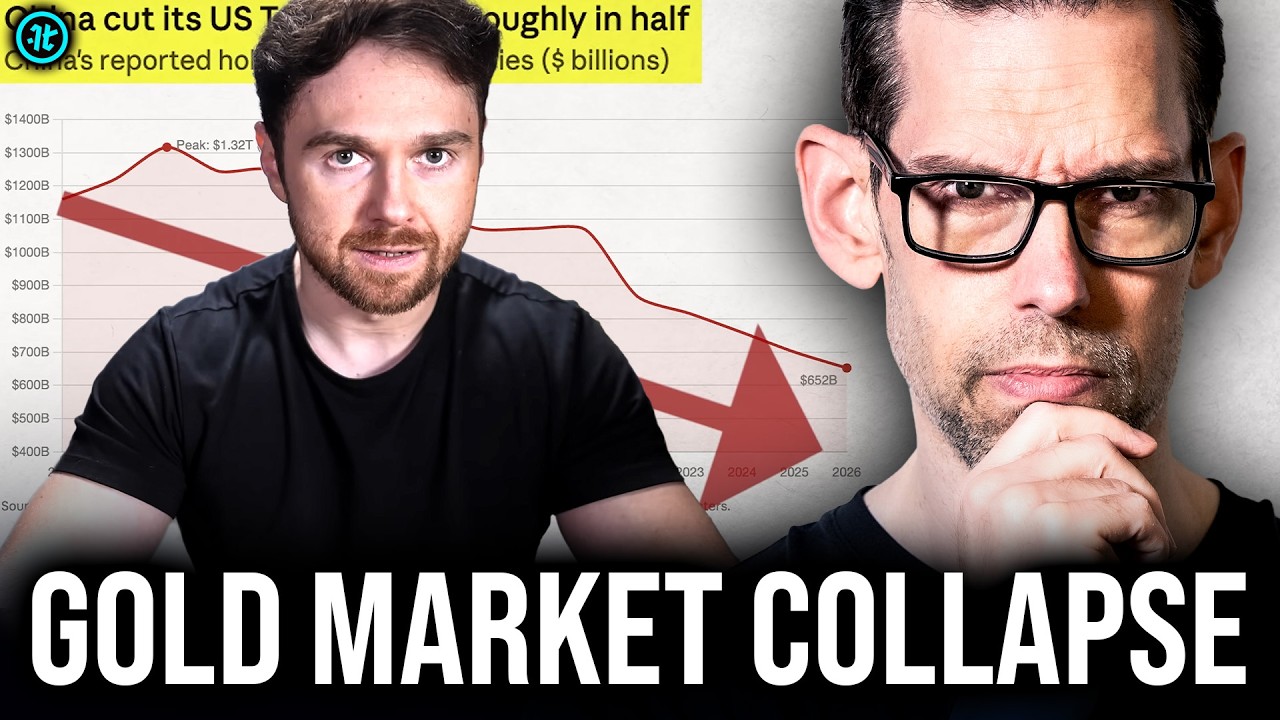
China has officially announced a shutdown of retail paper gold trading, citing the need to protect investors following losses incurred during leveraged perpetual swaps between 2020 and 2022 where liabilities exceeded initial investments. While state-owned banks like ICBC attribute this move to risk management after absorbing massive losses from these high-risk instruments, analysts argue that a deeper strategic objective is driving the decision: dismantling speculative markets dominated by Western paper systems in London and New York. By eliminating margin trading and leveraged contracts as of July 2024, Beijing aims to decouple gold pricing from fractional reserve banking practices where claims often exceed physical supply, thereby forcing prices back to reflect actual metal availability rather than financial engineering.
This initiative is part of a broader effort for China to establish an alternative monetary order by anchoring the yuan directly to tangible reserves and launching its own clearing system through Shanghai and Hong Kong that mandates physical delivery. With vault holdings expanding from 200 tons to over 2,000 tons, this strategy seeks to build trust in the currency while simultaneously challenging US dollar hegemony without direct conflict. The approach effectively forces a one-way flow of gold out of Western reserves by allowing citizens and entities to buy but preventing them from selling under current capital controls, which accumulates massive stocks for China's strategic use alongside other economic pressures like advancements in artificial intelligence dominance.
In response to this shift, the United States holds approximately 8,000 tons of official gold valued at roughly $11 billion based on outdated rates rather than market prices near $4,000 per ounce, representing a hidden trillion-dollar asset that could be monetized through revaluation or by issuing long-term bonds redeemable in precious metals. While some suggest the US might counteract these moves by physically linking the dollar to gold on significant anniversaries or relying solely on inflationary devaluation, China's strategy continues to erode confidence in paper-based systems globally. Ultimately, this geopolitical maneuvering aims to create a multipolar world where nations hold tangible reserves instead of trusting debt promises that are increasingly vulnerable to money printing and international sanctions related to conflicts like those between Russia and Ukraine.
Read the full video transcript
Boys and girls, things are popping off
in China and they have a goal to get out
from under the US dollar. I don't think
anybody's confused about that. They also
want to be the global hegemon. The more
you read about Xi Jinping, the more you
will realize that it's
act humble, act chill, you don't have
ambitions beyond China. Hey, what are
you guys talking about? And then
ambition is going to grow in the Eden
and as you get stronger, you're going to
reach farther and farther. And for
anybody paying attention to what they're
doing, they've just done not nuclear
testing, but testing the
I think nuclear submarines or
battleships that would launch nuclear
missiles using the
the actual ballistic missiles that would
carry the nuclear warhead. So they're
doing that testing. They're also now
pushing into the Pacific Ocean. So we're
not just talking about the China Sea or
being right off their coast. They're
pushing into the Pacific. And
eventually, as I've said many times, a
country is only held back by two things.
Their own moral compass
and the force of another to stop them.
And so that's it. And so how far is
China going to push out into the world?
We're going to find out. But they're
playing a very shrewd economic game and
they have been playing that very shrewd
economic game for a very long time.
And there's an incredible video by a
guy, he's a YouTuber named Andre Jik.
Highly encourage you guys to subscribe
to him. I think he's phenomenal. And
he's putting something together that I
think is really on point. I've got some
stuff that I want to add to it to give a
a significantly fuller picture of what's
going on.
But without further ado, here's Andre
Jik talking about a move that China's
making in gold.
>> So the battle for what is money and who
controls it just got really interesting.
At the start of the year, some investors
apparently made a bet that gold could be
worth as much as $20,000 per ounce by
the end of the year.
Now today, gold is worth closer to
$4,000. But what's interesting is that
on June 24th, one of China's biggest
banks, the Industrial Commercial Bank of
China or the ICBC,
announced that they were shutting down
their paper gold trading for their
retail investors.
>> This is where this starts getting
interesting right off the bat. So,
you've got there's a difference between
physical metal and paper gold. And
understanding that difference is going
to be key to everything that we're doing
here. He does a really good job of
explaining it, but I'm going to
punctuate some of this uh because I
think a deeper understanding of exactly
why China would want to do that becomes
increasingly important. But know that
there is a very real and meaningful
difference between I just bought gold,
which almost nobody does,
and I just bought a claim against gold.
>> That means on July 24th, if you're a
Chinese citizen who wants to trade gold
through their bank, your access will get
switched off.
Now, the ICBC is not the only bank doing
this. It was also their Postal Savings
Bank of China that did it first, then
Ping An Bank, then China Guangfa Bank
announced it in June. So, some of their
biggest financial institutions, one
after another, are now pulling the plug
on retail trading. Right, the question
is,
why is China doing this?
The official story that they're telling
us is that they are protecting citizens
from the volatility, right, the extreme
up and down movements of gold.
>> That's real, by the way, and China went
through something really brutal. I
forget what year it was. I think it was
2020, 2022, somewhere in there. They had
this big crisis where people were banks
were creating these um vehicles, which
were basically like perpetual swaps.
They were creating these vehicles inside
of their banking app. So, the average
retail investor who does not understand
the difference between paper gold, they
probably don't even really understand
futures. And so, they're in there
betting on the price movement of uh it
wasn't gold.
[ __ ] I forget what they were oil maybe.
Anyway, they were all betting on
something. I forget what it was now. And
what ended up happening was people
weren't realizing that they could
effectively lose an infinite amount of
money. They could certainly lose more
than they had put in. And so, you had I
forget how
either hundreds of millions of dollars,
I can't remember if it went over a
billion, but it was massive.
And people were just getting wiped out.
And you had individuals that let's say
bet I don't know $40,000 and ended up
owing a million dollars. It was like
pure insanity. And so, people were
freaking out. And they were like, "You
did not protect us from this." And so,
the Chinese government steps in. There's
like this whole inquiry, and they're
like, "Yes, even though the banks are
all state-owned,
uh we do think this was the bank's
fault." And so, they made the banks end
up eating all of those losses. And so,
they were like, "We don't want to find
ourselves in that position again." So,
that's very real. That's not like, "Oh,
this is just a marketing message from
China." They've really been through it.
They've lived through this where you let
people do these kinds of like fancy
options trading. And if people don't
understand it, they can get themselves
in trouble. And so, this is um
a real thing. But in this case, I think
it is far more They've got another
reason for doing it, and we're going to
hear what that reason is.
>> Cuz back in January 29th, spot gold hit
an all-time high, over five and a half
thousand dollars per ounce.
>> Okay, spot gold. So, this is where
again, going back to that initial thing
that I said, there's a big difference
between physical gold and paper gold.
Spot gold is okay, I'm uh let's say I'm
a reserve bank in London.
London has massive London and New York,
but primarily London has massive
influence over the price of gold. They
handle a lot of the gold exchange. Spot
gold is gold that's available on the
spot. That's where it gets its name,
meaning you could buy it right here.
There's no other claims against it. You
give me money, I'll give you the gold.
Okay, so that's the spot price, the
available for sale gold. But then there
is gold that's acting as a reserve
against these the paper trading. Okay,
so those are two very different things.
So when he says spot gold, that's what
he's talking about, things that are
available for sale on the spot. It's
going to become more important as we go
and if memory serves, he doesn't ever
define it.
>> But then it crashed. As I'm making this
video, gold is trading at around $4,000
per ounce. That's a drop of about 28%
from the peak.
So of course to protect people, China's
banks have increased what's called the
margin requirement to 140%.
>> Okay, every alarm bell you have in your
head should be going off right now. So
imagine what that really says. You've
got something that costs, let's say
$100. And if you want to trade on that
thing, a paper trade, if you want to do
a paper trade on that thing, you've got
to put up $140
to trade against the $100. That doesn't
make any sense. You'd be way better off
just buying the asset. So that that's
like the first thing that tells you
what China's doing behind the scenes is
not everything that they're representing
up front because that's illogical.
You're you've just killed the entire
market very much on purpose.
>> Which is a record high for the industry.
A margin requirement by the way is the
amount of collateral someone needs to
borrow money. And by increasing that
percentage like they just did, it means
you need to have a lot more money to
borrow less money. China's now demanding
more collateral than what the investment
is even worth. Okay, so the official
reason is gold is volatile,
retail traders are getting hurt, and big
government has to step in to protect
them.
Now the unofficial story though is
probably what's actually happening,
which is the battle for real money and
what that money should be worth.
Right, think about what China is really
shutting down.
They are getting rid of margin trading.
They're getting rid of the leveraged
deferred contracts, the paper gold.
>> Okay, those are
uh two sort of different things that are
worth teasing apart. So, trading on
margin is exactly how people get in
trouble. Margin, leverage, same idea,
you're using debt. So, you put down some
amount of collateral, it's usually like
5 or 10%. And so, 140% is like [ __ ]
crazy. You normally put down a
relatively small amount if you're buying
a future. I don't know if we need to go
into what a future is. For now, just
know there's this thing that basically
lets you bet on the price.
Uh literally, it's just gambling. And
you're letting people bet on the price,
whether it goes up or down, and if it
you know, moves in their direction, they
get paid. If it moves away from their
direction, they have to pay.
And you actually settles daily, which is
interesting. But anyway, so this is um
the thing that is playing out here is
you've got the ability to do those
trades versus now trying to China is
just trying to move away from that
totally.
Um one thing that I find really
interesting about China is the only way
for people to get paid out is if they're
willing to take that risk. And China's
trying to stop people from taking that
risk. And so, I know I'm sure a lot of
people feel good about that. Yay, China,
don't let people take risk. Uh to me,
this is one of the most abusive things
that a government does, which is not let
people decide what they want to do with
their own money. But anyway, this is how
China plays. They force everybody
basically to move as a unit, but we're
going to hear more about that.
>> Basically, the easiest way to understand
it is
they are getting rid of the speculation,
the gambling.
But physical gold, that's all good. They
can still buy and sell that. They're not
stopping people from owning gold.
They are stopping people from trading
the paper claims against gold.
Okay, so why is China doing that?
The theory says it's because
the real price of gold should be way
higher than it actually is.
But the reason that it's not is because
it's being manipulated and suppressed by
the paper markets, and it has been for
decades.
So in order to have what's called real
price discovery,
in other words, in order to figure out
what something is really worth,
you need to first shut down people's
ability to gamble on the price [music]
of it.
Now if this were true,
we'd probably see China as a nation
start to buy a lot more gold than usual.
And that's exactly what they've been
doing.
In May of this year, they bought 163
tons of gold, the most since March 2024.
And that's not just true of China. That
is true of all central banks around the
world, which have been buying way more
gold.
>> I can't remember if he goes into it, but
um what's interesting here, going back
to what we were talking about with the
stress on the debt. So you've got not
just China, but basically every central
bank in the world is moving away from
treasuries and into gold. And so they're
building up their reserve assets in a
way that is definitely bad for America,
but certainly historically uh gold has
been the thing that they've kept on
their books. So as you think about,
okay, we've got China, they're attacking
the US market via AI, and now they're
trying to get out from under the dollar.
How are they going to do that? They have
to amass a ton of gold. This is going
going to become a big part of the story.
There's uh a missing piece that
I mean, well, I'll see if he touches it.
I don't think he does, but there's a a
really important piece of this that will
make sense um with China's moves when we
get all the pieces on the table.
>> 15 times more than they've been telling
us.
It makes sense, right? Which is also why
the Chinese government is launching a
brand new gold clearing and settlement
system. It's a system that's designed in
a China, not London or New York, but
China as the place where the price of
gold actually gets set.
Now, once you put all of this together,
central banks and nations secretly
buying gold and taking steps to get rid
of the paper markets and building the
settlement hub there,
it all starts to make a lot more sense.
>> Now, as far as I know, China's the only
one that's shutting off the paper
market. Could be wrong about that, but I
don't think so.
>> So, today, let's speculate on what could
be really happening and why China's
doing this right now and what it all
means for our investments and the
dollar. So, with that said, let's get
into it.
>> We'll be right back to the show, but
right now, I want to talk about an
important investment you're not making.
You optimize your calendar, your team,
your systems, but not the one asset that
runs all of it, your brain. That is a
huge liability. Your brain is your
business and right now, most people are
running their business on the cheapest
fuel available. Caffeine spikes, sugar
crashes, stimulants that borrow from
tomorrow to get you through today. I
take ketone IQ when I really need to do
something high cognitive load because
I'm not willing to let my brain be the
bottleneck. It delivers pure ketones,
your brain's most efficient fuel source,
directly across the blood-brain barrier.
No caffeine, no sugar, no crash, just
your neurons firing at full capacity
hour after hour. Athletes use it, top
CEOs use it. I use it. Go to
ketond.com/impact
for 30% off your subscription order or
>> [music]
>> visit your local Target to get your
first shot for free. That's
ketond.com/impact. Now, let's get back
to the show.
>> [music]
>> Hi, my name is Andriy Zhuk. Hope you're
doing well. Come for the finance and
stay for the battle of money and gold.
So, to understand why China's shutting
down their paper gold market is such a
big deal, you have to first understand
what paper gold is and how it works. And
the easiest way I can explain it is like
this.
Let's say I've got this sick Pokémon
card called the Ancient Mew, right? It's
a physical card that is sitting in my
safe.
>> I love that he's using Pokémon, by the
way.
>> It's real. I can hold it. There's only
one of it. Now, imagine then I write up
a little paper certificate that says,
"This entitles you to one of these
Mews." And then I sell it to you. Right?
You're happy cuz you've got a claim on
my card, but
maybe you don't actually want to custody
the card because
someone might steal it and you're
afraid. So, you just hold the
certificate. It's easier. It also trades
like the real thing, but you never come
to collect it from me. So, here's the
problem.
Once I realize you're never actually
going to show up and ask for your card,
what stops me from writing a second
certificate and then selling it to
someone else?
And then a third, and a fourth, and a
tenth. Right? Now, there's
>> This, by the way, is called fractional
reserve banking. This is how the banking
system works. If you want to be mad
about something, be mad about this. This
is wild. This is why bank runs exist. Uh
and the exact same thing is true of
gold. I can't believe that's true, but
it is true. It's called unallocated
gold. It is people just God knows how
many trades against it. It's completely
legal. It's in the terms and conditions
when you buy paper uh against gold,
you're literally accepting, "Yeah, I
know that there are multiple claims
against this." Um and even in Basel III,
which I'm not going to get into that,
but it's like banking regulations, even
in Basel III, you can have I don't think
there's a specific amount of gold that
you have to hold. You can let people
trade against
uh it's that's wild to me, but
nevertheless, it's real.
>> There's 10 people who think they own
this Mew.
But there's still only one card.
I've sold 10 claims on it, though.
On paper, the supply will show that
there's 10 Mews.
In reality, nothing's changed, right?
There's still one card in existence.
>> Technically, it doesn't show that there
are 10 Mews. It shows that there are
um
it implies that there are 10 Mews. But,
if people understand the fractional
reserve nature of this, they know that
there's not. But,
yeah, it if people actually claimed
their gold, or in this case their Mews,
you have a the system actually just
breaks. So, wild.
>> So, what's it really worth?
Well, if the market is pricing my card
based on the evidence it has, which is
all that paper floating around,
the price should be 1/10 of what it
should be worth.
Because, as far as the market can tell,
these Mews are everywhere, right? Why
would the price go up when there's so
much of them available?
That's paper supply.
Now, the second everybody walks in at
the same time and says, "You know what,
Andre? Actually, I want my card now."
The whole system would fall apart
because nine out of 10 people would find
out that their paper certificate is
worth nothing.
>> Bankrupt.
>> That is the overly simplified version of
paper gold. Now, in the big Western
markets like London and Comex in New
York,
most gold that trades every day is never
physically delivered. They're what are
called contracts. They are claims.
People buy and sell these pieces of
paper that represent claims on the gold.
And the majority of people never intend
to take a single physical bar. Right?
Same as the Mew example.
And just like my card scheme,
that means they can also write way more
claims than there are actual pieces of
metal sitting in their vaults.
>> Completely legally.
>> Now, estimates for how much paper gold
there is varies cuz no one knows how
much gold there really is in the world
or how much paper there is. But, the
point is there is dramatically more
paper than there is physical real gold.
What that means then is that the price
of gold today is probably lower than
where it should be. That's how you
suppress the price of an asset. Now,
hold on.
Where's my proof? Like, I can't just say
we think there's more paper gold there.
Trust me, bros. If what I'm saying is
true
how would we know?
There's a couple ways that we might know
that that could be true.
First
there would be a disconnect between the
price of the physical thing and the
paper thing.
Think about it like this.
If the world was 100% honest and this
Mew only had one paper claim on it where
the $100
the card and the claim would trade
perfectly one-to-one because the world
knows all the details.
But, the moment it becomes a casino
where no one knows how many Mews there
are and how many paper claims there are
then what you'd see is a natural price
divergence of these assets.
People might want to pay more for the
physical thing than the paper thing.
They'd be like, "I don't know if I trust
this system, so I'll happily pay a
little premium for the real thing."
>> This is one of the most interesting
things about our economy and the way
that this stuff works. So much of this
stuff is done assuming a high trust
society, which is exactly one of the
things that's breaking down right now.
Uh and part of the um
gamble
that China is making is that, "Okay,
we're going to become the place that
everybody's going to get that physical
gold." And so, we've got to find ways to
amass that physical gold and by being
the place that people know that they can
go to to get the physical gold and that
we're more strict, I imagine. I don't
know for sure that they're going to be
more restrict.
Um but given that they're getting rid of
all the paper um betting, I don't know
what they'll do in their banking system
if they ever tie the yuan back to gold,
which I don't know that they plan to do,
but
um that would be the way that they would
sort of get away with looseness. But if
they bring in the physical gold and hold
themselves to a very strict standard,
now you're sort of pre-1971
uh US where the US is actually the
dollar is actually backed by gold. So
understanding it's this is a game of
psychology. It's like who can I trust as
an investor? Where can I go that I know
that that's backed by a real thing. But
the great irony is even gold is it's
fake. It's just a thing that we believe
in, right? It was it's been seashells,
it's been gold beads, it's been all
kinds of things before, including salt.
Uh so right now it happens to be gold.
And listen, it's been gold for thousands
of years, so let me not underplay that.
But um it is very interesting to see as
the global hegemon, the US, has eroded
the world's trust by printing money like
crazy and an important beat in this
story is confiscated the assets of the
Russians when they went to war with
Ukraine. Everybody was reeling. Central
banks, nation-states were all like,
"Holy hell. If you have something with
the US, that is conditional ownership
and the US might be able to take it away
from you." And that is one of the
reasons why China's like, "Yo, I want
physical gold. I want to get this here."
>> Now, the tighter the spread
between the real and not real,
the more honest the market thinks the
game is.
The bigger the spread between the two,
the more the market thinks something
funny might be going on. Make sense,
right? That's one way that we might
know.
Okay, then. So then the question is
have we ever had price divergences
between the real
and the paper thing?
And it turns out that we have.
In the silver markets, for example, the
peak hit in January. It was temporary,
but it was something like a 40% price
differences between the physical and the
paper markets.
Now, the spread today is much smaller,
but it's still not nothing. There is
still a premium for physical silver.
Now, the spread in gold is much, much
smaller,
which means, in theory, maybe all is
fair.
But, is it really?
>> I think that this actually speaks to
something different. So, there is a very
big difference between gold and silver
for one fundamental reason, despite what
um
Peter Schiff will tell you, gold
basically has little to no um use
outside of being a store of value. Yes,
people put it in jewelry, and he showed
there's a certain amount of it that's
tied up in jewelry, um but the when you
look at silver, the reason that silver,
like the physical silver, people really
care about the physical silver, is
because they are it's used in
technologies, advanced technologies. And
so, it becomes a very important metal
for uh industrial use, manufacturing,
high-end technologies. And so, I think
there's always going to be a much larger
premium paid for silver over time than
there will be for gold over time, uh
especially now as the use of silver is
increasing as technology uh becomes
wider, more widely adopted.
>> How real is this casino?
Let's go and find out what the price
should really be by getting rid of paper
speculation. And this is one way to tell
that something is off.
But, there is a second way
>> Yeah, I was going to say the the first
way this that China being like, "Oh,
we're going to figure out the price.
They have made comments about it in the
past, so it's probably not nothing.
Um, but I don't think that's what China
is really um thinking about. I think
China is looking for a way to get gold
into China. And there's a punchline
uh to what they're doing here that's
pretty crazy.
Uh and definitely if you're anybody that
thinks about how long dollar hegemony is
going to last, how long it's truly going
to be the world's reserve currency,
you're going to want to understand this.
>> And it's even better. But before we get
into that, I've talked about Seeking
Alpha before, and now they're running a
promo that expires on July 7th.
>> By the way, I'm going to let his ad run.
>> is it scans the whole market for
long-term potential and sus-
>> I'm grateful uh to people letting others
do reacts, and so uh I want to honor him
and let the ad run. So, if you guys are
wondering why I'm doing that, that's
why.
>> sustainable growth for buy and hold
investors. And for context, their system
has generated returns of more than 400%
since 2022. Now, a couple of the
recommended names they've called out
early are Credo Technology, ticker
symbol CRDO, and Micron, ticker symbol
MU, which are stocks I own as well.
>> Let's go.
>> So, if you've been on the fence about
Alpha Picks, right now there's $124 off
the normal $499 price, which brings it
down to $375 for the whole year. But
that discount is only available until
July 7th. There's 7 days left, and then
it's gone. [snorts]
Now, the only way to get this price is
through the link in the description
[laughter] down below. You will also get
access to two data-driven stock picks
every month, each with a full research
breakdown behind it, like the metrics,
the thesis, and why it made the cut. And
as an active member, you'll also get the
whole existing portfolio, not just the
new names. Please remember though that
these are not day trading lottery
tickets. This is long-term investment
research, which again so far has
generated returns of more than 400%
since the year 2022. Once again, the
link is in the description down below
and it's available until July 7th and
then it's gone. Go and check them out
and now let's get back to it. Okay, so
the second way to tell the casino might
not be telling us the truth is how
investors start to behave. Cuz think
about it. If you knew the paper was
maybe fake and you knew the real price
should be higher, what would you
actually do?
You'd do two things. You'd sell the
paper and you'd buy the physical thing.
Right? You'd get out of the certificate
market and you'd start buying a lot more
of the real thing.
So, the question is,
is anybody actually doing that? And the
answer is yes, they are. In fact, the
people doing this
are the most sophisticated money markets
on the whole planet. It's the people
that print the paper currencies. It's
the central banks. They have been buying
physical gold at the fastest pace in
recorded history.
>> You got to buy some
>> In the first quarter of this year alone,
central banks bought a net 244 tons of
gold. That is the strongest first
quarter ever recorded.
And it's also not a one-time thing.
They've now bought over 200 tons in 10
of the last 11 quarters.
>> Look at that.
>> part is that a big chunk of that buying
was never officially reported, which is
kind of interesting.
According to the World Gold Council,
they say their number includes an
estimate of undisclosed purchases, which
means gold these banks are buying but
not telling anyone about it.
Now, this shadow accumulation has
allegedly been happening since 2022.
The official numbers that banks are
reporting,
that's just the minimum. Right? The real
number is probably way bigger.
>> Imagine that. You you've got staggering
numbers, record-setting numbers, and
everybody knows that it's only part of
what they're doing. Uh I think America's
way too cocky about our position as the
reserve currency as if the world does
not see that we're nearly $40
in debt. If you want to know why I bang
the drum about balancing your budget,
here's reason 942.
>> Maybe as much as 10 times bigger,
especially for China.
Now, that behavior, that's the first
half of it. They'd buy more of the real
thing.
But it's also what they're selling to
buy it. What are they selling?
That would be US Treasuries.
>> is. The bond market.
>> Because for 50 years, the strategy for
all central banks was doing the opposite
of this.
Central banks took your extra dollars
and they parked them in US Treasuries.
They basically lent the money back to
America to earn a little bit of
interest.
That was the safe thing to do and
everybody did it. Any country that
didn't do it in fact and tried to route
around the dollar got a lot more freedom
in their country, right?
>> Jesus Christ.
>> But now, we're seeing a reversal of that
strategy.
Foreign central banks have essentially
quit growing their pile of Treasuries.
>> Bro, look at that graph.
The line of Treasuries being consumed is
essentially flat. That's crazy, but our
debt keeps going up. That is bad.
>> over a decade ago.
And lately, some of the biggest holders
have actually been selling US
Treasuries.
China has dumped hundreds of billions of
dollars of US debt and rotated into
gold.
Now, they're not dumping all of it at
once. That would not be smart
because they want to extract as many
dollars as they can.
If they sold all of it at once, they'd
crash the value of their own bond
holdings. So, they have to do it slowly
and strategically.
>> He's got up on screen a list of the
people that have been selling. Japan,
China, Taiwan, Saudi Arabia, India, UAE,
Norway, Singapore. Uh, friend or foe,
man.
Sell, sell, sell.
>> That's true for all the other countries
holding on treasury bonds as well.
But what they're selling, basically, is
the paper promise of supposedly the most
powerful government on Earth. And
they're doing that to buy gold that pays
them zero interest. And on paper, that
sounds kind of crazy cuz why would
anyone trade an asset that pays you for
an asset that doesn't?
You would only do that if you no longer
trusted the promise of that paper.
What was the promise?
The promise was, "Give us your paper,
park your money into our assets, we'll
be honest, we'll protect you, we'll
trade with you, and your life will be
awesome, right?"
But after the Iran conflict exposed the
US, and after decades and decades of the
forever war model, which was funded by
money that could be printed to infinity,
giving the US unchecked power,
the world sort of had enough.
The world does not want dollars. It
wants real money. They want what
economists call multipolarity, where
it's not just one nation that rules the
world, but many nations that contribute.
Now, if this theory was true, how would
we know that it might be true? What
would be the evidence?
Well, first, we'd see those US
treasuries being sold off over a long
period of time.
>> There it is.
>> And we have been seeing that.
>> Yep.
>> We would also be seeing investors
selling paper gold.
And we have been seeing that. Money has
flowed out of US gold ETFs.
We'd also see gold as an asset surpass
treasuries as the reserve asset for
central
>> We'll return to the show briefly, but
first, nobody ever tells you how lonely
building a business can be.
>> [music]
>> Every question lands on you, and when
you don't know the answer, especially
when you're first starting, there's no
one to ask. Shopify helps you fill that
silence.
>> [music]
>> I've trusted Shopify to power our merch
store for years, so it's an easy
recommendation from me to anyone serious
about starting and scaling an online
business. Professional templates, AI
tools that get your storefront looking
credible fast. You don't need to code,
no designers required. And when the
questions start coming up, which they
will, Shopify's built-in AI assistant
sidekick is [music] ready. And when
customers find you, Shopify checkout,
the best converting checkout on the
planet, make sure that they actually
buy. All you need is the idea [music]
and then Shopify will help you with the
rest. Start your free trial at
shopify.com/impact. [music]
All right, now let's get back to the
show.
If you can look at your phone, look at
this chart, you've got the treasuries
have gone down a little bit in the last
few years, but the gold purchases are
going up. And so some of this isn't even
um
the flat line in the treasuries hides
the truth of what's going on because
we're putting out so much more new debt,
you would expect foreign investors to
have a line that more or less tracks
with that if they still believe that
that was the right place to put their
money. To reiterate something he just
said, when they sell our treasuries to
buy gold, they are taking something that
was yielding a return and exchanging it
for something that doesn't yield a
return. That's more predicated on
either, in China's case, something I
think very different, which is we want
to surpass the US dollar and we know
we're going to have to back our yuan
with something if we're going to pull
that off.
Um or you just don't trust that the US
government is going to be worth the
paper that it's uh printing its debt on.
And so
even though you don't know when the
exact timing is, you're going to start
that migration process slowly so that
you can get out from under that debt.
Man, this chart is it should unnerve any
American who's going to have to contend
with the debt obligation cuz
yeah, [snorts]
foreign buyers are not going to help us
anymore.
>> We are seeing that.
Gold now represents a bigger share than
US Treasuries.
Gold demand in China also hit a record
207 tons, which breaks a record that
stood for over a decade.
>> Oh, and one other thing. I'm talking
this is just back in 2020. There used to
be a huge gap between the amount of
reserves that were being held in US debt
and gold. And now it's starting to be a
very substantive gap in the opposite
direction.
>> So, combine all this together.
>> 6 years.
>> How do we know the casino might not be
telling us the truth?
We might see things like the prices
diverging between paper and the physical
markets. We'd see the world selling the
paper claims and we'd see the US export
gold. And we are. Gold is going east.
And that's because gold is the number
one export out of the US for several
months in a row now.
Central banks worldwide are dumping the
dollar's paper and hoarding the real
thing and hiding how much.
>> Okay. So, you've got a zero-sum asset.
All right? This is not a um we're not
talking about gold in the um fractional
reserve sense. We're talking about spot
gold. It was available for sale.
Somebody went and bought it. This is
going to be a key part of how I bring
this all together in the end. Uh and
with what China is doing, they need to
siphon the gold out of the West and get
it into the East. And and I'll I'll go
deeper into this in in a little while,
but they need to get the gold that is um
otherwise going to be used in that
fractional reserve system so that they
can start effectively eroding the West's
ability to leverage gold in a fractional
sense to make more and more money off of
all of the trading. Now, they're never
going to be able to get all of the gold,
but you've got a lot of people asleep at
the wheel
uh and try Drew remind me I don't think
he brings it up.
Remind me I think it's called something
like the brown bottom sail. I was a UK
catastrophe
where they just made an absolutely
asinine decision that ended up costing
them money, a lot of money when you
think about the fractional reserve
ability to trade on it all day long if
you're going down the paper route. All
right, so anyway, siphoning sound is
what I want you guys to hear
where China is sucking the physical gold
out of London very specifically COMEX in
New York as well
and that's going to have consequences
that aren't necessarily
as obvious right on the surface.
>> Is that the evidence of an honest
market?
This theory says no it isn't. This is
not what a healthy honest market looks
like. All right, but there's another
piece of evidence that shows us this
theory could be true and it's because
China told us way back in 2014. Remember
when the head of the Shanghai Gold
Exchange stood up and gave a speech at
what's called the LBMA, the London
Bullion Market Association, which by the
way is the western paper gold pricing
system. So while he was there he looked
at the gold establishment and he said,
"Shanghai gold will change the current
situation of consumption in the East
priced in the West." And then he said,
"When China has the right to speak in
the international gold market, gold's
price will be revealed."
So basically he's saying once China has
a seat at the table, which they
obviously now do,
that's when the world will finally get
to see the reality of the price and that
was 12 years ago. In 2026 all of this is
sort of clicking into place.
So then the question is, well what is
China actually doing? What are they
building?
And what they're building is their own
version of a casino where they get to
say the house can't cheat. That is why
they're shutting down retail paper gold
trading. That is why the ICBC
Construction Bank and the rest of them,
that is why they all take effect on the
same day on July 24th. This is not a
coincidence because in that same time
window, China's also turning on the
other half of their plan. Their brand
new gold settlement system run out of
Hong Kong and working together with the
Shanghai Gold Exchange. Here's how it's
going to work. Shanghai is the vault and
the price. It's an exchange built on
physical delivery. So, when metal trades
over there, right, real metal actually
will have to move. Which means the price
will have to show real supply and
demand, not a mountain of paper claims
that people are using to bet against on
what the price of gold will be tomorrow,
right?
>> Really stop and think about that, boys
and girls. So, for a very long time,
we've been in a position where people
just trusted everybody. They trusted the
US, let the dollar and our debt be the
reserve currency. We don't need to move
physical gold around. That's ridiculous.
We can trade on the price, for sure,
might as well, but don't move it around.
That's archaic.
Just bet on the price. We can do it in a
fractional reserve system with
essentially no reserves. Money made all
around. And now, we are moving backwards
as we move into a multipolar world. Now,
multipolar is tough. There for anybody
that hates America and wants to see us
in a bad spot, a multipolar world is
wonderful. You've got somebody that's
going to keep the US in check.
However, I think that a multipolar world
also has massive downsides, and this is
going to be one of them. Where now, if
you want gold, you're going to take
physical delivery of that. You're going
to have to have it in a vault. This so
reminds me of the book by Niall Ferguson
about the Rothschilds and how at one
point during the French Revolution they
were literally burying [ __ ] in their
backyard and I'm like, "God damn, like
we're legit heading to that point where
central banks are like, I want a
physical thing. I want that gold in
whatever their version of Fort Knox is."
That people are going to be starting to
have to figure out where they store
their actual gold because they're
holding on to physical gold, which is
precisely what China's trying to put in
place. Now, that's crazy. Dude, we are
about to be in a totally different
world, man. That is how much money
printing has cost us trust in the world.
We were talking about the boy who cried
wolf. Remember, the real story is the
wolf [ __ ] eats the kid. He wasn't
making it up. There really is a wolf
there.
The US money printing, anybody calling
that out as a problem,
sure, the wolf eats the village slowly,
one kid at a time, but the kids are
getting eaten.
And so, when I see this and I realize,
holy but Jesus, they are, and I think he
covers this, but they're they're
building out like these massive storage
facilities, their version of Fort Knox,
so they can actually hold the gold. They
are actually going to buy gold that's
right now sitting in London, actually
get it shipped to China. Like,
welcome to a brave new world.
>> I I have a question about this cuz that
quote that he said that the Chinese
person said was, "We want to
stop making things in the East but being
priced in the West." Does that go to
like the financialization of our economy
where
>> He He was saying something slightly
different. I And that to me is sort of
the least um interesting part of all
this. What he's the the actual uh
West-East
like interesting phrasing that he used
was about gold, not about like
manufacturing. Um but the the part about
once we're able to speak at the table,
we're going to finally have a
Once we have a voice, you're going to
see what the real price of gold is. Um
that to me is is both true and like
whatever. Um it it is a phase transition
of the market where
I I've been screaming from the rooftops
forever, the stock market is gambling.
We We've all decided it's great and it
really does have massive upsides and I
love it and I'm glad it's a modern
miracle. I just think people lie about
what it is. And so we're saying, "Yeah,
I can't gamble with other people because
I've got counterparty risk." And so I
China I'm not willing to play that game
anymore. I've seen it hurt my people cuz
there really is a downside to letting
people speculate like that. They get out
over their skis, not understand the way
the vehicle works, get themselves into
tremendous amounts of trouble. That That
all is real.
But if I'm like, "Dude, I'm going to
take on the US. I've spent my 100 years
of humiliation. I've got a plan to get
out from under this. I'm taking all
these [ __ ] over. They do not
know what it means to be a cohesive
dictatorship that can just run the
table."
And so now they've got to get the
physical gold into
China. And so sure, are we all going to
find out what the real price is? Yes,
because somebody that owns a huge chunk
of it and doesn't allow for paper
trading cuz there's still going to be
paper trading, just not by China. So you
will get a truer signal of the price,
but that's not the game. The game is
that they're going to be able to control
a massive amount of gold which will
financially hurt the West for reasons
that I'll explain more later, but it's
going to financially hurt the West and
um it puts them in a position where they
can now This is speculation. I'm now way
over my skis, but I really think this is
where they're headed, that they're going
to be able to back the yuan with gold
and make a real play to become the
world's reserve currency. And that's
like the biggest part of the punchline
for me. Speculation, not It's not like I
>> why cuz I think directionally we like
what China's doing and if America had
the leeway in the gold assets, we would
also want to be backed by gold. But the
fact that China's actively working on
it, that's what makes it a danger to the
US because we'll lose our reserve
status.
>> Yeah, so yes, this goes back to the
don't have a central bank. Okay, cool.
Then what's your money backed by?
Historically, it'd be backed by gold.
That'd be an awesome position to be in
because it's sound money.
>> Yeah.
>> Um
but yeah, they're making a real play for
it.
>> I got you.
That's real price discovery that we
talked about.
But because of China's capital controls
the foreign nations can't easily get in.
That's where Hong Kong comes in.
Hong Kong is going to be their front
door. Where Shanghai sets the price
based on real discovery and Hong Kong
lets the world trade on it. So you put
them together and what you now have is a
parallel financial system that's going
to be the alternative to the system in
London and New York that's going to be
sitting outside the dollar.
>> There it is. Outside the dollar.
>> do we know how big of a deal this is
going to be? What we know is that Hong
Kong is growing its physical vault
capacity from around 200 tons to over
2,000 tons. They're doing a 10x
increase.
Obviously
you would not need a vault that big for
a paper casino.
But if you want to settle in real gold
obviously you'd want as big of a vault
as you can build.
And the reason why China wants to do all
this is because they understand that if
you control the price of the most
trusted money on earth and you settle it
in your currency, the yuan
then you've given your currency what's
called an anchor.
Not an official gold standard, but
something that ties to it. Something
that manages people's expectation
of stability.
They know the world doesn't fully trust
the yuan on its own yet cuz it's
controlled by the Chinese government.
It's not freely traded.
But the world trusts gold.
So if every major commodity deal can be
priced in yuan and settled against real
gold sitting in the Shanghai vault or
somewhere close to their
trading nation partners,
then the countries that were nervous
about holding the yuan will have a
reason to hold it.
Cuz behind it sits that anchor, the
thing that
>> That's massive.
>> nobody can print that they can then use
to fund the forever war model.
Right, that is how China challenges the
dollar without actually going to war
with the US.
That is China's move, which leaves the
obvious question, right? What is the US
going to do about it? The theory says
that the US will try to recreate a
similar idea with gold-backed Treasury
bonds.
Now, here's a fact that sounds made up,
but it's actually completely real.
The US government owns something like
8,000 tons of gold, allegedly. We don't
know if this is what's called
unencumbered gold or if it's still
there, but that's what the official
numbers say. Could be a lot less, could
be a lot more. But on the government's
books, that gold is not valued at the
market price. It is valued at a price
set by law back in 1973 and was never
updated since.
That price is $42 per ounce.
Gold is obviously trading around $4,000
per ounce.
So officially on paper, the United
States values all of its gold at about
$11 billion.
In reality, at today's prices, that gold
would be worth closer to a trillion
dollars. Damn. It's a trillion-dollar
gap is basically hidden by an accounting
rule from the Nixon era.
So, how the US could fight this
is with just a stroke of a pen. The US
could just revalue that gold and update
the official price from $42 to something
closer to the market price.
Now, the moment the US does that, more
than a trillion dollars in value would
appear on the Treasury's books. That's
money the government could use without
creating or issuing a a new bond.
In fact, the Federal Reserve has
actually published research on this
idea. The Treasury Secretary's talked
about monetizing the asset side of
America's balance sheet.
>> Within the next 12 months, we're going
to
uh
monetize the asset side of the US
balance sheet for the American people.
We're going to uh put the assets to
work.
>> There's also a proposal floating around
from an economist named Judy Shelton for
a 50-year Treasury bond that you could
redeem in either dollars or physical
gold. Now, what that would do is it
would make the US Treasury bond
partially backed by gold again. The
exact same trick that China is doing
with the yuan. So, that is the West's
answer to the East.
If China is going to anchor the yuan to
gold, then the counter is, "Okay, fine.
We'll just do the same for the dollar."
Right? And that is also why some people
out there believe and this is big
speculation here,
but that this revaluation could happen
sometime in July. Maybe July 4th, right?
America's 250th birthday, where the US
revalues its gold and launches that
gold-backed bond as kind of a monetary
declaration of independence.
>> Think if on July 4th, 2026,
which is going to be the uh
250th anniversary of our nation's
founding, Treasury offered for the first
time since
1971,
when President Nixon closed the gold
window and ended any kind of gold
convertibility for the dollar,
you would be establishing a link between
the US dollar and gold.
>> Now, do I think that it's going to
happen on that exact day or happen at
all? I don't know. I have no idea.
>> It did not happen.
>> But, what I do know is that the Fed is
looking into this. The Treasury
Secretary has talked about this.
The gold bond proposal is a real idea.
And even if the revaluation is nonsense,
if it doesn't happen with the repricing
of gold,
it might still happen anyway, but not on
the gold side, but on the devaluation of
the dollar side.
Right? Gold does not have to go up for
this to happen.
The dollar just has to go down a lot.
And that would be the same thing.
Luckily, we have a Fed chairman who's
going to show us that inflation is not
as bad as we think.
>> Good lord.
>> Having said that though, as a
disclosure, I personally do not hold any
gold at all.
I'm waiting for a safer entry price and
when that happens, I'll let you know in
the premium member section, where you'll
also get access to my main videos
earlier and if that is valuable, the
link is down below.
>> All right. Uh Andre Jik, round of
applause. He's fantastic. Now, there's
something that I Thank you.
>> [applause]
>> Something that I think that he leaves
out that I think is really the thing
that pulls this all together. And that
is once you understand the mechanism of
how this works, it becomes very clear to
me what China's actually trying to do.
So, the reserves that are going to be
held by China are going to be a pittance
compared to what they're forcing their
people to do. Remember, they've shut
down the paper, the ability to trade on
gold, but they have not killed the
appetite for people in their country to
find some way to get a return on their
money. And one of the ways they're going
to get a return on their money is by
betting on gold essentially. I'm going
to buy low so that I can sell high. So,
that's going to happen. But, when they
do that, they're going to force them to
take physical gold. They're they're
actually going to leverage them buying
it as a way to draw more into China.
Now, the fascinating thing that the US,
if nobody else has proven,
is that gold movements can be turned
into a one-way path. This is so
important for people to understand. All
right, so what you do is just like we
did I think it was Roosevelt ended up
saying all right, sorry everybody you've
got to sell the government your gold.
You're going to sell it to us at this
price and it's illegal to hold gold on
your own or China will have no problem
saying you can buy gold but you can't
sell gold and once China does that now
they create this one way like suction of
gold into the country into the country
into the country and that allows them to
wildly exaggerate the amount that they
would be able to buy themselves
by having the people the citizens of the
country who would naturally be buying
gold to move them off of paper and just
force them to take hold of that gold. So
whatever appetite there is for
interacting with gold people are still
going to do that but now it's all going
to happen within their country and so if
that ends up being true if they end up
putting any controls on it or if down
the road at any point they have to
confiscate some of that gold China is in
a much better position and if you think
the US will confiscate gold but China
would never you were out of your mind.
So if I'm China and I'm like okay I've
got to be able to defend myself against
the US and I want to do that
economically cool. I'm going to go after
getting as much gold as I can
have it he says anchored the Yuan being
anchored by gold I think they may push
it even farther than that and really try
to back it. We'll see they're not making
those noises but that would certainly be
a way for them to start gaining more
credibility with people especially at
one point they were talking about doing
a gold corridor where they were
essentially distributing the storage of
the gold. I don't know if that's real or
something they've given up on but that
would certainly be interesting stored in
other jurisdictions with a country that
people trust so it's like hey we China
have bought the gold we're backing our
Yuan with it we're distributing it
physically in vaults that are controlled
by our partner and now dear world you
can trust us we've gone back to sensible
sound money.
Now, that's I'm extrapolating so hard. I
am definitely um doing a thought
exercise more than anything. But, that
would be a way that they could really
make a run for the dollar. But, by also
just getting the gold into their
country, it means that they're getting
the gold out of London and the US. Now,
remember, the thing that the US does
well is we financialized
everything. But, if you want people to
be able to trade on paper, then they've
got to have some amount of gold. paper
on nothing. And so, every bar that China
is able to physically remove out of
either London or New York, that's one
less bar that they can use in this
fractional reserve game of gold trading
on paper. And so, now you just dwindle
and dwindle and dwindle those reserves
if they'll sell them, and you're now in
a much better position from the Chinese
perspective simply because they have
less money that they can earn in their
hyperfinancialization.
And that's something that Andre doesn't
bring up in this, but I think it's an
incredibly important part of why China
would want to play this. Now, I was
saying earlier that um the UK once made
a mistake like this where the price of
gold was like going wild all over the
place,
and they ended up selling like half of
their gold reserves at the bottom. And
when you think about their ability to do
all of the trading on top of that, if
they keep letting the gold go now,
regardless of whether the price moves up
or down, they're just giving up all of
those future revenues. And so, this is
one of those plays, man, that China is
being so strategic about the different
layers that they can go after the US
economy to bring back in what I was
saying at the beginning about AI, you've
got the whole AI play, which already our
entire economy is perched on top of AI.
That's a massive thing. Uh watch my deep
dive about it, just came out uh on
Tuesday. Check that out. So, you've got
them doing that. Then, you've got this
new move shutting down the paper trading
so that their own citizens can only get
physical gold, which will be always more
than they're going to be able to buy and
hold in reserves. So, now you've got
their reserve purchases plus all the
people uh all their citizens that will
be bringing gold in. And then, they can
decide at any point if they ever want to
do capital controls on that. I mean,
just it an absolute masterclass in terms
of how to play the long game and to take
this very um slow, methodical approach
to eroding the dollar. And by the way,
buying a lot of that gold from the
proceeds of selling US debt. Man, all
eyes on China. Iran has been such a
distraction. Um when you really think
about what is going to be a huge player
in the economic future of the US
long-term, I think China is a far more
important thing to pay attention to than
Iran. It's not that Iran isn't
important. Energy like really matters in
terms of inflation. But man, China's
being very, very strategic. If you like
this conversation, check out this
episode to learn more.
This guy's about to destroy everything
you think you know about investing in
this economy. Let's take a look.
>> Advice you give for the average person
that's looking to invest their salary or
their wages.
>> Don't own US stocks. That's a simple
strategy that you can act on.
>> But what about S&P 500?