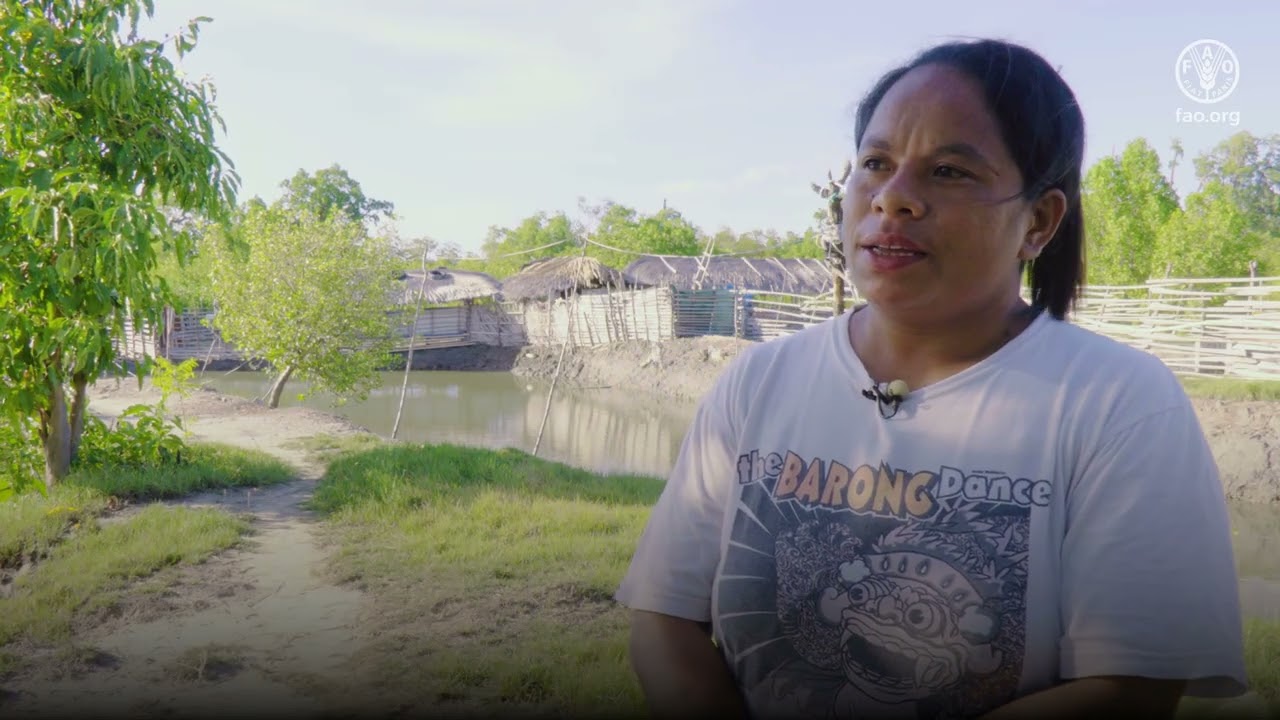
Celebrating Women Farmers. Mangrove Managers of Timor-Leste’s Coastal Areas
Watch on YouTubeVideo summary
Mangroves serve as a critical frontline defense against climate change by storing significant amounts of blue carbon within ocean and coastal ecosystems. However, in Timor-Leste, these vital areas have suffered a drastic decline from 9,000 hectares to less than 1,300 hectares due to deforestation, overgrazing, and rising sea levels, placing local communities at severe risk. To combat this crisis, Bascoella dos Sananto Silva has emerged as a leader within the Groupu Habilong IAPA, a women-led farmer cooperative dedicated to advancing community stewardship of these coastal environments through active planting and restoration efforts.
The importance of mangrove conservation is underscored by the fact that 60% of Timor-Leste's households live along the coast and depend on small-scale fishing for their livelihoods. Since mangroves act as essential breeding grounds for fish, their destruction has forced fishermen to travel much farther from shore in search of a catch, threatening food security. Through targeted community restoration projects, aquatic food sources are returning to these waters, while the Food and Agriculture Organization of the United Nations supports these efforts by establishing learning centers that share technical skills in mangrove management, seedling production, and nursery systems using biodegradable pots.
Beyond simple restoration, the cooperative has successfully revived 14 hectares of mangrove forest and launched livelihood projects that link conservation with income generation through agriculture and eco-tourism initiatives. The group operates a nursery to cultivate seedlings for replanting while also selling harvested fish and crabs, creating sustainable economic opportunities for local families. This holistic approach not only rebuilds damaged ecosystems but also empowers women like Bascoella to set a powerful example of successful restoration that can serve as a model for villages across the nation.
Inspired by these women leaders, young people such as Anna are joining the movement to protect their environment, with Anna using her skills as a teacher to educate students on coastal conservation. She brings students directly to the mangroves to demonstrate protection methods, gaining personal growth through collaboration and exposure to community activities that benefit both the group and nature. As women like Bascoella continue to share their experiences and knowledge, more coastal communities are expected to flourish, ensuring the preservation of these precious ecosystems for future generations.
Read the full video transcript
Mangroves are the frontline defense
against climate change and store what is
known as blue carbon. Carbon dioxide
captured and stored by ocean and coastal
ecosystems.
In Tim, mangrove areas once covered
9,000 hectares, but have drastically
declined to less than 1,300 hectares.
Deforestation and overg grazing
compounded by rising sea levels are
placing coastal communities at risk.
Bascoella dos Sananto Silva is working
to change that. As a leader of Groupu
Habilong IAPA, a women-led farmer
cooperative advancing community
stewardship of coastal ecosystems,
she and other women in this village are
planting new mangroves and revitalizing
damaged areas.
60% of Teimor's households live along
coastal areas and rely on smallcale
fishing.
Mangroves are vital breeding grounds for
fish, but their destruction forces
fisher folk to travel farther from shore
in search of a catch. Today, community
restoration efforts have resulted in the
return of aquatic food sources.
The Food and Agriculture Organization of
the United Nations or FAO established
mangrove and coastal resilience learning
centers.
Here technical skills are shared for
mangrove management and to support
ecosystem restoration and conservation
including seedling production, nursery
systems and biodegradable palm leaf
nursery pots
in partnership with the government of
Tim. Pilot initiatives in agriculture,
agriculture and ecoourism are creating
livelihood opportunities while linking
conservation with income generation.
The cooperative has restored 14 hectares
of mangrove and initiated livelihood
projects. They manage a nursery to
cultivate seedlings for planting
mangrove and sell fish and crab they
harvest.
foreign.
Thank you.
for
Anna joined her parents to plant
mangroves. and was inspired by the women
leaders in the cooperative.
She aims to use her skills as a teacher
to educate young people about the
importance of coastal conservation.
>> I can bring the students here and
explaining how to protect our mangroves.
It's really provide me uh extra
experiences which has helped my personal
growth as a youth because I'm not only
teaching but also I uh get exposed to
these kind of activities and
collaborating with this community for a
vision that not only benefit the group
but also for the nature
Women like Bascoella are setting an
example of successful mangrove
restoration that can serve as a model
for villages across Timolstee.
As they continue to share their
conservation experience, more coastal
communities and precious ecosystems will
flourish.