CEFISES Seminar: Caterina Schürch, “The art of cherry-picking: Integrating hist. and phil. analyses”
Watch on YouTubeVideo summary
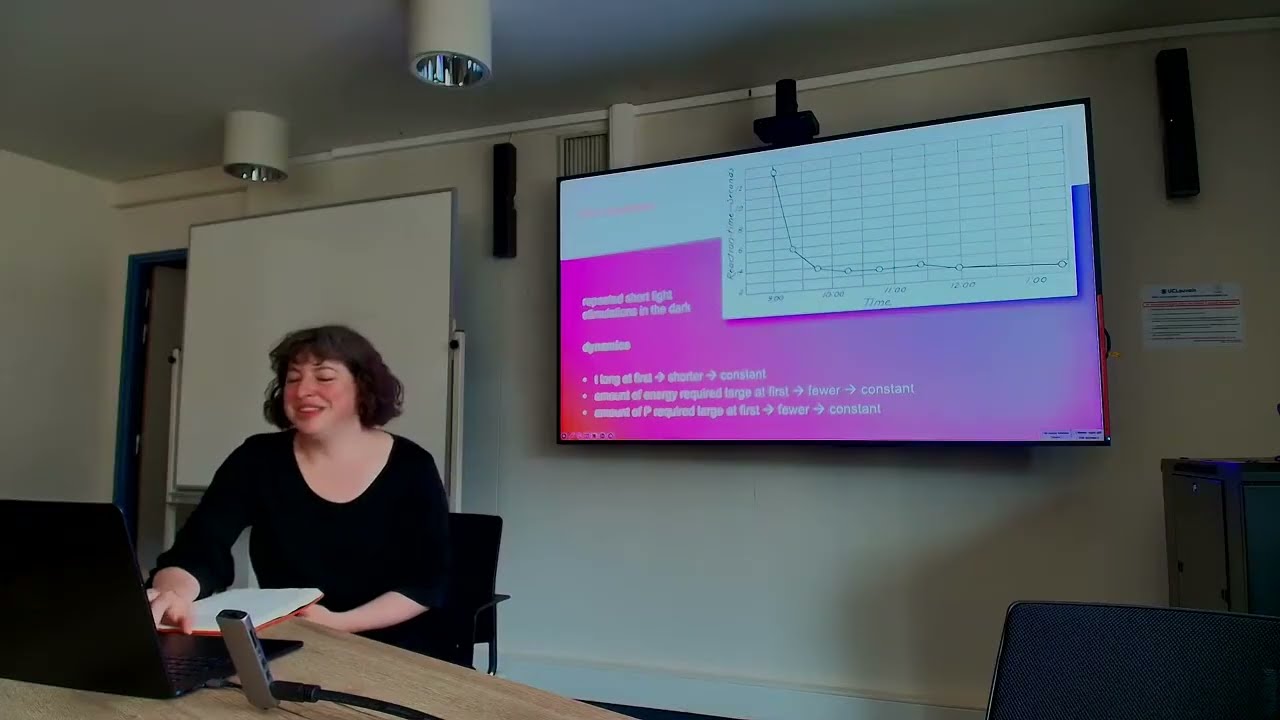
Caterina Schürch challenges the frequent criticism that historians of science merely cherry-pick philosophical concepts to support pre-existing narratives, proposing instead a constructive approach where philosophy serves as a blueprint for designing historical inquiries. Drawing on her doctoral research regarding interdisciplinary collaborations between biology and chemistry in the 1920s and 30s, she demonstrates how specific frameworks, particularly mechanism theory, guided the identification of relevant episodes and the interpretation of data. Through three primary examples, she illustrates this synergy: a physiologist applying the Law of Bunsen-Roscoe to sea animal light reactions to prove chemical conversion over psychological adaptation; botanists and chemists collaborating where the former needed chemical substances for bioassays while the latter required living systems to isolate hormones like auxin; and a biochemist bridging genetics and chemistry by linking phenotypic color differences to specific anthocyanin structures.
Schürch further elaborates on her methodological choices, explaining that utilizing entities and activities from New Mechanism philosophy was a pragmatic decision tailored to her specific cases, though she acknowledges limitations when dealing with passive processes like osmosis. She presents a fourth case study of a failed collaboration in Prague focused on electricity in biology to highlight that successful interdisciplinary work relies on pre-existing conceptual links or interfield theories; without these shared theoretical foundations, enthusiasm alone cannot sustain productive cooperation. This perspective contrasts with the philosophy of science discipline's typical top-down approach that begins with idealized end goals, offering instead a bottom-up view where historical actors worked pragmatically based on available skills and resources rather than pure curiosity or abstract theory.
The relationship between history and philosophy is framed as a cyclical process in which philosophers develop concepts for specific fields like neurobiology, which are then tested against diverse historical contexts such as early 20th-century plant and hormone research. Schürch argues against the notion that molecular biology was solely about genetics, asserting that earlier work on vitamins and hormones also constituted mechanistic thinking. By mapping philosophical concepts onto historical practices, she shows how these frameworks provide essential standards for experimental design, methodological norms such as objectivity and quantification, and criteria for evaluating success, including awards and Nobel nominations.
Ultimately, Schürch concludes that historians must engage with normative standards because the actors of the past were themselves guided by them, allowing for an evaluation of scientific success or failure based on contemporary standards rather than modern ones. This reciprocal engagement enables philosophers to identify the norms that shaped historical practices while providing historians with the tools to filter out less pertinent details, such as specific religious beliefs, in favor of skills and resources that drove actual scientific progress. By integrating these philosophical analyses, she reveals how interdisciplinary collaborations were fundamentally driven by logical interdependencies between problems and resources across different disciplines, transforming the study of history into a more rigorous and insightful discipline.
Read the full video transcript
Okay, great. Thank you for for being
here. Welcome to the uh second to last
HPS series that we found this year as I
um and today we have uh Katina.
Uh I said that right.
Um so thank you for being here. Um
uh so yeah going to talk about a problem
that I think is is very classic in in in
discussions about how to integrate or
not integrate history and philosophy of
science. um which is the the acquisition
I think that's mostly historians say of
philosophers right that that that they
are cherry picking and uh and um yeah so
so um and I think here presented in a
much more positive light um think about
how we should do uh we could do chair
picking uh yeah so the next
>> thank you so much N and for inviting me
it has been very productive for to um
come up with ideas for this talk. Um
they could not all be implemented in
what I'm going to show you. It is not as
polished as I wish it to be, but um I'm
super happy about being here. I'm very
thankful for you joining um in um and
yeah I'm super glad to present not only
um some research that is um was my um
PhD research um
but also my thoughts about how I work
and um it's been good to to to take a
step back and to to think about that for
a moment again after I did it I think
more when I did um still study the
history of science and history of um and
philosophy of science. Then there was a
more active occasion with this with
these topics and then I somehow
ended up um after doing a bachelor um of
science in history and philosophy of
science I ended up in a history
department still working on still being
a philosophy philosophic minded um
historian of science and so today I'm
speaking to you as a historian um being
appointed as a historian of science um
and technical university in Berlin
But of course still interested in in
these philosophical issues. Um and um
I'm super glad for talking to you about
that. Um
and cherrypicking was the um the
metaphor that I wanted to start with and
maybe hopefully come back to in the end.
Um my idea is that I'm going to talk
about doing HBS um as you um probably
want me to giving the title of the
colloquium
and then talk about the challenges that
come with it. Uh but mostly present you
my approach, how I um did it and want to
do it in the future, the opportunities I
see. Um
and the plan for the talk is as follows.
um need to and a bit on myself to think
about why
do we integrate disciplines and how
what is my particular approach?
What can be said about that? um apart
from my particular approach about doing
H3S in general um and what can be new
avenues for me myself but also maybe for
the fields and community for um of HBS.
I try to do a like a parallel narrative
of integrating biology and chemistry
which was the topic um of my PhD. Um, so
I analyzed how biologists and chemists
came to work together, but also I tried
to use this now as a a springboard for
you to talk about how to integrate
history philosophy. Um, so it will be
maybe a bit an annoying switching
between the actual work and the meta.
Um,
yeah. So
yeah, I just want to warn you in advance
and maybe it's a bad idea to do it like
that, but I myself found it fun in
preparing it.
Um
just to give a bit of a background
motivation for what is good to come. Um
you probably know the um society of
integrated HS and their mission
statement. Um it is
um looking at follows and I want to
highlight a couple of points. Um the
claim that one can effectively advance
history, science and philosophy of
science simultaneously is one of the
core assumptions of HBS and something
that has been disputed and denied um
often.
The claim that there is a common goal um
which is understanding science and then
of course a big question is what is the
science that we are talking about? Um
what is this exactly? Is it something
really abstract um that maybe has never
taken place in history or is it
needs it to be um something that that
has um been done and then maybe not
fulfilled all the criteria that we
wanted science to be. So there's a bit
of bit of attention there and I think
much of the debate about HS about what
is the experimental what are we really
interested in understanding
and then the um
the idea that we
have to do good history of science and
good philosophy of science when we do
HPS. So we still have to adhere to all
the standards of the disciplines.
Um and this has been one entry point for
the criticism um to say it's impossible
to when we do history then we leave
whatever philosophers want us to do um
and vice versa because as a historian
you need to grant everything you say in
sources. You have to be really sensitive
to the context. Um it's always local.
It's always um about local time and
space um it's always particular
and as a philosopher you want to be
clear and simple and abstract and maybe
universal in your statements. Um so that
has been um identified as attention. So
just let's keep that in the um back of
the mind and maybe what I say during the
talk can then be used to come back to
this um these claims and um will help me
to
um to to feed my my take on that.
Back to doing HPS and its challenges.
One thing I want to suggest um is that
oh something I I decided for me to do at
some point is not to care so much about
all the things that could go wrong when
doing HBS and to really concentrate on
all the risk that we take but more focus
on
if we want to do it how can we do it in
a good way. um how can we even think
about how to what should what does the
discipline need or the group of people
need um
in order to do it um in a good way. So
rather look uh for the opportunities and
not so much um just destroy ourselves by
only focusing on the challenges because
it's not a it's not um maybe a
coincidence that HBS scholars have been
so willing to engage in these debates
about their own method but maybe it um
yeah for my taste it was um we were
stuck a bit um in these debates whereas
um it would be more interesting to think
about the constructive side.
Um,
so the big question for me is how can we
use our historical and philosophical
resources and skills most effectively?
And if we want to combine them, how does
philosophy help me as a historian to do
my work? and how can what I do help
philosophers
and what is and what shall we do um but
let's get started
and now I leave this meta
methodological discourse and I will
present you with a case study um and we
go back to the question why integrating
disciplines and I in this case that I
looked at um half people in the
um area between the wars in the 1920s
and 1930s
decided to work on problems that needed
chemistry and philosoph and embiology to
be solved
and the answer I found
is that they did it in order to solve
their problems. Um and in one of the
cases um that I I'm going to start with
it was a problem um in physiology in
sensory physiology um that was solved um
by using skills and resources from
physical chemistry.
The person um who did that was D um
who studied physics and chemistry in his
undergraduate um training. Um and then
he went on to do a PhD in zoolology at
Harvard.
um and his whole career built on
experiments that he performed in the
year of n of 1917 um in La Hoya at the
scripts um marine biological institution
and he worked with Siona intestinalis
that's um an invertebrate animal but um
cesile in one of its life stages
and the um important thing about Sona
testalis for hex project was that these
animals are sensitive to light. They
would not be able to differentiate
between different colors. But if um
confronted with a sudden um
illumination, sudden beam of light, they
would retract their siphons. So just um
pull them back
and used um I told you things um from
physical chemistry um especially the
part called photochemistry
in order to solve the problem of what it
is um that happens in the sensory cells
of these animals um before the nerve um
impulse then is checked.
And um looking back to his career, he
commented here then in this um two
books, one by Shepher published in 1914
and one by Fitz Vot Germanist
in 1911 was knowledge which could be
drawn on for an understanding of the
nature of vision and photo reception. So
the idea is we have knowledge from
another field um and we can use it to uh
achieve the goal that we want to
achieve.
which is a goal from another discipline
here, physiology.
And I worked out in my thesis how
exactly this knowledge was helpful. Um,
and it was in terms of guiding hect how
to design his experiments. Um, from how
to manipulate um his study object to
what to measure and how to interpret his
data.
for all these um parts photochemistry
was instrumental
and I'll just give you a a quick
impression um of this very um first
experiment
which
went as follows. Um Hec
had um 10 different animals um that he
collected the day before. um the animals
would be still alive and they would be
um um light would be applied to them and
the light would um vary in its um
intensity. So we have six different
intensities of light here. Um
the way he varied intensity is just to
you would have the animal in this little
dish below have the master lamp here and
then you would change the distance of
the lamp um to the animal and this is
how you um have a more intense um beam
of light at stage six and a less intense
one at one.
So here we have these different um
values of intensity of light.
10 different animals. Every animal has
been um subjected to each intensity
three times. and he would measure the
time it took the animal to retract the
siphon because he found out in prior
experiments that this um reaction time
was consistent for a given intensity
and for an animal
more or less. Um so it's he had hopes
for this to be um an important data
point. So, how long does it take for the
animal at different intensities to react
to the light?
And he found that the more intense the
light was, the quicker the reaction was.
Um, and this
he knew is one of the Oh, well, it's
it's the basic idea of the law of
Bansome and Rasco. So, we had um come
back to that. We see in his notebook
that this is the law that he formulated
in his nose. This is how he um
calculated these numbers here in the
table.
And there was um photochemistry as a
field that started in the um 1860s. So
way before it had to do with the um the
chemical reactions on a photographic
plate. So the the chemical effect that
Bonen and Rosco were talking about was
to the blackening of a photosensitive
um
paper or um
and
yeah they formulated the the law that it
takes a a fixed um
amount of energy to elicit a
photochemical effect and energy is the
product of time and intensity. So you
can um either have more stronger
intensity and a shorter time of
exposition or a longer time of
exposition and um less intensity but the
product would be the same and you would
get an effect.
So Hec found that his animals would show
their behavior of a photographic plate
in a sense. Um they would show a
particular reaction um which is the
refraction of the siphon um that obeys
this law. And he argues that this means
that the amount of energy required by
soma the animal for reaction is the same
for all intensities. this is the
familiar phenomenon in the chemical
effect of light
and that has some interesting um
consequences.
He argues then in terms of the processes
that go on in the sense organs, the
applicability of the repres
means that during the sensitation
period, the light must form a constant
quantity of a substance before it can
produce its stimulating effect. Idea
being that something goes on in the
sensory organs. We don't know what, but
at the end of that process, there's um a
nerve stimulation.
Apparently, it takes some time for this
process to um run.
And his um
the consequence he draws from the fact
that the law of Androsco applied to
these animals and the reaction is that
undoubtedly this involves the conversion
of a photosensitive substance into
something else. which acts then as an
inner stimulus. Many such photosensitive
substances are well known and have been
studied with considerable care.
So from
knowing that these animals react to
light but not knowing why and how what
happens on a on a chemical level, he
found
evidence um for the thesis that there's
a conversion that happens because of the
chemical action of light on a
photochemical substance into a
nonphotochemical substance. maybe
something else happens but then the
nerve um trigger
is instantiated.
And then he went on and um a further uh
set of experiments
was designed in a way that he would um
expose the animals to short intervals of
light um after they were brought in the
dark. And he would see that they would a
colloquial way of saying is this is that
they adapt to the light they get more
sensitive. So whereas it takes a long
time in the beginning for them to react
the longer they spent in the dark um the
shorter is the reaction time.
Um
this
dynamics of the reaction time we said
can be translated in the fact that less
and less energy um is required every
time and that on a material basis less
and less of the substance P is required
um in order to get the effect
this I don't know how mindblowing it
seems to you um it was in many ways It
was in the time and in many ways it was
not because how was it not in the sense
that it was an idea that has been around
for the longest time. As soon as
photography um was developed, there were
um hypotheses that this is how vision
works.
And as soon as photochemistry was
developed in the 1860s, it was also
clear to many photochemists and to many
physiologists that probably this would
be helpful to study vision.
Um but then nothing happened for a very
long time. So everyone thought this is a
really um obvious idea
but no one was able to really prove it,
to show it, to investigate it. um
mostly because it was really hard to get
um to isolate the the pigment um
responsible for for light vision.
And then Hector's idea was to say, well,
I don't need to isolate the substance. I
don't need to monitor its behavior and
check whether it follows the behavior
that we know um so well from the
photochemical substances that we have
studied um elsewhere. It um
in non-living um systems.
This is pretty cool, but it's even
cooler um
or this just um something I wanted to
mention. So um of course you need um a
little bit of additional hypothesis for
this experiment to work. You need to for
example think that the nerve simulation
and muscle contraction that takes um
next to no time. So that you can take
the whole re light reaction time um as a
proxy for the time used for light
perception also. and we will see um how
important they are. He found these
animals that he could use for the
experiments. Um animals that are slow
enough in their reaction that you can
really follow. Um the time it took them
to react um animals that did not have
any psychological apparatus, any optical
apparatus that um as vertebrates would
have. um
animals that would just allow access to
studying the photo receptive um
mechanism.
But what is astonishing is that
exactly at the same time or here and
four years earlier
a physicist had the same idea and he had
really he he had the same idea of how to
use the dynamics um of the reaction
to prove that this is a photochemical um
process. um but he wasn't able to do any
experiments um because he did not have
access to these experimental animals or
the idea that these particular animals
could be used for that kind of
experiment.
There's another um
actor it's um a physiologist this time
August Pa in the same year as hect um
published the same idea um that sensory
processes probably um
are these um reversible chemical
reactions and he also provided an idea
how to analyze that mathematically. also
said that he would not be able to um
really do the maths but he um had help
from his um friend.
Um and then there were people like um
to Kashua
who did this exact same experiments as
as he did with um the repeated
applications of light beams.
and they would just say, "Well, what we
see here is an animal that gets used to
light and so it is quicker and quicker
in responding."
And Hector would say um about this
explanation is not a good explanation
because it gives us no insight into what
really happens um in the system. And
these kinds of experiments about dark
adaptation and how eyes get more
sensitive the longer they are um in the
dark, they have been around um for
decades that has been a really um hot
topic in physiology um throughout. And
the way these data were presented is to
give the tables of how much more
sensitive um the study object became.
And he criticizes that this sensitivity
and simplified says nothing. Um
it just gives us the minimum intensity
that is necessary to elicit a reaction.
about it. We we are not um we not do not
know more about what happens in the
system and rather he would interpret it
in the way we saw um saying that well we
need less of a particular substance to
get the reaction.
Um
and this is what in Heft's case um
photochemistry this knowledge. So sorry
that was a bit of a long excurs but this
knowledge really brought um so it was a
key ingredient for him to know this is
how I should design my experiment. This
is how I can use my experiment to um
come up with a a model of the mechanism
of photo reception.
And just to give you an impression of
how extensive that input was, um we have
I have here in um
these titles just the titles of the
little book by Vot of what he discusses
and we can see that directly it was a
direct blueprint for hect of what to
study in his experiments in the day in
the years that followed. So he had
papers on every of these relations that
um Vet discusses for um photochemical
reactions in in vitro.
Um so we can just um go through this and
one of the important factors for example
has been temperature.
um Hector then and the next year um used
another experimental animal which was
this clum that I showed you before that
also has the same same reaction of
retracting the siphon here.
And he would um heat the water the clown
was in um with it in alcohol lamp and
then see whether in fact the part of the
reaction time that is the sensitization
period is running faster or stays the
same um depending on the temperature of
the water and he found it is invariant
to temperature changes which we know um
is the case for photochemical reactions.
So another um good hint that this could
be um a photochemical reaction going on.
So, and with that I want to step back
again and say could we maybe think about
the relation of philosophy and history
in a similar way that photochemistry was
for Hec um and his project in
physiology.
in that in my case
the literature on um the search
mechanisms was important
to design my work with the case studies.
So everything that that I would read
about um the new mechanism
literature um gave me hints of what I
needed to look for in my historical
cases and um in a way similar to to
hacked. Of course I did not perform any
experiments um but it would give me an
idea of how to choose the historical
episodes that I'm going to focus on. um
what really to do with them and give me
an idea of how I could interpret um what
I found.
And let me spell this out a bit. Um
and just at the same time also say for a
moment that
we can
but for me it is I I can formulate the
goal of the project in purely historical
terms. So what I want to understand is
why biological chemical research
projects were initiated in the 1920s and
30s. And that question alone does not
necessarily imply that um I need um the
the philosophy about mechanisms to
answer that question. Um but why and now
it's it's the cherry picking in the
other way around. So why would I as
Dorian pick the cherry of the um new
mechanism philosophy and not maybe
something else? Um,
and what it made for me was um the fact
that from maybe you're all too familiar
with that, so I don't really need to um
say anything about it, but
>> not.
>> Yeah. Um,
>> don't be shy.
So uh it starts off with a
characterization of what an mechanism is
namely entities and activities organized
in a way that the phenomenon we're
interested in um is produced.
And then the the what made it appealing
to me is that from there the there were
plays about research practice. Um for
example about what is the goal of
biological research. goal is to find
mechanisms or to discover mechanisms and
for that you need to find entities and
activities and attach activities to
entities and vice versa and find out
about the organization and
think about what is the start point and
the end point and so on. So it gives us
ideas of what biologist biologists
really want to achieve. Um it gives us
standards that need to be fulfilled. Um
I would not I need ideally a full
description of how one entity and its
activities lead to the other so that you
get from the start to the end um point.
And this is exactly what I what is
needed to explain um the phenomenon of
interests and so on.
people um writing about mechanisms have
then really described certain strategies
of how biologists would proceed to get
there. Um and they also argued that
the search for mechanisms typically is
an interdicciplinary
endeavor. So normally you do not do it
within one single discipline. Um one
quote um I have here is that the
integration of biology is forged by
building mechanism schemas that span
many different bridge across many
different time scales um and that
satisfy evidential constraints from many
areas of biology, chemistry and physics
too. So um in order to fulfill the goal
that you want to achieve, you typically
need the instruments, the skills, the
resources from different disciplines.
There is no particular um as far as I
know claim about how these um these
collaborations come into existence. Why
a chemist and a physicist would be
interested in cooperating with
biologists? These are open questions
which for me as a HPS scholar is nice
because then I can make the point maybe
there's something in history that could
be um informative and interesting for
philosophy. Um that was a starting
point. Um
there's also a claim by many of these um
authors that understand many of them
understand themselves as philosophers of
science in practice
that what they describe is really
informed by actual scientific practice
and historical practice. And some of
them said nothing in biology and the
history of biology makes sense um except
in light of mechanisms. Um so this
really the claim that that this should
help us understand the history of
biology.
So another um
in a way a clear signal for me why not
look for this and a potential
explanation for historical phenomena. So
if
um I can really prove that they were
trying to um discover mechanisms in the
way it is described in the philosophical
literature, I can explain why they um
for example combined chemistry and
biology. So I have like a blueprint for
my argument provided.
Um before I show you how I rationalize
this, um it was important for me,
um and also vice versa, my colleagues in
history to establish that there is
really is need for this explanation for
an explanation of
um why people collaborated and um mixed
with biology and chemistry.
Even though of course in history there
have been um ideas and thesis about how
cross-disiplinarity
um
became a thing in the 1920s and 30s.
They have argued for example we have um
just had the first world war and
especially in America um and how the war
effort was organized there now was a a
culture of collaboration. people were
used to do um collaborative project now
they um have
uh reasons to import into science as
well. Um, another
explanation that has been given is that
there was the Rockefeller Foundation and
um, it issued a program that was
especially um, tailored to support
biology that would use physics and
chemistry. Um, that was only done in um,
32. Um so a bit after the the um the
person we just looked at in the project
and he actually even wrote to a friend
of his own um they're they're really um
in intelligent to come up with uh that
idea but also they are travel um slow in
in maturing um coming to the conclusion
that it's good. Um but of course that's
an that's often um an argument brought
by historians. we have to look at the
financial structure, the incentives, the
the the the resources that are available
for a certain kind of research. And then
there was another line of explanation
which was um that there was a tendency
in biology at the time to distance
oneselves from descriptive biology, from
morphology. Um so everything that was
quantitative that was experimental
was uh seen as good and as something
that is progressive and um
something that brings you near to um to
physics and chemistry um gives you the
impression of biology being a science
but then still having all these
explanation
which I don't do not reject at all um I
argue that there's still not sufficient
to understand what exactly has been done
because then even if you um are forced
to work interdisiplinary as a biologist
for example to cooperate with the
chemist you have to come up with an idea
of what to do exactly and how you would
combine um
your problems and your your resources
and skills and I found um some some
historical
um some some evidence or some some pot
for this idea. I have for example Chapek
a plant physiologist who said it is well
known how important and how difficult it
is in physiology to select the right
point of the complex questions to be
investigated in which the lever of the
physical method has to be used first. So
you can be super okay with using physics
and chemistry but where and how exactly
is not easy to decide.
uh William Bis a physiologist from the
UK said although a student may have
attended good courses in the physical
sciences um he she does not readily
apply the knowledge to physiological
problems but it's because it's not
readily apparent how and looking from
the other side from biochemistry
Hopkins at some point said the regular
chemist has no aptitude for biological
problems and does not recognize them so
it's really hard also if a chemist would
think about what he could provide or she
to biology, they would not know what the
biologist's problems are. So finding a
fit between the skills and resources and
the problems of different um
disciplines, it's really really hard. I
would also say it's the main challenge
um for us as historians and philosophies
of science which is to preface this. But
um how did I proceed in my own work? I
had four different case studies and this
similar set of questions for all of
them. I started out by for all these
projects to just describe what they did
and for that I used um lab notes um
their publications letters they wrote um
just normal things you would use as a
historian um to establish that. Then I
specifically um worked out what they
wanted to achieve, what um kinds of
methological standards they were
emphasizing um what their particular
resources and skills were um at the
beginning of the the interdiciplinary
project. So what was in a way the
starting conditions of um these
projects?
Then um the most specific point of
analysis was what what kind of ideas did
the protagonist have about how things
that were part of the different
disciplines were connected? Um I can
show you in a moment what I mean. But
for example for heck it was the idea
that these photochemical reactions are
connected.
The photochemical reactions are the
things that connect photochemistry and
physiology because the photochemical
reactions happen in an animal. Um then
the fourth section had to do with um how
then it really took place. How was the
project implemented? What kind of
strategies were used? What were the
different steps? Um how did maybe goals
and standards and resources used um
change? what kinds of alliances on a
institutional and personal level um came
about and so forth. And then in the end,
how did the protagonists themselves and
how did the people around them in the
discipline evaluate um the results of
the projects.
We already saw um the example of the
cact
and the action of the animals. I had
another um project that or another case
study that was um concerned with two
groups um a group of botonist and group
of organic chemist in um
they have been the goal here was to
isolate the hormone that is responsible
for plant growth. Um
the botists at the outset of the
collaboration already have established
that there must be a chemical substance.
They did not how it looked like what its
characteristics um was and the chemist
came newly to interact and he wanted he
was really into the business of natural
substances chemistry. So finding
hormones, finding vitamins, finding um
these kinds of substances. Um but he and
he knew in order to find these
substances I need a biological system. I
need these kinds of reactions in order
to find it. Um and this is how they did
it. Um
let me So there was um they used little
um oat seedlings at the stage but um
where it was still a col. So now the
green leaf has not um broken through.
cut the um the top end
of these um seedlings because it was
clear that in the top end the substance
was produced and then apply candidate um
substances
of the hormone onto the seedling on just
one half of it and then see from the
curvature
um how enriched the substance already is
in the sample that they tried. So
um the today we will call that a bio
essay. The plant is is just used as an
indicator of whether you have the
substance um that you're interested in
or not. Um and then there is a third
case that I will explain uh later when I
have a better slide to it. And then I
had a a fourth case that I won't tell
you about anything at all, but it was a
case that was not successful in the way
that they didn't um achieve anything
that they themselves or their peers
around could see as breakthrough in the
understanding of biological re um
phenomena.
With my remaining time, I would just
give you very quick impressions of how I
looked for these um different things.
For example, how did I um try to
identify the goal um of CDC? Um I would
at one point resources like um research
applications were really applications
for funding were super helpful because
there you have to um state your goal and
you do it
um before the fact which is I found more
informative than the retrospective story
they gave. Um but at this time the
applications were not as um expensive as
they are now. Um so for Hector was
really um
uh in informative also just to look at
the publications and where he would
formulate what is the goal of his whole
project and he gives this um statement
at one point that finally to reach a
more less more or less um complete
statement of the physical chemical
nature of the substances and processes
that underly the photosensory responses
of an animal like MIA. That is the goal
of my work and that um if we compare
that to the expectation of uh the new
mechanists um that is I would say that
can be um
brought in uh yeah that that um
corresponds quite well. Um,
and then
the maybe the trickiest part was to find
out about their methodological standards
because I didn't want to rely on
their self presentation in like more
pmic um pieces. So I also looked in the
publications for the um for the ways in
which they specify what needed to be
achieved in order for the problem to be
solved in a satisfactory way. And here's
one um example when he says an analysis
of sensory simulation in order to be
objective. So objective is a um a norm
that he wants to fulfill must take its
data from the relations between the
properties of the stimulating agent and
those of the response of the animal.
Um it also needs to be quantitative. Um
so we need to be able to measure the
simulation but also the um the reaction
in quantitative terms and we need to of
course be able to control it. And then
um he in a German publication said the
end goal of the whole um business is to
understand the um stimulation process
in terms of the physical and chemical um
characteristics of the substances that
are the components of the organ um of um
concern.
So we have these things in the um in the
publications
and then even more beautifully I could
trace that back to his own education.
I found his lecture notes at Columbia
University where we see that for example
he
um at least he noted the fellow
bibliographical um details of an article
by be and
also from his um notes uh from the
lecture of his professor he really um
was taught that when we are thinking
about sensory processes we are does
required to know about um
>> also
>> possible environmental stimula. Exactly.
And we also the Parker who gave the
lecture followed the suggestion of um of
that we should define sensory processes
in terms of the stimuli.
Um so that's a really um good hint that
this is something that he learned to
care for and then did care for. Um,
another thing that he apparently um
cited in his book in his lab book was
this article by um a colleague of his
who said
the um
if we want to say something about the
mechanism of visual response,
we need to def um employ the definite
structural and quantitative concepts of
theoretical physics and chemistry and
then make dynamic arguments and so on
and so
So this is how I um
learned more or tried to work out the
the protagonists methodological
standards. Then I needed to work out the
resources and skills they deemed
important and um for that
I could um for example use uh things
they bought and the receipts. Um here is
a postto from the group um in that then
went to Ctech and founded his own group
working on the similar project and he
immediately
again um ordered the same kinds of um
research organisms um these seeds of a
particular line um bread in Sweden
or he builds um facilities where he
could control the temperature and the
humidity of the of the room, which was
um really important to control um the
environment for for his um experiments
to work. Um so this is how you would
learn about resources and skills. Um,
also another way and this is how it then
began to really click nicely with um how
I could
combine these kinds of analysis with
then things that we might want to
explain with which is um why did
here camps and biologists need to
collaborate in a project like this. um
we saw clearly that the chemist who came
to UK had an expectation that he needed
um biologists or physicians for this
kind of um work. And then on the other
hand, um, let me get you
again the
well doesn't really help. But then um
the botonists on the other hand they
were super happy to help the chemists to
find the hormone because it was clear
for them that the next step for for
their project is to have the hormone to
then know about it characteristics but
also to use it again in their own
physiological experiments to see how
exactly the hormones affects the plant.
Um that again was important for the
chemists to know because they wanted to
know why is the hormone working? what
are the characteristics of the hormone
that make it um
biologically active. So this is a really
nice way of how the different parties
had different goals but were
interdependent in a way that it was
clear that they could only achieve their
relative goals together and it was clear
because of this logical structure of the
interdependence that the botonists
wanted were ready to help um with all
the resources that they had. So that was
one year of um all of the manpower they
had to just do this experiments um in
order to find the hormone and then it
was clear for Kir the chemist to give
them half of the substances that he
found. um um so really helps to to
understand also the social dynamics um
of the projects
and then
I told you I was looking for the
interview theories or what what is this
called in literature um but that is this
this these ideas of how things studied
in different disciplines are in fact
connected and here is now um this other
case study where
um a biochemist that was at the same
time a geneticist um in William Bates's
group but also worked in Fred and
Hopkins um biochemistry lab realized
that for a particular set of um pigments
the anthocyanins
these were pigments that in organic
chemistry were um isolated and
characterized and in genetics These were
the kinds of pigments that were
responsible for the colors that you
would trace um chemically in the
European Union um experiments. So she
realized here we have a very um
good opportunity to combine the two to
learn in fact about um how exactly team
act and how exactly um the these um
pigments are
um are produced in the plant. So she
said the biochemical interpretation of
factors or genetic factors for color is
part of a greater problem namely the
origin of anticoning in the plant.
Um there were two opposing um ideas
about that. I don't have to go into
detail but then
just to give you an impression of the
project of how it developed um it was
her PhD student Rose Scott Montre who
was a bio a biochemist
she was able to isolate these kinds of
um pigments from plants.
Then there was the group of Bateson at
the John Inis um center that was um
occupied with finding or with coming up
with hypotheses of the genetic factors
underlying um these uh patterns of
flowers. And then there was other groups
um one in Oxford by led by Robert
Robinson, a very famous organic chemist
at the time that tried to synthesize
um these
pigments.
And in this project, Scott Montre had
like a key skill which was the the
ability to extract um these um these
pigments because that was then helpful
for both parties um
to advance their own research. For the
chemists, it was really good to have a
proof that what they have synthesized is
in fact um the natural occurring
pigment.
For the geneticists, it was really good
to know what they have characterized as
a phenotypic difference is in fact a
phenotypic difference also on the
chemical level and that sometimes
similar um pigments would um produce a
similar shade in color. So that was a
source of imprecision in the um genetic
project. So that could be helped with.
But then um for for these reasons both
parties were really happy to collaborate
with Scott Montre. She in fact had
another plan um following her teacher
Mslow in fact of with um Jane
to say well this is our key to
understand what the gene actually does.
Um so if we know um in a specific case
that we have between two plants only one
genetic factor that is a difference and
we have from the pigments that we
isolated out of these plants only one
methylation factor that is a difference.
We know that this um genetic factor is
responsible for this um change in the um
chemical structure. So that was a
that breakthrough um in chemical
genetics and explains again why from the
beginning people were happy um from both
sides to collaborate with this third
person and this third person could do
could pursue the project that she wanted
to pursue even though from the beginning
not both of the um other um parties were
really on board because they were not
expecting it to work but it did in the
end. Um but yeah, he again you see how a
particular skill
was um a key for a decision for a
certain collaboration to to came into
being. And then how did I assess um how
people evaluated these um projects? We
can see whether for example in the case
of Kiral his fellow chemists were happy
with what he did.
They gave him medals and awards and
nominated him for the Nobel Prize. Bent
the physiologist also got nominated and
Kenneth Steven um another um
biologist um started out as a chemist.
He um got the Kenneth the Steven Hayes
prize. Um so when the the fields abroad
in crisis that was a clear indication
that they were happy and um if if the
protagonist themselves were happy. For
example here Demon and Bent wrote in
their first book publication of the
project that few fields can have
benefited so much from the close
interaction between biological and
chemical approaches and the remarkable
discoveries um of the chemical site have
made possible equally remarkable
progress in physiology.
This is a very quick run through through
what I did. Can I take five more minutes
to then
still improve? So this is how in the end
it was really
in my view an effective use of um
philosophy because many of the
um predictions um made by the
philosophers really um
were descriptions of things I found um
in history and then would help me to at
the same time explain by
um the chemist was happy to work with
the biohysicist
or the biochemist um but also why
exactly um
a certain strategy was employed or why
at some point one of the parties lost
interest. So it really made sense. I
think I have new um
inputs for the history of for philosophy
of biology about why the the chemist in
the the chemists in this um case were
interested in collaborating because they
had um goals that they could not achieve
without um the biological systems and
the skills of how to to to manipulate
these systems. um I could show um that
there were certain um constellations of
interdependencies between problems and
resources that would reflect on how the
research was um organized socially. So
we have for example this um case where
silic alone was able to integrate
everything because he had this
background knowledge in physics and
chemistry because the chemical the
photochemical work was already done
independently um and he had an idea of
how
um to to combine the two but he didn't
need to collaborate with anyone um then
we have um this case of coordinator the
biochemist
who had um offerings for both parties
who needed um input from both parties
and then um brought together these um
inputs in her own work. And we have this
case of a a really collaboration on um
equal terms where both parties from the
outset were really clear about that they
needed each other and that
um uh yeah they could not pursue the
goals that were really central to their
own discipline without um the skills and
expertise of uh and the resources from
the other project.
So that was really nice and neat. Um
and that so maybe here's the point where
I can um
talk about the cherry picking on the
other um way around.
So once I began to of course that was
not planned in advance and you cannot
really do a historical work but once I
it became clear to me that these are the
structures that I will be able to show.
It was also clear that maybe now these
are good um cases to compare to each
other and that um also with the with the
fourth case of the failure that I could
make the points that I want to make on a
more general level on the basis of these
three um case studies because they were
different and interesting ways. So it
gave me in a way an idea of now I'm
done. like I have done my homework.
Similarly um with another point that I
will come to um in a in a minute but on
the other way around this set of um
things I needed to do that was also
informed by the philosophy similarly
helped me to structure my work on the
historical case. It gave me um some
clear indications of what I need to
worry about and what not and that I
need not go into much details about for
example the the religious belief systems
of my protagonists because um
I would in so far as they would have
affected their goals and standards and
resources and skills it would have been
relevant but as long as I checked these
things out of my list I I would has
everything I need um to make the
argument. It also gave me in a way a
clear direction and focus of what to do.
Um and this is to come back to what I
said in the beginning how I think HDS
can help each other's discipline can
help us to to be effective and to know
what to do and maybe what not to care
about too much. Um I already said what
can I offer to the philosophers? um on
one hand an idea of why chemists and um
physicists would be interested in
searching for mechanisms or being part
of a a research endeavor that is looking
for mechanisms on the other hand I maybe
it's super apparent to you for me it
really helps to realize one thing
which is that the way the philosophers
um formulate their expectations about um
research practice
is
top down or um from the end result back
to the beginning in a way that they
first
characterize the end goal of the
endeavor which is the mechanism model
and from that um
develop what needs to be done which is
to develop test and revise a model um
and what kind of skills and resources
are needed. So this is thinking from the
the product back to how we get there.
Um whereas
if I want to tell the story as a
historian
is important to to start with resources
and skills or maybe formulate it in
another way. It is not for any of these
cases that people decided oh I want to
learn about vision or oh I want to learn
about plant growth. It was not
curiositydriven
decision to work on a particular mech
mechanism but it was a pragmatic
decision. It was um
built on the idea of what do I have?
What is um what are my skills? What are
my resources? Um this silic already did
his PhD work on assistians.
um the lab of state of of um Fitz
already worked on these color trials for
for 10 years. Similarly, the the
projects on the genetics of um flower
color went on for for 20 years by then
and the um the organic chemistry. So
these are all established
um sets of skills and resources that
have a history and they're starting from
these um grounds that people thought
about the the problems that they um were
that I decided to attack next.
So now we can think about what is that a
problem for philosophy?
Does not need to be. Um it can just be
the the different things you're
interested in. Of course the it's not
the the problem of the philosopher to
explain why this particular person in
that point of time um decided to do this
and that next. Still, it was important
for me to realize that we maybe that's
still an like something that is a result
of
um logical positivism and our um
fixation with with um
just sentences that we are interested in
the the formulation of the model and
that is um how we analyze research
practice and we're not really um taking
the the stance of the the actor Um, but
it could it could be an
just an an input to think about that if
if we if that's fine for us as
philosophers to do it that way or what
it would mean to develop a philosophy of
science in practice that um takes the
other stance.
I think that's enough for today other
things but um this is how I want to
close. I think um yeah
um okay
>> water
break water
Okay. Nice. Thank you for for for this
talk. Uh um yeah question. special but I
want to
>> okay now um
you said that you use as the new
mechanics you use entities and entities
and activities so therefore it's the my
camera
>> I'm closer to vector but
>> yeah that's that's that's my question
because why did you choose this one this
one of mechanism because activities is
not always obvious in your case.
>> Yes,
>> in your cases in your cases study that
activity is the right way to understand
the mechanism.
>> Well, for example,
>> but just
>> on the other hand, on the other hand, I
can understand MDC these people they
wrote much more about the standard the
strategy the nesting of a mechanism
other tools that you use in other part
of your your work. So why why choose
this one?
Well, that was pretty pragmatic. I would
not see how the difference between
operations and activities would be
relevant for my level of analysis.
Activities were
really important in the case of act for
example because he did not um get a grip
on the substance for a long time but
could only tell about the
characterizations of the activities. How
long does it take to have a
photochemical conversion? How long does
a normal chemical conversion
reaction take place? Um, but of I just
maybe I was too pragmatic there, but I
just took the two definitions as being
um as overlapping for for
>> everything I needed. And then
decomposition and functional
decomposition. That's a thing that
vector really focuses on. They're pretty
close. But uh
>> that was important here.
>> My impression is that the activities
entities are works particularly well on
neurons and neuron mechanisms.
>> Yeah.
>> Less clear in genetic mechanism or in
biochemistical mechanism.
that case maybe operation
uh relation of parts interaction or
concept that seems that seems better but
depends of the cases of course.
>> Yeah. Yes. I mean I I'm open to that
could be a next problem to attack to say
is are there subtleties between these
two um takes that would um that I could
um say something productive about by
looking at these cases
um
yes it didn't strike me as
relevant not to problematize um these
things.
>> Yeah.
>> Yeah. But um I'm of course open to that.
Um yeah, I I took um
entities and activities and components
and their operations as more or less
numbers. Um and then also of course
>> on the other hand if you ask that you
know clearly they say it's has nothing
to do with operation. its activities was
chosen for a very specific reason.
>> Okay.
>> Cra would say that.
>> Yeah. Well, yeah. The the the um
chemists and the physiologists in the
homework case, they were talking about
activity and properties.
>> Interesting.
>> Um activity structure. That was the the
relationship that they talked about. Um,
and I would have to go to another
presentation to really get the the words
used by um these people. Um,
yes.
>> But speaking better your cases.
>> I just I just eclectically took from
both both strands of the um of the
But um I'm I'm open to to to discuss
that more and or to to take more care
into looking.
>> I have a followup regarding that which
is so I don't know so much about this
literature on new mechanism. Um but so
this notions of activities and entities
for you they work both as actors
categoryish
and analytic category sort of is that
those concepts are doing the work of
bridging between
uh your historical work and your
philosophical interpretation in a way.
So in a way everything um that is
mentioned
here is these are all connecting points
during the bridging. So is it
the way people
talk about the goal and the norms? Is it
about the way the way people talk about
what they do and what they need to do
it? M
>> these are all connecting points and then
I was of course not looking for the term
activities and entities
>> but if um he acted would say something
like I showed um
the substances and processes that was
fine for me to say I have something like
entities and activities
>> almost it's also the the structure of
the sentence already feels very close to
the
>> it is for Hec it's really it's laughable
how close it comes also when he talks
about what his measurements are in
relation to the target mechanism in the
animal and then that the interpretation
with so yeah
>> you could really if you would have to
invent a cherry to that um it could not
be done better.
>> Mhm.
>> Yeah.
>> Yeah. Thank you so much for your talk.
There's another following up. I don't
want to stick on this point but really
could be interesting
because another another critics for
entities and activities
uh is made by an article by ker and
marika 2018 I think I don't remember in
which they criticize for example
activities not all biological processes
fit it necessary theology or the meaning
that you can give to activity for
example there are some process in
biology passive osmosis etc
>> so I don't know if in your specific case
uh it could be interesting to check if
in all your logical processes that
you're interested in
>> or maybe not is it's a general it's not
for your case specific necessary. It's a
general
no remarks general observation.
>> Yes.
>> Because they they had a lot of problem
in biology
concerning the entities and activities
but it's still mechanism. So the main
point is
>> yes
>> you switch to mechanism. That's an
important point.
>> Yes. That's still like
But yeah,
the meaning they they provide some more
general less constra
notions. I don't remember which one but
but maybe it's not sorry to it's not
it's really only because I
>> Yes. I Yeah. So I didn't come across I
so I checked other um of course not only
these four cases um for
um whether I want to work on them and I
didn't come across others that did not
um have any activities in it but on the
other hand I would not um argue that
there are not these cases something I
can tell from this um group that didn't
um achieve anything in the end is that
in my analysis the problem was exactly
that they didn't have a link to field
theory in terms of either entities or
activities. But um so Verizon was always
clear. So for this project it was clear
on the outside photo
perception has somehow something to do
with chemicals
and photosensitive chemicals. For them
it was clear that hormone action and
growth. So the hormone there's something
about the hormone and that was the this
lock and key metaphor that was really um
what spread at the time probably
something about the structure of the
hormone that is important um for the way
it acts. Um so they were really
perplexed when they found out in fact
that that different um differently
structured chemicals would have the same
physiological action. That was a big
problem at some point but then they
found a way around it. Um
for them it was clear
whatever teens do they probably do
something on a genetic um level.
Um and it was established
that um well
it was clear that also somehow these
pigments in the plant must um be uh de
developed somehow. So for all these um
projects it was somehow clear what they
were suspecting to be the relation.
And for this project it was more about
well we assume that things that happen
in biology
are
has something to do with electricity.
And they had no clear idea of what kind
of phenomena they were interested in,
what kind of behavior of the system and
what kind of
electrical um process on on the on the
physical chemical level that they could
really then pursue and test and make
plausible. Um so that was just did the
lack of any ideas of what kind of
behavior and activities they were
concerned with. um even though they knew
it must be something that has to do with
electricity and the charge of the
particles um was the reason why they
didn't arrive anywhere.
So I found no I I could not say I'm
positive. Every every um biochemical
research um collaboration of the time
had um the goal of identifying some
particular activities involved in um
biological mechanism
but it for the ones that I looked at and
that worked it was an important part.
>> Thanks.
Yes.
Thank you very much for your talk. Um I
was curious about the uh the fourth
case, the the one you don't present. You
didn't present and I was curious whether
you can tell us something more about
that. But mostly for it's possible a
relevance
um concerning how it fits in your
perspective on sharp peaking.
Yeah.
>> Yeah.
>> Yeah. Thank you. Um
two words about the project. So it was
located in Prague. It was paid for by um
a publisher that was not a scientist, a
hobby scientist who was convinced that
electricity is all we need to know to
understand biology.
um
who was selling
half of the newspapers um in in Bohemia,
so was very rich, could hire a biologist
um Nickelborn to work for him. And he
had already collaborated with um
a physicist called Dan Hartford. And
Hartford was really happy to help out
biologists. He would um be happy to make
his instruments available to them to
help them develop some techniques to
identify the electric charge of dyes.
And these dice would be would have been
used to then um
livingly
died this these Daphnneia
um organisms and highlight certain
structures.
And then they thought well if we know
the electric charge of the dye we can
then um conclude the electric charge of
the the physiological structure and that
tells us something about the the
function of the structure. That was the
the main idea and they were super happy
that they were able to highlight um
certain functionally already um
recognizably
um
complete structures with um their dice
and then they just did not get to the
next step of what they now learn about
the fact that this um this part was was
highlighted. Um also it was always um in
a way it was too complicated because
they they would also know the exact um
well it was funny factors um figuring in
to to make this um this argument a
proper argument and then they did not
have a theoretical idea of what it could
mean. Um
and why was important for me to have
this case?
>> Yeah. So what kind of lesson can we draw
from this failure in the context of your
perspective on sharing?
>> Yeah. Oh yeah. So yeah. Um
so my point that I in the end
explicit here is that it is super hard
to pick cherries in a good way. Um it's
it's it's an art and for me these cases
were cherries to pick because they um
but different in interesting ways and
similar in interesting ways. So they um
are
all of them are
instance in when people try to bring
together the resources and skills from
physics or chemistry and biology.
Some of them were um done as a oneman
show, others have been done um in
groups. Um
so this um case gave me the idea that
you can happily collaborate as long as
you have um maybe some starting idea of
what you are after. Um but it it will
get tricky to um
to to to really interpret um
to to to to come up with an experimental
design and to interpret um um
if you don't have an interfery. If you
don't have an idea of what you're after,
an entry or an activity that connects to
a certain phys um biological phenomenon.
Um so you don't have an entry point. Um
so it in a way it made I think my
argument stronger to say these were um
for all of these cases um the interfield
theories for the other for the um
successful ones the interfield theories
have been formulated in advance have
been around um for a long time. So the
conceptual link king was not the the the
the most difficult part. The most
difficult part was really to
operationalize it and to find an
organism um on which you could then do
the experiment and to really have on all
the techniques um also did the um
synthesizing techniques, the isolating
techniques um the the microchemistry
that was needed in order to um to
isolate the chemicals
to get a foot into the mechanism. Um and
it
um
did not happen here and it could not
happen because there was no idea of what
the interfered relation would be other
than the really um the really sketchy um
uncomplete one.
So yeah, it was important for me to have
a case where I find part of what I want
to explain, part of the experiment,
which was in for a long time a happy
collaboration, but then one that did not
produce any results and then for me the
ability to be able to explain it was
reassuring.
Um,
>> thank you.
Um
maybe it's maybe it's a related question
but a sort of um so for me it's very
clear how the philosophical framework of
new mechanism although I don't
understand it but it clearly that how
that guided your your historical
research not just the choice of the case
studies but also the choice mostly right
because if I understand correctly new
mechanism is really about understanding
uh biological sciences and neuroscience.
So this uh those case studies also fit
those uh um and but my question is uh
sorry um
how whether your case studies sort of
push back in any way the theoretical
framework sort of saying well this
either because it doesn't fit completely
or or sort of ways in which um
>> yeah I don't know how to say it but
whether the the the historical we study
um sort of brought something new to the
philosophical framework that was not
there right because at the beginning you
started with this idea that um both
disciplines can thrive together and sort
of the the ideal HPS iss that both both
thrive together so this is a very clear
case of how philosophy can make history
thrive but maybe I didn't get it how how
is how is history making philosophy
thrive. Yeah.
>> Is it is it sort of saying well look at
this case studies this doesn't work like
for example this case that you talk
about systemism being
rather a passive so it cannot be
considered an activity.
>> Yeah.
>> Yeah. So one of it is um an indication
about the applicability of the concept.
um which is when you look in the new
mechanism literature and say well
biology is about um mechanisms and then
if someone tries to date it they would
say at least since the second part of
the 20th century and then I can say well
look here 1920s and 30s it was really a
natural thing um to think about in these
terms about um your goals and your
methods and what you need to do to
achieve it that's I think just a good
information for philosophers to have
that their concept can be applied to
these parts of um biological practice
and history.
Probably not all of it um but but there
has been um work along these lines in
the past. first. second um
an um answer to
well if we if we um assume that we need
all kinds of um skills and resources
in order to to get there. We need in
either have people who can can use these
skill these resources and have the
skills or we need to be able to bring
them on board and being interested in
biological mechanisms. And that is a
that is not something that new mechanism
explains why um chemistry and physicists
should be um interested in that. And I
can give um an answer to that that goes
um along the lines of well for um
is in a way a methological um answer.
These um chemists needed
knowledge about the behavior of the
overall system in order to to identify
the the entities often violate
activities they were interested in. Um
and they also when they wanted to
theorize about
how certain substances um were
synthesized in the organism or how they
act in the organism, why
what the characteristics these are all
important theoretical questions in
chemistry um they needed the biological
system and the biologists um to find
these answers. second point and then a
third point was really for me maybe it's
it's trivial and maybe it's not a
concern but still just to to realize how
much we in philosophy think from the end
result back on the research pro process
and not not the other way around
>> and it makes sense I mean you have a
goal you what you think you need to get
there but in reality if you would ask
don why was hacked
um studying the mechanism of fish. She
would say he was interested in
explaining vision. And I would say well
he was interested in doing good biology.
He thought hard about what he can do and
what he can do over the couple of weeks
that he has in the summers when he goes
to or um and so that was a constraint.
So it was clear he wanted he needed to
do something with marine um organisms.
He knew about physical chemistry. He had
mathematical skills. He knew no one else
in my um group of peers can do that. It
was a a safe and also a safe way to be
original
>> and um a good use of the specific skills
he had. So I think he would have been
similarly interested in smelling as
well. Um but the reason why he chose to
work on the mechanism of virtual
reception was has all to do with his um
contingent history
>> um of his static background and his um
resources and that's
>> um it's just it's not curiositydriven
project but then what can I what is my
range of actions that I can do pragmatic
opportunity driven project Um and so
that would be my
my remark also for the HBS community. So
let's talk about what we as historians
and philosophers can do what we what our
skills is what the contingent material
is. I mean it's it's really um
contingent that I have the love notes
effect and not of of someone else. But
this is why I chose him as a cherry
because it's a nice cherry that makes
that a good case. Um
nothing else. Um but I think with my um
work I can give you reasons why I chose
this particular um philosophical concept
and the particular historical cases and
it was not an easy decision you know
some somehow it was but finding the
cases and then really connecting
everything it wasn't easy so I say well
I I did of course cherrypick um but it
was work and it's not something um that
is bad but in I would um yeah my wish
for us would be to say well let's pick
pick cherries and pick pick the good
ones
>> um and really get into discussions on
what is it that we now work on what are
the problems that are interesting in
philosophical science what are the
problems in the um the resources we have
in history and then find out how it
could be
>> you had exceptions archive. You have
even these notes at university. This is
this is exceptional.
>> It's rare that we have so much so much
information
>> and it's easier in that time than it is
in the 18th century where I work from
now or it would be in reading recent
history because then everyone well if
you have access to your emails that's
fine.
>> Um but I would have letters I would have
his lab notes I would have his
applications. That was really
fun
>> that already also sort of guides the
kind of questions the kind of
philosophical framework that is relevant
because if
>> like for example I have some case
studies where I'm not I have to do a lot
of work to reconstruct what they were
doing
>> to even try to understand their their
theoretical concepts. So I have much
more stuff about their connection to
political parties. So it's much more
easy to go to a philosophical framework
that that talks more about that and
about the practices because I just don't
have access to that
>> also I mean there's a new mechanical
philosophy there's another philosophical
project which is to understand
collaboration which is to understand
interdisiplinarity um would say we need
empirical cases we need historical cases
um to to develop our philosophy of um
interdisiplinarity So I think this is
something I have to offer
but it's it's never I think maybe not
with philosophical and historical work
per se but it's also especially not with
HBS it's never the end
of a problem solution endeavor just but
maybe the next iteration of talking
about it but yeah to come back to to
what the the the feedback is to
philosophy I think is these three points
application explanation how the this is
social implementation in a way of um the
project and uh whether we really want to
um look re reconstruct the the research
practice um retrospectively and just to
be um
yeah just to know about that that we do
it
>> okay yeah
>> yes um I have a a couple of questions
regarding more the details of the cases
specifically about this he work. Uh so
you mentioned that when he was choosing
the model organism one of the concerns
was uh that it wouldn't be it would be
something simple without you know uh too
complex neurohysiology etc etc etc and
then you mentioned like that you also
worked on the plant photosensitivity but
was uh there already some preceding work
on plant photosensitivity and whether it
was like was it important to work on
animals or it was just his lab which was
doing animal physiology. So they
continue continuing to physiology.
>> Thank you so much. Um yes the um the
applicability of the law of transcope to
organisms was first shown in plants in
1910
um by a person in Vienna and also this
lab in. Um so that was clear and it was
one of the poster
achievements uh for the group of general
physiologists.
Um because then Chak Lulip who worked on
um invertebrates could also show it for
um for hydra um that they also have um
photochemical reactions. Chaklip of
course was really important for the
whole political um I mean disciplinary
politics um to um push for quantitative
experimental biology in the US and it
was a a great mentor for city
um it was
in that time at least people had also
the people in working but also l they
would say it's even the things we're
after are probably the same in plants
and animals. Um so we are interested in
these processes on a very general level.
So also that brings that is that makes
it important to work on really simple
animals. Um because then we have the
most direct access to these fundamental
processes.
Um and it was a for a heck of course I
think he was drawn to these
photochemical systems because he wanted
to associate himself with LI.
Importantly he went
one step further than Li whereas Li
would just tell hey look how great I
found a case where a a physical and
physical chemical law applies to a
biological process. Heck made use of
that finding and said, "Well, it tells
me something about the biological system
because I think it tells me that there
are certain substances that are part of
that system." Um, he he in a way he
filled that um finding with meaning and
he would be able to do so because he
knew more way more about physics and
chemistry than did.
>> But was he directly student of love or
no?
>> Okay. No, he was student of um Parker
and he um only met L um
after he did these experiments in La
Hoya.
Um Luke published um the journal uh Luke
uh edited the journal um for general
physiology which was the the the
platform where um H published his first
experiment here. Um and it was the
second issue of the journal being
founded and loop um yeah edited it
together with um Oster and that was the
the methodological um
impetus for for for having this
journalist to say we need to um promote
this kind of research that is
quantitative and experimental and takes
into account physical chemistry. So it
was a really nice fit and then um became
a mentor of um of um Hector had a
position in Omaha, Nebraska and and was
very unhappy there because he had no
persistent chemists to talk things over.
He had no access to libraries and so on
and then um L made sure that he would
get an fellowship by the general
education board and then was able to go
to theological station in Naples for
example. He also went to Cambridge. He
wanted to go to um work with autoborg
with Emilog first and also with ES4.
Some of the plants which he realized are
not but and eventually in like 10 years
later he got a position as a biohysicist
at Columbia University and Thomas from
Oakland who was also in the team with
Luke and Haj to um edit these um
books. the
the experimental biology monographs. Um
he was the one that brought um he who
made sure that there is a position for
heck in that.
So again a lot of social institutional
things happening that has to do with
methodological norms um and whether
people are able to fulfill them.
Can I point?
So, um, concerning the I'm going back to
the contribution that Max mentioned
concerning history, contribution of
history from from philosophy.
Um
you you I think you mention if I
understood correctly uh that um a
contribution from philosophy say look
look at this
case studies in which they already
thought in a mechanistic way. Now this
is I think contribution that you mention
is correct. Uh but maybe we can push a
bit this
um I would like to know what you think
about it because the new mechanis new
mechanism
uh the foundation was in in by the
article by m
2000
>> yeah can also say 74
we can also say offman even earlier but
No, because you you use nonetheless in
your presentation you use engines and
activities. So
>> yeah.
>> So and
>> in my oral presentation I didn't show it
explicitly on the but yeah
>> okay. No because for me it's interesting
because the context in which they
proposed the mechanistic
mechanistic explanation and definition
of mechanism was at the molecular level
using the neurotransmitter release. They
were very into molecular biology but in
your case you are you are kind of before
mole whatever biology kind of 10 years
before talking about 2020. So
could be even more interesting to say
it's kind of we have a mechanism
thinking before new mechanistic
philosophy because
>> no what do you think because it's before
so entities activities are referred to
molecular stuff to
molecular mechanisms or chon channel and
calcium etc But you're talking about
some thought before all this molecular
biology uh description. So what what do
you what do you think about about if you
don't know why because it's true that we
have to be we are to agree about the
start the foundation of the mechanism
philosophy so maybe this is but if we
think about
>> so I think that's maybe the cycle that I
mentioned okay these philosophical
concepts came from a study of the
practice of a particular practice which
was um for D and Crater of course um
neurobiology and molecular biology and
protein synthesis and so on. Um Makar
works also on right
>> what
>> he has is also early modern
>> yes yes he would
>> he's a the cat schol
before switching to philosoph so he
would not be confined to mole biology
probably he would also be happy to
defend that there was um mechanistic
thinking in the 18th century and before
um Bectal
used um work on vitamins in the 1930s
also when he developed um his framework.
So I think not from the beginning it was
not only neuro physiology and um protein
synthesis that was the the the
material that has been studied in order
to develop it. But of course all I would
say the the philosophers of science who
are thinking about scientific practice,
they always also have a particular um
field in mind or are best um versed in a
particular um field and then maybe what
they come up with is um influenced by
the the particularities of that
particular field. And then it's it's all
the more interesting to take such a
concept and take it into other contexts
and see whether they apply. Um and then
historically
many of the things that the people did
that I studied then would
then become what people later called um
molecular biology. Um it is a bit of a
retrospectic misconception that
molecular biology was always about
genetics and about um molecular
genetics. So these these vitamin and
hormone studies and how they act that
would also be counted as a molecular
biology in the um early 1940s for
example. So maybe it even helps us to
readjust a bit our um idea of Yeah. or
It just shows the prehistory of um
molecular biology and how natural it was
for these people to
I would say to think about activities
and therapies or components and
operations. Um
but of course that's that's one way why
I think
or and I put it another way the people
who both do
HBS are probably in my view the people
who are interested in research practice
and that could be the the philosophers
and that part of philosophy you really
want to understand what is going on in
science and that could be either by them
assessing science as it is now and maybe
using so logical methods or just their
impression um or they look at historical
episodes um and this is the the meeting
around. Um, and so there's in my view
always this necessary
cycle of developing something by
studying a particular field or a
particular phenomenon in science,
abstracting from it and come up with the
general philosophical idea and then take
it as we take models in the sciences and
try to apply them to somewhere else and
see what happens. And maybe there's
interesting feedback again for for the
for the
>> Yeah,
I have I follow up on this.
No, no, no.
>> Yeah, it's just a short follow up on
this topic. So, um you mentioned that uh
maybe I didn't just understand it that
there is this historaphical narrative
linking the origin of molecular biology
to the activity of the Rockefeller
Institute and Rockefeller Foundation.
The all this work is before that, right?
or or is it at least independent from
it?
>> Everything started before the
Rockefellers decided to um but some of
them of course got money and also the
Rockefellers foundation already paid in
20s for this general education
>> bought fellowships to send people um
>> and was it already this sort of physical
chemical? Yeah. Okay.
>> Yeah. Already some line of work that
they would um help to fund. Yeah.
But I would not
support the view that this is
like the beginning point of people
thinking about how that they should
integrate
um physics and chemistry into biology. I
think there was an independent need
felt by the activists themselves um
independent of the the defining
structure.
>> Well, okay. one it's it's kind of a beer
question. So, so we I do it then maybe
you want to answer then we
>> but so it's out it's it's sort of
related but it's outside the talk but
it's something I'm struggling with and
um which is at the beginning you you
start with the sort of potential HPS uh
tensions and and and sort of benefits uh
and the last one is about the
disciplinary standards that it's hard to
adhere to both and and you you see the
specifically the sort of local
contextual
thingy grounded sources and so on versus
the clear and simple and that's always a
struggle when especially when you have
to present in in 15 or 20 minutes how
much detail you want to go on and so on.
Another
maybe obvious disciplinary standard that
that is difficult to bridge because
everyone gets mad is is the normative
component. Um so so historians don't do
that. They don't like doing that.
>> Yeah.
>> They don't like people doing that. and
and and philosophers well we had
discussion about whether sort of the
normative all all philosophy is
normative or whether it's sort of
essential to discipline or not people
have ideas in this room about that um
but for me at least it is why I don't
say philosophy is the normative
component not just doing the evaluation
but at least thinking about sort of okay
what are the normative components in
here what are the norms guiding research
and what so
uh I don't know if there's some
normative component in your work or not?
Uh
and how how do you deal with that?
>> Yeah,
>> if at all.
>> Yeah, sure. Thank you. Um let me preface
this by saying of course there's a
reason why I'm interested in science and
philosophy of science and history of
science. Um and that has to do with
Yeah. Um but then for the most time I
can just say normative
standards for me are interesting in so
far as they have been important for the
historical actors and that I would say
no historian can take from me that when
occasionally when people think about
what they do they think about h how the
thing that they want to achieve needs to
be achieved.
Certainly when you are a postto starting
your new project, you want to do good
work. You want to make yourself a name.
You have to really think hard about how
to use the little resources that you
have effectively. So this is why I think
for every historical
description of what happened, normative
ideas of how you should do your work are
always an necessary component.
Now a historian can say well still for
that I don't need philosophers to tell
me what these um norms are and for me
it's it's more a thing um that has to do
uh that is similar to this uh relation
of hack and the photochemists. For me it
was easy to say well there has been
people that had thinking been thinking
hard for a couple of decades about how
the goal of finding mechanisms was
achieved and how that um what the
logical um connections of that are to to
to research practice. So why not just
take their work and um test them in a
way for for my um cases. So let's let me
rely on the experts um who are really
trained in finding finding um the the
consequences of particular um
characterizations.
And so for me as a historian necessarily
I need to talk about norms. I can always
say it's not me who decides whether I
was good science. It's really it's also
not
my first interest to do to say oh um
this PR people were bad scientists but I
do want to understand why in their view
and the the view of their peers they
were not successful or the other ones
were so happy to say we have achieved so
much within so little time. um that is
something that I think historians should
be able to explain and I think they need
to um refer to the norms of the of their
study objects and then for me philosophy
is a good resource to to to inform
myself about norms always with the
option that this would not help me to
understand the historical um events
but maybe it does and if it does not it
also is um maybe an interesting learning
for us.
>> Okay. Yeah.
>> Okay. Great. Thanks. Okay. And I think
we close.