Video summary
The question of whether art can change the world is often considered a trick question because art is an essential part of life that inevitably finds expression during major societal transformations like revolutions; historically, every significant revolution in class society has had a corresponding artistic manifestation. While many people feel disconnected from their daily lives and see art as separate from reality, it serves as a valuable tool for social transformation when artists use their work to express revolutionary ideas or directly engage in the struggle against capitalism. Communists must defend great art not only because of its political connections but because aesthetics are fundamental to making life worth living, just as much as basic necessities like food and shelter are important; however, we cannot judge art solely through a Marxist lens or reduce it entirely to politics without recognizing that artistic ideas have their own complex development.
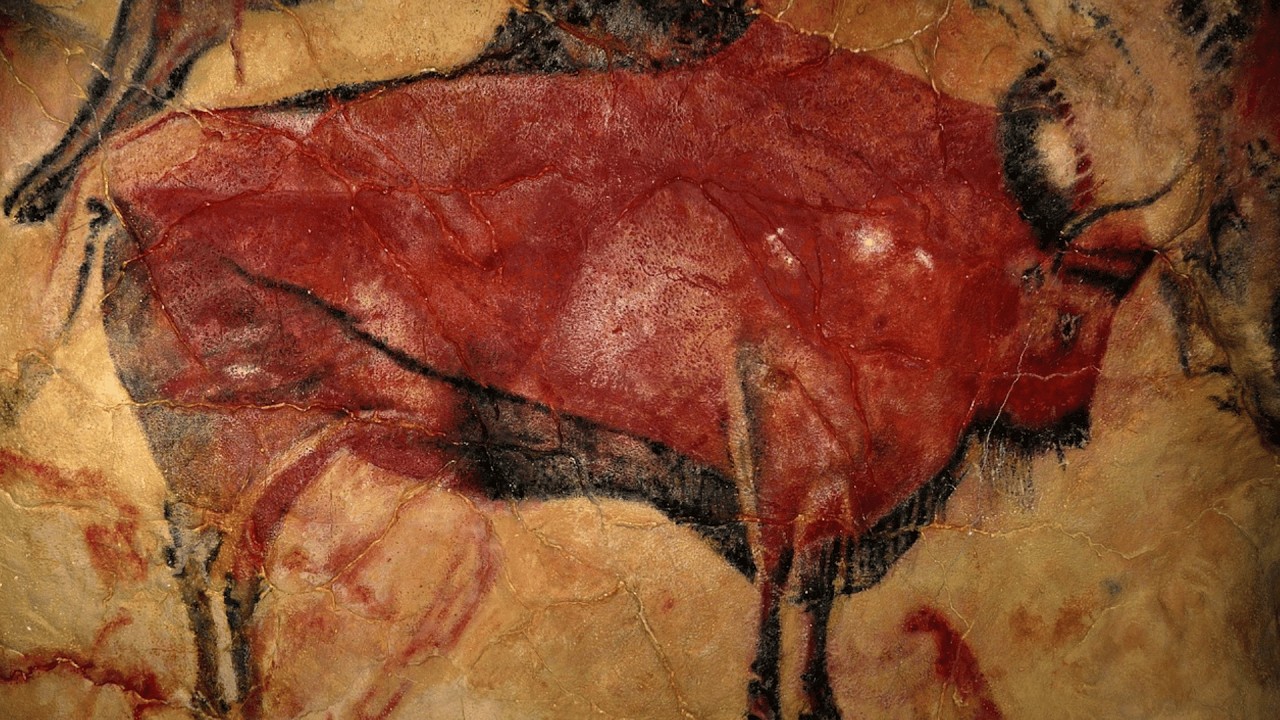
At the root of art lies an aesthetic sense for beauty that is unique to humans because it arises from productive activity rather than biological instinct alone, allowing us to create and enjoy art for its own sake as a form of communication about our inner states of mind. There is no single historical definition or ideal of beauty since artistic styles constantly evolve based on the changing psychology and ideas within artists' minds, which are themselves rooted in material conditions like the development of means of production rather than appearing from nowhere. This evolution explains why new art forms like filmmaking emerged recently while others like cave paintings remain timeless masterpieces that reflect different consciousnesses; furthermore, we must avoid mechanical generalizations by understanding that each artistic tradition has its own laws and cannot be simply ranked based on whether the productive forces were more advanced at a given time.
Despite capitalism's ability to revolutionize technology and make art widely accessible through digital media, this abundance often leads to an adulteration of culture where mass-produced, profit-driven content dominates while genuine creative expression becomes alienated from ordinary people who are too busy working long hours or emotionally repressed by insecurity to engage with it fully. Under capitalism, human senses become stunted because workers do not control their labor products and live in isolation rather than through collective activity, preventing the full development of aesthetic appreciation that is necessary for a humane existence; revolutions change this dynamic by allowing oppressed masses to participate actively in complex social activities like strikes and assemblies, which fosters an outburst of creativity and enables people to appreciate deeper art that expresses their desire to transform society.
Ultimately, revolutionary art does not require artists to be perfect Marxists or adhere to specific political doctrines to be effective, as evidenced by figures like Diego Rivera who produced incredible work despite personal flaws, or Bertolt Brecht whose theatrical innovations were brilliant even though his philosophical foundations differed from orthodox Marxism; great art communicates truth through various methods ranging from realistic depiction of ordinary people to surreal distortions that reveal deeper realities about hypocrisy and social conditions. While art alone cannot overthrow capitalism without the broader context of class struggle, it remains a powerful force for winning hearts and minds when combined with revolutionary organization, creativity, imagination, and emotion; therefore, communists must defend total artistic freedom while working to build an international movement that will eventually free all people from capitalist fetters so everyone can fulfill their full human potential.
Read the full video transcript
The question of whether art can change
the world in a way it's a bit of a trick
question because the reality is that art
is actually an essential part of life
and therefore we find that huge events
which transform society and transform
people's lives like revolutions for
example inevitably find some sort of
connection or expression to art.
And yet in most people's existence arts
I would say is disconnected from their
lives.
But when revolutions take place all of
that changes and really I would say that
there's not really been a revolution
in in the period of class society that
hasn't had this sort of corresponding
expression in art in one way or another.
Now of course art is a valuable tool in
the transformation of society. There
have been many artists that have sought
to express revolutionary ideas in their
art or even use their art as a direct
weapon in the class struggle in the in
the struggle to change society.
And as communists we have to understand
and value and defend great art and not
just because it might be connected to
revolution. We have to champion art
because art is one of the things that
makes life truly worth living and
communism is about that just as much as
it is about having food to eat or a roof
over one's head.
But also we have to remember that we
can't ask more of art
than what it's capable of and
importantly we cannot judge art solely
from the standpoint of Marxism or
politics or the class struggle. We can't
narrow down art to these things because
that would be a huge mistake.
The revolutionary struggle cannot be
waged solely on the ideological front if
you want to use that expression. Now art
can play a revolutionary role but it
must be linked to the overthrowing of
capitalism itself which is the only
thing that can guarantee the future of
art and the future of all society.
So in terms of what art is fundamentally
we have to talk about the aesthetic
sense right? The sense of what is
beautiful. Now, that is something that
is fundamental to the human species.
A sense of aesthetics, a sense of
beauty, it does exist in other species,
in other animals, but it's more
instinctive. It's not self-conscious.
Often this aesthetics is linked to
biological needs such as the need for
birds to mate, for example. Now, in
humans art is different. Art is learned.
It's not inherent. It arises and
develops alongside productive activity
and labor. So, art today is made by
humans and it is enjoyed by humans for
its own sake. Even if originally, as art
developed, it had a direct connection to
what we call the productive forces, the
way we produce and distribute the
necessities of life, or even if art and
aesthetics had a biological origin like
in the need for mating, for example,
like I mentioned in in some species.
So, that is to say that we produce art
because it is pleasurable, because it is
enjoyable, not just because there is a
utilitarian need for it, right?
So, what is art at its root? Art is
about communication at the end of the
day of an inner state of mind within the
artist that is represented in one way or
another.
And there is no super historical ideal
of beauty, right? The idea of what is
beautiful changes quite dramatically,
actually, in different parts of the
world and in different periods of time.
Also, there is no single clear-cut
definition of art and I would say that
comrades should not be preoccupied with
trying to define what art is or isn't at
any given time because what is art is
always changing. It's always molding and
adapting and being redefined. For
example, filmmaking is one of the most
beloved forms of art today, and yet it
didn't really exist 150 years ago. You
know, are video games art, for example?
No, I would say personally that a lot of
them are made with a lot of artistic
merit, and yet I would say that we are
at the very early stages
of that art form in terms of its
uh existence, right?
So we can see a lot of how these things
will develop and and come into
existence, you know, very rapidly.
And changes in artistic ideas, artistic
styles, concepts, trends, they are down
to changes in the ideas, right? That are
in the minds of the artists and the
people that create them. Now, if you
read some of the great sort of history
books on arts, they talk about these
changing ideas, right? That's a correct
thing to do.
But the point is, we would say that this
changing psychology, this changing
mindset of the artist does not come from
nowhere because, you know, as Marxists
we say that ideas do not come from the
sky. They have a material basis in the
real world.
Now Trotsky says that in all social
phenomenon, including arts,
they all have a common root, which is in
the development of the means of
production.
The production and distribution of the
necessities of life.
The way we do that determines, in the
final analysis only, right? The social
relations which are formed in society
and the subsequent ideas which emerge.
And that includes morality, religion,
philosophy, and art is of course uh
connected to this.
Now, that does not mean there is a
direct link between economics and arts.
There is no direct link between ideology
and economics
in in in in a general sense. But what we
have to say is that for 5,000 years we
have lived in class society and in one
way or another that has stamped its
character on the art that we have seen
produced in this period.
So the developments of the means of
production does of course push arts and
culture forward. There are certain art
forms like architecture, for example,
which are very dependent and closely
connected with productive technique.
But also, we have to recognize when we
study art history that there are periods
of economic ascendancy and also periods
of economic decline which have produced
great art.
Each form of art has its own laws and
you have to study them. You can't
compare them all in a one-to-one
fashion. You've got to look at their
development and their history because
again, there is a big danger of being
mechanical and rigid when trying to make
these broad generalizations
about art and trying to understand it
from a materialist perspective.
And we do have to say as well that being
a Marxist does not automatically make
you an expert in art just in the same
way as it wouldn't make you an expert in
science for example.
You take music. The bourgeois
revolutions and the developments in the
means of production have clearly led to
spectacular advances in musical
instruments, in techniques, the
development of orchestras and things
like that. But if you look at other
forms of art, you look at drawing,
painting and sculpture and I'm talking
about these three things specifically.
Um it is by no means given that those
forms of art are better than the past
because the productive forces are a
higher level today.
For example, it's not an accident that
Pablo Picasso
who many considered to be the greatest
artist of the 20th century, he openly
said that primitive cave paintings in
his opinion were the best depictions of
animals ever created. He said we have
nothing to teach these people. And why?
Because those paintings and those
drawings reflect a completely different
consciousness and mindset and
relationship with the natural world that
cannot be replicated. And those
paintings are indeed beautiful and
incredible.
So I would encourage comrades to avoid
being too categorical in saying what is
the correct style of art either. For
example, you look at Western painting
and drawing after the Renaissance.
The aim was to achieve optical
naturalism to try and mimic the way that
things appear in reality to our eyes.
They used single point perspective and
they used layering of precise detail.
But if you look at other paintings,
right? You look at Eastern aesthetics
like Chinese traditional landscape
painting which I would say is equally
beautiful and equally technically
proficient if you want to use terms like
that. Their depictions are different.
They use shifting perspectives, which
make the paintings look unrealistic in a
certain sense, but they also create a
sense of storytelling
and meditative contemplation.
I've got an example for everyone here.
Look at the banner behind us, right? It
was designed by comrade Amy Harris, and
I think it's I think it's very good. I
think it's beautiful.
Now look at the size of the person
there. Look at the size of the flag.
Look at the size of the tent, right? Is
that done in a realistic scale? It's not
unless this person is 30 ft and and that
flag is the size of a hill.
It's not realistic, right? Does that
mean it's bad? Does that mean it's ugly?
Of course not. You tell me, right?
This is the kind of idea that we have to
understand in relation to to painting
and drawing. Is Renaissance painting
automatically better because it just
happens to be more detailed, it is more
precise, and because the productive
forces were at a high level at that
period compared to other places? Well,
not necessarily, right? There's not
always a simple answer to these
questions. Now I have a quote from
Trotsky's Literature and Revolution to
help illustrate this point.
I quote Trotsky.
With the exception of architecture, art
is based on technique only in its last
analysis. That is, only to the extent
which the technique is the basis of all
cultural superstructures. The practical
dependence of art, especially of the art
of words, poetry,
upon material technique is
insignificant. A poem which sings of
skyscrapers can be written in a far away
province,
a far away corner of some Russian
province on yellow paper with a broken
stub of a pencil. In order to inflame
the bright imagination of that province,
it is quite enough if the skyscrapers
are in America.
So I don't have more time to go into
detail on the history of art. We have a
lot of great material on that by
comrades like Alan Woods and others.
I want to focus more on the connection
between art and revolution.
So, today we live in an almost
paradoxical situation.
In a way there has never been
a more connection to art than what we
have today. Capitalism has indeed
revolutionized the productive forces.
It's led to groundbreaking developments
in art, in photography, film, complex
instruments, computers, electronic
music, right? These are all parts of
those developments.
Almost nine out of 10 of all adults
today are literates. They can read and
write. And that is a progressive
development, right? It's a product of
economic
progress.
A majority of people in the world, I
would say, have access to phones. They
have access to the internet. And that
means that they can access music, film,
TV, culture in in a relatively easy way,
right? So, art and culture has long
since broken from these narrow national
boundaries. And we kind of have already
have this world culture where people
listen to the same music, they wear the
same clothes, they watch the same kind
of films, they have the same sort of
cultural identity and interest.
Now, if you think about the Trotsky
quote I mentioned, right? He's talking
about the idea of skyscrapers alone
being enough to spark the imagination in
people in parts of the world where no
such thing even exists. Words, ideas,
inspiration, concepts, these things can
spread in this day and age to a far
greater extent than they could ever do
in the past.
And yet today,
even though there is this kind of
abundance of art that surrounds our
lives, I would say that in reality,
in class society and the decline of
capitalism, we've seen an adulteration
of arts. We've
It's contributed to its decay.
There is a lot of art readily available,
but it is largely mass-produced,
profit-driven art with very little
creative content behind it. You know, I
mentioned that technology has advanced
music,
but it's also caused problems for it.
If you look at streaming, for example,
and the domination of streaming giants
like Spotify in the art market and the
way people consume art, new musical
artists in effect are competing not only
with all of the artists today, but
they're competing with all music of all
time because these things are actually
more accessible than they ever were in
the past. So, as a result, because of
the market pressure, you've got a
situation where musicians have resorted
to writing Tik Tok songs for the
algorithm with catchy hooks that are
formulaic because they're designed to go
viral cuz that's the only way that they
can sort of get popular and and make a
living.
And perhaps what's more important than
the proliferation, you know, of bad art
is that art itself has become separated
from people's lives and people's
existence.
Most people, I would say, are truly
prohibited from created
and and being involved in art. Their
aesthetic sense is not fully developed.
It's not fully utilized.
Working class people are given bad art.
They're given bad culture and they
become accustomed to it. You know, they
might even convince themselves
that they are not
that they're content with art
of this quality.
And this contributes to the domination
of petty bourgeois and individualistic
attitudes towards art in the art world.
And I would say that further alienates
ordinary people from the world of art.
They think it's not for them, basically.
Now, Marx explains in his early writings
that through their activity and
interactions, people change the world
and in that process they change their
consciousness.
He also says that the manifestations of
life of an individual are an also an
expression of their social life and
their existence. In other words, what we
do on a day-to-day basis in the world is
inseparable from our relationships with
one another in society.
Because we use our senses actively, not
just passively. And through labor and
through activity, we transform the world
around us. But under capitalism, we're
alienated from this process. We don't
have a say in the work that we perform.
We don't control the products of our
labor, we don't own them, and often we
don't even appreciate or agree with what
we produce or what we work on on a on a
day-to-day basis.
And so, our sensuous activity under
capitalism is necessarily one-sided and
stunted. Now, I quote Marx,
"The forming of the five senses is a
labor of the entire history of the world
down to the present. But the sense
caught up in crude crude practical
activity has only a restricted sense."
So, in ordinary life under capitalism,
people are not given the ability to
think and to feel and to act as if they
are real human beings. They're not free
to pursue, enjoy, and experience art.
And yet, these are the things which
allow us to live a full humane
existence.
And really, if you think about it,
that's why people strive to have beauty
in their lives, even unconsciously, even
if it's something small like having
posters in your room or having some
records that you listen to.
Hegel, in his introduction to his
lectures on aesthetics, he even talks
about this is the reason why people
dress themselves in in nice outfits,
basically, and try and wear nice
clothes. It's an expression of this deep
desire to live beautiful lives, right?
To have beauty.
And no one, of course, is born an
artistic genius. You know, talent, of
course, has a genetic element, right?
None of us would deny that, but that
talent has to be honed, it has to be
developed, it has to be identified at a
young age and
and fulfilled.
But under capitalism, the vast majority
of the masses do not have the
opportunity to do this. They're usually
too busy working long hours to have the
time or the energy for art. And also, in
a general sense, people in this society
are emotionally repressed. They live in
an insecure, uncertain world. They don't
know if they're going to have
rent
to pay the bills. They don't know if
they're going to be able to keep their
jobs. They're not going to be able to
know if they're going to feel part of
anything in society. So, they feel
vulnerable and alone and isolated. And
in turn, that makes them too afraid to
express themselves emotionally. They
fear rejection. They might feel unworthy
uh of just uh speaking and letting their
voice be heard.
So, yes, a lot of art is accessible in a
technical sense due to the internet and
due to computers, but I would say that
there is still a hard limit on the type
of development you can get
from that sort of thing.
There are many kinds of arts, theater,
film, ballet, opera, classical music,
architecture. If you don't have time,
money, space, connections, I would say
it is impossible for you to train
yourself fully in these things.
And so, this art becomes the sole
preserve of the wealthy and the
powerful, as it has always been in class
society. But revolutions change and
transform all of that.
In a revolution, what were yesterday
downtrodden and oppressed masses
suddenly become involved in this hugely
complex and engaging social activity.
They involve themselves in mass strikes,
uh in democratic assemblies, soviets,
other forms of workers organization. And
in that process, the masses achieve
things they never thought were possible.
And they begin to express themselves
fully as human beings, and they can
appreciate uh more complex art, uh
deeper art if you want to use that term,
uh which expresses things like the
desire to change the world.
Now, this sensuous outburst of human
activity, which comes from the practical
experience of carrying out a revolution,
is part of that process of human beings
striving to become whole again.
Now, that is what a revolution provides
for the masses. And actually, as I
mentioned,
I can't really think of a major
revolution that's taken place in the
last few hundred years that has not
produced this outburst of creativity on
artistic expression.
Even in the bourgeois revolutions, this
was the case.
Although I would say for the bourgeois
revolutions, it was more confined to
sort of the expression of individual
artistic geniuses, right? The great sort
of
artist. But it's there nonetheless. You
look at the English Revolution, for
example. You have the works of Andrew
Marvell and the great John Milton. In
the French Revolution of 1789, initially
you have heroic neoclassicism as a style
becoming popular and emerging, which is
then uh superseded by romanticism.
Pierre Beaumarchais, the playwright, uh
he wrote the play The Marriage of
Figaro, uh which probably comrades have
heard uh was made into an opera by
Mozart of the same name. Now, Napoleon
Bonaparte described this play as the
first shot of the French Revolution.
The greatest poets of the time also
celebrated and defended the French
Revolution. Lord Byron, Percy Shelley,
William Wordsworth, uh and so did the
Scottish poet Robert Burns. Uh and also
the German poets Goethe and Schiller
also defenders uh of the Russian Oh,
sorry, of the French Revolution.
Now, there was a similar response to the
1848 Revolutions.
Uh Alan is a very Alan Woods is a very
big fan of classical music, and he's
always keen to point out the fact that
uh the composer Richard Wagner actually
fought in the 1848 Revolutions.
Wagner actually wrote an essay called
Art and Revolution, where he argued that
uh art uh and true art cannot exist
under capitalism, and and a revolution
is necessary to free art from these
constraints.
And once capitalism develops fully and
the proletariat emerges finally as a
fully formed historical force, again you
see a corresponding impact and change in
the world of art. And of course, we have
the great example of the Russian
Revolution. And again, I can't go into
too many details on this. Maybe comrades
can come in on some of these points. But
there are some other great examples from
the 21st century that I think are worth
mentioning as well.
You look at the the Hong Kong Umbrella
Movement, for example. There was a huge
outburst of street art and music uh that
emerged at the time. There was a similar
thing in the Egyptian Revolution, and
also in the Arab Spring as a whole.
Um and these latter examples, you know,
of course are not on the scale of say
the Russian Revolution, but again,
they're sufficient to demonstrate this
inherent connection between art uh and
revolution.
So, the question then arises, I suppose,
um
what is political art? What is
revolutionary art? What are some of
these features? Because, of course, art
is created by individual artists at the
end of the day, right? Even if it's
done, you know, uh collectively.
There are times, though, when the
individual consciousness of the artist
begins to align with a revolutionary
process taking place in society.
Can art have political messages? Can art
be a weapon for revolution? Well, the
answer is yes to both of those
questions.
But, we have to stress, does this mean
that art has to take a particular form
in order to be good, in order to be
revolutionary? Well, again, not
necessarily.
Should political art or revolutionary
art be judged solely from the standpoint
of whether the political ideas within it
are correct or not, whether they're
Marxist or not? Again, I don't think
that's the case, right?
To make this clear, what we're saying is
that it is not a prerequisite that an
artist has a full understanding of
Marxism, a full understanding of
dialectical materialism, in order to
produce good art. And actually, I would
say
that the world would be a very boring
place if all art was about Marxism and
the class struggle.
In fact, art doesn't have to be directly
about politics at all, uh as opposed to
something like individual emotions for
it to be good, for it to be engaging,
for it to be revolutionary.
I'll take a great example from the 20th
century.
So, Diego Rivera was one of the greatest
artists of the 20th century. His work is
imbued with revolutionary spirit, and
Trotsky directly praised Rivera's work,
uh and he collaborated with him in 1938
on the Surrealist Manifesto. Now,
Trotsky describes Rivera as an authentic
revolutionary, uh who played an
invaluable role in inspiring others with
his imagination and with his ardor. Now,
we have a great article on Mexican
muralism, uh in the Latin America issue
of the item that came out this year,
which goes into further detail about the
work that was produced at the time.
So, Rivera was a fantastic artist,
right?
You might
Rivera must have been an excellent
Marxist, a great communist for him to
make such incredible art. But in fact,
the opposite was true. He was a terrible
communist.
Trotsky considered Rivera Rivera a
personal friend and an ally of the
Fourth International who played an
invaluable role. But also, Trotsky in
his writings described Rivera as
impulsive, as unpredictable. And he also
said that he was organically incapable
of carrying out the day-to-day work of a
revolutionary. Um Trotsky actually says
he never turns up to branch in his
writings.
>> [laughter]
>> Rivera thought that because he was a
great artist, he could produce miracles
in politics, but he couldn't, right?
In fact, he made disastrous errors
uh and judgment uh and his and he
couldn't submit to the common
decision-making of the party and
structures of the party. And eventually,
as is the case with most intellectuals,
he actually went through an ideological
crisis and eventually broke with
Trotsky, with Marxism, and eventually
with the Fourth International.
And sadly, he actually reconciled
himself in the end with Stalinism.
There was a similar dynamic between uh
the Russian writer Maxim Gorky and
Lenin.
Gorky was a very talented playwright. I
recommend uh comrades uh investigate his
works. He was a great playwright, a
great author, and he was actually a
close friend of Lenin.
Uh and Gorky helped to finance the
Bolsheviks over many years, but his
political ideas and his temperament were
terrible. And during the period of
reaction that followed the 1905
revolution's defeat, Gorky actually
joined Bogdanov's faction uh and they
ended up opposing the October Revolution
itself when it took place uh in 1917.
So clearly, right? You don't have to be
a genuine Marxist or good Marxist to be
a good artist, right?
There is an argument to be made
that certain artists' work suffers when
they abandon revolution, when they
become Stalinists, etc., right? But
that's a separate point. You know, in
general, we have to say it's not enough
to judge art solely on the artist's
politics alone.
So what are some of the elements of
great revolutionary art?
Well, one of the first and most
important factors is the idea of
expressing truth. You know, Lenin said
that to tell the truth is a
revolutionary thing. Uh and one of the
great things about art is it because art
utilizes imagination, conscious
distortion, abstraction, it can help
illuminate truth in ways which mere
facts alone cannot.
In the play Hamlet, Shakespeare gives
Hamlet the following lines about acting.
The purpose of playing, whose ends both
at the first and now, was and is to
hold, as 'twere, the mirror up to
nature. To show virtue her own feature,
scorn her own image, and the very age
and body of the time his form and
pressure.
Art holds the mirror up to society. It
reveals the truth about the world that
we live in.
And again, there is no one single way
that an artist can do this.
The realist style of painting emerged in
France under the direct influence of the
French Revolution and the 1848
Revolution. You have Gustave Courbet's
striking realist images of ordinary
peasants and working people. It was an
attack on the stuffy neoclassicist style
of the French Academy at the time.
But again, truth does not always mean
attempting a one-to-one imitation of
nature, right? Copying nature. Later on,
painting develops well beyond realism uh
to express emotion and truth in new
ways. Look at the paintings of Van Gogh,
for example, right? His painting style
and his technique is one of the most
powerful and striking and beautiful
examples of emotion uh that has ever
been put to painting.
Take Cubism, for example, right? One
might think that Cubist paintings,
again, are not realistic, but in the
way, you know, um that the abstractions
of Cubism actually demonstrate an even
greater sense of how humans perceive the
world through sight, time, memory, and
movement. Because, of course, this has
been proven by science. When we look at
objects, our eyes don't stand still.
They make tiny, rapid, microscopic
movements uh from different angles. And
those images and those perceptions are
then pieced together to form our picture
of of the world, right? And cubism
demonstrates that fragmented process
and the different perspectives that are
necessary to form and perceive an
object, right?
We have an article in the In Defense of
Marxism magazine about the development
of psychological realism in acting and
how Constantine Stanislavski's ideas
helped to develop how to help to allow
actors to achieve emotionally truthful
performances. And one of the points
that's emphasized in that article is
that something can be emotionally
realistic even if it is fantastical,
even if it is imaginary and false. It
just has to feel as if it is real
emotionally for it to be good.
Great novels don't always base
themselves on a realistic depiction of
the world, but they can still explore
truths about reality about the world
that we live in today.
So art by consciously distorting the
appearance of things can penetrate
through the superficial and reveal
deeper truths.
The surrealist movement is a fantastic
example of this.
In expressing a warped and illogical
view of reality, surrealism exposes the
petty bourgeois hypocrisy
and politeness
sort of hypocrisy behind the politeness
and reveals the under the truth the ugly
truth that lies underneath.
Realism in that circumstance might be
too clunky. It might be too didactic. It
might be ineffective at communicating
these same ideas.
If anyone's a fan of the film the films
of David Lynch, I would say they do a
similar thing in this period as well.
Now in these examples, what is surreal,
what is distorted, what is exaggerated,
right? All of these things are
advantages rather than disadvantages in
communicating certain ideas. Again, I
don't have time to go into further
detail, but I recommend that comrades
revisit the Revolution Festival talk we
have on surrealism by comrade Will
Collins.
So revolutionary art of course is about
truth, right?
There are other artists though that go
even further than this concept. They
seek to use their art as conscious
weapons in the revolutionary struggle.
They aim to change society itself with
their art. Now, the great
communist and German playwright Bertolt
Brecht,
he said it best in his quote,
"Art is not a mirror held up to reality,
but a hammer to shape it."
Now, of course, that idea, which I think
is correct, kind of contradicts
everything I just said earlier, right?
But, the point is again, there is no one
way to do this, right? There is no one
form of art that the that the artist has
to
produce in order to be an aid to
revolution, in order to express truth.
What are some of the best examples of
this idea?
Now, I would say one of the best
examples is the great El Lissitzky, the
typographer, who emerged in the Russian
Revolution. His Red Wedge manages to
strike a rare balance of being quite
literally a Bolshevik propaganda poster,
and yet at the same time a magnificent
piece of art.
The Red Wedge was a mass-produced
propaganda poster that was created
during the Russian Civil War. And not
only does the abstract form of this
poster brilliantly condense the essence
of the Russian Revolution, it was a call
to arms for the building of socialism.
You know, El Lissitzky is quoted as
saying these things.
There were too many examples to mention,
but I have to just focus on one more,
which I think is the clearest. And as I
mentioned, it's it's the plays of
Bertolt Brecht.
So, Brecht considered himself a
communist. He was radicalized following
World War I, where he actually fought.
And his ideas developed very rapidly
from the '20s onwards. Now, he's most
known for the concept of epic theater.
So, in short,
Brecht's style of theater is designed so
audiences wouldn't lose themselves in
the emotion of a play.
Brecht went
>> [snorts]
>> He wanted audience members to not forget
that the play is an artificial creation,
it's fake. He wanted them to think about
the performance critically and relate it
to the real world outside the stage. He
didn't want them to be too emotionally
invested, but instead be sort of
critically detached.
Now, if you watch Brecht's plays,
especially the later ones, uh are
masterpieces in my opinion. You know,
they're borderline propaganda in many
ways, right? Uh they're didactic.
They're intended to teach a lesson as
well as just entertain. You know, the
the message is very clear in Brecht's
work. Capitalism is bad. It has this or
that effect on women, children. It
produces all manner of themes,
cutthroats, horrible people. And of
course, he says very clearly the
audience should think about this and
then do something about it. They should
change society.
So, he uses staging techniques to remind
people of the artificiality of the
plays. And basically, he wants people to
to watch the play, decide that
capitalism is bad, and then go out and
be revolutionaries and transform
society.
So, did Brecht succeed in using theater
as a vehicle for revolution and social
change?
Well, no. He failed. Uh he failed to do
this, right? Despite being a great
artist. Some of his plays, for example,
when they were produced, like The
Threepenny Opera, uh which again is a
brilliant piece of work, uh they were
enormous they were enormous commercial
successes. They were hugely popular at
the time. And yet, they had zero impact
on the class struggle uh in Germany.
Brecht was a genuine artist. He was a
great artist. And I think he was genuine
in his communism, although it's a it's a
bit ambiguous, I think, in his public
statements. But the reality is that
Brecht did not understand Marxism. In
fact, Brecht was trained in Marxism uh
by a petty bourgeois German intellectual
called Karl Korsch, whose ideas are very
similar to the Frankfurt School's and
and Lukács's. Now, Korsch argued that
the failure of the German Revolution was
due to insufficient preparation on the
ideological front. Right? In other
words, uh well, the workers are to
blame, but also, you don't need to
change society. You just need to change
the ideas in people's heads, right? You
just need to offer them new alternative
ideas, new culture.
Now, I think this is where Brecht's sort
of philosophical ideas came from, and
that's how he formed his ideas on on
theatercraft, actually.
Now,
he had this idea of theater and and
culture being this ideological
battleground, right? For revolution. But
this idea was not Marxism, right? It is
not something that Marx or Engels or
Lenin or Trotsky ever argued. Uh it's
it's Frankfurt School stuff, right? It's
critical theory.
The idea of solely fighting on the
intellectual front is alien to Marxism.
So clearly, Brecht's political and
philosophical foundations were all
wrong.
Does that mean Brecht's art was bad?
Does that mean he was a bad artist?
Well, of course not. Clearly not. In
fact, you can see, even with Brecht, how
wildly
incorrect and actually reactionary
political and philosophical ideas can
actually producing can actually produce
incredible art, right?
Brecht's ideas on theater, in my
opinion, um he's single-handedly
responsible for the continued relevance
of theater in the age of film and in the
age of computers. And I think he's
second only to Stanislavski in terms of
importance for theater as an art form.
But as great as Brecht was, he did not
bring out about a revolution. He could
not change society through his art alone
because again, you can't ask art to do
what it is not capable of doing.
Art alone cannot change society. It can
only do so as part of a broader class
struggle, a revolutionary struggle.
So just to bring things to a conclusion
then,
art can and will play a revolutionary
role in the struggles of the future. And
we have to build a revolutionary
communist party and the revolutionary
communist international. We have to win
over the biggest and the best and and
the brightest artists and put them in
service of the proletarian revolution.
Art is important because it's important
for us to build a powerful organization.
Uh and in doing so, we need to have, you
know, basically all of the talents
of people inside the organization and
outside of the organization.
Now Daniel Morley at the recent CC
meeting, he made a very interesting
point about how the CIA, following World
War II in their war against the Soviet
Union and communism, they actually sent
American orchestras on tour. They paid
for them to go all across Europe in this
war to win hearts and minds in this in
this war against communism. Now, we have
to wage a similar struggle, right?
Because the CIA understood and
recognized the power of that art to move
people in an emotional way. They knew
that it was more powerful than 10
speeches given by some random American
bureaucrats on the need for a sort of
capitalism.
If we eventually get to thousands of
members, which I have absolute
confidence that we will,
if we are all dry, boring, rigid, and
mechanical in our approach to art, to
culture, to science, we're going to be
weaker as a result of it. We're not
going to be able to win people over.
Um in the past, a few decades ago even,
uh the Heliades, uh the Workers
Revolutionary Party, they had Vanessa
Redgrave, the actress, uh as a member.
Uh the Mandelay Group, they had John
Lennon selling their newspaper on public
demos. You know, that should be us. We
should win these people over, right? And
I think we've already made a start,
right? We're making progress in this
field. Ken Loach, who I consider to be
the greatest living British film
director, he supported Fiona's election
campaign. We've got Roger Waters of Pink
Floyd. He's basically Fiona's mate at
this point
supporting her campaign.
>> [snorts]
>> Pink Floyd changed the face of 20th
century music, right? And this is the
potential that we can
uh that we can get in the party. So
again, in the RCP, we stand for and we
defend total artistic freedom, right? I
can't stress that point enough. We do
not narrowly fit art into this box of
what we think it ought to be about.
Eventually, what we have to do though,
through revolution, is to lay the
foundations for a future society which
will allow everyone to fulfill their
artistic potential and to truly free art
from the fetters of capitalism and class
society.
And I'm going to end with a quote from
Lenin,
which he made in a 1922 speech. And the
context is this is the Soviet Union
straight after a brutal civil war, a
country that is on the brink of economic
collapse. Now, I quote Lenin.
Fantasy is a virtue of inestimable
value, and it is vainly presumed that it
is only needed by the poet. This is a
foolish prejudice. Even in mathematics
it is needed. Even the discovery of the
differential and the integral calculi
would have been impossible without
fantasy.
Even science requires a flight of fancy.
It requires imagination. But it's
through our revolutionary and practical
activity that we can turn these dreams
into reality. Humans have had the dream
of flight for over a millennia, but it's
through science and it's through
progress and development that we
actually achieve these things. We've
made them into a reality.
So, comrades,
we are communists. We are
revolutionaries. We aim to overthrow
capitalism and bring about a socialist
revolution to usher in a new world, and
that's a huge task. It is a monumental
task. And if we're going to succeed in
it, then I would say, yes, we need
uncompromising dialectical materialism
and Marxism. We need willpower and
determination to smash obstacles. We
need to build the RCP and the RCI. But
we also need something more. We need
something else.
We're going to need some creativity,
some imagination. Yes, we're going to
need some emotion as well. And those are
the things which art can give us.
>> [applause]