Video summary
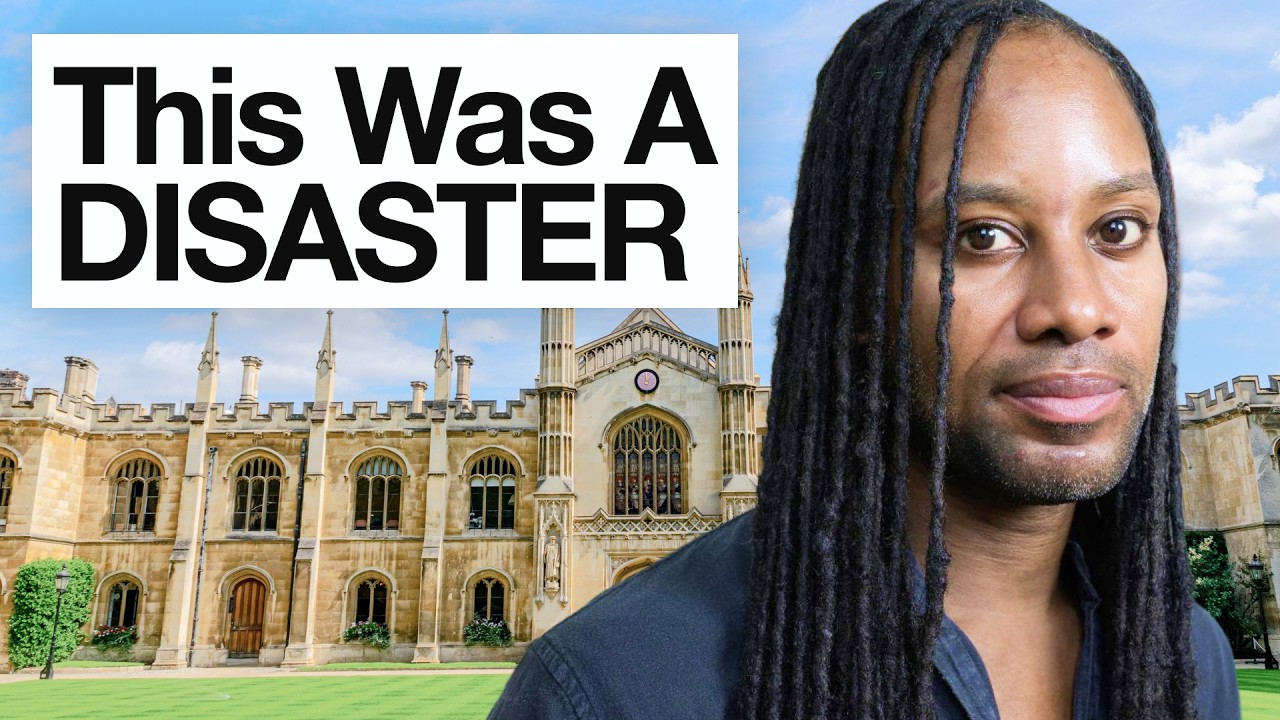
The video examines the high-profile resignation of Jason Arday from his prestigious position as Professor of Education at Cambridge University following allegations of plagiarism and data fabrication. While academic misconduct typically remains within university circles, this case became a national sensation in Britain's "silly season," dominating front pages across major newspapers like The Telegraph, The Times, and The Guardian. Critics on the right seized upon these controversies to argue that diversity initiatives have led institutions to hire unqualified individuals based solely on their identity rather than merit, effectively using Arday as proof of the failure of Diversity, Equity, and Inclusion (DEI) programs.
However, a group of Cambridge academics and progressive voices counter this narrative by arguing that the university's handling of the situation has unleashed grotesque racism against Black scholars. They point out significant inconsistencies in Arday's memoir proposal compared to his published work, such as discrepancies regarding medical history, timelines, and specific events like car accidents or cancer diagnoses. Despite these factual gaps being highlighted in media reports, including a piece in The Atlantic, supporters of DEI argue that the intense scrutiny is part of a coordinated smear campaign designed to discredit Black academics who hold platforms, thereby harming the broader field of critical race studies.
The transcript also explores the potential institutional motivations behind Arday's appointment and subsequent defense by university leadership. Critics suggest that hiring decisions may have been influenced by a desire for "inspirational figures" with compelling personal stories rather than deep academic expertise, leading to an environment where questioning such appointments was discouraged or shut down by powerful law firms. This lack of curiosity during the interview process is described as a systemic issue where institutions prioritize non-threatening representatives who will not challenge the status quo over genuinely brilliant scholars who might provoke difficult debates within their departments.
Ultimately, the video concludes that while there are legitimate concerns about individual qualifications and institutional accountability, dismissing these issues entirely allows right-wing narratives to flourish without addressing deeper structural problems in academia. The speakers emphasize that avoiding a critical debate on what DEI initiatives actually achieve leaves Black academics vulnerable to baseless attacks and prevents universities from honestly assessing whether their diversity efforts genuinely level the playing field or merely serve as window dressing for individualistic ideals of excellence.
Read the full video transcript
Uh in the media, August in Britain is
known as silly season. Um the reason
Parliament is in recess, there's less
obvious news to report on, less
political debates. Um and so more niche
stories have to fill the gap and they
take on added significance. Now,
unfortunately for him at least, the
story this week in silly season has been
that of Jason Arday. Now, Ard, as I
imagine you've all heard by now, um was
a Cambridge academic in a prestigious
role as professor of education. Um when
he was appointed, he was celebrated as
the youngest black professor in the
university's history. But after
extensive allegations of plagiarism,
fabrication of data and invented
backstories, um which all emerged sort
of over the past fortnight, Arday has
resigned. Now, the controversy is deeply
embarrassing for Arday and for Cambridge
University. But how newsworthy is it?
Academic appointments at UK
universities, even when they go horribly
wrong, wouldn't usually make the inside
of a national newspaper, let alone a
front page. But this week, this story
has been inescapable.
Um, on Thursday, our day's resignation
was the main story on the front page of
the Telegraph. It was also on the front
of the Times and the Guardian. And the
Daily Mail declared in glee that the
scandal the left dismissed as racism had
led to Arday stepping down um from his
job. It was also the top story on the
BBC today for a while. Um the reference
to the left dismissing concerns about
our day so that you saw on the front
page of the mail there. Um that was in
part um a reference to a letter
organized by the Good Law Project which
was signed by academics, politicians and
other public figures. Um perhaps most
notably Zack Palansky. This was the
video the Good Law Project shared to
promote that letter.
>> You might have not heard who Jason Ode
is. Jason is the youngest black
professor in Cambridge's history. And to
the surprise of literally no one. From
the start, newspapers like The Telegraph
and the Times have been calling him a
diversity poster boy and just overall
annoying him. But now they're taking it
a step further and they're trying to
smear him with accusations of
plagiarism. basically saying his work
isn't his own and trying to discredit
him. And it's really interesting because
it doesn't matter that academic
journals, universities, everybody that
has looked into these claims has found
no evidence of plagiarism whatsoever.
The newspapers do not care and we have
to talk about it. A baseless smear
campaign against a distinguished black
academic isn't just a personal attack.
It's an attempt to shut down a black
person who has a platform.
Now that video I mean which has now been
viewed sort of over two million times on
social media has aged very badly. In
fact that's why it's been viewed so many
times because so many people are sharing
it saying this has aged badly. Um the
reason it's aged badly is because there
was I mean we've all seen it now. There
was a considerable overlap between
Arday's work and that of others. Um
there is also evidence of quotes from
interviewees in his papers being either
um fabricated we don't really know or
mislabeled. There's clearly some
inconsistencies there which sort of
really puts into question the method
used. Um and most famously are's
backstory from running marathons with a
broken leg to receiving pig heads in the
post um have I mean seemingly fallen
apart under scrutiny. And the Atlantic
this week also had another damning piece
comparing the unlikely events in his
memoir set to be released next week in
the US to the proposal he wrote for that
memoir. and there are sort of some
inconsistencies.
So they say the proposal also lays out
many of the same events as the memoir
but with slightly different dates and
details. The boys who beat him up were
not his age but four years older. His
suicide attempt happened before not
during the pandemic. And whereas the
book describes Arday as having survived
two brain tumors, the proposal says he
had a bout of testicular cancer. No
reference to that illness appears in the
memoir. Nor does the book describe the
time that Ardeday, then a teenager, was
struck by a car and spent several months
in a coma. According to the book
proposal, the doctors told his parents
that he would never recover and
suggested taking him off life support as
an act of mercy. Through all of this, he
was aware of everything that was going
on because he had lockedin syndrome. As
I will describe to readers in the book,
Arde wrote in the proposal, "These MS
afforded me another profoundly different
way of perceiving the world." Um, they
write, "The book doesn't describe any of
this, nor that he awakened miraculously
from the coma, nor the full the full
year he spent relearning everything, how
to walk, to talk. Instead, the memoir
tells us only that he spent those months
finishing his final year of secondary
school and taking his exams." I was
relieved, beyond relieved, the memoir
says when those were done. Um, and the
inconsistencies go on and on and on.
Now, obviously, in a book proposal, if
it's a bit different to the finished
product, that's that that's fine. And if
it's a book of work of fiction, you
know, you might sort of change the
stories to make it fit together nice.
Obviously, also you might emphasize
different things in the final addition
to the proposal. But I mean, if you've
got just huge, incredibly what would be
like incredibly noteworthy events just
appearing in one but not the other, it
does it raises questions, clear
inconsistencies, and they do go on and
on if you go and read that article in
the Atlantic. Um, now when Arday was
first appointed as a Cambridge
professor, it was his unlikely backstory
that led to him being so celebrated. So
that's why the backstory is is relevant.
It's not just a sort of side note. Um,
he had numerous puff pieces written
about him and even guest edited an
addition of the BBC today program. Um,
so it's no wonder that the collapse of
this story has elicited fascination,
right? It's it's not a surprise that
people find this interesting, especially
as there sort of so many developments.
It has also though led to a frenzy on
the right which sees our day as ultimate
proof of the folly of diversity, equity
and inclusion and the attempt to make
elite institutions more representative
of society at large. Um it's an
unfortunate situation to say the least
and a group of Cambridge academics think
their university is to blame. Um so
their letter which made the front page
of the Guardian on Friday accused
Cambridge of unleashing grotesque racism
um by the manner in which it appointed
our day. So the group of Cambridge dons
are calling for an independent inquiry
into our day's appointment and a
professor of postcolonial studies Priya
Gopal um who is one of those organizing
the letter um told the Guardian this an
independent investigation must
scrutinize how such an early career
appointment to a very senior and
prestigious professorial chair was made
and what both the faculty of education
and university management have got very
badly wrong. Whatever the results of any
investigation, the university bears no
little responsibility for the grotesque
racism which this whole business has
unleashed and for the harm done both to
the individual in the line of fire to
black academics as a group and the
broader field of critical race studies.
This requires accountability now from
those responsible not.
Um, so this letter, I suppose, is is
written by people very much on the left,
I think, or sort of who would define
themselves as progressives who are
saying that because they promoted
someone who seems questionable and
potentially underqualified, um, that's
now putting their discipline and
confidence in other black academics in
doubt. Um, especially among those who
have sort of been banging this drum for
a while. Um, what's your thoughts on on
this story, I suppose, in general.
Banska, it
>> it's a really sad situation, I think,
and quite an ugly situation all around
really. [clears throat] You know, I I
can remember first hearing about Jason
Aday several years ago. Um, I didn't
really look into him massively, but I I
knew he had this kind of very compelling
um quite amazing, fantastical story.
Obviously, now it turns out it was, you
know, a bit too fantastical, right? That
there are some glaring inconsistencies.
And I think that Guardian piece on
Monday um was the thing that finally
when I locked in and read that I was
like, "Okay, there's actually lots of
things here that do not make sense." I
think we've seen just time and time
again. This is on replay now. Whether
it's the murder of Henry Novak, whether
it's the attempted murder that was in
Belfast, whether it was what was going
on with migrants in in, you know, the
Moroccan Spain border last week, we've
seen that the right is really able to do
this thing where it takes a single
story. It takes a singular moment and
then spins a whole story out of it that
actually feels quite coherent. I think
there is a section of people who are
going to look at this story that's now
being spun out of this particular
incident and thinking well damn may you
know maybe maybe black academics are
being overpromoted over white people.
This is another example perhaps of the
ways in which the tables are turning and
you know we've gone too far. It's DEI
gone gone mad as as you know as as the
right often like to to frame it. If we
pull out and look at the bigger picture,
of course, we know that there's actually
quite a lot of systemic um issues
against black academics in in the field,
you know, they hold under 1% of
professor roles despite making up about
4% of the the population. So, they're
under reppresented actually. Um but
these singular stories, these singular
moments that the right are very adapt um
adept, pardon me, at latching on to and
then kind of spinning a whole story out
of, you know, they're very very good at
good at doing that. And that leaves, I
think rightly as Priya has has put in
that letter her and her her colleagues,
it leaves, you know, black academics
vulnerable. There are now other black
academics who are being questioned
without any real basis as far as I can
see. The likes of, you know, the popular
historian David Lushoga, for example, is
now being questioned online about his
credibility as far as I know that no
one's brought any evidence to suggest
that that David Olesoga is not qualified
to do the things that he's doing. So
there's this very tangible material
impact that is coming out of this which
I think is incredibly worrying. Me and
you have had conversations I think
before about DEI and and a kind of
leftist critique of DEI which I think is
is missing. I think sometimes there are
people maybe on the left who are a bit
too scared to bring a critique of
diversity initiatives that it's actually
really really needed and in that vacuum
there was a very good piece by Jason
Akundai that we were talking about
earlier and he really kind of laid out a
view which I completely agree with as
well which is that in that vacuum where
the left refuses to have an alternative
to these kind of liberal DEI solutions
which deep down many black and brown
people know are quite empty and are for
show and aren't for ticking a box and
not really about leveling the playing
field in that vacuum. the right comes
out to play and it plays hard.
>> But I suppose the reason it's playing
hard here
>> and I know lots of them believe very
unpleasant things but is because their
critique was always that the attempt to
diversify elite institutions is going to
lead to um unqualified
people hired because of their identity.
And in this situation it does seem like
an unqualified person was hired because
of his identity. So I suppose
do does one need to say okay some of the
things you were saying you had a point
or I mean how would you respond?
>> Well I think it's about saying looking
at these diversity initiatives and and
and thinking about I suppose what the
end goal was here because I think part
of him is not just that he's hired
because he's black suppose they could
have pulled off pulled anybody off the
street in that case they could have
hired me. Um [laughter] but they hire
him as well in part because of this kind
of fantastical narrative and and story
that he had, right? That really kind of
captured headlines. Um really kind of
made for a great grand story that I
think really allowed the institution to
be able to say, "Look at us. We're
doing, you know, diversity. We've we're
better. We're getting better with our
representation. We're ticking those
those kinds of of of boxes." And of
course they they weren't. It's just it's
just window dressing. There's actually I
think at the heart of of some of this
endeavor to do these kind of tickbox
exercises. It's to me it's an outgrowth
of individualism of saying here's this
one individual this fantastic black
excellence larger than life individual
who's got this fantastic story. Never
mind the fact that he he doesn't perhaps
seem to actually be maybe very adept at
the job itself. Let's raise him up and
put him on a platform rather than
actually looking at how we make equality
better across the board for for
everybody. And yeah, there's lots of
issues in academia, not just with race,
with class, with gender, lot, you know,
loads of stuff.
>> Let's um look at a clip because we do
have some insight into his hiring
because the BBC reported it on it at the
time. You know, it's a very celebratory
story. Isn't this brilliant? Um this was
the head of our day's department
speaking in 2023.
>> We've listened to the voices of our
black scholars and our black students.
Um and some of it has not been easy to
hear to be honest, but we're able to
face up to some of the um structural
issues that people that people face.
>> There will be days. I think this is a
tokenistic appointment. What are your
thoughts on this?
>> The board of electors on your um
interview day were absolutely unanimous.
We are so lucky to have you. Uh you are
the best in the world in terms of the
research that you do.
Now I mean beyond the plagiarism
allegations the sort of was there um I
suppose academic fraud in terms of sort
of some of the interviewees in the you
know his his is qualitative research so
your interviewees are actually sort of
the key data point you're using and and
some of them are inconsistent. Um so
sort of the same quote being used by
people with different characteristics
and it just it doesn't doesn't add up
and then you've got the fantastical
background. So, you know, Cambridge
could plausibly claim that this this was
all information which arose later on. I
mean, they did actually also shut down
anyone asking any questions. Carter
Ruck, who are a very sort of powerful
law firm, were hired. I don't know if
that was by him or the university or
someone else, but that sort of shut down
one bit of reporting. Obviously, the
police were called on one other
journalist and they investigated him for
a little while, which was ridiculous. So
there were a lot of opportunities for I
mean what looks like the truth to come
out. But putting all of that aside,
>> I know you were saying you were
listening to a sort of podcast with this
guy earlier. I was watching a lecture
with this guy earlier.
>> If he is if he was ever considered the
best in the world in this discipline,
the discipline has a problem.
>> Yeah.
>> Because I I watched, you know, half of a
40-minute lecture and it was just word
salad and nothing was said. It felt like
I was in a kind of HR
talk where someone was just phoning it
in.
>> Yeah. Buzzworthy almost.
>> Buzzwordy. And so and and also I think
that lady, she's the head of faculty.
She is sort of another professor of
education. and she sort of does
I think kind of like peace and conflict
in educ something that sounds very
wishy-washy like she I think she seems
like a nice lady and she was doing her
best
>> so as and she felt like she was she was
very clear that we've listened to our
black students we've listened to our
black scholars and and actually to be
fair to them Oxford and Cambridge have
done a lot on access like their student
body is much more diverse than it used
to be because they've been trying quite
hard um but she thought we also need
some inspirational people in high places
and then they convinced themselves that
this guy was a genius. I don't know. I
suppose what how do you what do you
respond in that video? What do you see
going wrong?
>> It's difficult to say, isn't it? Because
of course on an individual basis have no
idea what's going on in, you know, in in
in that woman's mind. You know, let's
believe the best in her. There is
sometimes this thing where I think like
black and brown people get hired to like
more senior positions on the basis that
they will be they will play ball like
they will be kind of non-threatening or
they won't appear to rock the boat too
much as well. Do you know what I mean?
And I think that happens with with lots
of different demographics potentially,
you know, where we can kind they kind of
I don't know if it's like this fouian
impact almost of like I will agree to be
your kind of shiny representative and in
return I won't rock the boat too much,
you know, I'll play ball. I'll, you
know, and then there'll be a kind of
mutual transactional agreement. [snorts]
And maybe it's never like verbalized,
but it's it's just kind of something
that's there. So I don't know if that's
also kind of part of it. is like, well,
we're not going to get someone who's
really smart and who could seriously
rock the boat on sociology, you know,
and then ask some quite difficult
questions actually of of our department
more broadly. We're going to get someone
who would just kind of has a great
story. It would be great in the media.
They'll play ball. They'll play the role
and and maybe it was it wasn't there
wasn't any more questioning or curiosity
there. That's the key thing maybe, isn't
it? A lack of curiosity there. So you're
thinking in the interview in the
interview process what was going through
their heads wasn't is this guy talented
but is this guy threatening to us and if
he's not threatening to us then we want
this famous black guy.
>> Yeah. Maybe not as crudely as that but
>> well they wouldn't [laughter] have said
it. These are these are nice lovely
people.
>> Yeah. And I wouldn't have said like they
would have literally thought that in
their head necessarily but I I think
there perhaps might be an element of
that. It's very difficult to know and I
think uh the letter did raise the idea
of an investigation right which I think
must happen. They are going to have one.
>> You know ultimately there's still lots
of stuff we just really don't know. Um,
so there should be an investigation
further further into this. Um, but yeah,
I mean, one of the things that was
raised in that Guardian oped that I
mentioned earlier by Jason was that he
said there was a kind of institutional
problem of a lack of curiosity, a lack
of thought, and a lack of debate
actually about what the hell these DEI
initiatives are actually for, what's the
purpose? What's the end goal? And I
think that that debate internally within
academia and lots of other places as
well should be reignited. We should not
be afraid of having that conversation. I
think there's a fear about we're going
to be giving meat to the right. We're
going to be giving meat to these crazy
ethnationalists, these so-called race
realists or whatever who are obsessed
with this story for all the wrong
reasons. But if we don't do that, we we
risk something much worse, I think,
happening than where we are at the
moment even.
>> Uh yeah, quite um this is a bit like
that first story, you know, on the first
race. I'm sure we'll be coming back to
this and actually I hope we won't
because that would mean there were more
race. I kind of hope we won't be coming
back to this [laughter] story. maybe
when the investigation is out. But this
is already I feel one thing I feel bad
for the guy. I mean I feel bad for the
guy a number of things. I'm not sure
he's you know he doesn't
>> strikes me as vulnerable.
>> He strikes me as vulnerable. Yeah. Which
isn't a good reason that he should keep
his job as a prestigious professor but
also why I think one can feel empathy
for him in this position. But that on on
the most sort of basic level the thing I
really feel sorry for him about is that
this story happened in August. Because
if this was in like May
>> and there was like loads of politics
going on. Andy Burnham's just become
prime minister. This would not be front
page of the newspaper for a whole week.
But it's because there's literally like
not that much else for political
journalists to talk about. This is just
filling up so much space. Um on that
note, let's go on to a a more
significant story.
>> [snorts]