Video summary
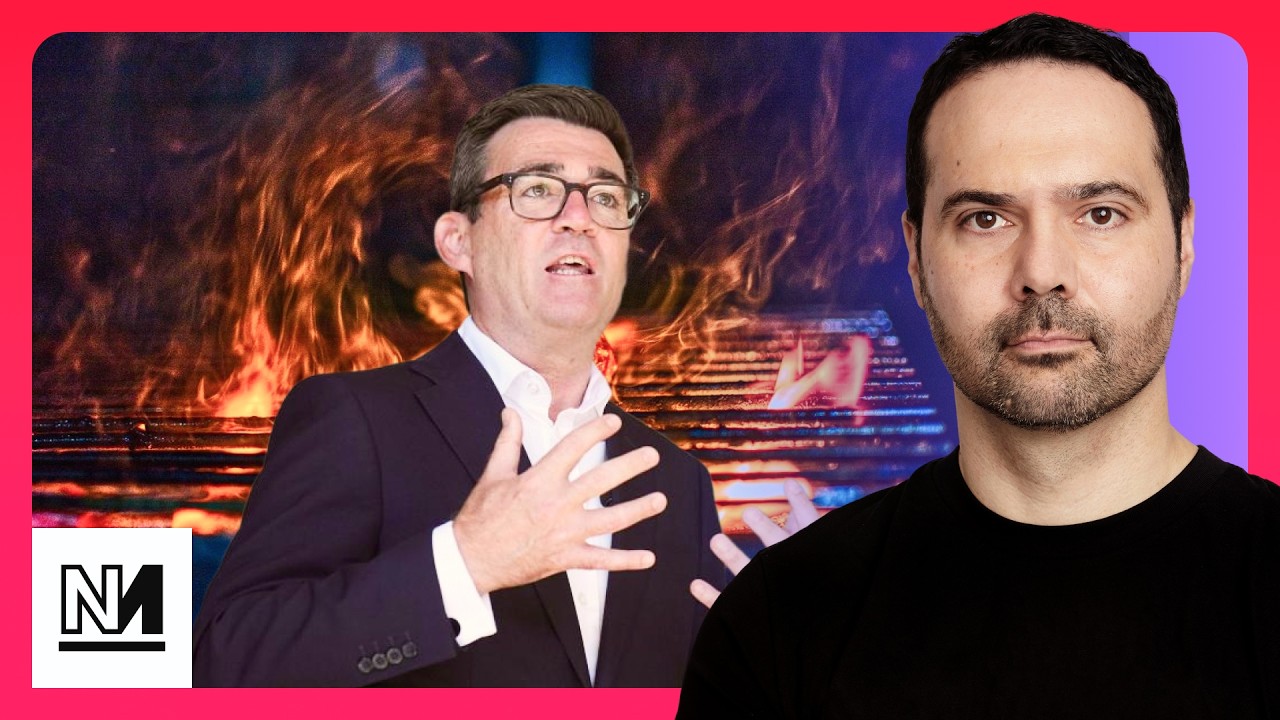
Andy Burnham convened an emergency COBRA meeting in response to demands regarding England's severe drought, though reports indicate his proposed measures may fall short of Green Party expectations. While a ban on disposable barbecues was suggested as a practical step to prevent fires caused by hot coals reaching extreme temperatures and smoldering underground or in bins, the analysis suggests this represents an easy political victory rather than a solution to the broader climate crisis. This situation highlights perceived failures within British politics to address fundamental environmental issues effectively, especially given that Europe is currently warming at 2.5°C—significantly faster than the global average of 1.4°C due to factors like Arctic heating and jet stream shifts—which poses a threat of sea-level rises up to five meters if the Greenland ice sheet melts completely.
The economic implications of this climate emergency are substantial, with think tank Verdant estimating over £4 billion in lost output caused by heat reducing labor productivity by 3% for every degree above 30°C, alongside rising costs from wildfire suppression and drought-impacted harvests driving up food prices. In contrast to the political challenges faced by Andy Burnham, US politics presented a divergent picture where Franchesca Hong's narrow defeat in the Wisconsin gubernatorial primary marked a setback for the Democratic Socialists of America (DSA), particularly after key endorsements were withheld due to her past controversial tweets about abolishing police and canceling Thanksgiving. Conversely, Peggy Flanigan successfully won the Minnesota Senate race by utilizing economic populist platforms like Medicare for All without adopting "cultural warrior" rhetoric that often alienates voters, suggesting a clear lesson on how well candidates resonate with the median voter rather than just adhering to ideological correctness.
This comparison between Hong and Flanigan underscores the importance of avoiding performative activism on cultural issues while pivoting toward economic populism to achieve electoral success in competitive purple states, as controversial views regarding mass incarceration remain unpopular among those seeking public office. The discussion also touches upon the resilience required for political figures, noting that while young candidates might make incoherent statements during lockdowns without losing eligibility, holding extreme or divisive positions can still hinder their prospects significantly. Beyond these political analyses, there is a call for financial support via navaradia.com/sport to improve Navara Media's infrastructure against ongoing server failures, acknowledging the platform's growth on YouTube and Instagram despite technical hurdles.
Finally, due to the extreme heat currently affecting cognitive function and production capabilities at temperatures reaching 35°C, the next broadcast will be conducted remotely rather than live from the studio as planned. This operational shift reflects the tangible impact of climate change not just on policy and elections but also on daily work environments and media production logistics. The speaker expresses hope that this intense summer season ends soon to restore normal conditions for both political discourse and content creation, emphasizing how environmental factors are increasingly reshaping every aspect of modern society from economic output to electoral strategies and even the ability to hold a live conversation in a studio setting.
Read the full video transcript
Welcome to Navara Live. Coming up
tonight, can Bernham's belated Cobra
meeting find any substantive solutions
to England's desperate drought? We
talked to the author of a report on the
economic costs of this sweltering
summer. And the Democratic Socialists in
America suffer their first big setback
in a while. I'm Aaron Bastani and
tonight I should be joined by Michael
Walker. This should have been a live
show, but because of technical issues
that wasn't to be. Uh if you want to
help future proof of our media and make
sure that these kinds of technical
issues don't become more pervasive that
as we get bigger and better they all but
disappear, you can of course go to
navardia.com/sport,
help us build a new media for different
politics. We're trying to mix it up with
the big boys. Uh we don't always
succeed. We're trying our best uh with a
little help from our friends, namely
you. The link for that is in the
description below. help us build a new
media for a different politics. On a
separate but somewhat related point, you
can listen to this show on Spotify and
Apple Podcasts, and of course, like this
video, subscribe to the channel. And
don't forget to let us know what you
think in the comments below. Last
Wednesday, Zach Palansky called an
impromptu press conference to demand
Andy Burnham chair an emergency Cobra
meeting on the droughts. This afternoon,
it happened. Zach Palansky welcomed that
news. Good. Now, we need action. tax
fossil fuel giants to pay for
firefighting helicopters, a cool space
in every community, a maximum working
temperature, and no new oil and gas
extraction in the North Sea. We cannot
negotiate with the science. At COBRA
meetings are called to deal with
national emergencies, and they bring
together the prime minister, senior
civil servants, and ministers and
officials from relevant departments. All
the people who should be on top of the
details. Uh we're yet to get
confirmation as to what was discussed or
decided, but reports this morning
suggested Bernham's plans are unlikely
to meet the ambition demanded by the
Greens. Bernham told journalists this
morning that one thing he would be
considering is a ban on disposable
barbecues. To be clear, this isn't a bad
idea. This is from the Guardian. In July
this year, firefighters called Tanic
Chase uh found an area the size of a
football field blazing in the summer
heat. The Heathland and Sherbrook
Valley, part of a special area of
conservation, was home to adders, toads,
and other wildlife, which were thought
to have suffered severe damage, though
no people were harmed. The cause of the
fire, was identified as a disposable
barbecue. Uh, disposable barbecues,
which can be carried into public areas,
present a number of problems. They
remain hot, sometimes for hours after
they're used, making them extremely
difficult to dispose of safely. And when
they cannot be carried away, people are
forced to leave them or place them into
bins where they carry on smoldering.
Burying the barbecues, as some try to
do, will not stop the danger. As these
trays of charcoal can reach 450° sea and
will carry on burning underground, where
they can still ignite fires long after
use on beaches. The buried coals and
metal grills are also a hazard for
walkers and in fields for farm animals.
On a personal note, I think this is a
really sensible first step. Is a ban on
disposable barbecues going to help solve
the climate crisis, solve the drought?
Is it going to help us um have more
sustainable infrastructure and food
production? Of course, it's not. But
it's very easy. You know, sometimes it's
okay to start with the really easy
stuff. And the fact that in British
politics, we don't address the easy
stuff time after time after time, I
think speaks for itself. You know on the
high street the classic example for me I
keep on talking about this is the bins
where you put clothes for charities
right and of course they get full up and
then people just fly tip everything
everything not just clothes but rubbish
mattresses chairs so these basically
become signs signals even to say fly tip
here or telephone boxes with no phones
in them they've not been in there for 20
years what happens in them people like
to urinate in them people often sell
drugs from them. These these are very
easy things to eliminate. Are they going
to remake Britain? Not really. Most
people don't even notice this stuff.
It's just weirdos like me. But it costs
next to nothing. Um, and when you think
of, for instance, the the charity shop
bins, who's actually having to clean
that stuff up? It's local authorities.
It's the councils. So the council
taxpayer is subsidizing charities to
have these awful bins, which by the way,
I've spoken to people in that sector.
They barely use any of the clothes. It's
more about having their brand on a high
street, basically advertising their good
work and obviously to get more money,
which they're entitled to do, but it's
not good policy. So, I think this is a
sensible move. I don't think it's
sufficient. I don't think anybody thinks
it's sufficient, but it's a sensible
move. And you know what? You can get a
really good um mobile barbecue that you
can use again and again and again on
Amazon. I don't like using Amazon, but
you can get on Amazon for 30 quid if you
want to spend a bit more money. I think
it's a Smokeoky Joe with Weber. It's
about 80 quid and you can take that
where you like and it's a great
barbecue. By the way, these disposable
barbecues barely cook food. It's awful.
My dad, who's Iranian, who's Turkish
Iranian, will say, "Don't trust an
Englishman with a barbecue." Which is
ridiculous. Of course, one of my best
friends, one of my good friends, uh is
fabulous with barbecues. He's an
Englishman. Uh but his his line of
thinking with this is who else uses
disposable barbecues? These people
aren't serious about cooking their meat
outdoors, which you know there's
something to that, right? So from a
climate perspective in terms of fires,
no good. Uh obviously from a
sustainability perspective, these are
one-off use. They should be banned
anyway, let's be honest. So this is
good. This is Andy Burnham. What he's
very able at doing big issue. He'll zone
in on a a tiny detail which people
understand and he'll get lots of
consensus behind it and he'll do
something about it. Good for him. It's a
start. The Greens could, I hope, push
beyond it, though. Uh it would make
sense to invest a lot in climate
adaptation over the next few months
because next year is set to be even
warmer than 2026.
Zeie Housefather is a climate scientist
at Berkeley. He's plotted this chart
predicting 2027
uh and it will be considerably hotter
than this year. He's captioned it,
quote, I'm not sure folks have realized
just how crazy the second half of 2026
and 2027 will be for global temperatures
on the back of a record smashing El Nino
event. Here is my latest estimate of
where both years will end up compared to
global temperatures since 1850.
Uh, that's worrying. Unfortunately for
us, global average temperature rises
have been hitting Europe harder than
anywhere else. Europe is now 2.5° C
hotter than before. before the mass
burning of fossil fuels um almost double
the global average of 1.4 degrees. So
it's 1.4 degrees basically since the
mid-9th century in Europe it's it's more
so when people talk about 1.5 or two or
as it presently is 1.4 four. That is of
course a global average and some places
it's cooler. Some places it's warmer. We
don't talk about it enough. The sea is
very good at absorbing the heat. So over
sea 70% of the earth's um surface area
it's cooler. Over land mass it's warmer.
Temperatures in Europe for instance have
risen by 0.56 degrees a decade since the
mid1 1990s. That compares with 0.42 in
North America, 0.36 in Africa and 0.27
degrees centigrade in South America. On
the one hand, maybe that's a good thing.
We kicked off the industrial revolution
and we're relatively rich. It's better.
We have faster warming in Europe than
say subsahara and Africa where it will
be much harder to adapt. But the reason
Europe is warming up faster than
elsewhere also brings many causes for
concern. This heat map from the
Capernacus Institute shows how much
different parts of the world are heating
up. Obviously, you can only see half the
world here, but it's enough to show you
that the fastest warming region on Earth
is the Arctic, which is heating up at
around 1.5° C a decade. Eastern Europe
is also badly affected. And you can also
see the worrying cold blob, which could
indicate the AMO might be slowing down.
That's to do with the jetream over the
North Atlantic. Uh it's a system of
ocean currents, which brings warmer
water up to the North Atlantic from the
tropics. The Arctic being hotter than
anywhere else is not good as it can
bring about tipping points with less
ice. Less sunlight is of course
reflected back onto the atmosphere and
the melting of perafrost is also a big
concern. I mean, let's keep this image
up for a minute. You can see that
Siberia and of course the Arctic as I
just said get really hot. You can't see
it here, but of course it's the same
story in the north part of the Western
Hemisphere. famously, I think in 2022,
British Columbia, British Columbia,
Vancouver, folks, saw 49° centigrade. I
think that was one of the data points
where I said to myself, what on earth is
happening? Um, but it being the hottest
over the Arctic is so important for a
bunch of reasons. For instance, if the
Greenland uh ice sheet disappears, you
can see Greenland right at the top
there. That's not doing as badly as the
bit of the Arctic over northern Russia.
But if the Greenland ice sheet
disappears, I think sea levels rise by a
good four or five meters. Pretty
sharpish. When I say sharpish, not in 10
years, but you know, pretty sharpish. It
happens pretty quickly. Uh and that is I
think that the deal breaker really uh
between whether or not we get the
jetream sticking around or not. So
basically, if the green sheet melts,
Britain, it's plausible. uh it gets a
lot warmer for 50 60 years and then it
gets much much colder because of course
uh people don't realize this but
somewhere like Rome is on the same
latitude as New York. The reason why
Europe is so much warmer than North
America is because of the jetream. So
it's not just about temperatures here.
It's also about the jetream. It's also
of course about sea levels. If all of
that ice melts then sea levels will be
significantly higher than they are
today. I mean, I don't know about you
guys, but this story
over the last couple of weeks just
brings the climate systems breakdown
story to, you know, so close to home. I
mean, I live in the I live in Hampshire.
I live in on the South Coast. I'm I'm
from Dorset. I now live in Hampshire.
Right between those two places, of
course, the New Forest. and seeing new
forest ponies uh running through ash,
you know, smoke literally coming up from
the floor. Um hearing about uh birds
that will, you know, nest on the ground.
They'll reproduce on the ground like
night jars for instance. Many of those
will have obviously been killed in the
last few days. This is really really bad
and it's just starting. It is just
starting. And I think some people on the
left often we get accused of being
alarmists and sometimes I think that's
true. Sometimes the left goes a bit
overboard, right? I don't agree with
people when they say, "I don't want to
have kids because of climate change."
What kind of a world are we bringing
children into? Well, you know, people
brought children into a world much worse
than this one 5,000 years ago. If they
didn't, you wouldn't be here. Uh so I
think sometimes the alarmism can go over
the top or or at least be irrational,
not internally coherent. But this is
really really bad. This is really really
bad. We have, I think, now um in terms
of part parts per million with CO2, we
have about 430 parts per million in the
in the air. I think it was about 270 in
the 1850s. And uh if we carry on like
this, I think by the 2070s, we get to
the mid500s.
We get to the mid500s. I read somewhere,
I think it was Bill Maguire, if we burn
all of the fossil fuels available to us,
coal, gas, oil, maybe Pete as well, I
guess.
And obviously that's not going to
happen. If we burnt all of the fossil
fuels available to us as a species, I
think planetary warming would be
something like 15 degrees warmer than
today. Obviously we're wiped out. We're
probably wiped out at five or six,
right? Um and that's not me saying this
as a climatologist because I'm not. It's
somebody who just reads these people. Um
Bill McGuire is a volcanologist at UCL.
So if we burnt all of these resources,
the planet's probably 15 16 degrees
warmer than I think either today or the
mid- 19th century.
And I presume that people who have no
issue with climate change, people, you
know, like who vote reform and or
whoever they vote for. But of course,
these people have a higher propensity to
vote for certain parties or or vote for
the the Tories or whatever. If they
think this is no issue at all and we
just keep on burning fossil fuels, what
you just accept that actually 15 degrees
warming isn't a problem. Nobody thinks
that, right? They're saying, "Well, no,
we should reduce CO2 emissions." That's
what. And then you go, okay, well, okay,
we've found a middle ground here,
haven't we? So, we should reduce them.
How quickly? Well, not as quickly as
you're saying. Okay, well, you're
reacting to a political position I have.
What's What's your solution? And that's
where we've got to get to. I do,
however, think, and I'll finish with
this, this summer has woken up so many
climate skeptics in Britain. So many. I
think even if they thought it was real,
the scenes that we're seeing across
England where more than twothirds of of
this nation is in drought, I think they
thought that was 30, 40, 50 years away.
No, it's coming. And as Kevin Anderson
said to me on downstream last week, in
terms of, you know, the averages,
this is as good as it gets now for the
rest of your life. It's only going to
get worse because of CO2 and methane and
water vapor that's already been um
ejected into the atmosphere. The point
is now, what can we mitigate going
forward? Reform and the Tories like to
complain that the transition to net zero
is too expensive. But in case you hadn't
noticed, climate change turns out to be
pretty expensive, too. It takes a lot of
money to put out forest fires and even
more if they burn down houses.
Installing air conditioning for the
summers and flood defenses for the
autumn and winter also doesn't come
cheap. And one think tank has attempted
to put a figure on the cost of the UK's
summer of extraordinary heat waves and
droughts. The think tank is called
Verdant and they have projected that the
heat this summer may have cost over4
billion pounds in lost output. That
figure is based on the assumption that
very hot weather lowers labor
productivity which of course seems
plausible I'd imagine to most people.
For a more detailed sense of where this
estimate came from, my colleague Michael
Walker spoke to the report's author um
earlier on today. That is of course
friend of the show James Midway.
>> So the 4.4 4 billion pounds is an
estimate for the loss in output, how
much the economy produces over the three
summer heat waves. And you get there by
saying, okay, what's the um temperature
that was reached in all the different
local authorities across the entire
country? This is MET office data to get
you that. And then what we did was look
at some research from Alliance, the
insurers, which said that basically
every degree over 30 degrees you have in
an area, it's about 3% of uh the amount
you can produce in any working hour in
that area. So you take those two things,
put them together, and that gives you
the estimate for the total loss from the
heat waves over the summer. It's based
as I say on originally on research by
Alliance who are one of the world's
biggest insurance companies uh Met
Office data to get you temperatures then
our calculations to get you the final
figure
>> and as far as I understand it and also
just you know I think everyone knows
this anecdotally um hot temperatures
make you less productive they make you
sort of slower at thinking in general um
obviously though presumably one thing
that really matters is whether your
workplace has air conditioning does that
make a big difference here
>> it does make a difference I mean you're
absolutely right there sort of two
different channels for effects. One of
them is is especially if you're doing
outdoor work, if you're working on a
construction site or you're picking
fruit, the effect is very immediate and
physical. Um the second one is more
subtle is if you're in an office, it
gets hot. It's just harder to think. You
as you say, it's not just anecdotally,
we actually have good sort of scientific
evidence around this. The particular bit
that starts to matter, especially in
London over June, uh London, other
built-up areas, is that you have these
tropical nights, nights over 20 degrees
when okay, you're in an air conditioned
office, but then you come home, it's
baking hot, you can't sleep, you don't
sleep properly, you go in the next day,
it's air conditioned, but you have not
had good sleep, you can't work as well.
And that's the kind of cumulative impact
uh that builds up over time during these
heat waves you see even in office
environments.
>> And and will we see this in the GDP
statistics? Obviously, you've made this
prediction based on these assumptions.
It will it be the case that sort of at
the end of August, we'll be able to see
if actually the economy did sort of lose
that much amount of or that value of
production.
>> Well, be it'll be it'll be mixed in with
everything else that GDP records, but it
should be a bit lower than you might
anticipate. That's basically what this
estimate is telling us. It would have
been 4.4 billion bigger and now it's
going to be a little bit smaller than
that. So with everything else going on,
it will sort of maybe get mixed in with
the impacts of the Iran war and all
sorts of other things. But nonetheless,
that's real and it's happening and we
think obviously this is effect is going
to get worse in Britain across Europe uh
over the coming years as climate change
worsens.
>> So you're very open about it in the
report that you're just looking at labor
productivity. There obviously other
costs of heat waves and we're seeing
images of forest fires presumably takes
a lot of money to to put those out and
then they cause some damage as well that
presumably lasts a while. I know farmers
are struggling with yields and because
uh it's so dry. Um so could we imagine
the cost actually being even higher than
what you've suggested?
>> Yes, you'd have thought so that I mean
wildfires is an obvious one where it's
just expensive uh to have to put these
things out. That's a cost that most
likely falls on government. I mean by
the way one consequence of what we're
saying is that the government deficit
will be slightly bigger because you get
less in taxes uh than you might have
expected. Um, there's the potential
costs of, you know, you turn the air
conditioning on or the fan or whatever,
your electricity bill goes up. So,
that's a cost to businesses and to
households. So, all of these things
start to stack up on top of what we're
seeing. And then, of course, there's the
longer term impact. A particularly
severe wildfire might knock things out
for a long period of time. Final bit is
of course farming, which, you know, the
reports are already pretty alarming
about how badly impacted harvests have
been over this year. We'll probably
start see that coming through in the
autumn in significant increases in the
price of food. both from Britain and of
course everything we have to buy from
the rest of the world.
>> And it's it's 20 years now since the
Stern report was written. That was
written in 20 2006
um by a sort of very distinguished
economist um asked for by the Labor
government at the time. And his big
argument which was seen as quite
groundbreaking at the time was to say
that yes it's expensive to deal with
climate change but if we fail to
mitigate climate change the costs of its
consequences will be much higher um
considerably higher. um your argument
that you're making today is you know
along a similar line. I wonder if you
can sort of look back over those two
decades. Do you think that message has
sort of sunk in to to global leaders?
>> I mean in practice yes there's been a
fair amount of progress being made in
decarbonizing energy systems in
particular. This country the UK has a
significantly decarbonized energy system
compared to what it had in 2006. you
know that there's no coal production of
any sort taking place now in terms of
our energy mix. So that's something
that's actually happened. If you look at
the progress that China's been making
and the exports of all this renewable
technology now incredibly cheap uh solar
panels, battery technology to the rest
of the world. So there's progress that's
been made um relative to the sort of
scenarios that Stern was talking about
back then. The problem is it's just not
enough. So we've made this progress, but
you're still getting hit by climate
change. were still getting hit by the
impacts of all that car um dioxide in
particular that's been burnt over you
know two centuries of industrialization.
So we've made progress it's just not
enough and that's why we're seeing these
sort of real economic costs in addition
to everything else that you're getting
with these heat waves
>> and and these kind of projections that
you're doing are they also being done in
the treasury? Obviously, we hear all the
time about Treasury brain. You know,
they they can't look at the long term
and they're always saying, "Oh, we
shouldn't spend this, we shouldn't spend
that." And they're not looking at how
investments now could save us money in
the future. Are there people in the
Treasury doing these kind of sums or is
this something which is alien to them?
>> Well, it's it's the Office of Budget
Responsibility that's that's taken a bit
of a lead in doing this and they have
given projections for what will happen
to the British economy if climate change
just continues unchecked uh into the
future. And it's all pretty alarming.
you know, this is very very significant
increases in government debt, which of
course the thing they really fixate on,
huge increases in the deficit, big
impact and growth. It's all there. I I
would say that from our point of view, a
lot of this stuff is sitting there in
those OBR reports as quite distant
things that happen by 2050, 2070 when we
need to think about some of the really
sort of not unexpected but jarring
impacts that we get already like heat
waves. So the average temperature
increases a bit, but then you have these
big spikes in temperature during the
summer months. And this is where the
real costs are starting to appear is
when not just the average increase. The
sort of day-to-day typical things
increase, you also have these big
dramatic events like the heat waves
we've had over this summer. That's where
some of the real sort of immediate costs
start to appear. But there is clearly
some thinking like this taking place in
government for sure.
>> That was my colleague Michael Walker
speaking to the co-founder of the
Verdant Think Tank earlier today, James
Medway. Before we move on to our next
story, I have personal experience with
this. Right now, we're having a loft
conversion. Uh not because we're posh,
but because we can't afford to move.
We're on a terrace house and we're
having a second child.
Ideally, they'd have a bedroom, right?
So, we're converting the loft and um we
we know the guys involved in it um part
partly through family. So, we have a a
decent um rapport and uh the windows
haven't turned up. The windows have been
weeks and the staircase didn't turn up
for weeks. Both were delayed. And it
turns out that both the factories of the
the windows and the staircase were in
the UK and they shut down because of
extreme heat right at the start of the
summer. I don't know if you remember we
started to do shows remotely, right?
Because it was getting to 35 36. Those
factories also shut down I think for a
week which makes sense doesn't it? You
know you presumably they don't have air
conditioning. presumably they can't
really do much beyond 30 31 even though
it's a stretch but you get all the fans
blazing you can just about do it but at
35 36 you've got heavy machinery it gets
hot it's obviously much hotter inside
than it is outside it's just not
manageable is it so just just me
anecdotally I know of two businesses
who had to do shutdowns because of the
heat and there are so many stories like
this which we're not talking about I saw
an amazing one in Japan um Japanese work
culture is being revolutionized is by uh
the oil crisis of course ongoing with
Iran but also with the heat as well. So
Japan this time of year, tons of air
conditioning and it means that the
Japanese salary man can wear his suit to
work and they've broken with protocol.
This year they're going into work with
t-shirts and shorts and that has stunned
and stupified, you know, the the
saratoral conservatives in in Japanese
uh discourse. They are very upset. Uh
and that is a direct outgrowth of
geopolitics and climate change. Uh so
this is happening. If you want to deny
it, go ahead. But these are very real
manifestations of the stuff that we talk
about all the time, geopolitics, but in
this instance, more so climate change.
It's happening and the repercussions are
absolutely everywhere, not least the UK
economy. Last Tuesday was a big moment
for the American left. That was with
Abdul Al, of course, winning the
Michigan Senate primary for the
Democrats, proving that the left can win
nominations in purple states and they
can take on and defeat the money of the
Israel lobby. and polls had suggested
the Democratic Socialist of America
would due another win this week in
Wisconsin. Their member, Franchesca
Hong, had been the front runner in a
primary for the governorhip of the
state. Polls had shown her 20 points
ahead of her nearest rival. But by
Wednesday morning, it was clear she'd
lost, even if by the narrowest of
margins. With almost all votes counted,
the establishmentbacked Democrat David
Crowley has 39.78% of the vote. Hong has
39.37%
of the vote. Hong, who is a chef and
restaurant owner, was dogged by negative
stories about past tweets calling for
the abolition of the police and even
cancelling Thanksgiving, uh, which she
of course struggled to rebut or even
explain. This was one viral clip during
the campaign.
>> You know, you've talked about your past
positions that he keeps highlighting
and, you know, obviously likely would
continue to do so before November should
you win. One thing that they brought up
as well was a post from you in 2021 um
where you said Americans should cancel
Thanksgiving. Should have done this in
1621. Uh the post has been deleted.
Republicans have been highlighting it.
Do you still believe that uh
Thanksgiving should be cancelled?
I'm a chef and one of the first meals
that I made uh that was um for the
community uh when I was 16 was a
Thanksgiving meal. You know, I always
think my hospitality background and
owning a restaurant for seven, eight
years that bringing folks around the
table uh to share conversation and build
community is always a good thing. But
Thanksgiving is also a time that's
incredibly painful for many people in
our communities. And so I think there I
wanted to make sure that people
understood that there are multiple
views, but you know, views can evolve
and the position that I'm running for
right now and I think my background as a
chef will actually help me become a
better governor that's able to bring
more people to the table.
>> I don't think anything she said there
was actually unreasonable. I don't agree
with all of it, but it's not
unreasonable. These are these are
coherent points. Uh, but it's not great
populist politics, which is perhaps why
Bernie Sanders and AOC withheld any
endorsement of Hong, which is a shame.
It's a shame. You said one thing in
winter of 2020. We were kind of all
going a bit crazy. Uh, and you know, you
you you don't win, which is a shame. She
probably would have been a very good
public representative. But the closeness
of the race means there has been some
backlash at the decision of those two,
namely Bernie Sanders and AOC, to stay
out of the race. Nathan Robinson is
editor of the leftist current affairs
magazine. He said this totally
inexcusable that Bernie and AOC failed
to back Hong. If she loses narrowly, it
will be a major setback for the
socialist movement that they will bear
major responsibility for. Someone with a
different take on why Hong lost was
Julian Andreioni from Dropsite News.
Americans love economic populism. They
want another new deal, but they are
completely turned off by college campus
culture warrior performative activism.
Evidence: These results happened in
almost neighboring states on the same
night. Andreion is comparing Hong's loss
in the Wisconsin primary to a win in the
Minnesota Senate primary by Peggy
Flanigan. Flanigan ran on progressive
priorities including universal
healthcare, a high minimum wage, and an
end to unconditional US aid for Israel.
These were all very popular things,
particularly with undecided voters. She
was also massively outspent by a
corporatebacked rival. Flanigan was
backed by Bernie Sanders, but she does
not identify as a socialist and was not
backed by the DSA. Here's how she
accepted the Democratic nomination.
>> As your next senator, here are the
things that I'm ready to throw down for.
Ending the despicable priorities of an
administration that hands out tax breaks
to billionaires, builds gilded
ballrooms, and spends billions on bombs
while screwing over working people.
>> Truly affordable housing so that people
can pay their rent and young people can
buy their first home before they're
middle-aged.
passing right to repair so that
Minnesota farmers can fix their own damn
equipment.
And getting rid of prior authorization
so that some dude behind a desk or worse
yet an AI bot isn't determining whether
you get the life-saving health care that
your doctor has prescribed.
and passing Medicare for ALL
because we are going to make healthc
care aa available and affordable once
and for all.
>> She doesn't identify as a socialist.
That's winning. By the way, when people
talk about policies far to the left of
the Democrats, you know,
then at any point before 2016, not
including the New Deal obviously, and
they said, "Look, I'm not a socialist. I
just want to put working people first. I
want to stop tax cuts for billionaires.
I want to stop support for Israel. Uh I
want to build homes for working people,
but I'm not a socialist." Fine. Knock
yourself out. That's winning. When
people do everything you want in your
agenda, that sounds like Bernie Sanders.
Uh, but I'm not a socialist. That's
fine. And by the way, before people in
the comments say, "What a s socialist
democracy." I know. I know. But clearly
the the the
tenor, the tone, the rhetoric, that is
far and brimstone left politics. If she
doesn't want to identify as that, great,
fine by me. uh to get a lowdown on
Tuesday's primaries and what they meant
for the American left. Uh earlier on
today, my colleague Michael Walker spoke
to Branco Maretic. He's of course a
staff writer at the magazine Jacoben.
>> I think there was one major race that
was a very bitter disappointing loss,
which is the um gubernatorial race in
Wisconsin. I mean that and that really
was, you know, the biggest prize for
socialists because it uh it was a
statewide race in the Midwest. uh
socialists want to prove that they could
win in a Midwestern state on the state
level. Um and and it would have been an
electoral test for the socialist
movement uh in the general election. So
that was really the biggest prize and
that's a massive disappointment. Uh is
it an overall defeat? I I think it's
hard to make that case when if you look
at the the the candidates that DSA
chapters, Democratic Socialist of
America chapters actually endorsed. Um
most of them did end up uh moving on to
the general election and winning their
races. Um now those I don't think
eclipse the the uh Fran Hong defeat but
it is important I think to keep it into
perspective that the you know on the
whole social scandid end up winning uh
last night.
>> Al so just ju just just to clarify
because I know I've
very much familiar with Hong and
Flanigan. What are the DSA backed or
sort of DSA candidates who who did win
last night? What kind of races are we
talking about there?
>> Um, there were several incumbents that
won re-election. Ryan Clansancy, for
instance, in Wisconsin. He's in the
state assembly. Uh, there was also Omar
Fate, which you know, he he had run for
uh uh mayor of of Minneapolis. He won
his state senate re-election bid. But
there were also others that that won. I
mean, in Minnesota, for instance, the
school board race, uh, Twin Cities DSA
endorsed candidate, uh, won for that
position. You had, um, a socialist
candidate, actually running, two
socialist candidates running to replace,
uh, Fran Hong in her current seat. One
was a DSA, DSA backed socialist
candidate, um, uh, Juliana Bennett. he
lost to another socialist candidate. Um
uh and and I also have confirmed uh from
uh Ryan Clansancy who I just mentioned
before that uh the Wisconsin Legislative
Socialist Caucus uh which did not exist
4 years ago and the last time it existed
was about 100 years ago is going to
expand in the next legislative session.
uh partly because of um you know some of
the the wins that I mentioned but also
partly because I think some members are
going to um join that caucus who were
not identifying as socialists before. Um
and then sort of a few other kind of uh
uh smaller races down ballots uh that
were won by socialist candidates. Um,
so, uh, it it it also I I'll be remiss
to mention to not mention, um, in
Connecticut,
um, in Vermont, which also had
primaries, there were several, uh,
socialist candidates that won, including
one for the, uh, Connecticut uh, state
senate, I believe, the the first Muslim
um, uh, candidate that that will sit in
that body. So, um, there are some some
other major wins, you know, if we look
beyond that that one kind of very
disappointing defeat. So you got you got
some some local victories alongside the
sort of nationwide defeat or I suppose
this is a statewide defeat but it would
be to go to a nationwide body. Um what
happened with Hong then? I mean there
have been I mean there's been some
fallout today. I've sort of seen it on
X. Um people arguing whether or not um
Bernie and AOC have let down the
socialist cause by not backing
Franchesca Hong. Um I mean obviously
people on the other side saying that
they made the right decision because she
was a weak candidate. This is what
they're saying. she was a weak candidate
and she probably would have lost in in
the generals and that would have been
more damaging for for socialists than
her losing the primary. Um where do you
stand on that?
>> Um I think it's a fair criticism. Uh I
mean Hong lost by a few thousand votes
uh uh you know I think it was 4%.
Um, so you know, if Sanders and AOC and
and not just those two, I mean, you
know, the entire kind of uh slate of
recent socialist candidates who went to
campaign for Abdul sayed in Michigan
just last week, they stayed away from
the race. Um, and I think that uh uh
reflects some of the internal doubts uh
within the left about, you know, Hong as
a candidate. Um I I think a lot of
people were kind of wanting to see if
she would be able to get through this
this primary um before they kind of
stepped in and wanted to to lend their
names to her campaign. Um but at the
same time such hesitancy can also become
a self-fulfilling prophecy and it could
be that that you know by staying away
from the race um they they you know may
have ended up kind of securing a defeat
for her. Um I think also you know before
we get too hung up on these endorsements
you know we don't know if these
endorsement would have made a difference
there's also other factors that that uh
played a role in this. I mean one was
you know again uh Hong the socialist
candidate was way out spent by the kind
of Democratic party establishment. Um
her campaign was really running on on
fumes. It wasn't very well funded. I
think they spent something like half a
million dollars or less than half a
million dollars um on ads um whereas uh
uh Crowley the candidate who ended up
winning the forces behind him spent
about $4 million. So it wasn't as
dramatic a overspending ratio compared
to the the Michigan race although that
one really was a an outlier in terms of
just how much money was being poured but
but they were significantly outspent. Um
there were also you know internal uh uh
mistakes that that the Hong campaign
made arguably mistakes. I mean you know
for instance Hong was the only candidate
who did not spend a single scent on TV
advertising. Um and she you know I think
I think that was the strategy was we're
going to try and focus on the voters
that that we need to turn out that we
know are going to be enthused about our
campaign. But it could be argued that,
you know, in that final stretch as the
establishment was kind of um really
attacking her and as they spent big on
these um on these ads that that were
kind of calling into question her
electability,
putting some money towards television
advertising herself to kind of reach
some of these voters and allay their
their fears um may have helped to combat
this. um you know and and I think other
people have point out that that Hong
didn't really go on the attack whereas
in the final stretch they really were
hammering her um for some of these
electability concerns and you know there
have been questions raised about you
know could Hongk have been a little more
nimble and skilled and kind of dealing
with some of these um questions that
were being raised about these old tweets
and so on and so forth. you know, with
every campaign there are a million
things I think that that you can point
to, but but I think you know, in terms
of what the campaign itself could have
controlled. Um, those are things that
should be looked at uh, you know, and
reflected on in in the months ahead
besides just the kind of uh, standards
and AOC and and so on, not not jumping
in. And another analysis I've seen on
online today from a bunch of people is
to say Penny or Peggy, sorry, Peggy
Flanigan um who who has become the
Senate candidate um in in in Minnesota,
she's a sort of economic populist. She
wants Medicare for all. She wants to
reign in the power of the billionaires.
Um but she hasn't got the same sort of
history of saying abolish the police or
cancel Halloween. And that shows
actually the way to victory, which is
economic populism without the kind of
cultural stuff that many people find
alienating or weird. Um, and I suppose
this feeds in really, doesn't it, to to
AOC saying woke one was crazy. So, how
does this result feed into that
particular debate about whether or not
economic populace should ditch the
cultural stuff?
>> I mean, I think that uh the defund
slogan, for instance, you know, that
that one has been problematic. uh you
obviously it made sense at the time but
there has been an effort by socialist
candidates since then to kind of reframe
how they how they uh uh talk about this
issue. um you know I mean actually
polling and even elections show that
that the public is in favor of diverting
uh uh funding towards sort of more less
punitive kind of uh and and and and you
know alternatives to policing basically
you know people who are first responders
who who aren't police who aren't armed u
mental health professionals and so on
and so forth we have seen that actually
be an electoral winner in certain parts
uh of the country
I I think I think you know uh the fact
that you see people like Hong and Al
sayed kind of you know and and Zara
Mandani too kind of backing away from
some of these issues I think reflects
acknowledgement that that that you know
this is not necessarily the most
electorally viable thing and and you
know I mean when it comes to um uh some
of the more cultural stuff you know some
of the things that Hong really became
controversial for you know talking
hating on holidays, public holidays, and
talking about race in these very kind of
specific kind of
campusoriented ways. Um, you know, I
think that stuff has really been
acknowledged, widely acknowledged as
pretty toxic and alienating. Um, I think
that's an outgrowth of where the left
was uh in this long period of wilderness
in the uh the first part of the 21st
century. And I think there's an
understanding that that you know to to
really be able to meet people where they
are that kind of stuff has to be left
behind. Um I think with Figan we should
also mention I mean Figan was kind of a
more establishment
um uh candidate even though she did have
these policy positions that that overlap
with the left. I mean you know she was
the lieutenant governor. So she was
someone who was a more of a well-known
quani in in the state um is and was able
to kind of balance those progressive
positions while while kind of having the
the opaces of of of being a sort of more
establishment back candidate.
>> Super interesting uh conversation
between Michael and Branco. He does
great work. Jackman does great work.
There is so much interesting media right
now in the states. You know we've just
cited of course drop site news a little
bit earlier in the story. There's
Jacobin too, other publications as well
um just coming from the left and and
helping to redefine the terms of what's
just a credible political conversation
which is really um distilled with
someone like Peggy Peggy Fanigan, right?
They they have the agenda of the radical
left in the US of the DSA without being
in the DSA. Great. Um and I do think
there's a learning there in terms of
these two different politicians, Peggy
Flanigan and Hong. um and and why one
did well and and one underwhelmed,
right? I think it's it's pretty
instructive. I I agree. It's actually
quite straightforward as to why that
happened.
At the same time, I think Hong is 37
now, so they were 31 when they were
saying that stuff. I'm 42, so that's a
baby, of course. Um but you know, people
can say slightly strange or incoherent
things during a co lockdown. And I don't
think that should disqualify them from
ever standing for public office. But you
know what? She's young. She can stand
again. Uh but that stuff just isn't very
popular. As my colleague Michael Walker
has said many, many times. Um it's just
not popular with a median voter. And
that's fine. You're allowed to think it.
You might even be right. You know,
Michael Walker might be wrong. But if
you want to win public office,
you can't really say that. Does that
mean that, you know, more people in
prison is a good idea? I think Britain,
for instance, has too many people in
prison. I think America certainly has
too many people in prison. Um, what are
the solutions is of course the point,
right? That's that's what you're then
meant to discuss. But these kind of huge
statements that are just sort of put out
on social media, again, fine if you want
to do it, but if you also want to win
public office, it's probably going to
hold you back. Uh, as this person found
out this week, um, I would say thank you
to Michael Walker. He wasn't here
tonight. He had to leave. This wasn't a
live show. Of course, it should have
been. It could have been. If you want to
future proof Navara Media and stop that
server from just dropping off the face
of the earth again, you know what to do.
Go to navaradia.com/sport.
Help us build a new media for politics.
We can't just have a single point of
failure when it comes to our servers and
our our infrastructure. So whether it's
one pound a month, uh two pound a
month,5 a month, whatever it is, help us
keep on building this project. 1.3
million subscribers here on YouTube.
We're gonna hear a million on Instagram
very very soon. I think in the next
week. So, we're taking these
conversations certainly in the UK to a
very very big audience. One pound a
month. Help us do that little bit more.
Thanks everyone for tuning in. Come back
tomorrow for another stream from 6:00
p.m. It will not be live stream from the
studio. Uh it's remote because it's
going to be very very hot and the heat
affects not just how we think and feel.
doesn't just mean drought and fire. It
also means it's very hard to produce a
show when it's 35° C. Uh so people will
be broadcasting from the comfort of
their homes. It won't be a regular
thing. We hope maybe this is the end of
a very hot summer. Touchwood. For now,
you've been watching Nvara Media. Good
night.