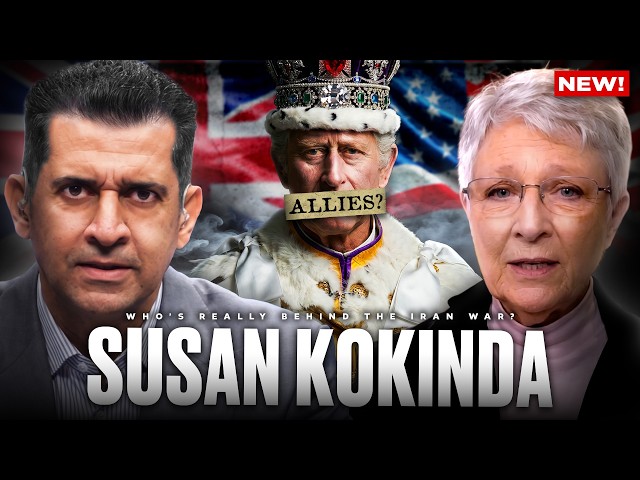
British Imperial Expert: The Force Behind King Charles, Iran & Every War Since 1900 | PBD #788
Watch on YouTubeVideo summary
Susan Kokinda from Prometheian Action argues that recent global conflicts, including multiple assassination attempts on Donald Trump and tensions with Iran, are not driven by traditional rivals like China or Russia but rather by a British Imperial system seeking to maintain control through financial dominance, intelligence networks, and media narratives. She contrasts the American model of productivity, sovereignty, and human creativity with the British approach, which relies on perpetual war and resource extraction for elite profit. According to this perspective, Britain has historically suppressed nationalist movements in places like Egypt and Iran by fostering radical Islam as a tool against them, while figures such as King Charles III operate within an imperial framework potentially influenced by Saudi interests cultivated long ago by British intelligence agencies.
Under President Trump's second term, the administration is reportedly executing a strategic shift to dismantle these globalist structures by treating nations like Saudi Arabia as sovereign partners rather than pawns and securing critical infrastructure like Panama Canal ports to prevent foreign dominance. This new approach involves invoking the Defense Production Act for energy independence and implementing tariffs to counter vulnerabilities in supply chains, effectively breaking long-standing monopolies such as that of Lloyds of London's shipping insurance after their withdrawal was framed as a political statement against Trump's policies. While European allies appear weak or unwilling to confront threats like Iran, the administration is forcing them to expose these weaknesses rather than relying on expert briefings that validate British narratives, marking a departure from blindly following free trade models designed to feed London's financial interests.
The discussion further explores historical and contemporary figures who championed physical economies over artificial financial systems, highlighting Lyndon LaRouche as someone who shaped Reagan's Strategic Defense Initiative before being prosecuted by officials like Robert Mueller; his legacy is seen in the current administration's ability to execute revolutionary policies despite lacking his philosophical depth regarding science. The speaker validates extreme claims about British intelligence orchestrating events and controlling aspects of the drug trade when examined through primary sources rather than media caricatures, noting that China's decline stems from demographic issues and social credit systems that enforce conformity while Russia faces internal stratification. Ultimately, the video concludes that courage is essential for leadership in a republic against entrenched enemies who use psychological warfare to distract populations, and that Trump possesses the necessary wealth and competence to pursue sovereignty despite ongoing assassination attempts and misleading narratives regarding his connections or political opponents.
Read the full video transcript
I've never seen anything like this.
>> What do you mean by that
>> in terms of competence,
coherence,
singularity of purpose?
>> How much of this comes down to money?
How much of it comes down to power? And
how much of it is, if you got money, you
got the power anyway. So, how do you
view what they're solving for [music]
long term?
>> They really believe that we're no better
than animals. They just happen to have
[music] blue or blood, so they get to
run us. What I'm trying to figure out is
who's influencing [music]
who, who's elevating who, who has
control over who.
>> These binaries are out there to keep you
from looking at again what's generating
the shadows on the wall.
>> I I have a very very hard time thinking
Britain has the same kind of control and
influence like they did before.
>> I think for long term it's even more
evil. I mean they use the money, they
use the power, but ultimately it comes
down [music] to an image of man.
Today we have a special guest with us,
Susan Kokinda from Prometheian Action,
whom I get text messages of from my
sister saying you have to see what she
has to say. So Susan, it's great to have
you here on the podcast.
>> Thanks for having me. So for some people
who don't know, can we just qualify one
thing that you're not right? Because you
know some people may look at you and say
is this is this Q from James Bond? Can
you just qualify that you're not Q from
James Bond? It's very important.
>> I'm definitely not Q.
>> Okay. Well, thank you for doing that
because we don't want, you know, people
to go out there start saying why is Pat
talking to Q from James Bond. But your
analysis, the way you break things down,
very very interesting, very different.
and and you know your story is very
unique because you were is it true that
you were at the uh uh RFK senior's
campaign. You were working with them in
1968 and you were there when the
assassination happened working with the
campaign not physically there but you
were on the campaign as well as uh at
the White House press pool at GW
hospital in 1981 after Ronald Reagan the
assassination attempt at the same hotel
that the president just had the attempt
a few days ago. Are those two true that
you were you you were there at those two
events?
>> That's true. I was in San Francisco with
the campaign in 1968.
Uh and then uh when the president was
shot in 1981, I was covering a hearing
on Capitol Hill and all of a sudden I
got the call, head over to GW Hospital
and find out what's happening. So yes, I
was there for both.
>> Now at the time where where was you
where were you at politically? What was
your cause? because you know was it I
want to help America because of these
three issues. what was important to you
at the time both in ' 68 as well as 81
>> really both was the same thing which is
that I sensed even at the young age
which I was then in 1968 uh I I sensed
that something had gone very wrong
obviously with the assassination of JFK
that there was a change in direction in
the country and I didn't understand what
it was early but I I knew there was just
something that was going on that was
taking us in direction that was
different which had characterized
especially the early JFK period which
was progress which was science which was
technology you know I was a child of the
space program I wanted to be an
astronaut and and somehow all of that
began to change you began to see the
emergence of the rock drug sex
counterculture which just seemed very
strange to me um you know this kind of
hedonistic approach as opposed to this
sense that the nation has a mission and
you should devote yourself to a mission
not to what makes you feel good. So you
know again it was unformed for a while.
Um but then as I become more politically
attuned and astute, you know, I began to
dig more deeply uh into what is causing
this. And you know, by the time I was uh
in Washington DC in 1981, it was pretty
clear that there was uh a deeper
historical fight going on than I think
most people were aware of.
>> And
>> and I think they are now with Donald
Trump. Now you see the globalists. Now
you see that there's it's more than the
newspaper headlines. It's more than the
way the mainstream media portrays
things.
>> Susan, what's different and what's the
same?
>> You uh from when what's different in
this?
>> Give me both of them. From 6881, what's
different from today with President
Trump with the three different
assassination attempts he's had in ' 68
and in 81?
>> Uh very very different. I mean because
look look the MAGA movement has gone
through a series shall we say of walls
of fire uh you know they went through
COVID they went through the stolen
election they went through J6 they went
through the you know the butler
assassination I think there's a layer of
the American population which has really
grown up you know which is in
increasingly looking behind the curtain
and saying this stuff just isn't random
you know it's like lone assassins I mean
give me a
uh you know people are are are are ready
to de dive more deeply into it. One of
my friends that I do podcasts with, um,
Blaine Holt says, uh, you know, if we
were talking about the things we're
talking about today, people would be
putting, back then, people would be
putting tin foil hats on us. But now
you've got millions, if not tens of
millions of people thinking more deeply
about what is actually driving these
forces. And again, you want to make the
comparison. Look at the comparison
between how people have to live today
and how people lived, say, in the middle
1960s. In the middle 1960s, a bluecollar
income like here in Detroit, could raise
a family of five or six comfortably, one
income, and and have the confidence that
your children would have a better life
than you did if they worked hard. You
know, what have we gone through since
NAFTA, since the 2008 bailouts, and
everything that comes with that
globalist system? You need three or four
incomes and you still can't make ends
meet. You know, you're you're you're
you're giving half your income to
daycare because mom has to work two jobs
and dad has to work three jobs. And I
think the support for Donald Trump,
especially his his uh recorded victories
in 2016 and 2024 were, you know, a very
clear response from a broad swath of the
American population. You know, including
people who didn't used to vote
Republican, like bluecollar workers here
in Michigan who said, "I don't want to
live like this any longer." you know, I
want I want that world where, you know,
you've got progress, where you've got
stability, where you've got opportunity,
and you don't have to scramble, you
know, like a rat to figure out how to
get to the end of the maze. So, I I
think that's sort of the foundation of
the fact that that then opens a lot of
people's minds to the fact that there's
a bigger picture here. And I I always go
back to a quote from Scott Besson uh
where he gave an interview about it was
actually about a year ago um and he said
look the Democratic Party is to comp the
Democratic Party's strategy is to
compensate the loser. He said but I
don't think the lower 50% are losers. I
think it's the I think they're winners
but the system is broken [clears throat]
and we're going to fix the system. And I
think that's extremely important because
once people realize that it's systemic,
the problems that have ruined their
lives or made their lives incredibly
difficult, it's an entire system. It's
not their fault. It's an entire system.
And this administration is committed to
changing it. So it, you know, it creates
a different kind of environment, I
think, where people can think more
deeply. Okay, well, what was wrong with
the old system and what is it that
President Trump is trying to do? That's
what we do at Prometheian Action. We try
and sort of translate for people, hey,
here's something that it looks new. It's
frankly not. Used to be called the
American system, but here's what the
president is doing, and it actually is
transformational. and maybe you need to
calm down and hold on while this
transformation takes place. Now question
for you that's very interesting when
you're breaking that down and I want to
go a little bit deeper into that as well
but a lot of times today if you were to
look at different podcasters or
influencers if you watch mainstream
media the enemy is going to be you know
China or Qatar or Russia right that's
going to be the enemy that they'll not
even cutter it's more going to be China
or Russia if you look at podcasters
streamers independent content creators
you will hear Israel and you're here
Qatar, but when you listen to you, you
say Britain. Even one of the videos you
recently did, you said the hidden hand
behind Trump's assassination attempt and
it goes to Britain and no one is saying
that. So, nobody is even talking about
Britain, but you are. Tell us why
Britain? Why why are you thinking
Britain's behind the third assassination
attempt?
Well, if if you actually look at the
history of assassination attempts in the
United States, and we actually have an
ebook on the Prometheian Action website,
which is entitled, it is the British who
murder our presidents. Uh, and if if you
look at President Trump's comments after
the assassination, both in the press
briefing and then in the outtakes from
the 60 Minutes show, you know, he says
it's only consequential presidents who
get assassinated or are there are
attempts. and he cites Abraham Lincoln
and he cites William McKinley and that's
extremely important because those are
the the probably the most important
American system presidents in our
history. Now why do I say that when you
ask me about the British? Because if you
look at the 19th century and uh you know
our our our own the the the decades of
our own founding there were two systems
in the world and it wasn't capitalism or
communism. That didn't come those
phrases didn't even come along till Karl
Marx. The two systems in the world were
the American system versus the British
imperial system. And the British
imperial system was based on power,
money, perpetual wars, controlling
resources, keeping countries backward so
that they could extract raw materials or
whatever from them was based on free
trade. Uh and the American system was
based on a different set of principles
which is that your economy is not
measured by money. Your economy is
measured by what are you producing? Are
you advancing? Is your population
getting healthier? Is it getting more
productive? Is it getting more
prosperous? Does it have more
opportunities? And is that a durable
policy that is going to continue in the
future? Those were the two systems. And
by the end of the 19th century, the
American system was really the wonder of
the world. You had Russia, China, Japan,
Germany, France. You had leaders in all
of those countries explicitly following
the American system. Now, you know, I
ask your viewers to think, were you ever
taught the American system in school? Of
course not. It's been written out. Why?
Because the British imperial system
recognized it was a threat. One of the
things they did is they assassinated our
presidents like Lincoln, like Garfield,
like McKinley by creating an
environment, creating anarchists,
creating radicals where you don't
necessarily have to, you know, give them
the the, you know, the the the marching
orders directly, but you create an
environment in which people are out
there ready to take out a president.
Does that sound familiar? That, you
know, that's the environment that that
we're in today. But the the purpose of
it, the reason for it was to crush the
American system from spreading because
the American system is based on Donald
Trump's stated policies. I want a world
of sovereign nations working with each
other as individual nations working out
their differences, but based on actual
economic development. And if you have a
world of sovereign nations, then this
globalist financier parasite, which is
simply a modern-day version of the
British Empire, is not going to
function. And so they have a kind of
feral, you know, hatred of American
system policies. That's where it comes
from. Then once you sort of put yourself
in that setting of this fight between
the two systems in the world, you
discover a whole lot. You know, if you
look more carefully at the role of
British intelligence, British policy
throughout the 20th century, you know,
let's just take the crisis in the Middle
East who created the Muslim Brotherhood.
That was a direct operation from British
intelligence in the 1920s, you know, and
you you look at a whole array of
different policies, you simply start
pulling the string, you know, where
where you're no longer blacking out this
idea that there is a British imperial
system still functioning. Once you
entertain that hypothesis and you start
looking at the world, a lot of things
seem to make sense, which is why I think
a lot of people respond to our our work
by saying, "Oh my gosh, you've put the
pieces together for me."
>> Can can you go a little bit deeper on
the Muslim Brotherhood being started by
the Brits in the 20s?
>> Well, you you even you know, you can go
back even to the 19th century. I mean if
you look at the question of radical and
political Islam uh you'll find the hand
of the British all over it. I mean one
of the more famous figures in this this
is gets into the 20th century is
Lawrence of Arabia you know te Lawrence
who was British intelligence um I can't
remember his first name Kim Philby the
famous you know uh double triple agent
spy in Britain his father was one of the
key handlers of these kinds of networks
in the Middle East uh in an earlier
period in the 19th century the British
proconsul of Egypt uh I think it was
Lord Cromer but he was d he was a
bearing from the bearing bank. He was
one of the people who built up political
radical Islam and it was always used as
a tool against the nationalist forces in
countries like Egypt and elsewhere who
were trying to develop independent
economically strong nations. People like
Nasser, people like Mubarak for example.
Um so I mean there's there have been
some excellent books written on this um
uh one called the devil's game by Robert
Drifus and the other one whose name
escapes me at the moment but it's called
secret agents where they go in depth
into the role of British intelligence in
creating radical and political Islam
which then becomes a very convenient
tool for them.
>> Now how much when you say the Brits are
you saying the royal family? How much is
it the bankers? How much is it the
wealth? How much is the Rothschild? Who
specifically was playing these games? We
know the story of what Rothschilds did
during war to say, "Hey, you know,
Napoleon is losing the war and then
everybody started selling off the bonds
and they came and they 10xed their
fortune overnight." So, we know those
games they play to create a lot of
wealth. This is before there was
regulation. But when you say the Brits,
who specifically are you saying has the
power to do some of these assassination
attempts? Is it the money or is it more
politics or royalty?
>> It's it's it's it's like a it's like a
corporation. Um you know, and everybody
plays their part. Uh in my uh show
yesterday, I referenced a new book which
has just conveniently come out, you
know, just as King Charles is arriving
in Washington DC. You referenced it.
It's entitled uh Queen Elizabeth and Her
Presidents, the hidden h hand behind
history. And the author documents, Queen
Elizabeth was more thoroughly briefed
with daily intelligence briefings,
national security briefings. She was on
top of the nuclear contingencies. You
can bet she had, you know, her hands all
over the five, there it is, the five
eyes operation. And this author, you
know, I I I haven't read the book yet.
I've just read the blurbs and watched a
couple of interviews because I just
discovered it two days ago. But, you
know, I don't know if this author is
saying this is a good thing or she's
neutral. You know, I don't know the
particular political take in terms of
this, but she describes how uh the the
the monarchy uses what they call soft
power
>> to influence presidents, but then yes,
you have the city of London, you have
the financial power that's embedded in
the city of London. And you know this
this is one of the things which I think
illuminates what the Iran conflict is
all about because the the city of London
Lloyds of London the you know the people
who set the oil prices with Brent crude
which is set in London and has nothing
to do with the delivery of a barrel of
oil you know it's just speculation
they've used the instability the choke
point of the straight of Hormuse to
extract what the president's uh trade
adviser Peter Navaro calls a um a terror
premium
basically a terror tax
>> where the p if you if you look at the
the price of a gallon of oil here in the
United States about 20% of that comes
from the pricing from the Brent futures
market which is in London which has
nothing to do with the physical
production of oil unlike you know West
Texas pricing uh and it has to do with
the insurance uh of Lloyds of London
which basically had a monopoly prior to
this. So that that's sort of the
financial end of the thing. Then you get
the intelligence side of things which is
MI6 and MI5 which are pretty legendary
and which you know I think up until the
Trump administration were pretty much
joined at the hip with the CIA. And then
you have much more of the soft power
which is the media, you know, and the
way that they shape the political
environment. And and one of the things
that that that this British elite have
mastered and and you know been masters
of for decades is psychological warfare.
You know the way that they they shape
narratives, the way that they well look
at the war going on inside MAGA from the
people who used to be MAGA, you know,
like Tucker Carlson and MTG and others.
You know, this is just pure
psychological manipulation in order to
divert the MAGA movement from the task
at hand, which is that everything that
this administration is doing
strategically and economically is aimed
at breaking the power of this modern-day
British Empire or what this
administration bluntly says is the
globalist system. This is big. I mean,
the last president who seriously
threatened the global reach of this
imperial system was William McKinley.
Now, you know, if John Kennedy had long
lived long enough, might might that have
been a serious threat? Probably. Um, but
what the president is doing right now,
especially with this cabinet, this this
team is extraordinary. And I always tell
people, you know, turn off your social
media feed and just watch the cabinet
meetings, read the executive orders,
read the presidential directives, pay
attention to what they're actually
saying and doing. It is historic. And
they want you diverted. You know, is it
Israel or is it Qatar? You know, that
that is not the issue. The issue is
these two systems before the world.
>> Wow. I mean, you have to know if you say
that to the average consumer of content
on social media today, no one's pointing
at the Brits. So, if you're saying
Tucker and MTG and and others, what are
how would the Brits get a hold of them?
How would MI6 do that? What would be
their methods? I mean, that's a you
know, I I don't see any connection
there, but maybe you're seeing something
that we're not.
>> Well, I think it's more of this question
of you create a system.
>> Okay? you know, which is the system
where people get paid, where they get
influence, where, you know, they, you
know, they live their lives. You create
that, you know, sometimes I compare it
to Stockholm syndrome, [laughter] you
know, where, you know, you you've lived
in this system your whole life. If you
buck the system, you're going to lose
money. You're going to lose your job. I
mean, with Tucker, honestly, I think
Tucker was terrified after the
assassination of Charlie Kirk. you know,
you you you you also play on people's
psychological vulnerabilities.
So again, it's not like you you get a
phone call from, you know, the head of
MI6 saying, "Tucker, this is what you're
going to say today." That's not the way
it works. You know, you you create a
system that people long
>> I'm I'm actually really curious how it
works because if if let's just say the
Brits have been doing this the longest,
you have to know that automatically
others are going to duplicate what
they're doing. So, you know, Russia's
going to be paying attention. China's
going to be paying attention. Cutter's
going to be paying attention. You
everybody else is going to be paying
attention at the propaganda game that
Brits have played. And the Brits played
it against Iran as well. So, Iran are
paying attention to see what they're
doing. So, but what is the playbook? If
if you were to say the playbook of doing
first you do this, then you do this,
then you do this, then you do this, what
would the method be?
Well, the method is to keep people sort
of in the world of perceptions where all
all you're doing is just reacting to
what you know the the narrative is the
institutions. I mean, obviously, one of
the critical elements in the United
States is the mainstream media, you
know, completely controlled by by the
globalists. And again, it doesn't have
to be a direct tie to the city of
London, although a lot of times if you
dig deep enough, you'll find it. But
it's it's to the powerful what the
president has called global financier
elite. Well, they run the mainstream
media. You know, they they run
entertainment. Um entertainment and
culture is a big part of this, you know,
again, because it's it's once you shape
how people think,
then you don't have to go in and
specifically say, "Well, then think
this, think this, think this." You've
got them trapped in a world where uh you
all you're looking at is the shadows on
the wall. And that's what the media
does. That's what the culture does and
so on. They create the shadows on the
wall and all you do is react to the
shadows. what we do and what I'm pretty
sure some people in the administration
must understand because they wouldn't be
doing the kinds of things they're doing
strategically and economically is you're
looking at what's generating the shadows
and that is this fight between these two
systems. You mentioned the Russians.
They get it. Read what the Russians say
about who's keeping the war with Ukraine
going. You know, they're very clear.
It's the it's not only the Europeans.
specifically the British. They are very
very clear that it is the British who
are keeping this going. They're no
longer saying the United States is the
great wararmonger. I mean, yeah, you
have a few hotheads in Russia who still
say that, but the official, you know,
Putin, the people who speak for
President Putin. They're not pointing
the finger at the United States any
longer. They're pointing the the finger
at the British, you know. And then in
the 19th century, this had a name, and
they're still playing it. It was called
the Great Game. And the great game was
to make sure that nations stay pitted
against each other, constantly fighting
so that the imperial game masters at the
top could continue to play their their
games. There you go. the elements of the
great game which Roger Kipling outlined
in Kim and um you know central Asia has
been you know the Afghanistan you know
southwest Asia central Asia the m east
all all of this you you you look at the
way the British and the French but p
primarily the British rewrote the map
after the Ottoman Empire broke up after
World War I. It was to keep these, you
know, it was they they divided countries
up in the craziest ways that made no
sense in terms of the different
religious or ethnic or political
groupings. They they shattered it in
such a way it would always be a cockpit
for war and that's how they do it. You
mention Iran. I mean it's sort of like
the classic case. You had a nationalist
leader Mosedc who nationalized the oil
industry. Well, believe me, the British
Empire was not going to tolerate that.
So he was overthrown and the sha was put
in and then at a certain point you know
the sha began operating from the
standpoint of what is good for Iran. He
wanted to use the oil revenues to build
nuclear power to actually develop the
country as a modern nation. So he gets
overthrow you know the the you know the
British are are really quite yeah Kermit
Roosevelt was in on that. Um and if you
actually look at the history Eisenhower
was not exactly happy when he realized
what was going on there. um because
Eisenhower was somebody who actually had
an American outlook which is why he
stopped the British and the French from
taking the Suez Canal in 1956. Um but
you know again when when you when you
sort of just shift the way you look at
the world from these binaries you know
communism versus capitalism, the west
versus Islam, right versus left, these
binaries, these binaries are out there
to keep you from looking at again what's
generating the shadows on the wall. And
it's this historic fight between
imperialism and the idea that nations
and people have the right to develop for
the betterment of the nation and the
people, not for the betterment of some
global finance or elite.
>> So you you don't you don't look at it
right now. That's interesting because
it's globalist versus you know what
we're trying to do, right? So you don't
you don't look at it as you know West
versus Islam. You're not looking at it
as cutter as the rest. That's just a
distraction to you. You know, you how
much of this you you to simplify to the
average person, how much of this comes
down to money? How much of it comes down
to power
>> and how much of it is if you got money,
you got the power anyway? So, how do you
view what they're solving for long term?
>> Well, I think for long term, it's even
more evil. I mean, they use the money,
they use the power, but ultimately it
comes down to an image of man. I mean,
if you go back through history, what
what do you find with these very evil
imperial systems? They they really
believe that we're no better than
animals. They just happen to have bluer
blood, so they get to run us. But, you
know, they they want a world in which
people are stupid and backward so that
they can control them and they can loot
them. And, you know, so they don't want
people ultimately educated, independent,
sovereign. That's what they don't like.
Uh that's why that's why they feared the
American system so much because while
obviously this question of the image of
man man in the image of the creator as
opposed to you know man is simply an
animal to be manipulated by his senses
which by the way is the basis of all of
British liberal philosophy you know John
lock Thomas Hume John Stewart Mill it's
all based on the idea that we know the
world only through our senses not our
minds and so they create institutions to
keep us trapped
in that kind of thing. Um, but that im
the the image of man is man in the image
of the creator. Obviously that's been
around since the time of Christ and in
in some respects in in well actually in
very real respects in earlier religions
and and movements. But what do you get
with the American Revolution? You
actually get an economic system based on
the idea that the productive powers of a
nation is
is the human mind is human creativity.
That that that was a breakthrough to
actually that was Hamilton's ideas and
that actually forms the basis of a
completely different kind of way of
organizing your society where you're
maximizing creativity.
You're not maximizing money. So yeah,
the the the empire uses power, they use
money, they use ideologies, they they
use wars, they use all of these things,
but it's for the purpose of keeping
their system protected from upstart
sovereign nations who are likely to
challenge them mortally if they get off
their if they get off the ground. And
when again I go back to the end of the
19th century where this idea of the
American system was was consciously
understood
in many countries Japan's major
restoration was based on the American
system. Count Sergey Vitta the last
economic adviser for the last Zar in
Russia was a student of the American
system. There were people in Italy, in
France, in Germany who were students of
the American system by name. And people
just have to ask themselves the
question, well, if this is what was
dominating the 19th century, how come
I've never heard of it? Because the
British rewrote our history.
Because the British rewrote our history.
Okay, so when you're [sighs]
going to the Brits rewriting history,
King Charles is going to be coming in
town. And when you go and you look at
stuff with King Charles, his history,
it's a very unique, you know, history on
what things he's done. His his uh you
know uh uh it's just nasty. Diana, you
got him taking money from cutter, $3.2
million documented saying that money was
given to me when he was a prince to go
to charity and his affection to Islam
and he's how he complimentary there.
He'll speak on that day Ramadan but not
on Easter. What role? Because what I'm
trying to figure out is who's
influencing who, who's elevating who,
who has control over who. Some will say,
you know, the Israel elites are
controlling politics in America and
through that they're getting things done
elsewhere, right? You'll hear the
criticism there. Some will sayQatar
right now, you saw the number, $6.3
billion they put into US universities
officially more than China. China's at
like 5.5 billion. Cutter's number one at
6.3 billion. And then you know you'll
see China by controlling manufacturing
that we learned during co oh my god we
are so reliant on China they controlled
it in a complete different way we have
the strongest military but who is who is
really because I I have a very very hard
time thinking Britain has the same kind
of control and influence like they did
before. I have a hard time buying that
but I'm always open to being wrong. So,
I just want to know with King Charles
and influence, is cutter and them
influencing him or is it the other way
around?
>> Oh, I think it I think it's the other
way around. Um again, because if you go
back and you look at some of this
history, um Charles in particular, uh
was a big supporter of the Saudis and I
would say in their earlier pre-Trump
incarnation where the Saudis were
notoriously
supporting uh Muslim extremism,
especially the the whole Wahhabit side
of things. You look at the history of
Wahhabism and again this is another case
where you go back to the 19th century or
the 20th century. How did the Saudi
family end up being the family that was
ruling everything because that was not a
that was not a done deal at the
beginning of the at the end of the 19th
century and the early 20th century
straight British intelligence. I mean
again that's documented by some of the
books that I referenced earlier. But
what what you have today and and and
that's that's sort of where you see the
the Charles question and yeah he's been
a major supporter of you know setting up
Islamic centers and again I'm not doing
this from the st I'm not I'm not
assessing this from the standpoint of
Islam bad west good. I'm looking at this
from the standpoint of what the British
created in terms of political radical
Islam to use as a tool to keep the world
divided. So, you know, think for example
the fall of the Soviet Union at the
beginning of the at the beginning of the
1990s. All of a sudden, you know, we no
longer had the communist boogeyman from
the standpoint of the Soviet Union as
the way of dividing the world. Samuel P.
Huntington um who's who's you know an
author who you know is got extensive
ties to British institutions and British
intelligence and so on. What does he do?
He writes the clash of civilizations.
All right. Now the dividing line in the
world is the west versus Islam. Now what
Samuel P. Huntington isn't going to tell
you is everything he's t attacking in
terms of Islam uh which is dangerous is
this particularly created political
radical Islam which the British Empire
has its hands all over. So that that is
the game that the British have played.
Now Donald Trump I think has judoed a
lot because unlike the way the British
approached say the Middle East you know
the way British intelligence you know
played a major role in shaping the
policies in Saudi Arabia Qatar and again
in terms of the king I mean I think you
have different levels in terms of
competence of monarchs I think queen
Elizabeth was extremely competent uh
extremely intelligence uh I'm not sure
how far down Charles falls on that
rating system, but I don't think he's
quite as quite at the level of his
mother. But that doesn't mean, you know,
he's he's he doesn't have his hands in a
lot of things. Um, but that's sort of
been the role the the relationship
between the British and these particular
movements and tendencies in the Middle
East. But along comes Donald Trump. And
remember what his first administration
where he he really didn't have control
of a lot which I think he discovered
pretty quickly. Um but in his first
administration what was his first
foreign visit? It was to Saudi Arabia.
That that was highly unusual. Uh and and
and other Gulf states. But he basically
laid down the law to the Saudis and he
said, "You're going to stop your support
for Islamic fundamentalism, for ISIS,
for al-Qaeda, and so on." And they did.
And he basically said, "We're going to
have a different relationship. You know,
you you don't have to now only be a pawn
of these imperial forces, which you've
largely been. Now you can start to
develop as a sovereign nation, and we're
going to work with you from that
standpoint." And then that was the basis
on which he could then move on to the
Abraham Accords. I mean Saudi Arabia
hasn't signed them yet. They were on the
verge of before October 7th. Um you know
but where he started with other Gulf
states, other nations and say you're no
longer pieces on the imperial
chessboard. You're a sovereign nation.
I'm going to treat you that way. Let's
work out trade deals which mutually
benefit us. not where you're just a gas
station for, you know, British Petroleum
or Royal Dutch Shell. We're going to
work out nationto-nation economic deals
which are going to help your nations
and people started nations started to
buy into that. Um and you know then he
wasn't able to finish it with his first
term came back with his second term and
again you know all the reports are it
was very Saudi Arabia was very close to
joining the Abraham Accords which means
you recognize Israel uh and then October
7th happened you know and everything
we've seen play play out since then but
look at the response of the Gulf nations
to the Iran conflict they're not on
Iran's side any longer
whether they wanted to be or whether
they felt they had no choice, you know,
because of this crazy, you know, Muller
IRGC run regime. Now they say, "All
right, there's a different world we can
have something to do with and
essentially they're lining up with the
United States against the insanity in
Iran and creating a completely different
environment." So, you know, uh again,
when you look at what the president and
his team have done from the standpoint
of stopping the great game, you know,
stopping this imperial manipulation
which especially in the Middle East has
given us perpetual wars and saying, "No,
we're not going to do that any longer."
And you know, it takes time. You have to
take pieces off the chessboard to stop
this. But I think that's what this
administration is doing. And it's
completely contrary to the policy of the
British, which is why the British and
the rest of the European Union didn't
support what the president is doing in
Iran. But don't you think UK don't you
think Britain's gotten weaker and weaker
and weaker? Don't you think when you see
their influence, their wealth, you know,
the the immigration that they've opened
up, the crime, you know, they no longer
uh uh are seen by the world the way they
did maybe 20 years ago, 40 years ago, 60
years ago, you know, like
>> Yeah. Yeah. You can take that back uh a
hundred years because that was the whole
point of the pivot when the British
recognized that they were no longer a
match for the United States. You know,
coming out of the Civil War, we weren't
destroyed. People should look at the
hand of the British in terms of the
Confederacy, the reintroduction of the
slave system and all of that, but we
weren't destroyed after the Civil War.
Um Lincoln despite his assassination
[clears throat]
in 1865 had set into motion the revival
of the American system of political
economy. By the time we had the 1876
centennial exhibition, we were the
wonder of the world in terms of what we
were doing with industry and so on. So
what did they do? They started
assassinating our presidents and then
they started corrupting our
institutions. So by the time of the turn
of the 20th century, you have the
British explicitly
outlining people like Cecil Roads and
the road scholarship or the British
roundt explicitly saying we have to
bring the United States back under our
way of doing things. So that for most of
the for all of almost all of the 20th
century, not all of it, but for a large
part of the 20th century, we were the
dumb giant to their policy. So they
don't have to be strong. They don't have
to have a strong military. In fact, the
um uh uh House of Lords just published
an extremely important report where they
review the US British relationship and
um they also premiered it at Chattam
House which is their you know primary
think tank and a number of the lords
were very very clear that we have
benefited by this system that we set up
but this system only exists
because the United States enforced it.
They say that.
Yeah, that's that's the report uh or
that's the Chattam House uh uh uh forum
which was just last week. Uh but
throughout they admit we we couldn't
enforce this system without the United
States basically doing it for us. So
they don't have to be strong. They just
needed us going along. And especially
with President Trump's second term, they
ain't getting it. We're not going along.
>> So,
>> so, you know, they Charles over for his
charm offensive, which I don't think
means much.
>> What What do you think happened? Uh,
because the first term, the president
seemed like he was trying to do things,
but it wasn't fully creating momentum.
What do you think happened on the the
the break that he had for four years
when Biden came in?
I wonder what adjustments you think he
made to his approach because you know he
was determined to get back in there
because everybody that was asking him,
"Are you going to run again?" He said,
"Yes." He says, "I've never had a more
exciting job than this one. I have to
get back in there." He really wanted to
get back to becoming a president again.
It wasn't like he was contemplating not
doing it. His words, what changed with
him? What adjustments you you think he
made? Did did he go from thinking who
was the enemy in 2016 to realizing
that's not really the enemy? This is the
enemy because on the on the second term
that he's had, his sequencing has been
very interesting. He first gets Canal,
Panama Canal. No, he first gets
Venezuela.
Then he goes and finds a way for
Panama's president to turn against China
to say CK cannot have this control of
these two ports. And then he goes and
attacks Iran. And then what changed?
What do you think changed? Did he figure
out something? You think he realized who
the enemy was on a second term versus
the first term?
>> I I think he always had a a kind of
general idea. Um I mean, you know, I'm
not going to venture too far in terms of
what he knows and what he doesn't know
because I don't know what he knows and
what he doesn't know. What what I see is
the effects of what he does. And I think
one of the things that happened in the
first term is, you know, he was just hit
across the face with how evil and how
deep these institutional forces were.
Um, you know, how much does he
understand their origin? I have
absolutely no idea. But I I look at the
way that, as you say, this second term
has been completely different. And I
think, you know, once he recognized what
COVID was, once he saw what happened on
J6, he saw the steel, then then of
course you get the assassination attempt
in Butler. [clears throat] But I think,
you know, he he got a much deeper
understanding of how evil what it is he
was up against.
>> You know, how much again the history is
there. I can't believe that
somewhere in this in this, you know, in
this administration, you don't have some
very deep institutional knowledge of
what you're up against because you don't
make the changes that this
administration is making by accident
randomly.
>> That's I agree.
>> You know, you don't revive the American
system randomly. And I I should
reference the fact that Jameson Greer,
the trade ambassador, when he went to
Davos, he gave an amazing speech. His
speech was entitled the American system
that nobody knows about. And he
literally went through Alexander
Hamilton and how the American system had
been the economic philosophy which
guided this country in the 19th century
and made it great. So there there are
people who know this kind of hidden
history which we're all supposed to
forget about you know so we all just sit
there and react to the shadows on the
wall. So you know who has the deeper
institutional historical knowledge I
don't know but somehow this combination
of people is really extraordinary you
know especially when at JD Vance Scott
Bessant I I'm you know I mean I've been
following administration since 1976 I've
never seen anything like this
>> what do you mean by that
>> in terms of competence
coherence
singularity of purpose
One of the things you probably noticed
there's no leaks.
You know, this is not a government which
is is, you know, where some faction is
trying to, you know, get factitious
advantage by leaking this that and the
other thing.
>> You had a little bit of that with
Michael Waltz and you had a little bit
of it with Joe Kent and yet some of
those
>> and guess how long they lasted.
>> That's true. [laughter] Yes.
>> Right. You know that this is this is a
different animal. You know, this is on
point. They have a mission. They
certainly understand that the enemy is
globalism. They say that. They said
that. They went to Davos, they said it.
Um, you know, Jameson Greer said the
policy is the American system. So, you
know, it's it's there. Um, you know, and
then you have people like Scott Besson
who know from the inside how this
British financier system works. I mean,
he did work with George Soros, you know,
and he did crash the British pound. So,
you know, he's got some skills.
>> He's got some skills. You know, those
skills are being used for us now for a
change.
>> That makes sense. And by the way, if
there's a guy that knows how to mess
with the currency very well, it's George
Soros. So to be with him, I think he
worked with him once for nine years,
second time for five years as his chief
investment officer, chief I don't know
what it was, but chief he he was a
heavyweight with Soros. So he has that
experience. But to finish up with UK,
when you see this chart here, this is
from uh a paper that came from the
Institute of Economic Affairs. When you
look at this, it says what Americans
perceive for UK to be in ranking of how
wealthy UK is versus US uh for GDP per
capita. And they said Americans believe
UK would be right behind Jersey. Okay?
meaning New York first, California
second, Washington third, Massachusetts,
Texas, Jersey, then UK, then you have
everybody else, which actual ranking,
[clears throat] UK would be 51st. You
know, this whole thing with value and
PBD podcast started with a phone, me and
Mario. That's it. And it grew today to,
you know, 15 million subscribers almost
and 164 full-time employees. And that
relationship or you watching us and
supporting us wouldn't happen without
you. But did you know 51% of you that
watch the content are not subscribed to
the channel? And it would mean the world
to us if you could press that subscribe
button and notification. Why? It allows
us to grow, hire more, do bigger
interviews, have a bigger team, and
deliver a better product to you. So if
you haven't yet, if you don't mind,
press that subscribe button. It would
mean the world to us. So h how much of
their control that they have the the
actual control and the actual wealth
that they have is falling apart you know
where America is just getting because
you you said something you call you call
him the dumb giant right the UK sees the
America as the dumb giant is this dumb
giant becoming so giant that you can no
longer control it
>> yeah well and it's also becoming way
less dumb I mean that's that's the point
you know when when you when you
rediscover the American system and the
power that that actually gives you to be
economically sovereign, you know, look
at the question of energy.
You know, what is the pre one of the
premier policies of of President Trump?
Energy independence, which means you're
no longer at the mercy of the straight
of Hormuz. You're unfortunately we're
still at the mercy of, you know, Brent
Futures uh pricing, but I think that may
recalibrate at some point in the not too
far distant future. Um, but you you
create independence in energy, so you're
not relying on their markets or their
strategic choke points or their Lloyds
of London insurance cut off and so on.
and and everything this administration
has done, a lot of it quiet, you know,
where where you look at something
seemingly boring like the recent
executive orders that the president
promulgated on April 20th where he
invoked the Defense Production Act for a
whole gamut of uh aspects of our energy
sector, not just energy production, but
generation and transmission where we're
incredibly v vulnerable. We don't build
transformers in the United States. And
if we had to order one from South Korea,
it take two years. So let's say you had
a bunch of transformer accidents, the
lights go out for years. And the
president said, "No, you know, this
doesn't work." And in this order, he
says the market is not is is not seeing
to our national defense. So we have to
step in. And you know there's all sorts
of government financing institutions
uh under the defense production act in
the energy department. You have things
like the export import bank. I think
there's one called the international
devel development finance corporation.
But these these government corporations
where this administration is saying hey
Wall Street has not and and the magic of
the free market has not seen to our
basic needs. We are vulnerable in all
these areas. You mentioned it, you know,
during COVID, we discovered this. Well,
you know, we we have to use the full
array of government power to make sure
that we're producing the basic things we
need as a sovereign nation. One of those
things is tariffs, but another of those
things is how do you actually get credit
into these sectors? If JP Morgan Chase
would rather speculate than invest in
some vital industrial area, how are you
going to get the money in there? Well,
you use these government financing
agencies to make sure that the credit
goes to people who want to produce here
in the United States. Um JD Vance
described it in terms of our strategic
minerals uh uh uh weaknesses. He said,
'Look, companies would come in and want
to invest in a processing facility here
in the United States and they'd go
through the ownerous regulatory policies
and they'd put a lot of money into this
and they're just about ready to get
going and China would come in and
undercut the price and wipe them out and
they'd go bankrupt. So, we didn't have
anything in the United States. He said,
"That's crazy." He said, "So we're going
to create new kinds of mechanisms where
the producers are protected and they can
produce." So what I mean by we're not
dumb any longer. You know, dumb is
blindly following the British free trade
system. You know, blindly believing in
some mystical invisible hand is going to
make it all work out. No, the invisible
hand is picking your pocket to feed the
city of London. And Donald Trump isn't
playing that game any longer.
>> And that's the problem that the British
have right now.
>> And And how much of that did we see when
we all of a sudden saw Lloyds of London
pulling out? Was that a Was that a
mistake on their end?
>> I think it was a mistake on their end. I
don't think they I don't think they
expected this administration to do what
it did, which is to step in and say,
"Okay, you're not going to do it. We
will." So, we essentially just broke a
300-year monopoly on shipping insurance
by them pulling out because, of course,
that's the first time they had ever
cancelled insurance through all the
other conflicts, you know, in the last
30, 40, 50 years. If you have a conflict
in the region, they jack the prices up,
you know, they that was their business
model, you know, they they did quite
well from that. They never cancelled.
And the fact that they canled was their
way of saying, "We do not agree with
Donald Trump trying to end this game.
So, we're going to call his bluff. We're
going to cancel." And Trump
counterbluffed and said, "Go ahead, make
my day."
>> How important was that? The average
person didn't pay attention too much to
that when that happened in the power
structure. How important was that move?
And what do you think behind closed
doors? UK sitting there saying, "Wait a
minute. What did he say? He said he's
going to insure." Yes. Oh What do
you think their reaction was to his
move?
>> No, I think you I think you hit the nail
on the head. They they did not expect a
president to do any of these kinds of
things, which is why they've been so
flatfooted in terms of all of their
responses right now. And it's out in the
open. I mean, suddenly the country which
was our oldest and dearest ally, which I
always found completely hysterical,
people would literally say, "Britain is
our oldest and dearest ally." And I
said, "Excuse me, do you remember the
American Revolution? Do you remember the
War of 1812? They're not our oldest
ally, right? But but people were sort of
in this, you know, this fairy tale and,
you know, the soap opera of the royal
family and all the rest of that. Um, and
I I think this this experience where
they've in where in in essence the
British are outing themselves
by responding to a president who will
openly not play their game. So I think
>> who came from UK to the White House and
gave an invitation to the president
that's never had before that's we've
never had before and his reaction was
very complimentary. I don't know if you
remember this or not. This was about a
year ago maybe 14 months ago he got an
invitation to do something that never in
the history of America has that
happened. Do you do you remember that?
>> Yeah, sort of about as much as you do in
terms of I don't remember the specifics.
Yeah, but it seemed like it was a big
deal to the president. It seemed like um
the president was very honored by it and
he was very, you know, taken by it. It's
not too many times you see him going
through it where you kind of see, oh,
this is interesting. This has never
happened before. Uh but at the same
time, I I know he the the vibe he gives
me is he doesn't want to be the man
where anybody thinks they can control
him. He'll deal with everybody. He'll do
the team of rivals and a lot of people
will say, "Well, he's owned by this.
He's owned by that." They control him.
They tell him what to do and he does it.
Um I I don't know if I fully buy into
the fact that he's controlled by
anybody. I think he's his own mandate
making a decisions. I mean, one of the
things that he did that I want to get
your thoughts on
where they withdrew from 66
international, you know, organizations.
31 was UN entities, 35 was non UN, one
of them being the, you know, world uh
health organization, the other being the
UN Human Rights Council. the Paris
climate agreement. He did that in 2016,
2018, and then Biden went back and then
he redid it again. How important is it
for him when he comes out and says,
"Look, we're withdrawn from all these
organizations that you guys claim are
important to us." You know, do do you
think he does that to kind of make NATO
or some of these guys realize, well,
what happens if he all of a sudden
withdraws? Cuz because the way they
handled the war with Iran, they almost
made it seem like they didn't care if he
withdraws or not. the way they handle.
We're like, "No, we're not going to let
you do this." Spain, "No, we're not
going to let you fly over. No, you can't
use our military base." And okay, no
problem. This is how far you want to go.
Here's what I'm capable of doing as
well. Do you think it'll ever get to a
point that he withdraws from NATO?
>> I think there's a good chance of it. Um,
you know, I I think all of these
European countries right now are
definitely punching above their weight
class. I mean, what what do they have to
bring to the table? They they bought
into the green nonsense. They've
destroyed their ability to produce
energy for their populations. Uh most of
them don't have serious militaries. Uh
you know they're dependent on you know
they left themselves dependent on oil
from the straight of Hormuse. So uh I I
think he's called a lot of people's
bluffs and I think he's ready to call
NATO's bluffs. But see this is the way
the president operates. You know I
people should read the art of the deal.
um it's much better to get your opponent
to expose himself than for you to stand
there and say this that and the other
thing. So you know take the question of
NATO or take the role of you know the
British in terms of the bases and so on.
You know Donald Trump could have you
know said I don't like NATO I don't like
these people and one of these days I'm
going to break with them. Instead, you
know, he pursues a policy which is the
American policy which is in the what he
believes is in the interest of the
country and by doing so in a way that
these institutions have not seen. I mean
the the last person I think who
seriously challenged them strategically
was Eisenhower in the Suez crisis and
before that it was Roosevelt. That's
another story. Um but you know here he
is seriously challenging them and he's
forcing them to expose themselves. So he
doesn't have to go out and give some
kind of you know uh expert briefing to
the American people about why NATO is a
problem. NATO just proved that they're a
problem. He doesn't have to go out and
give some expert briefing about why
Britain is not, you know, we should no
longer have a special relationship with
Britain. Britain just proved it.
by refusing to step forward. Um, you
know, so he's he's he's forcing these
these institutions, you know, and I
would call them adversarial institutions
to increasingly show their true color.
Whereas previously if a pre you know
presidents, congress, other nations,
political leaders, they all play by the
rules of these games, you know, the
post-war rules-based order is the
favorite phrase of a lot of people like
Mark Carney, uh, who's still trying to
save it. Uh, you know, but if everybody
plays by the rules of the game, nobody
sees those rules. It's only when
somebody says, "No, I'm not playing by
the rules of that game." that the, you
know, people trying to enforce the game
end up exposing themselves. And I think
that's what's happened, you know,
especially with um NATO with Iran uh and
you know, with and the response of
Europe to all of this.
>> Let's let's talk about the blockade
because this kind of bleeds into that,
right, with the whole NATO saying we're
not going to we don't want to fight this
war. This is your war. This is Israel's
war. We want to have nothing to do with
it. with with the way he set up the
blockade and Iran being stuck, you know,
to they can only sit on the oil for so
long before they start, you know, being
losing money. And we've seen the number
four to $500 million a day. They're
losing 12 to$15 billion a month. They're
losing how sustainable that is. And the
Abbos Archi who is the main negotiator
right now on their end, he didn't want
to meet with us. He didn't want to meet
with Witkav, Krishna, and JD. So then he
went to Islamabad. He had a meeting
there. Then he went to Oman. Then he
went to Russia to have a meeting, I
believe, with Putin and his leaders.
What do you what is your impression of
what's going to happen with Iran and how
that ends?
>> Well, you know, I I don't want to get
too far ahead of my skis in terms of,
you know, predictions because there's a
lot of different moving pieces and
obviously you do not have a unified
government in Iran. You know, you've got
the IRGC, you've got the civilian
government, you got a whole who know and
who knows how much is going on in terms
of Israeli intelligence. you know, how
much is going on in terms of British
intelligence and so on. So, it it's, you
know, there's a lot of moving pieces in
terms of this, but you know, I I think
what characterizes Donald Trump in a
very unique way, which is where you can
hypothesize
an outcome to this is he operates in the
real world of physical economy. And you
hit the nail on the head. uh the fact
that you've got this blockaded, the fact
that once the storage facilities in Iran
are filled and you know I've heard I
think Scott Bessant said May 2nd is the
point that that hits which we're getting
pretty close to maybe it was a little
bit after that and then they have to
stop pumping and once you stop pumping
you lose the wells right it you know it
just doesn't work any longer if you stop
pumping you're going to have to start
from scratch and drill all over again.
The president does have them over a
barrel. You know, he's not just
operating in the world of moving
diplomatic chess pieces around. He's
dealing in a world of physical reality
where I think he's got him by the
throat. Um, and they're going to play it
till the I think they're going to play
it till the very last minute. And I
think if the relatively sane people in
Iran can make the decisions, and that's
where I think you have a wild card yet.
I don't know the answer to that. But if
they can make the decisions to finally
you know negotiate the fundamental
questions in time they are just up
against it. I mean their economy will if
if if they lose those oil wells and you
know that's going to set that will set
them back to the dark ages much more in
a certain sense than bombing bridges and
you know electric
energy plants which clearly the
president doesn't want to do. he will if
he has to, but clearly he didn't. He
doesn't want to send the Iranian people
back to the stone age, but he is not
going to let this cancer exist any
longer. Um, but I think this, you know,
the way that they're doing this in terms
of dealing in the world of physical
reality as opposed to diplomatic
machinations and money machinations and
so on, this this gives the president and
when he says, "I've got all the cards,"
that's what I think he's talking about.
>> Yeah. It it'll be it'll be interesting.
Now, who do you think could bail out
Iran? Who could help him out? Who could
give him a extender life of saying,
"Hey, we'll be a customer of yours.
Let's do a deal this way. Can Russia or
China or anybody else help them out?
>> Well, I think Trump wants to help them
out. I mean, you know, from the
standpoint of the people, the people of
the nation,
>> I'm not talking I'm talking about IRGC.
I'm specifically saying IRGC. Who can
help out the IRGC?
>> Who can help out the IRGC? You know, I I
I
I don't really I I I don't really
believe that either Russia or China is
all that enamored of this regime. Um I
mean there again I and when I'm talking
about any nation, I I'm not also
presuming that they're completely
unified. You know, I think there's a lot
more factions in China than there
probably are in Russia at this point, at
least in terms of their their actual
influence. So, are there factions in
China that would like to bail out the
IRGC? Probably. Uh, is Xi Jinping going
to let him? I don't know the answer to
that, but if I had to guess, I'd say
probably not. So, I I don't think they
have too many places to go at this point
because again, what has Donald Trump
done with these other countries? What
has he done with Russia? What has he
done with China? He's created a
different kind of relationship with
them. If you read the national security
strategy which came out in uh December
or read the national defense strategy
which came out in January these are very
very interesting documents because
they're written for the layman you know
they're not written in bureaucraties and
they're relatively short and they just
establish a completely different
parameter in the world where you you do
not see either Russia especially you
don't see Russia treated as some kind of
immutable enemy.
And you see China treated as a
competitor who could cause problems in
Asia, but we're going to be powerful
enough that it won't. So, and and
believe me, the Chinese and the Russians
have read those documents. You compare
the US national security strategy
document to the new British defense
document, you know, their hair is on
fire in terms of Russia, uh, perpetual
enemy, World War II around the corner,
and so on and so forth. China they have
a a more complicated approach to which
is how can we somehow still maneuver
China in our world and use it against
the United States. But the Russians and
Chinese can read these documents and I
think they at least the people calling
the shots right now certainly in Russia
and you know and with Xi Jinping in
China they see the United States is
something very different than they've
had to deal with for decades and
decades. And you know in that world do
they still need to play assets like the
IRGC
to maintain their position on the
chessboard and so on? I tend to think
not
really. So then when it comes on to
China, I guess maybe the other thing for
us to be thinking about with China is we
saw the reports that came in. I think
it's four or five consecutive years of a
declining population. Four years I
believe it's declining population. And
it looks like they're going to have
their fifth year here in 2026
and they're at 1.01
their birth rate and you know the
replacement number is 2.1 so they're at
1.01 and and what what are things that
China is going through that they've been
very good at hiding that they're
internally having to overcome because
from the outside it's like China's going
to take over, China's going to be the
powerful, China's going to be this,
China's going to be that. I don't know
where you subscribe to that mindset as
well. And if not, what challenges are
they're having that the world is not
seeing because they're keeping it
private?
>> Well, I think you hit the nail on the
head. I mean, you know, they're not
replacing their population and they've
got a very stratified society, you know,
and you you have a whole lower level of
society which is not really
participating in, you know, the kind of
of, you know, development and economic
growth that you're seeing in terms of
the way they play they they look, they
played the free trade system, right? um
you know and and as President Trump has
said I don't blame them you know but
honestly they didn't set up the free
trade system they just played it but
they created a very stratified society
um you know the social credit system you
know is clearly I mean I think that's
one of the big aspects of it the social
credit system has to be a damper in
terms of the ability of your society to
actually develop um because you're
basically exerting a certain level of
mind policing and once you have mind
policing people are not going to think
independently. They're not going to
think creatively. So that the the
durable basis for a future society which
is
population replacement
um and you know a a population a
generalized population
which can create and produce and
participate. I think they've left
themselves incredibly vulnerable because
they just sort of plugged into this
world free trade system and you know
milked it for what it was in the context
of the way they were running their
society. Um you know it's not unlike the
problem that the Soviet Union faced um
back in the you know before the the end
of the Soviet Union. uh you know they
had they had a very highly skilled um
sector which built and supported their
military but it was totally closed off
from the rest of society and the rest of
their civilian economy was just a
complete disaster and it was kind of
that that tension that that collapse of
the civilian economy um because the
population again was in this kind of you
know [clears throat] mind policing world
where you're not allowed to think
independently and if you if you do
you're going to be punished ultimately
that that's what's going to kill any
society. Now you know once with the fall
of the Soviet Union and with Putin's
several presidencies but especially this
latest round they put enormous impact on
education science and technology you
know cultural expansion and so on for
the whole population and that's what's
key. You can't have a stratified society
and be successful. That that's the
ultimate failure of empires or any
system which is based on that kind of
idea that we have the elites and then we
have the peons. Um
>> it's funny I had a guy on I had a guy on
a podcast a couple weeks ago Xiang and
uh he's made some interesting claims
that that they in July of 2024 he says
President Trump's going to win. He's
going to go to war with Iran and he's
going to lose. and he made those
comments, those videos went viral. I
don't know if he saw that or not. And we
had them on, we had a good conversation
together. But when I asked him about
China, he said, "In China, there are
certain things you just can't talk
about. You know, you just have to
accept." You're like, "No, we don't even
debate it. We don't have, you know, you
can't push back on the following ideas
that they have. If you do, they'll come
knocking on your door." And it's just an
accepted thing that they have. So you're
right because what that prevents man
from doing if I can't question then I
become I lose the creativity of
questioning and then what happens? Nope.
Just follow the rules. Mom, what do I do
with this? Nothing. Just listen to what
the government says and move on. But I
don't agree with them. Honey, be quiet.
They know what they're talking about. F
it. It's it's not sustainable for
creative minds. creative minds will get
in trouble like Jackm got in trouble and
other people got in trouble but long
term I I don't know if we're really
going to see the consequence of what
China is doing today for 50 years I
don't know if I'm going to be around to
see what happens to China because the
case study you need not just a decade a
year definitely a lie a decade is maybe
a little bit but you kind of need a few
decades to see what's going to happen to
those guys you know by 2076
who are going to be the players you know
who's going to be a big empire empire
today that's going to fall. We don't
know, you know, what things are going to
happen. But what key factors you think
will determine
which empires are still in power 50
years from now, not not 10 years from
now?
>> Well, that, you know, the question is,
will there be any empires? And that's up
to us here in the United States. you
know, if if the Trump revolution
succeeds and continues, you know, which
means one of his successors, JD Vance,
Marco Rubio, uh, you know, continues
this and we establish these principles
which are inconst the national security
strategy, the national defense strategy
and everything what all the uh Trump
people said when they went to Davos. We
want a world of sovereign nations.
If the United States is able to play
that role, which is what the British has
always have been afraid of since
certainly the time of Abraham Lincoln,
but absolutely since the time of
McKinley, you know, if the United States
maintains itself as a sovereign,
independent, prosperous nation, if other
nations are allowed to replicate that,
and you have, as the president has said
so many times, a world of sovereign
nations, then there won't be any empire.
s and I think China will adapt to that.
Look, there's an older tradition in
China. You know, I mentioned the
countries that were uh advocates of the
American system. Shank Kaishek was an
open advocate of the American system. He
wrote about the American system of
Alexander Hamilton and Henry Kerry and
others. That tradition is still there
somewhere in China. Um you know, I
mentioned Count Sergey Vitta in Russia.
So you know you had the Soviet Union,
you had communist China. Um Soviet Union
is gone. Russia is going back much more
to its tradition of as you know as a
sovereign nation based on Christian
principles. You know Chinese is China
isn't necessarily Christian but there's
a lot in Confucian principles which
cherish [clears throat] the kinds of
things you're talking about in terms of
creativity. So what I would envision,
and again it's entirely up to what
happens here in the United States, that
if the Trump revolution sustains itself
and continues, in 50 years there won't
be any empires. And in fact, we'll have
sovereign nations and who knows, we may
have sovereign
>> colonies on the moon and Mars.
>> Well, I mean, listen, that that is very
ideal if you believe that. And so it'd
be good to see that happen. By the way,
uh, walk me through the influence that
Lyndon Lar Ro has had on you. Very
interesting character. No matter how
much I read about him, this guy's a very
unique character. You know, he went
from, you know, when I see him
politically, he was a socialist worker
for the Troskist in the 40s and 50s,
far-left, you know, and we we know what
happened to Troskis. They got kicked out
of Russia. They were so communist they
got kicked out that I think the guy
ended up getting killed or died in
Mexico. I don't know what it was but
something like that.
>> Yeah, he was assassinated and then he
ends up joining the labor committees uh
in 19 the national caucus of labor
committees in ' 69 founded in US labor
party in 73 and then shifted to farright
politics in the mid70s. He got himself a
little bit of in trouble with male fraud
and tax evasion the $30 million whatever
it was that he ended up having to do 15
years. I think he only did five years.
Married a girl 27 years younger than
him. He ran for president many times.
Interesting guy. Why why did he inspire
you? What what you know what what about
him interests you?
>> What interests me is I I ran into his
movement uh a couple of years after the
Kenned Bobby Kennedy assassination. Uh
which had obviously affected me pretty
dramatically and was sort of spiraling
into hopelessness in terms of what are
we going to do to turn this country back
around again? Um, and I I ran into
somebody espousing his ideas and it the
the one thing with him which has never
changed and you know these descriptions
of him are kind of again like the
shadows on the wall where you take a
noun or an adjective and you act like
that's what he was. He he was he was a
universal genius. Um and his passion was
always this divergence between the
development of the physical economy
based on the creativity of the human
mind versus all these other kind of
artificial systems based on money or
systems analysis or whatever. Um and
what attracted me to him is that he was
an intellectual who who forced you to
constantly hypothesize and rethink the
way you thought. And we did rethink our
the the organization which I joined
which he founded rethought everything
when we discovered the American system.
And you know it it nothing had changed
from the standpoint of our fundamentals.
But we were trying to find what what
what is what is the policies what are
the institutions what is the philosophy
that exists in the world that will do
what we wanted to do. And when when
literally we had to rediscover the
American system and it was actually
right around the time of the American
bicesentennial in 1976
that then everything kind of locked in
and we could take the same principles
that we had always espoused but we're
trying to figure out well socialism work
does this work does that what what works
we said oh here it is the American
system has always worked so you know
that the the you know the media will
then say oh he went from left to right
he didn't change what he his his
principles and his policies always
stayed the same and um you know his and
his influence was is is not always
understood but he played a vital role in
Ronald Reagan's strategic defense
initiative. Um he met Reagan on the
campaign trail in 1980. They talked
about this and Larouche was brought in
to the Reagan administration for
intensive discussions on what Reagan
ultimately announced as the strategic
defense initiative. Um I was there in
Washington and at that point this same
imperial elite which went after Donald
Trump said okay lar is getting too big
for his britches. Uh among the people
who prosecuted Lynon LaRouche were
Robert Mueller. So you know it's a small
world.
>> Wow. Uh what year we got to
>> uh 87 I think
>> yeah I think the Mueller indictment was
either 86 or 87 maybe it was a little
bit it became a blur because there were
it was just like Trump there were so
many indictments at the state and the
federal level. Now, one thing I have to
say which I would want to say anyway,
uh, following Larouche's passing, uh,
his widow, Helga Zeppel took the
organization in a direction which we
completely disagreed with. Um, and so
those of us who formed Prometheian
action, split off, and we have nothing
to do with her, which we need to say
legally, but as I say, I would want to
do anyway.
>> Very. Yeah, because when I when I see
some of this stuff, look, people like
this are very interesting to study
because you want to know why they say
what they say. some of the claims he
made. He said Queen Elizabeth II runs
the international narcotics trade. Okay.
He claimed Hitler's rise was
orchestrated by Rothschild's Warbergs
and Oppenheimer's which we know Warbergs
were very powerful uh uh on what they
did. They were even involved with Jackal
Island the meeting at Jackekal Island of
beginning of building Federal Reserve.
Um then he said British rules Israel as
a zombie nation. Okay. British
intelligence and a queen circle
controlled the US economy. Queen
Elizabeth II framed Bill Clinton.
British intelligence orchestrated the
Russia gate. The CIA, KGB, and British
intelligence conspired to assassinate
Lyndon Lar Ro. The IMF deliberately
created and spread AIDS. The CIA and KGB
brainwashed and kidnapped Lar Ro aids
into assassins. I mean, when you go and
I can go on and on and on. this guy had
some very
unique takes uh uh you know uh on on
what happened. So did you ever spend
time with him one-on-one? Were you
around him? Were you
>> and and what was he these are things he
literally believed in on what happened?
>> Well, those those are kind of cartoonish
type characterizations of some of the
things. But you know, take for example
the question of uh the international
drug trade. Um, you know, the the the
key element, and this is something that
Bessant and the Trump administration are
taking on. The key element of the
international narcotics trade, you know,
is not the cigar boats with the drugs on
them. It's who laers the drug money. And
there, all you have to do is go back to
the 1960s
when the British, the city of London in
particular, set up the entire offshore
banking operation in the Cayman Islands,
is of man, aisle of white and so on,
where you have these black boxes of
complete and total secrecy in terms of
moving money. This is where the
financial flows which finance
international drug trafficking come
from. Um, you know, you also have very
premier institutions like Hong Kong,
Shanghai. Uh, in the 1970s, we wrote a
book [clears throat] entitled Dope
Incorporated. Um, and some of the
research we used came from the I think
she was the bank commissioner of New
York who had filed a brief against Hong
Kong Shanghai being able to charter
itself in New York because of their role
in international drug money laundering.
So all we did is we just started to put
all the pieces together. Now, you know,
this was then caricatured. I think there
was even a Saturday Night Live skit, you
know, which shows somebody playing the
Queen of England with nickel bags, you
know, handing them off to Henry
Kissinger, who by the way at one point
gave a speech at Cadam House where he
said, "When I was Secretary of State, I
kept the British Foreign Office more
closely informed than I did the State
Department." So, you know, confessions
essentially. Um but you know but but
when you look at the institutions in
terms of drug money laundering in fact
um it was about 10 years ago I think it
was the fellow who was the drug
anti-drug zar for Russia I think his
name was Costa or Ka gave a speech at
the United Nations where he pretty much
said everything we had said in dope inc
you know that it's these big
London-based banks that finance
international drug trafficking
So, you know, again, the the the media
will put a kind of cartoon version of
this, but you know, or you look at
Hitler, look at the role of his finance
minister, Hilmar Shockt, uh, who came
straight out of London Wall Street
Networks who was deployed back to
Germany to basically set up a financial
structure in Germany to keep paying the
war reparations debt. um and then later
to uh have the money to militarize
Germany and so on. He he came straight
out of these Anglo-American financial
circles. Um, so you know when when when
you bother to look at the you know you
you just get below the the surface level
of history which is what you get if you
look at Wikipedia usually um you know
and and again just dive a little bit
more deeply you'll you'll find that that
all of the claims which LaRouche made
could be thoroughly thoroughly
historically proven you know not in a
two sentence you know simple-minded
version. But if you actually look at the
historical processes behind this um and
there up until recently, there's really
been very little serious history that
people have done. It's all been this,
you know, this really simple-minded soap
opera cartoon version of history. Um,
one historian who I think has done
extremely important work and I always
take the opportunity to highlight uh is
a book by Richard Poe uh entitled How
the British Created Communism and Blamed
It on the Jews. Now that is an amazing
book.
>> How the British created communism and
blamed it on the
>> Jews and blamed it on the Jews.
>> How did they do it? What does he say?
What he he he shows is that communism
was created in London. I mean actually
Karl Marx was on the payroll of the um
of uh yeah there's the book uh was was
>> wow
>> through uh Urkheart was basically on the
payroll of the British East India
Company. You know they wanted to create
an ideology which they could use largely
against Russia. I mean what he documents
in the book is that so much of British
policy with well British policy was
largely aimed in the 19th and the early
20th century against their great rival
on the continent which was Russia and
whatever they could do to weaken Russia
and then of course they were worried
about what was going on with the United
States. Um, but what he documents is how
these these movements were completely
synthetically created and they were all
created for geopolitical purposes and
that the claim that it was the Jews was
also straight from British intelligence.
This is a short book. Uh, actually like
I don't know 20% of it is the footnotes.
That's how well documented it is. It's
an easy read. He's an excellent writer.
Um, and I I think people will just find
their entire world view begin to shift
when you work through something like
this.
>> Is he So, Richard Poe is alive. So, he's
a because it just came out two years
ago.
>> Yeah.
>> Rob, can you go on Richard Po's link
just to see what is his background?
>> Uh, I don't quite remember. He's might
be an investigative journalist.
>> New York Times bestselling author and
award-winning journals. He has written
bestselling books on many subject
fiction. I'm talking about Shadow of
Fire. Interesting. All right.
Interesting.
>> Yeah.
>> No, he's he's just a really competent
historian and there have been so few of
those out there who actually just do the
work. Do the work, you know, as opposed
to taking a bunch of secondary sources
and pasting them together. I mean,
that's the other thing I will say in
terms of my time with Lyndon Larouche,
which is it was all primary sources.
You know, you don't read somebody's
description of what something was
happening. you went back, read the
primary sources, and I would say that
the the you know, the the same thing is
true of the Trump administration today.
Stop getting your ideas about what
Donald Trump is doing from social media,
unless you're reading Trump himself. Go
to the White House website. Read the
executive orders. Read the findings. One
of my favorite pastimes is watching a
cabinet meeting. These cabinet meetings
are amazing because you actually see a
team and they're not rivals. A team of
people, you know, who are working with
each other in sync to carry out an
actual revolutionary policy. It's
actually all there. [clears throat]
>> You just have to look for it as opposed
to take, you know, as opposed to taking
Fox News's or the Washington Post's
version of, you know, what is going on.
just go to the primary sources yourself
and start thinking.
>> Yeah. Um I mean, if you don't do that,
there's uh we have congressmen and
congresswoman who think there's been 11
wars. I don't know if you saw that
yesterday with Ilhan Omar talking about
World War 11.
>> Um and uh because she thought that the
the you know when they put the two, she
thought it meant 11. And oh yeah, she
she was she was reading off a paper and
she said
>> World War 11 and she was destroyed for
it. I'm sure it was an innocent mistake,
but she was destroyed over it. But
that's a good point. By the way, last
thing with Lar Roach, who who would be a
modern-day Lyndon Lar Ro today? Do we
have one? Because he ran for president,
I think, six, seven, or eight times. I
don't know what the number is. He kept
running and the highest he ever got was
2%
>> as a Democrat [clears throat] in the mid
80s on 84, something like that.
>> Right. Right. I mean, we were probably
starting to get some traction when all
the attacks began against us, but you
know, I don't know if Donald Trump will
appreciate this or not, but you know, I
I say that before there was Trump, there
was Larouche. And what happened with
Donald Trump is he picked up the same
fight uh probably not with the same
historical or philosophical depth
because Larouche was really a genius um
in terms of economics in terms of
science in terms of philosophy he was
just conversant in everything um I mean
if you listen to one of his discussions
you know he's talking about you know
philosophical fights which nobody has
heard about but which nonetheless were
really foundational to the development
of civilization. Um, does Trump Trump
have that kind of depth? I don't know.
Again, um, but it's it's but it's
essentially the same instinct. And you
know, with Trump, what did you have with
Trump? You have somebody who had the
money to do this.
>> Yeah.
>> You know, could Trump have become
president in 2016 if he weren't a
billionaire? No.
uh and also a a new social media
platform which didn't exist
>> when LaRouche was running. I mean our
our you know we got material out by
leaflets you know by pamphlets
um and so on you know which which had a
certain effect and at at at certain
local levels before we came under the
kind of attack again that you've seen
with Trump and all the attacks against
him. We were beginning to win primary
elections in you know local and state
races and so on. We were beginning to
build up a certain kind of traction, but
you know, they hit us with a ton of
bricks and figured they would wipe us
out. They didn't wipe us out. You know,
they basically severely damaged us, but
basically we could hang on as an
institution to keep these ideas alive.
And Larouche did long live long enough
to see Trump get elected. Um, and he saw
that as as an extension of the kind of
fight that he had fought. Um and uh
because the key is if if you don't have
a leader with that kind of courage to
stand up and fight, you're never going
to get to these deeper levels. It's only
because Trump has stood his ground and
fought. Um and it's forced the enemy
much more into the open than they ever
have been. not one assassination attempt
but three very visible ones and a few
others that you know didn't quite get to
the level of of the three that we're
talking about. Um so uh but I I think
Larouche's approach was always we we
need many Donald Trump's or Lyndon
LaRouche's that is you need people who
will think who will challenge and who
have then have the courage to act on
their convictions and that gets back to
what we've talked about in terms of
creativity and independence. That's the
core of a republic. you know, if you
don't have people who have the courage
of their convictions and and you know,
that's one of the horrible things about
DEI and you know, I mean, DEI and you
know, all this social, you know,
enforcement is really no different than
social credit in Britain. That that will
your society. Your your average
healthy society should have a whole
bunch of people who are like Donald
Trump. They may not express themselves
in the same way as Donald Trump, but you
know, people who have the courage of
their convictions and who think
um that that that's where I that that's
when a republic is secure.
>> Did Lar Ro and the president ever meet?
Was there ever a documented meeting
between the two?
>> No, I don't believe so. I don't believe
so.
>> Yeah. Because you know the the president
will listen to anybody and everybody and
he always like what is the ideas he has?
What is she saying? you know, he he's
not uh he's not one that wouldn't listen
to anybody. I mean, he's met with some
of the most controversial people that
will come to Mara Lago and he's like,
"Yeah, I'll sit down and talk to you.
What do you have to say?" And then he'll
get heat for it afterwards like, "Oh,
okay. Yeah, I just had a conversation
with a guy. I just had breakfast with a
guy. I just had a meeting with a guy."
So,
>> um I do like that about him a lot. Uh
last thing I'll ask you before we wrap
up. What is what is one storyline that
influencers, podcasters, content
creators
are that's very popular that does very
very well that is extreme by far not
accurate and has brain rotted a lot of
people. What do you notice that you look
at and say what are you saying? That's a
lazy position. And we all fall for a lot
of different things at times. And you go
do research, you're like, "Well, what
was that all about? Why did I believe
that for a year or two years or three
years?" And and you try to snap out of
it by taking a cold shower and reading
books and hearing different arguments.
But what's one or two ideas that you see
spreading like that's a full-on lie and
it's propaganda.
Well, uh, on the one hand, probably the
one which is most widespread at this
point is the whole question of the
Epstein files, you know, and and when
you get to the when you get to the far
left, you know, you have these
obscenities of, you know, Trump is a
rapist and a pedophile and he eats
children, uh, which is part of what
created the environment around this
latest assassination attempt clearly.
But there's also part of the MAGA
movement which is also, you know,
heavily invested in this. And you know
when you look at how much look at who
the Epstein files has actually brought
down brought down Peter Mandelson. They
brought down Prince Andrew, no longer
Prince Andrew and so on, you know. But
this this fixation that Donald Trump is
somehow the beating heart of the Epstein
files is extremely corrosive. Um because
people who are just living in that world
have have literally stopped thinking. Um
and that that spans both the left and
the right obviously. Um, you know, the
question of Epstein is his intelligence
ties. You know, you look at Mandlesson,
why what was he feeding Epstein? Top
financial information
uh during the 2008 crisis and so on. So,
people who are completely fixated on the
island are ignoring the fact that this
is a much larger intelligence operation.
And guess what? It it actually is being
dismantled. So, you know what? I I think
this question of I'm not going to
support Donald Trump until I see, you
know, people in handcuffs and the
Epstein files and so on, they're really
not paying attention to what the
president is actually doing to bring
down the structure that created Epstein.
You know, sometimes they say, look,
there were evil things of that same kind
of quality in the Roman Empire. You
know, what what what what was the what
was the solution for society? you know,
put everybody whoever did that in Rome
in handcuffs or bring down the Roman
Empire.
>> And that's what I think the president is
trying to do. And the other the other
big one, of course, is the Israel
question, which Tucker and Candice and,
you know, the rest of these things have
gotten onto. You know, that's a longer
question, but it's not it's it's
completely parallel to the British role
in creating the Muslim Brotherhood. They
created radical Zionism.
um you know which is not which is not
Judaism just like political Islam is not
Islam uh and that's a a larger longer
story but you know that that has clearly
I mean I see it in the I those are the
two things I get in the comments in my
videos um you know from people who
disagree the most Israel and Epstein um
and if you actually look more seriously
at what is behind both of those it takes
you back to the same place that we're
talking about which is this British
imperial system, a system which the
president is taking down.
>> Got it. Yeah. Well, Susan, great having
you on. Uh, where can people find you?
Is it the Prometheianaction site?
>> Yeah, Prometheianaction.com.
That's it. Uh, that's my latest video up
there. Um, and, uh, we have a YouTube
channel which you can link to through
there and a lot of other material
including background material. um on the
Prometheian action website including if
you want to go back to the website we
have an ebook on there under the toolkit
uh which is called uh police dossier it
is the British who murder our presidents
>> very useful thing for people to read
right now because it goes through the
history of Lincoln McKinley Kennedy and
the attempts on Trump so
>> let's put that below Rob both links
Susan thank you for making the time to
come on and I uh look forward to our
next conversation as more things will
happen under Trump. I have a feeling
there's going to be many more things
happening that we'll probably invite you
back to have a conversation with. In the
meantime, keep creating uh creating
great content. You got a lot of people
thinking and looking for things they
weren't looking for before. Uh and by
the way, that video that's on there from
17 years ago, did you really have this
YouTube channel 17 years ago?
>> We did. It was when we were still
Larouche Pac. Oh, so that so this
YouTube channel used to be called
LaRouche Pack,
>> right? So some of the history stuff
that's actually that 1932 is a great
history.
>> It really is. It really is. I was
looking at them like it's an hour and 40
minutes, but it was from 17 years ago.
>> Yes.
>> And yes,
>> that's Oh, okay. Very cool. Well, thank
you Susan. All the best to you.
Appreciate your time.
>> Thank you for having me.
>> Anytime. You know, this whole thing with
VIN and PBD podcast started with a phone
me and Mario. That's it. And it grew
today to, you know, 15 million
subscribers almost and 164 full-time
employees. And that relationship or you
watching us and supporting us wouldn't
happen without you. But did you know 51%
of you that watch the content are not
subscribed to the channel? And it would
mean the world to us if you could press
that subscribe button and notification.
Why? It allows us to grow, hire more, do
bigger interviews, have a bigger team,
and deliver a better product to you. So
if you haven't yet, if you don't mind,
press that subscribe button. It would
mean the world to us. Thank you so much.