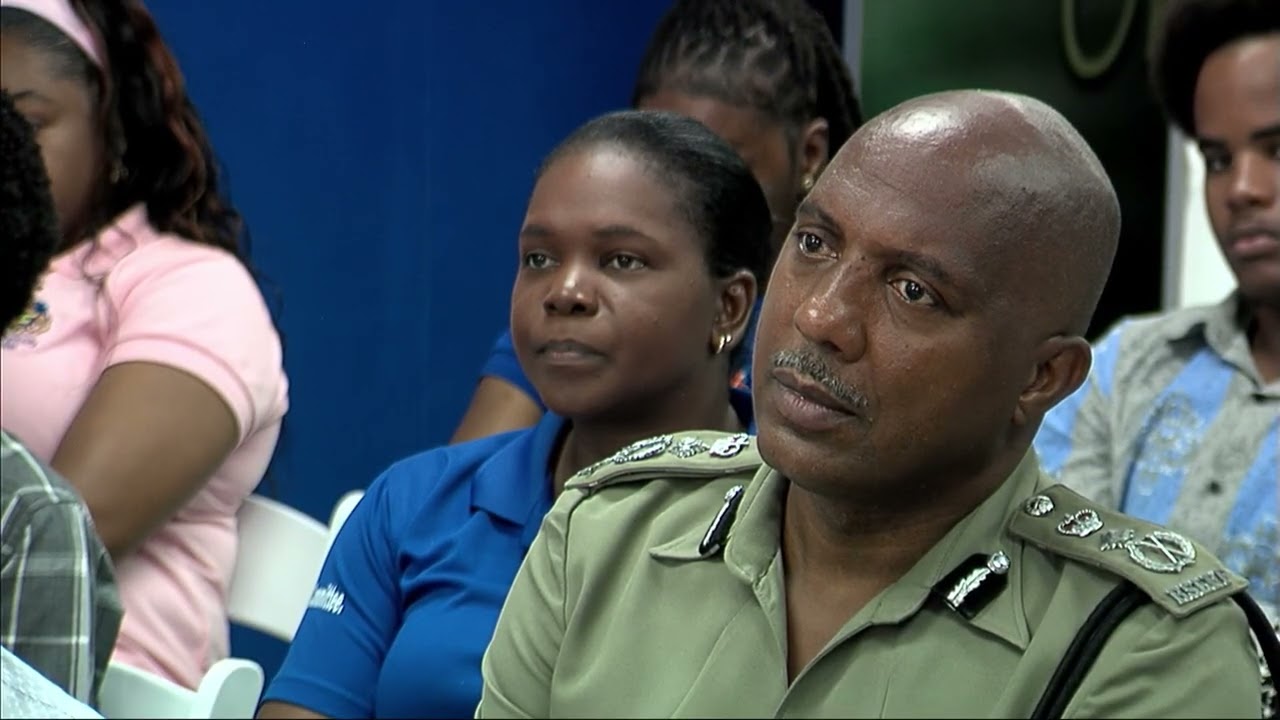
Video summary
The 2026 Brian Bernard Memorial Lecture convened in St. Lucia with solemn proceedings that underscored the nation's shared commitment to crime prevention and youth development. Following prayers for peace and law enforcement integrity, Inspector Zachary Hippolit honored the legacy of Commissioner Brian Eric Julian Bernard, a thirty-five-year public servant celebrated for his unwavering integrity, humility, and compassion. The event highlighted how the National Community Foundation was established in 2004 to promote ethical values within communities, while leaders like Honorable Emma Hippolit emphasized that sustainable prevention begins long before criminal acts occur through strong family units, nurturing schools, and supportive community role models. Speakers stressed that raising children is a collective responsibility involving families, educators, and society at large, rather than an institutional burden alone, calling for the mending of social fences even amidst real-life conflicts where relatives find themselves on opposing sides of violence.
Dr. Montel Felix delivered the central presentation as a distinguished criminologist who challenged simplistic attributions regarding youth delinquency by introducing key theoretical frameworks such as Social Learning Theory and Hirschi's Social Bond Theory. His research, which surveyed hundreds of secondary students across five schools, revealed that while attitudes toward crime are the strongest predictor for nonviolent offenses like truancy or substance use, a strong connection to school serves as the primary protective factor against violent behavior including cyberbullying and weapon possession. Dr. Felix illustrated through personal anecdote how even disciplined home environments cannot fully immunize youth without addressing external peer influences, arguing that schools must function not merely as response sites for problems but as vital hubs fostering belonging that deters violence. He explained that definitions of acceptable behavior shift over time based on proximity to delinquent peers, suggesting that repeated exposure normalizes actions like skipping school or fighting until they become viewed as standard practice within a specific social circle.
To effectively counter these influences, the lecture proposed comprehensive strategies that go beyond simple prohibitions by integrating social-emotional learning and conflict resolution programs into daily life. The discussion highlighted the necessity of creating environments where positive peer relationships are accessible through structured activities like sports and mentoring, alongside cultivating strong teacher-student bonds where knowing a trusted adult significantly reduces delinquent behavior. It was noted that students from households normalized for violence or theft require active intervention to build character rather than relying solely on parents who may lack resources, necessitating simultaneous training for both educators and families while updating curricula to address modern realities like online content influence. The consensus among attendees was that solutions must target prevention before adolescence by investing in positive adult relationships early from primary school onwards, ensuring a safe physical environment to avoid the broken window effect where negative surroundings foster criminal psychology.
In conclusion, the memorial lecture framed juvenile delinquency prevention as an urgent societal imperative requiring patience and collective effort to support young people navigating complex social landscapes. By adopting initiatives such as renovating schools for training centers, removing juveniles from adult facilities, and integrating virtue programs nationwide, stakeholders aim to provide every child with opportunities to choose a different path despite negative media influences or fading safety nets. The event ultimately reinforced the message that it takes a village to raise a child, urging communities to engage difficult youth who may seem disconnected by offering mentorship and emotional intelligence development rather than judgment. Through these multifaceted approaches involving government ministries, private sector partners, and prison reform advocates, St. Lucia strives to build an ecosystem where every young person feels valued, supported, and empowered to contribute positively to society while upholding the human values championed by Commissioner Bernard's enduring legacy.
Read the full video transcript
[music]
Welcome to the Brian Bernard Memorial
Fund commemorative lecture. I am your
[music] mistress of ceremonies, Nereti.
So first I will ask everybody to please
stand so that we could pray and you will
remain standing for the national anthem.
The prayers will be done by Mrs. Usilla
Curtain an NCF volunteer.
Good morning everyone.
um a bit old-fashioned. So, I did
walk with my prayer, my written prayer.
Those of you who are Catholics,
sign yourselves,
those of you who are not, do whatever
your religion permits you to do.
Heavenly Father, we thank you for life.
We thank you for gathering us here today
under the banner of the NCF to have this
meaningful discussion to advance and
enhance your people.
With humble hearts, we seek your divine
guidance, protection, and wisdom today
and always.
We now pray for crime prevention and all
all persons entrusted with maintaining
law and order.
Lord, we raise our voices and pray for
crime prevention in our homes, in our
communities, our schools and nation.
We knock at your door as you open. We
ask that the spirit of violence, hatred,
greed, and lawlessness is removed
amongst us.
Replace fear with peace, anger with
compassion,
and despair with hope.
Guard those entrusted with maintaining
law and order. Grant them wisdom,
integrity, courage, and fairness as they
serve and protect the nation.
We pray for young persons,
especially the younger children because
sometimes they are often forgotten.
Lord, we bring the youth and the little
ones to you. Help them to make wise
decisions.
Bless them with opportunities
for education,
employment, positive development and
leadership.
Stretch your hands over the sleep, the
future, the hidden fears, and the
growing dreams.
Cover them in grace and let us be
mindful that the trust is still tender
in its way and the world can wound them.
So we bring them to you, the God who
watches them in love and light. Spread
your peace and holy favor. Keep them
safe and keep them near. Guard their
minds. Guard their bodies. Guard the
songs they sing. Over the little ones,
over the youth, spread your wings and
let mercy rain. For the children of
tomorrow need your covering today.
Father, hear and answer our prayers.
Amen.
>> Thank you, Mrs. Quin. And please remain
standing for the national anthem.
[music]
Heat. [music]
[music]
Heat. [music]
[music]
>> [music]
>> seated.
Moving along with our program, we will
have some welcome remarks by Miss Vana
Reed Hinson, NCF Executive Director.
Good morning.
>> Good morning.
>> Morning. My name is Vana Reedson, the
executive director of the National
Community Foundation. Allow me at this
time to acknowledge special guests with
her with us here today. The Honorable
Emma Hippolit, Minister for Equity,
Social Justice, Gender, Older Persons,
Labor, Cooperatives, and Consumer
Affairs. Her Excellency Governor General
Dame Polet Emirator Dame Plet Louise and
proudly patron of the National Community
Foundation.
Mr. Shafur Celestein,
representative of the Ministry of
Education, Youth Development, Sports and
Digital Transformation.
Mr. Ricky Quinnland, representative of
the Ministry of Home Affairs, Crime
Prevention and Persons with
Disabilities.
Miss Kit Juul Frank Amaroso, chairperson
of the National Community Foundation.
Police Commissioner, Mr. Vernard and
members of the Royal St. Lucia Police
Force, members of the board of directors
of the National Community Foundation,
staff of the National Community
Foundation, representatives of the
Government Information Service, members
of the media, specially invited guests,
ladies and gentlemen joining us both in
person and virtually.
On behalf of the board of directors and
the staff of the National Community
Foundation, it is my pleasure to warmly
welcome you to the 2026 Brian Bernard
Memorial Lecture. We are grateful that
you have joined us as we continue a
tradition established in honor of a man
whose values continue to inspire us not
simply through remembrance but through
meaningful dialogue and action. Each
year, this lecture invites us to reflect
on issues that are fundamental to the
well-being of our nation. This year's
themes could not be more timely. Across
St. Nusha families, communities,
schools, law enforcement, and policy
makers are grappling with the question
of how do we create a safer future for
our young people. Today's discussion is
an affirmative nod that crime prevention
begins long before a crime is committed.
It begins in our homes, our classrooms,
our communities, and in the
relationships we build with our
children. It begins by creating
environments where young people feel
supported, connected, valued, and
hopeful about their future.
Recent research conducted here in St.
Lucia reinforces this very message. It
tells us that youth behavior is shaped
not only by individual choices, but by
the influence of family, pairs, schools,
and communities. That evidence
challenges us to think differently about
prevention, not as the responsibility of
one institution, but as a shared
national commitment. That is why this
lecture is so important. It brings
together government, educators, law
enforcement, civil society, community
leaders, and citizens to consider how we
can strengthen the protective factors
that help our young people thrive and
reduce conditions that contribute to
crime. At the National Community
Foundation, we believe that investing in
people is one of the most effective
forms of crime prevention. Every
scholarship awarded, every family
supported, every young person mentored,
and every community partnership
strengthened represents an investment in
a safer, stronger St. Lucia. We hope
that today's lecture will not only
deepen our understanding of the issues
before us, but also inspire renewed
collaboration and a shared commitment to
create creating opportunities for our
youth.
Thank you for joining us and for being a
part of this important national
conversation. It is my pleasure to
officially welcome you again to the 2026
Brian Bernard Memorial Lecture. I wish
you a thoughtful, engaging, and
impactful morning. Thank you.
Thank you so very much, Miss Vana Reed
Hson.
So right now we are going to have the
biography of the late police
commissioner Brian Bernard. And it is
definitely my pleasure to invite
Inspector Zachary Hippolit from the
Royal St. Lucia Police Force.
[applause]
Thank you Mr. Ceremonies. Allow me to
adopt the protocol that has been
established.
What is integrity?
Integrity is doing what is right and
ethical
even when no one watches.
What is humility?
Humility is placing team success above
personal ego and remaining open to
feedback. What is empathy?
Empathy is listening actively and
valuing the diverse perspectives of team
members.
What is empowerment?
Empowerment is delegating meaningful
responsibility
and lifting others up.
These are just a few of the attributes
that great leaders possessed. And the
man that we are honoring today was not
just a great leader. He was one of the
greatest.
Today we pause to honor the life and
legacy of a man whose commitment to
duty,
integrity,
and public service left an indelible
mark on the Royal St. Lucia Police Force
and our nation.
Brian Eric Julian Bernard was born on
August 12th, 1948
and enlisted in the Royal Senate Police
Force on August 16th, 1968,
beginning a distinguished career that
would span more than three decades.
Through dedication,
professionalism, and exemplary
leadership, he rose through the ranks,
serving in a variety of operational and
leadership roles before being appointed
commissioner of police on March 1st,
2001.
He retired from the force on August
12th, 2003,
having served with distinction for 32
years in policing and 35 years in
service to the government and people of
St. Lucia.
Commissioner Bernard was a leader who
embodied the very values he expected of
others. His career was defined by
unwavering loyalty,
discipline,
fairness, and an uncompromising
commitment to public safety.
He believed deeply in the oath of
service and in the responsibility
entrusted to every police officer to
uphold the law with both courage and
compassion.
To the officers who had the privilege of
serving under his command, I was one.
Commissioner Bernard was more than a
superior officer.
He was approachable,
honest, and sincere. A leader who
inspired confidence, earned respect, and
led by example.
He challenged members of the force not
only to enforce the law fairly but also
to examine their decisions through the
lens of humanity
recognizing that justice is most
effective when tempered with empathy.
One of Commissioner Bernard's greatest
concerns was the erosion of discipline
and ethical values within society,
particularly among the nation's youth.
He understood that effective policing
extended beyond responding to crime. It
re required building stronger
communities, nurturing character, and
creating opportunities that would steer
young people toward positive choices.
It is this vision that continues to
shape his enduring legacy.
Following his passing, the Brian Bernard
Memorial Fund was established on August
12th, 2004 and is administered by the
National Community Foundation.
Created in recognition of his
outstanding contribution to public
service and humanity.
The fund is dedicated to promoting
ethical behavior, strengthening human
and Christian values and encouraging
integrity within our communities.
His mission is simple yet profound
to strengthen ethics within our
communities by inspiring individuals and
institutions to act ethically toward one
another.
As members of the Royal Senica Police
Force, we continue to draw inspiration
from Commissioner Bernard's example, his
legacy reminds us that the badge is not
merely a symbol of authority,
but a solemn commitment to service,
justice, and the protection of our
communities. His life's work continues
to challenge every officer to lead with
integrity,
serve with humility, and remember that
the greatest measure of policing is not
only the laws we enforce, but the lives
we positively influence.
Ladies and gentlemen, as we commemorate
his life through this annual lecture,
may we honor Commissioner Brian Eric
Julian Bernard, not only with our words,
but continuing the work to which he
devoted his life,
building a safer, more ethical, and more
compassionate
St. Lucia. Thank you.
>> [applause]
>> Thank you so much, Mr. Hippo. Those were
amazing words for a definitely honorable
man. So, up next, we have some remarks
from Miss Kit Joel Frank Amaroso. She's
the chairperson of the NCF board of
directors. Welcome, Miss. [applause]
Good morning, everyone. I'd like to
adopt the protocol already established.
Now, the National Community Foundation
is hosting today. But we must first
begin by understanding who is the NCF
and why are we here. The National
Community Foundation was first
established through the National
Insurance Corporation in 2002. The
concept is credited to honorable Emma
Hippollet, Minister for Equity, Labor,
Gender, and Elderly Affairs, Social
Justice, and Consumer Welfare, when she
was the then director of the National
Insurance Corporation. [applause]
According to the NCF mission, the
organization exists to support
initiatives that engender
self-empowerment and social upliftment
through assistance to emerging community
needs in education, health, social
services, arts and culture, community
development, environment, and civic
affairs.
The NCF seeks to administer to the
vulnerable in our society through the
delivery and support of focused programs
including the specialized donor directed
activities.
This Brian Bernard Memorial Fund today
is one such example.
Growing up, I always heard the proverb,
it takes a village to raise a child. Who
else heard that?
However, it appears that something is a
miss. I cannot say if it is the village
that is no longer as engaged. Children
are no longer as open to direction. The
safety nets for a productive and
disciplined society have been fading.
But something is wrong.
Let's consider the content of social
media, the internet as a whole, and the
types of programs and movies that the
youth can now access.
Now, think about how easily a young
person can be affected by the people and
environment around them. Let's remember
that one positive influence can change a
life.
The foundational support that we the
leaders in society can provide are the
building blocks for opportunities for
our youth to succeed. This assistance
can come in many forms. It may be
mentorship, financial support, providing
a safe environment or simply a healthy
avenue to express themselves.
In more recent times, there has been a
greater focus on the importance of
developing emotional intelligence.
This includes the elements of
self-awareness, self-regulation,
motivation, empathy, and social skills.
It is hoped that through today's
discussions, we can zero in on some of
the challenges affecting our youth and
contributing to the issues surrounding
juvenile delinquency and challenges to
social learning. We thank you all in the
virtual space and in person for taking
the time to be part of this. and let us
the village find a way forward to
improve the lives and future of our
youth because I believe the proverb
still has relevance today and it does
take a village to raise a child. Thank
you.
Thank you so very much Miss Frank
Amaroso for those encouraging words.
Up next, we have an address by the
Honorable Emma Hibollet, Minister for
Equity, Social Justice, Gender, Older
Persons, Labor, Cooperative, and
Consumer Affairs. Minister Hippolit is
also one of the key founders of the NCF
and the founder of the Brian Bernard
Memorial Fund, Miss Emma Hippolit.
[applause]
Good morning everyone.
>> Mr. Commissioner, I didn't realize you
were hiding at the back.
>> Let me recognize our patron de Plet
Louie for being here and my apologies
for being late everyone.
I recognize the chair of the board of
the NCF
and the board members
of the NCF.
I recognize Miss Hingson who's our CEO.
I recognize today our
commissioner of police,
Mr. Vernard,
our
lecturer Dr. Montel Phillips,
our online viewers, esteemed ladies and
gentlemen, good morning.
>> It is a privilege and an honor to join
you this morning for the 2026 Brian
Bernard Memorial Lecture.
I extend my sincere appreciation to the
NCF for the invitation to share these
remarks as we gather to celebrate the
life, legacy, and enduring impact of our
former commissioner. I want to take this
moment to thank in a big way the
ch the chairperson and directors of the
National Insurance Corporation.
As you've heard as when I was the
director I made a suggestion it was
accepted
but since then the NC the NIC continues
to support the NCF. So let us show our
appreciation to the NIC.
[applause]
Commissioner Bernard was a man of
integrity, courage, and unwavering
commitment to public service.
His leadership was grounded not only in
the pursuit of justice, but also in the
belief that strong communities are built
through compassion,
partnership, and opportunity. His legacy
continues to in to inspire all who are
committed to creating a safer
and more just St. Lucia.
This year's film crime prevention and
youth development is both timely and
significant.
Across our nation, we continue to
confront the complex challenges
associated with crime and violence.
In my own constituency of Suare for
Shak,
we have to be dealing with young persons
who are related blood relatives and who
are on opposite sides
and we have to sit in the room and
engage and you try to understand what
exactly has was the beginning of this
problem and sometimes you just can't get
an answer that is
making sense but they are at on opposite
sides and as a community we need to sit
and see how we mend the fence.
While effective law enforcement remains
essential,
we must also recognize that sustainable
crime prevention begins long before
crime and criminal behavior take root.
And you've heard a little of this from
former speakers. It begins in our homes
where values are first instilled.
It continues in our schools where young
men, young minds are nurtured and
encouraged to dream.
It is reinforced in our communities
through positive role models,
mentorship,
recreational opportunities and access to
education,
employment and social support.
So with this I am saying
it is the entire nation, the entire
community, the entire village as the
chairperson puts it that is responsible
in shaping
our youth.
And somewhere along the line
throughout
uh the community we as a community we
have built
And I I believe what this lecture and
other activities that are happening now
is causing us to take a pause and
reflect
on
what has caused such a fracture in our
society
and how as a government, how as a
community we can try to
put Humpty Dumpty together again. Um, a
lot of people believe that
the horse is out and we cannot bring it
together. But I am one with tremendous
faith to know that there's nothing that
we cannot achieve
if we put our Lord first.
So today I want to to thank persons who
are in the room who are doing tremendous
work with us. Um Dr. Montel
um in the crime prevention unit who is
doing tremendous work on the ground with
us. Our commissioner and his team who
are doing tremendous work with us on the
ground. Our peers in crime prevention.
We have persons in the ministry of
education, persons in the ministry of
youth and sports, our prime minister who
is providing the financial assistance to
the diff different projects, persons
within my own ministry of um equity
sitting to see how best we can come
together and I I miss Wallace I just saw
your face. Good morning. Sorry I didn't
see you here. Um, Miss Wallace is the
manager for the boys training center.
So, you have different groups coming
together. Um, we need to really put a
proper structure in place because but we
are doing different things nationally to
deal with that challenge.
So I am
committing to say that as a government
we need to embrace
a lot of work that is being done by
other members of the society. Persons
like Dr. King, Prince Kash, a whole set
of persons who are doing work. We really
need to bring everybody together and see
that we do not duplicate the efforts but
we must work with one vision.
Significant work must be done within the
Ministry of Education, within the
Ministry of Youth and Sports
and the private sector as well,
especially in terms of
um mentorship and work apprentice
programs.
Um and
we need to deal as well with some of the
persons who are encouraging our young
men to be in these issues. So we need to
we need to be able to sit around the
table and say how we deal with it.
I'm told there are persons within the
prison system themselves
who have realized that they are there
and
they are contributing to what is
happening and and are committed to
working with us to make the changes. So
within the NCF
we have a team. We have the virtues
program which is a very important
program. I believe we need to get
funding for it. We need to get our
schools to embrace it
and we need to go back to engaging our
persons and I recognize Mr. Victorin
from the SS SDF is there again doing
significant work in his area. So it is
all of us coming together and see what
part
um what slice of that pie we take, how
we bring it together and how we
ring fence our young children. We need
to ring penc
and in doing so for example we have to
see how what what provision we make to
remove our juvenile offenders
out of the body correctional facility
cuz when I go there and I see we have
young persons below the age of 18 there
and they have committed hard crimes but
I say they're in the wrong university
because if we have to transform them and
that's not a place for that.
And as a government, we are looking at
seeing how best we can
um renovate the George Child's
um old George Child school, how we can
quickly renovated to move the boys
training center from Rosile to there.
And as a medium-term measure, how do we
renovate and fix up the boys training
center so that the juvenile
um persons in BTC um in bodily should
move to there. So we are trying to do
different things. So in all of that, I
ask you to keep praying for our young
people, keep showing them the love, the
patience that is required at this time.
Because when I sit with them in my
constituency office, I can tell you it
requires a lot of patience
um to engage these young persons and to
try to get them to sometimes they don't
you speak and they don't even hear you
because they in a different they're in a
different world. Um but you need to
continue speaking and you need to be um
to continue being patient and to be at
it until we succeed.
So I want to again thank the NCF for
this annual lecture and let one of the
things to come out of it is the uh
adoption of the hutus program within the
education system in St. Lucia. Thank
you.
[applause]
Thank you so much honorable Emma
Hippolit for that informative speech. So
up next we have the introduction of the
lecturer and that will be done by Miss
Marissa Steven the NCF volunteer and
media personnel.
Good morning.
>> Permit me to adopt the protocol that has
been established.
Our lecturer this morning is Dr. Montel
Felix, a distinguished criminologist,
researcher, and law enforcement
professional whose career has been
dedicated to understanding crime,
justice, youth development, and
community safety. Dr. Felix holds a
doctor of philosophy in crime prevention
and corrections from Central Police
University in Taiwan.
His doctoral research examined the
factors influencing police officers
decisions to make arrests when
responding to intimate partner violence
cases. He also holds a master of science
in management with a specialization in
criminal justice management from the
University of Maryland and a bachelor of
science in criminal justice from Monroe
College in New York. With more than two
decades of service in the Royal St.
Lucia Police Force, Dr. Felix has
successfully combined practical policing
experience with research, education, and
public policy. He currently serves as a
research consultant within the Ministry
of Home Affairs, crime prevention,
conflict resolution, and persons with
disabilities, and he contributes to the
development of evidence-based crime
prevention strategies and national
policy initiatives.
Dr. Felix has also lectured at Taiwan
Police College and Central Police
University, teaching criminal justice
and criminology theory to future law
enforcement professionals and graduate
students.
He served as a voluntary research
advisor to nursing students at Sir Alfa
Lewis Community College supporting them
in research design and academic writing.
His research has been published in
internationally recognized academic
journals and covers juvenile
delinquency, policing, corrections,
inmate trust, and procedural justice. Of
particular relevance to today's lecture
is his 2023 publication examining the
influence of social learning and social
bonds on delinquency among secondary
school students in St. Lucia. His
research provides valuable insights into
the social influences associated with
youth offending and the protective
relationships that can support
prevention. As we reflect on the legacy
of former commissioner of police Brian
Bernard and examine the important
relationship between crime and youth
development, we are privileged to hear
from someone whose professional journey
bridges policing, academic research, and
national policy. Ladies and gentlemen,
please join me in welcoming our
distinguished lecturer, Dr. Montel
Felix. [applause]
Good morning everyone.
>> Allow me to adopt the protocol that has
already been established.
Uh before I begin,
I would like to share a very personal
story. That's my first time sharing it.
So um as some of you might know,
my father was the my school principal.
I'll not say which school. [laughter]
And you know on paper some might assume
that I had everything going for me. The
protective factors in a household.
Um I came from a good household, a good
structure.
I had discipline
uh parental supervision
and yes my father was my principal.
But that did not make me immune to
falling
through the cracks for delinquency. I'll
not say whe whether it was violent or
nonviolent.
So like many many young people
I did associate with bad friends or
delinquent friends.
Um,
you know, yes, I knew that that behavior
was wrong, but what I had been taught at
home,
their influence still mattered to me. So
as I got older and eventually became
involved in policing um criminal justice
research
I kept coming back to the question why I
was raised
well but
I did not say I didn't go by the wayside
but pay influence influenced me to
become a delinquent at school.
So back to your question, why why can a
young person come from what we might
consider a good home,
know right from wrong, have parental
guidance, and still become involved in
the Lucan behavior. Why?
Now I like to make my presentation
interactive. So I'm going to ask a few
questions as I go along. Okay.
So that question is actually very close
to what we're going to explore today
because delinquency is not simply a
question of whether child comes from a
good or bad home. Young people exist
within multiple social environments,
family, friends, school and community.
And those environments can
simultaneously expose them to both risk
and protection.
So my research publication examined two
important questions.
One, what are young people learning from
the people around them?
And what are the bonds that potentially
restrain them from delinquency?
So these are essentially the competing
mechanisms representing
the social living theory and the social
bond theory or social control theory.
So today I'm going to share with you the
findings of my research on the impact of
social learning
and social bonds on
juvenile delinquency among secondary
school students in St. Lucia.
Then
sorry and as you go through the
presentation
I want you to keep your mind open to my
story because when we get to the
findings of the of the of the study
we're going to see whether the evidence
supports what many of us instinctly
believe about parents pairs and schools.
the slide.
Okay. So the slide is um across there.
Okay. So presentation overview.
Okay. So we'll begin by establishing
what we mean by juvenile delinquency and
why it is important for us to understand
it.
I will then bring you to the discussion
closer to home by looking at the context
within the Caribbean and St. Lucia.
From there, I'll explain why I conducted
this study and introduce the two
perspectives
or criminological theories that shape
the research, social learning and social
bonds.
And I want you to remember the story I
shared at the beginning again
because these theories speak directly
into that experience.
The main focus of today's presentation
is the evidence.
We are going to look at what the study
actually found, what those findings
mean, what those finding findings mean
for crime prevention, schools,
families and communities. And then we
will conclude with some key takeaways
and recommendations moving forward.
So before we continue,
I want to give you a small challenge.
Think of one factor that you believe has
been the greatest influence on
delinquency among young people in St.
Lucia.
It could be friends, parenting, schools,
poverty, social media,
community, attitudes, or something
entirely different.
You don't have to tell me your answer
yet. maybe later
because when we get to when we get to
the findings, I'm going to ask you to
revisit your answer and see whether your
perception matches what the evidence
actually showed.
Okay.
Understanding driven delinquency. Before
we talk about the causes or influences
of delinquency, we first need to
establish what do we mean by
delinquency.
In simple terms, delinquency
refers to the unlawful or socially
prohibited behavior
committed by children or adults. So an
adult can smoke a cigarette, but an
adult can't because it's not socially
acceptable. Same with alcohol.
However, one important point is that
juvenile delinquency is not limited to
serious criminal behavior. When people
hear a term delinquency, they
immediately think about gangs, weapons,
drugs, or serious violence.
But delinquency encompasses a much
broader range of behaviors.
So, let me ask you,
that's a question. When you hear the
term juvenile delinquency,
what's the first behavior that comes to
mind? There's about two or three
responses.
Okay,
one more.
>> Pardon me.
>> Good. Okay, so as we can see the answers
might be different and that illustrates
something important. Delinquency can
take different forms and vary
considerably in seriousness.
So in this study, delinquent behavior
was examined in two broad categories,
violent and nonviolent behavior.
So violent delinquence included
behaviors such as that's part of the
questionnaire the the the students were
asked to answer
hitting someone with the intention of
hurting them physical bullying verbal
bullying bullying through social media
or as it's coined cyber bullying.
Then we have nonviolent delinquency
which included behaviors such as
truency, theft, marijuana and cigarette
use selling drugs, sharing of
pornographic material and bringing
weapons in schools.
So throughout this presentation whenever
I refer to nonviolent and violent
delinquency these are the categories of
behavior that were actually measured in
the study.
So let us move towards the Caribbean and
St. ution context.
Youth violence is not simply a St.
Lucian problem. It's a problem as you
know in the wider Caribbean.
Across the Caribbean, youth violence and
delinquency have been long-standing cons
have been long-standing concerns for
governments, schools, communities, and
civil society.
So, I'm going to ask another question.
What do you think makes young people in
the car in Caribbean societies
particularly vulnerable to violence and
delinquency?
Two responses.
Okay,
one more.
>> Great. Okay, so these responses
demonstrate something important.
Delinquency really has one single
explanation.
Young people are influenced by families,
peer groups, schools and the environment
or communities around them. So let us
zone in on St. Lucia.
Some [clears throat] of the historical
regional data cited in in this study
provided an indication of
concerns that existed
among senu.
So for example, a UNDP citizen survey
reported that among senator youth, 21.7%
reported carrying weapons at nights,
16.2% reported carrying weapons during
the day and 42.5% reported keeping
weapons at home.
So let's pause and think about that last
figure. 32.5.
That means almost one in three of the
the persons interviewed
reported keeping a weapon at home. So
how do we interpret that? What does this
tell us when a young person feels the
need to carry or have access to a
weapon?
Is it delinquency?
Or could it be fear,
perceived vulnerability,
or the belief that carrying a weapon
provides protection?
So, we're going to connect to schools.
Now,
the school environment is also part of
this wider context. Across the
Caribbean, concerns have been have been
included in fighting, bullying,
vandalism, and other forms of
school-based violence.
But I don't want us to think about only
schools
as places where delinquency occurs as we
will later see in the findings
connection to school can also play an
important protective role.
So rather than beginning with the
question how do we punish a delinquent
perhaps we should ask this question
instead. what is happening around the
young person and what may be what may be
affecting their behavior.
So for the purpose of study
having established the context the next
question is what exactly was this study
trying to understand?
At the time of the research, there was
limited empirical
evidence examining delinquency among
young people in St.Alia.
So rather than relying primarily on
international evidence
and assuming that the same explanations
internationally would apply to St.
Russia, this study sought to examine the
issue within our own island, the Sian
context.
So before we delve into the two research
questions, let's consider this scenario
just to think about. Imagine you have
two students attending the same school
from the same community, same age.
One becomes involved in delinquency and
the other does not. What might explain
the difference? Two responses.
Pardon
>> me.
Good.
I think the individual mindset as well,
>> the belief system. Great. Okay. So
that's that's exactly what
the research speaks about. What what are
the factors that may increase or reduce
the likelihood of delinquent behavior
or does a company young people keep
matter?
Okay. The second concerned
social bonds or social control.
Do weak bonds to conventional society
particularly connections to schools,
communities, environments, family,
significantly influences
our behavior?
Or again in simpler terms, can strong
relationships and connections help
protect young people from delinquency?
Okay. By the hands, who thinks per
influence will be the strongest
predictor in this study?
>> Yeah. Okay. Who thinks family rel
relationships?
Okay. What about connection to school or
teachers?
Who thinks all free? All three matters.
Okay. All right. So remember the answer
because when we get to the findings
we'll compare with what you thought or
the findings say.
Okay.
So we're now looking at the theoretical
framework. So the study is grounded in
two crimological theories.
I don't want to bore you too much into
the whole methodology.
Um
so one of the theories help us to
understand how delinquent behavior can
be learned while the other helps us
understand what may restrain a young
person from engaging in delinquent
behavior.
Now this is where the story I shared at
the beginning about my
experience starts to make theoretical
sense.
So how do you explain that? How could
those protective relationships exist
while at the same time pet influence
was pulling me in the other direction?
These two theories help us understand
that tension. So let's start if what is
the social learning theory.
The social learning theory essentially
tells us that behavior can be learned
through our interaction with others.
Birds of a feather flock together.
Monkey see monkey do. Okay, that's
simple terms.
So
think back at my experience having a
structure at home did not mean that I
existed only within my my environment.
Like every adolescent I also existed
within a pair environment
and that brings us to the first concept
of the social inferior.
It's called differential association.
different association.
I mean know the terminology might sound
complicated but there's a question who
are you associating yourself with and
what are these persons doing?
If the people you spend significant time
with are engaging in delinquent
behavior,
you are repeatedly exposed to that
behavior.
A few days ago, I was I was doom
scrolling, but
I was not just doom scrolling anything.
It was more on an educational aspect.
So, I came across this video and he
said,
"You spend a day in a fish market, you
don't to buy fish, you'll come back
smelling fish.
You spend a day in a perfume shop, you
buy no perfume yet. You come back
smelling perfume." So the moral of the
story is proximity makes you carry the
scent of where you stay
and your environment shapes your habit,
[clears throat] your mindset and energy
just like it shapes your physical order.
So the social learning theory goes a
little bit further. It's not only about
who you around. It also is also about
who you eventually begin to accept,
justify and normalize.
So that's where we come to the term
definitions. A young person might
initially know that a particular
behavior is wrong.
But after repeated exposure,
perhaps skipping school doesn't seem so
serious. Fighting becomes justified in
certain situations.
carrying a weapon might become viewed as
a necessity for protection.
So the question becomes,
does repeated exposure eventually change
what a young person considers
acceptable?
So we're going to move to the social
bond theory or like I said earlier,
social control theory.
If social inferior explains the pull of
peer influence, social bond allows
allows us to look at the other side of
my story. Despite that peer influence,
there was also relationships and
expectations connecting me to
conventional society, family, school,
authority, expectations from my parents,
values.
So that is so the social bond fury was
was the brain the brainchild of Travis
Hershey
a renown criminologist.
So what Travis came he came up with two
questions.
Many of us will ask
why
do persons commit crime?
He said nah let's look at it from a
different angle.
Why don't persons commit crime?
>> Why don't you commit crimes?
You understand? So instead of asking
that question, you turn it around. What
prevents persons from committing crime?
So the basic argument is that strong
bonds to conventional society can
restrain delinquent behavior while
weaker bonds can increase vulnerability
to delinquency.
So Hershey identified four elements
under the fury.
Attachment, commitment, involvement and
belief.
So for today's discussion, what I
particularly want you to remember is the
idea of connection.
Connection to parents, teachers, schools
and conventional values.
Now let us use a hypothetical 13y old.
Let's stick my aside. So a 14-year-old
has friends who who skip class, fight,
engage in other dealing behaviors.
But that same young person has a teacher
he respects, feels connected to.
He's connected with school, has
supportive relationships at home, and
believes in conventions, conventional
rules and values.
So can those connections be strong
enough to counter some of the influence
coming from his pairs?
That is what socialborn f theory asks us
to consider.
So now let's put the two theories side
by side.
The social learning theory asks what is
the young person learning and from whom?
Social bond asks what is the young
person connected to and how strong are
those connections?
And then we think back to my story.
I can see both processes operate at the
same time. There were bonds connecting
me in one direction while pair influence
pull me in the other direction. So both
can exist at the same time.
So let's ask you why simply saying he
came from a good home or she fell on the
wrong way.
These questions may not adequately
explain delinquency.
So for this section if you want to
remember only two words from the from
this free.
Social learning equals connection.
Social bond equals sorry social learning
influ social social learning equals
influence whereas social bond influences
connection. So the research then asked
how those how do those influences and
connections relate to delinquent
behavior among youth in Senosia.
So we'll now move on to methodology. I'm
just going to skim through this one
quickly. So
this study targeted 300 students across
five different secondary schools in St.
Lucia. And for ethical purposes, I will
not say which schools. Um I got um 268
responses. Um the target sample was form
one and form two students
and the age range was between 12 and 13.
Sorry, 12 and 15, but the majority of
students were 12 and 13. So the students
completed a questionnaire about the
experiences and behaviors.
So this was particularly useful because
not every incident of delinquency
comes to the attention of the teachers,
the the parent or the police.
Sorry.
So again the study examined violent and
nonviolent behavior and explored how
those behaviors were related to the two
areas we've discussed.
Okay. Now
this is the most important part of the
presentation the findings.
Okay.
So earlier I asked you to think about
what you believed would be the greatest
influence on delinquency.
So remember your your answers. Before we
begin I'm just going to explain the
slide quickly.
Um,
the green arrow, sorry, the red arrow
pointing upwards means that when that
factor was present more strongly,
young people tended to report more
delinquent behavior. The green arrow
pointing downwards means that stronger
connections in that area were linked to
less delinquent behavior.
One other thing to keep in mind that
these findings show us relationships.
They tell us which things tended to go
together did not mean that any one
factor by itself caused a young person
to to become delinquent.
So let's start with nonviolent
delinquency.
The factor that stood out
the most was young people's attitudes
towards delinquency.
To put it simply, young people who are
more accepting of delinquent behavior
were also more likely to report engaging
in nonviolent delinquency.
The next factor that stood out was the
company they kept.
Young people were associated more with
delinquent pairs were also more likely
to report nonviolent delinquency.
But we also found something protective.
their the relationships to their
teachers. That's teacher teacher
attachment.
So [clears throat] young people who had
stronger connections with their teachers
tended to report less nonviolent
delinquency.
Now let's move on to um violent
delinquency
because something interesting happens
here. The factor under violent
delinquency that stood out the most
was connection to school.
So young persons who felt more connected
to the school tended to report less
delinquency.
Attitudes toward delinquency were also
important. Young people who were more
accepting of delinquent behavior tended
to report more delinquency.
[clears throat]
But what I particular want to notice is
that when it came to violence,
connection to school stood out most.
So let me ask, why do you think feeling
connected to a school might help protect
a young person from becoming involved in
violence?
Why do you think feeling connected to a
school might help protect a young person
from becoming involved in violence?
two responses
or one.
>> Great. Yeah. A sense of belonging. Yeah.
>> So that's an important finding for
prevention because it suggests that that
the school isn't simply somewhere
respond to problem problematic
behaviors.
after it happens the school environment
can potentially can potentially be be
part of the protection around a young
person.
So now we have total delinquency. So in
the survey I just added the statistics
between nonviolent and violent
delinquency. I'll just brush it quickly.
So when violent and nonviolent behaviors
were combined, we looked at overall
delinquency and we saw a similar
pattern. Again, attitudes towards
delinquency stood out the most. The next
major influence was association with
peers
and again stronger relationships with
teachers were linked to less
delinquency.
So I'm going to bring the findings
together. So if you remember earlier,
if you remember nothing else from the
slide, I want you to remember three
things.
What young people believes in matters.
Who they spending time with matters
and who and what young people feel
connected to matters.
So that's this this is what the findings
are telling us.
PD
this the the evidence is right there
from the survey.
>> Can you repeat the three again please?
>> With pleasure. What young people believe
matters.
Who young people spend their time with
matters
and who and what young people feel
connected to matters.
So,
did these findings match your
expectations
or did did anything surprise you?
One or two responses.
>> Okay.
Okay. One of the things I find
interesting is that the same factor did
not stand out for every type of
delinquency. For nonviolent and for
nonviolence and overall delinquency,
attitude stood out the most. For violent
delinquency, connection to school stood
out the most. And that gives us a very
important lesson for prevention. We
cannot assume that one solution will
address every form of delinquency.
Okay.
>> [laughter]
>> So policy and practice implications.
So now that we know what the research
found the important question becomes
>> what do we do with the evidence?
So the findings suggest that effective
prevention can cannot only focus on
responding to delan behavior after it
occurs.
We also need to address the attitudes,
relationships, environments that
influence the behavior in the first
place.
Uh
one second.
Okay.
Okay. So, first
attitudes matter.
Definitions favorable to delinquency
were the strongest predictor of
nonviolent delinquency and the second
strongest predictor for violent
delinquency. So prevention has to go
beyond simply telling young people don't
do this. We need to challenge the
beliefs and justifications that make
delinquency
delinquent behavior appear normal,
acceptable or necessary.
That could involve conflict res
resolution programs,
social emotional learning,
positive role models and interventions
that help young people develop healthier
ways to respond into difficult
situations. I mean these days before you
not even step your should touch
somebody's shirt, they want to grab a
gun and and and shoot you, you know. So
number two, pairs matter.
association with delinquent pairs was
the second strongest predictor for for
both violent delinquency and total
delinquency. But our responses cannot
simply be choose better friends.
A more useful prevention question is how
do we create environments where positive
pair relationships become more
attractive and accessible?
That means creating opportunities
through sports, mentoring, youth
organizations
and other structured activities where
young people can develop positive
relationships with both peers and
adults.
Thirdly,
any teachers here?
Okay. Our teachers matter.
Stronger teacher attachment was
associated to lower delinquent behavior.
That tells us that the relationship
between a student and a teacher is not
merely academic.
For some young people, having an adult
at school who knows them, listens to
them and takes interest in them may
become an important source of connection
and also protection.
Finally,
teachers school connection matters too.
One of our most important findings for
violent delinquency was that school
attachment was associated
was sorry actually the strongest
predictor operating in a protective
direction. Students who are more likely
attached were more strongly attached to
school reported lower delinquency
lower violent delinquency sorry. So we
need schools where young people don't
just simply attend. They need to feel a
sense of belonging in the school.
So question again,
if you could strengthen one thing in our
schools tomorrow to help reduce
delinquency, what would it be? I think
one or two question, one or two
responses.
>> Yes sir. I believe
[clears throat]
that the school
has a benefit of social
and so
we really have to create this new
education system
and we cannot continue to divorce
building of character education system
who are less inclined
to be inclined
um is not totally because the attachment
to school that attachment to school
um that that shows less
happened before.
>> Mhm. So I think is lack of practice. to
so
there's definitely a link between
poverty and crime but but causation is
not necessarily
that correction is not
poverty doesn't necessarily cause
strength is a lack of character
>> because because most of us are growing
so I think the school
has to become a great reform
And we have to incorporate the building
of character into our education system.
It must be deliberate.
>> True.
>> One second. Yeah.
>> I support him totally
thinks that the school will have some
resistance by going forward while at
home backwards. So you find the school
and some want the school to influence
the children in character.
So you still has to do
it you have that that negative
[clears throat] backlash from the home
as well is not in syn with
>> you also need to create a safe
environment for the teachers themselves.
I I find that a lot of our teachers
spend time dealing with the delinquency
where they should be spending time
teaching. Um so we need to um make
mechanisms in place to deal with the
delicate behavior. Um I see I see a
class for example the teacher is
teaching a class and sometimes have to
leave that class to deliver one
individual for almost a whole hour or
two principal. So the the rest of the
students are just then left to their own
devices. So whilst we we we say the
teacher needs to do this teacher needs
to do that etc. But the the the support
enir and safer environment must be
created for the teacher who seems to be
now always dealing with delinquency.
>> Yeah. That's one point serious and I
think that serious root cause analysis
would and it would be interesting if you
actually ask the students that feel that
attachment to school how is it at their
home? How was it like at their home?
>> Because really truly nothing has changed
fundamentally different in terms of
>> what is offered or what is delivered in
class the curriculum. Maybe the
commitment by the teachers might be
lacking but the curriculum is basically
the same thing
>> as well when when I went into school is
more interesting
>> but what has happened is that the family
values are ser been seriously eroded.
Mhm.
>> And I I think if we do serious root
cause analysis, that is where the issues
at. I I think that is where the issues
are. That is that is our challenge. One
of the something that that that that has
taken me back now
um in the questionnaire
this one of the question one of the
questions I asked the students,
have you experienced violence at home?
The same students who said yes are the
same students who answered yes for I see
no problem in beating my my classmate. I
have no issue if my friend does it. So
you see where the the cycle continues.
So you grew up in a household where you
believe no that's that's a norm. So you
go to school you do the same thing. Same
way you in a household where your
parents they steal or your parents
you know send you to steal. You go to
school, you might do the same thing and
then your P seat, you do the same thing.
So it's repeated.
Yeah.
>> So where is the best place for that?
accountable. If you see violence at home
and your students, you can exercise
violence for students
that reinforces the point that education
system
coming into school. It doesn't have
to be in the school. We need to we need
teachers who are who are taught to
address that kind of from the from the
as part of the education system and if
it is
if it is introduced as part of the
education system
where we're going to build character the
parents who want to counter that will
have to explain what basis you want the
government and the country to decide not
to instill discipline in your child
because because the country needs
>> and what basis you want to add
>> to um Mr.
Um when you mention for example very the
education system and what is being
offered there is very much the same
right
when you think about what the internet
is saying you're you're saying what is
offering education is very much the same
and the internet is saying
that what the youth is dealing with or
what we are seeing is amplifying there
is a gap how Can this system or the
education or what is being
integrate and relate to youth in a way
where you know what what is happening in
school addresses what we're seeing so
that it's not really the same should it
really be the same is it actually
reflecting the context and actually
taking responding is is the system
responding the updates the upgrades the
way that it was being actually taunt the
person involved. Is there now a
responsiveness to the context that we
know
to actually address this issue familiar
with disability
but I can give an example of the
situation at play. I attended a certain
school. I won't say whether it was my
primary school or secondary school, but
I attended a certain school and there
was certain behavior among certain
students there. And I went to my mother
and informed her about the issue. My
mother went into the school to speak to
the relevant school officials
about her concern. This wasn't the the
education. This was the subjects. This
is what was happening in the school
environment
because the children belonged to certain
prominent families. They did not wish to
rock the boat. And the school official
point blank told my mother, "That is
your responsibility to continue to raise
your child the appropriate way."
All right. So again, we are in a school
environment.
We are learning subjects but there is
another aspect to school life. There's
something happening in that school life.
Because of how I was raised, I I openly
spoke up and went to my parent about my
concern.
My parent goes in to the school, right?
And the school official is responding
that because it is the social element of
the school and who the children are that
are involved in that social element, it
is not their part to deal with. Okay?
Cuz it was not technically violating a
specific school rule.
>> We're not talking about whether or not
it was moral behavior or ethical
behavior. It was not a school rule that
was being violated, but it is something
that can influence and impact
the the students life and the way they
go forward,
but the school is not taking a role in
it.
>> That's a
point made by Mr. Hson is a valid point.
The reality is that we have to work on
both ends. We have to work with the
school, make the education system a lot
more responsive, um deal with character
building, but we also have to work with
the families. We cannot neglect working
with the families because if we work
with the families, we will develop more
committed teachers. Individuals who are
more committed to delivering the
material that will develop. Cuz some of
the challenges, some of these
individuals are not committed to
teaching.
They want to earn a salary, but they're
not really committed to teaching and
doing some of the work that is required
to really build character within the
school. But you could build character in
the school if the person returns home
that all your work in the school will be
eroded. So it needs to be done at both
ends both the family and the school.
That is where so our programming has to
be deliberately
>> pleasant day. I will change the dynamics
a little.
you raised you were raised in a good
home and you still your pay engagement
you decided okay I'm going to be part
and parcel because of the context at the
time there is something that is key in
the crime prevention aspect and engaging
in crime that we do not take a look at
environment in the sense of environment
we are what we are part of and persons
don't take into consideration the
physical environment
>> mhm M
>> in its context, the physical environment
has a lot to do with it. Children spend
a lot of time at school just like we
spend a lot of time at work. What does
the school setting look like?
Is it a comfortable environment? Is it a
welcoming environment? Already we know
the home environment that they are
coming from. If you're now going into
another environment, what type of
physical environment it is. And this is
an area that we really need to work on
because it is not a welcoming
environment and of course you will not
want to continue to stay there because
it is not what you want to be part of.
This can also change your psychology
your the way you think because if you
are in an area whereby it looks nice you
would dress nice.
>> Correct.
>> You would feel nice.
>> Mhm.
>> If it's not then the reverse happens the
broken window effect. Right.
Additionally,
an important factor is
most of us are speaking of what it is
that can be done for children and what
can be done for us to change the crime
aspect. What are we doing as adults?
What used to happen? We go to the
village raises a child. Let's go on the
context of the village repres um
>> the raising the child. How many of us
turn a blind eye when we see things that
not supposed to be? How many of us are
role models? Remember, children are
replicating, repeating what it is that
we are doing as adults. So if we as
adults are not doing the right thing
even when no one is looking, what do you
think the child is going to do?
Then thirdly, we think we can think for
them
and we don't listen to what it is that
they have to say.
And lastly, and most importantly, the
four-letter word that a people afraid to
look at, love.
And love is not what they make you
believe. Love is actually what it is in
its context. Mutual respect,
genuine caring. So all of these are
factors that we have to take into
consideration when looking at a child
and when we're looking at crime and we
really need to work on the environment,
the infrastructure, what it looks like
so that we can change because you as a
criminologist would know that the broken
window effect says that whatever your
environment looks like that is exactly
what you are going to portray.
>> Correct.
>> Thank you.
Yeah, I'm sorry. I just
>> Yes. Um
on Mr. Hson and Mr. Victor's point from
earlier. Um I just want to say while I
agree totally that the school must be a
major player in getting that difference
that change must be. Um my thing is that
we also have to take in consideration
that while we want to work on the
students we must also work on training
the teachers. The reason for that think
of me as a teacher at 22 years old
teaching for about three or four years
not in a real situation. I'm just saying
[laughter]
and
>> I was like
>> and um you bring that new program in. I
came from a home that might have been
like how the students come from.
>> So my whole upbringing is not what you
really expect to be um pushing that
program. So I must be worked on first so
I can buy into the new first to be able
to teach that to the streets because my
upbringing is is exactly what we're
trying to move away from. And if I if
I'm still in that mindset and I'm
teaching, I'm just a teacher in the same
mold that the students we're trying to
change is. So So we have to look at that
as well.
May I
there there's one factor doctor that I
believe that we seem to forget because
this factor is also very helpful to
mankind.
But it it is a double-edged sword. You
you mentioned three main factors we have
to focus on. peer influence what the
child mindset is on and there was a
third one
my father could be the commissioner of
police and my mother could be Miss Emma
Hippolit and I raised in a good home and
I could be spending hours on social
media listening to plump peos and came
and six
>> I'm not I have not gone on the block I
have not met any pairs and I'm at home
with my headphones and my parents
believe oh he's such a nice boy He's
such a nice girl. He or she goes
nowhere. And then all of a sudden when I
react in school, I'm blaming the
teacher. I'm blaming mother and father.
But no one knows that I'm spending 10
hours a day listening to the most vile
of music and all type of bad content on
social media on my device and my parents
hardly check on me. I say this doctor
just for us to understand the reason why
we have so many different answers is
because it's a complex
>> problem to deal with and whilst you
might have a a a class where you would
say oh the teacher needs to do more just
because two students are misbehaving but
there are 13 that are doing well in that
same teacher's class that same teacher
so it is very dynamic in my 31 years as
a police officer. I have seen things
that have just shocked me where I have I
have been called to the massi store to
to to to deal with a student who you
would think who just stole a bar of
chocolate, oh that that child must come
from a home that is poor. That child
must come from a ghetto youth's home and
when we get to the home you are shocked
at who the parents are and how how how
great their life is. So I I just wanted
to bring that in doctor to for some
reality in the situation that it is so
complex and that's why we have varying
views.
>> Yeah. Because to borrow from what he was
talking about, if you look at what grabs
people's attention now, it is never the
quiet, the safe, the the proper
behavior, the expected behavior in
society. It is how outlandish can you
be, right? The ones that we uplift, the
ones in society who are the headliners,
they are not the people who conform.
They're the people who stand out whether
for positive or negative reasons. Right?
And then you're dealing with children
now who in today's society will not
accept you just telling them do this.
They want to know why.
>> And as a society, guess what? Half of us
cannot answer the why.
>> The response that that is how we grew up
or that is what we were told.
>> People said that's not an answer for
them. They need to have the ex
explanation and it has to make sense.
And in the same breath when they ask
when they speak up you're shunning them
because they're free thinkers. You want
free thinkers. That's how change
happens. That's how society evolves. You
may want to um curb it in a certain
manner but we are stifling some of them
and as a result now they're going to act
out in a different way. So it is a
complex situation and one of the things
that we have to appreciate is that
yesterday's solutions may not help us
with today's problems
>> and in a in a society now where we are
no longer a rock onto ourselves. We are
part of a global institution, a global
family. We need to be a little bit more
cognizant about what we are exposing
ourselves to as a society because
society itself is changing. The beliefs
and the structures that we had are
falling by the side. So I think that all
of the discussion we've had has been
very interesting, but it needs to go
beyond the four walls of the school. It
needs to go beyond the four walls of the
home. It needs to go beyond the the the
pairs as in the peers that you live at
home with or down the block, right? Um
your the peers are now the people on
online on Facebook, on Instagram who
live in in Timbuktu.
>> All right. And those are the ones
they're socializing with.
[laughter]
>> Hi, morning doc.
>> Morning sir. I really appreciate your
presentation, but I noticed that you try
not to be the sage on the stage.
[laughter]
I'm going to throw the ball right back
at you. I need you to be the sage on the
stage. You are the academic who has done
the work. I I'm I I sense that you're
avoiding preaching, but I think it's
necessary this morning that you do the
preaching.
>> Yes.
>> You had a stage on the stage from your
research because the work is done in St.
Lucia, very often we go back to our
anecdotes and how we feel and so on and
you've done the research. You put the
stuff out there. You found it out. I
need you to tell us what you found and
what we need to do based on what you
have found because you've done the work.
It's not an anecdote. You've done the
research and it's out there. I need you
sorry apologies but I need you to tell
us that because very often policy here
there's a resistance to have data inform
the policy and I know it's cultural and
structural but the work that academics
do all around the world informs these
things and in St. Lucia, I think we need
to change the approach. So, having done
the research and having accepted the
invitation to stand on the stage, I'm
going to throw it to you.
>> Preach to us.
>> Preach.
>> Thanks.
>> Okay. One thing I can I can safely say
now, um, we're
our department is tasked with
creating a national crime prevention
policy. Now our approach
was to make it datadriven.
So we conducted
a few national surveys and some other
departments and with [snorts] my
research my colleague we also did
research well this PhD thesis in
delinquency it's also a a national
survey we've incorporated these that
data into the policy it's presently
under review by our superiors
yeah
but thank you very much for your comment
in the interest of him. Um, allow me to
continue, please. [laughter]
That's a that's a very it was a very
fruitful and interesting conversation.
Okay, I'll just skip to the next slide.
Okay, so effective prevention is not
only about reducing risk, it's also
about strengthening protection. Okay.
Um, conclusions and key takeaways. So as
we come to the end of the presentation,
I want to bring us back to the central
question. What influences delinquency?
And perhaps equally important, what does
understanding those influences tell us
about prevention?
So I'm just going to run through because
of time. Okay. So
okay, looking ahead,
where do we go from here? The
recommendations are granted in in a
simple principle. If delinquency is
influenced by attitudes, pair
associations and young people's
connections to school, then our
prevention strategies should
deliberately target those areas. So,
first we need to strengthen young
people's sense of connection and and
belonging to school. Um, this particular
this is particularly important because
school attachment emerge as a strongest
predictor of violence
operating in a protective direction. So
the question should be how do we make
school schools places where young people
feel valued, included and connected not
simply places they are required to
attend.
That means identifying students who are
beginning to disengage through absentism
and we saw that through through COVID um
postcoid many students got disengaged
from school um through well absentism
behavioral difficulties declining
participation and other signs. So we
need to intervene before that
disconnection becomes more serious.
Second we need to invest in positive
teachers student relationships. Um
teacher attachment was of course
associated with lower delucan behavior.
So that tells us that teachers can
potentially play a protective role that
ex that extends beyond the academic inru
instruction. For some young people, one
trusted adult at a school who knows
them, listens to them and recognizes
that when someone is changing may make a
meaningful behavior. Sorry, when
something is changing, it may make a
meaningful difference.
Um thirdly, we need to address how young
people think about delinquent behavior.
Um remember definitions favorable to
delinquency were were the strongest
predictor of delinquency. So prevention
cannot simply consist of saying don't
fight, don't steal, don't carry weapons.
We need to challenge the attitudes,
beliefs, and norms that allow these
behaviors to become acceptable,
justified, and normalized.
Um finally
we need to target prevention early.
Most of the participants in this
research were 12 and 13 years old. So if
these influences and behaviors are
already observable at that age then we
need to not we should not wait until a
young person has graduated into the
system before we intervene.
So the earlier we identify the risk and
strengthen protection the greater our
opportunity to change the trajectory.
Okay. So
looking ahead further research we also
need to continue building evidence.
We need more we need more surveys. We
need more research. We need to gather
more data.
So the study was concentrated among
younger school students. So future
research should therefore include older
adolesence and
and a broader representation of schools
and young people.
I envisage um if in the interest of time
when I when I conducted that survey um I
wanted to do a longitudinal survey to
follow the students from form one to
form five.
However, thanks I want to start from
younger from primary school and follow
them through
and that takes a lot of commitment and
funding minister. [laughter]
Okay. So for me to conclude a final
thought, when we strengthen the
environments around young people, we
strengthen
their opportunities to choose a
different path. And perhaps that is
where effective
juvenile delinquency prevention truly
begins.
Thank you very much.
[applause]
Thank you so much Dr. Mont Dr. Montel
Phelix for that powerful powerful
presentation. [snorts] Okay. So before
we continue for our closing remarks I
just want to briefly state something
that I wanted to say earlier. There's a
part of everything that everybody I
think missed. Um outside of your
responsibilities, outside of your
titles, outside of what you believe your
character is, who are you?
Who are you in the core? What is it that
is higher than you that you believe in
that could set you on course? I think
that's something that society has lost
our spiritual belief. We have lost
course. We have gone into more of the
physical aspects of things. So I believe
if we are more centered, if young
persons get to learn who they are as an
individual, what their purpose is on
Earth, that could help curb the
different distractions that will bring
or maybe cause us to enter into criminal
activity. So that's just my little
tidbit. So in closing, I would like to
welcome Mrs. Leslie Crane Mitchell, NCF
Education Committee member and head of
the UI Open Campus St. Lucia, [applause]
thank you m
everyone. A pleasant good morning and
please allow me to adopt the protocol
that has already been established.
As we come to the close of this year's
Brian Bernard Memorial Lecture,
I believe that we leave here with
something far more valuable than just
information.
We are left with a challenge. a
challenge to look more closely at the
environment our young people grow up in,
the relationships that shape them, and
the opportunities that we provide for
them to make positive choices.
The research presented this morning also
leaves us with a heavy responsibility
by reminding us of something that should
be obvious but too often is not of
something at once profound and deeply
human that young people do not grow in
isolation.
They are shaped by the people who
surround them, the relationships they
experience, the schools they attend, the
communities in which they live, and
perhaps most importantly by whether they
feel that they belong.
Dr. Montel Felix's research challenges
us to look beyond a simplistic
explanation for the behavior of young
people to consider not only what the
young person perhaps did that was wrong
but also what relationships surrounded
them. What opportunities were available
to them? Who was there to guide them,
encourage them, believe in them and help
them find a different path? These are
difficult questions but they are
necessary ones because if our young
people are influenced by their
environment then we must accept that
each and every one of us have a role in
creating that environment and by
extension a responsibility to ensure
that our youth are provided with the
best possible physical, emotional and
social conditions to enable them to
thrive.
The responsibility for the well-being of
our young people cannot only rest on
their shoulders. It is a shared
responsibility.
That is perhaps the most important
message that we can take from this
morning session. If social environments
can contribute to negative behaviors,
then the inverse is true that positive
social environments can also serve as
powerful protective factors.
As the hardworking and dedicated staff
of the National Community Foundation
know only too well, every family
strengthened is an investment in a
child's future. Every teacher who makes
a student feel seen is an investment in
a child's future. Every mentor who
offers guidance is an investment in a
child's future. And every community and
every community, sorry, that creates a
safe space for young people is an
investment in our natures nation's
future. And sometimes the difference
between a young person who loses their
way and one who finds their way forward
may be as simple and as profound as
having one person who cared enough to
stand beside them.
That is why the findings shared this
morning should not leave us with a sense
of helplessness. They should in fact
leave us with hope.
And so as we remember Commissioner Brian
Bernard, perhaps the greatest tribute we
can offer is not simply to remember his
name, but to allow his memory to move us
towards action.
Let this lecture challenge us to ask
what more we can do. What more can we do
to strengthen families to keep our young
people engaged in school? What more can
we do to provide them with mentors,
positive role models and safe spaces?
And what more can we do to ensure that
every young person in St. Lucia knows
that they are valued, that they matter,
and that their future matters to us.
Because behind every statistic is a
story. And behind every young person is
a future that can be shaped for the
better. Our young people are not merely
the leaders of tomorrow. They are part
of St. Lucia today. The society we leave
to the next generation will be
determined in large measure by what we
choose to do for that generation right
now. So may we leave here this morning
not simply inspired but committed.
Committed to building stronger
relationships.
Committed to creating safer communities.
Committed to listening to our young
people. Committed to giving them not
only boundaries but possibilities.
And committed to ensuring that no young
person is defined forever by a mistake,
a circumstance, a poor choice, or a
difficult beginning.
As we honor the memory of Brian Bernard,
may we also honor the young lives whose
futures are still being written. And may
the knowledge share shared here this
morning help us write those futures with
greater compassion, with greater wisdom
and greater hope. Because ultimately the
measure of a society is not only how it
remembers those who came before us but
how faithfully it invests in those who
will come after us. On behalf of the
education committee of the national
community foundation I extend sincere
appreciation to Dr. Montel Felix for his
valuable contribution to this most
important conversation.
I extend appreciation to all of those
who made this lecture possible and to
everyone who joined us here this
morning. May the memory of Brian Bernard
continue to inspire meaningful inquiry,
thoughtful dialogue, and most
importantly, positive action in service
of our nation and of its young people. I
thank you.
>> [applause]
>> And thank you so much, Mrs. Leslie Crane
Mitchell. So, here concludes our
commemorative lecture. Ladies and
gentlemen, thank you so much for
participating and for being here with
us. It was definitely a pleasure. I pray
that the powers that be do give you the
funding and the resources necessary to
con to continue the project. I believe
it's necessary. I believe it's necessary
and that we come up with some more
creative ways to really engage our youth
and to bring up more outstanding
citizens fully holistically as well. So,
thank you once again and do enjoy the
rest of your day.
Look.
[music]