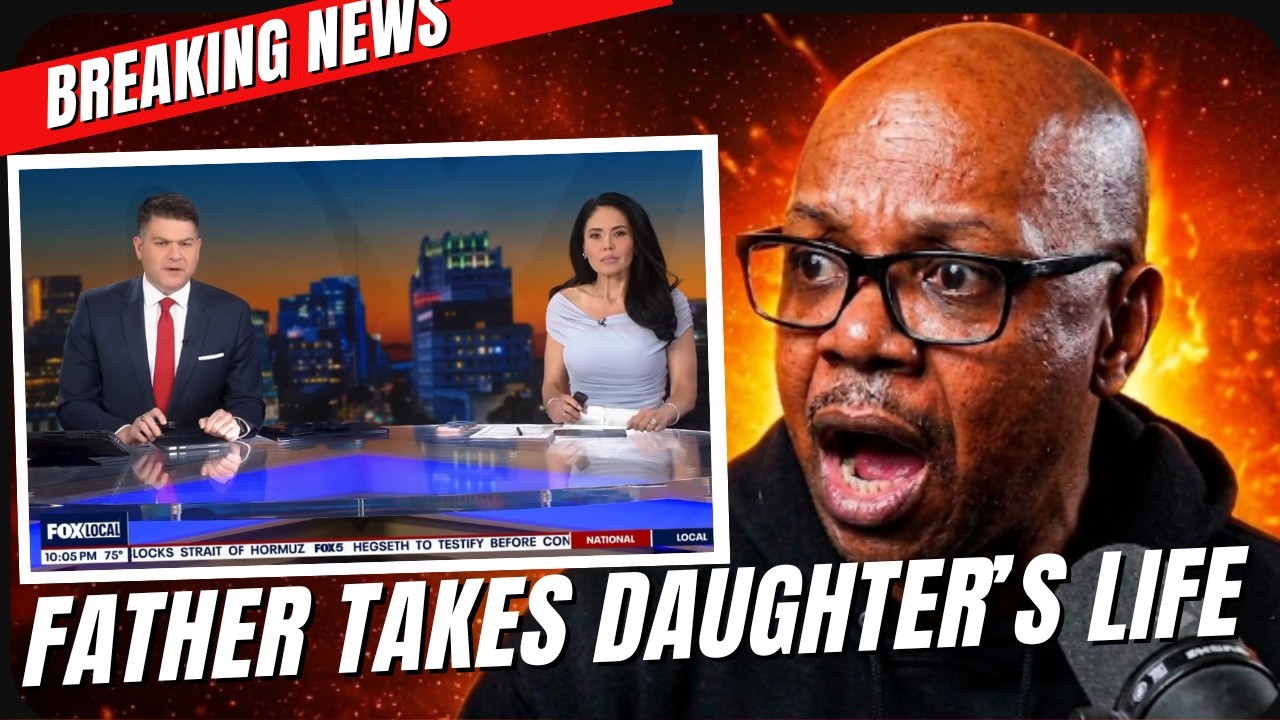
Video summary
The video presents a disturbing biblical account from the Book of Judges, detailing how Jephthah, after leading Israel to victory against the Ammonites with God's help, made a rash vow that whatever came out of his house to greet him would be offered as a burnt offering. Upon returning home in triumph, he was met by his only child, who danced and played tambourines to celebrate his safe return. Overcome with grief upon seeing her, Jephthah felt compelled to honor his word despite the tragic consequences, leading to the sacrifice of his daughter. The narrative highlights the complexity of this event, noting that while some traditions suggest he may have allowed her to live as a virgin for two months before she died in the mountains mourning her lost future, the text explicitly states he carried out the vow by offering her up.
The speaker emphasizes several critical theological and ethical questions surrounding Jephthah's actions, particularly focusing on why God would allow such an event or if He expected it at all. The core argument presented is that human vows differ significantly from divine commands; while God honors His own promises, humans are not obligated to make rash oaths out of emotion or excitement without careful consideration. The video cites scriptures like Numbers 30 and Matthew 5:37 to illustrate the biblical principle that one should simply let their "yes" be yes and their "no" be no, avoiding unnecessary vows that could lead to sin or tragedy. It is argued that Jephthah's lack of counsel before making such a severe promise was a grave error, as he failed to recognize that God had already provided the victory through His Spirit, rendering the sacrifice entirely superfluous and abhorrent in nature.
Furthermore, the transcript draws parallels between Jephthah's story and other biblical instances where vows were broken or led to disaster, such as the sons of Hamor who initially vowed not to kill Shechemites but later killed them after circumcising themselves, showing how seriously God views integrity regarding one's word. The speaker concludes that while breaking a vow is sinful, making an unnecessary and foolish vow in the first place is equally problematic because it invites temptation toward evil actions. Ultimately, the video serves as a cautionary tale urging believers to be mindful of their words before speaking them, reminding Christians that they do not need to make extreme vows to prove their faith since God's presence within them through salvation is sufficient. The tragic ending underscores the importance of wisdom and restraint in making promises to God, ensuring that future generations learn from Jephthah's mistake by honoring their commitments without resorting to such horrific extremes.
Read the full video transcript
your own daughter. I know this world is
bad, but to kill your own daughter,
>> man is behind bars accused of killing
his daughter.
>> Fox 5 Shamari Stone has this story.
>> Have you heard about this? A man
actually decides to kill his own
daughter. And you won't believe the
reason why. [music]
[music]
>> This world is sick. It's been sick for a
long time. It's sick now. and it will
continue to be sick until the day the
Lord comes back and gives it a brand new
scrubbing. Yeah. This time with fire.
But while we live on this world, it's
almost as though we we're never ceased
to be amazed by how low, how much
ugliness, how much sin, how much
destruction, how much killing takes
place. And it should not come as a shock
or surprise that now we've got family
members killing their own family
members. But there's one particular
story that is just uh a father killing
his own daughter. And the reason why is
because of God. Yeah. There's a story in
the Bible of a man named Jeepa. You've
probably heard of it. Maybe you haven't.
Maybe you have not. Of a man who is
following after God who decides to kill
his own daughter in honor of or as a vow
to God. In Judges 11:30, the Bible says
that Jeepa made a vow to the Lord and
said, "If you will indeed give the sons
of Ammon into my hands, then it shall be
that whatever comes out of the doors of
my house to meet me when I return in
peace from the sons of Ammon, it shall
be the Lord's, and I will offer it up as
a burnt offering." So what did he do? So
Jeffa crossed over to the sons of Ammon
to fight against them, and the Lord gave
them into his hand. He struck them with
a very great slaughter from Aayor from
Aor to the entrance of Menith 20 cities
and as far as Abel Keramine so that the
sons of Ammon were subdued before the
sons of Israel. Now it's time to pay the
piper as you so to speak. And so when
Jeffa comes back comes to his house
behold his daughter was coming out to
meet him with tambourines and with
dancing you know to celebrate her father
coming back. Now she was his one and
only child. Besides her, he had no son
or daughter. When he saw her, he tore
his clothes and said, "Alas, my
daughter, you have brought me very low
and are among those who troubled me."
So, what's the problem? Now, he has to
sacrifice his daughter cuz remember, he
made a vow. Well, there's a couple of
questions that come up as to what's
happening here. One, why did he do such
a thing? Two, does God expect him to
honor that? Three, did he actually
sacrifice or offer his daughter up?
Well, if we go back to the text, we'll
see what he says. He says, "For I have
given my word to the Lord, and I cannot
take it back." So, he's going to have to
go through with this. But there's some
debate. There probably shouldn't be, but
there's some debate as to what he
actually did to her. Verse 36. So, she
said to him, "My father, you have given
your word to the Lord. do to me as you
have said since the Lord has avenged you
of your enemies, the sons of Ammon. She
said to to her father, "Let this thing
be done for me. Let me alone for two
months that I might go to the mountains
and weep because of my virginity. I and
my companions." Then he said, "Go." And
so he sent her away for two months and
she left with her companions and wept in
the mountains because of her virginity.
So what does it mean because of her her
virginity? Well, this is referring to
likely that the fact that she has never
been with a man. So she has no family,
no children of her own, and so she'll
die that way. Verse 39, at the end of
two months, she returned to her father
who did to her according to the vow
which he had made, and she had no
relations with the man. And so the
question is, what was the actual
offering? Did he, some would say that
maybe he allowed her to go and live
forever as a virgin, but that's not what
the text says. The text literally says
to do he did to her according to the vow
which he made for her which is to offer
her up as a burnt offering. Now there's
a problem with that. Number one, there
is a prohibition against human
sacrifices. Now how you deal with that
though uh depends upon what the
sacrifice was for. For example, there is
a prohibition that the the children of
Israel could not offer up a sacrifice to
Molech, a son or daughter of theirs to
Molech. God would that person is to be
is to be killed. But a person who does
this, the Bible is not totally clear on
that. But he but God is not after any
sort of sacrifices whatsoever. Because
other verses that we see regarding this
deals with someone who is doing this
according to some sort of divination.
Well, that wasn't the case with Jeffa.
Jeffa just made a he made a rash vow.
There are people in the Bible who have
made statements, who have said things
that they should not have. Remember the
Bible is going to record the good things
and the bad things that people do. And
in this case, this is one of the bad
things. Jeffa had no business making
this sort of vow. And I understand that
Jeffa may have wanted to make sure that
he would secure the victory. The problem
is though, Jeffa did not need that. Why?
Because we look in verse 30, but if we
just scroll up one verse previous, it
says, "Now the spirit of the Lord came
upon Jeffa so that he passed through
Gilead and Manasseh. Then he passed
through uh Misbrav and Gilead and from
Misbra of Gilead he went to the sons of
Ammon. So the spirit of the Lord had
come upon him. Doubtful the spirit of
the Lord come upon you and you not have
any idea especially in that time
especially to empower you to win these
particular conflicts to have the Lord to
bring these people into your hand. Yeah,
it's kind of hard for him not to know
that. Sometimes though, you can make a
vow out of excitement, something rash,
out of emotion. As a matter of fact,
we've seen that before. We're going to
see where we saw that before. But you
need to understand why he is so torn and
why the daughter understands what has
happened because she says, "You have
made a vow." Cuz when he saw her, he
tore her clothes and said, "Alas, my
daughter, you have brought me very low."
Why? For I have given my word to the
Lord and I cannot take it back. And she
agrees. You have given your word to the
Lord. Why is that such a big deal? Well,
in the Bible, giving your word is
actually a big thing. Think here are a
couple verses that we need to look at so
that you can kind of see what the Bible
says about offering up your word.
Numbers 30:2. If a man makes a vow to
the Lord or takes an oath to bind
himself with a binding obligation, he
shall not violate his word to do so
according to all that proceeds out of
his mouth. When you make a vow to the
Lord your God, you shall not delay to
pay it, for it would be sin for you, and
the Lord your God will surely require it
of you. However, if you refrain from
vowing, it would not be a sin to you.
You shall be careful to perform what
goes out of your lips, just as you have
voluntarily vowed to the Lord your God
what you have promised. God is serious
about what comes out of your mouth as a
vow. Remember, um, our profession of
faith is a vow. And so God takes this
very seriously. Psalm 76:11, he says,
"Make vows to the Lord your God and
fulfill them. Let all who are around him
bring gifts to him who is to be feared.
Do not make a vow with the intention of
not to keep it or making a vow and then
not keeping it, no matter what it is."
Even Jesus brings this up. He says in
Matthew 5:33, "Again, you have heard
that the ancients were told, "You shall
not make a false vow, but shall fulfill
your vows to the Lord. But I say to you,
make no oath at all, either by heaven,
or uh it or for it is the throne of the
God, for it's the throne of God, I'm
sorry, uh or by the earth, for it is the
footstool of his feet, or by Jerusalem,
for it's the city of the great king. Nor
shall you make any oath by your head,
for you cannot make one hair white or
black. But let your statement be yes,
yes, or no, no. Anything beyond this is
evil. In other words, there's no need to
vow or promise what you're saying and
attach to anything else. Just let your
yes be yes and your no be no. Otherwise,
all you're doing is you're trying to
convince other people and yourself of
something that you're probably not sure
of. So, just say this is what I will do
without any vows because there's nothing
that you can do to perform it anyway.
And just simply let your word stand on
its own. Now, to make a nice little
segue, Jesus is making this statement.
Jesus is out of the line of Judah, the
tribe of Judah. Why is Judah the one
that Jesus comes forth? Judah is not the
oldest son of Jacob. As a matter of
fact, Judah is the fourth oldest. The
first three are not have disqualified
themselves because of their actions. The
first one because he slept with his
father's concubine. But the next two did
something
similar to this. They made a vow and
went against that particular vow. And so
because of this vow, this shows how
severely God takes these oath, these
vows. And so because of that, they are
now taken out of or they have
disqualified themselves from the Messiah
coming through them. So let's go to
Genesis 34:13.
Now, but Jacob's sons, Ancestor Shaim,
and his father Hmore, with deceit.
Remember, this is where Dina had been
defiled by them. But because of this
man's desire to be with Dina, they
decided to take this vow with uh the
sons of Abraham, the son, I'm sorry, the
sons of of Jacob. And they even vowed to
become like them, to take part and
become like the Jews, to circumcise
themselves and to follow after God. And
so the two sons vow uh not to kill them
in exceeding for this so that their
daughter or that their sister would not
be defiled. And so there's an agreement
made. So the Bible says that Shaam and
his fathers hammered a seat because he
had defiled dine of their sister. They
said to them, "We cannot do this thing
to give our sisters to one who is
uncircumcised, for that would be a
disgrace to us. Only on this condition
will we consent to you. If you will
become like us and that every male of
you be circumcised, then you we will
give our daughters to you and you will
we will take our daughters for
ourselves." So the problem is that they
make this vow. If you're going to kill
them, you should have killed them
because they defiled your sister. But
don't make a vow again making them
become like you. Remember the
circumcision was a sign of them
following after God as well. And so what
do they do? They turn back against their
vow. And in their in their father's
death or at his deathbed as he's dying
and Jacob is blessing the sons, he
brings this up again. It's important in
the eyes of God and all the Jews
understand this. As a matter of fact, I
think human beings particularly for the
most part, we understand that going
against your word is a no no. It's a bad
thing, especially for God. So when Jeffa
goes against his word, it's a serious
thing. He didn't. So what did he do? He
actually sacrificed his daughter
unnecessarily. He needed not to even
make this vow. The Lord was with him.
The Lord was going to fulfill what he's
going to do. Cuz remember how important
are vows? Well, when God gives a vow, he
honors his. He expects us to do the
same. And so, the expectation was for
Jeepa to do the exact same thing to
honor his word. And according to the
text, he did so. There are some that
think that what he did was so vile that
he was punished later. Maybe he was, but
the Bible doesn't say so. There are
there are Jewish uh rabbitic traditions
that would state that he died in such a
horrible fashion. We just don't know
that. We have no idea. We just know that
he was buried. Uh but the circumstances
surrounding his burial doesn't say. Was
God happy with the with the vow? No. But
he had to carry out the vow because of
this. Now, some of you would say, "If it
was my father, he's not carrying out
that vow on me." But the fact that his
daughter allowed this would show what
she thought about what a person's vow to
the Lord actually meant. So, yeah,
that's weird. That's bad. And I would
say um that anyone if he would had
counsel would have said to this person,
don't make that vow. It's unnecessary.
And if you're going to vow something, be
a little bit more clear what you're
going to vow. Anything that comes out of
your house, this is just you just being
exuberant because what you know the Lord
is going to do for you. And so you want
to just do something. Well, if you're
going to do something for the Lord, do
something godly. Do something that's
really honoring to him. uh the sacrifice
of your daughter does nothing to move
the Lord because again the spirit of the
Lord had already come upon you. So there
was no need to. So here we've got an
example of someone saying something that
they didn't need to perhaps because he
maybe didn't fully believe it. I'm not
sure why it wasn't there. Can't get into
his head or to his heart why he did so,
but it was clearly not something that
the Lord was after. Weird story, tragic
story, tragic ending, but it does
highlight how important our vows are to
God. And so with that being said, our
vow to God as we as believers, as we
serve him, how much importance do you
think God places on our words when we
say something? When we when we decree or
say to ourselves, we're going to honor
the Lord and we say this verbally, that
means something. When we make a
confession or profession before people
about us serving the Lord, God expects
that. Everyone else does, too. And we
should always honor our words. But you
don't have to put a vow or tie it to
something. Just as Jesus said, let your
yes be yes and your no be no. In this
way, we can outdo and do much better
than what Jeffa did. We don't have to
tie our vow to anything. God is already
with us. If you're saved, you don't have
to worry about the spirit of the Lord
come upon you. He's already in you. And
so just walk in that and just let your
words be what they are. Amen. [music]
[music]