Video summary
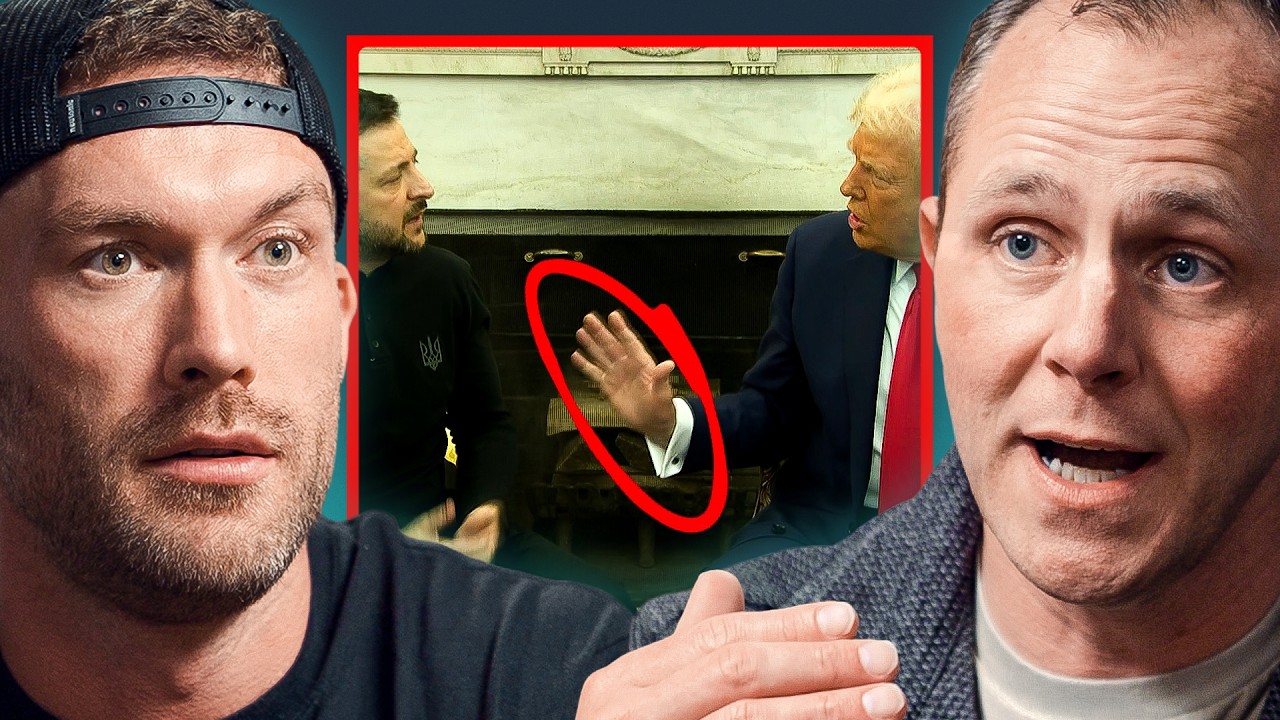
In the discussion regarding behaviors that signal insecurity, Chase Hughes advises looking beyond simple micro-pauses to deeper mammalian and human responses rooted in evolutionary biology. He identifies incomplete movements, such as reaching for an object and stopping mid-action before resuming, alongside reduced arm swings and downward eye contact as primary indicators of fear or lack of confidence. Most significantly, he points out that insecure individuals instinctively adopt postures designed to protect vital arteries; this includes keeping the humerus closer to the body to shield the brachial artery, raising shoulders to guard carotid arteries, and lowering the head for similar protection. Men are more prone to crossing arms or using a "fig leaf gesture" to cover their genitals while simultaneously protecting femoral arteries, whereas women often wrap a single arm around their abdomen to protect the uterus area in social situations where they feel vulnerable. The conversation shifts to specific facial cues that reveal when someone is withholding information or emotions, with lip compression highlighted as a critical signal of holding back truth. Hughes explains this mechanism through Desmond Morris's theories on human behavior described in his book *Naked Ape*, suggesting that these actions are evolutionary remnants related to nursing and defense. For instance, pushing the tongue out slightly serves as an immediate "no" or refusal, while licking lips is classified as a hygienic gesture intended to enhance attractiveness before delivering potentially questionable information. These gestures act as subconscious attempts to stack the deck in one's favor rather than overt signs of lying, illustrating how humans instinctively manage their presentation even when trying to appear honest. A crucial distinction made during the dialogue is that there are no universal behaviors for deception itself; instead, observers must detect changes from a baseline and analyze clusters of signals within specific contexts. Hughes emphasizes that while tapping fingers might indicate stress in one instance, it could be a habitual action if performed consistently throughout the day without change. Therefore, effective detection relies on noticing shifts such as a sudden transition from present to past tense when discussing a missing child or an abrupt increase in breathing rate and pupil dilation alongside new physical tics like finger-tapping that were previously absent. Without establishing this baseline and considering environmental factors like temperature changes that might cause arms to cross for warmth, interpreting isolated behaviors leads to false conclusions about dishonesty. Ultimately, the speakers conclude that body language analysis is not an exact science akin to a polygraph but rather a probabilistic assessment similar to meteorology, where one evaluates historical data against current observations to determine likelihoods. In high-stakes situations, relying on single indicators like crossed arms is insufficient; instead, analysts should look for a "mountain of behaviors" including verbal hesitancy and language shifts that collectively suggest stress or deception. The dialogue also touches upon the importance of hydration in maintaining cognitive performance, with Hughes promoting Element electrolyte drinks as essential for reducing muscle cramps and optimizing brain health to support clear thinking during such analytical tasks. By focusing on detecting changes rather than absolute truths about lying, individuals can better navigate social interactions and accurately gauge the security or insecurity of those around them.
Read the full video transcript
You're talking there about building
confidence, but I'm interested in what
behaviors instantly reveal insecurity.
You mentioned micro pauses as one that
maybe not insecurity but authority and
trustworthiness perhaps.
>> Yeah.
>> What are the behaviors that reveal
insecurity?
>> So, when it comes to insecurity, let's
go mammalian and then human. So, the
mammalian
uh fear response or insecurity response
is a reduced arm swing,
incomplete movements.
So, like I'm going to reach for this and
I'm going to stop and then kind of
continue doing it and then
the movements aren't completed. You'll
see a lot of that kind of stuff.
>> Mhm.
>> And you'll see reduced eye contact in a
downward motion. And biggest of all,
you're going to see the body moving or
staying in areas that protect arteries.
This means you'll see a lot less of
this. You'll see the humerus kind of sit
in a little bit closer to the body while
they're talking so that the brachial
artery is protected. You'll see the
shoulders a little bit up in in social
situations that'll stay a little higher,
their head coming down a little bit
uh protecting the carotid arteries.
You'll see the arms in front of their
body like this sometimes. This is called
a fig leaf gesture um named by Allan
Pease.
>> Cuz it's covering the genitals.
>> Covering yeah.
>> Uh interesting.
>> But it's also protecting the femoral
arteries at at the same time.
And men are more likely to do that.
Women are more likely to wrap a single
arm around the abdomen like this while
they're talking during like if they're
insecure. And this is protecting the
uterus area.
And there are studies on this. I've no
idea who did the studies, but uh this
was originally written about by a guy
named Desmond Morris uh who who just I
think died in the last month or two. He
was in his 90s, but he's like the first
researcher who wrote a book about really
observing humans as if they were
animals. Like what how do they how do
their body move and
uh so the book was called Naked Ape.
They're like us. And like the hairless
monkey.
And
he studied he was like this savant at
human behavior.
But anyway, like when you're looking at
the insecure behaviors
and you if you're looking at two people
what you really want to look at
especially if there's two people
is which person needs something more
from the other person and which person
is reacting to the other person.
The one thing man I'm
hesitant to reveal this.
The one thing
that I teach uh a lot of these venture
capital people they'll they'll get
pitched a lot.
Uh I've never been to one of the
pitches.
>> I've been on the pitching side quite a
bit over the last 6 months. So I know
what this feels like.
>> The one thing that I teach them to look
for is what's called lip compression.
And we tend to do this at times when we
are
we are withholding a little bit of
information or we're withholding an
emotion.
So like you imagine like if your friend
started a new job and you're like hey
dude how's it how's the new job? He goes
OH IT'S GREAT.
>> [laughter]
>> SO
THAT LIP COMPRESSION IS WITHHOLDING.
So what I teach them to do is
watch for the compression. The moment
you see it just rewind. What were they
just talking about right before you see
it?
>> How's the financials in the business?
>> Yeah. He says oh all the financials are
great. Uh we've we've projected out a
good uh
thing for the next couple of quarters.
And you'll see that just that little lip
compression is
>> Is that lip compression
I'm always interested in why that
particular
expression or feature is associated with
that particular motive or leak. What is
it? Is it
>> It's It's our first way of withholding.
It's our first way to hold in milk.
Um like a tongue jut like after someone
tells a lie like there's something
called the tongue jut that's very common
like this. This is our first no. It's a
way to force a nipple out of the mouth.
Uh and these are theories of Desmond
Morris's as well.
Um like this is our first way of
withholding
and keeping milk in the mouth and our
first no is pushing our our tongue out.
Or pursing our lips a little bit.
What?
>> This is sick.
>> Is that not cool?
>> Okay, yeah.
>> Is that not cool? It's amazing. Sorry,
I'm enthralled in the conversation. Is
this not Are people more bored usually
because this is brilliant?
>> Okay, good. Yeah, maybe I expect you to
be bored. It's boring to me cuz I've
been looking at it for like 10, 15
>> I'm British. You have to remember you
have to filter it through the British
whatever it is.
>> Yeah. Yeah. So that that's our first no.
So tongue out of the mouth
that tongue jut is our first no.
There's a difference though between a
tongue sticking out really quick and
then a tongue licking the lips.
So a tongue licking the lips is is
called a hygienic gesture. So it's made
to make somebody more attractive. So
hygienic gesture might be me sitting up
a little straighter and like pulling my
shirt down like rubbing lint off,
licking my lips. All those gestures that
are made to look us more attractive.
Those you want to look for before
someone starts talking. So if they know
a topic's coming up like all right, next
we're going to get into financials and
then you see hygienic gestures before
they start talking. So typically you'll
see hygienic gestures so they're
improving their appearance before the
delivery of something that might be
questionable.
>> Mhm, you're trying to stack the deck in
their favor.
>> Yeah. And there's no behavior for
deception. None.
>> There's no behavior for deception. What
does that mean?
>> There is no behavior that's like this is
deception. None. Zero.
What we're measuring with behavior is A,
stress
and B, changes.
Like somebody says, "Oh, someone tapping
their finger all the time uh or tapping
their finger means that they're stressed
and that means they're lying." That's
That's total Absolute
So, if I just tap my finger all day
long, what you need to look for is when
I stop.
>> I was going to say you're just a finger
tapper.
>> Yes. Yes. So, your first thing that you
need to do like and people study body
language a lot and I could save you 15
years of studying body language. The
only thing that you need to get good at
is detecting change.
And then learn a few little facial
things or few little tricks, but
get really good at detecting a change.
>> This is the same as doing a polygraph.
They have to get a baseline first.
>> Yeah. Yeah.
>> And what you're doing is a visual
equivalent. Is that a fair assessment?
>> Yeah. Visual and verbal equivalent of
all that.
>> What's the cadence that this person
speaks at? What's the volume that this
person speaks at?
>> Yeah. Or if they've been talking about
their kid that's missing on the news
uh like he's great, he's great, he's
great and then all of a sudden they say,
"How How do you think he's doing?" and
they start using past tense words all of
a sudden
to describe their child who they think
or they're trying to say is currently
alive.
>> Mhm.
>> Uh and they're using past They shift
from present tense to past tense.
>> Mhm.
>> He is a good kid. He was a good kid.
Like those like shifts in tense and
language use are are really important.
And
when it comes to behavior, there's none
for deception. You got to look for
change, context.
So, like
somebody says, "Oh, well, his arms went
into his torso." Like, "Well, did it get
colder? Did someone open a door and it's
50° in the room?"
So, context is really important.
>> Was he hungry?
>> Yeah.
>> [snorts]
>> And then clusters. So, like one behavior
is not
that much to like if if you're in
something that's high stakes, you want
to look for a mountain of behaviors. So,
like his breathing rate increased, we
had pupil dilation, he licked his lips,
and he was tapping his finger that he
did hadn't done before, and his language
shifted.
He started becoming more he lost his
verbal fluency. So, he's more hesitant
in his language and stuff. We were like
we we typically want to see a stack of
of many different things. And in in body
language,
I don't know why uh
I got obsessed with it for a while. I'm
really not. I'm kind of over it, but
in body language, you deal in
likelihood. It's like a meteorologist.
It's not like yes, it's definitely going
to rain at 3:15 p.m. today.
Now, we're looking at here's historical
stuff that's happened.
Here's something that's happening now.
Here's a likelihood that something will
happen.
>> Most people don't realize how much being
dehydrated impacts their performance,
which is why for the last 5 years, I've
started pretty much every morning with
Element. Element is a tasty electrolyte
drink mix with everything that you need
and nothing that you don't. This orange
salt in a cold glass of water is like a
sweet, salty, orangey nectar, and I
really tell the difference when I take
it versus when I don't. It plays a
critical role in reducing muscle cramps
and fatigue, helps to optimize brain
health, and regulate your appetite,
while also curbing cravings. Best of
all, they have a no questions asked
refund policy with an unlimited
duration, so you can buy it and try it
for as long as you want, and if you
don't like it for any reason, I'll just
give you your money back. Plus, they
offer free shipping in the US. Right
now, you can get a free sample pack of
Element's most popular flavors with your
first purchase by going to the link in
the description below, or heading to
drinklmnt.com/modernwisdom.
That's drinklmnt.com
{slash}
Modern Wisdom. Congratulations, you made
it to the end of the clip, and the
full-length episode is available
right here.
Go on.