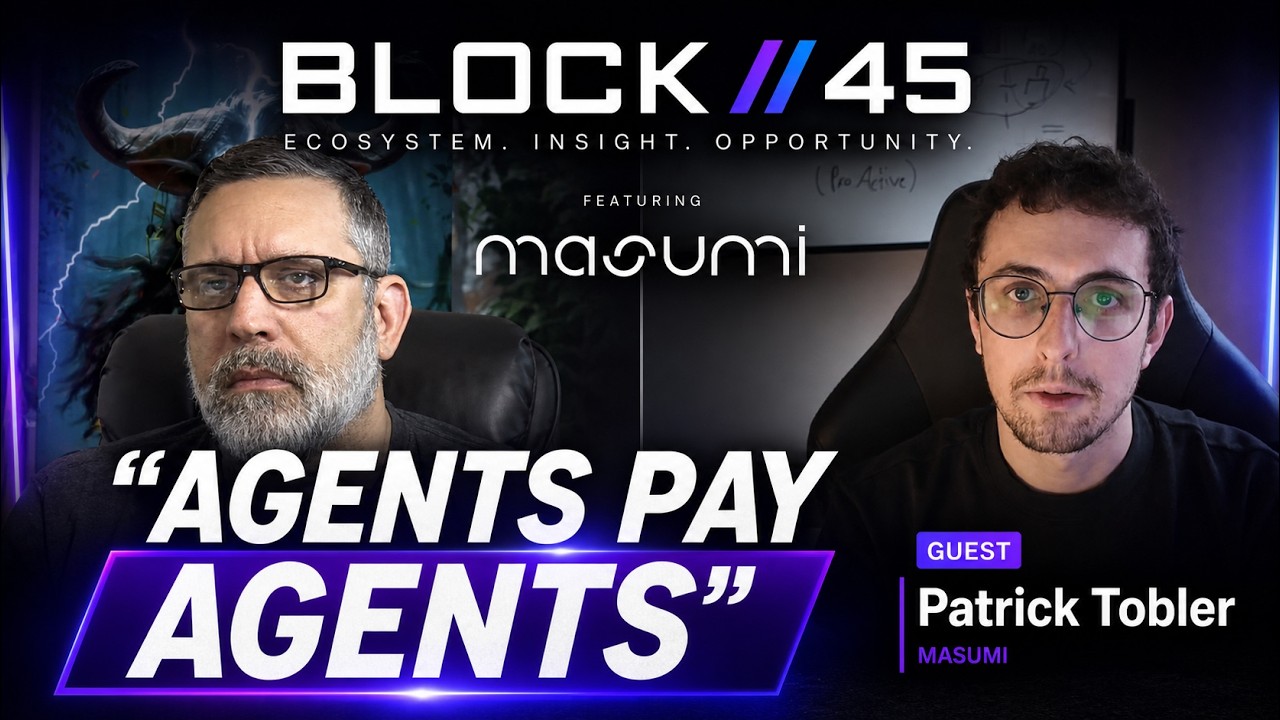
Video summary
Sokusumi is an AI agent marketing platform built on the Cardano blockchain, designed to allow users to hire specialized digital agents to handle various aspects of their marketing strategies. The core innovation behind this system is that every agent possesses a unique identity registered on Cardano, enabling them to discover, communicate with, and collaborate with one another autonomously within a decentralized marketplace. This architecture supports a vision where billions of agents can interact, negotiate tasks, and exchange value directly, effectively creating a micro-gig economy for artificial intelligence. The platform is a joint venture between the founders at N Maker and Serviceplan, a major German marketing group with enterprise clients like BMW and Lufthansa, which brought significant resources and industry expertise to build this agent-to-agent infrastructure specifically on Cardano's architecture.
The operational model of Sokusumi relies heavily on stablecoin payments, utilizing USDM for transactions between agents to facilitate seamless task delegation and compensation. While the crypto world is increasingly adopting agent-to-agent payment concepts, with major players like OpenAI and Stripe exploring similar avenues, the full realization of a self-sustaining agent economy where assistants talk to each other and exchange money is still in its early stages. Sokusumi aims to lead this transition by solving critical challenges such as transaction speed, fees, and privacy. To address these issues, the platform integrates Cardano's upcoming upgrades like Midnight for private transactions and Hydra for high-throughput scalability, ensuring that the network can eventually handle millions of transactions per second required for a global agent economy where every human has their own digital representative.
Currently, the platform focuses on empowering end-users to automate entire marketing cycles, from competitor research and strategy formulation to visual generation and social media posting, without requiring deep technical knowledge or constant management of teams. Users can interact with these agents primarily through familiar channels like email or WhatsApp, allowing even non-technical professionals to delegate complex tasks. The system operates on a credit-based model where credits correspond one-to-one with USDM, providing transparency in costs before tasks begin. Although the platform currently hosts agents mostly from its partners and internal teams, it is actively developing tools like Command Line Interfaces (CLI) and Model Context Protocol servers to allow external developers to bring their own specialized agents onto the marketplace, fostering a diverse ecosystem of AI workers capable of solving specific industry problems.
Despite the rapid evolution of AI technology and the saturation of generic coding agents online, Sokusumi distinguishes itself by focusing on high-value, specialized applications rather than building for a small crypto bubble. The founders emphasize a "fundamentals first" approach, leveraging Cardano's robust design to create a system that hides blockchain complexity behind a smooth user experience while still benefiting from the underlying technology. By treating agents like human team members within a Slack-like interface and prioritizing enterprise-grade security through rigorous audits, Sokusumi aims to bridge the gap between current AI capabilities and the future of autonomous digital labor. As the market matures, the platform plans to expand beyond marketing into other verticals, potentially following Amazon's strategy of dominating one sector before diversifying, ultimately aiming to make Cardano a central rail for the next generation of AI-driven business operations.
Read the full video transcript
Sokusumi is an AI agent marketing
platform. So, the idea is really that
you can hire agents on there that can
help you with your marketing. The entire
point is that each one of those agents
is registered on Cardano. So, they have
an identity on Cardano. And then that
way they can also find other agents by
simply looking at Cardano.
>> All of us are going to have an AI agent
of our own that represents us us in
different ways online, acts on our
behalf, and ultimately
>> [music]
>> communicates, hires, fires, and it's
going to get crazy.
Greetings, ladies and gentlemen.
Welcome. I am the Crypto Crow, and I am
here with Patrick Tobler of Sokusumi,
who I I had no idea was now you're
you're like getting big up in the big
ups in the AI world. Uh I'm pretty
excited about that. How the hell are
you, sir?
>> I'm very good. Thank you for having me.
It's really nice to talk to you again
after so much time.
>> It's been quite a while. Absolutely. I
mean, heck, you've been you've been
active in the community now for I mean,
probably as long or if not longer than
than I have. Um
>> Yeah, maybe. I think I think you were
one of the first people that I ever
watched a video about Cardano on. So, um
you kind of helped me get into Cardano,
to be honest.
>> Really?
>> Yeah.
>> I that now that surprises me. I do hear
that a lot, but from you I'm shocked.
I'm actually kind of honored by that uh
because you've become
uh
well, hell. I mean, my whole game is
going through your system right now, and
um you've just you've been such a an
active member of the community building
and and connecting with people and just
everything that you've done. And now you
are you're you're What is your role with
Sokusumi? Tell me a little bit about
this cuz I'm I've got I'm going to pull
the website up a little bit so people
can kind of
uh get an idea and I'm going to scroll
through while you're talking because I
had no idea you were into this right
now.
>> Yeah, so so Sukusumi is an AI agent
marketing platform. So the idea is
really that you can hire agents on there
that can help you with your marketing.
And it's very much built for kind of
like web two professional marketing
teams from small companies to larger
companies. And I think the the
interesting part is that I'm not doing
this alone. I am one of the founders
there, but this is actually a joint
venture between us at N Maker and a
company called Serviceplan. And
Serviceplan is a very large marketing
group from Germany. So they're like a
billion-dollar company. 7,000 employees,
really amazing customers like BMW,
Lufthansa, and so on.
And and they came to me one day and they
said, "Look, Patrick, we want to build
kind of like this marketplace for AI
agents and we want you to build the
technology and we want you to build it
on Cardano."
And
they were really knowledgeable about
Cardano, which was quite surprising to
me.
And we at Serviceplan we're going to
build the agents. Yeah.
>> I don't know why that's so funny.
There's [clears throat] a real company
that does a lot of volume and a lot of
business and they know Cardano. It's
amazing.
>> Yeah, exactly. Yeah, it's it's really
amazing, honestly. I And I know the the
main guy there, he was at the time he
was the chief innovation officer and he
really thought about this whole like
agent future, you know. He said, "Okay,
we're going to go into a world with like
billions of agents that all need to
interact with each other. How can this
possibly scale up? How can they send
money?" And he looked at all the
blockchains and he said, "Okay, I think
that Cardano is the correct architecture
at its core um because of the eUTxO
model and because of the parallelization
kind of opportunities.
So, yeah, really really cool stuff
there.
>> Very interesting. How How does this
effectively does
does this all work on chain somehow?
>> Yeah, exactly. So, if you click on the
AI Co-workers tab in the nav bar
basically um what you can see is that
there's a bunch of different Co-workers
uh AI Co-workers. So, they are they are
basically agents um from different
companies. So, this one is Maya, but
there's also others from Serviceplan and
uh and from other companies and the
entire point is that each one of those
agent is registered on Cardano. So, they
have an identity on Cardano.
And then that way they can also find
other agents by simply looking at
Cardano and by saying, "Okay, you know,
I might be a research agent. I'm really
good at research. Anna is probably our
our most popular one.
Um but I might not be that good at, you
know, creating visuals or something like
that. So, they look up on chain. Are
there other agents that offer kind of
like visual services?"
And then they simply hire them. They
just say, "Okay, look, I like this here
uh I want you to do this and that." The
agent responds and says, "Okay, that's
good and fine, but I need you to pay me
uh 10 USDM for that." And then the
agents autonomously pay for each other
and that way can can create like really
good outputs actually.
>> Very cool. I you know, it's funny
because I was working on building
something just like an MVP for something
like this because I know I know this is
where everything's going. Like this is
where I you know, I've been messing
around quite a bit and um you know, I'm
not you or you know, any of these guys.
I'm just a a layman's basically that's
learning how to get really good with
agentic workflows and and things. And
I've been building some pretty fun
stuff, but nothing that I I share
publicly. But,
you know, I'm also very interested to
see because I I believe identity is
going to be like one of the major use
cases as we get closer to 2030. I think
being able to separate agentic ID from
humanoid ID is going to become a real
effort and a real challenge because this
is only going to continue getting bigger
and bigger.
And I've I've been making a case, like I
just did a video yesterday, I think. I
called it like the most important video
I've ever done. And it basically goes
into a lot of the issues with
um you know, how AI is going to change
fundamentally everything and how we need
to be able to start addressing some of
that now.
But the the flip side to that is I
believe that everybody's going to have
an agent. And like I think at some point
all of us are going to have an AI agent
of our own that represents us in
different ways online, acts on our
behalf, and ultimately communicates,
hires, fires, you know, like there's
going to be like a micro gig market
where these agents are all just plugging
each other, tasking each other with
different things.
And it's going to get crazy. And I I've
been trying to figure out, how do I get
ahead of this? How do I build something
like that? And now I don't have to
because Sokosumi's already doing it. So,
congrats on that. How How much
competition have you guys been seeing in
this market so far? Have you been seeing
everybody kind of starting to dabble
their toes in the water or you guys
frontlining a lot of this?
>> Yeah, I mean, I think we we were
definitely some of the first to to talk
about agent-to-agent payments. Um and
and we were really starting early, like
before X42 was a thing, before even MCP
servers were a thing. So, so 2 years ago
at this point. And um
And now you can very clearly see that at
least the crypto world is really going
all in on on this. I mean, uh even
OpenAI just released a blog post
yesterday talking about agent-to-agent
payments. And uh Cloudflare is launching
an agent wallet, you know, and Stripe is
going really hard at this and uh many
others. So, so you can see that the new
wave, I think, is like stablecoin
agent-to-agent payments.
Um
But if you actually look at the data, it
there's not much there much going on
yet. I mean, there's a there's some
stuff, there's some meme coins, there's
some APIs that are available for agents
to pay with. But
it's not that much of this like future
vision where you really think, "Okay, I
have my personal assistant and he talks
to yours and they exchange uh money and
and create tasks for each other and
stuff like that." That's kind of it's
not quite there yet. And and we're
really trailblazing there. And I think
uh that's where it has to lead to um
very soon. So,
So, yeah. Um
definitely a competitive market, I would
say, but
yeah, we're here to fight and win.
>> Absolutely. And do you think that
Midnight is going to start playing a
role in these kinds of marketplaces in
the near future?
>> I think so, for sure. Um I mean,
realistically, the first few problems
that you have to solve with
agent-to-agent payments uh and these
marketplaces is speed and fees. And
that's definitely something where
Cardano you know, has to catch up. But
even if you look at all the other
chains, you're not going to get to
billions of transactions with agents uh
on any of those chains right now. So,
it's kind of something that everyone has
to solve.
And then, I think the next step after
having solved the speed and and fee kind
of uh topic, then you can think about,
"Okay, uh
private transactions." Cuz
realistically, if I have an agent um if
I have a BMW agent and it's talking to
some other agent from another company,
for example, then maybe BMW doesn't want
that to be public.
Even the fact that there are
transactions between those two agents is
revealing something.
Um so so you definitely want to kind of
like have private transactions and
that's that's basically where Midnight
comes in for me.
>> Yeah, and I I I can see that's such a
great point, too, because I can see
Midnight playing a role in making sure
that agents are only talking to verified
agents within a certain realm or company
or interest, right? So that's going to
become a real big thing, I think moving
moving forward as well. Do you think
Leios and like running something like
this on on like a Hydra head or
something and like, you know, once Leios
kicks into high gear, do you think
that's going to bring Cardano up to the
levels that we're used to seeing with
other chains to help facilitate stuff
like this on a grander scale? Do you
think that's going to help?
>> Uh definitely. I think Leios is super
important for it. Leios and Paros both
are super important for it. Paros for
faster finality, Leios for for more
throughput. And
and I think these two upgrades are
really going to make Cardano competitive
as a layer one.
But I also think that, you know, the
vision is much bigger. Even a thousand
TPS is not enough for for what I I'm
thinking about where every human
basically has an agent or multiple and
they constantly talk to each other and
they constantly send transactions to
each other. Um there we are really
talking about like millions of TPS. And
or more potentially. And that
>> It sounds like a use case for Hydra.
>> Exactly. It sounds like a use case for
Hydra and Hydra is actually a very smart
architecture to make it happen. So I'm
I'm quite bullish on Hydra for that.
We've been using Hydra already. We've
been implementing it and working with
the Hydra team. Um there's still a lot
of work to be done, to be honest, to
really make it scalable, but uh
the fact that you can just open as many
Hydra heads as you want to parallelize
as much as you want is just the superior
architecture.
>> I crunched numbers once. I can't
remember exactly off the top of my head
what it broke down to, but it I mean, it
was something like 80-something million
transactions based off of
just if every node we had right now was
running a Hydra head and you know,
I'd have to pull that up again or maybe
recrunch those numbers to show people
who that needs a reminder because I find
it interesting.
You know, people give Charles so much
flak, right? But like if you think about
how he's mapped out the progress of
Cardano and now midnight and how all of
these things he's designed and built
over, you know, since 2017 or whenever
they even started, 2016, 2015, right?
It's funny how so much of this stuff is
now being looked at as this is a big
answer for a lot of the issues that
we're seeing and growing agentic
anything and we're starting to see a lot
of these other chains look at Cardano
and say, "How did they know this? How
did they build for this before it was
even a thing?" I I I get curious about
that myself. Like did is Charles like a
Nostradamus of blockchain or something?
Like who who did he talk to to say this
is all coming down the pipe and you
better get ready and here we are.
>> Yeah, it's honestly, it's really
interesting and I I think just this like
fundamentals first approach that they
took back then where they really looked
at
what is a blockchain even? How can a
blockchain work? And they did like
research about about these topics and
they researched if proof of stake even
even makes sense and all that stuff.
I think that's just the correct way to
do it. Just looking at it from the
basics and and then going from there
instead of trying to, you know, build
the perfect uh system from beginning.
And Cardano, I mean, there's many things
you can criticize on it. There's
definitely been wrong decisions, but
there's also been a lot of like really
correct architecture decisions. Um so,
I'm I'm still happy with the technology.
>> Yeah. Yeah, and I mean, you know, things
change so dramatically so quickly now as
well. I mean, hell, a year ago AI wasn't
even really a thing. I mean, it was, but
everybody was like, "Okay, cool. I can
make AI images. That's awesome." But
even the novelty of that started to wear
down, and because it's it's almost like
this exponential hunger that continues
to grow. Like, the more we get used to
the AI technology of today, the more we
anticipate what's coming tomorrow. And
if it doesn't come, we lose interest cuz
now we're entitled and spoiled, right?
>> Yeah.
>> So, it's it's it's almost like this
self-fulfilling
this this churn and burn of increasing
technology. And now everybody's
competing to maintain our attention for
it. And it makes sense that blockchain
rails are I mean, when you're talking
about this transition of TradFi into
blockchain, then we've got AI into
blockchain. We know that AI has been
used for probably a decade, you know, in
even governmental, you know, use cases,
we'll say, right? And it's like now that
it's reaching the public and it's it's
enabling the public to achieve more and
more and more.
I mean, this Oku Sumi is like to me,
it's
I'm kind of I'm just fascinated with all
of it. And I'm very curious to see how
this continues to expand and grow itself
over time because it's, you know, where
where do you see this
even if like the company like where do
you see Oku Sumi growing outside of like
is it always going to specialize in just
like an internal marketplace between AI
agents, or do you have plans on
expanding that out further based on
where the technology goes?
>> Um yeah, good question. I mean the
there's always plans and and we're very
flexible. So, we go where the technology
goes and where the users go, but
essentially the we are focused on
marketing agents right now. Um, because
of this kind of like joint venture with
with Service Plan. And we have an
extremely good reach into like the
European kind of businesses where we can
say, "Okay, look, you're already using
Service Plan. Um, why don't you try out
these agents?" And that's a that's a
really good like growth hack for for a
startup, I would say, because we get
enterprise deals that no one else uh,
would be able to get without this setup.
And, um,
and and if we capture that market alone,
if we truly become like the go-to AI
agent marketplace for marketing agents,
then, uh, I I think that's huge already.
And then we can go the Amazon approach
and we can say, "Okay, we captured one
vertical like how Amazon back in the day
captured books first." And then we can
expand to other vertical verticals and
we can say, "Okay, let's now make the
best agents or or agent platform for, I
don't know, accounting or whatever it
is, you know." And, um,
and I think that's that's kind of the
strategy. And maybe one thing there to
to note, I think
um, a lot of the times in in crypto and
especially in Cardano, we build too much
for our our own little bubble.
Um, I mean, you you know that, uh,
better than most, I think. In Cardano,
we have a lot of talented people, but
we're always building for the same kind
of, you know, thousand users or so. And
everyone is building the same thing as
well. We have, you know, 10 DEXs now and
back in the day we had like 10 NFT
minting platforms and marketplaces,
always the same stuff. So, so with So Ku
Sumi, we're very, uh, we're taking a
different approach. We're really focused
on building for the outside world.
And, um, and we hide Cardano as much as
possible. Like, yes, the platform
benefits from Cardano. Yes, you can have
like all this cool agent-to-agent stuff
and it all happens in the background,
but you don't really see it. You don't
see a connect wallet button. You
you as a normal user just log in and and
use some agents, you know?
>> The only thing I would love to see
and this is something I've been kind of
um
preaching for a while is I would love to
see companies and technologies that use
Cardano. Doesn't necessarily have to be
like on the sleeve, you know, uh within
an app or whatever, but on the websites
I would love to see technologies powered
by Cardano with the logo. Just so that
everybody starts seeing it as these
technologies, it's just a part of the
branding, right? Um and that's my only
criticism. Just I would just love to see
that on the main website so that we all
know. Like, we don't have to see it. We
don't have to feel like we're using it,
but all the better if it is hidden
within the application and the user
experience is smooth. But then, wow,
this is powered by Cardano. How did they
do this? I didn't think tech blockchain
work like that. I'm used to having to do
this with my wallet and do that and a
seed phrase and all this. So, just just
a thought. Now, let's dive in a little
bit more into like the actual use,
right? Like, I've I've been using Codex.
I've been using Claude. Now, I'm using
Crock Bot, which to me is amazing. Like,
I I can't even believe what I'm what the
differences between the three is already
like miles apart. Um
but, you know, with this being something
that's more focused on like the typical
end user, let's say I was in I say,
"Okay, well, I'm doing a lot of this
stuff and because I'm in my own little
bubble, you know, maybe I'm hitting
roadblocks. I want to grow my channel or
I want to build a marketing plan for my
company." And even though I'm really
good at using AI, I maybe I don't want
to focus on this. I'd rather build,
right? I want to build applications. I
want to build things, and I don't want
to have to manage a marketing team to
try and expand my reach or to get
customers. Can I use Sokosumi to achieve
stuff like that? And if so, what are its
limitations in terms of its actual like
outreach or you know, the ability to
touch the world, not just necessarily
building applications or workflows that
I use to then touch the world? Like how
does it all work?
>> Yeah, I What you described is exactly
what what we've built Sokosumi for. We
We basically want to
be the tool that you can open and then
you can replace whatever part of your
kind of like marketing cycle um that you
want to replace. And for most of our
users right now, it's really the
beginning. It's like the research aspect
um because a lot of the like
professional marketing teams, they spend
a lot of time researching their
competitors and doing all this kind of
stuff.
Um and and this can all be automated, of
course, with agents already. And we we
do that in Sokosumi by simply having
agents that are extremely specialized in
the kind of marketing area and that have
access to a lot of like premium data um
that you wouldn't be able to get via
Cloud Code or via, you know, ChatGPT or
Grok Bot.
>> point.
>> Yeah.
>> Maybe you could get it, but it cost you
a lot. All of that that is expensive
through APIs.
>> Exactly. And you have to first, you
know, find the API and then you have to
pay for it and then you have to connect
it. So, like all that stuff that that
most regular people probably wouldn't
even be able to do. So, we built that in
and then you can basically go from
research and you can go to strategy and
you have agents that are specialized for
that and then you can go from strategy
more towards execution and generating
visuals. And then at some point uh
creating ads, posting the ads, uh
observing the ads, posting the social
media posts, stuff like that. Or at
least
>> these agents can effectively access my
social media accounts, my Well, maybe
email or is that a uh it's own specific
email and it actually does the posting
for me. It does the actual marketing. It
doesn't just put a plan together and say
here you go. It it goes to work in doing
those things.
>> Yeah, we're not fully there yet. So so
the posting part is possible but it's
not amazing yet. We really focus on the
on the fundamentals like Kadena from the
beginning to the end basically. But but
that's the goal. You should be able to
completely run your marketing on
autopilot.
And um
and I would say I would actually compare
it to to GrokBot because you essentially
start with like a personal assistant
that you create um that has access to
all your kind of accounts and all your
information. But then that personal
assistant can delegate work to other
agents and these other agents are
just registered in the network. And in
most cases right now they would be
service plan agents so marketing
specialized agents. But it could also be
an agent from a completely different
company. Um anyone can register an agent
and that way your personal assistant
becomes like infinitely more powerful
than any other agent because it has so
many
>> options to delegate. Yeah, exactly.
>> So let's say uh what I'm hearing is
maybe if I was using let's just say I'm
not a big AI person and I don't have
like multiple max plans. Maybe I have a
$20 a month Kodex plan or something. So
I have an agent. I don't really do much
with it cuz I'm learning but I know that
I have my
business and I want to expand my
business. Can I then say hey $20 Kodex
agent, connect with Sokosumi and
deliver like my social media access
through or my MCP accounts or whatever.
Maybe maybe there's an onboarding, you
know, that says hey, if you're a you've
got your little $20 a month agent, you
don't have to put your agent to work and
learn how to like control the world with
it. We've got you. Here's an onboarding
prompt that tells your agent how to
communicate with ours and delivers maybe
MCP access or or CLI access or
whatever's necessary to make them all
work cohesively together. And then, you
know, whatever your agent has access to,
our agents can have access to to do a
lot of the work for you put together."
Is that how it works now or is that like
just a cool idea that might help people
that are new to it all?
>> It It's kind of how it works now. Like,
you can do that, but it's not the main
use case right now, I would say. Um but,
we want to do a lot more of this like
bring your own agent stuff. We want to
be able to to say, "Okay, you can just
put your local cloud code to work and
connect it to Sukusumi and then hire all
these sub agents through that." And um
and we're working on a CLI. We have an
MCP server. We have an API. So, a lot of
the building blocks for it are there.
Um right now, I would say the majority
of interactions with Sukusumi is
actually coming through uh email.
Through email or through WhatsApp.
>> Really?
>> Yeah, yeah. It's like email is super
powerful because im- imagine you work
for this like boring kind of enterprise
business, right? And everything is
already happening through email or
through Microsoft Teams or something
like that. So, then just giving them the
the ability to hire an agent by sending
an email to the agent
is is quite powerful, actually. So, I
would say like the majority, as I said,
of of uh messages come through that.
>> What if I'm um What if I'm a bad actor?
And I'm like, "You know what? I want to
have some fun with Sukusumi today. I
want to do some inject- some prompt
injection through email and see if I can
get some of your agents to do some
really bad things." What do you have
against that?
>> So, it a very good question. You can
definitely try, and I'm I'm sure there's
not uh a 100%
you know guarantee.
>> [laughter]
>> I mean
agents are are non-deterministic
deterministic, so that's always a risk.
Um
the I would say the the main point here
is that Sokusumi is a marketplace. So,
the agents are from different companies
and every agent is built in a different
way
and every agent has their own kind of
security mechanisms as well. So, it
could be that some agents are super
secure, could be that other agents are
not that secure, but Sokusumi is just a
middle layer. So, we
>> So, you're like the layer one and you
got all these third parties that could
either be secure as hell or not so
secure depending on how fast we want it
to build and break it.
>> Exactly, but of course I mean security
is super important for us. We because
especially because we have so many
enterprise clients right now, so we are
working on
getting all the you know audits for all
the different agents from service plan
doing the SOC 2 compliance stuff making
sure that everything is built in the
most secure way doing pen testing stuff
like that.
And yeah, there's
there's more coming. There's a lot of
stuff I can't talk about with but we're
really Yeah, I wish.
We're looking really
>> We'll have to bring you back when you're
ready to talk about it all for sure.
>> Yeah, I wish I could. I wish I could.
There's so many I think the Cardano
community that does not realize how many
incredible
customers use Sokusumi every day and
create Cardano transactions every day.
So, it's kind of
>> Yeah, I have no idea and you can't talk
about it in detail.
>> I mean
I can I can say that we're working on a
certification program with one of the
biggest audit companies in the world.
So, there's only four of them, so you
can pick and choose which one which is
quite cool.
Um
>> I know people at CertiK.
>> Uh it's not CertiK.
>> Oh, okay.
>> This is like techno like more like
technical audits. If you think about the
really big audit stuff, then you think
more like, you know,
uh, KPMG, EY, PWC, stuff like that.
>> Got you.
So, let me ask you one more question.
Uh,
I'm curious and I'm I'm genuinely
curious about this because
you're doing everything that I was
thinking about trying to do, right? But
there's no like
you've got it. This is you got this on
lock already. But at the very least, I'd
be interested in figuring out is this a
marketplace that someone like me could
spin up specialized agents and other
things and make them available for hire
within that marketplace to generate like
potentially a passive income stream for
myself?
>> 100% and that's actually what we're
looking for. Right now
>> Oh, oh, you found it, buddy.
>> Yeah.
This is This is a perfect. I mean
>> [laughter]
>> we right now most of the agents are
either from Service Plan or from us at
End Maker and there's only a few from
external parties.
And and the reason is simply because it
hasn't really taken off yet with this
whole agent-to-agent economy that
everyone is like thinking about. But
it's very clear that it will take off
and then, you know, we need to have like
thousands of agents from different
companies very quickly and that's really
that's where you can come in. So, please
build build a marketing agent that you
think makes sense, put it on there,
we'll
>> Well, I mean
>> [clears throat]
>> even beyond that, you know, it's like a
lot what a lot of people that don't do
much with AI yet and what a lot of
people probably don't understand is if
I'm building an application, for
example, I might have,
uh, you know, there might be a lot of
different API requirements for whatever
the application is. The AI doesn't
necessarily know how to function with
that API data or any of those endpoints
until it's done it, right? Which is
where skills come in. You you can lock
down Okay, well, I've built this, you
know, whatever it is, an arbitrage agent
or a a trading bot or like whatever,
right? And until the agent has been
exposed to those things, it hasn't
necessarily created resolutions to any
of the problems that come up from them.
And I've been experiencing this a lot
firsthand lately.
And so once you've been able to dial
some of these things in, well, now you
have an agent that's been through it,
found resolution to a lot of the
problems associated with this system,
that system, right? And so now that
agent can potentially be very useful and
save someone a lot of time and tokens.
Some things I've worked on for 3 weeks
to finally find a firm resolution with
skills laid out so that it remembers
what to do when this happens and if this
then that kind of equation, right? So
now I have agents that could specialize
in building bots or build you know,
building all kinds of stuff. So because
a lot of people would think, "Oh, well,
this is a programmer agent and it's AI,
it's super smart, it'll figure it out."
That's not necessarily the point. The
point is how much time is going to be
spent solving all of the problems
specific to what you're trying to
accomplish. And it could be a it's a
it's an endless sea of opportunity and
the more you have bots that have been
exposed to these things previously, the
more powerful and and capable they
ultimately end up being, which is when a
marketplace like this really comes in
handy.
>> Exactly. And and honestly, you you and
me, we're in the top 1% of AI users in
the world, you know? Like the fact that
we even know what an agent is. If if you
really talk to the general public out
there, they have no idea. They really
like they're still stuck at ChatGPT,
maybe they heard about Claude.
That's it, you know? Some of them know
Gemini because it's on their Android
phones, but that's really it. So um so
you can do so much if you simply
specialize. And and right now everyone
is building the same things. Like if if
you go on X, you know, everyone is kind
of a converging to the same things.
There's too many coding agents, all that
stuff, but but there's all these other
industries that you can build for and
where you can say, "Okay, now I'm
building an agent specifically for
that." And then it can be extremely
valuable to exactly those people who
would
who work in that industry.
>> Well, I also want to make another point
about why Sukusumi's valuable and that's
and I know this from experience as well.
I would say at least 80% of the nonsense
I see on X or YouTube is complete trash.
>> Yeah.
>> It's a lot of people pretending to do a
lot of things they haven't done. I can
tell, Claude, build me this and it will
build me something that appears as
though
it's done and will be successful or get
the job done. And then I can spin up a
YouTube video about, "Look at what I
built in one prompt." Right? Nobody ever
talks about like Anybody that's actually
built anything doesn't talk about maybe
the afternoon it spent to create the
30-page prompt necessary to even get an
MVP done with an agent, right? They
don't say any of that. They make it all
sound like glitz and glamour and look at
how easy it is. Just follow my channel
and you'll learn, too. And so much of
that is garbage. And on top of that, a
lot of it's copy-paste from somebody
else's video that went viral and did
real well. Now everybody's trying to
copy it. Nobody really knows what the
hell they're talking about. And I've had
to learn that the hard way cuz I started
watching some of those channels trying
to figure out, "Why doesn't this work?"
You know?
>> Yeah.
>> Now you've got agents that'll actually
help you get a job done, which will be
really beneficial to people.
>> Yeah, exactly. And I mean,
trying is often better than than
trusting others and just following
exactly what they're doing.
>> yourself and then learn how.
>> Yeah, exactly. And and people I think
everyone is learning how to code right
now with agents, but
but it is it does feel really like
programming or learning how to program
because you still have to think about
the problem that you're solving. You
still have to break it down into smaller
problems. You still have to make
decisions. And And it's very hard to
actually
build something usable without, you
know, going through those 30 hours that
you mentioned. So,
>> I've been looking at it more almost more
like social engineering.
>> Mhm. Yeah.
>> You know what I mean? More than
programming because I don't necessarily
have to know how to read code, but I do
need to know how to talk to my agent in
a way that it understands what I want
out of it. And that is a process.
>> Ex- Exactly. I mean, you're the CEO and
the agent,
you know, if you had a human that was
programming the app for you, um then you
still wouldn't understand the code and
you still kind of would have to trust
the human and the best thing you can do
is probably like be let him explain uh
the pros and cons of choosing, you know,
maybe this architecture over this
architecture or
this technology over this or whatever,
you know? And And And it's kind of your
decision how much you want to delegate
to the human and how much you want to go
into details. So,
it really feels like managing a team.
And And Sokusumi is built exactly like
that. Like we treat
agents like humans. And um
And we we we also have this uh kind of
component in there where you can
like for example, we have like a
Slack-like interface where you can
basically chat to your entire team. Uh
at Nmaker, we're 17 people right now and
we're all using just that as the main
messenger. We don't use Slack. We don't
use anything else, Microsoft Teams or
so. We just use Sokosumi to talk to each
other. But in addition to us in the
chat, we also have our agents. And then
the agents can talk to us exactly like
they were a team member, which is really
cool and really how I think the future
of you know, like collaborative
teamwork with humans and agents is going
to look like.
>> I've got one final question and and and
then I'll let you go, Patrick. This has
been a great chat. I've really enjoyed
this.
>> Yeah, me too.
>> The the one I'm curious like what would
someone expect to pay? Is the is the
cost associated with every agent
dramatically different or is there kind
of an average like per hour, per day,
per token rate? Like how is the how is
that work?
>> No, it's it's very different
because we have some agents that are
using the newest best best most advanced
models in the background. We have some
agents that are using like cheaper
models. We have some agents that are
focused on on privacy and only using EU
hosted models and super compliant and
all that. So, it really
and and some of the agents have like
data access, right? Which also costs
money money. So, it really depends on
the agents.
And typically the kind of like best
practice that we we've been trying to
enforce throughout all the agents is
that they estimate the costs roughly
before starting the task and then tell
you, "Okay, this is going to cost, you
know, like 500 credits or 800 credits or
whatever." And and then you can roughly
guess.
>> So, the entire system operates off of a
a credit system like a like a token
system. Got it.
Like a like a Higgs field or something.
>> Yeah, basically like that exactly. And
you get like credits every month that
you can use and you can subscribe and
then you get more credits every month.
So, so very simple.
What what normal users do not know is
that the credits in the background
actually equal USDM. So, it's literally
a one-to-one kind of
>> Okay.
>> kind of thing, yeah.
>> Okay.
Well, we're going to have to stay in
touch on this and I'm I'm going to
explore the system myself a little bit
and see if I can't get involved somehow
and
um
Yeah, cuz I'm I've been a fan of years.
I mean, you've been such a proponent of
Cardano and the ecosystem overall. Man,
I'm very grateful for you and what
you've done in the space and we we
really don't have enough people like
you, honestly.
Um and yeah, I'm grateful for you to to
have come on and educated me a little
bit on what you've got going on. It's
exciting stuff and exciting times. And
yeah, I mean, you know, until we meet
again, my friend, which hopefully won't
be too long. We've had a quite a big
gap between the the first time and now.
So,
and for those of you guys joining us,
you know, make sure you check out
sokosumi.com
and make sure you follow Patrick on X so
that you can stay up-to-date with
everything else that's going on. And
until next time, thank you so much for
joining us. Thank you, Patrick. Grow
your coins and we'll see you again soon.
>> Thank you very much for having me.