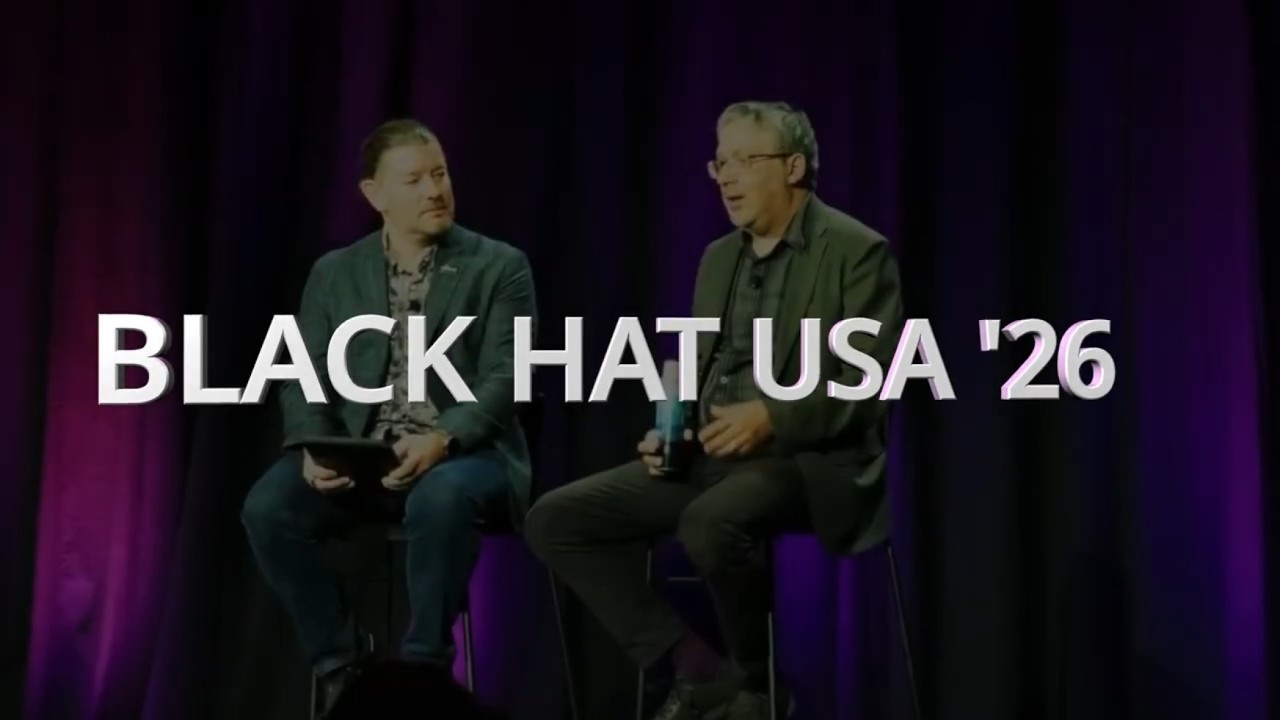
Black Hat USA exposes a faster, more aggressive threat landscape
Watch on YouTubeVideo summary
The video highlights a rapidly evolving threat landscape where attackers are leveraging artificial intelligence to significantly enhance their operational speed, scale, and expertise. This technological advantage allows malicious actors to execute attacks much faster than security teams can respond, often leaving defenders with almost no time to react or mitigate emerging threats. The core issue is not just the sophistication of the tools but the sheer velocity at which these AI-driven campaigns unfold, creating a dangerous imbalance between offensive capabilities and defensive readiness.
Attackers benefit from two primary advantages in this new era: asymmetry and being the first movers. Due to asymmetry, adversaries only need to succeed once to cause significant damage, whereas defenders must be right every single time. Furthermore, because attackers are ahead of the curve regarding AI adoption, they do not yet face the same compliance requirements or auditing burdens that organizations must navigate. This disparity is compounded by a lack of awareness within the security community; while approximately 20% of Chief Information Security Officers understand the implications of AI for their organizations, the remaining 80% operate under a state of ignorance, often assuming they are safe when they are not.
The urgency of this situation is further illustrated by the shifting timeline for quantum readiness. Organizations previously thought they had until around 2040 to prepare for quantum threats, but that deadline has moved leftward to dates like 2035, 2030, and now a mandated requirement by January 2027 in the United States. This accelerated timeline presents a daunting challenge because many existing systems cannot simply be waited upon to become secure; instead, there is an immediate need for retrofit solutions that can integrate security measures without requiring a complete and disruptive "rip and replace" of current infrastructure.
In conclusion, the industry faces a critical juncture where the convergence of AI-powered attacks and advancing quantum threats demands immediate strategic adaptation. Security leaders must move beyond ignorance to actively understand how AI reshapes the threat environment while simultaneously preparing for near-term quantum mandates. The path forward requires innovative retrofitting strategies that allow organizations to secure their systems without halting operations, as waiting for legacy systems to naturally become safe is no longer a viable option in this aggressive and fast-moving security landscape.
Read the full video transcript
Our
[music]
attackers are using AI to really elevate
their level of expertise to move faster
and at a greater scale than we've ever
seen before. And for security teams,
that means that they don't have as much
time to respond [music] and react. In
fact, in some cases, they might have
almost no time.
>> Attackers have a couple things going for
them. One is asymmetry. They only have
to be right once. The second thing they
have going for them is they are the
first movers here on AI. They don't have
to deal with compliance or auditing.
About 20% [music] of CISOs get it. They
understand the implications. They
understand what their organization's
trying to do with AI. So the other 80%
are in a state of ignorance. Sometimes
ignorance and bliss or at least assumed
bliss. The date by [music] which
organizations need to be quantum safe or
quantum resilient or quantum ready has
been moving left of what was previously
center. [music] So that center might
have been 2040, 2035, then 2030, then
2029 as Google and Microsoft announced
and now there is a mandate [music] for
January 2027 for example in the US. is
about being able to have this retrofit
solution because there's this daunting
task of rip and replace [music] or wait
for systems to be Okay.
Hey, nobody