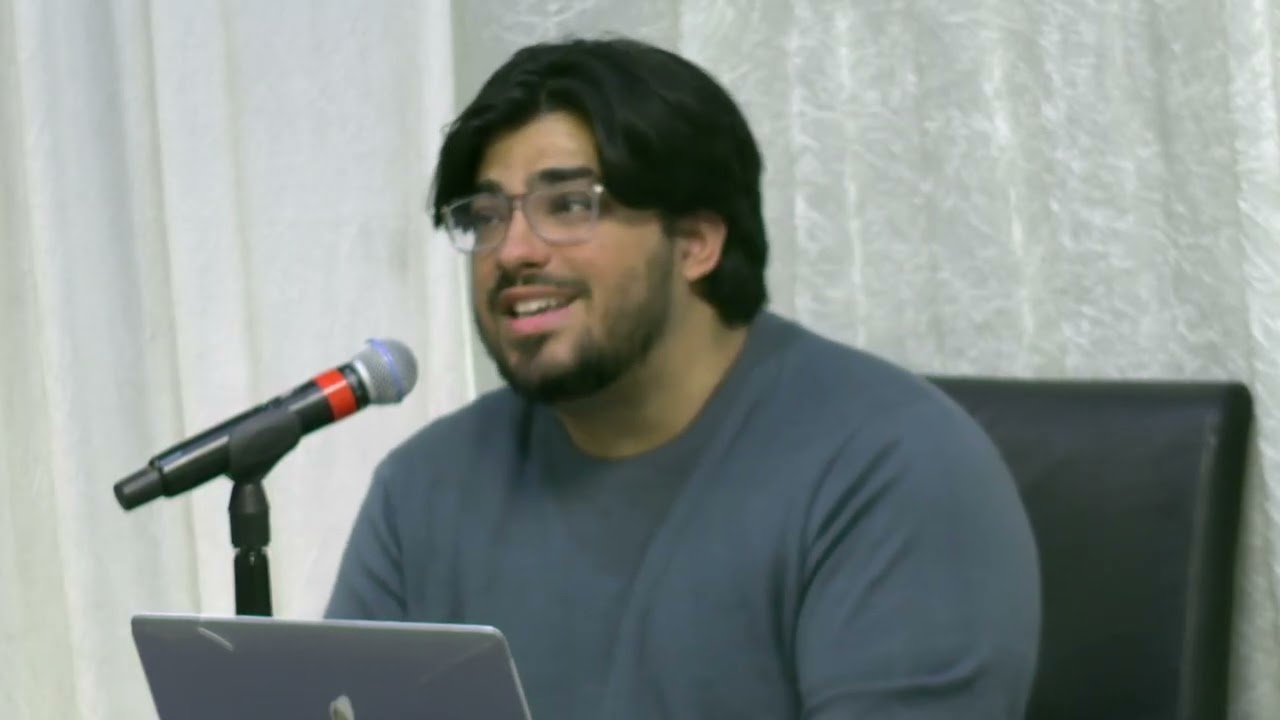
Being Muslim: Monthly Convert Bookclub | Ustadh Omar Naisan
Watch on YouTubeVideo summary
The book *Being Muslim* presents Prophet Muhammad not merely as a historical founder but as the final Messenger whose life embodies and explains the Quran through two central roles: role model and lawgiver. His authority is divinely granted, meaning that obeying him equates to obeying Allah, while rejecting his Sunnah contradicts direct Quranic commands. The term *Sunnah* encompasses his complete way of life—words, actions, approvals, and heart qualities like mercy, humility, and sincerity—which serves as a tangible example for believers across all spheres including worship, family leadership, poverty, and victory. This guidance is intelligible only to those seeking Allah in the Hereafter, distinguishing him from mere human founders by affirming his humanity while protecting him from error or caprice in conveying revelation.
The Prophet's elevated status is further defined by titles such as *Beloved of God*, *Al-Amin* (the Trustworthy One), and *Seal of Prophets*, which signify that he was divinely selected rather than self-appointed to provide universal, timeless guidance. His love for humanity is evident in his ability to relate through ordinary acts like eating and sleeping while remaining the greatest servant who intercedes for his Ummah on Judgment Day. Love for him grows cyclically through knowledge, gratitude, obedience, imitation, remembrance (*dhikr*), and sending blessings (*salawat*), manifesting practically by learning from his character, honoring what he honored, avoiding what displeased him, and expressing devotion through poetry, scholarship, and gatherings. Studying his biography nourishes this love, where seeing his tenderness with children fosters compassion and understanding of his forgiveness deepens reverence.
Born orphaned into the complex society of 6th-century Mecca, a sacred city centered on the Kaaba but corrupted by tribalism, oppression, slavery, and superstition, he entered a world marked by loss yet divinely prepared for his role as mercy-filled servant. Before his public mission, Allah's wisdom operated behind outward appearances through divine preparations such as being raised after the deaths of his parents to gain deep empathy for vulnerability, earning the title *Al-Amin* decades early due to private integrity and modesty, and marrying Khadijah based on her recognition of his character rather than superficiality. His leadership was demonstrated when he peacefully arbitrated a dispute over placing the Black Stone in the Kaaba using a cloth to allow all clans shared honor without conflict, foreshadowing his future role in restoring monotheism while affirming noble cultural traits like bravery and generosity while rejecting their distorted forms based on revelation.
As corruption increased around age forty, he withdrew to Cave Hira for contemplation where Angel Gabriel commanded him to read (*Iqra*), initiating a mission focused on knowledge, creation, and humility rather than power or wealth. Overwhelmed by this experience, he sought comfort from Khadijah before consulting a relative who confirmed the divine nature of his calling, leading to the formation of an initial community that included diverse individuals like Abu Bakr (Sadik), proving Islam transcended social classes. When he publicly called for abandoning idolatry, Quraysh leaders offered wealth, power, and marriage to stop him; his refusal demonstrated that his mission was motivated solely by divine command rather than worldly gain. Early Muslims faced persecution, mockery, torture, and isolation because truth often meets resistance, yet the section concludes with a prayer for believers to emulate the Prophet's traits of truthfulness, patience, and humility, acknowledging that accepting faith may involve difficulty but leads to ultimate dignity near Allah.
Read the full video transcript
start by thanking Allah subhanahu wa
ta'ala for bringing us together yet
again on this day for planting within
our hearts the love of him of his
beloved messenger and of this great and
beautiful religion so welcome back to
those of you online and in person on
this course on our wonderful book uh
being Muslim by Dr. Assaarsine.
Alhamdulillah. In the last uh session,
we finished chapter 4 um on spiritual
refinement. And so today we'll shift
gears and start chapter 5 inshalla and
we'll discuss the prophet sallallahu
alaihi wasallam. And uh I just want to
you know point out this is a you know
quite an exhaustive chapter. It's very
very important. So I decided to split it
up into two sessions in so we'll cover
the first half of the chapter today and
then inshallah on the next section the
next session we'll follow the second
half of the of the chapter.
So this this chapter it's important to
note at the beginning that it's not just
about a historical figure and this is
something that's very important to
distinguish. So when we speak about the
prophet Muhammad sallallahu alaihi
wasallam, we're not just talking about
the founder of Islam in in the same way
that people would talk about like the
founder of a school or the founder of a
movement, even the founder of a
civilization.
We're talking about the finer the final
messenger of Allah subhanahu wa ta'ala.
We're talking about the one through whom
Allah's re last revelation was sent to
humanity. The one whose life explains
the Quran, whose character embodied the
Quran, whose sunnah preserves the
practical meanings of the Quran. The one
whose entire existence from his worship
and his mercy, from his patience and his
courage, from his tears to his smiles,
from his life with his family to his
public role. It became a model for the
believers. So the chapter is not really
just about knowing facts about the
prophet, but it's about learning how we
relate to him, right? Learning and
understanding why he's central to our
lives. It's about understanding why we
love him. It's about why we follow him,
why we send our blessings upon him, why
we study his life, and why his words are
preserved.
So, uh, for those of you with the with
the book, uh, if you go to the first
page of the chapter, that's on page, uh,
119. So, there's a a few verses from the
Quran here. All right? And so, the
chapter begins with a Quranic framing to
remind us that the mercy of Allah
subhanahu wa ta'ala, it's vast and that
his mercy is connected to following the
messenger sallallahu alaihi wasallam. So
Allah subhanahu wa ta'ala he describes
the prophet as one who commands what's
right who forbids what's wrong who makes
lawful what is good prohibits what's
harmful relieves burdens and removes the
chains that weighed people down so quite
the rich image here right the prophet
sallall alaihi wasallam he did not come
to crush the human being he came by the
permission of Allah to free the human
being to free us from false burdens from
false gods, false identities, false
systems of value, false ways of living.
Before the revelation, people were often
burdened by ignorance, by the arrogance
of tribal relations. Idolatry was huge,
injustice was rampant. People believed
in superstition. There was social
oppression, spiritual confusion, and
vast enslavement to the ego. And so the
prophet sallallaihi wasallam, he came
with revelation that released us from
these chains. And that's why following
him is not just obedience in a legal
sense. Following him brings liberation.
He teaches us how to be free from the
worship of creation. Free from being
ruled by desire. Free by being trapped
by social status and free from inherited
falsehood. Free from moral confusion.
He taught us how to become dutiful
servants of Allah subhanahu wa ta'ala.
And so the first major section of the
chapter, it talks about the role of the
prophet. And so we emphasize two central
roles here. The prophet as a role model
and as a lawgiver.
So we have to slow down and unpack both
of these, right? Both are necessary and
both protect us from misunderstandings.
So he's a role model. Allah subhanahu wa
ta'ala, he didn't just reveal
instructions, but he showed us what
those instructions look like when
they're lived by a perfected human
being.
So, it's part of Allah's mercy because
we need examples as human beings. We
don't just learn by seeing abstract
concepts, right? We learn by seeing, by
seeing, by putting these things into
practice, into action, right? So a child
they don't just learn what generosity is
by hearing or reading the dictionary
definition but they learn by watching a
generous person give freely from their
wealth. A student learns how to be
humble not just by reading about
humility but by sitting with a humble
teacher and seeing how they with all
their vast knowledge behave.
And a community learns about mercy not
just by putting up posters about slogans
about how you should be merciful but by
being led mercifully. Right? So the
prophet sallall alaihi wasallam he's the
living example of Islam. He shows us
what toed looked like in fear and in
safety in times of poverty in times of
leadership with his family in the public
in victories and losses in worship and
service in silence and during times of
speaking. And that's why the Quran
describes him as the excellent model for
those who have hope in Allah and in the
last day. And that qualification is
really important. If a person doesn't
care about Allah in the last day, then
the prophet's life might not make sense
to that person. All right? If their
entire goal is worldly comfort, then
you're not going to understand why the
prophet sallallaihi wasallam why he
endured hardship. If your goal is to
obtain power, then you won't understand
why the prophet forgave when he could
have punished. If your goal is fame,
then you won't understand why he lived
with humility. And if your goal is
indulgence, then you won't understand
why the prophet fasted, why he prayed at
night, why he gave away what he earned,
and why he restrained his desires. So
the prophet's life, it becomes
intelligible when our hearts are
oriented towards Allah subhanahu wa
ta'ala and seeking uh the the So if
we're seeking Allah, the prophet shows
us the path. If we're seeking the last
day, then the prophet shows us how to
prepare for it.
But the prophet sallallaihi wasallam,
he's not just a role model in the vague
sense of, oh, you know, he's really
inspirational, you know, he's a really
cool guy to follow. No, no, that's too
basic, right? He's also a lawgiver by
the permission of Allah subhanahu wa
ta'ala. And that phrase needs to be
understood quite carefully. So, it
doesn't mean that he legislates
independently of Allah. It doesn't mean
that he's divine.
It means that Allah subhanahu wa ta'ala
has given him authority to command, to
prohibit, to explain, to judge, to
approve and to guide. So the Quran
itself, Allah subhanahu wa ta'ala in the
Quran, he commands the believers to obey
the messenger. He tells us to accept
what the messenger gives us to abstain
from what he forbids us in. And he tells
us to be obedient to the messenger
because that's part of obedience to
Allah subhanahu wa ta'ala. And so the
prophet sallallaihi wasallam his
authority is not just something that was
invented by Muslims after his death.
It's not an optional development that
came over time but it is Quranic. So if
we claim to follow the Quran then we
must follow the the command in the Quran
to follow the prophet sallall alaihi
wasallam.
So this helps us answer what's a common
modern confusion here. So we find in in
contemporary studies that some people
say oh I I just follow the Quran and
that's that's it. Right? And and that
might sound at first on the surface
level like it's oh this person is very
reverent for revelation. But if it means
rejecting the sunnah then it's
contradictory to revelation itself. The
Quran is not presented as a book that's
disconnected from the messenger. The
Quran was revealed to the prophet
sallallaihi wasallam. It was recited by
him. It was taught by him, explained by
him, implemented by him and preserved by
the community that he formed. The Quran
commanded prayer and the prophet showed
us how to pray. The Quran commanded zaka
and the prophet showed us how to apply
that. And the Quran commanded fasting
and pilgrimage and the prophet
demonstrates the practice. So when the
Quran commands justice, mercy, patience,
truthfulness, modesty, remembrance. The
prophet sallall alaihi wasallam he
showed us what these qualities are like
in real human situations. So without the
prophet the religion would be vulnerable
to interpretation.
But with the prophet revelation became
anchored in a divinely guided life. And
that's why the sunnah is central. The
sunnah the prophetic way. It includes
what the prophet said, what he did, what
he approved, what he disapproved, the
pattern that his life established.
Right? But we should be careful though
because as we discussed earlier in
sessions, right? The word sunnah it can
be it can be used in more than just one
way. So in in like the legal context
right the sunnah is a recommended
action. It's something that's rewarded
but it's not obligatory. Like the sunnah
prayers that we discussed during the
session on prayer right but in a broader
sense the word sunnah it can mean the
entire way of the prophet his whole way
of life. And so in this chapter that's
what we're referring to when we use the
word sunnah. It's the prophet
sallallaihi wasallam as the complete
model of life. So following the sunnah
it doesn't mean just imitating
isolated external details but neglecting
the prophet's heart, his mercy, his
sincerity, his patience, his humility.
But it also doesn't mean claiming to
love his character while ignoring his
commands and his practices. So the true
sunnah, it's both outward and inward.
its form and its meaning, its worship
and its character, its law and its
mercy, its obedience and its love.
So when we say that the prophet
sallallaihi wasallam is the best
example, we should think about that in
every sphere of life. So how did he
worship Allah? How did he speak? How did
he listen? How did he treat those that
were weaker than him? How did he react
if he was offended? How did he respond
to ignorance? How did he corre correct
mistakes? How did he deal with his
family? How did he handle poverty,
betrayal, grief, leadership, victory?
How did he handle being praised? How did
he handle being insulted? These are huge
questions. So, the sunnah is not just a
a set of rituals, but it's a complete
way of being.
And one of the greatest tragedies is
when we study pieces of the sunnah and
it doesn't impact our hearts and our
characters. When we study the sunnah, we
should find that we're more merciful. we
become more truthful, more humble, more
trustworthy, more patient and more
devoted to Allah subhanahu wa ta'ala.
So then we the chapter discusses uh the
prophet sallallaihi wasallam speaking in
God's name and so we have to explain
this with care again right the prophet
wasallam he received revelation and he
had access to what Allah subhanahu wa
ta'ala allowed him from divine guidance
he didn't speak from caprice in matters
of revelation
and so this gives his teachings a unique
status
when the prophet sallallaihi wasallam
gives guidance in religion The guidance
is not just the opinion of an ordinary
wise person but it's prophetic guidance.
Allah subhanahu wa ta'ala has protected
him in conveying the message and this
protection is why we trust that the
religion came through him. Allah
subhanahu wa ta'ala he would not command
us to obey the messenger and then leave
the messenger unreliable in conveying
what must be obeyed by us. Right? So
he's protected in conveying the message
truthfully, accurately and completely.
And so this doesn't mean though that the
prophet loses his humanity. He ate like
us. He drank le like us. He slept like
us. He married like us. Grieved, smiled,
became tired. He lived in the world.
Right? So his humanity is part of why he
is so followable. If an angel was sent
in an angelic form, then we as humans
could say this is not our condition.
This person this this being is greater
than us or it's different than us. How
can we act like this angel? Right? But
Allah subhanahu wa ta'ala in his
benevolence in his all- knowing guidance
he sent us a human messenger. The
prophet sallallaihi wasallam he lived a
life of a human being but he was guided
he was protected and he was elevated by
God. So he's human but he's not
ordinary. He's a servant but he's the
greatest servant. He's created but he's
the best of creation. and he's not
worshiped but he is the one through whom
we learn how to worship Allah subhanahu
wa ta'ala and the companions they
understood the significance so they paid
attention to his words his actions his
approvals and even his times of silence
they observed him publicly they observed
him when he was private they preserved
his teachings they asked questions they
narrated what they saw
and so the later scholars they developed
this as the science of hadith to
preserve Oberve these reports carefully
and truthfully. And so hadith, a hadith
is a report that's connected to the
prophet sallallaihi wasallam. It usually
describes something that he said,
something that he did, something that he
approved or a quality that he possessed.
And hadith are not all treated equally.
So the scholars, they examine the chains
of narration, the reliability of the
narrators, the the wording, the meaning
and and different factors when examining
hadith, right? But through the hadith
tradition, we have the sunnah and it
reaches us in detail. So without the
hadith, our knowledge of our religion,
it could be dramatically incomplete. So
we wouldn't know the detailed
performance of the prayer, the practical
rulings of many acts of worship or even
the intimate dimensions of the prophet's
character. We get all of that through
the hadith corpus. And that's why
dismissing hadith altogether is a major
issue. It cuts us off from the living
explanation of the Quran. But hadith
must be approached with scholarship,
right? Not with random quotation. Not
every narration that we read on social
media is is truly authentic, right? And
not every person is qualified to derive
legal rulings from hadith narrations. So
the solution here is not to reject a
hadith. It's also not to be chaotic with
the hadith. Right? The solution is to
learn through reliable scholarship.
And that's consistent with the earlier
chapters of this book of what we've
studied. When we learned the importance
of sound methodology, the importance of
inherited scholarly tradition. This
religion is not one of random individual
interpretation. It's a transmitted
religion. It's studied. It's preserved
and it's lived through disciplined
chains of knowledge.
And so that's a big leadin into
discussing innovation,
a topic that is easily can easily
confuse us, right? So the prophet
sallallaihi wasallam he warned his
community against corrupt innovation in
religion and this warning matters
because Islam is not our religion to
redesign right we're not owners of
revelation we are servants of revelation
so we don't alter the fundamentals of
the religion just to suit our
preferences we don't add a six daily
prayer and say oh this is obl an
obligatory prayer right we don't reduce
the days of Ramadan because fasting is a
little too difficult for us and we can't
change the basic belief beliefs because
modern society finds them uncomfortable
and these kinds of alterations would
corrupt the religion. But we also need
nuance. So not everything new in a
worldly or linguistic sense is a
condemned innovation. Muslims we use we
use microphones we use printed books
websites classrooms calendars apps
architecture educational institutions
and they these things didn't exist in
the same form during the time of the
prophet sallallaihi wasallam right but
they still serve established uh
established purposes so the scholars
distinguish between alteration of the
religion itself and using new
innovations and new means to serve the
religion so if something alters the
foundational belief or worship ship
without basis, then it's condemned.
But if something is just a is a
permissible means to teach, to organize,
to remind or to facilitate something
that's already part of the religion,
that's not the same thing. So we
shouldn't throw around the word
carelessly. It's a really serious
concept, right? It requires knowledge.
It requires that understanding the
difference between fundamentals and
secondary matters, right? And this is
where we find balance. One extreme is to
treat the religion as you know
infinitely flexible as though every
generation can reinvent it to fit their
own desires and that's a false extreme
and then another extreme is to be so
rigid that every new tool expression
educational form it's treated as
suspicious and that that can be harm
that can be very harmful as well and so
the balanced path is preserving the
foundations honoring the sunnah and
allowing legitimate means to serve the
religion religion without altering it.
That's why we need scholarship. Not
every complex issue can be reduced.
So after establishing the role of the
prophet as a lawgiver, as a source of
the sunnah, then we're introduced to
some of his titles. And this is a
beautiful section, right? Because the
names and titles, these things shape
love. When we know the prophet sallall
alaihi wasallam just as the prophet,
it's a true thing. Yes, he's a prophet,
but that's very general. When we learn
his titles, we begin to see different
aspects of his rank and his relationship
to us. Each one of his titles opens up a
door. And so one of his titles is the
beloved of God. And that should soften
our hearts immediately. The prophet
sallall alaihi wasallam is the beloved
of Allah subhanahu wa ta'ala. So that
means love of the prophet sallallaihi
wasallam is not just uh cultural. It's
not inherited. It it's rooted in divine
love. If Allah subhanahu wa ta'ala loves
him, then the believer loves whom Allah
loves. If Allah chose him, then the
believer honors whom Allah chose. If
Allah raised his mention, then the
believer mentions him with reverence. So
the title Allah, it teaches us that our
connection to the prophet wasallam is
not just a legal cold obedient
relationship. Love is part of this
religion. Reverence is part of this
religion. The heart has a role here.
And another title is al the trustworthy
one. So before revelation
before people accepted the prophetam as
a prophet his community knew him as the
trustworthy. [snorts] And this is very
significant. His character preceded his
prophet his claim of prophethood. The
people of Mecca some of them later
rejected his message but they knew his
integrity. They trusted him with their
possessions. They knew he was not a
liar. They knew he was not a cheat. And
this matters because the final
revelation, it came to us through a
person whose truthfulness was already
established. This is a big lesson. If we
want to represent this religion, then
our trustworthiness matters. If we want
to speak about truth, but we're
dishonest in business, if we're
unreliable in our promises, if we're
careless with the rights of people, if
we're manipulative in our relationships,
then our da'wah is weakened. The prophet
sallallaihi wasallam his truthfulness
was not theoretical. It was known
through lived experience
and then he's called the best of
creation.
Now this title indicates his rank before
Allah subhanahu wa ta'ala amongst those
who are created. It does not mean
divinity. Allah is Allah and creation is
creation. But amongst the creation Allah
subhanahu wa ta'ala he elevated the
prophet sallallaihi wasallam. The
prophetam is the greatest servant, the
most complete worshipper, the final
messenger, the one whose servantthood
reached its highest human expression. So
propered, it doesn't require emotional
coldness towards the prophet. No,
propered it teaches us to honor him as
Allah subhanahu wa ta'ala honors him
without crossing the boundary.
Then he's called a Mustafa, the chosen
one. And this reminds us that
prophethood is not self-appointed. The
prophet sallaihi wasallam he didn't
campaign for spiritual authority. He
didn't seek revelation as a way to gain
power. Allah subhanahu wa ta'ala chose
him. And this becomes especially clear
when we talk about the first revelation.
And that'll be very briefly towards the
end here. We'll talk more in the next
section inshallah. So his response to
being chosen for revelation, it wasn't
prideful. It wasn't oh with excitement
or self-promotion. He was overwhelmed.
He returned very shaken. He sought
comfort. And this is the opposite of
someone who would, you know, try to
invent a religious role for themselves.
Prophethood is a burden before it's an
honor. And Allah subhanahu wa ta'ala, he
places that burden where he knows it
belongs.
And the prophet wasallam, he is the seal
of prophethood, which means that
prophethood culminated in him. No
prophet comes after him. So this gives
his message finality, universality. So
his guidance is not just for 7th century
Arabia. his it's for all of humanity in
the entire world until the end of time
because there's no prophet after him. So
preservation became super essential
here. The Quran is preserved. The Sunnah
is preserved. The religion is preserved
through scholarly tradition through
community. So to fi follow the final
messenger is to remain connected to the
final form of revealed guidance.
Then he is the intercessor and this
title if it should fill us with hope.
The prophet's concern for his ummah it
didn't it's not going to end with the
end of this world on the on the day of
judgment by the permission of Allah
subhanahu wa ta'ala he will intercede
for us and this tells us about his mercy
he's not just a worldly leader and it's
you know where there's relationship with
his followers it ends when his political
mission is done no that's not the case
his concern extends beyond death it
extends into the he's worried for his um
he prays for his um he teaches his um
and by Allah's permission He'll
intercede for his um and so this should
increase our love for him because we
realize that his mercy towards us is
part of Allah's mercy towards us right
and so those are some of the titles and
so then we move on to love of the
prophet sallaihi wasallam which is you
know ties hand in hand with some of the
titles right it's perhaps the most
important section in the chapter for our
hearts love of the prophet sallallaihi
wasallam it's not just emotional
decoration it's it's connected to
completing the faith Faith is connected
to completion of im the prophetam he
taught that our faith is not complete
until he is more beloved to us than our
parents our children ourselves and the
whole of humanity
and so that may feel like a lot at first
we can ask like how can I love someone
I've never met more than my entire
family right it's a very daunting task
right but love grows through knowledge
through gratitude through the
recognition of benefit and who amongst
creation has benefited us more than the
messenger of Allah sallallahu alaihi
wasallam. Through him we know Allah
subhanahu wa ta'ala. Through him we
received the Quran. Through him we
learned how to worship. Through him we
learned the path to paradise. We learned
repentance, mercy, sincerity, patience,
humility, hope. Every prayer that we
make, every fast that we observe, every
ayah of the Quran that we recite, every
blessing that we experience is connected
to the guidance that was sent by Allah
subhanahu wa ta'ala through the prophet
sallallahu alaihi wasallam.
So love of the prophet sallall alaihi
wasallam it begins with gratitude. If if
today you were hanging off a cliff and
someone grabbed your arm and saved you,
right? Would you not feel indebted to
that person?
So then what of the person who endured
persecution? He endured hunger. He
endured mockery, loss, battle, grief,
exhaustion for one goal so that the
message would reach humanity. How do we
feel about the one who remembers those
who come after him? How do we feel about
the one who prayed for his ummah, the
one who carried the burden of
revelation? Love is the natural response
to that when a heart recognizes the gift
that he's given us. But love is not just
a claim, right? It's not just a word. It
produces a following. If we say yes, I
love the prophet, but we don't care
about what he teaches. We don't care
enough to obey him. We don't care to
learn about his life. We don't care to
send blessings upon him. Then our love
is incomplete.
Real love, it moves the lover towards
the beloved. If you love someone, you
want to know more about them. You
remember them often. You speak well
about them, right? You honor what they
honor. You avoid what displeases them.
and you try to resemble them in that the
ways that you can. Right? So love of the
prophet it is exhibited by learning by
remembrance by obedience by imitation by
reverence and by sending salawat upon
him. And then at the same time following
him increases us in love. It's a
beautiful cycle. The more you learn
about him the more you love him. The
more you love him the more you want to
follow him. And the more you follow him
the more you taste the beauty of his
path. And the more you taste the beauty
of his path, the more your love grows.
And that's why studying the s the pro
prophetic biography, it's not just a
study of history. It's not just a
biographical study. It's nourishing
love. The s it when you learn about how
he forgives, your love grows for him.
When you learn about how he prays at
night, your reverence grows for him.
When you learn about how he treats
children, tenderness grows for him. When
you learn how he endured insults, then
our shame of our own impatience grows.
When we learn about how he honors his
wives, how he serves his family, how he
cared for the poor, how he remains
humble in victory, we begin to
understand more and more why so many
people across centuries have loved him
so deeply.
And historically the Muslims they
expressed love for the prophet sallall
alaihi wasallam through poetry through
songs of praise gatherings of
remembrance calligraphy scholarship
study of his s preservation of his
hadith and most importantly constant
constant salawat upon him and and this
is natural because love seeks
expression. Human beings speak about
what they love. They remember what they
love. They preserve what they love. They
gather around what they love. Right?
What's the common thing that is
surrounding every gathering?
It's food, right? We all surround food
because we all love food, right? We all
gather around what we love. So why
shouldn't we gather around the prophet
sallall alaihi wasallam?
And so then this chapter gives us a
description of the prophet sallallaihi
wasallam and it's a very moving section
and this is a a small introduction to
the science of which is like the
description of the prophetam right and
this reminds us that the prophet
sallallaihi wasallam he's not an
abstraction he was seen he was known he
had a face a voice a walk a smile a
fragrance a presence his companions
looked at him they sat with him they
traveled with him they ate with him they
prayed behind him they listened to him
and of course they loved him and And the
descriptions of him, they help make him
more vivid in our hearts. They remind us
that revelation entered human history
through a real human life. And this is
really important to distinguish. Right?
There's a very common thing in academia
called the uh search for the historical
Jesus. Right? There's a claim, a very
popular claim. It's growing and growing
more now in society, in academic
circles, that is Alisam didn't even
exist. The Christian version of Isaam,
right? There's all these different
pictures of him. Is it? What's his skin
color? How was his hair? What was his
community? There's all of these question
marks in the Christian community about
Isaam. We don't have any of that. It's
completely preserved how the prophet
sallallaihi wasallam looked. The
companions described him as balanced in
physical form. He wasn't extreme in his
height, but he had a dignified presence
and a beauty that affected everyone who
saw him. His hair, his face, his eyes,
his build, even his walk, his bearing,
they were all remembered by the ones who
loved him. What's even more important
though than the outward description is
the effect that he had on people. People
who saw him, they were awaken. People
who spent time with him, they loved him.
He was dignified without being distant.
He was majestic without being arrogant.
He was gentle without being weak. He was
accessible without losing reverence.
It's a very rare combination.
Some people can be approachable but not
dignified. Others can be dignified but
intimidating. The prophet sallall alaihi
wasallam he combined beauty, awe,
humility, warmth and authority in the
most perfect balance of humanity. His
speech was concise but it was
meaningful. He never spoke excessively.
He didn't waste his words. He didn't use
his words to dominate people, to confuse
people, to show superiority. His words
carried weight because they carried the
truth. He was patient when he was
personally insulted. He didn't take
revenge for the sake of his ego. you
know, but he was firm when the limits of
Allah subhanahu wa ta'ala were violated
or when others were oppressed. And this
is central to prophetic character. He
forgave personal wrongs, but he did not
neglect justice. He was merciful, but he
was not morally careless. He was gentle,
but he was not passive before
oppression.
And so the descriptions of his
character, they're especially important
for us because they show us how
prophetic greatness it appears in his
life, right? He was not just noble in
public sermons or in in major moments of
history. No, he was noble at home. He
helped with household tasks. He served
his family. He patched his own sandals.
He mended his own clothing. He milked
his own goat. He sat with the poor. He
accepted invitations. He gave attention
to children. He shook hands fully. He
didn't pull away first.
When someone spoke to him, he listened
in a way that made that person feel like
they were the center of existence. Just
think about that. The most important
human being in history, in all of
creation, he made other people feel
seen. Many of us when we become busy,
when we start to gain social status, we
become harder and harder to access. We
become less patient. we become less
present. But the prophet sallall alaihi
wasallam he was the opposite. His
greatness made him more merciful not
less. And this should challenge us. We
might claim to love the prophet but do
we love his humility? We can praise his
character but do we imitate it at home?
We send blessings upon him but do we
listen to people the way he listened to
people? We speak about the sunnah but do
we make others feel safe in our
presence? Do our families experience our
religion as a mercy or as harshness? Do
beginners experience us as welcoming or
intimidating?
Do people below us in status experience
kindness from us? These are
uncomfortable questions to ask, but
they're necessary.
The so the prophet's description, it's
not just given to us so we can admire
him from afar. It's given to us so we
can measure ourselves against his beauty
and beg Allah subhanahu wa ta'ala to
give us a share of his character.
So then we move to sending blessings
upon the prophet salawat. And this is
one of the most important practices in
our lives, right? Allah and his angels
bless the prophet and we are commanded
to send blessings and greetings of peace
upon him.
And this alone should make us pause. So
we send when we send salawat we're
participating in an act that Allah
subhanahu wa ta'ala mentions with honor.
We're not giving him not we're not
giving the prophet something that he
needs from us in the ordinary sense.
Allah has already elevated it. But we're
sending by sending blessings upon him.
We're exposing ourselves to divine
mercy. We are connecting ourselves to
the messenger. We are expressing
gratitude. We are obeying Allah and
we're nourishing love. So the meaning of
salawat is to ask Allah subhanahu wa
ta'ala to bless, honor, raise and shower
mercy upon the prophet sallallahu alaihi
wasallam. And there are many many
formulas you know the maybe the most
famous being the Abrahamic prayer that
we that we uh recite during our daily
prayers but there's a shorter formulas
that we use in daily remembrance like
asking Allah subhanahu wa ta'ala to send
blessings and peace upon our master
Muhammad sallallahu alaihi wasallam and
his family. So the exact wording can
vary but the meaning is love, honor,
prayer and connection. So sending
blessings upon the prophet, it's
especially emphasized on Fridays. Friday
is already a blessed day. It's connected
to the congregational prayer to the
communal remembrance. But it's also a
day when salawat upon the prophet is
given special emphasis. So the
narrations mention that our blessings
are presented to him. And this should
deepen our sense that our relationship
with the prophet is not a historical
one. It's a lived one. Yes, his bodily
life in this world has ended, but his
connection to us remains real. Muslims
across the world, in every language, in
every land. They send blessings upon him
all the time. Our voices rise from
mosques,
from homes, from cars, from gatherings,
from private rooms, from lonely hearts.
and by the generosity of Allah subhanahu
wa ta'ala the practice of sending
blessings upon the prophet is a means of
our spiritual connection
and there's many many many
uh benefits of sending blessings upon
the prophet sallall alaihi wasallam and
amongst those that Allah subhanahu wa
ta'ala he blesses the one who sends
blessings he raises the person in rank
he removes sins he answers supplications
and he brings us nearer to the prophet
on the day of resurrection
through salawat Allah subhanahu wa
ta'ala he fulfills our needs. He pro
protects us from spiritual poverty. He
improves our character. He increases us
in love. And he keeps our hearts
connected to the messenger. So we should
never treat salawad as a really small
thing. Yes, it's easy on the tongue, but
its meaning is immense. It's one of the
simplest ways to keep our love alive. So
we might not know much yet. We might be
new to this religion. We might struggle
with the Arabic language. We are not
probably not able to study for hours
upon hours every day. But every single
believer can send blessings upon the
prophet. Every single believer can say
Allah.
Every believer can make this a daily
habit. It's very easy. And so then we
start to move towards the actual
biography. And like I said, most of this
will be covered in the next section
inshalla. But uh we'll cover a little
bit of the beginning here. So before we
talk about the birth birth of the
prophet sallall alaihi wasallam we have
to understand the world into which he
was born and so that's why the chapter
pauses to describe sixth century Mecca
so if we don't understand Mecca then we
won't fully appreciate the mission of
the prophet sallallaihi wasallam he
didn't appear to us in a vacuum right he
was born into a society that had its own
values that had its own social order
there was spiritual confusion there were
strengths there was diseases and part of
the wisdom of Allah subhanahu wa'ta'ala
is that he sent the prophet sallall
alaihi wasallam into a society that had
noble qualities but also severe
corruption.
So the prophet sallall alaihi wasallam
he didn't come to erase everything about
Arab society but he came to purify to
correct it to complete it to redirect it
some values were affirmed and refined
other values were rejected and replaced
and so Mecca it was an ancient sacred
city and at its center stood the sacred
house built by by the prophet Ibraimisam
and his son is
so thea was originally a house that was
dedicated to the worship of Allah
subhanahu wa ta'ala alone
It was a symbol of the pure worship of
the one true God. But over generations
the spiritual inheritance of Ibraimisam.
It became corrupted. Idols became
introduced. Polytheistic practice
started to spread and by the time of the
prophet sallall alaihi wasallam the Kaa
was surrounded and it was filled with
idols and these represented various
tribes false objects of devotion. And
the tragedy of Mecca was that the house
that was built for pure monotheism
became surrounded by idolatry and
polytheism.
The very center of tohed was covered in
shik. And this image is spiritually very
powerful because it mirrors what can
happen to our own human hearts. The
heart is created to know Allah subhanahu
wa ta'ala. But it can become crowded
with idols. The idols are the love of
status, the love of wealth, power, the
love of desire, the love of the self.
And so just as the prophet's mission
would cleanse the Kaa outwardly, his
message cleanses our hearts inwardly.
But Mecca's status, its sacred status,
it was still important even during the
time of idolatry. So people from
different tribes, they still came from
pil for pilgrimage. The Arabs still
recognized the Cabba as sacred even if
their understanding of it was corrup
corrupted. Right? So it gave Mecca
tremendous religious and economic
importance. Um pilgrims brought people,
people brought trade, caravans passed
through and merchants benefited. The
tribe of quresh who lived in Mecca, they
served as custodians of the sanctuary
and they held s significant prestige
amongst the Arabs. They were not just
another tribe. They were associated with
the sacred house. They are the ones who
hosted the pilgrims. They managed as
aspects of the Cabba. They benefited
from the respect that people had for the
city. And so this meant that the
religion, economy, honor, tribal
identity, these were all really
connected in Mecca and society.
And so that helps us understand why the
message of the prophet wasallam, it was
so threatening to the Quraysh. When he
called people to worship Allah subhanahu
wa ta'ala alone, he was not just making
a private theological statement, but he
was challenging the entire structure of
Mecca and life. If the idols are false,
then the religious prestige that's
attached to those idols is false. If
Allah subhanahu wa ta'ala alone deserves
worship, then the tribal gods have no
authority. If all human beings are
servants of one Lord, then the hierarchy
of arrogance, of lineage, of wealth, of
tribal superiority, these were all
spiritually exposed. If the weak, the
poor, the enslaved, the socially
vulnerable, if they were equal before
Allah subhanahu wa ta'ala, then power
was morally challenged. So when we hear
later that the Quraysh persecuted the
early Muslims, you can understand that
their opposition was not just because
they disliked this new idea. It's
because they understood that it
threatened their social, economic, and
religious order.
So 6th century Arabia, it was a place of
powerful tribal identity. The tribe was
a person's protection. It was their
legal system, their social identity,
their source of survival. If you belong
to a strong tribe, then you had
protection. If you had no tribal
protection, then you're vulnerable.
Honor was central. Insults could become
conflicts, and then conflicts could
become cycles of revenge. Loyalty to a
tribe could override justice. The strong
oppressed the weak. Slavery was rampant.
Women and the poor were often
mistreated. And at the same time, Arab
society valued bravery, generosity,
hospitality, eloquence, loyalty, poetry.
So, it's not a society without virtues.
It had virtues, but those virtues were
often misdirected or trapped within
tribalism.
Generosity could be sacrificed for
reputation. Courage could supersede
revenge. Loyalty became a support for
injustice. Eloquence became boasting.
And so the prophet sallall alaihi
wasallam, he came to take what was noble
and to orient it back to Allah subhanahu
wa ta'ala to remove what was corrupt to
replace it with revelation. And this is
an important lesson for us. Islam does
not always come into a culture and erase
everything. Right? Islam judges culture
by revelation. If a cultural practice
expresses dignity, modest, modesty,
generosity, truth, beauty, justice, then
Islam affirms it, perhaps it refineses
it. Right? But if a cultural practice,
if it expresses oppression, arrogance,
superstition, immodesty, disobedience to
Allah, then it's rejected. Right? So the
prophet's mission in Arabia, it's a
model for how Islam interacts with every
culture. Islam is not culturalist, but
it's not controlled by culture.
Revelation is the criterion upon which
culture is judged.
So then into this world into the city of
Mecca from the tribe of Quraysh from the
noble line connected to prophet
Ibraimisam the prophet Muhammad
sallallahu alaihi wasallam he was born
his father Abdullah his mother Amina his
father had died before he was born. So
from the beginning of his earthly life
the prophet sallallaihi wasallam he
entered this world as an as an orphan
and it's not a small detail. Allah
subhanahu wa ta'ala, he chose for his
final messenger to know vulnerability
from the beginning. He was not born into
the experience of worldly security in
the same way that some people imagine
greatness would begin.
He didn't grow up under the protection
of a living father. He came into the
world already touched by loss. And later
when the Quran reminded him that Allah
subhanahu wa ta'ala found him as an
orphan and gave him shelter. It points
to this early mercy that Allah subhanahu
wa ta'ala had on him. His life taught us
that being orphaned, being vulnerable,
being acquainted with grief, it doesn't
mean that a person is abandoned by Allah
subhanahu wa ta'ala. But sometimes Allah
prepares his most beloved servants
through experiences that soften them,
that deepen them, that make them vessels
of mercy.
And then the reports they mention
special signs around his birth. Signs
that serve as indications that this is
not an ordinary child.
But even if we set aside the miraculous
atmosphere, right? The meaning is
profound. Still a child born in Mecca,
outwardly vulnerable, fatherless, not
yet known to the world, but Allah
subhanahu wa ta'ala has chosen him for
the greatest mission given to any human
being.
And this is a reminder that Allah's
preparation is often hidden. We might
look at a child, a poor person,
uh an orphan, someone who's socially
unknown, and we might see nothing
significant. But Allah subhanahu wa
ta'ala, he knows what he's placed within
his servants. The world judges by
outward appearance and power, but Allah
subhanahu wa ta'ala gives rank according
to his wisdom, and his wisdom is greater
than anything we could conceive of.
So in Arab custom at the time some
children were sent to live for a period
of time with a bedawin wet nurse in the
desert right and this was connected to
health language and upbringing right. So
the desert environment it was seen as a
pure stronger linguistically more
eloquent environment than the town. So
the prophet sallallaihi wasallam he was
placed in the care of haleema his wet
nurse and the story of hale liema is one
of the beautiful early signs of
blessings around the prophet. She came
out of poverty and weakness with little
milk with a weak animal and with very
little outward hope. But when she took
the infant prophet sallallahu alaihi
wasallam, blessings began to appear
rapidly and abundantly in her life. Her
milk increased. Her mount gained
strength. Her household experienced
unexpected goodness. And here we see one
of the patterns that will continue
throughout his life. That closeness to
the prophet sallall alaihi wasallam, it
brings blessings to those around him.
Those who honor him are honored. Those
who serve him are enriched spiritually.
And those who love him receive openings
from Allah subhanahu wa ta'ala. And so
during his time with his wet nurse,
there was a famous incident of the
opening of his chest where the angels
came to him and they opened his chest.
They washed his heart and they returned
it to him removing a clot. And this is a
mysterious and very profound event.
So we shouldn't reduce it just to
ordinary symbolism and we shouldn't
speak about it casually because this is
divine preparation. The heart of the
prophet sallallaihi wasallam was being
prepared for revelation
and for receiving the greatest burden
for carrying the mercy to the worlds and
he would later teach us how to clean our
own hearts of arrogance of envy of
idolatry of hypocrisy of heedlessness.
But before his public mission, Allah
subhanahu wa ta'ala prepared his own
blessed heart. And so when the prophet
sallallaihi wasallam was six years old,
his mother had passed away. So he lost
his father before his birth. He lost his
mother in his early childhood. So then
he was cared for by his grandfather
Abdul Muttalib. And then after his
grandfather's death, he came under the
care of his uncle Abu Talib. And so
again, we have to slow down and and and
analyze the human weight of this, right?
The prophet sallall alaihi wasallam, he
knew loss. He knew what it meant to be
dependent upon others. He knew the
fragility of being attached to the
world. He knew that those we love will
leave this world. And later on when he
comforted the grieving, he was speaking
not as someone who was untouched by
grief. He was seeing some he was
speaking as somebody who knows grief all
too well. When he showed mercy to the
orphans, he knew orphanhood. When he
taught care for the vulnerable, he lived
vulnerably. His suffering didn't make
him bitter. It became part of the mercy
that Allah subhanahu wa ta'ala
cultivated within it. As a young man, he
was known for his noble character. He
was honest. He was trustworthy. He was
dignified. He was modest. He was
serious.
And but even before revelation, he was
recognized as alamin. And this matters
enormously. Allah subhanahu wa ta'ala,
he prepared the prophet's public
credibility through decades of private
integrity. He didn't appear suddenly
with a claim to prophethood while known
as a manipulator or a liar. No, his
truthfulness was already established
long before he came with the message.
And then during his youth, he traveled
with his uncle on a trade journey one
time and he encountered a monk named
Bahira. Bahira recognized signs that
indicated that this young man had a very
special future. He warned Abu Talib to
protect him. And so whether we focus on
the details or the broader meaning, this
story here contributes to the sense that
signs of prophethood they were all
around him even before revelation. The
world didn't know him as a messenger but
Allah subhanahu wa ta'ala's preparation
was unfolding all around him. Then later
on in life the prophet wasallam he
worked in trade and he was employed by
Khadijah bin a noble and wealthy woman
of Mecca.
She's one of the greatest women in all
of human history. And we should never
just merely mention her as the prophet's
wife in a passing way. She is the first
believer, the mother of the ummah. She's
the first person to support him when the
revelation came. She's the one who
comforted the prophet when he was
shaken. She's the one who gave her
wealth, her heart, her loyalty, and her
life to the mission. Before marriage,
she recognized his honesty and his
excellence. She saw that he was not like
any other man. She saw his integrity,
his trustworthiness, his modesty and his
nobility and then proposed marriage to
him. And their marriage is very
significant. The prophet sallallaihi
wasallam was 25. Khadijah, she was older
than him, the age of 40. And she was a
woman of dignity, of experience, of
wealth, of honor. And their marriage was
not built on superficiality. It was
built on character. He was faithful to
her. She bore his children. She stood by
him in his most difficult years. And
during her lifetime, he didn't marry
anybody else. And even after her her
death, the prophet sallall alaihi
wasallam he remembered her with such
loyalty that
she felt a kind of jealousy over the
love that the prophet sallallaihi
wasallam had over our mother Khadijah.
And so this tells us something about the
prophet's emotional fidelity. He didn't
forget those who sacrificed for him. He
honored loyalty. He remembered goodness.
He loved deepully deeply and he loved
faithfully.
And then before revelation, another
major event occurred. The rebuilding of
the Kaa. The Kaa had been damaged and
the Quraysh undertook the task of
rebuilding it. But when it came time to
replace the black stone, there was a
dispute that emerged amongst the clans.
So each clan wanted the honor of placing
the stone in its position. And the
matter became so serious that violence
almost broke out. And so this again an
example of the intense honor culture in
Mecca. And so a sacred action almost
became the cause of bloodshed because
each group wanted prestige.
But then they agreed that the next
person to come in, he he would arbitrate
for them. And by the decree of Allah
subhanahu wa ta'ala, the prophet
sallallaihi wasallam, he entered. And at
that time, although he had not publicly
received revelation, the people had
already trusted him. They called him the
trustworthy one. And so they accepted
his judgment. And he came with a
brilliant solution. He asked for a
cloth. He placed the stone upon it in
the middle. and a representative from
each clan would lift together the cloth
from each corner. Then he himself would
place the stone in its position,
satisfying everybody. So it prevented
bloodshed. It gave each clan a share of
honor without allow allowing rivalry to
destroy them. And we see prophetic
wisdom before prophethood here. He
understood people. He understood honor.
He understood conflict. He knew how to
preserve dignity while resolving
tension. And that's leadership.
Leadership is not force. Leadership is
wisdom that prevents harm. It honors
people appropriately. It mu it moves a
community towards peace.
And so this incident, it foreshadowed
his later mission. He'd be the one to
restore the Kaa to its true purpose. At
this moment he physically placed the
black stone in the structure. Yes. But
later he would cleans he would cleanse
the sanctuary entirely of idols. At this
moment he prevented tribal conflict
around the house. But later he would
call all tribes to the worship of of
their Lord.
At this moment the Quraysh trusted his
judgment. But then later many of them
would reject his message because they
knew accepting his message required the
surrender of their idols, the surrender
of their status, the surrender of their
inherited ways. And so as he approached
the age of 40, the prophet sallall
alaihi wasallam he became in
increasingly withdrew from the
corruptions that were around him. He
would go to the cave of Hia of Mecca and
he would spend time in contemplation and
worship. And this is such an important
part of his biography. Before the
revelation, he did not participate in
the idolatry of his people. His heart
was searching. It was reflecting. It was
turning away from falsehood. He looked
at the world around him and he saw that
something was wrong. There was idols.
There was tribal arrogance. There was
injustice. There was moral disorder. And
so the cave represents retreat from
noise. It represents the need of the
soul for solitude before Allah subhanahu
wa ta'ala. It represents a heart that's
being prepared in silence before being
sent into the storm of the public
mission. And then in the cave the
revelation came the angel Gibl he appre
he appeared to the prophet sallaihi
wasallam he commanded him to read and
the prophet wasallam said I I can't read
and the command was repeated with an
overwhelming embrace until the first
revealed words of the Quran came the
command to read in the name of our lord
who created and we should pause here the
final revelation it begins with read it
begins with knowledge it begins with
creation it begins with our lord it
begins with the origin of human beings
It begins with the generosity of Allah
subhanahu wa ta'ala teaching by the pen
teaching us what we did not know. The
first revelation is not about pride or
about wealth or about conquest or about
revenge. It's about knowledge that's
rooted in the name of Allah subhanahu wa
ta'ala. It tells us that our religion
begins by reorienting knowledge. We must
learn as human beings but not in the
name of our ego, not in the name of
domination, of arrogance, of power. read
in the name of your lord.
And so the prophet sallall alaihi
wasallam he returned from his experience
shaken up and it's one of the most
powerful proofs of his sincerity. He
didn't return from the cave saying oh
I've achieved greatness. This is it. No
he didn't return saying now I'm a
leader. No he returned overwhelmed
frightened by the magnitude of what had
happened. He went to khadijah and he
sought comfort. And her response is one
of the most beautiful responses in the
entirety of the s. She didn't dismiss
him. She didn't panic. She didn't accuse
him of anything. She comforted him. She
reminded him of his character. She
reassured him that Allah subhanahu wa
ta'ala would never disgrace a person who
maintained ties of kinship, who cared
for the weak, who supported the needy,
who honored guests, who stood for truth.
This is for profound.
She recognized that his moral character
was evidence of divine protection. She
knew the kind of man that he was and so
she became the first to believe.
And this teaches us so much about
spiritual companionship, about support,
even about marriage. Our mother,
she was not passive in the story of
Islam. She's the first believer, the
first supporter of the prophet sallall
alaihi wasallam. When the world did not
believe, she believed. When he was
shaken, she studied him. When the
mission became costly, she gave. When
others mocked, she stood by him. Her
role shows that the earliest foundation
of the Muslim community. It was not a
public institution, but it was a
believing household. The first refuge
after revelation was the home of a
righteous wife. And this should elevate
our understanding of family. A home is a
sanctuary for revelation, for faith, for
courage, for the mission. This is the
home of the prophet sallallaihi
wasallam.
So Khadijah then took him to
a learned relative familiar with the
previous scriptures and he recognized
that this event that happened to the
prophet wasallam was revelation. He
understood that the being that came to
him was the same angelic messenger that
was associated with previous messengers.
And he also warned that the prophet's
people would oppose him. Another
profound point point revelation brings
guidance but guidance is often resisted.
Truth doesn't enter a corrupt society
without opposition
understood the pattern of prophethood.
The messengers are not just celebrated.
They're often rejected by those whose
power whose habits and whose identities
are threatened by the message. And so
the first believers included Khadijah
Alib Abu Bakr Sadik and others who
recognized the truth early on. And and
again to notice something here, the
earliest community included different
types of people. A woman, a a young man,
a close friend, people of status, the
poor, the vulnerable. Islam did not
become as a movement of one social
class, but it called the hearts.
And the public call then began and it
came with persecution. The prophet
sallall alaihi wasallam, he called
people to abandon idolatry, to worship
Allah subhanahu wa ta'ala alone. He
urged them to accept the fundamentals of
this religion, to recognize
accountability, to prepare for the to
live truthfully. In the Quraysh, they
understood these implications. They
tried different strategies at first.
They attempted to pressure him, to
negotiate him, to bribe him. They
offered him wealth, status, leadership,
even marriage. Only the the only thing
they asked is for him to stop calling
people to Allah subhanahu wa ta'ala. And
another clear sign of his sincerity
appears. If his goal was wealth, they
offered it. If his goal was power, they
offered it. If his goal was status, they
offered it. But he refused. His mission
was not for sale. His famous resolve was
expressed through the meaning of his
response that even if they placed the
sun in one hand and the moon in another,
he would never abandon the mission that
Allah subhanahu wa ta'ala gave to him.
This is prophetic firmness. He was
gentle, but he did not compromise in
truth. He was merciful, but he was not
willing to sell revelation. He was
patient but he was not weak. An
important lesson. Mercy doesn't mean to
abandon your principles. Wisdom doesn't
mean to sell the truth. Good character
doesn't mean you have to please
everyone.
So as Islam spread, the persecution
intensified. The leaders of the Quraysh,
they saw that the message was not
disappearing. The ones who accepted
Islam, they came under pressure. Some
were mocked, some were tortured, some
were socially isolated. And the weak
suffered especially. And this is a
pattern of many early truth movements.
Those without worldly protection, they
pay the earliest visible price. But the
early Muslims, they endured because
faith had entered their hearts. They
discovered something more valuable than
comfort. They found Allah subhanahu wa
ta'ala. They found the truth. They found
the they found dignity beyond the status
of tribes.
And so this part of the biography, it
teaches us that accepting Islam, it
doesn't always make our lives easier
outwardly. It sometimes can create
tests, right? We can face m
misunderstandings from our families,
pressure from our society, an internal
struggle or the need to change our
habits. And the early Muslims, they
remind us that the truth that truth is
worth the difficulty. Right? The
prophet's mission was born in struggle,
not in convenience. The Quran did not
descend into a world that applauded it
immediately. It descended into
resistance and then through patience,
through sacrifice, through support, it
transformed the world.
So, we're um we're going to conclude the
first half of this chapter. But before
we do that, we should ask ourselves,
what did all of this do to us? Right?
This should have made the prophet
sallall alaihi wasallam a little bit
more real to our hearts. He's not an
abstraction. He lived, he suffered, he
was loved, he was opposed, he was
trusted, he was tested, he was chosen,
and he was prepared by Allah subhanahu
wa ta'ala. And when we say sallallahu
alaihi wasallam, we are sending
blessings upon the one who carried this
burden for us. We're remembering the one
through whom Allah subhanahu wa ta'ala
brought us from the darkness to the
light. And so we ask Allah subhanahu wa
ta'ala to deepen our knowledge of his
messenger to make that knowledge a cause
of our love for him. We ask Allah
subhanahu wa ta'ala to make our love for
the prophet a cause of following him. We
ask Allah subhanahu wa ta'ala to make
our following of the prophet a cause of
our nearness to Allah. We ask Allah
subhanahu wa ta'ala to grant us a share
of the prophet's truthfulness, his
patience, his humility, his mercy, his
courage and his unwavering commitment to
the truth. We ask Allah subhanahu wa
ta'ala to gather us under his banner to
grant us his intercession to l allow us
to drink from his blessed hand after
which we'll never thirst again.
We're going to pick up second Saturday
of September, right? Which is the is
that also the 8th or the 10th? Something
like that. It's um I can check. So we'll
be back on
September 12th in September 12th. So
we'll conclude chapter five. Does anyone
have any comments, reflections,
questions?
Okay.