Video summary
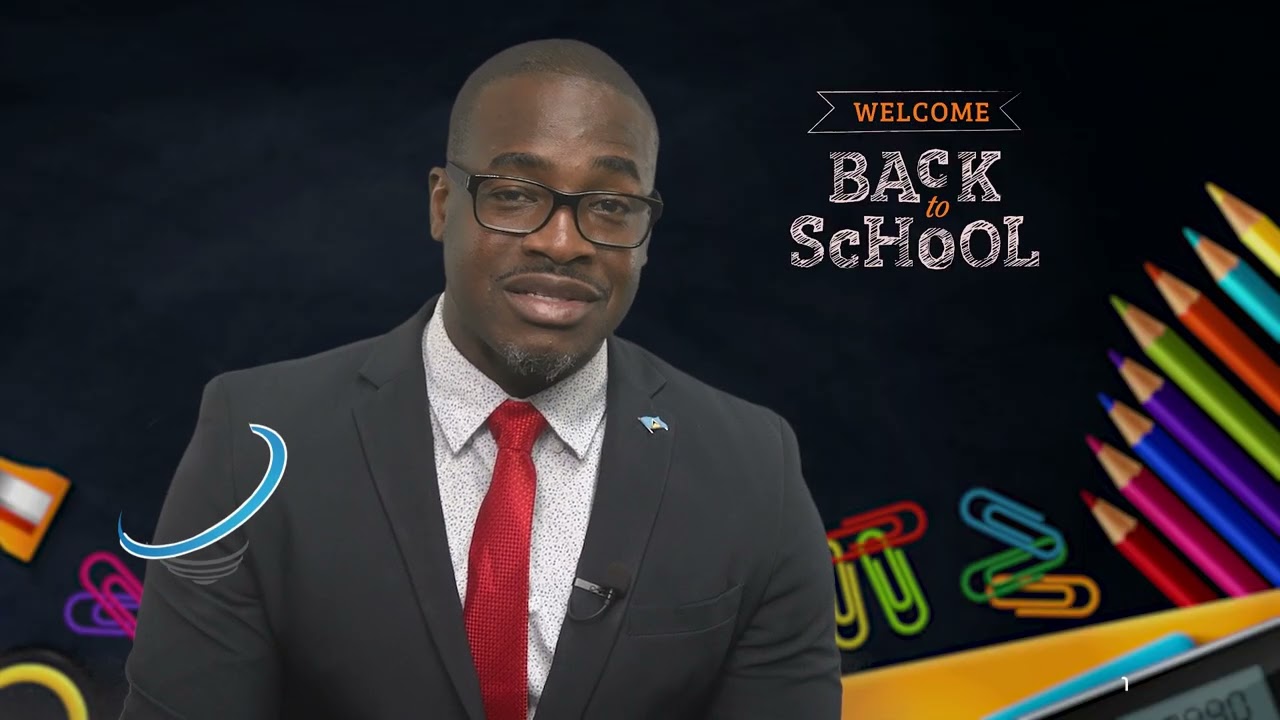
Honorable Kenson Casimir's back-to-school address for the 2026-2027 academic year emphasizes that reopening schools is far more than a routine event; it is a powerful reminder of why education matters and an opportunity to shape lives. He welcomes the entire education community, including students, teachers, parents, and support staff, with optimism while acknowledging the need to avoid complacency despite recent achievements in regional assessments. The core message is that every child possesses potential regardless of their background, ability, or economic circumstances, and the government's responsibility is to build a system where every learner has a fair chance to succeed.
To achieve this, the administration outlines several strategic initiatives aimed at strengthening the education system, starting with enhanced psychosocial support through the addition of eight counselors, two social workers, and two new truancy officers dedicated to reconnecting absent children with their education. A new program called Educational and Skills Pathways for At-Risk Youth (ESP) will be introduced to provide alternative routes for both in-school and out-of-school youth to develop practical skills and transition successfully into further education or the workforce. Furthermore, the government is addressing teacher well-being by incorporating a midterm break to allow educators to rest and recharge, recognizing that their mental health is directly connected to the quality of teaching and learning they provide.
The address also highlights a renewed focus on holistic development and inclusivity, aiming for every school to have at least one enrichment club to nurture talents in music, entrepreneurship, athletics, debate, and science. The government plans to establish a National Parent-Teacher Community Association to strengthen partnerships between home, school, and the wider community while preparing educators for the upcoming implementation of a new digital curriculum and multilingual education initiatives, including the expansion of French and Mandarin teaching. Special attention is given to dismantling the artificial divide between academic and technical-vocational education, ensuring that students who build, create, or innovate are valued equally, alongside continued efforts to improve mathematics support and inclusive education for students with disabilities through specialized training and assistive devices.
Finally, the speech underscores the government's commitment to early childhood education by investing in centers and providing tuition support, as well as expanding the "Banana a Day" nutrition program to ensure no child learns while hungry. While the government can build infrastructure and employ staff, Casirim stresses that true transformation requires active participation from teachers who believe in every child's potential, principals who foster excellence and innovation, parents who remain engaged and celebrate effort, and students who attend regularly, apply themselves, and respect their peers. The address concludes with a vision for an inclusive, innovative, and ambitious education system that unlocks the potential of every St. Lucian child, wishing everyone a safe, productive, and successful academic year under God's blessing.
Read the full video transcript
[music]
Fellow St. solutions. [music] As we
stand at the beginning of another
academic year, there's a familiar sense
of anticipation [music] across our
nation. Every September brings with it a
special energy, the excitement of new
beginnings, renewed responsibilities,
and another opportunity for our children
to learn, grow, and move closer to
realizing their dreams. The reopening of
school is about much more than returning
to classrooms. For me, the reopening of
school is always a powerful reminder of
why education matters. Behind every
school gate is a child with potential.
Behind every classroom door is an
opportunity to shape a life. And behind
every successful learner is a community
of people who have chosen to believe in
that child's future. It is therefore
with tremendous optimism and a deep
sense of responsibility that I welcome
our students, our teachers, principals,
parents, education officers, counselors,
curriculum officers, support staff, and
every member of our education community
to the 2026 2027 academic year. We begin
this year encouraged by what our
students and educators have
demonstrated. Our students continue to
distinguish themselves, including
through outstanding regional performance
in the Caribbean Primary Exit
Assessment. Their achievements remind us
that St. Lucian students can compete
successfully at the highest levels, but
achievements must never make us
complacent. Our responsibility is to
build an education system in which every
child has the opportunity to succeed
regardless of ability, economic
circumstances, community or learning
need. And this year we are moving
forward with more focus and deeper
purpose guided by strategic imperatives
and initiatives. Firstly we will
strengthen the psychosocial support
available within our education system
through the addition of eight counselors
and two social workers. Two new truency
officers have been recruited to provide
the support required for children who
are absent from school. We cannot simply
record these absences. The truency
officers are tasked to reach out to the
children and family and work to
reconnect those learners with education.
This year the department will introduce
a program coined the educational and
skills pathways for atrisisk youth or SP
where opportunities are created for both
in school and out of school youth to
develop the knowledge, practical skills
and competencies they need to transition
successfully into further education,
training and the world of work. This
initiative recognizes an important
truth. A young [snorts] person may need
a different pathway, but that does not
mean that he or she has less potential.
ESP therefore forms part of our broader
commitment to ensuring that fewer young
people fall through the cracks. Now, as
we focus on the well-being of our
students, we must be equally mindful of
the people who care for, teach, and
inspire them every day, our teachers.
Teaching is deeply rewarding, but is
also demanding. Our educators carry
significant responsibilities both inside
and outside the classroom and we
recognize that their mental health and
overall well-being matter. We cannot
expect our teachers to continuously pour
into our children without also creating
opportunities for them to pause,
recharge, and rejuvenate. It is for this
reason that the midterm break has been
incorporated into this academic year,
providing our teachers and students with
an important period to rest, reset, and
return to school refreshed and ready for
the remainder of the term. This is part
of a broader recognition that teachers
well-being is directly connected to the
quality of teaching and learning. When
our teachers are supported, valued and
given the opportunity to care for their
own well-being, they are better
positioned to give their best to the
children and trusted to them. So to our
teachers, I say your mental health
matters, your well-being matters, and
you matter. This year, we are also
placing renewed emphasis on extra
co-curricular development. Our vision is
for every school to have at least one
enrichment club. Education must develop
the whole child. Somewhere in our
schools is a future musician waiting for
an instrument, an entrepreneur waiting
for an idea, an athlete waiting for an
opportunity, a debater waiting for a
microphone, or young scientists waiting
for an experiment. We must create spaces
where these talents can emerge. Because
schools cannot accomplish this work
alone, we'll establish the National
Parent Teacher Community Association,
strengthening the partnership among the
home, the school, and the community.
When parents, teachers, and communities
work together, our children are the
beneficiaries. We are also preparing our
educators for the next chapter of
curriculum reform. Throughout this
academic year, teachers and principles
will participate in training and
capacity building in preparation for
implementation of the new digital OACs
primary curriculum in 2027 2028. At the
lower secondary level, we will continue
advancing the digital curriculum,
ensuring that learning becomes
increasingly engaging, relevant, and
responsive to the world our students
inhabit. Our commitment to multilingual
education will also continue. The pilot
teaching of Quol will continue across 15
primary schools throughout our education
districts, while Mandarin will be
introduced into additional secondary
schools. Our children must be firmly
rooted in who they are as St. solutions
while being equipped to engage
confidently with the wider world. We
know that transformation must also
address areas where our students require
additional support. Mathematics remain
one such priority. This year, we'll
introduce additional mathematics support
teachers, including drawing upon the
invaluable experience of retired
educators who still have much to
contribute to our education system. Our
transformation of technical and
vocational education and training will
also continue. Enrollment across our
four TVET schools is increasing and each
institution will place greater emphasis
on its flagship programs. For too long,
societies have created an artificial
divide between academic and technical
education. We are dismantling that
thinking. The student who designs,
builds, creates, repairs, produces,
cooks, cultivates, or innovates is no
less capable than the student who
follows a traditional academic pathway.
Our responsibility is to help every
learner discover a pathway through which
talent can become skill, skill can
become opportunity, and opportunity can
become economic independence. One of the
areas about which I am especially
encouraged is our continued movement
towards inclusive education. Every child
belongs. Our students with special
educational needs must increasingly have
the opportunities to learn, participate,
and thrive alongside their peers with
the appropriate support. To advance this
commitment, special education teachers
in our mainstream schools have received
training to better support students with
disabilities, particularly students with
autism. We'll also provide additional
assistive devices to help remove
barriers to learning. Importantly, two
purpose-built buses have been provided
to transport students with special needs
from their homes to school and back.
Because access to education means very
little if a child cannot physically get
to school. As a government, our
commitment begins long before primary
school. Investing in universal access to
early childhood education is a major
initiative of this government. While the
framework is being finalized to ensure
adequate access and quality education,
pertinent parent gaps are already being
addressed. This academic year, each
early childhood education center will
receive $3,000, while tuition support of
$100 per child per term will continue
for students in our early childhood
centers. These are not simply
investments in preschool. They are
investments in the foundation upon which
future learning is built. And because a
hungry child cannot give full attention
to learning, we expanding the banana a
day program to include all students.
This is a simple initiative with an
important purpose. Supporting students
nutrition while connecting our education
system with local agricultural
production. Fellow St. Lucians,
government can build schools. We can
provide technology. We can employ
counselors, train teachers, expand
programs, and invest millions of dollars
in infrastructure. But government cannot
transform education alone. Teachers, I
ask you to continue believing in the
potential of every child who enters our
classroom. Principles, continue creating
schools in which excellence,
accountability, compassion, and
innovation can flourish. Parents, remain
engaged, ask about homework, attend
meetings, speak with teachers, celebrate
effort as much as achievements. And to
our students, this education system
exists for you. But your success also
requires something from you. Attend
school, apply yourself, read, ask
questions, explore your talents, respect
your teachers and your peers, make
responsible choices as we open the doors
of our schools for the 2026 2027
academic year. Let us open even wider
the doors of opportunities. Let us build
an an education system that is inclusive
in whom it serves, innovative in who and
how it teaches, ambitious in what it
expects, and uncompromising in its
belief in the potential of every St.
Lucian child. May this academic year be
one of discovery, growth, achievement,
and renewed responsibility. I wish you
all a safe, productive, and a successful
2026 2027 academic year. May God bless
our students, our educators, and by
extension our beautiful nation, St.
Lucia. Thank you.
[music]