Video summary
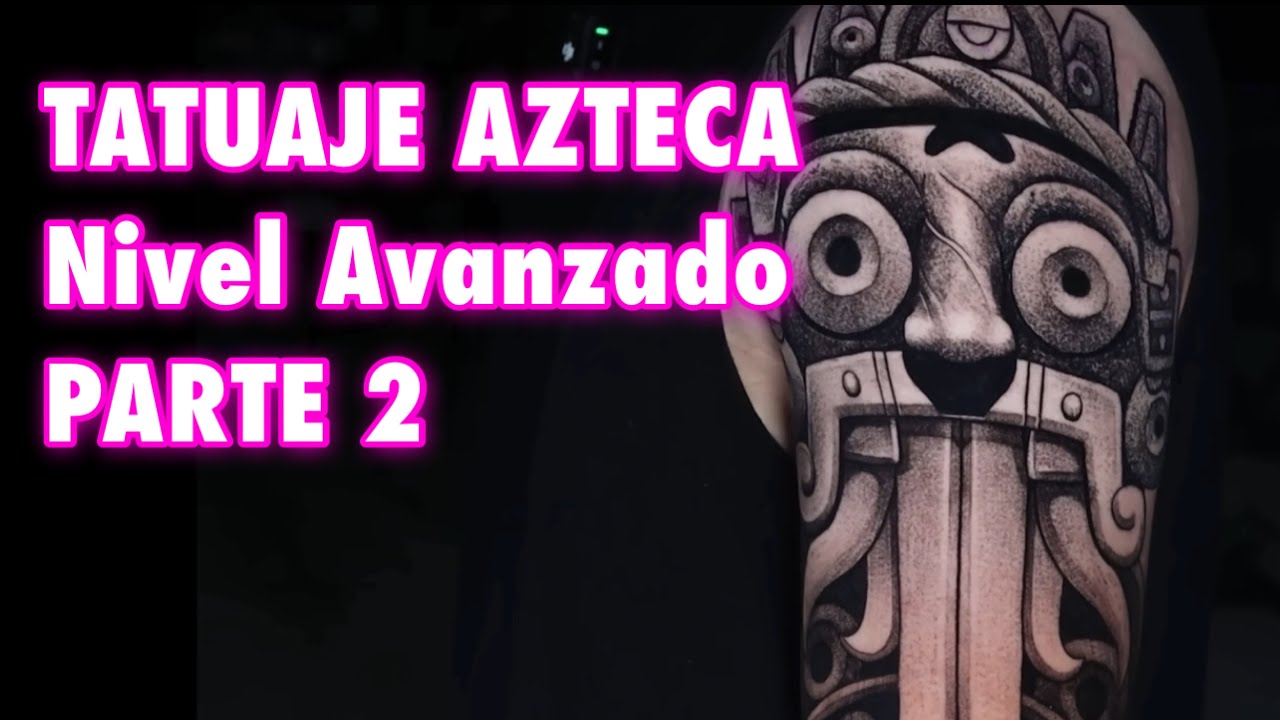
This video serves as an advanced exploration into the Aztec cosmology, specifically focusing on the intricate connections between major deities like Cuatlicue, Tlaloc, Tonatiuh, and Tlaltecuhtli within the context of a tattoo project. The narrator begins by clarifying that while the Sun Stone is often called the "Sun," it actually represents the entire universe, including the middle world and the earth itself. Central to this explanation is the figure of Cuatlicue, depicted at the base of the calendar stone in a birthing position, which symbolizes Tlaltecuhtli as the navel of the Earth responsible for gravity and fertility. The speaker emphasizes that these deities are not isolated figures but interconnected energies where male symbols like Tonatiuh appear alongside female representations to illustrate the balance between life, death, rain, and the earth's surface.
The discussion then shifts to the Ferrier Barer codex to explain the specific roles of Tlaloc and his companion Chalchutlique within the concept of the mid-heaven or clouds. In this cosmological framework, Tlaloc acts as the "liquor of the earth" who brings rain to fertilize the land, while Chalchutlique receives these seeds in her celestial womb to ensure fruitfulness on Earth. The narrator highlights a profound symbolic link between water deities and olive snails; in Aztec culture, conch shells were used during dances to mimic waterfall sounds intended to attract Tlaloc's rains. This connection is visually represented by the stars found on Cuatlicue's skirt and the presence of these shell motifs at the bottom of her garment, reinforcing the idea that water, fertility, and celestial bodies are all part of a single, unified system.
Finally, the video details how these ancient symbols were integrated into the specific tattoo design being presented. The artist explains the placement of various elements to mirror the cosmic order: the top features stars representing the children of Cuatlicue and the southern sky, while the middle section depicts Tlaloc in his role as the rain-bringer connecting heaven and earth. Below this lies Chalchutlique with her coal serpent zodiac sign and skulls symbolizing death that paradoxically represent life through birth imagery. The design culminates at the bottom with representations of Tonatiuh, Tlaltecuhtli, and Tlaloc again, ensuring that every part of the tattoo tells a cohesive story about how rain feeds the earth, which in turn supports human survival under the gaze of the sun. Through this detailed breakdown, the creator demonstrates years of study to ensure that each stroke honors the complex relationships between Mesoamerican gods rather than treating them as mere decorative patterns.
Read the full video transcript
Alright, this is part two, the
more advanced version to explain the
meaning of this project you see here
and the books I recommended in the
last video, I recommend them again in case you have
n't seen part one. Coise
Borgia. Here he explains all the twenty-day periods
that are the tonal powali and here we have
the Boturini codex for the Mechicas' journey
. also the great
civilization of the Aztecs and the Mayans.
And in my digital version I have the
Fair Barer codex, which is what we're going to
talk about today. And I also have the
ancient Mexico of San Bernardido de Sagún. Phew!
A very important figure for the
civilization of Mesoamerica. So let's get
started so we don't waste time because
this video is going to be full of
information for those who are already
advanced and have a notion of what
culture is.
This is the video you have to see
because there's going to be a lot here, there's going to be
too much, so hopefully I won't
miss it. So if you have any
questions, leave them in the comments.
So let's begin. I already explained in
part one the basics of what
Cuatlique is and who Tlalock is. So there's
no need to summarize that. Let's go
into detail now.
Eh, Cuatlique is
the cosmic mother, life, death,
fertility and the earth. Why did I put
Tlaloc and Cuatlique side by side? Tlalok,
the liquor of the earth. Tlali, liquor and
pulque. [music] This is the meaning of
tlalo for those who didn't see part
one. So, why did I put them
together?
First we need to see the male tonal.
For those who are new, that's the
Aztec calendar. To call it
correctly, it is the tonal Mas. Many
people might call it the
sun stone, but it is not only the
sun stone. Because?
Because the tonal masó is a representation
of the universe, the middle world, and
the earth. By saying it's only the
sun stone, you're referring to the
universe only.
Why do we know that the tonal masó is a
representation of the universe, the middle
heaven, and the earth? Because if you manage to see
in the middle of the tonal masó we have the face.
Many people know it as tonatio, which
is correct, but what do we have
around our eyes? A mask
[music] representation of coal,
snakes
that is connected with Tlaloc.
The tongue that is coming out of Tonatio is
not Tonatio's. If you can see
all the codices and representations of
Tonatio, in no drawing or tombstone
where Tonatiu [music] is depicted does he not have his
tongue sticking out. That means we need to
see who has their
tongue out. And there is only one
deity. And there is only one God who
has the tecaltl
as his tongue,
the obsidian knife. There is
only one. Who is Taltecutli?
It is the navel of the Earth.
representation as gravity, which
pulls everything down to the surface
of the earth, the tlac
on the earth. That is why
his tombstone, his
Tlalt Kutli monument, is flat
because he was not standing, he was not on
the monuments, he was not
on the pyramids, he was
buried because of gravity, the
navel. Tlaltecuhtli is also known
as the earthly beast. Tlalcutli is the
energy of man and woman. Because?
Because we can see in the
Talte Kutli monument that she is in a
birthing position. That means it's
related to fertility,
but it's also related to being a
man. Without going too far off-topic,
we have Tonatiu, Tlatekutli and Tlalock
in the middle of the Tonal Maon. Why is it so
important that I explain this? Very
easy.
If we can see the Cuatlicue, at the
bottom, at the base of Cuatlicue,
we have Cuatlicue Citlálico. At the
bottom we have the same
symbols as the male tonal, which are
tonatiu, taltecutli and tlalo. We can see
that she is in the birthing position to
represent Tlaltecuhtli. We can see
Tlalock's mask and in the middle part,
which is like a sun tone,
we can also see
flint feathers to represent Wiloslle.
Everything is connected, everything, everything, everything,
everything. Before I continue explaining
this part of the tonal machó and the
quatlique,
I'm going to refer to the Feir Barer codex now,
and I hope I don't confuse you or
lose you, but I swear that if you
manage to get through this part here,
everything will eventually connect. So please bear with me
. So
now we go to the Fer body Mayer codex. In
the Fer body Mayer codex I will only
focus on the part where
Tlalock is.
The part where Tlalock is. I'm going to
put a little circle there so I don't
lose them. If you can build Tlalock, he
is on the left side
of where Shutecutli is. I'm
not going to delve too deeply into that deity,
as it could complicate matters. Uh,
this part is called the Wistlampa,
which translates to mid-heaven.
Why the midheaven? Because what is
there is where it is located, it is
the clouds, what connects the universe and
the earth.
The clouds are the mid-sky, the Wis
Tlampa. His companion of Tlalock is
Tepeyol,
the heart of the mountain, the lord of the echo
related to the manifestation. I'll
leave it there. Tlalock is in the
Wlampa
to connect the universe and the earth.
Who follows him at the bottom, which
is [music] the llama?
instead of femininity connected with
the moon. Who's there
in quotation marks? Tlalock's wife,
Chalchu Tlique. Very good.
Chalchutlique, the goddess of the
oceans, the rivers, the
waterfalls, everything related
to water. A little bit of what I explained
in part one. Tlalock makes it rain. He
who fertilizes the earth, the liquor of the
earth, Chalchutliqueu, receives the
seed,
buries it so that it bears fruit in the
Tlac on the land of
Cuatlicue,
because chachutlique, cuatlice, tlalique,
tla solteo are represented with
fertility because they are feminine energies
with the celestial womb. Okay, so what's my point
with all this? Look how everything
makes sense. Everything is connected, everything in
culture is connected. It's a
beautiful thing. A brief summary. In the
male tonal we have Tonatiu Taltecutli,
Tlalock. At the base of Cuatlique we have
Tonatiu, Tlalock, Tlaltecutli,
Wiloposli.
In the Ferry Mayer codex we have
Tlalock and Chalch Chutlique. Okay
, just remember this so you don't get
lost. In the middle of the Tonal Maot
we have Atlante Kutle with the tongue
of Tech Palkle,
the mask of Tlalock and Tonatu in the middle
of the Tonal Mau. Alright, let's go see the
Tlant Kutli monument.
Let's focus
on the bottom part
where the skirt is. Please pay close attention
.
The little circles you can see on the
skirt of Tlalte Kutli are stars.
Those little circles you see there are
stars. Let's go down a little further
on the skirt where you can see a kind of
little tail there, like a kind of little
bun.
Those are olive snails.
Why olive snails? In the
Mechica culture, when using those
olive conch shells, when performing dances to try to
attract what is atlalok and the rains
so that Chalch Chutlice receives them and
has the seed in the celestial womb,
they used the olive conch shells to
make the sound of a waterfall.
Very good, Chalchutlique,
the energy of the waters, of the waterfalls
and of the lakes
is related, they
connect it with the olive snails.
Perfect, so far so good.
Now we're going to focus on
sitlalique,
a summary, cuatlique, citlalique and at
the bottom we have Tlaltecutlin,
tono, tlaloc, witiloposli.
Very good. Now in the Citlalique part
we have
death. The cuatlica and the citla
lique have two skulls
that in water are called mikishkli. It's
very important, very important that you
remember that
because you're about to see. Now let's
focus
on the part where the feathers are. That's why we have
Wichiloposle at the bottom
. There is another representation of
Wichiloposle.
What do we have down here?
That skirt is basically a
replica of Tlalte Kutle's skirt.
Exactly the same.
There we have the circles. What can we
see in the circles? They are the stars,
because she is the one with the
starry skirt. Clear.
What do we see at the bottom?
Olive snails again.
Why do we
see? And here I'm going to open the book
just so you can see this,
so you can see that the
information I'm going to give is feasible.
Chalchutlique,
each Chalchutlique energy, tontiu,
tlalo tantecutli, they all have, I'm going to
call it for now zodiac sign,
although I feel bad saying zodiac sign, they are
called their tonals and the rulers,
but for now we're going to call it
zodiac sign.
Chanchutlique, its zodiac sign
is the Coal snake.
Knowing that, we have the skull
above,
Mikishkli.
Why do we have it in the uterus? The
tonal of Chalchutlique is the
coal serpent.
We have Koal on Coatlique's head
.
We have the death Mikishkli,
located in the belly
of the coatlicue and the sitlali.
Because?
Because miishkli not only means
death, but because it is located
in the belly it means life,
known as the celestial gourd.
Chalchutlicue is down on the skirt of
Cuatlicue to represent when a
mother is about to give birth. That's why
we have
olive snails coming out of the skull, from
Mikishkli's, I said skull, from
Mikishkli's, as if giving birth. Now
you can see that everything is connected, everything
is connected. Lalog Chalchutlique
are together in the same
monument of the CLAL and the Cuatlique,
now that we have all this information, I am
going to let you know all the
details of this project so that
you can appreciate each part of this
tattoo that I put a lot of effort, a lot of
brains, eh I put a lot of thought into.
We'll start with the bottom part. What do we
see at the bottom? The tonalma
to represent Tonatiu, Tlaltecutli
and Tlalock
who are connected with the quadrille and
the Ferry Mayer codex. In the
middle part we obviously have Coatlicue; it doesn't
require much
information, I mean, I just gave you
the whole video, but there
Coatlicue is represented with the two
snakes looking at each other.
at the top, up there
where the little wheel with squares is.
That's a representation of corn. Why
corn?
We have Tlalo above
giving the rain, the fertilizer
of the Earth, giving it to Coatlique
to fertilize the earth with the seed
and bear fruit in the Tlactipac of
Coatlique.
In the part already going up we have
Tlalok, very easy to recognize, the liquor
of the earth. Once again, Tali Tierra
Oli liquor, energy of the rain,
fertilizer of the earth and responsible
for the survival of the people.
Remember what I told you about the Fir
Barer codex, that Claralo is a
representation of the
Wistlampa, the midheaven, which
connects the universe and the Earth. How did
I represent that? If you can see in
Tlalock's crown above, I put the
stars,
the star symbol,
look, the star above,
which are the children of Cuatlique, Losenso
Wisnats, which I explained in part
one, daughter of Koyol Shauki, I mean, sorry,
Koyol Shauki is the daughter of Cuatlique and
the 400 stars of the south, the Witnah.
That's why I put the star at the top. Very
good.
If you can grasp the meaning of
all this, we've got the stars
up on our shoulders. In the middle I have the
Wistlampa with Tlalo the middle sky, and the
earth below, the Tlac Coate. Phew! I
could go on, but I think that's enough for now.
I'm so excited about this topic that if
you like this video, please
share it, leave me a comment, and if you
have any questions, don't hesitate to ask them
in the comments and
I'll gladly make another video for you. And
this, as I say, I love this
topic, this, I love it, I love it, I
study it a lot, I have several books and I've been
putting a lot of effort into it for a couple of years
to fully understand what
culture is. This one, and yes, I hope you
liked this video. Leave
your opinions in the comments, and if you
're interested in seeing what this
project is like, I have a video specifically
where I tattoo my client, and there's no
backstory, I just
shared a little bit of the tutorial
on how I did this project, right? So
thank you very much and I wish you a
nice day.
[music]