Video summary
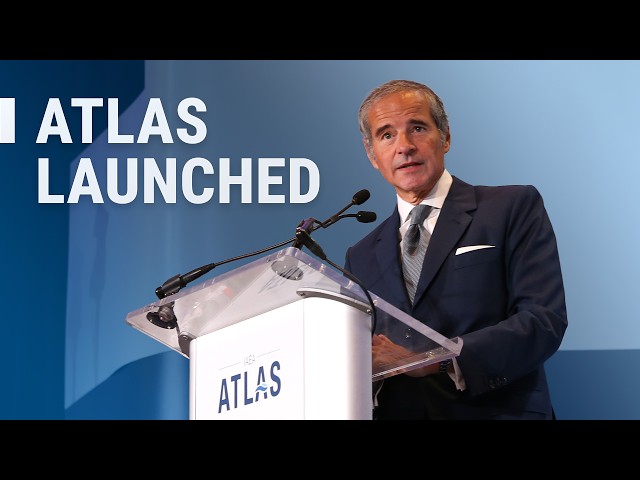
The launch of the Atlas initiative marks a significant convergence between two pivotal forces driving the global economy: commercial shipping and nuclear energy. Held in Washington, D.C., this new program is dedicated to shaping the future of nuclear technologies at sea, aiming to integrate small modular reactors that can power civilian vessels with reduced refueling needs. Additionally, the initiative explores the potential of floating nuclear power plants to deliver reliable energy solutions to coastal and remote communities, thereby expanding access to sustainable power sources in areas where traditional infrastructure may be lacking.
A central focus of the event was addressing the critical challenge of regulating nuclear power when used as a propulsion source or for generating electricity and process heat on ships. IAEA Director General Rafael Mariano Grossi emphasized that while regulatory frameworks must evolve to ensure safety, security, and peaceful use, these challenges are solvable through international cooperation. Over two days, global leaders and experts gathered to discuss strategies for maintaining the highest standards of safety and security, ensuring that the deployment of these advanced technologies proceeds responsibly and aligns with global peace objectives.
The historical significance of this endeavor was highlighted during a visit to the Port of Baltimore, where delegates toured the NS Savannah, the world's first nuclear-powered merchant ship. This historic vessel serves as a powerful reminder of the early dreams and achievements in the peaceful application of nuclear energy at sea. By revisiting the legacy of the Savannah, participants connected the past with the present, acknowledging that while the technology has advanced significantly, the core mission remains unchanged: to revive and realize the original vision of using nuclear power for civilian maritime purposes under the guidance of the Atlas initiative.
Read the full video transcript
Atlas is the [music]
coming together of two of the most
important [music]
driving forces
of in
>> [music]
>> world economy.
Commercial shipping, of course, as I
mentioned, is one of those. And at the
same time,
nuclear and nuclear energy.
>> This week in Washington, D.C., the IAEA
[music] launched Atlas, a new initiative
focused on the future of nuclear
technologies at sea. Small modular
reactors could power civilian vessels
with less refueling, while floating
nuclear power plants [music] could bring
reliable energy to coastal and remote
communities. IAEA Director [music]
General Rafael Mariano Grossi opened the
event alongside U.S. Energy Secretary
Chris Wright.
>> How are we going to regulate
nuclear nuclear power both as a
propulsion source or as a electric
generating or process heat generating
source on a ship? That's why we're all
here. This is a challenge, but of course
we can solve it.
>> Over two days, global leaders and
experts [music]
discussed the best ways to keep these
technologies safe, secured, and
peaceful. At the Port of Baltimore,
[music]
delegates toured the historic NS
Savannah, the world's first
nuclear-powered merchant [music] ship
and an early example of the peaceful use
of nuclear energy at sea.
>> We're at the heart of the Savannah,
first ambassador [music] of
atoms, of this project at a time where
we are reviving the dream.
But when doing so with [music] Atlas, we
remember where it all started,
right here.