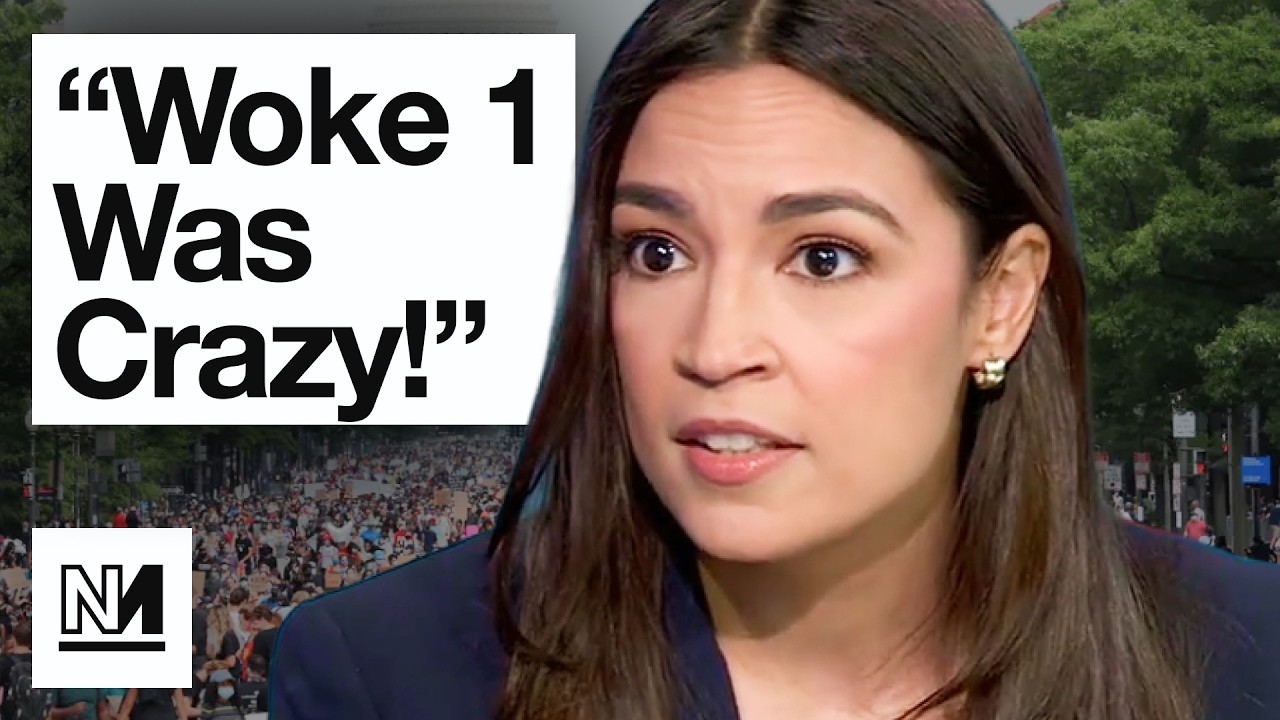
Video summary
The video examines the political challenges faced by socialist candidates in recent Democratic primaries ahead of the US midterms, focusing on how past social media posts from 2020 and 2021 are being scrutinized against their current stances. A primary example is Franchesca Hong, who is running for governor of Wisconsin but faces criticism over her historical tweets advocating for defunding or abolishing police forces as well as the abolition of ICE. Critics have also pointed to her past suggestion that Thanksgiving should be cancelled due to its colonial origins, arguing that while these positions were once held by many progressives, they are now viewed as unpalatable in a broader electoral context where local politics often diverge from national progressive movements.
AOC addresses this controversy by explaining that the rhetoric used during the height of the Black Lives Matter movement and the pandemic was shaped by an urgent need to address systemic racism and high unemployment rates at that specific time. She acknowledges that slogans like "defund the police" were intended as a pathway toward reform rather than immediate implementation, noting that many people today find such language difficult to accept without understanding its historical context within social movements. AOC clarifies that she has evolved in her thinking after witnessing real-life consequences of incarceration within her own family, leading her to believe that while prison abolition remains an ideal goal for a just society, practical political demands must be tempered with the reality of what communities currently need and can support.
Franchesca Hong responds similarly by asserting that politicians are capable of growth and evolution over time, emphasizing that she will not defund police forces if elected governor because such actions would undermine public safety efforts like removing guns from streets and ensuring victim justice. The analysis suggests that her approach reflects a pragmatic shift toward coalition-building and persuasion rather than rigid adherence to past ideological purity, though some observers feel this triangulation lacks the authenticity of someone who sincerely holds different views but remains committed to them without constantly adjusting their position for political expediency. Ultimately, both candidates illustrate the tension between maintaining revolutionary ideals from social movements and adapting those ideas to win elections in a system that requires compromise and broad-based support.
Read the full video transcript
Socialists are proving competitive in a
number of Democratic primaries ahead of
the US midterms. However, um some are
taking heat because of their past lives,
namely what they tweeted between the
years 2020 and 2021. And Francesca Hong
is the prime example here. She's
currently running to be the Democratic
candidate for governor of Wisconsin. Um,
and networks like Fox News have been
highlighting tweets of hers um, from
2020 and 2021 calling for the defunding
of the police, the abolition of the
police. And there's also one from 2026,
so very recent, calling for the
abolition of ICE. I think that policy
she does still stand by. Um, Hong has
also been criticized for calling for
Thanksgiving to be cancelled because she
had quite good reasons for doing it. You
know, she saying it's celebrating the
colonization of this continent, but not
necessarily a populist position. Um,
we'll look at how Hong herself has
responded to these past tweets in this
current campaign. However, first, um,
it's another socialist politician whose
response to this line of questioning has
gone viral this weekend.
>> What do you make of those controversial
statements? I'm sure you've seen. I
mean, she's,
>> uh, you know, the the Thanksgiving dust
up. She says she doesn't, you know,
still believe that, but uh, you know,
uh, the abolish prisons, abolish police,
which is also positions that have been
taken by a lot of the progressive
candidates who have won.
>> Mhm.
>> How do you how do you get around that?
Those are not positions that are
supported by,
>> right? I mean, I think that a lot of
these races,
even right now, they'll have a tendency
to be nationalized,
>> but
these races ultimately are local and all
politics are local. My understanding is
that um is is that Franchesca Hong has
made clear her present stances to her
election.
>> Yeah, she's moved away from a lot,
>> right? She's moved away from it. And I
have a local city councilman that has
this uh
>> uh saying woke one was crazy. [laughter]
>> Uh [snorts] so Ash, that clip has
absolutely divided the internet. So
there's sort of one group of people
saying great, you know, this is showing
that AOC has, you know, become, you
know, she's grown up. Um she's
abandoning some of the unpopular or, you
know, not persuasive positions she once
held. other people saying this is AOC
selling out the BLM movement or people
who you know believed in defunding the
police. other people saying which to be
honest actually is the most common I
think saying oh well it's easy enough to
say this now um in the years 2020 to
2023 there were people losing their jobs
for this and if you said what AOC is
saying now 3 years ago then
>> AOC might say that you're not someone
who should be associated with so I mean
is it how what's your interpretation of
this new position from AOC
>> well look I I think that there is truth
in the point that well it's easy enough
to say it now but I don't think that
that's a reason to necessarily dismiss
someone. I think that tells you
something about how a particular set of
politics operated at that time. Now I
think it's something that you said which
is that when you look at positions like
defund the police and I'm sure that lots
of people watching will agree with the
sort of slogan and and proposition to
defund the police. But even if you look
at African-American voters at the height
of BLM, it was a minority, a real
minority of Africanameans who supported
defund the police. And because of the
way in which movements work, I don't
think that um social movements do
necessarily have to be super
representative of the electorate. That's
never been how they've worked. They're
often sort of vanguardist in the in the
fight for social change throughout
history. Um, but there was often this
sense of invoking the broader interests
and beliefs of black people in the US in
the slogan defund the police. But
actually, there was always this remove.
And what's most interesting about that
isn't that um it was a minority of
people saying something that was
unrepresentative of the wider
electorate. Again, that's movements. Is
that there was never much interest in
building any support for the
proposition. there was as you've said
before a sort of mechanism of raising
the social costs of disagreement. So
what you're talking about in terms of
well you'd have you know some people
lost their jobs or you know found
themselves very intensely criticized in
a way which um went beyond I really
disagree with this or I think it's
problematic and here's why and was sort
of you're racist for for disagreeing
with the premise is that that was the
mechanism of trying to get people on
board. And so I I think that it's a
little bit it's you're not actually
escaping from the Twitter mind vortex
when you say I'm leaving woke 1.0
behind, right? Because that is an
extremely online thing to say and to
think about. Um like it's you're just
you've got brain rot in a in a new uh
flavor. Um, but I I do think that there
is something important for movements to
recognize which is the way in which
things were done a few years ago. And I
think that's because of that sort of
like I don't know that like uh hotboxed
sort of you know cauldron you know
really intense crucible of politics
where you had movements and then because
of the sort of poorestness of the you
know the Democrats and the primary
system is that there were expectations
to see that being reflected in um you
know national political campaigning is
that maybe there is a step in between
which is if you say okay we're a street
movement, right? We're a street movement
that that are making demands. Maybe
before you go and we want that those
slogans, we want those demands to be
represented by electoral officials. The
thing in between is to go maybe we
should start persuading people of it.
But there was a jump without any of that
persuasion happening. There was a jump
in saying we want to see our elected
representatives um you know out there
fighting for this, which I think was was
a tactical error.
I'm I've got a lot to say about this,
but let's actually first go to AOC
expanding um on how she looks back at
the demands made at the height of the
BLM movement.
>> Did the movement go too far with some of
those positions? I mean, you you briefly
supported the idea of defunding the
police.
>> Well, um
>> you know, I think I think that
during this time and during especially
during COVID, there was a huge opening
of the overtone window. We were shut
down. there was some of the highest
unemployment rates that we have seen
because of those shutdowns. And I think
that the the doors were really open in
trying to entertain any and every policy
that was going to get us to a better
place. And I actually think that the
discussions that had that were had in
that time were quite fruitful. I think
that when we talk about crime today,
it's fundamentally different than the
way that we talked about crime in
bringing crime down, right? And I think
that we all share in the goals of having
as low a crime rate as possible. I think
that, you know, during lockdown,
of course, rhetoric in that time is not
rhetoric that we would use today. And
I'm grateful that these candidates have
the opportunity to present who they are
to their electorate and what they're
campaigning on in this moment.
I suppose
from what AOC says there and I don't you
know I'm not going to make this about me
[laughter]
that would be ridiculous.
>> Enough about you AOC.
>> Uh but I I remember saying at the time
like on Twitter, you know, like defund
kind of makes sense if you're just
saying there are other ways to deal with
crime and that America should maybe be a
bit more like a social democracy, a bit
more European in sort of like how it
deals with crime and punishment. Um, and
it's good that people have moved away
from abolish and they're going to defund
because it seems a bit more reasonable.
And the amount of people online that
would be like, "What the hell are you
talking about? You're speaking over
activists. Um, it's defund as a route to
abolish, yada yada yada." And obviously,
you know, I didn't lose my job. My life
is fine. I'm not really
>> I tried to get rid of you, but I was
overruled.
>> Well, some people did. No, not not
anyone in the organization, but there
were lots of people who were sort of
like the number of quote tweets and da
da d d d d d d d d d d d d d d d d d d d
d d d d d d d d d d d d d d d d d d d d
d and um and the main
consequence for me which wasn't a
consequence was was people sort of
saying you know why why do you why do
you need your voice to be heard on this
issue D and so I just stopped tweeting
about it which is fine for me but I feel
like both on that debate and um I mean
even more controversial one sort of some
of the trans debates
The main consequence for I think lots of
people was to just back out of all the
discussion. And what that means is that
the discussion is only ever dominated by
people with quite specific views because
everyone else thinks this is not worth
it. Oh my god.
>> Should I risk getting in trouble?
>> Go on.
>> All right. So,
>> better than me risking it.
Something which I've I've changed my
mind on is that you know I I would talk
about abolition and abolition of prisons
and abolition of the police because like
a lot of people I was coming from that
position of having
seen the impacts of racist policing um
like fairly close up having also seen
the way in which prisons contribute to
the social wheels that they purport to
be solving because when you take someone
out of their you know family unit out of
their community, you put them in prison,
you're sort of creating a tear, right? A
tear in the social fabric which has all
of these these different consequences.
And something which changed my mind
about it was actually an experience of
incarceration within my own family where
I actually thought this person needs to
be in prison, right? There isn't an
alternative to this person being in
prison. And in a moral society, in in a
just society, that's where they should
be. And whenever I tried to bring this
up with friends of mine who were still
abolitionists, they just couldn't wrap
their head around that part. And when I
would say, "But hang on, like, aren't we
proposing a society where prisons are
eliminated?" Then it would get into
these very semantic arguments of well no
because whatever force we have to
deprive people of their liberty or
separate them off from society be so
different from the police it would no
longer be called police which I just
think is a an argument about language
it's not an argument about content
obviously I want how policing operates
and prisons work to be really different
or it would be a setting of homework
like well if you go and read Ruth Wilson
Gilmore and so I would then started
going, "Okay, but abolition had a really
specific meaning. The abolition of
slavery meant one day you didn't have
slavery anymore, right? It wasn't, well,
we're going towards a horizon where
there is no more slavery." It's like,
"No, there will be no more slavery." Um,
and so I I have since come to the
conclusion that abolition is often
invoked, and I'm not saying this about,
you know, Ruth Wilson Gilmore or Angela
Davis, who I'm sure thought a lot about
this, but it's often used by people in
the movement to make reform sound
spicier than it actually is.
>> And I think that has got something to do
with subculture. I think it's got
something to do with the way people turn
to politics when what they actually want
is either subculture like you're not a
real punk, I'm a real punk or religion
which is a certain form of certainty if
this is right and this is wrong. Whereas
politics is actually about negotiation
and prioritization, persuasion,
coalition building, these things which
have various forms of compromise kind of
built into it because that's what it
means to to negotiate something
politically. Um, and and again, I just
don't think that people, and there are
good reasons for this. I think that when
you watch the video of Eric Garner being
choked to death or George Floyd being
suffocated or you hear the 911 call,
Trayvon Martin being killed by George
Zimmerman, all of these things have very
visceral effect, right? You don't really
want to think politically and
tactically. You do feel,
you know, so morally outraged and
offended. It is very right and it's very
wrong. But if you're making political
demands actually right or wrong is just
one component of it.
>> Well, I suppose I'd push back because I
I never thought the problem with like
defund or abolish was that they were
politically unstrategic. I thought they
were bad ideas.
>> But it's both both, right? It's like you
have to be open to having a discussion.
>> Yeah. Yeah. You have to be open to
having that discussion. Then you can
hash it out in openminded.
>> You can't you can't just sort of be like
um manayan about it. There is good and
there is evil and this idea is on the
side of the good. But I can understand
how you feel that way and how you feel
that there is a very clear sense of good
and evil when you watch a video where
quite frankly evil is being done. M
um let's look at how Franchesca Hong is
responding to the questions about her
old tweets.
>> That's not going to be an easy race.
It's going to be very easy for people to
put up on the board and say, "You said
abolish the Senate, defund the police,
abolish the police." And why should they
not believe that you would want to do
that, that you would try to do that if
you became governor?
>> I believe that people can evolve. We
meet Trump voters from previous
elections who now would like to vote for
me who have a sign in their yard.
>> So, who needs to involve the voters?
>> The governor cannot defund the police
and I won't defund the police. But in
the things we know prevent crime, like
getting guns off of our street, making
sure there is victims for justice, that
there are, you know, places where our
kids can go after school and thrive. You
know, we can't be tough on causes. We
have to be tough on causes if we would
like to be tough on crime. And as
governor, I cannot defund the police.
And I've reminded folks that I won't
defund the police.
>> So her argument is basically
it's unclear if I believe in it or not,
but I don't have the power to do it
anyway, so don't worry.
>> I
I mean this um you know, in a derogatory
way. She sounds like a politician
both in terms of her delivery and the
sense that she's trying to make you feel
much better about some bad news that
she's telling you. Um, and also what
feels like a lack of authenticity. I
think it's perfectly legitimate to be
like my views have changed and they've
evolved. I've become older. I've spoken
to more people. I understand that there
are different solutions to social
problems and that's what I'm committed
to. But the slogans didn't didn't really
tell us anything about them. So, I'm
interested in these solutions. That's
what I'm clear about. It's would also be
fine or, you know, honest to be like, I
still believe in this man.
>> Like, disco never died. I still believe
that both of those things pull from a
real human place. Whereas, I just don't
think she was getting there. I I I I
don't really mind in a way. Um, and I
think lots of people feel this way is
that I've got more time for someone who
holds a belief that I don't hold, but
they're sincere in their holding of it
than someone who is constantly
triangulating.
>> All right. Uh, that uh primary is
tomorrow.
>> Um,
>> may I set something right though because
I saw something in the comments which is
someone asked,
>> "Am I that girl who said that air
conditioning was racist?" No, that was a
different South Asian woman who I
constantly get mixed up for. And I would
actually say maybe not having air
conditioning is racist because I look
shinier than you, right? Shine shows up
more on dark skin. So that's woke 2.0.
Fit AC in the office.
>> To be fair, I still look pretty shiny.
Maybe the contrast is lower. I don't
know.
>> I think the contrast is lower.
>> I was just some comments. I've been
really liking some comments today. So,
so Michael went to Oxford and can't add
30 to 2012, which is fair enough. It did
take me a few seconds. Um, there was
also a debate about why I'm not a vegan,
and someone kindly pointed out that I
had IBS, so [laughter] I struggle with
with pulses. So, I love I love that you
[laughter] I love that our viewers know
about my dietary requirements. Makes me
feel very careful.
>> That you had IBS. Well, I've got I've
got terri I'm actually going to I'm
trying to get referred to an allergist
because um pulses give like make me
incredibly bloated. Now, I know they
make everyone a bit bloated, but me
really bloated and I have a kind of nut
allergy.
>> Oh,
>> so I'm really struggling with the whole
vegan proteins, but I am going to try
and cut out well not try that's weak.
I'm going to stop eating beef and lamb
for a start because they are the ones
that are really bad for the climate.
Maybe cut down on cheese, chicken, fish,
tofu.
any advice you've got, uh, let them know
in the comments. If you know a good
allergist in the London area, uh, feel
free to let me know. Or if you are an
allergist, definitely
>> if you want to join Michael's support
group, Hot Boys with IBS,
>> link in the description.
>> Exactly.
[snorts]