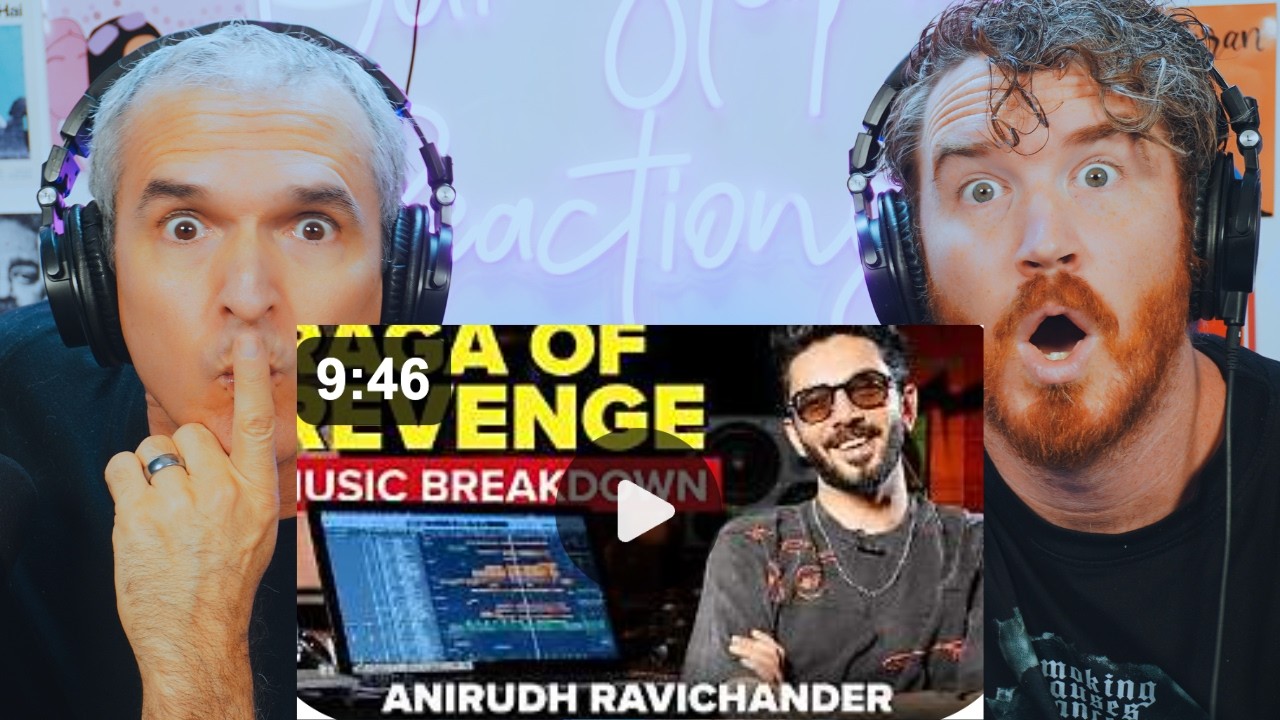
Anirudh Breaks Down ‘Raga of Revenge’ | The Music Behind DC’s New Sound REACTION!!
Watch on YouTubeVideo summary
The video features Anirudh Ravichander breaking down the creation of his track "Raga of Revenge" for the DC movie trailer, a piece he composed specifically to showcase Indian musical elements in a global context. Originally intended for screening at the Cannes Film Festival, the track was released online due to high demand after its initial festival run. Anirudh explains that his goal was to blend North and South Indian musical traditions by combining a South Indian rhythm with a Hindustani tabla beat and a Hindustani vocal style. This fusion was designed to be as authentically Indian as possible, creating a unique soundscape that merges the percussive energy of the south with the melodic depth of the north.
The composition process involved layering various instruments to build intensity, starting with orchestral strings and brass sections to establish a cinematic foundation before introducing specific rhythmic elements. Anirudh utilized an Oud for low-end frequencies instead of a traditional bass guitar, allowing the electric guitar to handle other frequencies while maintaining the track's unique texture. He also incorporated a Vina to carry the melody line, eventually deciding to add vocals on top of it rather than keeping it purely instrumental. The production included cinematic sound effects like "brams"—loud, ominous brass blasts—to heighten the climax of the trailer, ensuring that every element reached its peak intensity at the end of the track.
Beyond the technical breakdown, the video delves into the collaborative nature of high-level film scoring, drawing parallels between Anirudh's workflow and the massive teams led by composers like Hans Zimmer. The host explains how top-tier composers often have dedicated writing teams where different members specialize in specific sections, such as rhythm or strings, allowing the composer to focus on the final arrangement and master. This division of labor is compared to the specialized roles in an NFL football team, where coordinators handle specific aspects of the game plan. The discussion also touches on the distinction between engineers, arrangers, and producers, using George Martin's work with The Beatles as a prime example of how a producer can fundamentally shape a song's arrangement and sound.
The conversation concludes with an interesting observation about musicians who are excellent at sight-reading but struggle to play by ear, highlighting the different skill sets required in professional orchestras. The host notes that many composers have "stimming" behaviors or other coping mechanisms when working intensely, similar to how artists in the past might smoke cigarettes to manage their focus. Overall, the video provides a fascinating look into the intricate process of creating modern film scores, emphasizing that while technology and large teams make production more efficient, the final creative vision remains the responsibility of the composer who guides every decision from the initial piano sketch to the final mixed track.
Read the full video transcript
Have you heard any of the Harry Potter
book quotes where they replace the word
wand with willie?
>> No.
>> This is one of the better ones.
Lost in visions of this happy prospect,
he flicked his willie a little too
enthusiastically so that instead of
producing the fountain of pure water
that was the object of that day's charms
lesson, he let out a hoselike jet that
ricocheted off the ceiling and knocked
Professor Flitwick flat. Honestly, it
happens to us all.
>> Read Harry Potter and replace Wand with
Will. There's a whole audio thing on Tik
Tok and Instagram where you can hear it.
It's hysterical.
>> The biggest, the baddest, wackiest,
funniest, filmiest show on earth.
[music]
>> Hey, welcome back to Super Corbin.
>> I'm Willie. You can follow us on
Instagram, Twitter for more juicy
content. Thank you very much on Patreon
and follow T account. Subscribe and hit
that like button.
>> You've seen Willy Wonka, but have you
seen Wonka's Willie? Willy Wonka. Willy
Wonka. Willy Wonka's chocolate tears.
Willy Wonka tries chocolate tears. He
does.
>> Whoa. He's amazing.
>> What is this?
>> He's amazing.
>> Who is Willy Wonka? You idiot.
>> No.
Today we got a uh Anie thing where he um
breaks down one of his songs.
>> Oh, I thought he was going to cry.
>> Exactly. [laughter]
>> Uh so we he's going to just be in studio
and he's going to I think break down how
he created the song a little bit. That'
be kind of fun.
>> A song we know.
>> Yeah. Well, it's from the DC. It's
you'll you'll recognize it when you see
it.
>> Okay.
>> Songs weren't the issue.
>> No, the songs weren't the issue
[laughter]
>> with that. But um and well that's one of
the things a lot of people that even
before we saw it but and and after is
that a lot of people were really enjoyed
the score of the movie. Yeah.
>> Um so you'll recognize it but he's going
to
>> we were enjoying that and we also we
were we didn't have a problem at all
with we were like Bill Cash.
>> Yeah. Here we go.
>> Yeah.
using
>> as I told you I'd come up with the the
melody line the [music]
but I didn't have an idea that I should
vocalize it so I just recorded a vina
[music]
>> what's a vina
>> the formula is that towards the end
>> it looks kind of like a but we had
>> I I always like to, you know, do some
crazy combinations. [laughter] That's my
problem. Hi guys, this is Anerud and
you're watching me [music] on Mashable
Toad food.
>> Me and Lok go back many years now and
our combination is like a special one
for the audiences here in the south. So
when he was becoming a hero, first I was
like why do you want to do it?
[laughter]
But then I think now everything has come
together so well and with the director
Arun. So with Loish it's always been in
a way that he just lets me do my thing
in the sense I just hear the story from
him. He tells me the script and whenever
he shoots something he'll show me some
stuff but apart from that we don't
discuss much when it comes to music. He
just gives me a it's a free slate. So
this was basically made not as a track.
Uh if you want to know more about this
Raga of Revenge, it was made because
this film's trailer was to be played in
Khan. So just couple of days before we
had to submit it probably about 48 hours
before that, it came to us saying okay
you know what we're going to screen this
uh trailer in Khan in the film festival.
So you got a score for this uh trailer
and uh [music] when the trailer released
in fact uh it was supposed to be
screened only in KHN because we thought
you know it's actually pretty cool why
don't we release it online as well
because it was a little earlier to when
the film is coming so generally we
release trailers closer to the film
right like let's release it online on uh
on YouTube and then um when it released
there was a lot of requests for the
track to be released separately. I
loaded the visual and then um I thought
okay you know what this is going to be
screened in Khan and so let's be as
Indian as can be. So that was the idea
in my head and because you to make it
Indian I thought why not make a south
Indian rhythm with a Hindustani
[laughter] vocal you know okay you want
to show them India let's show them both
the north and the south [laughter] that
was the idea so basically I started only
with the rhythms first we have a
wonderful rhythm producer who works with
me called Karthikamsi started basically
with this
>> just for the rhythms
that's what um
is that common like Hansim has a writing
team and he'll have people
>> so the idea
>> write parts for him
>> you know 68 south Indian beat [music]
but then
>> he'll say he'll say give me a south
Indian 68 rhythm and I want 25 bars of
it
>> show both elements of the north and the
south
>> and I want to be we started the track
>> 67 68 beats per minute
>> I just came up with idea of that
>> have you seen the average auto insurance
rate in California
>> no I'm so glad you came to tell me cuz
it's been on my MIND I COULDN'T SLEEP
LAST NIGHT LARRY IANS ARE PAYING OVER
2,800 per year on average.
>> Son of a
>> The vocal line came next. So once I got
the vocal idea as well, then we started
producing it. And then because this is a
revenge based story and it's a hardcore
like you know action film, thought why
not we start off you know with some nice
uh orchestral
uh music. I wanted to sound like this.
>> [music]
>> If you don't if you don't know what that
is, each of those little bars is [music]
a track of music. Each of those tracks
has its own
EQ volume setting.
>> Strings first. So the strings [music]
obviously have it's like a proper you
have your cellos, vias, violins, all
that happening.
>> [music]
>> Obviously the second half of this we
wanted more thumb. So that's where the
Brams and the brass section join.
[music]
So we added these brams which are very
popular in you know orchestral music
right now. So we added those brams just
to give that kick towards the second
half of the as we as we're building the
intensity of the of the track before the
strings came in uh on top of the rhythm.
I came up with this uh little guitar
line which is which goes like this.
[music]
I thought it sounded cool with uh with
the with the beat, you know. So,
basically, if you heard it with the
beat, I always like to, you know, do
some crazy combinations. As I told you,
after I came up with the rhythm idea and
the vocal idea, the first thing I did
was groove to this well RPG.
I thought this was cool by itself. And
then uh I added a oud to it, you know,
just to give that little low end. I
didn't want to add any bass guitar in
this song because I felt the low end of
the oud or the uh electric guitar should
be the bass. Then what happened was you
just added some electric guitars
[music]
to go with this and then
as as I told you I'd come up with the
the melody line the
but I didn't have an idea that I should
vocalize it. I thought it should be on a
instrument like a Vina. So I just
recorded a Vina.
Vina was supposed to be the highlight
along with the rhythm elements and of
course electric [music] guitar. Then uh
thinking about like okay why not we just
try some vocals on it vocals and we just
added that got the ven down because that
wasn't the driving factor anymore and
then we came up with the vocals.
>> [music]
>> So I strongly believe that you know
everybody says you know the melody is
the reason why the song works but as a
guy who gets a kick out of producing
music I strongly feel that any tune can
be made into something which works
[clears throat and music]
[singing]
>> as it keeps increasing you just keep
going crazy with all the elements.
[music] So that was the whole idea
behind it. But mainly the driving factor
of the song I thought was the groove and
the vocals because South Indian rhythm
meets a Hindustani tabla meets a
Hindustani vocal. I want to do just some
you know allaps and all that just to you
know fill because I love the vocal
coming in the second but I like why not
show a trace of it here and then take it
over so that then we got this
[singing]
>> [screaming]
>> Jesus Christ.
[laughter]
>> The highlight about this vocal is that
it's not just one voice. Wherever
needed, we added like a chorus also to
it which we recorded here and I think
about that's about 10 guys. We kind of
comped it into one and then what
happened was this was the main vocal
which we had.
What I really liked about this is that
towards the end I just want to keep as I
told you all the elements should reach
their pinnacle towards it's a trailer
right in a trailer the formula is that
towards the end you reach a peak so once
you reaching that we had
>> [laughter]
>> Is that a working tick of his his mouth?
It absolutely is.
>> Crazy shouts and all that
>> when he's working the whole track. Then
obviously the we had the Brams to
because there's no bass in the song. So
the Brams and the the low end of the
guitar have to take care of the those
frequencies. So
[music]
>> like typical you know uh Brams which
happen. So I strongly feel that
>> what's he saying? Braum.
>> This guy is the
>> bra. I've never heard that term. I don't
know what he's referring to. [music]
[music]
>> [music]
>> No, [music]
>> another production hack if you must say.
Obviously towards the end where I showed
you that the vocals go crazy, the rhythm
should also double up there.
>> It's actually a cinematic sound effect.
Okay.
when he does that crazy shout. We should
double up double up on the tapes is what
we thought.
>> Yeah.
>> A Bram A Bram is a cinematic sound
effect that is a loud, ominous, low
pitched brass and synth blast that's
heavily used in movie trailers.
>> Oh, cool. Nice. Uh, learn something new
every day. Yep.
>> I I like that a lot. Um, I love the
[snorts]
>> see nerds nerd out on their on their
craft. It's it's always fun to see. But
yeah, Han Zimmer has a team of uh
writers.
>> I wonder how common that is. I'm
assuming it's pretty common
>> when you hit that level
>> like to because
>> best I can equate it to is in NFL
football, you have a passing game
coordinator. We have a run game
coordinator.
>> Great, great analogy.
>> Like these like there's the guys that
are there's a head coach and then
there's the two there's a person in
charge of the offense, offensive
coordinator and then there's a defense
coordinator. And amongst those, you have
an offensive line coach, you have a run
scheme coordinating defensive coach, you
like there's all these different
branches that have their specific focus.
And then obviously the music director
right here, but I'm I
>> I guess it just never occurred to me
because I' I've never been in the music
world. Um that they would have like uh
rhythm, you said rhythm, and so you'd
have would you have a string person?
You'd have a
>> Yeah, you could have anybody and
everybody for all kinds of things. In
fact, I don't think we asked him, and I
would love to ask that, especially now
that he's worked with Hans. I I don't
think we asked AR if he has a team that
he works with the way that Hans does.
Um, where and I don't know that Lucas
Lucas probably h he for sure has
assistance and stuff.
>> Could have asked for Shaw, too.
>> Yeah. Uh, but the reason I know this
about Hans, it's public knowledge, but I
have a longtime friend, Pedro Aost,
who's worked with Hans for years and
years, and that's how I knew that was
from him and someone else who's actually
on Hans's writing team. Um, and what you
you have is literally
cuz I mean, the amount of work that he's
given to do and the amount of time he
has to get it done,
>> multiple projects simultaneously, it's
very easy to do. For example, I want a
rhythm section. He can say to somebody,
look, remember the rhythm section we did
for Man of Steel on this particular
track? I want something that sounds like
it but not identical. I want it at that
beats per minute and I want it to be
heavily make sure we accentuate
orchestral sounds. So, I want timony and
I want a lot of orchestral lowend. Uh,
don't put a drum kit in it. Make it all
toms. Uh, maybe some congas, but don't
make it sound too tribal. And that's it.
>> Mhm.
>> That saves him the time. And then they
send him the however much he wanted of
it and he can say, "Okay, I want this
changed." Simultaneously, it's just like
what he does as an arranger. He can say
to somebody who, "Okay, the song's going
to be this many beats per minute. It's
in this key and I want to create a
melody line through this. I'll give you
a piano underscore." And he may give a
piano underscore to everybody and say,
"Okay, write a string thing about this.
Write this and put them together and
say, "No, change that." They'll hear and
saves him a lot of time.
>> But he gets the final say on,
>> "Is this the sound I want?" So, he's
basically having the people be his
instruments.
>> Yeah.
>> Um, it's funny because obviously I don't
know anything about music, but this
>> the music producing on the computer
makes the most sense to me
>> of
>> cuz I like I can visual like put things
together and that I don't know how to do
it.
>> Yeah. [laughter]
>> You would do you'd pick it up very
quick.
>> I don't know how to like and not in
terms of like do the I know how to do
the software. I don't know how to do
like like I I can tell you like in my
head that this is what I hear. Do it
please. [laughter]
Back in the day all all I had back in
the day when I was recording stuff um
was a four track.
>> So I could record stuff on the four
track and I knew how to bump the track
so I could turn the four track into like
a seven track.
>> You never produce music, right? In terms
of like
>> not like that. No. No. Only my own stuff
that I recorded. Even when I did my own
album uh later when I did the time to
dance
>> uh Sky produced that
>> and actually Sky engineered it and then
we gave it to uh somebody else who
produced it like did the final engineer
master of it.
>> Tell me the difference between producing
and engineering of music.
>> So an engineer is there on the day.
>> Okay.
>> They're in the booth and you're
recording and they're recording you
record.
>> Okay. and they're keeping those tracks
and you're talking about what you want
to do. Engineers are often the
arrangers. Sometimes they're not. So the
arranger will be there. What the
arranger does is the arranger decides
this song that you wrote. Let's say I
brought a song to them on the piano and
that's all I have.
>> Okay. What do you want it to sound like?
Well, we're going to make it. It's is it
going to have a horn section or not? Yes
or no? The arranger is the one who
decides what other instruments are going
to be included. Engineer is there on the
day recording everything as it goes.
The producer is the one who masters it.
So they take everything that the
engineer and the arranger put together
and now they make it sound.
>> They're the editor of the movie.
>> Yeah. They're the editor of the movie.
That's the best way to describe it. Um
and you can hear it's really
interesting. You'll hear things and
you'll ask who produced this because it
has a particular
it's so so essential to the final end.
And producers also typically have a lot
to say and sometimes there were multip
Quincy Jones he engineered, he arranged
and he produced and so when you say
somebody mastered it, that's really what
they mean by they they were the
producer. They're the one who took
everything and made sure every level.
>> So you're engineering it, you're
recording it, you're doing this. You
might have to bump some tracks, but the
person who does the master is going to
decide, are the vocals going to be out
in front or the vocals going to be back
behind the track? Are we going to have
the drums be really, really hot or are
they going to be here? Where are those
levels going to be? Is it going to sound
condensed? Is it going to sound open?
Are we going to put a lot of reverb? And
you have to make those choices on every
track. And and it's it can be really
tedious work unless you've got something
really simple like you're recording the
police because the police just go in the
studio and record and you're done
because it's a live band of three guys
and they don't really add anything else.
But when you've got full-blown
orchestral things to do or you've got
really big productions, but like Brian
Epstein,
he was not he was the manager of the
Beatles. Uh gone it. Um, damn it.
[sighs]
I have to look it up because my brain
isn't working. Uh, they he's the fifth
Beatle. Um, Brian Epste was their
managers was their manager. Uh, George
Martin.
>> Oh,
>> so George Martin was their producer, but
George was critical to what things
sounded like. example, Elanor Rigby
is what it is. Because George said to
Paul when he showed him the song which
was on the piano, he went, "It's just
vocal and strings." And Paul said,
"What?
Just vocal and strings?" Are you sure?
Just vocal and strings. I hear it. Trust
me. And George wrote the string
arrangement.
Paul wrote the song, but the whole idea
of Elanor Riby being just strings and
all of it, the violin, the cello, and
that whole arrangement, that's George
Martin.
[snorts]
>> Cool.
>> Yeah.
>> Um,
love stuff like that.
>> Yeah. So, he can do everything.
>> Yeah.
>> He can sing, he can write, he can
arrange, he can engineer, and he can
produce.
>> Also has a tick.
>> One. Yeah, I saw that. He's got a
working tick. I think
>> a lot of people have working ticks.
Yeah. like when they're working, they
don't notice that they're doing it, but
they'll bite their lip, bite their
tongue, like they'll like kind of fidget
a little bit. Yeah.
>> It's their way of like um it's called
stemming is actually what it's called.
>> Is that what that's called?
>> It's usually a
>> It's a neurological thing, right?
>> Yeah. Yeah.
>> Uh usually has to do with um some type
of um spectrum. Not saying he's
autistic, but he might be on the
spectrum. And then when you do something
to kind of um kind of cope or um I don't
know the exact word, but it's called
stemming. Sometimes people
>> a lot of people back in the day I think
a lot of artists for them when they were
working was cigarettes.
>> Oh yeah.
>> Right. That was their way of having a
tick that they could manage and cope and
Right.
>> Yeah.
>> The whole people
>> that was I want more stuff like that.
This is very cool. I would love um
Hollywood does it or they used to the
the whole breakdowns of scenes. So we've
seen it sometimes with directors.
They'll break down a scene. Yeah.
>> And what they did.
>> I personally would love to see
>> an editor would be cool
>> like from start to finish the
composition of something. I've seen it
for example with John Williams. If you
haven't seen the John Williams biography
on I don't remember where it is, maybe
on Apple. It's so good. But to watch
from composition on the piano
>> and then when they're in studio with the
film above them and the whole orchestras
>> Yeah.
>> there and you know those musicians and I
know this from Pedro who's worked with
John and has done these types of things.
>> You show up and there's the chart
and the you're going on the one that is
the score that's going to be in the
film. You're gonna you might run it once
maybe, but for the most part, you are
expected to sit down and play every note
perfectly for film because they have
they have no time to just run it,
practice it. You got to site readad it
and be spotless.
>> Wasn't Carnivis like he was a spot fill
in.
>> Yeah, I think he was at the orchestra
>> uh for trumpet
>> in San Antonio. Yep.
>> He was trumpet, right?
>> Yeah.
>> Like he they would just if somebody
couldn't go, he just go and you'd have
to basically site readad.
>> Yeah. Uh, and so just cool,
>> amazing. But what's funny is a lot of
site readers aren't good by ear. Like I
remember talking to this piano player,
brilliant. Throw a chart in front of
him, played it, and I said, I'm amazed
by that. I can read a vocal chart. I'm
not flawless when I first read it, but
I'm pretty good with the vocal chart.
You put a piano chart in front of me,
it's going to take me days to try to
figure out a piano chart in front of
you. He says, "Yeah, but can you play by
ear?" I said, "Oh, yeah. I play really
well by ear." He says, "Couldn't do that
to save my life." Really? Please.
>> I need it. I need the chart.
>> That's weird.
>> Isn't that weird?
>> Interesting. Anyways, uh let us know
what you thought about that. Any other
videos we can react to like that down
below.
>> The biggest, the baddest, [music]
wackiest, funniest, filmiest show on
Earth.
>> [music]