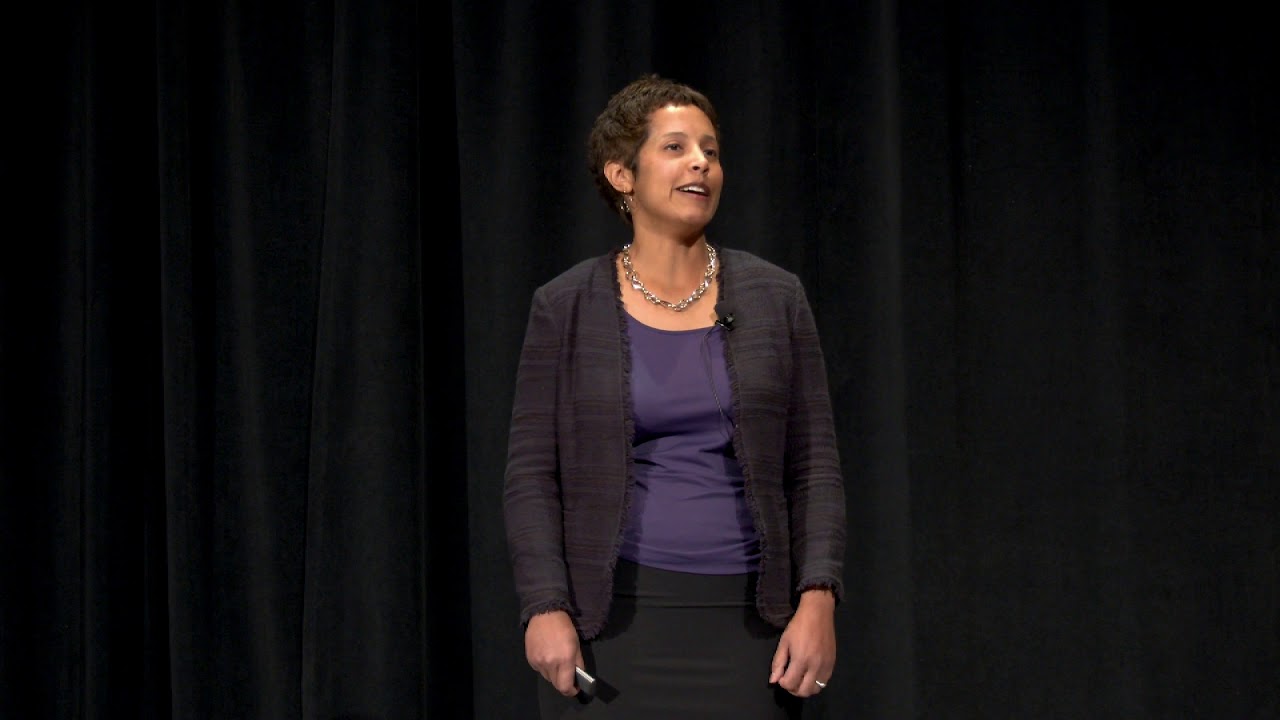
Video summary
Angela DeBarger, a program officer at the William and Flora Hewlett Foundation, delivered an inspiring keynote addressing the core mission of open education: creating inclusive classrooms where every student feels seen, valued, and empowered to be a creator of knowledge. Drawing from her personal history as the child of educators in West Los Angeles, she shared a poignant story about her childhood reluctance to color her skin tone differently than her peers, highlighting how early educational environments often fail to validate diverse identities. This reflection led her to emphasize that true inclusion goes beyond simply licensing materials openly; it requires intentional design and planning to ensure all students are represented and appreciated, a lesson reinforced by her visit to community libraries in Uganda where children's stories were celebrated and published despite limited resources.
The talk further explored the vital role of student agency through the example of Student PIRG, an organization where young people advocate for issues like college affordability and open textbooks with remarkable competence and curiosity. Angela argued that students do not need to be given voice as if they are empty vessels; rather, they arrive as resourceful individuals who simply need educators to listen and follow their lead. However, she also identified significant systemic barriers that currently hinder this ideal, noting that many open educational resources lack adequate support for English learners and students with learning differences. She expressed concern over the proliferation of digital tools that often compromise privacy and fail to offer rigorous pedagogical approaches, urging the community to champion ethical technologies and showcase examples of open pedagogy that truly foster deeper learning and creativity.
To address these challenges, Angela outlined a refreshed strategy centered on three critical questions: who are the learners we serve, how do we engage them productively, and what systemic barriers must be dismantled? She emphasized that sustainable change requires shifting mindsets at the classroom, system, and field-building levels, supported by holistic resources like those from SUNY that connect policy with practice. A major theme of her conclusion was the necessity of caring for oneself within this demanding work; she shared her own struggles with perfectionism and fear of misunderstanding, reminding the audience that entering the space with curiosity rather than having all the answers is essential. Ultimately, she called for a community committed to mutual care and self-preservation, asserting that only by supporting one another can we effectively support the learners in classrooms around the world who are leading the way toward a more equitable future.
Read the full video transcript
I first met Angela two years ago at this
very conference when she joined the
hewlett team and through the k-12
community i'd heard of great work and
she had led at the george lucas
educational research foundation so I was
really excited for her to join our
community as well
since then we have toasted in Delft we
have had coffee and Lisbon and we've
shared many laughs at various events and
meetings I'm so grateful to call her a
colleague in this work and for her
support of pre k12 we are throughout all
of our our work that we do here more
officially she serves as a program
officer in education at the William and
Flora Hewlett Foundation her portfolio
addresses Oh er and where she's finding
the connective tissue between we are and
teaching and learning so please join me
in giving a warm welcome to miss Angela
departure Thank You Kristina for that
warm and kind introduction I'm really
honored to be here and I want to thank
David and the program committee for
putting together a really wonderful set
of sessions for the community to come
together and learn and speaking of
learning and community thought I'd start
by admitting that sometimes I feel like
an open ed newbie or new as my kids
would say if I'm being generous I've
been working in the field now about five
years but really only deeply so these
last two years since I've been at the
Hewlett Foundation and I want to share
that mostly for those of you who are
also feeling new to open education
trying to make sense of the multiple
ideas and perspectives that you're
hearing your work and your role in the
space I'm so glad you found your way
here you belong here and I'm excited to
learn along with you so for this talk I
thought I'd share how I've been learning
my way into open education being a
program officer or funder at Hewlett is
only one of my identities I've been
learning about this work as an
african-american woman as a working mom
and as a researcher my background in
education and I can't help but bring
these experiences from my lips then
to the work that I do and sometimes I
even think about how the work that I'm
doing that we're doing would have
affected me as a kid growing up I grew
up in West Los Angeles
in a family of educators my mom was an
elementary teacher for her whole career
my dad started out as a high school math
teacher and basketball coach and then
worked for many years as a principal and
I left that my parents were educators I
thought it was great that they were
helping children learn
I liked learning I liked school growing
up maybe sometimes a little too much my
mom being the elementary teacher that
she was would sometimes have extra
workbooks lying around the house and I
remember little like playdates on the
weekend with my friend at the time we'd
like teach each other handwriting so
like super nerdy so I like school but I
can't always say that I felt like I
belonged my parents sent me to a small
elementary school so we had like 25 kids
per class kindergarten through sixth
grade and they like this they sent us
there they liked it because it was small
and structured and I remember this art
project that we had to do in
kindergarten once where we each got
these giant sheets of butcher paper and
we had to find a partner and take turns
lying down on our butcher paper and
tracing ourselves and we were supposed
to like color ourselves in what we were
wearing what our hair looked like and
all of that and I remember I didn't want
to color in my skin because I didn't
want my picture to look different from
everyone else's when the teacher is
gonna post them around the class I've
always been kind of embarrassed to admit
that like why didn't I value who I was
why was I shame to look different from
the rest of my class and as I've gotten
older I've come to understand like it's
so much more complex and complicated
I wonder what messages I was hearing
were there even crayons that looked like
my skin color
did I have books with pictures that look
like me and my family and who was
explicitly encouraging me to explore and
express my unique identity and I almost
forgot about this experience until more
recently I had the opportunity to visit
a school in Oakland called roses in
concrete and the founder director of
Jeff Duncan Andrade was taking us around
on a tour and we went to the art
classroom and he was telling us that one
of the projects that the students have
to do is to paint a portrait of
themselves and to do that they have to
find and mix colors that match their
skin tone and boy did I wish that that
was the art class that I had had when I
was in elementary school and I reflect
on this experience sometimes when I
think about our work in open education
creating meaningful and inclusive
classrooms is more than putting an open
license on a material or a product
requires thoughtful attention and
planning so that every student is seen
included and appreciated I think making
students feel included is a good first
step I also think that our work in open
education opens up so many more
possibilities for students to be sense
makers in our world and creators of
knowledge and one of the most
transformative experiences for me and
realizing this was a trip that I got to
take to Africa so in my work I get to
collaborate with teams who are working
on open education all over the world and
some of my colleagues Neil butcher
Kirsty van Gogh Liz levy are working on
early literacy efforts in Africa so I'd
been talking with the team and reading
their reports I really wanted to get out
there and meet the people the
community's doing this work so we
traveled to Kampala Uganda and we met
with a man named is Cornelius school
year and Cornelius had started up
community libraries and I learned that
community libraries in Uganda are really
important because there isn't as much
public funding for for school and and
public libraries so Cornelius actually
started up this community library
initially
out of the trunk of his car he would
load up storybooks for the children many
of them openly licensed so that they
could be more easily translated into the
children's home languages he would take
these in this car to church services and
after services invite the children over
to find books to read and enjoy
Cornelius also like to encourage the
children to tell their own stories and
he showed us the shoebox filled with
little books written and illustrated by
the children so now we really wanted to
get out and meet some of the children
he'd been working with and we traveled
with Cornelius to st. Mark's Community
Library and Cornelius brought after
brief introductions brought out his bin
of storybooks and asked the children to
pick out a book that they're their
favourite and tell us why it's their
favorite so the children were sorting
through the books bit of a skirmish
broke out between two girls they were
kind of arguing over this one book that
they had both decided was their favorite
it turned out Tecla won the battle and
for a good reason
this was her favorite book because she
had written it Cornelius worked with
Tecla to get her book published through
the African storybook project and to me
this was one of the most powerful
moments I've seen of a child's
experiences and ideas validated and
Tesla was so proud of her work as she
should be at the same time I wonder
about those dozens of other books in
that shoebox I'm like what it would take
to get those stories published and
talking about this with the team and
questions about quality and readiness
for publication start to surface who
gets to decide about quality the
children their teacher the community the
publishers and so we you know when we
talked about like how we can get the
community more involved in this work and
what's the opportunities for local
editors and local illustrators so it's
most definitely still a work in progress
but I think we were all really motivated
by what we saw because we think through
these experiences children can become
inspired to lead
and hopefully one day become leaders in
their own communities so another group
I've been following is the student perks
our student Public Interest Research
Group if if you haven't heard of the
student perks they have chapters on
campuses all around the country and they
advocate for issues that matter to their
communities one of those being college
affordability and open textbooks so when
I was in college I was proud to say that
I played trumpet in the band now that I
have met the student PIRG I feel like I
was kind of a slacker this the student
prairies are out there advocating on
behalf of their communities to make
their world our world a better place to
live in and it's because of their work
on open textbooks that more faculty
understand how and why oh we are matters
to their students on their campus I had
the opportunity to attend a couple of
trainings with the student purves this
year one of them was with the CalPERS
and it was really cool students from all
over the state of California drove to UC
Davis for the weekend to work with each
other to figure out how to build more
effective campaigns they talked about
how to create and tell effective stories
they shared ideas about how to bring in
and connect with new communities on
campus to help them understand how and
why these issues should matter to them
the Hewlett Foundation we talked a lot
about deeper learning well if this isn't
deeper learning then I don't know what
is students are out there creating
change in their communities around
issues that matter to them and as I was
reflecting on this experience with the
student perks I realized students don't
need us to give them agency power or
voice they come as competent curious
resourceful sometimes they just need us
to listen and follow their lead and when
our work in open education is meeting
their needs they get excited to join in
the fight so we have to continue to make
sure that the work
we're doing is responsive to how
students want to learn I was sharing
these stories with a friend of mine
who's newer to open education she's like
wow that's great because this kind of
work where students are publishing an
openly licensed books and advocating for
the kind of learning they want to see
like something happening like all around
the country all around the world and
open education now it's kind of sad to
say like not enough and it got me
thinking about okay well like what are
the challenges that we need to address
in our work so that this kind of
learning is possible for more students
everywhere and I started thinking
personally too like what are the
questions and areas that I need to be
more intentional about dressing in my
own work and so I came to these three
questions really wanting to think about
like who are the learners in our schools
that were intending to serve what are we
doing now to engage them in productive
or maybe not as productive ways you need
to address that and what are the
barriers that we should name explicitly
that we can address them in our work
when I take up this first question it's
hard for me not to think about it in a
very personal way I think about myself
and my role as a parent these are my two
boys when they were little and now older
they're 11 and 14 and I've always wanted
them to love school to love learning I
remember when my older son was just
starting kindergarten and I imagine we
felt like most parents like excited to
be going to the big school and nervous
about joining a new community and what
to expect there and the first week I
have to say like started off pretty well
easy drop-offs in the morning no tears
and then about day three we got a call
from the principal and she said you know
your son wouldn't come in from recess
today the teacher was trying to round up
the rest of the class and she got
everyone to go back but he wouldn't
listen we had to get another teacher to
come out and carry him back to his room
I wanted to tell you about this so that
could nip it in the bud and we can't
have this become a habit and so I wanted
you to know and let's let's fix this my
husband and I were kind of horrified
like a call from the principal on the
first week of school so we followed up
and talked with his teacher Miss green
who is awesome by the way and she
explained to us that there was something
they were working on in class that day
that he was unhappy about that made him
upset he was anxious and that's probably
why he wanted to stay out on the
playground and I can kind of empathize I
think sometimes we all have days when we
wish we could stay out on the playground
so anyway we worked with Miss green and
she was flexible and adapted assignments
and our son ended up having a great
first a great year in in kindergarten
but I think about like what if we didn't
have miss green would have been a really
different experience for us and I think
about the other kids like what if they
don't have a Miss Green when they're
struggling I recently read a report by
forward together and I learned that one
in five students have learning and
attention issues so these are many of
the students in their general education
classrooms today and according to the
survey only 17% of teachers well they
may care deeply for these students only
17% felt very well prepared to support
their students with mild to moderate
learning and attention issues I also
think about our learners and the
diversity of English learners in our
schools there's an organization called
English learner success forum that works
with curriculum and professional
development providers and according to
their analyses most materials openly
licensed are not lack adequate supports
for the diversity of English learners in
our schools I think about this when I
reflect on our work in open education we
might theorize about the potential of
our to meet every every learners needs
because they're flexible and adaptable
but we're not intentional from very
beginning about including inclusive
principles and practice
is in the design of materials and we're
not actively working with teachers with
educators to anticipate what productive
adaptations might look like probably not
doing enough to help I also appreciate
like that this is hard and when we think
about engaging with how we engage with
students there are so many options in
play in our schools and this tweet from
a parent really resonated with me
she was lamenting about this consent
form that she felt pressured to sign
that listed like over 58 different
learning technologies that might be in
play in her son's or child's school and
questioning like the appropriateness of
some of these for her child and I do
worry when digital solutions and data
analytics are promoted as the solution
for student success I think there are a
lot of great options out there Norman
might even speak to some of these in a
few moments but I think we we do need to
better understand like what are the
options for open and ethical learning
technologies and I think if we really
want to cut through the noise with our
work in open education through the
confusing choices that are out there
which many of which lack a rigorous
pedagogical approach compromise student
privacy and limit the potential of
students to explore and express their
unique identities if we want to cut
through the noise with our work in open
education we have to showcase what makes
open educational resources and practices
different what ethical and open learning
technologies look like I think we need
more examples of open pedagogy and
practice that show the creativity of
teachers and students as creators of
knowledge and I'm really excited that a
lot of this work is starting to bubble
up and is underway and I think it's
really gonna be important to make it
visible and to demonstrate how and why
this is deeper learning I also
appreciate that this work is really
challenging and that sometimes it can
feel like we're trying to run up
a down escalator I think it's because a
lot of our schools and systems are not
currently set up to support open
pedagogy and practice that put students
at the center I think that we have to
you know think about this in terms of
cultural and systemic barriers that
we're going to have to address and
changing financing and shifting policy
is a good first step but if we're really
talking about shifting mindsets and
sustaining change then the work that we
have to do is about supporting people I
think there are some really interesting
models and approaches that are emerging
and this work is going to look different
in different institutions and different
places but I want to share if you
haven't seen yet SUNY has put together
really a wonderful set of tools and
resources that really think taken on
sustainability in a more holistic way
support institutions in looking at both
shifts in policy as well as shifts in
how people are supported for example in
professional development I think these
kinds of tools are great for sparking
conversations about the connections and
disconnects perhaps between our work in
open education and institutional mission
statements policies and metrics for
student success I've been thinking about
all of this and reflecting on these
questions about who are the learners
that we want to serve how are we
engaging them what are these barriers in
the cultural and systemic that we need
to address in our work I've been
thinking about this also in my role as a
program officer at the Hewlett
Foundation because the schools and
institutions that we want to make sure
to support we want to make sure they're
really thinking about and keeping
students at the center of their work and
we've been refreshing our open education
strategy with all of this in mind and
one of the best parts for me about
working and being participating and this
strategy refresh has been getting out to
meet people to learn and listen
listen to and learn about what brings
people to work in open education where
they see challenges what they're excited
about what opportunities they see ahead
and how that work can be supported so
I've had the chance to for example meet
with k12 teachers and administrators
who've been leaders and champions in
this work for years had we've had the
chance to talk with educators who don't
know much at all about oh we are and to
see what ideas and messages resonate
with them I got to visit the University
of Houston and auroria campus in Denver
to learn more about the core role that
libraries play in moving oer initiatives
forward and I got to talk with oh we are
skeptics who are not convinced of the
potential of open education and the
promise of open education yet and and so
we've been taking all of this in and
revising and reflecting on how we can
improve our work in open education going
forward and our plan is to share out our
new strategy in March 2020 and I think
but what you're going to see is our be
centering around teaching and learning
we want to make sure that it's really
clear that the work our work in open
education supports every student in
experiencing relevant meaningful
engaging learning and in terms of
operationalizing the strategy I think
we're thinking about it in a number of
different levels the work that happens
in the classroom the interactions
between educators and their students the
work that has happened at the system
level to create support of conditions
and context for what we hope will happen
in classrooms and then the field
building work that's going to need to
continue to evolve and expand so with
related to each of those those levels I
think we have some questions in mind
that we I anticipate we will address
going forward so getting into the
classroom level I think and looking more
deeply at how can able in fact
open educational resources and practices
I don't think we know enough about how
and under what conditions open
educational resources and practices
result in deeper learning we don't know
enough about how open and ethical
technologies can support students in
learning about core disciplinary ideas
and practices and we don't know enough
about how we are can support students
social and emotional growth so I think
to answer this kind of question it's
going to involve deeper work in
classrooms implementation research that
really helps us gather the evidence
about how students and when students are
experienced in inclusive learning
opportunities the second question really
gets at the system's level work how do
we support coherent equitable and
sustainable practices given where we are
in the movement the work that all of us
are doing now is the time to really dig
in and figure out how institutions and
schools can own this work of open up
education adapting creating enhancing
open educational resources and practices
and I can imagine that what this might
look like it might be deeper
partnerships with post-secondary
institutions and networks of
institutions to figure out how to move
policy into practice to figure out how
libraries centers for teaching and
learning disciplinary and scholarly
societies can play a more active role in
supporting our work in open education
I'm the k-12 side I think this might
look like deeper partnerships with
districts so we're working together
collaboratively to figure out how to
coordinate curriculum assessment
professional learning for educators
so students experience coherent
instruction and then the last question
here around the field building efforts
how can we support the growth of diverse
and inclusive communities I'm thinking
about this in a few ways I think on one
like in a global
level there's so many opportunities to
learn about what open scholarship and
open education look like in different
context and communities with the UNESCO
recommend a our recommendation that
hopefully will pass in November
countries around the world are going to
be looking for guidelines and support
and information about how to integrate
open education in their educational
systems I also think about this work on
a much more personal and intimate local
level the work that each of us is doing
individually and through our
organizations to really build our
understanding about what equity and
inclusion means in our work and to
illustrate what I mean by that I wanted
to share an experience that I had
recently we brought together a group of
grantees who are working on diversity
equity and inclusion in their
organizations and what brought each team
to this work really varied some teams
we're trying to figure out how to build
awareness and understanding among their
staff about what diversity equity
inclusion mean others were trying to
figure out how to connect with different
communities to make sure they're
responsive to these communities in their
work so two very awesome people
facilitated the session just Mitchel
from the inclusive design Research
Center and Kevin Crouch our program
fellow at the time and what the session
wasn't it wasn't a training on diversity
equity and inclusion and it wasn't a
facilitated share out of each of the
projects really what the work involved
was a lot of personal reflection time
like trying to figure out how we each
individually are making sense of the
work and then we had some really great
group conversations about like how we
can create create brave spaces how we
don't always have to feel pressure to
bring our whole selves if that's not
what's comfortable and we talked about
how just as important to work on how we
are supporting relationships and
building identities
and that's just as important as the work
we're doing around creating systems and
structures to support sharing ideas this
is really hard work and I have to admit
like sometimes I struggle with it
sometimes I feel stuck
paralyzed almost about what to say or
not to say worried I'm going to get the
ideas wrong and we're going to reflect
poorly on me on the foundation like I've
seriously spent 30 minutes working on a
single tweet trying to figure out all
the ways it can be misunderstood and
misinterpreted so yeah you know I feel
it and this community on that day
reminded me that it's okay to not have
all the answers it's okay to enter with
curiosity to ask questions that we're
all in this learning together and we're
all going to be in there helping each
other learn along the way and I felt
cared for that day and for that I'm
forever grateful to this community and I
it does matter to me how we care for
each other in this work I worry when I
see my friends our colleagues in this
community
fresh frustrated and fatigued because
give so much of yourselves to this work
your time your time being here this week
your time your hearts your spirit
because that's what this work takes and
we have to remember to care for
ourselves as Audrey Lord said caring for
myself is not self-indulgence it is
self-preservation and that is an act of
political warfare we have to remember to
care for ourselves so that we can care
for the learners who we hope will
benefit from open education and by
learners I mean from those of us all of
us in this
to the learners in the classroom and I'm
hopeful about what's to come because I'm
hopeful when learners are leading the
way forward because when learners are
leading we find Tecla we find the
student perks I think we find each other
and we find ourselves I'm so glad to be
here learning alongside all of you and
I'm proud to be in this work with all of
you
thank you
[Applause]