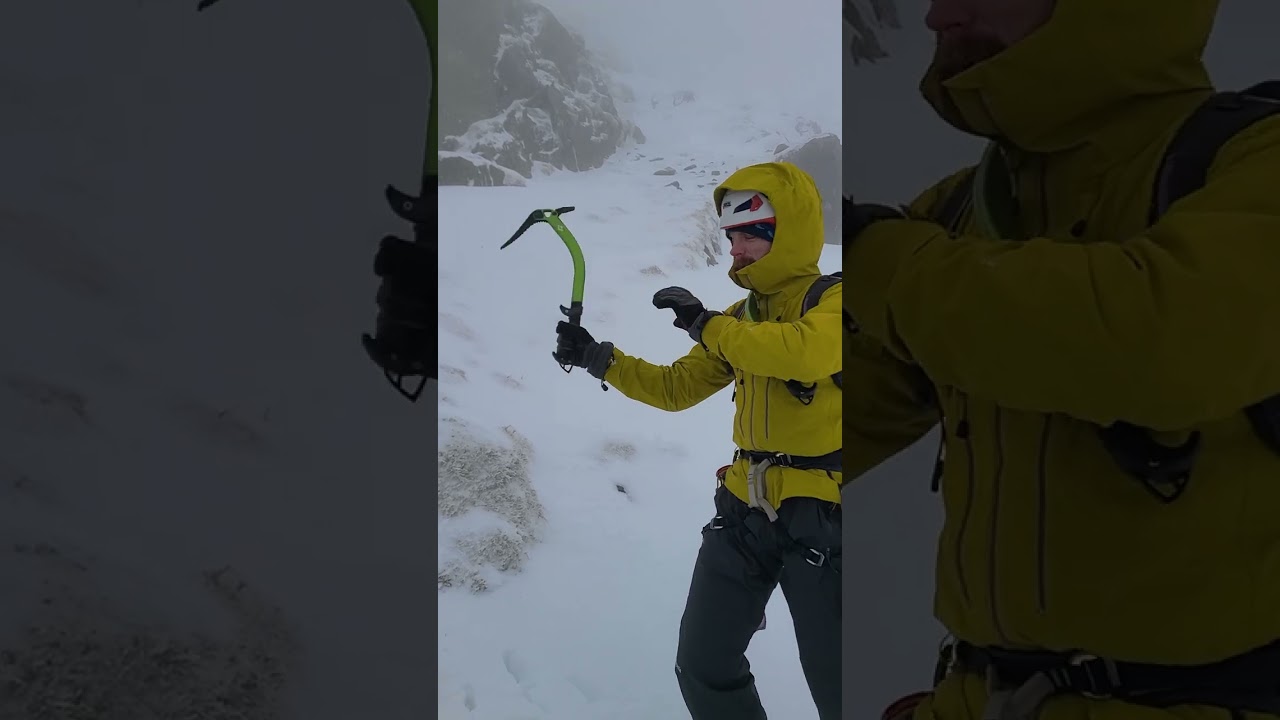
Andy gives us his thoughts on the Black Diamond Viper Ice Axe. #livebreatheoutdoors
Watch on YouTubeVideo summary
Andy from Ellis Brigham shares his winter experience testing the Black Diamond Viper Ice Axe, highlighting its versatility across various terrains ranging from less steep paths to demanding mountaineering routes in places like Italy's Lilaz Gully. He notes that while the axe is an aggressive tool compared to some others on the market, it climbs exceptionally well and provides excellent security even when navigating awkward angles where traditional curved handles might struggle. The straighter design of the Viper allows for easier placement at steep sections without relying solely on the base of the tool, making it a reliable choice for gully lines that require both precision and stability.
A standout feature discussed is the innovative handle mechanism designed to prevent issues with snow crusts often found in ridge routes. Unlike newer handles that can get caught when plunging into hard-packed or crusted snow, Black Diamond has engineered a system where users can flip the base of the handle upward to avoid snagging while still allowing for easy adjustment before heading out on the hill. Additionally, Andy praises the simple and basic construction of the upper handle section, which offers freedom of movement for swinging and positioning hands naturally without unnecessary complexity or bulk interfering with technique.
The adjustable trig rest further enhances the axe's adaptability by allowing users to slide it up and down within a specific range marked by a safety notch, providing an ideal second position on the ice axe once locked into place before climbing begins. Andy believes this tool is perfect for those taking their first steps into winter climbing or aspiring climbers with grand ambitions in the Alps who need a versatile instrument rather than one specialized solely for hard technical climbing. The aggressive shape ensures stability on small edges without being overkill, offering sufficient security as users ease themselves into more challenging conditions while retaining the potential to tackle much harder terrain if needed.
Read the full video transcript
Hi, I'm Andy from Ellis Brigam and this
winter I've been trying out the Black
Diamond Viper. For me, I've loved this
axe on less steep terrain and also more
all round mountaineering routes, but
it's still quite an aggressive tool
compared to some out there. So, it still
climbs incredibly well. I was out in
Italy earlier in Feb and climbed Lilaz
Gully which is grade four. But this is
still a great axe for that style of
terrain. More gully lines where you're
going to be on steeper sections but
equally you're needing a lot of security
on terrain that's you know that awkward
angle where you can't get an ax in that
way and you're often having to rely down
here on the base of the tool.
being straighter, not having that curved
handle means that you can get the end of
the tool in a lot more easily and it's a
lot easier to get your weight over it.
And compared to a lot of more modern
aggressive tools, having, you know, the
more traditional spike down here means
that you can really get that in and get
a lot of security out of it. If you are
going to be spending a lot of time on
more mountaineering sort of style ridge
routes, often on more snowy terrain like
we've got here behind me, when you are
plunging the base of the axe, often what
can happen if there is a crust to this
snow, these new sort of handles can get
in the way. But Black Diamond has done
something really quite nice here. And I
think they've done it really well
compared to other options out there that
you can just flip the base of the handle
up there. It means that it's far less
likely, you know, it's not going to get
caught. Um, but we can just pop it down
super super easy. And the other thing
that I'm a huge fan of here in the
handle, um, very simple, basic handle,
but I prefer that I don't like a lot
going on in here. I like the freedom to
be able to swing and put my hand where I
want it. But up here on the trig rest,
you can move this up and down. Now, it's
got a little notch to stop it going too
low, but realistically, you're not
wanting it to go too low. But it's just
a case of popping it open, sliding it to
where you want it, making sure it's
stiff, but you're going to do that
before you're out on the hill, and then
just closing it. And that's going to
give you that fantastic second position
on the iceax. This is a tool I think,
you know, it's going to be great for
people that are maybe getting into the
first foray in winter climbing, you
know, and maybe grander ambitions out in
the Alps or potentially even the bigger
ranges and want that versatility over
just a harder climbing axe. We do have
that more aggressive shape. So, it's
going to give you quite a lot of
stability on smaller edges, but it's not
overkill. So out on the lower grades,
maybe when you're easing yourself in, it
will give you everything that you need
securitywise.
But that's not to say it won't go
further. You know, people have climbed
much harder than me with much worse ice
axes.