Video summary
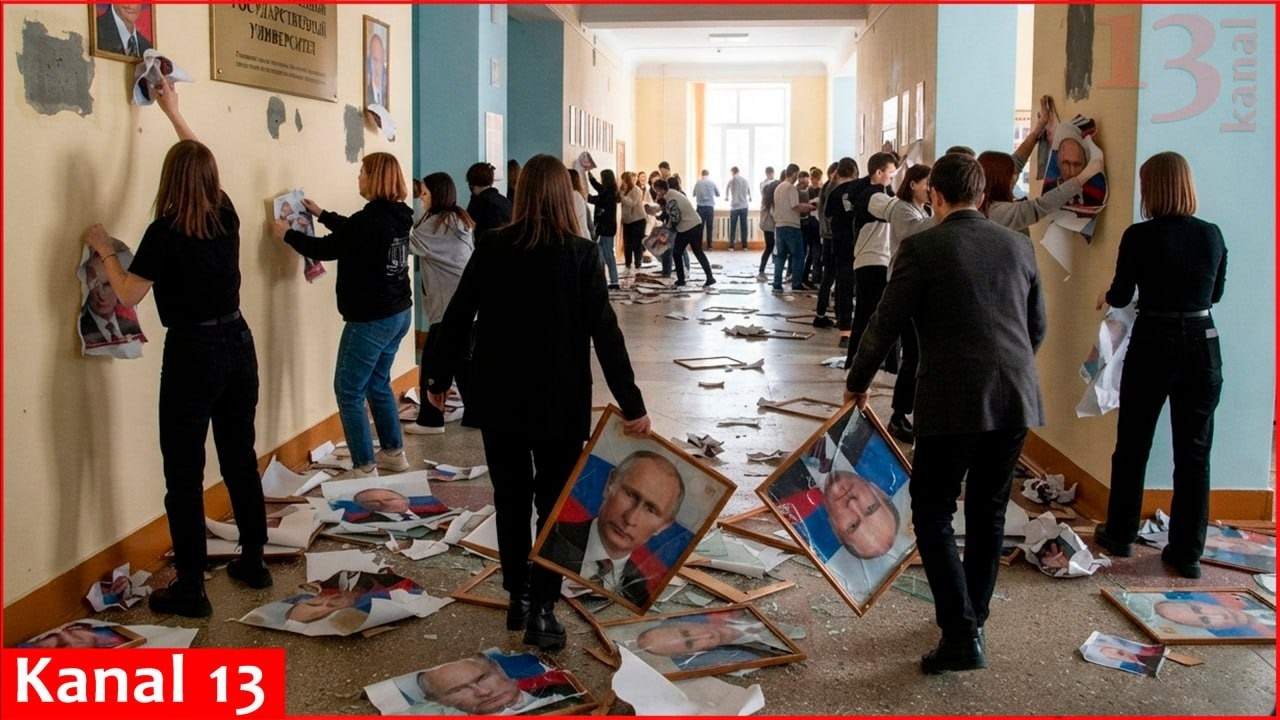
Recent videos circulating on Russian social media depict a growing underground movement where citizens are demonstratively tearing down portraits of Vladimir Putin, destroying United Russia political propaganda, and even ripping up Russian flags. These acts of defiance are occurring against the backdrop of intense military propaganda and as state Duma elections approach, signaling a new wave of quiet protest within the country itself. The footage often shows teenagers and school children approaching honor boards, public stands, and other display areas to remove these symbols before recording their actions for video, highlighting how even the youngest members of society are beginning to reject official narratives.
The scope of this unrest extends beyond just portraits, with videos capturing people removing campaign materials from mailboxes and apartment entrances, only to crumple or tear them up in a deliberate display of dissent. One particularly striking instance involves a man publicly ripping up a Russian passport, an act that serves not as a casual annoyance but as a direct rejection of the state's very symbol. The sheer repetition of such videos suggests that irritation with the ongoing war, relentless propaganda, and mandatory loyalty is surfacing even under conditions of repression, revealing a deepening disconnect between the government's demands and the sentiments of ordinary Russians.
The involvement of school children in these protests is especially significant because it exposes the failure of years of state indoctrination efforts aimed at cultivating a cult of war among youth through programs like the Yunarmia youth army and lessons with SVO members. When teenagers themselves begin to remove the very symbols they were taught to revere, it highlights a stark gap between official propaganda and the real attitudes of young people who are increasingly disillusioned. This shift indicates that the Russian president's initial strategy for a quick victory has collapsed; after expecting the war to end in ten days, Russia now faces a static front line four and a half years later with mounting human costs, including British intelligence estimates suggesting nearly half a million Russian soldiers have died since the full-scale invasion began.
Despite his approval ratings hitting their lowest point since 2022 and rumors of a new mobilization round, Vladimir Putin's presidency does not appear to be in immediate peril according to the analysis presented. The underground revolt described in these videos represents a silent but persistent erosion of support that has been building up over time, challenging the regime's ability to maintain control through force and fear alone. As the war drags on without achieving its original objectives and the human toll continues to rise, these small acts of rebellion are becoming more frequent, suggesting that the foundation of the state's authority is being quietly undermined from within by a population that is increasingly unwilling to comply with mandatory loyalty.
Read the full video transcript
Videos have begun circulating on Russian
social media showing people
demonstratively tearing down portraits
of Vladimir Putin and United Russia
political propaganda and even breaking
and tearing Russian flags. Against the
backdrop of active military propaganda
and the approaching state Duma
elections, this appears to be a new wave
of quiet underground protest within
Russia itself. Based on the published
footage, some of the videos were filmed
by teenagers and school children. They
approach honor boards, stands, and other
public places where flags, portraits of
Putin, or pro-government materials are
displayed, then tear them down and
record the action on video. Some videos
show people removing campaign materials
for the ruling United Russia party from
mailboxes and apartment building
entrances. These materials are then
demonstratively thrown away, crumpled,
or torn. In one video, [music]
a man publicly tears up a Russian
passport, a gesture that appears not as
a casual annoyance, but as a direct
rejection of the symbol of the state.
The very repetition of such videos shows
that irritation with war, propaganda,
and mandatory loyalty comes to the
surface even in conditions of
repression. The involvement of school
children is particularly painful for the
system. For years, the authorities have
been trying to indoctrinate children
into the cult of war through
conversations on important things, the
Yunarmia or youth army, lessons with SVO
members, and portraits of Putin in
schools. But when teenagers themselves
begin to remove these symbols and
publish videos, it reveals the gap
between official propaganda and the real
attitudes of some young people. Russia's
war against Ukraine is not going
according to Vladimir Putin's original
plan.
The Russian president's initial strategy
called for the war to be won within 10
days, but Ukraine's spirited defense in
the first months of the war robbed
Russia of the initiative. Now, 4 and 1/2
years later, the front line inside
Ukraine has remained largely static for
months. Meanwhile, the human cost
continues to mount, particularly for the
invaders. British intelligence estimates
suggest that the number of Russian
soldiers killed during the conflict is
approaching half a million since the
full-scale invasion began in February
2022. Rumors are growing about a new
round of mobilization. It's Putin's
lowest rating since the beginning of the
full-scale invasion in 2022.
But, this still doesn't indicate that
his presidency is in particular peril.
>> [music]