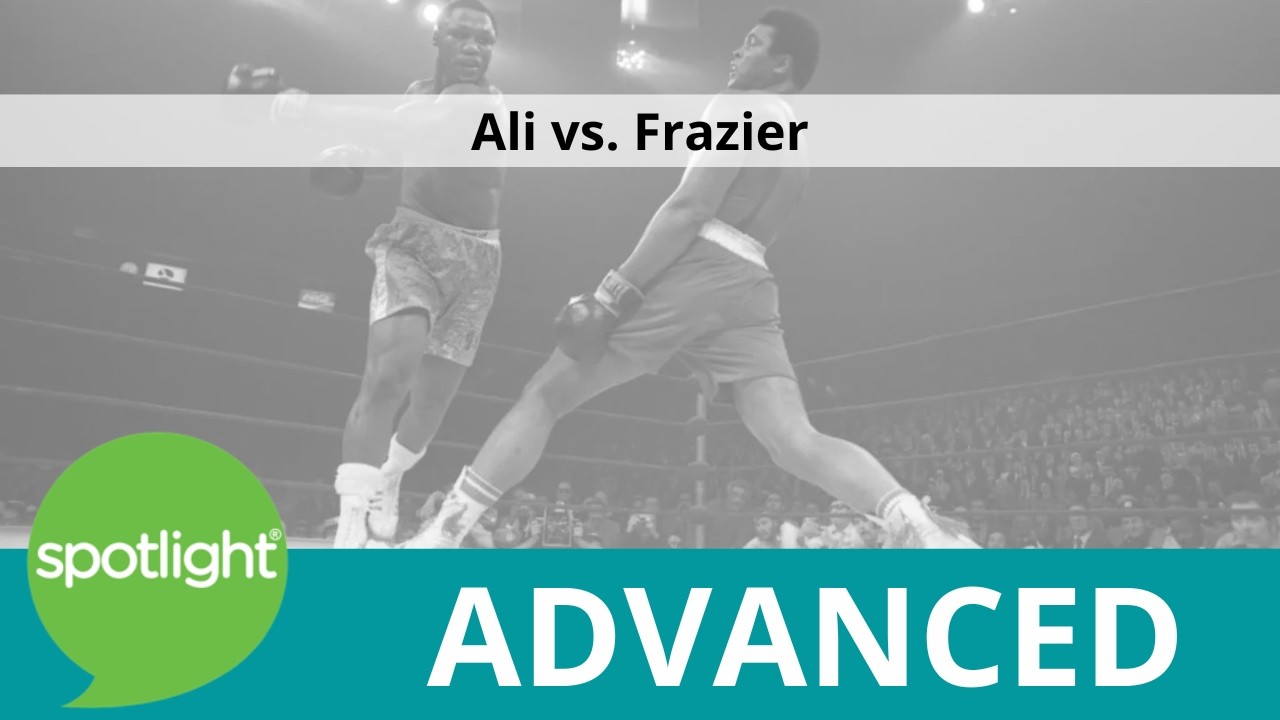
Video summary
The video explores the intense and legendary rivalry between Muhammad Ali and Joe Frazier, two of the greatest heavyweight boxers in history whose relationship was defined by both fierce competition on the ring and deep personal animosity off it. Their third match, known as "The Thrilla in Manila," is described not merely as a fight for a championship title but as a battle where each man fought to prove his superiority over the other. The narrative highlights how their hatred had grown so profound that they felt compelled to insult one another and push themselves to physical limits, with both fighters entering the ring prepared to die rather than lose. This competitive dynamic reached its peak in 1975 under extreme conditions in Manila's heat, where each round was a grueling test of endurance until their trainer intervened to stop Frazier from going blind, only for Ali to make his own decision to quit moments later due to exhaustion.
Before this final confrontation, the two men had already fought twice with contrasting outcomes that shaped public perception and personal pride. In 1971, in a match dubbed "the fight of the century," Joe Frazier defeated an undefeated Muhammad Ali after controlling the latter's body throughout the bout; however, three years later, Ali managed to win by decision despite suffering severe damage himself. The video details their distinct fighting styles, noting that while Ali used his height and long arms to strike from a distance with quick movement, Frazier relied on close-range pressure, powerful left hooks, and defensive techniques like bobbing and weaving. These stylistic differences were central to the drama of their matches, where fans witnessed two undefeated champions facing off in an event broadcast across 50 countries to hundreds of millions of viewers.
Beyond the boxing ring, the story delves into the personal histories that fueled their conflict, including Ali's refusal to serve in the Vietnam War based on his religious beliefs and Frazier's background as a victim of racism who felt more aligned with the struggles of African Americans than Ali did. Although they continued fighting professionally after Manila, neither ever regained the same level of greatness or intensity when facing opponents other than each other. The rivalry ended not just physically but emotionally for many years, as Frazier struggled to forgive Ali's hurtful comments and even his later diagnosis of Parkinson's disease; however, a profound moment of reconciliation occurred when Ali expressed that if he were ever called to fight in a holy war, he would want Joe Frazier fighting beside him. Ultimately, the video concludes by reflecting on how their mutual respect eventually emerged from years of pain, leaving them as enduring symbols of athletic excellence and complex human relationships.
Read the full video transcript
[music]
>> Welcome [music] to Spotlight Advanced.
I'm Megan Nollette.
>> And I'm Patrick Woodward. Spotlight uses
a special English method of
broadcasting. It is easier for people to
understand no matter where in the world
they live.
>> [music]
[music]
>> Jerry Eisenberg, a reporter who covered
the fight called The Thrilla in Manila,
later wrote,
>> "What it came down to was not the
heavyweight championship of the world.
They were fighting for something more
important than that.
They were fighting for the championship
of each other.
I have never witnessed anything like it.
Both fighters won that night, and both
fighters lost."
>> Eisenberg was talking about Muhammad Ali
and Joe Frazier.
The Thrilla in Manila was the third time
they boxed for the heavyweight
championship of the world.
By this time, they hated each other.
They insulted each other. There was too
much to forgive.
Ali and Frazier were the two best
fighters of their generation.
They each won one of their first two
fights.
The Thrilla in Manila was the final time
they fought.
It was their last chance to be
remembered as the better fighter.
Each was prepared to fight to the death,
and they almost did.
>> Today's Spotlight [music] looks at the
competitive relationship between
Muhammad Ali and [music] Joe Frazier.
Boxing is a sport where two people
wearing padded gloves on their hands try
to punch each other while defending
themselves.
Boxing is different from kickboxing
because boxers are not allowed to kick
each other.
>> [music]
>> They also cannot use their knees or
elbows to strike.
Each round of boxing lasts 3 minutes.
[music]
The fighters get 1 minute of rest
between each round.
>> [music]
>> In championship fights, there are 12
rounds unless one of the fighters cannot
continue.
Until 1982, championship [music] fights
were 15 rounds,
but they were shortened due to health
concerns.
>> Ali and Frazier boxed in the heavyweight
group in the World Boxing Association
during the 1960s and 1970s.
Muhammad Ali was named Cassius Clay
before he changed his name when he
joined the Nation of Islam in 1964.
Elijah Muhammad was the leader of the
Nation of Islam. He gave Ali his new
name because Muhammad wanted Ali to
promote and support the Nation of Islam.
He also felt Ali needed a new name to
symbolize his freedom in Islam.
>> Ali was a young, talented boxer during
the early 1960s,
but Sonny Liston was the heavyweight
champion of the world.
Many people did not think anyone could
beat Liston. He was too strong.
People were frightened of him.
But Ali defeated Liston to become the
heavyweight champion of the world.
Ali was only 22.
Ali even defeated Liston a second time.
>> Ali successfully defended his
heavyweight championship title nine
times,
but then he refused to join the United
States Army to fight in the Vietnam War
because of his religious beliefs. Ali
said,
>> "I am not going 10,000 mi from home to
help murder and burn another poor nation
simply to continue the domination of
white slave [music] masters of the
darker people the world over."
>> Ali's refusal to serve in the army made
him a hero of the black civil rights
[music] movement,
but it also made him unpopular with
others who said he was not supporting
his country.
A federal court found Ali guilty and
convicted him of refusing to join the
army.
The World Boxing Association stopped Ali
from boxing for 3 years
and took away his title of heavyweight
champion.
Ali appealed his conviction.
He often spoke publicly against the
United States involvement in the Vietnam
War.
The Supreme Court finally withdrew his
conviction 3 years later.
Ali was allowed to start boxing again.
While Ali was banned from boxing,
another fighter named Joe Frazier became
a heavyweight champion.
Frazier's fighting style was different
from Ali's.
Frazier was 182 cm tall. Ali was 191 cm
tall.
Ali used his height and long arms to hit
down at opponents and avoid their
counterpunches.
He moved quickly around the boxing ring.
Frazier liked to get close to his
opponents. He used continuous pressure.
He was good at a fighting method called
bobbing and weaving.
Bobbing and weaving was a way of
defending himself by constantly bending
his knees to lower his body and moving
his head from side to side.
Frazier also hit powerfully with his
left hand. This was called his left
hook.
Frazier had one of the greatest left
hooks in boxing history. Frazier was
strong and could take a lot of
punishment.
>> In 1971,
Ali fought Frazier for the first time.
Frazier was the heavyweight champion.
Ali wanted to win back the title that he
felt had been unfairly taken from him.
The fight was called the fight of the
century.
Frazier had fought professionally 26
times without losing.
Ali had fought professionally 31 times
without losing.
It was the first time that two
undefeated heavyweight champions fought
each other for that title.
Even people who were not boxing fans
were interested in watching the fight.
Ali had become a symbol of the anti-war
movement. People who were against the
Vietnam War supported Ali.
Frazier supported the United States'
involvement in the Vietnam War. Others
liked Frazier because they thought he
represented their values.
>> Before their fight, Ali made many
negative comments about Frazier to
reporters.
He suggested that Frazier was being used
by the United States government to
promote their own interests. Ali said,
"Joe Frazier works for the enemy." Ali
also said about Frazier, "He is too ugly
to be champion."
>> Ali's comments deeply hurt Frazier.
While Ali had been banned from boxing
for 3 years, Frazier had loaned him
money.
Frazier felt [music]
Ali had been treated unjustly and wanted
to help him.
Also, Frazier grew up poor in rural
Alabama. He had been the victim of
racism during his youth.
He wanted equality and justice [music]
for African-Americans.
Frazier felt he could relate more
[music] to the struggle of
African-Americans
than Ali, who had experienced a much
easier childhood.
Frazier felt that Ali was disloyal.
Frazier said,
>> "Ali thought that would weaken me when
it came time to face him in that ring.
Well, he was wrong. It did not weaken
me. It awakened me."
>> The fight of the century was watched in
50 countries by 300 million people. This
was a record at the time. Ali was
winning in the first five rounds. He hit
Frazier many times, but Frazier slowly
gained momentum. He landed many punches
on Ali's body. Ali got tired. Frazier
bobbed and weaved to avoid Ali's
punches.
Frazier's punches started hurting Ali.
In the 15th and final round, Frazier hit
Ali on the chin with a perfect left
hook.
Ali fell hard to the mat.
Ali managed to get up and finish the
fight, but the three judges all voted
for Frazier as the winner.
>> Three years later, Ali and Frazier
fought again.
This time, Ali won the judges' decision
and was named the winner.
>> Their third and final fight was held in
1975 in Manila, the capital of the
Philippines.
It was over 40° C
and very humid. The air at the ringside
was hot and thick. Ali was now 33 years
old and Frazier was 31.
Each man entered the ring knowing they
would never fight each other again.
They also understood it would take
whatever skills and strength they had to
win. Ali later said that he and Frazier
went to Manila as champions and came
back as old men.
>> The fight followed a similar pattern to
their first match.
Ali controlled things for the first few
rounds, then Frazier fought back and
gained control. He punished Ali with
body blows.
By the 11th round, Ali was exhausted. He
almost gave up and quit.
But Frazier was hurt, too.
By the start of the 14th round,
Frazier's right eye was swollen shut and
he could barely see out of his left eye.
Before the 15th and final round,
Frazier's trainer, Eddie Futch, looked
at the worsening condition of Frazier's
eyes.
Futch did not want his fighter and
friend to go blind. He decided to stop
the fight.
Frazier yelled,
>> No! No! No! You cannot do that to me!
>> Futch told Frazier,
>> Sit down, son. It is over. No one will
forget what you did here today.
>> Futch and Frazier had no idea that when
they decided to stop fighting, Ali made
the same decision.
Ali told his trainer, Angelo Dundee, to
remove his boxing gloves before the
final round. He was done. He could not
take any more punches.
After the fight, Ali said it was the
closest thing to dying he had ever
experienced.
But Dundee refused to let him quit. Ali
beat Frazier for the second time and is
remembered as the greatest boxer ever.
>> Over the next few years, both Ali and
Frazier [music] continued to fight,
but neither was ever as great as they
were against each other.
For many years, Frazier [music] refused
to forgive Ali for his hurtful comments.
Ali finally apologized in an interview
for offending Frazier,
but Frazier had difficulty forgiving Ali
completely. [music]
Even after Ali was diagnosed with
Parkinson's disease, a brain disorder
that causes involuntary shaking and
[music] several mental issues, Frazier
remained angry.
The pain was too deep.
Perhaps the most meaningful apology Ali
ever offered Frazier was when he made
this statement [music] to a reporter.
>> If God ever calls me to a holy war, I
want Joe Frazier fighting beside [music]
me.
>> Have you ever heard of Muhammad Ali or
Joe Frazier? Did you know they fought
three times? Who do you think was
better? You can leave a comment on our
website at www.spotlightenglish.com.
You can also find us on YouTube,
Facebook, TikTok, Instagram, and X.
You can also get Spotlight episodes
delivered directly to your Android or
Apple device through our free official
Spotlight English app.
>> The writer of this program was Peter
Anderson. The producer was Michio Ozaki.
The voices you heard were from the
United States and the United Kingdom.
All quotes were adapted for this program
and voiced by Spotlight.
No AI or artificial intelligence was
used in this program.
Spotlight episodes are written, [music]
voiced, and produced by real people for
real people, no matter where in the
world they live.
This program is called Ali versus
Frazier.
>> We hope you can join us again for the
next Spotlight episode. Goodbye.
>> [music]