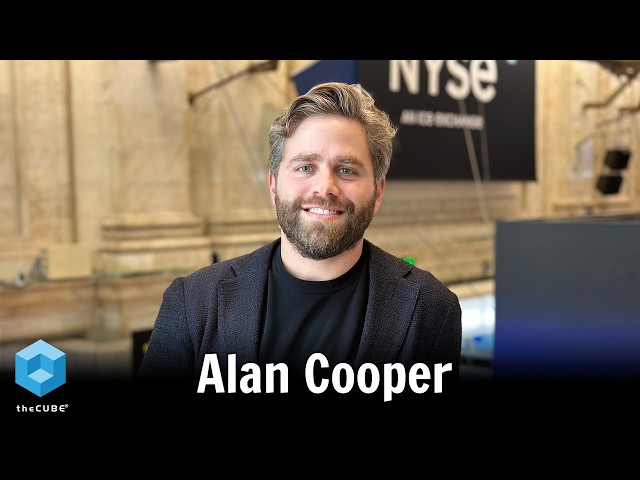
Video summary
The video introduces Alan Cooper, CEO of ON Energy, who discusses a critical bottleneck in the artificial intelligence revolution: energy constraints between data centers and the electrical grid. While much attention is focused on AI chips and processing power from companies like Nvidia, Cooper argues that the true limiting factor for scaling AI infrastructure is not generation capacity but rather transmission limitations and grid stability issues. He explains that although electricity generation in the U.S. remains abundant, the ability to transmit it reliably during peak demand periods creates a significant hurdle. This gap between data centers and the grid represents where ON Energy operates, aiming to solve the complex challenges of connecting massive AI factories without destabilizing the existing power network.
To address these issues, Cooper details his company's flagship technology, the AIU UPS, which functions as an uninterruptible power supply that sits in series rather than parallel between the data center and the grid. Unlike traditional setups that require multiple disparate systems like backup generators and specialized metering equipment, this patented solution decouples the data center from the grid while ensuring perfect power quality. The system acts essentially as a highly predictable battery storage asset that is always charging, allowing utilities to understand exactly what they are receiving at all times. This architecture eliminates switching times and simplifies interconnection requirements, effectively turning potential liabilities into stable assets for both the utility companies and the data center operators.
The conversation highlights the massive scale of upcoming AI construction projects, with estimates suggesting between 20 and 50 gigawatts of new load could be built by 2030 alone. Cooper notes that major hyperscalers like Caruso are already committing to multi-gigawatt builds, necessitating solutions that can handle extreme density computing loads without causing "AI load ripple" events where power drops significantly during processing cycles. The technology is particularly vital in regions with strict regulations regarding voltage ride-through and grid safety, such as Texas. By redefining the standard data center architecture to include this specialized interface, ON Energy helps operators meet regulatory demands while providing a flexible solution that can eventually allow data centers to contribute energy back to the grid during moments of constraint rather than just drawing from it.
Looking toward the future, Cooper emphasizes that capital markets are beginning to recognize AI infrastructure as an industrial play distinct from speculative tech bubbles, with investors shifting focus toward tangible power generation and stability assets. He observes a trend where private equity firms and technology companies are acquiring utilities to better manage decentralized energy needs, suggesting a generational shift in how energy is viewed within corporate portfolios. The company's strategy involves leveraging reliable existing supply chains to deploy at the gigawatt scale required by ambitious projects like those of Caruso, ensuring that factories can operate with resilience from day one. Ultimately, ON Energy positions itself as an essential "pick and shovel" provider for the AI boom, bridging the gap between economic engines and the internet while helping communities maintain affordable and safe energy access amidst rapid technological expansion.
Read the full video transcript
Palo Alto Studio Connection Silicon
Valley and Wall Street. I'm John B here
with Dave Volante, my co-host.
Hello, I'm John Furry, host of the Cube.
Here in the Cub's NYC studio, of course,
we have our PaloAlto studio connecting
Silicon Valley to Wall Street. This is
our powering tomorrow series. We're
kicking off. We're meeting with the
leaders. We're bringing the energy
solutions and all the engineering around
AI infrastructure to power the AI
factors and the AI value proposition.
Energy bounds the value and we're here
to discuss it. Alan Cooper is here, the
CEO of On Energy. Alan, great to see
you. Thanks for coming on the cube.
>> Thanks for having me, John.
>> So energy is obviously the most
important asset for AI. We've heard
Jensen Wong at Nvidia talk about it,
bounded by energy. I I've been
introducing the idea of capital finances
now in the equation because of the of
the importance but everybody's talking
about Nvidia the chips the AI factories
the density but not a lot of people are
talking about what happens between the
data center and the grid that is kind of
the biggest story because there's a lot
of data that'sorked and the energy that
powers these factories there's a lot
going on there and it could swing the sc
tip tip the scales and swing the the the
balance of power literally. Yeah, that's
exactly right. I think uh and that's the
universe in which we live, which is
exactly the place where the grid and
power generation meets
a data centers. Um and really that's the
constraint right they're we're talking
about uh data centers being energy
constrained. Uh the reality is that
energy largely is abundant still in this
country. So the problem largely is
capacity which really is a different way
of saying that we're transmission
constrained and even that's a different
way of saying that we're transmission
constrained during different times
during the day specific you know largely
it's like 40 or 70 hours during the
entire year that we're constrained
>> and that creates a real problem for
connecting data centers and we're trying
to create real solutions to solve that
for
>> every single person has an experience
experience. Okay, it's a heat wave
conserve power like we need more power.
In fact, the requirement of power has
been forecast to be greater than the
entire homes populated in the United
States for this AI. Where do you guys
fit in the equation? Explain what you
guys do. It's important to understand
the context.
>> Yeah. So, on Energy created a patented
technology. Uh our flagship solution is
called uh AIU UPS. It's an
uninterruptible power supply that sits
in between the data center and the load.
Um, sorry, it sits in between the data
center and the grid. Um, and it fully
decouples them from each other. And so
essentially what it does is it serves
perfect power quality into the data
center with full uninterruptible power
supply. Um, and it it makes the data
center invisible to the grid. um which
is a really useful asset now as data
centers are getting increasingly large
uh increasingly volatile with AI
training loads um and with regulations
becoming increasingly stringent with how
AI data centers have to perform uh and
behave on grids with all of this uh
changes to their data center
architecture we created a unique
architecture for how they connect um
>> so UPS on every power supply I think of
oh backup in case the electricity goes
out or my PC.
>> What is what's different about what
you're doing? Because you're an
interface of the grid. So, what's the
uniqueness of it? What is it doing
specifically?
>> Yeah. So, our system sits completely in
series to the load. So, it means all of
the energy is flowing uh from the grid
or from on-site primary power generation
through our system and into the data
center. So everything is flowing through
the system into the into the data center
um not in parallel to the load. So it
doesn't require any switching times,
doesn't require any uh specialized
metering equipment and that's very
unique because essentially what you can
do is interconnect a single standardized
asset onto the grid um that is highly
predictable. It's basically a battery
that's always charging. uh you can
standardize across all of your uh data
center fleet. The utility knows very
clearly what it's getting at all times
which is this a very predictable battery
storage uh like asset and from a data
center perspective it's getting
perfectly clean power all the time. So
it's not a generation problem gener
generating energy, it's the stability.
>> Correct. It's a it's a it's a it's a
stabilization asset. It's a it's a it's
a uh it's a power control system for uh
the entire campus.
>> And what's it like for the data center?
They don't have it. They have to deal
with what what's the what's the problem?
What's for them?
>> A million different problems, right? So
a data center that doesn't have it has
to uh still has to have uh a UPS to
protect the compute, right? right?
They're investing uh billions of dollars
into compute architecture. So they're
they're typically using low voltage UPS
to protect the compute. Then they're
likely installing uh traditional battery
storage to meet the voltage ride through
regulations and other grid codes that
they need to pass all these
interconnection requirements. They need
to make all these things talk to each
other. They need to have backup
generations. And basically our
technology smashes all these things
together into
>> a boatload of hassles.
>> Boat load of hassles
>> and potential catastrophic
problems.
>> Correct. And like single failures could
could mean not only failure inside the
data center but potentially grid
failures and grid outages. Right.
>> All right. So you must have a lot of
people buying the system given the size
of the buildout. Explain the uh before
we get into the the that feature. What
is the scope from your standpoint of the
AI buildout? Um the demand is super
high. we seeing the big hypers scales
take out debt vehicles.
>> How big is that demand in your mind?
Scope that for people who aren't
tracking it.
>> I mean demand demand is uh demand is
massive. Uh so far we actively building
uh a 3 gawatt out of uh 5 gawatt
commitment from uh our wonderful uh a
key customer in Cruso. Uh Chase was on
on on here a few weeks ago. Um we uh are
capturing many more customers. We're
seeing you know depending on who you
believe between 20 and 50 gigawatts of a
real load being constructed per year
between now and 2030. Um
that's exactly why our technology is so
important because with that amount of
load growth it you're topping up on real
capacity constraints from the grid and
grid operators are trying to come with a
real solution to help the UA the US win
the AI race
>> and the the reality is there's enough
generation on the grid to support it.
there just isn't enough capacity and
these types of solutions are exactly
what are designed to
>> what are some of the issues with the
grid if you had to kind of throw the
magic wand at the grid say hey fix that
one two three what would it be
>> I think um
fundamentally like I I think uh they're
doing this to some degree across the
board so like you know shout out to to
to all the people who spend tireless
time working on this but number one is
uh you know interconnection is is in the
process of being uh resolved and
revolutionized, but it needs to get
better and faster. Um the process of
interconnection is complex because
they're protecting the average citizen.
Energy is a basic human right at this
point and so they need to make sure that
affordability is maintained and that
things that are being connected are safe
for everybody. Uh and I think that um
they need to make sure that that is
faster and that projects that are being
submitted into interconnection are real
and that they are being implemented with
technologies that can make
data centers grid safe and that can
build compute without breaking the grid.
That's exactly kind of stuff that we're
doing. Um I think number two, there
needs to be increased flexibility on the
grid. And I think everybody's been
chasing that um from
the increase of like decentralization of
the grid from like you know large
concentration of generation to
decentralization and now battery storage
and I think now this is a huge
opportunity for storage behind the meter
and even you know generation behind the
meter. So all this primary generation
that these data center are building can
be a great asset for the grid if
somebody can orchestrate that and sell
it back into the grid. So that's another
>> so a lot of either dormant power or not
connected power
>> and all these things of like you know
fully islanded or hybrid solutions or
all the story about speed to power why
don't we turn all of those assets into
assets for the grid and I think those
are great mo for moments of constraint
right
>> I remember there was a t concept called
grid computing back in the '90s and I
think we're going to get to a place
where energy efficiency is going to be
connected
>> I want to get your thoughts on your
product and you mentioned Caruso Okay,
Chase was uh we saw him last week in San
Francisco. Uh he was on many times, but
that is an example of some of the build
that we're seeing these big AI
factories. This is what my narration at
the beginning was what happens between
the AI factory and the grid. That's
where you come in. You're a critical
ingredient for him because he's building
essentially a massive AI factories and
it's completely built from the ground
up. He needs to have that. What's it
like working with Caruso? share some of
the experiences and how it all came
together.
>> It's a beautiful and exciting honestly.
It's a it's uh you know every day is a
new adventure there. There's working on
many different projects and solving a
bunch of different puzzles. I definitely
feel the our companies have a very
similar
um
similar mods and similar uh rhythms and
paces and so I think that uh has helped
the relationship quite a bit.
They're building some very ambitious
stuff at a a pace which very few
companies can keep up with
>> and we are doing everything necessary to
keep up with that pace that Chase is uh
running and and a shout out to all of
our our friends at Cruso. They're
they're really uh at the top of their
game
>> and there's tons of Neo clouds coming
out. I'm seeing some compute clouds come
out. We're seeing a ton of activity. Um
the market's reacting behind us. They're
making trades. Um the market's hot for
AI infrastructure. It is
>> explain some of the momentum you have
and h how is that being understood by
the capital markets? I think the c you
know the the capital market seem to have
shifted particularly in the last couple
weeks at least from my interpretation of
it from
uh you know big plays into hyperscalers
and and the monetization and they seem
to have gotten a little bit cooler on
their infrastructure bets into their own
portfolios but shifted into exactly the
space that we're in which is sort of
power generation and and um you know and
industrials plays and power gen uh and I
think these cycles. So, I I you know, I
I wouldn't I wouldn't read that much
into it in in in these horizons. I think
ultimately this is a uh a long-term
strategy that we're building. We've been
building these types of solutions for 10
years.
>> It's interesting the capital markets and
the financers, the banks, too. They're
looking at this market. It's almost a
whole clean sheet of paper. It's a brand
new generational shift.
>> The risk variables, at least my
observation, there's no there's no
comparable.
>> Yeah. And so they're trying to squint
through the risk. You solve a big piece
of the puzzle because you can quantify
downtime. You can quantify problems that
you solve.
>> Yeah.
>> Um
>> they have to model that out because the
capex investment.
>> That's right.
>> People are always like, "Where's the
bubble bursting?" Well, the payout's
coming. People the demand's still there.
So the bubble conversation to me is
irrelevant because there's no bubble.
There's maybe some speculation rise on
prices, but
>> there's demand. And maybe what I would
comment, John, is that it seems to me
that the market every time it shifts
from like a definitely not a bubble to
maybe a bubble, it shifts from like bet
on the hyperscalers to maybe bet more on
AI picks and shovels, right? And maybe
that that's the toggle that keeps
shifting, at least in my impression.
>> Um, and I think that's exactly shifted.
>> How should people think about your
company?
>> I I I think we're an AI picks and
shovels play. Of course, I we we build a
we build specialized industrial power
technology. We we build very we build it
very well. It's a we've been building it
very well for a long long long time. We
build uh patented equipment in
specialized factories. We build it right
here in the US uh very proudly and we're
deploying it at the largest scale
possible at some of the most ambitious.
>> Can you share some examples of some
deployments momentum? Um so we're we're
actively uh deploying about five
gigawatts with Cruso. We uh have closed
on other uh projects which we can cannot
be named. They're projects unfortunately
are are extremely confidential as uh as
most of the industry has become. Um it
the the product market fit has been um
extremely attractive particularly in
markets like URKT where regulation again
around the interconnection
um
requiring solutions such as ours to keep
data centers safe on the grid uh for
things such as voltage ride through and
we call the AI load ripple where
basically uh data centers especially
>> what's it called
>> the AI load ripple
So essentially what happens are uh these
data centers are and and high
performance computing are uh large
clusters. They're all processing about a
gigawatt of compute at a time and
they're all processing essentially the
same problem at the same time. And then
as they cache and process the
information they drop the load about 70%
before they take up again. And in that
process essentially it's like strobing
on the grid. And that that presents a
big problem. It's like a it it it spits
out like transients uh onto the electric
grid and essentially the uh grid
operators are saying, you know, let's
hold our horses uh and let's solve this
problem. Let's make sure that at least
uh you're not negatively impacting the
grid if you're going to let you connect.
And so that's a regulation that has been
formalized across Urkot in Texas and uh
likely is a expanding national here
soon.
>> Our solution solves a lot more than
that. But it's like it's indicative of
the same trend which is uh
>> sort of the barometer shifting from hey
I don't want you to catastrophically
impact our grid and our communities to
hey I don't want to feel you at all to
hey data center how about you become a
grid asset and increase flexibility and
become positive to the grid and I
actually see that trend happening across
all of our customers and hyperscalers
shifting to like how do we become
positive participants
>> we're seeing I'm doing a story right now
in carbon credits a lot of this kind
community stuff where there's a lot of
economics involved in giving back. I
mean, basically what you're saying is
that the grid wasn't built for this.
>> It was not.
>> So, so you saw that immediately.
>> But on the business side, there's
requirements to run these factories or
anything at scale. I mean, a business
would have electricity to have power the
lights.
>> That's right.
>> Run the operations, but not run monster
data centers. So, you're essentially
bridging this generational shift.
>> That's right. Essentially, they're
saying, you know, the grid is saying,
you want to connect this thing, you got
to put a firewall between me and you
>> and and that seems completely fair. And
for for and from the data center's
perspective, they're saying
>> if the investment is modest,
>> then that seems fair, too.
>> I love how computer networking
technology comes into all examples, then
you got the DMZ, you got inside the
meter. So, like this is what happens.
And this is what this is the new
architecture. You're redefining the
architecture. that is and and we and we
we really are redefining the the
architecture and and and we define it
like as the the topology of the of of
the data center has to be rearchitected.
It's a great opportunity because they
sort of have to be rearchitected anyway
because of the nature of high
performance computing moving from being
like 30 60kw
racks and now moving towards like you
know extreme high density computing. So
I think we're taking advantage of that
opportunity to really rethink how a data
center should be built and and
>> powering tomorrow pun intended as a
double entandra on the words but
>> talk about the journey um that you've
had. Obviously you're in a good position
the product market fit.
>> Yeah.
>> The shift to the new architecture is
happening with the grid and its
relationship to what's connecting to it
terms of size and scope. Yeah.
>> Um has it always been um easy? I'm sure,
you know, I've heard stories of
regulatory nightmare, you know, hoops
you got to jump through, but now it's
pretty clear that there's economic value
in these data centers, notwithstanding
people who don't understand what it
means and protesting the data centers.
But you're e you're connecting an
economic engine
>> Yeah.
>> to the to the internet and the grid.
>> I mean, the the answer is uh none of
it's been easy. All of it's been
rewarding. Um, you know, it's [laughter]
been it's been uh it's been 10 years of
trying to help customers work through uh
deeply unsexy problems uh both behind
the meter and in front of the meter of
like how do you solve this resiliency
challenge uh and using a deep knowhow of
batteries and power control systems to
uh connect these two problems and solve
them and I think finally it's being
applied to a space that is uh you know
creating seeing real change and really
is like a like a generational
opportunity. So, we're we're fully
taking advantage.
>> When was the uh the markers in time
where people started to get it and then
when did it click in
>> or where are we are people still
figuring it out? Where's the journey?
>> So, I think um you know I think there
was a very clear marker about 18 months
ago. Um, you know, we started bringing
uh like a full data center push about 18
months ago, and I think uh the team over
at Cruso was clearly the first to to get
it. Um, particularly the digital
infrastructure group over uh at Cruso
with Chris Dolan and and Jason Hutler
over there. um you know and uh since
then
there's been just s such widespread
buyin from everybody inside of you know
the the data center architects inside of
a lot of these uh fast growing
particularly like the energy first
>> leaning firms I think now more
widespread adoption against maybe some
of the more like traditional data center
developers who have more you know
three-year road maps for technology
development QTS is aligned the firms
like that um and obviously into
hyperscalers who ultimately have to be
convinced uh as the end users right
>> is there a trend that you're watching
carefully that impacts you or product
opportunity on the road map I mean what
jumps in my head is energy switching
energy routing I mean I've learned here
at the NYSC that their parent company
ICE they do energy futures I mean I see
people vertically integrating in their
energy into their data center they might
want to maybe share that, broker it. I
mean, there's a there's money involved
in energy. So, I can see a lot of a
action happening.
>> You know, I do I you see like energy
seems so decentralized still like the
energy generation side of it still seems
uh extremely decentralized. I do see a
trend of more uh private equity scooping
up uh power generation companies. So,
that that seems to be a really
interesting trend.
um
you know the acquisition of uh or the
take private of black the take private
of AES by Black Rockck GIP was an
interesting example. Um I think if I
look into the future I think a lot more
utilities are going to be uh taken over
potentially by like more technology
company bents with exactly this in mind
and I think that's probably a wise
strategy as data centers become a more
interesting profile as as part of their
portfolios. um lots of new technology uh
lots of tech technology risks still um I
think maybe uh that's one aspect of of
our solutions that I really liked where
we leveraged
>> really reliable existing supply chains
at full scale to deploy this thing and
at gigawatts which like do not
underestimate
what the crusos of the world and what
these people are trying to construct at
the pace at which they're trying to
construct
because there are 9,000 people on
location where we're building today
>> and they need their stuff on time
>> the day they need it and you cannot be a
minute late and so I think you need to
be up to that standard and your whole
supply chain needs to be ready for that
and I think some of these new
technologies are very interesting very
attractive
>> but will they be ready for that level of
scale and I think that's everything
there
>> yeah timing is everything and capital is
everything and like
>> manufacturing is hard.
>> Yeah. Yeah. And and the speed that they
have to deploy these factories. Caruso's
got an ambitious goal. Um but this
operating value when you when it's up
and running, not just build, when they
start operating it, they're going to
need to have that steady energy to make
sure that the systems are running and
have resilience.
>> That's right.
>> Um final question, what's your focus
now? What are you optimizing for in your
current situation? Is it more uh
technology build, more distribution,
more customer go to market? What's the
focus? Yeah, I I think uh like everyone
a little bit of everything. So like uh
the whole world is coming at us really
fast. Um
>> building out a multiple concurrent
projects and multiple uh states at the
at the same time for multiple offtakers
is is its own uh beautiful challenge.
It's a great opportunity. um continuing
to improve the product relentlessly
which I think is a big part of our
roadmap like how do we continue to have
the best product on the market. We have
a we currently have the best one and I I
I guarantee you that we will continue to
have the best one.
>> Um and how do we continue to add more
value to the customer than they would
ever expect from us. So and I think
that's a lot of stuff that's beyond the
product. So how do we continue to add
flexibility? uh how do we make them have
a more compelling value proposition to
their end user which are hyperscalers
and their communities right so how do we
make them more flexible to to the grid
>> and as we said at the top AI values
bounded by the energy available Alan
thanks for coming on sharing what you're
doing and and your insights here on the
cube NYC wired program
>> thank you very much John
>> all right powering tomorrow our new
series talk to the leaders in energy
making it all powering the future again
the energy is the bounding function to
the value being created by AI it's
happening super fast. The industry
leaders are coming together to do that.
I'm John Furry, your host of the Cube.
Thanks for watching.