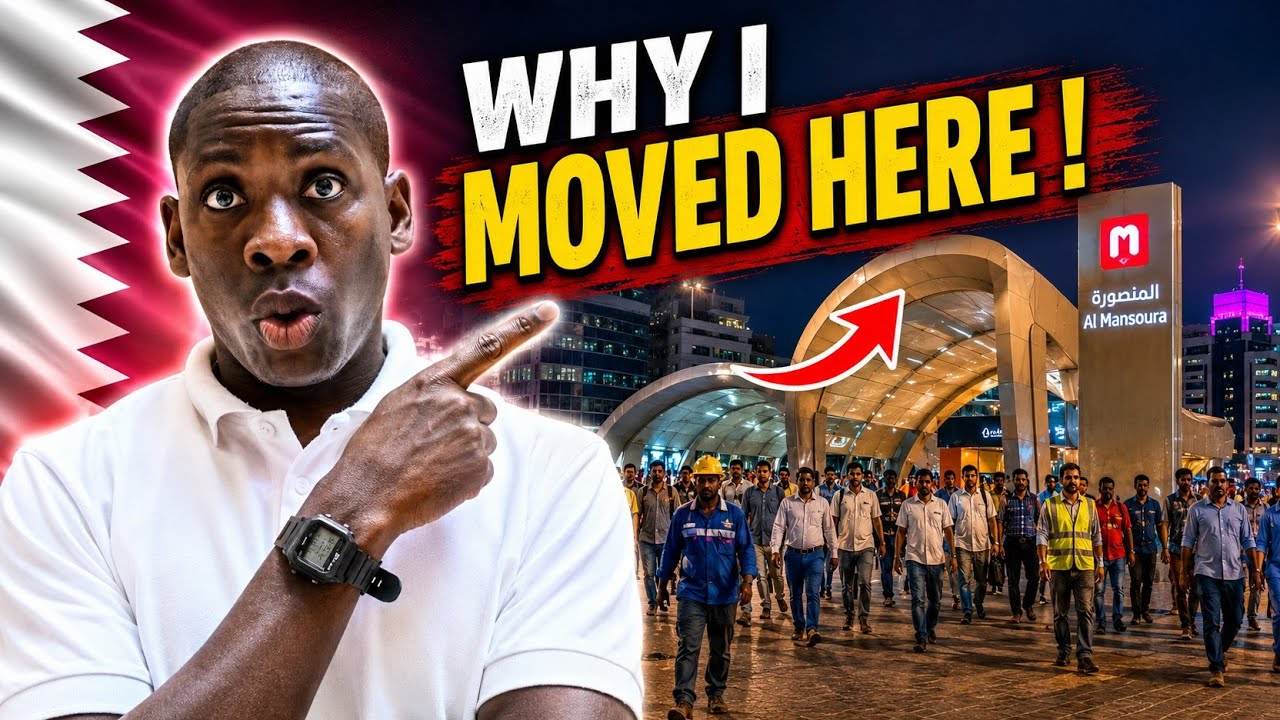
AL MANSOURA Qatar: The Real Migrant Worker Hub of Doha (2026)| Mexcreationtv
Watch on YouTubeVideo summary
Al Mansoura offers a glimpse into a distinct side of Doha that exists beyond its famous skyscrapers and luxury hotels. Rather than being merely another residential district for the 5,000 migrant workers who call it home, this neighborhood functions as a bustling urban hub where people work, eat, shop, socialize with friends, and return to their accommodations after long shifts. It feels like a city within a city, packed with diverse amenities such as restaurants serving South Asian, Filipino, Arab, and other cuisines, along with supermarkets, salons, pharmacies, mobile phone stores, and essential transportation links all contained within a compact area. This density of services creates an environment where daily life revolves around practicality rather than just the opulent image often associated with Qatar.
The primary reasons migrant workers choose to live in Al Mansoura stem from its strategic location, robust transportation network, affordable food options, and strong sense of community. After enduring grueling shifts that may involve standing for eight to twelve hours, tired workers prioritize convenience over long commutes or complicated journeys just to buy dinner; they want the ability to step off public transport, grab a meal, purchase necessities, and head straight home. The area fosters a natural social network where individuals from similar backgrounds can reconnect with people from their hometowns, find familiar foods that evoke memories of family gatherings, and shop for products recognizable from back home, effectively bridging thousands of kilometers away to make the neighborhood feel like an extension of home.
Transportation plays a critical role in making Al Mansoura attractive, specifically due to its dedicated metro station that connects residents directly to Doha's wider transit network. This connection is vital because it allows workers to save significant time and money by using public transportation instead of relying on daily taxi rides for their commute. However, the video offers practical advice regarding housing choices in this area: newcomers should not select a neighborhood based solely on rent prices but must also consider total monthly expenses including food, commuting costs, living conditions, and mental comfort. Living close to familiar foods, services, and people from one's own community provides immense value that goes beyond simple financial calculations, ensuring residents feel safe and supported in their daily lives.
Ultimately, Al Mansoura serves as a fascinating window into the everyday reality of migrant life in Qatar, proving that the country is defined not only by its luxury developments but also by the millions of routines happening within neighborhoods like this one. It is where workers build new lives far from home, engage in family shopping trips, and meet friends for meals while navigating their daily challenges with resilience. While it may not be suitable as a universal solution for every single migrant worker due to individual needs and preferences, Al Mansoura stands out as one of the most interesting places to understand how diverse communities shape everyday life in Doha. For those considering moving there or simply wanting to explore beyond the tourist facade, this neighborhood provides an essential perspective on the human side of Qatar's rapid development.
Read the full video transcript
If you want to understand a complete
different side of Doha, you don't always
need to visit the luxury hotels, huge
shopping malls, or famous skyscrapers.
Sometime, you just need to walk through
Al Mansoura because behind the modern
image of Qatar is another Doha, a busy
mall culture, working-class urban
environment where people go to work,
eat, shop, and send money home, meet
friends, and return to their
accommodation.
Yes, after long working days. And 5,000
migrant workers, Al Mansoura is simply
another neighborhood. It can feel like a
city within the city. You can find
restaurants serving South Asian,
Filipino, Arab, and other cuisines,
supermarkets, more shops, salons,
pharmacies, mobile phone stores, and
transportation connections all within
relatively a compact area. So, today we
are going inside Al Mansoura. We want to
see what exactly the whole place looks
like. Yes, it is a night exploration by
Mix Question. What makes the place so
attractive to migrant workers? And what
should newcomers before coming decide to
live here? Should not stay until the end
because I'll also give you a practical
advice about the most of the things that
definitely as an individual you need to
know. Let's get into the video. By the
way, if it's your first time to
uh find Mix Question, don't hesitate to
subscribe and support. We are exploring
Al Mansoura night time.
So, why do migrant workers choose Al
Mansoura? There isn't any one single
answer. Yes, it is usually a combination
of what we call location,
transportation, food, shopping, and what
we call the community. Imagine finishing
a long shift, you are very tired.
Imagine, and you are tired. You may be
have been standing for 8 or 10 or 12
hours. The last thing you want is a
complicated journey just to buy dinner.
You want to get off transportation, walk
to a restaurant or supermarket, buy what
you need, and go home. That's where
neighborhoods like Al Mansoura become
practical.
The area has a strong commercial
character with a supermarket,
restaurants, and other everyday
services. And there is other factors
like community. When workers from
similar backgrounds leave and spend time
in the same neighborhood, they naturally
create what you call a social network.
You might meet someone from your
hometown. You might find a restaurant
serving your own food you grew up
eating. You might find a shopping
selling products you recognize from
home. And suddenly, even though you are
thousands of kilometers away, your
family, the neighborhood feels similar.
If you're a migrant worker in Qatar and
you love food from your home country, Al
Mansoura can be very interesting place.
Walk around, you'll find a variety of
restaurant food businesses. South Asian
food, Filipino food, Arab food, fast
food, tea shops, cafes, great food, and
plenty of quick meals for people coming
home from work. And this isn't just
about taste. For migrant workers, food
can be connected to identity and what
you call memory. Sometimes you don't
want an expensive international
restaurant. You want food that reminds
you of home. The food you ate with your
family. The food you understand.
Now, let us try to talk about
transportation. Yes, most of the
important reasons people stay attention
to Al Mansoura, the neighborhood, has
its own Al Mansoura metro station
connecting residents to Doha's wider
metro networks. The area has been
specifically studied in relation to
transit-oriented development because of
its connection with the metro and the
surrounding urban streets. For workers,
yes, when we look at our workers,
transportation is not just about
convenience. It's about time and money.
And if you can use public transportation
instead of taking taxis every day, you
can potentially reduce what you call the
transportation and expense. And if your
accommodation is close enough to total
the station, yes, or convenience, then
definitely you'll agree with me, the bus
connection in your daily commute may
become a little bit easier. Yes, but
here an important warning, choose your
accommodation Yes, because someone tells
you of that place.
My practical
My practical advice, if you're coming to
Qatar for the first time, here is my
advice. Don't choose your neighborhood
based on only rent. Look at rent,
transportation, food, commute, and
living conditions. Ask yourself, how
much will I actually spend every month
living here? And don't forget your
mental comfort. Being close to people,
food, and services that may you feel
comfortable can also have value. Al
Mansoura is one of the examples of how
migrant communities hope to shape
everyday life in Doha.
So, Al Mansoura is the perfect place for
every migrant worker in Qatar. No, but
it's one of the most interesting
neighborhoods for understanding everyday
migrant life in Doha. Absolutely.
Because of Qatar is not only the
skyscrapers. It is It isn't only Lusail.
It isn't only luxury hotel. There's
another side of Doha where millions of
everyday routines happen. Workers going
to work, family shopping, friends
meeting for food, and people building a
life far away from home. And Al Mansoura
gives you a fascinating window into this
side of Qatar. If you live in Al
Mansoura, tell me in the comment
section, what do you like and what do
you like about Al Mansoura?