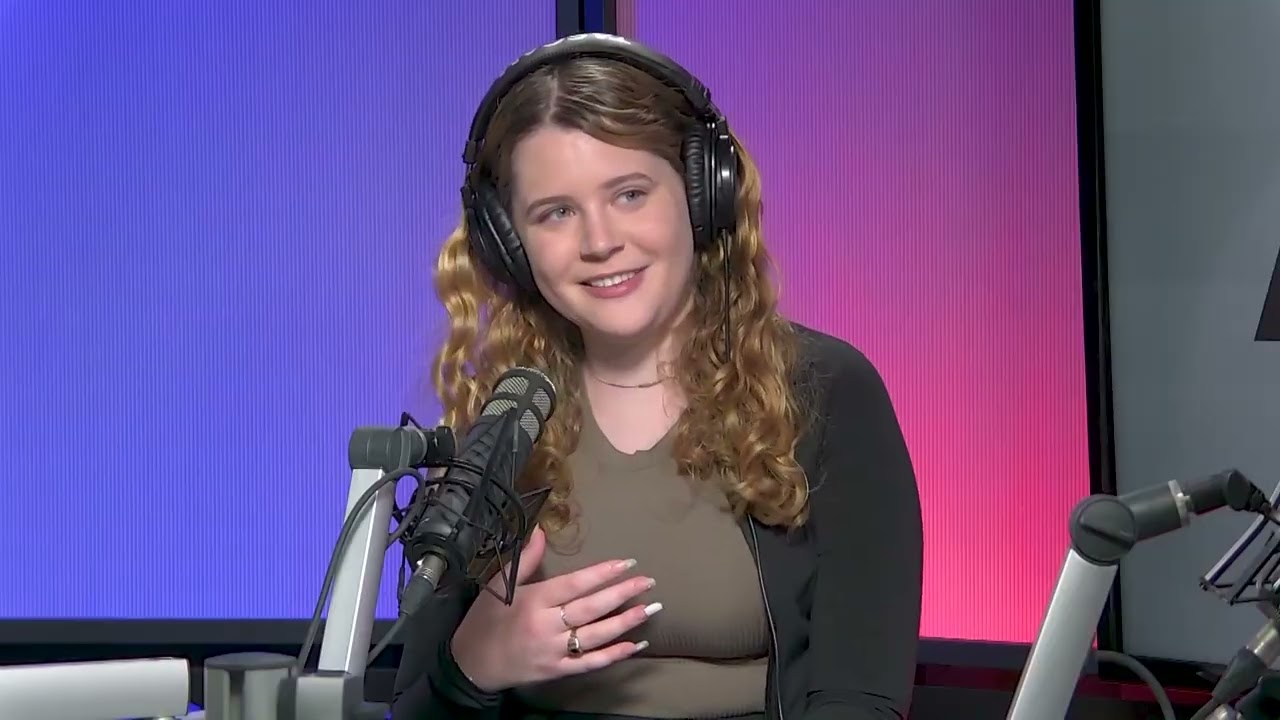
AI for You Podcast | Episode 15: Seventy Percent of the Work Was the Spec
Watch on YouTubeVideo summary
In this episode of the AI for You Podcast, hosts Philip Mman and Dr. Jay Tao explore an experimental Business Analytics course at Fairfield University where students collaborated with Synchrony Financial using advanced agentic workflows. The core methodology discussed is "spec-driven development," a structured approach designed to prevent the technical debt often caused by improvisational coding styles known as vibe coding. This framework relies on three key documents: a stable Constitution that outlines guiding principles, a detailed Spec generated through an interview-style process with AI to challenge assumptions before any code is written, and deterministic scripts that act as guardrails ensuring each step passes specific tests before proceeding. Dr. Tao explains the shift from traditional Test-Driven Development to this spec-based model because large language models can sometimes write weak or bypassable tests, whereas clear specifications provide necessary functional requirements and passing gates for complex AI tasks.
The process revealed a significant reallocation of effort, with approximately sixty to seventy percent of project time dedicated entirely to specification rather than coding itself. Students frequently iterated on their specs up to seven times while keeping the high-level constitution stable, refining clarity as requirements evolved. This rigorous approach emphasizes teaching underlying principles and constraints over relying solely on specific tools that may become outdated, ensuring students remain adaptable regardless of technological changes. Despite the autonomy granted to AI agents, human oversight remains critical; teams engaged in constant communication, auditing, and "red teaming" to prevent hallucinations and ensure alignment with real-world needs. For formal client work like those at Synchrony, this strict adherence was essential, though students noted they could simplify these steps for personal projects where less coding autonomy is required.
The semester concluded with a showcase event coinciding with the institute's anniversary, highlighting the tool BOD as a vital collaboration feature that allowed multiple users to share chats and solve limitations of individual laptops. During this presentation before senior executives at Synchrony, teams focused their pitches on high-value data preparation tasks, such as reducing cleaning time and demonstrating improved results through feature engineering. Although some groups faced minor logistical challenges like technical difficulties with borrowed equipment or a presenter's absence due to an NCAA tournament, they addressed these issues with humor while successfully engaging diverse audiences ranging from executives to non-technical staff. The event was so successful that Synchrony requested further conversations about building similar skills, validating the projects' practical utility and confirming that auditing capabilities are now seen as essential for future careers in AI verification.
Read the full video transcript
[music]
Welcome back to the thrilling conclusion
of this two-part series [music] looking
at experimental classroom design and
consulting in the real world with AI at
Fairfield Dolan and our MS in business
analytics and AI. Uh I'm Philip Mman.
I'm joined as always by Dr. Jay Tao, the
director of the AI and Tech Institute
and the professor who if you saw the
previous episode, but I'll catch you up
to speed, created a new experimental
class this past semester that used AI uh
agentic workflows um to solve real world
problems for one of the biggest best
companies in the world, Synchrony
Financial, who brought on as a as a real
client. Um in the last episode we walked
through uh the beginnings, how it uh was
formulated, what were the problems um
the the challenges of pivoting
mid-semester, the uh the amazing
students we have and let me introduce
them again. We have Margarita Sakudo and
we have Sheila Green. Uh they're recent
graduates. Congratulations of the MSBA.
Uh they did very well in the course
obviously they delivered for the client.
What we're going to talk about today is
the next step. So we had the problem set
up. problems. You'll repeat what your
problems were, how you chose them. Um,
and then we'd like to go on the journey
with you. Uh, what did we learn? How did
we grow? Uh, and focus on we ended last
time um with the discussion of spec
driven development. So, maybe start with
talking about that and skills and all of
the rest of the technical stuff. So,
let's go tell us about your journeys.
>> All right. Um, well, we started out, or
at least I started out knowing, of
course, about LLMs and how some types of
prompting were more effective than
others, but that was pretty much it. I
would use it as a tool to help maybe
debug some code and it would be very
adoc interactions. Not very even though
the prompts tended to be more structured
as I improved my usage of it, it wasn't
something that where the overall
approach to the conversation itself was
very structured. [snorts] And so I think
from the beginning of of the course,
even though we weren't focusing yet on
the final project, we learned so much
from an actual good prompting structure,
how to handoff between conversations so
we don't explode with context drift and
the LLM starts struggling with keeping
up with everything we've discussed. So
tiny things, incremental things like
that that you don't even realize you're
learning so much while you're in the
middle of it. I feel like only looking
back I was able to see where we started
and where we ended up. So I say we
started out very inexperienced
and then improved I would say by
iterating and by learning incrementally
the better prompt structure, the
conversation, how to handle it better.
And then finally arriving at spec driven
development which is a way to approach a
project and for it can be for AI
assisted coding but it can also be for
general coding. I think it was it
existed before LLMs but the way we used
it for this course was
trying to avoid just pure VIP coding
where you lose track of what you've
built and how the code is organized and
everything. you're coding bit by bit and
you're kind of improvising as you go
>> and you generate what is called
technical debt. So you sort of don't
know when you have a bug you lose a lot
of time trying to figure out what it
coded for you and how it interacts with
the remaining parts of the code.
Specdriven development allows you to
figure out all of your functional
requirements. So for someone who is not
very technical like me or my colleagues
in my project, it was an amazing way to
make sure that at the end whatever code
it produced, whatever automation was
generated, if it was failing at some
point, it was very easy for us to go to
a functional document where we had
specified what we wanted our
requirements but in plain English
>> and we could edit and improve and we
knew exactly what was changing at the
end when the actual LLM skill would run.
>> Okay. Um, let's talk a bit more about
that. Well, we'll get to your journey in
a second too, Sheila, but I want to dig
into spec driven development and try to
understand it. So, vibe coding, I
understand you're just constantly
chatting. You have a new idea, you tell
it a new idea, you drift, you're
surfing, you're doing whatever you want.
Um, is it fair to say that spec driven
that the the spec was it written by you
by hand or was it part of the
collaborative?
>> It was a collaborative,
>> right? So it's essentially you're are
you vibe specking
>> somewhat? I would say we we used the
interview structure a lot to generate
each output. So the way we did spec
driven development and correct me if I'm
wrong here but I think there's several
um tools available or kits available. We
use the GitHub spec kit. So it's very
straightforward what steps you have to
go through. But essentially we used this
interview approach where we would say
okay this is an idea that I have in our
case our project data cleaning data
feature engineering
this is essentially what I want to
accomplish now interview me to so that
we can arrive at a spec with this
structure and we would feed it the
GitHub spec kit structure so it's very
easy to make it more contained and have
less drift and the interview process
itself we would challenge even after
answering ing some questions, we would
say sort of the Socratic method. We
would ask it to challenge some of the
assumptions that we made. And [snorts]
that was a really good way to refine
each idea and make the most of the
collaboration
instead of us having to think ahead of
every hurdle that we could face.
Especially because we're not very
technical people. a lot of the things
that we would face later on about coding
and libraries and stuff, it would raise
those issues for us in advance during
those interviews. So using that
interview to arrive at the final spec
was I think the best way to collaborate
with the LLM.
>> I heard a quote, I think it was
Einstein, he said uh if he had to solve
a problem, he'd spend in an hour he'd
spend 59 minutes coming up with the
right question. So maybe that's the same
thing as with spec. How what percentage
of the time of the client work would you
say was building the spec itself?
>> I would say it was
maybe 60 to 70% actually. Yeah. Because
we really before you arrive at the final
final spec, we had a pre-document that
was more generic before we settled on
any specific decision on the coding
language, the actual LLM model that we
would use. That was called the
constitution and that's sort of the
overarching document that you want to
keep somewhat generic so you don't have
to revisit a lot, but that guides then
the spec. So we spent some time on that
and only then did we go through the
actual spec with the more detail and
specific requirements.
>> Okay. I think I'm starting to
understand. So it's a hierarchical
approach to building. Yes.
>> First you have a con. First you have
your general prompt, right? Then you
have your constitution, then you work on
the spec, then you work on the code and
the planning and whatever.
>> Yes. You do planning, you separate it by
tasks which are smaller requirements and
that would have maybe some of the tests
that you would want to make. Um and only
then you implement
even then after implementing you revisit
anything because
>> and how often do you go back? I think we
went back so for the final weeks of the
project because we were gaining clarity
also as we were going we were learning
uh we went back uh for the final two
weeks I think perhaps maybe five times
that
>> back to the spec or back to the
constitution
>> back to the spec
>> uh the constitution was fixed
>> we changed maybe once or twice we
updated the constitution with a little
bit more detail but because we wanted to
keep it somewhat stable and just be the
guiding principles for the project. We
didn't have to revisit the constitution
that much.
>> That makes sense.
>> The spec we did a few more often.
>> When you revisit the spec, you've
already done some work after the spec.
Do you continue that work or do you
start from scratch?
>> No, we continued. And
>> so you would tell it like, "By the way,
there's a new spec."
>> We would update the versions. So we had
like version versioning uh for each spec
and we kept logs of all the
conversations with the LLM and so it
would be easy to just say then okay
we're updating the spec because we
figured this out this step that we were
maybe we didn't do the three personas
review at the beginning we realized we
wanted it in the final report or at some
point we realized we didn't want a data
dictionary because they would have a
data dictionary things like that um we
would just update the spec and it knew
the versioning process because the
versioning process was actually
specified in the constitution.
>> Makes sense.
>> So
>> very interesting and your journey was
similar.
>> Yes, there's I feel like all of us had
the same structure because it was like a
classroom setting instead of just doing
it on our own in a job. We all used the
same structure like we were all supposed
to have our spec one week and our
constitution done another week. And
obviously, as I said, we kept going back
to those like we definitely had at least
seven versions of the spec. Like it was
just something
>> and same as Margaret in the last couple
weeks, you'd still be updating a bit.
>> Yes. Like
>> and I think it's particularly
challenging for your group because you
know, you you were trying to basically
wrap your mind around the whole plan to
spare kind of thing.
>> Yeah.
>> You know, if you could talk a little bit
more about that, that would be I think
that would be great. Yeah. I feel like
it was something so new to all of us.
Like even though we spent so much time
picking a topic,
I can't speak for my group members, but
I definitely didn't fully understand it
by the time we were even starting it. I
It's just something that was so new to
everybody in the room that for a while I
feel like I would talk to people even
like outside of us and our groups like
we would talk to other peers and they
would be like, "Yeah, I don't fully
understand what's going on, but you
know, we're figuring it out as we go.
And as we kept putting the hours into
this, we kept getting more and more
clarity. So we would go back to the spec
and be like, "Oh, wait. I actually
understand what I was trying to do here
and I actually did something different.
So I'm going to go ahead and update
this." And even though like it was like
collaborative with the AI to make the
spec,
it was still something
as I've emphasized like human review is
so important and it's something that we
had to keep working with. And I feel
like talking to people about AI, like I
was talking to somebody two days ago, I
think, and they were like, "Well, how do
you trust it?" Because AI is so known
for making things up. Like even with
something like this, like it could make
something up because it tells you what
you want to hear. And I feel like a big
part of what we did in the class was
auditing and red teaming. Like along
with the interview process to help us
come up with it, we had to make sure
like this isn't just telling me what I
want to hear. Like this actually is
plausible and this actually works. So,
it's a lot of going back and forth and I
don't want to say arguing with it
because it's not like it's a person, not
to personify it, but it's just a lot of
going back and forth and working with it
and making sure that rather than just
telling me what I would like to hear
that it's actually something that will
help me and my project grow.
>> You got a lot of uh you were right to
push back.
>> Yes. Yes.
And I think that's um those are the
answers to your question is not really
vibe specking because I think with vibe
specking I I think the word vibe here
means I don't need to look what's under
the hood.
>> Um
>> good definition.
>> That's my understanding and I think you
know all they did was actually trying to
pry under the hood to see what's going
on. Maybe they're not looking at the
code, but they are looking at the
internal machinery and why
>> they're looking at the spec document for
sure,
>> but also they're looking at how how the
the model function and respond because
they auditing the red teaming they're
persona challenging the the the results.
So they are prying in under the hood to
understand you know what is happening
why they are they getting a response
like you know they got so I don't I
don't think it's vibe backing um and I
think you know the the whole
um the whole idea of of spec driven I
think it you know writing specs is
actually I hope you know it's a useful
skill beyond you know these project and
even beyond dealing with LM or coding
because um I I now I realize I can do a
lot of things with specs because I I get
a task now I can basically the idea is
break the task into little
functional units and solve one
functional unit at a time. So I I think
it's a it could be a life skill that's
really interesting. And so you you
presented this way this scaffolding
right this framework for the students
but you it came from somewhere for you
too right from your own consulting
experience what other what other
frameworks or structures did you think
about other than spec driven that you
threw away because this is better
>> um so before using spec driven I was
using test driven so basically test
driven development is you design a test
first then you um basically build the
product to uh pass those tests.
>> That was particularly good with uh more
human hands-on
and AI assisted coding.
>> Meaning I'm I'm doing a series of
prompts to to to write the single
functional unit. That that's good. you
know, when I work with AI more in a more
hands-on way, but then I I have shifted
from a more hands-on way, tell the AI to
write this code to that code to more
hands-off way to give the AI more
autonomy to do this. And I feel like uh
test-driven fall short because uh the
model now is both the the the judge and
the player,
>> the basically the referee and the
player, right? So it can actually first
it can design um weaker tests and it can
also fake through the tests. So then I I
I I feel like you know even though I
want to be hand hands off I still want
to maintain full control of the whole
development process and I feel like you
know test driven is giving me less or
weaker control over this because I don't
even though I can say make the test
harder it can still find a way to go
around and and it I have experiment
proving that you know it can't go around
that. So that's why I I move it more to
spec. Now I don't you know it's it's
still test is a part of the spec but now
I care more about what you have to
deliver. What are the passing gates that
you have to reach before I can call
this? Um the other one I think you know
um I think I I just talked about is the
more hands-on the more interactive way
of of doing things. And I think you know
you guys may have something to say about
this as well is because what you went
through in the in the course is
basically a very interactive way that
you you basically you are working you
are collaborating with the model to to
get this done and I think you know I
want to say it's basically um you you
are it's it's almost like a ladder right
you start from at the at the the least
experience level. You need that
experience. You need that handholding to
understand on one side to understand
what that models can do. On the other
side is basically to to work your own
skills to build your own skills and even
to boost your confidence that you can
get this done. And and I think once you
are more familiar with this, you will
move to the more hands-off way to do
this where maybe you set up certain you
know checkpoints and say you know I need
to make sure this spec works and I need
to make sure these tests are included in
the specs and then you can basically um
let go let model you know do the heavy
lifting. I think that's where we we talk
about you know LMS make us more
efficient. I think that's the way to go.
>> Mhm.
>> So, it's not that uh you still use
specri development when you're
consulting clients, right? You're not
this isn't like training wheels. Yeah.
>> Right. That you're teaching them. This
is the real world.
>> This is the real world.
>> So, and then and that's that's my
teaching philosophy right now. I I don't
think it's responsible to teach students
something that I don't use every day.
>> Yeah.
>> And or or something that have gave up.
Right.
>> Yeah. then then you know and and it has
to come from the real world. It has to
be
battle tested to to to actually um to
work in the real world.
>> Okay. So you've done the specs, you've
done the constitution, you're constantly
referring back, but you're you're now
planning it out. You're building things.
What what does the rest of that journey
look like?
>> So the end output would be the so-called
skill that we've been mentioning so
much. So we used claude skills. They
also have a format I would say a
structure in which they're written out.
So again it's also helpful that you have
a guiding framework. And all of this
work that we had done so far with the
specs with the plans all the details
that we had on what we wanted to
accomplish was then structured into this
way of claude skill organization I would
call it. So essentially it's a document
that has yes um that has the main point
of the skill itself and then is
supported by pieces of code scripts uh
some people I think call them hooks as
well and all of those things were
generated through the specdriven
development you condense them into a zip
folder you upload them to claude and
that's a I think also a big part of how
user user friendly it is. You can just
use the web interface cloud.ai
and say you name your skill. In my case
it was data- cleaning. Uh you just
backslash data cleaning upload the file
and it runs the skill for you like a
normal chat. And because the skill and
the scripts that support it all have the
purpose that you specified in the spec,
it will output all of the outputs that
you said you wanted. In our case, the
clean file, the report with the
decisions, the confidence scores in the
decisions, and then you would hand it
off to the second skill, the feature
engineering, and it would generate the
new variables, the new Excel file with
all of the new variables, the report as
well on the features that were created
and how confident it was and what the
decision process was, and then output a
JSON file for my group, following group.
>> So, you would do each skill separately.
you do slash data cleaning, wait for
that output, maybe have some interactive
chats. Yes.
>> Fix some things. Then when you're
comfortable, it's the same thing as like
first a constitution, then a spec, then
run it. Right.
>> It was also critical for us to have that
checkpoint before starting the new
features. If you're going to create new
variables, you want to make sure it's on
good data. So, we wanted to be able to
inspect it. Besides the human review, we
complemented it a lot with AI review, of
course, all the personas and everything.
But you want at some point a checkpoint
to make sure that it's going in the
right direction. So we didn't want it to
break halfway through data cleaning and
then still generate features, buggy
features, right?
>> So we stopped and we divided into
skills.
>> That makes sense. So So for those of us
new to skills, uh is a skill just a text
file? Is it
>> more or less?
I would say I don't know if you want to
compliment this but I would say
it's a very rich text file that is
arrived at through a well if you want a
good skill uh through an iterative
process complemented by code
>> that needs to run
>> and the code is large enough that
doesn't fit into the same skill you'd
have separate
>> yeah we had separate files we had
snippets of code within the skill for
the critical things and but then we just
had the name of the scripts that
supported it saying, "Okay, at this
point you will call this script and the
script was a separate file."
>> And would you call that a tool or
>> Yeah, I feel like I tended to refer to
it as like the orchestrator kind of like
telling everything else what to do,
but I mean I feel like it could be
looked at in so many different ways.
I think it's very interesting u and and
there there is actually a backstory um
here and um and it's title we talk about
the challenge of changing course
mismaster
um is when I designed the course you
know and we have run this course you
know multiple times and it's focusing on
the design part of the course so this is
the experiment is mostly about the
implementation or the prototyping part
of the course and how how does how how
to make that work and when I was you
know um basically brainstorming about
this I was thinking about you know what
is the popular thing you know when
everybody talk about workflow and of
course you know the the the tool
everybody is talking about is an addend
it's a it's a diagramming tool and
that's you know that's when they get
into this course that's what's on the
syllabus and say you know we're going to
use it and in the second part of the
course to implement whatever your idea
was. And then um we we realize
um basically when when when I uh talk
more with you know synchrony financials
we find out you know the a few things
one is um what they want. So the the key
difference or the key limitation of ANN
is it's basically a drag and drop
diagram and so human in that case is
orchestrator you know I I I like what
you bring up orchestrator human arrange
the steps and the splits and and
whatever so LM is is a part
a small part in that process that's
basically how how it line up to be and
talking to Synchrony Financials, they
want more than that. They that that they
don't they're not uh content with just
one cutting point of using nonjang
model. They actually want to redesign
part of their process, the data cleaning
process, the documentation process and
and let AI drive more. And so to me I
think the the one of the difference from
you know um um
it is a just a text file is you know now
you it you basically lay out steps and
you're letting AI to carry out these
steps or the difference between a skill
and a text file is how do you ensure you
have u enough quo of you know how AI do
things your way. It has I I think it has
two features we should talk about. One
is the the assets where you can say here
is how I do things. Here is the template
of a report. Here is you know um
basically some recipe you should look at
when you do these steps. And then you
have scripts you know the code part
that's the deterministic part where you
you have you can say whatever
intermediate results you generate at
this step it has to pass those
deterministic tests before you can move
on. So that's how we to me that's how we
ensure the AI is doing things our way
because we are providing two sides of
assistance. One side is basically
crutches saying you know here are some
help use it and the other side is
basically guard rails and say you have
to do it this way if you don't pass
those gates you can all move on. I was
going to ask you um if you thought
there's something beyond spec driven
development like what might be the next
thing but I think you're kind of
discussing it here. It's like checkpoint
driven. It's not just a spec. A spec is
one type of checkpoint, but work and
work and work until you get to a spot
that you would might later change again,
but is a a fairly solid deliverable,
right? Just like you would have in in
the real world in a corporate
environment. Where's this? Where's this?
Right? A road map. Yeah.
>> Is that fair to say?
>> I I I think, you know, that's a that's a
very good idea because spec is a is a
living document, but it's still a
document. I think what you describe is
is a living deliverable. So um I think
you know all we want is basically a a a
iterative development process that have
you know
we we can improve our deliverable but uh
spec is one way to control that is to
describe what a deliverable should look
like once it improved you know in the
iterative process. tested is the other
way to describe this is basically
how good it it should be. Um I guess you
know to to add on to your comment I
think you know we need to figure out is
there a more abstract way that's not
just a document or as passing gates that
we can merit the quality of the the
deliverable.
I mean, I feel like we're at a point
where AI and everything is going to
continue growing. Like, we're doing all
this now, but in five years, it could be
such a different process.
>> Oh, you five months?
>> Yeah, five months. Five days. I mean,
>> yeah,
>> who knows? I mean, it's probably grown
so much since we even started the
course. And I think
>> the podcast
>> I feel like it's hard to speak on these
methods when in a week it could be
something the next best thing could be
totally different.
>> That That's true. So the nice thing
though is uh you could be the one who
comes up with the next thing.
>> It's true.
>> So when you're thinking about the next
projects that you would be using AI for,
would obviously you do some spec driven
and some checkpoints and all the rest of
it is what other thoughts like you're
you're going back to your personal
project now. Talk about that. How what
what how are you approaching it now that
is different than even maybe the way you
finished the course?
Yes, I would say um I am keeping a lot
of what we learned for from spectriven
development. I may be simplifying it a
little bit because what I've realized it
is that for some types of projects it
might be overkill and you can just get
there faster with a summarized version
of specdriven development. I think
that's the way I'm changing it the most.
So, I'm I guess skipping some of the
steps or shortening some of the steps
there just because I think they don't
add as much value for certain types of
projects because in this case, the
personal project is very textbased.
There's not a lot of coding involved.
So, there's not as many scripts that I
need or a certain type of asset. I've
forgotten about assets, but I just need
a message. And LLMs are pretty good at
knowing what messages sound like within,
I don't know, certain tones or
limitations, but I don't need to be as
specific or restrictive with my
specifications. So, I think that's how
I'm mostly adapting it is making it a
little bit more flexible
depending on the type of project. So in
this case, because it's very text based
and that's what the LLMs are best at,
I'm keeping it more loose and giving it
more autonomy, less having less scripts
that are more deterministic. I basically
wanted to be good at finding the right
people. Say I'm interested in a finance
job and I want to find people at certain
banks and who went to a school or who
worked at the same company that I worked
at something there. I just need to be a
bit more specific. But other than that,
I give it leeway to figure out what's
interesting about that person or how I
should approach them.
>> I feel like I don't have very much to
say on this one since I haven't picked
it back up yet, but I feel like I do
agree like with the client project, it
was such a big and formal thing that
with our own personal projects, not that
it would be like cutting corners to
condense it, but like she said, it would
be kind of overkill.
>> Mhm. So, I feel like it's good to keep
it simple because if you if we did that
whole process for every small project,
it would be overwhelming and a waste of
time at a point. So, I feel like every
project is different and finding the way
to have that spec driven, but also not
going insane with it is a key point of
keeping the balance.
I think you know that's this is
something I learned from you Phil you're
the master of this is um
we I think the last thing we want is
teach tools we don't want to teach
people tools because tools will be
outdated then rigid like you guys said
if you treat specd driven development as
a tool or like you said GitHub specit
that that is a tool right if you only
learn the tool
you it's you will not understand how to
use it or when to use it and and and
particularly like you said when smaller
projects why why would you use something
like this a huge tool and I learned from
you is you you're using the tool to
teach the philosophy so the the
philosophy is the same the principles
are the same right it doesn't matter you
have to go through every single step but
the philosophy is you have to lay out um
different layers of constraints
that an LM has to follow or different
kind of checkpoints LM has to reach
before it can move on. That's basically
the the the philosophy of of doing this
and that's I think that you know um a
lot of the courses we teach actually
follow that that way. We teach you the
philosophy through the tool because if
we start talking about philosophy at a
very abstract level for for for for a
student you may get lost. You may say
what are you talking about? Because
that's you know up there in the air but
you want something that's on the ground
that you can touch, you can feel, you
can build. And then once you get more
familiar with what you build, what you
experienced, what you learned or even
what you changed, then you can see you
guys are moving up here, right? And say,
you know, here is what I think how I
should do this. And I think that's all
graduate study is about is basically we
give you a tool, we try we we try to
help you grasp the philosophy behind the
tool.
>> That sounds awesome. And I love the idea
of layers and and uh checkpoints and and
constraints like because you you you
search and then you want something to
solidify and you can search again as
opposed to just go everywhere. go crazy
wi with your own experiences with your
journey on this thing. There must have
come a time so at the beginning of the
you know this is an overwhelming project
we don't really understand it fine let's
spec it out let's great at what point do
you remember having an aha moment like
by god this might actually work
>> I feel like for me it was a lot more
towards the end than it probably should
have been or ideally would have been
like once I was kind of seeing
everything together
>> I was like wait we're actually pulling
this off it's actually happening like
even getting to the showcase itself and
having to present our findings. I was
like, "Have I had my aha moment yet or
am I like going to figure it out on
stage?" Like, [laughter]
it's one of those things where we kind
of just rolled with the punches either
way. Like even like the aha moment did
come, but even if it wasn't going to,
it's like, well, doesn't matter. You're
doing it anyways. [laughter]
>> Yes.
>> What about you? I think it also helped
at the same time as we were developing
everything we had each group had to make
a classroom presentation and the first
group to present we were still in our
constitution spec phase work-wise but
the group's presentation was already
about what a skill was and that really
helped me put in perspective okay this
is all going towards that and at the end
that's the thing that's going to run and
it runs in this way and we'll have the
assets and the scripts and that I think
was my well early aha moment ahead of
seeing it actually worked because I
hadn't finished the work itself. The
second one was the first trial where we
actually tried the skill itself and it
worked not perfectly but it did this a
decent job. We first tried the cleaning
one and that was first seeing it work
was the full aha moment I would say but
it was good to have that preview of
knowing what a skill would look like
before I had to deliver it actually. So
I think it was a good thing to pair
those two. We're working on our project
but we're also getting a glimpse of what
it's going to look like at the end
through each group's presentation. To
piggy back off of that, you kind of
reminded me that those existed. I did
kind of forget that that happened, but
that was a big aha moment for me because
I will admit like as the project
manager, my amazing group members did
most of the building itself. So, I can't
speak as much on that as maybe Margarita
can, but with the with my group's
project, it was about sub agents. So,
that was having we did it based on like
one of our skills and having everything
run at the same time.
and being able to go back to it and edit
it. And I feel like that was a big aha
moment for me because it was kind of the
first time I was more seeing it in
action because being more like observant
in the process made it hard for me to
fully dive in and really see what was
going on. So I think doing that project
separately, but looking in on it helped
me have that aha moment where I was
like, "Oh, this is how this works. This
is what it's doing."
>> Interesting. You guys probably have a
bit of an advantage in being younger
than Jay and I. Like we we grew up uh
thinking thinking in a programming style
and when you're programming you have
lots of tiny aha moments, right? Teeny
tiny. This function works. Thank god.
Let's do another one. Uh so as you're
you're you're constantly building up and
then you get what you expected, right?
But I think with now at least my
experience, tell me if it was the same
thing with you and you with AI there
there's a lot of moments of doing
nothing and then it outputs something
like wait this worked and that worked
and this worked. My god. Mhm.
>> Yeah.
>> Bigger ones. Is that was that your
experience?
>> I would say so. I would have to agree.
Yeah. It was just like you'd be playing
around with something like not really
knowing even what you're doing half the
time and expect something out. It's like
wait like
>> that's a that's good. That's a key part.
Like that that helps. Or a lot of times
you're just hoping that it will work
because you're looking at a document.
You're just working on text. That's
true. interviews and
>> that's true.
>> And then you just need to wait for the
moment where you actually upload it and
it's
>> or like after the interview it's like
wait is are the results going to work or
did I do all this and it's going to like
give up on me and not give like did I do
all this for it to not give something
that makes sense or what I'm looking
for.
>> Yeah. Or not generalizable. Is that been
your experience too? I think what you
said and first line align with my
experience and then I think there is
explanation for that is I think you know
LMS and and you know basically modern
tech in general is actually elevating us
from the the actual work like you I
don't know about you I look less and
less about coding.
>> Yeah.
>> I'm I'm ashamed to admit I don't even
read the skills anymore. [laughter]
>> You guys still do, right? Or you had to
for the course. You probably won't
anymore. Yeah. So I I think you know um
your little joy lives in the code the
line to line stuff right. So as as we're
reading less and less of that we're
basically
>> that's true
>> distancing our
>> that's true
>> ourselves away from the little joy. And
so what I've been trying to do at least
in this course and and in my daily
projects is I still want to touch back
at what's going on but not at the code
level. All the the interviews, the
specs, the checkpoints, the tests, the
the the iterative development is all me
touching back to the actual development
process. I don't want to build a wall
that between me and and see let's let's
like like we said you know at the very
beginning of this podcast you know
prompt and pray [laughter] that that is
that is that is what vibe coding sound
to me right you prompt build me this
make make no mistakes
>> right and then you pray it works
>> right
>> right so um I I I don't think I can live
with that so I don't want a war I don't
want I do want a separation. I do want
an elevation that at a more abstract
level I still know what's going on. And
I think you know um this is also how we
train these students is you know they
have the basic skills right so they they
can get the work done at a very abstract
level but they have the basic skills if
they want to dig deeper into this and
figure out what's going on and answer
the client's question how do you build
this they can you compare it to um uh if
you're if you just have employees
working for you right you're obviously
not going to do their work but you have
check-ins you see they explain to you
what they're doing right they certain
road maps. What are the similarities and
differences from having a team reporting
to you to having agents that you've
built?
>> Um, I think it's very
um it's similar in in a lot of different
ways and I think you know again very
early in this podcast we say you know AI
are overconfident interns. I I still
feel that way. I still feel my agents
not only overconfident but also
overeager to get things done. Right.
Once you say, "I want this build." Okay.
Boom. Done. Build. But wait a moment.
How do I know you build? You didn't even
ask me how I want this build. I just
give you an idea. So, um, I I feel like,
you know, even with the model advancing,
um, even with the the the the famous
infamous fable,
I feel like I'm slowing it down. I'm
still slowing it down a lot
>> intentionally
>> intentionally not not that you know well
on the other in the same time I'm
becoming the bottleneck I realize that
but I'm still slowing it down I I want
to say you know um wait a moment don't
start building let's talk more about
this ask me like the interview technique
they they mentioned ask me about you
know what I want to build ask me what I
don't want to build ask me or challenge
me what assumption I'm challenge is
good.
>> That's these are very important and then
at the end result I wanted to create a a
document a self-guiding document from
the interview from the challenging that
throughout the process. So um you know I
I I think I would spend a lot of time um
you know um in that in that phase rather
than just directly get into building.
But I always believe right now you know
if you look at any kind of development
project there are three stages be even
without AI there's planning there's
building there's reviewing so basically
as a developer you spend time on all
three of those so now we can agree
building part is highly condensed you
know we can even ignore it
>> right so now it's basically you spend
time on planning or reviewing
>> my preference is always you spend as
much time on planning so you don't have
to spend time on reviewing because
reviewing is painful.
>> Mhm.
>> Planning where you're brainstorming,
you're talking about your your colorful
ideas and designs and things like that.
That's always a joy to me.
>> And look at look at what you build um
and you know um and start challenging
how did I do it this way and why it's
not working. That's always a pain. So my
way is I want to extend the planning
phase as much as I can so that I don't
have to spend much time interviewing.
>> That makes sense. Now, now when you guys
were obviously wasn't individual
projects, you had a group. So you had
both challenges working with AI agents
and with people. How was that process?
>> I mean my group was amazing. I've
mentioned them in the previous episode,
but Chiao and Valerie were both very
good at communicating at each point. I
was also very involved and we had some
time during the classes where we would
break to work that was also very useful.
But essentially them being able to
communicate to me each milestone each
thing that they were producing or
struggling with and asking for help or
going to the professor the three of us.
So we always knew what was going on also
because Shiao was focused on the data
cleaning part. Valerie was on feature
engineering but they depended especially
Valerie depended on Chiao's output. So
they had to constantly be communicating
on expectations and deliverables.
>> Would they communicate through you or
just directly?
>> Both I would say. So especially in class
because it was the time we'd have
together the most. they could speak more
directly to each other and look at each
other's outputs on the same screen and
we would meet outside of class of course
but sometimes I would be looking at the
two things together and I'd have
questions and then would have to ask
each or either of them um but
essentially I think we managed to
maintain a very good flow of
communication that was the most
important thing where if there was a
project level decision they would just
come to me but they could always speak
to each other and we'd have maybe a
Slack conversation going on with the
three of us where I could see things but
I didn't have to intervene. they would
just discuss between themselves. And it
was just very important that we always
had checkpoints each week because each
week we had somewhat of a deliverable,
an intermediate deliverable so that we
knew I would be overseeing everything,
but they could talk to themselves
between themselves to see if anything
was missing on either side or some of
the output that Chiao was giving Valerie
wasn't matching what the skill was
expecting, how to adjust everything. So
I would say communication was just the
biggest part of it and all of us being
okay with learning and not having this
expectation of knowing everything
>> and that's so powerful.
>> Having the availability of the professor
who was always we could meet at short
notice that was helpful too.
>> And I feel like for me I could not
emphasize communication enough if I
tried to. I mean my group members
Whitney and Molly were fantastic with
it. We were meeting all the time. I wish
I was kidding. I even like I worked
retail at the time and I had to change
my work schedule around these meetings.
like we met every Friday and like a lot
of Wednesdays. The class is on Mondays
and so we were meeting outside of class
multiple times a week just to continue
collaborating and working together on
everything because while everyone's
doing their own individual part like
everything has to come together. So it's
so important to stay in the loop and
stay informed and just keep
collaborating. And a big thing that I
feel like helped helped us is BOD, which
is an AI tool that he showed us that
allows multiple people to collaborate in
one chat.
>> Nice.
>> Which is probably the most useful thing
out of this entire project. It's
something I still use today.
having multiple cuz in the beginning of
the semester when we were doing the
individual projects it was one person's
laptop doing everything
>> and while that was not my laptop I felt
so bad for the person who had that
responsibility cuz like that is a huge
responsibility to have everything on
your end when everyone needs to work
with the same thing but only one person
has access to it and can work with that
it's really hard to make that work,
which is why communication is so
important, but having that tool to allow
all of us to work on it did really help
make it easier as well.
>> Awesome. Sounds like a really
challenging and powerful and enjoyable
semester. Let's let's go uh to the end.
Uh Jay, set the scene with the final
presentations. What was it like? And
then they'll tell us how it went from
that perspective.
>> That I think that's the pinnacle event
of of the semester. and um happens to be
the the one year birthday of the
institute and um so at the institute we
promise three things we promise you know
we'll do community outreach well we'll
do you know basically workplace
education and we'll do impactful
academic research. So clearly we're
doing our through podcast like this but
we're also doing our like you know
projects with synchrony and and and
things like that.
So I was toying the idea of you know
how do we make sure these projects are
again a real beyond the regular
classroom projects are actually
something that will fly in a real
workplace. So I was talking to Abby
about this and I say you know how about
we actually let the students pray them
back to your team to um you know and
we'll open the audience you know to to
to other people to to real practitioners
and and to to basically you know um and
and and hear the students out and you
know I was so grateful that I'll be
actually bringing you know so training
senior executives from Synchrony and uh
you know we actually um um basically
advertised this. So a lot of working
professionals showed up at you know um
the the showcase and uh you know um and
they all did a good job. So I'll let
them take over telling you know you guys
their experience at the showcase.
Uh so for my group it was a little bit
different because so while the class was
nine people, eight out of nine people
were at the showcase and the one person
missing was one of my skill owners
because she is a college athlete and she
was away for the NCAA tournament for
women's lacrosse.
So obviously that's something that we
were aware might happen for most of the
semester. Like she warned us pretty
early on like it is a possibility that I
will not be there but it was not
confirmed until the week of
>> Oh my god. Nice.
>> So while it was something we try to
somewhat plan for ahead of time, there's
really no planning for it until you're
in it. And we thought long and hard
about what we would do with like her
part of it. And for a while we were
like, she's going to zoom in or I'm
going to have to say all of it and learn
all of it. But we ended up settling on
her recording her part.
And then during the showcase itself, I
think for the most part it it was
awesome. I don't it was such an awesome
experience and probably the most
rewarding thing I've ever done. just the
pride and relief after it ended was
inexplainable.
But while we were on stage, of course,
the one group that had te technical
difficulties was mine. And it wasn't it
wasn't our fault. So, we were using one
of my groupmates lap. She borrowed a
laptop from a school to avoid any
technical difficulties because her
laptop was terrible. But we had issues
all semester with this girl's laptop,
but um so we used the school's laptop
and then the slides just would not
project properly. Like it was something
so minor like that and we're just
standing there like well might as well
crack a joke about it. Like I got to
open up like cuz after the slides
finally worked I think there were more
applause then than anytime else. And I
made a joke about that when we started.
I'm like well that's the most applause
we're going to get all night. So, it was
even like something like that to break
the ice kind of helped ease the nerves
even because it was a big thing that I
think most of us were really nervous
about. And then even playing her video
like we were really worried how that was
going to play out and we were like what
do we just stand here as this video
plays? Like we didn't really know how it
was going to work with having to play a
video halfway through the presentation.
But in the end, you know, it worked out.
We we all did our thing and it was
incredibly rewarding at the end of the
day.
>> Yes, I'd say rewarding is the right
word. I had some experience in
presenting to clients, but I hadn't done
it in a while, so it was scary to me,
too. And
Valerie and Shiao, they both work
already, so we're used to it, but it's
always somewhat nerve-wracking. I think
what we really tried to do was focus
more on the results and the value of the
project itself so we could really be
more captivating to the entire audience
because not everyone was the analytics
team. There was more executive level,
there was professors from different
backgrounds, marketing and it was really
fun because like I said in the previous
episode, data cleaning, processing, it
takes a big chunk of time. So you can
always lead with that argument. So
people are compelled to listen to your
presentation. It's like maybe you're
spending 3 days out of a five day work
week in the boring part of working with
data and you could really reduce it to
some hours or minutes even. And then we
also tried to frame the results in an
interesting way. So we tried different
data science models with our data set
with the features versus without the
features. And that was also compelling
that we got better results with the
feature engineered data set. I think we
tried to focus on the value that this
skill could bring. And then it was good
at the end that we had a lot of
questions from people even outside of
Synchrony that were interested because
they would need it for their own work
and their own projects and they weren't
some of them were but some weren't
really techsavvy and they could just
maybe use our skill to bypass that
process and have their work made easier
with our project. That was good.
>> I feel like a big part of it too was
that like the audience we were speaking
to is such a wide variety of people.
some very technical, some not technical.
So, we had to find the right way to
share our results to make it sound
impactful to people who even have no
clue what we're talking about.
>> And Jay, what was the uh epilogue?
I I I guess you know the app blog would
be I'm going to ask you each of you if
there's one thing only one thing that
you wouldn't continue working on after
this course from this course but after
this course I know it it it might be
your personal project but
what would that thing be and and why is
that help you
why is that helping um in your future
just just name one thing the one thing
come to your mind?
>> The first thing that came to my head was
like the auditing and red teaming skills
that I talked about in the last episode.
I feel like that's something that will
be used forever. Even I have family that
works in data analytics and after we
learned about auditing in this course, I
reached out to that to one of my family
members and mentioned it and she
emphasized like how important it is to
know that and how she does it all the
time in her job and how it's something
that she recommends that I keep working
on because of how much it's going to be
used. And even like in interviews, it's
something I talk about like how cuz as
we all know, AI sometimes likes to do
its own thing. So, it's really important
to have those skills to be able to check
the work and really
really be confident in what you're
putting out.
For me, besides the personal project,
I'm lucky that the skill itself is
useful to the career I'm considering. So
as I'm thinking of going into data
science and working with data science
models or deep learning models, that
whole aspect of data preparation is
something I can actually leverage my
skill for. So I definitely think I'll
keep refining it and using it in my own.
I've used it for school projects even.
We have data science courses and deep
learning courses. But for my actual
career, I think it might be very useful
in the future. I just need to be mindful
of a way to use it safely within
corporate settings.
>> And now you have a a more powerful
instrument. You you know how to build a
skill, right? Not just a skill yourself.
You can actually build more skills to
what you need.
>> What was the feedback from Synchrony
after the end of everything? Well, um I
think you'll hear it from Abby in the
next episode, but the the general
feedback um and and you can attest to
this. They want to bring as they done
back for further conversation about what
they build. I think that that's um is
the evidence that how useful um these
projects are to to synchrons.
>> Well, congratulations and thank you both
for coming on the podcast. This was
really great. Margarita, Sheila, uh
thank you all for joining us. We'll have
our next episode as Jay said with with
more interesting feedback from from
Synchrony. Uh what a fantastic episode
this was. We last episode we we set it
up. This time we talked about spec
driven development constraints layers of
hierarchy and how that relates both to
AI agents as well as within a group and
managing the people that you're working
with together. The power of
communication. It's the same power as
with AI agents, right? You you build
hierarchical AI agents. How do they
communicate with each other to to bring
about checkpoints that can grow
ultimately to the wonderful aha moments
and the wonderful feedback and the great
opportunities and and growth that we all
experience. Thanks for joining us.