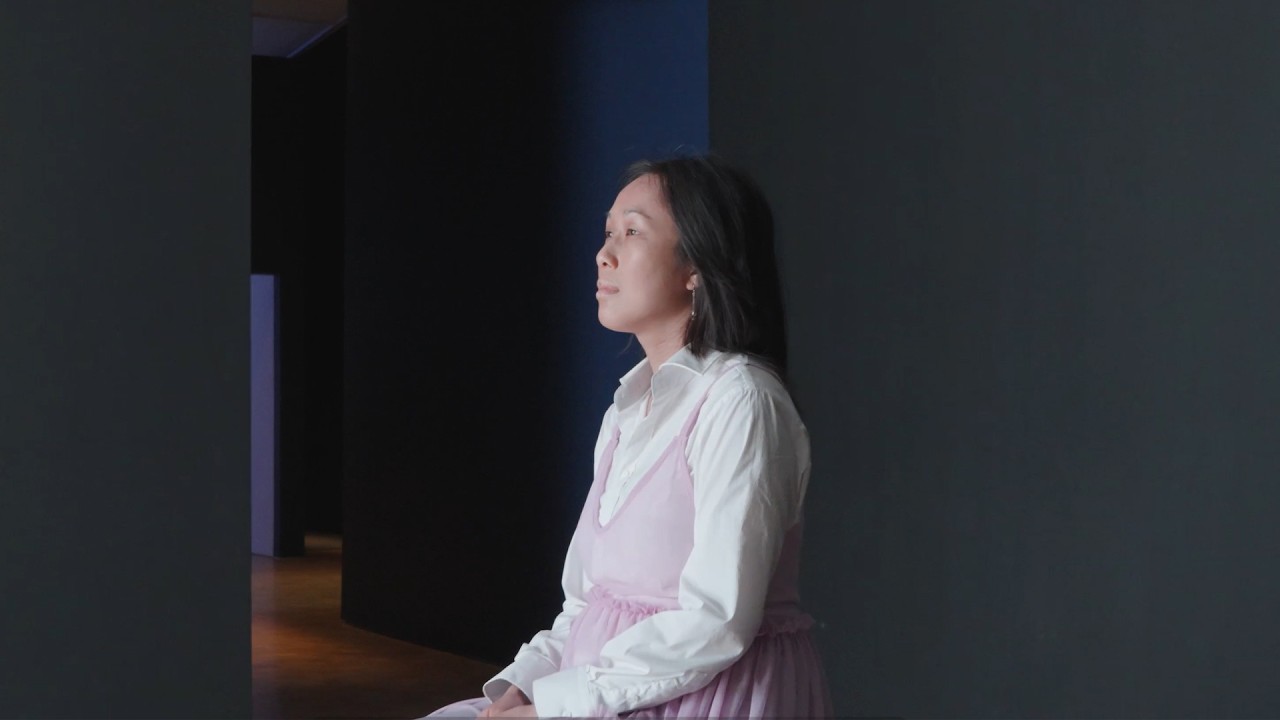
Video summary
The video clip highlights a deeply moving scene from the "Freedom Dreams" exhibit at the Barnes, where a woman is forced to walk backward until she reaches a police car and is subsequently handcuffed by officers. As she is being restrained, her young son, appearing to be only seven or eight years old, steps out of the vehicle, creating an image that profoundly disturbs the observer. This specific moment serves as a powerful visual representation of the systemic pain and injustice faced by many, prompting the speaker to reflect on the immense suffering experienced by those living through these realities compared to their own position as distant observers.
The speaker uses this exhibit not merely as art but as a crucial reminder to America that vast stretches of history, experience, and pain have historically gone unrecognized and unreckoned with. By bringing attention to these overlooked narratives, the presentation challenges the nation to confront uncomfortable truths about its past and present rather than allowing them to fade into obscurity. The core argument is that acknowledging this hidden suffering is essential for a honest national dialogue, ensuring that the struggles of marginalized communities are integrated into the broader understanding of American history.
Furthermore, the video emphasizes the urgent need to keep this work from being forgotten as the nation continues its ongoing journey. The speaker urges viewers to actively engage with these stories so that they do not become mere footnotes in history but remain central to the collective consciousness. This call to action is rooted in the belief that true progress requires a continuous effort to remember and honor the pain of others, fostering a society that values empathy and justice over indifference or amnesia. Ultimately, the exhibit stands as a testament to the resilience of the human spirit while demanding accountability and remembrance from all who witness it.
Read the full video transcript
And the clip that stood out to me was
woman being asked to step backwards
until she reached the police car. And as
she was being handcuffed, I believe it
was her son that came out of the car and
he looked to be seven or eight.
And so if it's this painful for me as an
observer,
how painful is it for someone who
actually lives this?
So I'm really processing this exhibit as
like reminder, like hey America, let's
not forget that there are entire
stretches of [music] experience,
history,
pain that have not been recognized, not
been reckoned with. And as we continue
to live this nation's journey, try to
make sure that work doesn't get
forgotten.