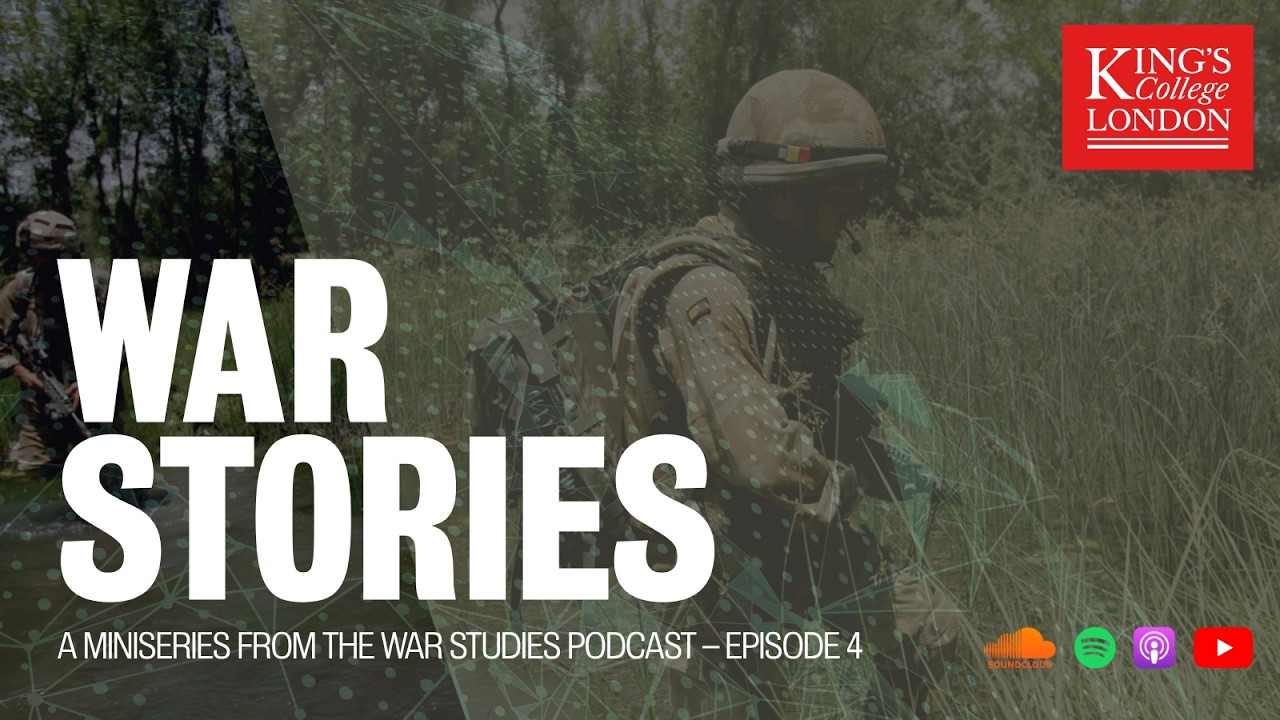
A Journalist on the frontline of the 'War on Terror', Iraq and Afghanistan, 2001-2010
Watch on YouTubeVideo summary
Tiana Stevens recounts her career spanning South Africa, Bosnia, Iraq, and Afghanistan, highlighting a dramatic shift in security protocols and media access between 2003 and 2010. Her early reporting was defined by a relaxed atmosphere where she traveled on the Queen's flight without heavy armor while soldiers wore berets, but this casual environment ended abruptly after a suicide bombing near a market that forced military attitudes toward journalist safety to harden significantly. By 2004–2005, independent embedding with US troops became restricted by public relations directives requiring constant accompaniment by female personnel, marking the transition from open access to controlled oversight where journalists could no longer freely choose their locations or narratives without approval.
The nature of reporting evolved as commercial news imperatives increasingly prioritized sensationalism over nuanced human stories, pushing media away from positive troop-civilian interactions toward a focus on death tolls and catastrophic events like the Haditha massacre. Stevens describes two traumatic kinetic experiences that underscored this shift: witnessing a suicide bombing in Fallujah/Ramadi and surviving an IED explosion near Sadr City where she was isolated for ten hours without food or communication during a sandstorm. Although physically uninjured, these incidents revealed how prolonged uncertainty caused psychological distress rather than immediate trauma, illustrating the danger of media desensitization that favored dramatic headlines over complex realities while political pressures dictated coverage priorities.
Trust between journalists and military forces became increasingly fragile as external editors began overriding local context or safety concerns built through personal rapport, culminating in instances where stories were altered without consent before Stevens eventually secured permission to embed with both American and British forces again. Despite admitting a lack of formal training initially—where reporters relied on instinctual drives rather than ethical protocols—the dynamic shifted from basic hospitality like providing tea to a structured process involving designated liaison officers trained at Northolt, yet the underlying tension remained as journalists pursued truth against military restrictions that often limited their ability to report accurately or safely.
Ultimately, Stevens argues for mutual education where both sides must learn from one another: journalists need to understand the military's perspective just as much as the armed forces require training on how to effectively and safely interact with press representatives. While she completed an MA in War Studies after her field experiences rather than before, this post-conflict education provided crucial skills for critical thinking regarding ethics and operations that were absent during her early deployments. Her journey reflects a broader critique of how media dynamics shaped conflict coverage, balancing the duty to report truthfully against the realities of military constraints while maintaining an ethical drive to illuminate human realities in war zones despite institutional pressures toward sensationalism.
Read the full video transcript
Welcome to the War Studies Podcast. We
bring you worldleading research from the
School of Security Studies at King's
College London, the largest community of
scholars in the world, dedicated to the
study of all aspects of security,
defense, and international relations. We
explore the complex realm of conflict
because the study of war is fundamental
to understanding the world we live in
and the world we want to live in. Before
we begin, a brief warning for this
series content. We will be discussing
the firstirhand experiences of war and
conflict, which may well include
descriptions of traumatic events and
scenarios involving severe injuries or
death.
These accounts are deeply personal and
may be upsetting for some listeners,
particularly veterans. If you find
yourself becoming overwhelmed, we
encourage you to pause the episode or
step away entirely. For anyone impacted
by these themes, support is available
24/7.
In the UK, you can contact the combat
stress helpline at 08001381619
or the NHS OP courage service.
Additional resources are linked in our
show notes.
The opinions expressed on this podcast
are those of the individual interviewed
and do not reflect the official views of
King's College London, the School of
Security Studies, or the organizations
for which the individuals speaking were
working at the time of the incidents
discussed.
Hello and welcome to King's College
London War Studies War Stories. Uh today
we're delighted to welcome Tiana Stevens
[snorts] uh who joins us all the way
from Australia. Um but as a uh a former
uh graduate of the the war studies uh
department uh still enjoys our attention
as an alumni. Uh Tania uh was a
journalist throughout much of the early
period of Iraq and Afghanistan. Um good
morning Tanya.
>> Good morning.
>> How are you?
>> Good. Um it's evening here so it's a bit
strange like you're there during the day
but um no it it's good and it's it's
great to be part of um this podcast. It
brings back a lot of memories. [snorts]
>> Thank you very much. And actually that's
definitely something we've seen already
in some of the the podcast is I think
it's been quite helpful for people to to
relive some of those those moments um
and quite cathartic uh whilst also you
know in some ways bringing back some
quite joyous memories of of comradeship
and so on.
Awesome. Well, we'll get stuck in. So
what I'd love to do is just right at the
top if you could just lead with a very
short summary of your career uh to date.
Um and then we'll dive into more depth
specifically on that elements of Iraq
and Afghanistan. So start broad and and
then we'll focus down.
>> Yeah. Well, um I started I trained in
Australia um as a journalist and then um
one of my first jobs after I finished my
cadet ship um in Australia was actually
a year in South Africa um working for uh
a newspaper um in a little play coastal
place called East London. And it was
there that I had been um
all the way through school wanting to
work as a journalist in difficult areas,
areas that um were problematic or had
had um some kind of issues of course
with the parttheide and then the
elections in 1994 with Mandela um and
through that. So I spent a year working
and then ended up in London
sorry on ended up in London on a small
newspaper the Audot news inshot
and
>> I do calling uh working in London at
Aldershot news.
>> Yes sorry well yeah it wasn't [laughter]
exactly London but for me it was London
at that point. Um and but back sorry to
South Africa. I actually my first
introduction to sort of defense stories
was spending time on the HMS Cornwall.
Um when they came to Port Elizabeth and
I reported on the HMS Cornwall and then
they went to Cape Town and I followed
them and went to Cape Town and spent
more time with them with them and loved
it and just thought this was something
that I was sort of playing around with
that actually defense reporting. um the
military. Um I would love to do that.
And then I ended up in London and got
the position in at the Ordershot News
and was covering army stories and um
again like the the stories that I was
covering very local but I couldn't
[clears throat] actually think anything
more I wanted to do. Um, and then I was
offered a position down in the West
Country and I was covering the Navy, the
Royal Navy,
um, and uh, the Marines, I think it was.
And, um, and it just went from there.
And then 9/11 happened and of course
Afghanistan. Um, so in in one way,
regardless of like the the horrific um
outcome of 9/11, I was in the right
place in the west west country to take
on those stories. And then I ended up in
London working for um a tabloid and got
to cover Iraq.
So that's kind of the short
>> version. And then so just and then very
briefly sort of uh take us through the
the 20 years post
um Iraq.
>> Okay. So when um my last trip to Iraq, I
was actually sitting in
actually on Camp Victory and sitting in
accommodation like just a little um what
are they called? Like the the metal
boxes like you know where I was
sleeping. And I remember um I had a book
on ethics and war and I just
>> I was reading that and I thought do you
know what I'm gonna apply for war
studies at King's College and I applied
for it sitting on Camp Victory in Iraq
>> and actually got my acceptance there as
well. Um, and so when I as soon as I
came back, I returned back to the
newspaper and
what cemented the idea of like King's
College and doing something else was
that I went straight into the newsroom
and was asked to report
uh, Big Brother. It was live by that
stage, 24-hour live feed, and I just had
to sit there and report and write.
And there was nothing more boring for me
than coming back from Iraq. [laughter]
>> Um having to write about Big Brother. It
just
>> there's nothing. And so that that was
kind of it for me. And um I mean after
that I did some journalism work um just
uh freelance or just um on and off and
worked for um did some intelligence work
and things like that and then eventually
started uh did finished the masters with
Kings and then did my PhD and am now an
academic at the University of Sydney.
>> That's amazing. uh really interesting
and I think particularly that little uh
uh adage of uh applying for King's
College war studies uh from Camp Victory
and getting your acceptance there.
>> I still have the book. [laughter]
I still have that book like I keep it
because it's sort of a memory of when I
did that
>> but also just the I think for for those
thinking about joining the military like
we often talk about how uh the army is
an awful lot of hurry up and wait
[snorts]
>> um and you spend an awful lot of time
sat around waiting for stuff to happen.
you're ready, you're trained, you're
good to go. [snorts] The reality is on
operations is very rarely waiting. It's
often recovering, getting ready for the
next operation. It's always something to
do. Um, but I think it's very reassuring
to con confirm that that waiting is
still better than watching reality TV.
>> Yeah, it is. Um, I think for journalists
is a bit different. It's well it is
different like if if it's quiet is like
we are sitting around so we're not
always out in the road. There are times
when it is so quiet and you think what
am I going to do and you're just sitting
there and that's when I thought I really
want to do the war studies masters and I
just and I applied not thinking I would
get it but um a little bit cocky maybe
thinking well hang on a sec I'm in Iraq
and you know I know all this I know what
it's like on the ground.
>> Yeah. um it'll be fine. And yeah,
>> so moving more into specific sort of
deployments as a journalist. Um
>> I'm conscious here. We're going to sort
of treat this one slightly differently
where with a lot of the other um podcast
we're focusing on specific incidents.
>> Yeah. Um but with you I think we're
going to sort of try and pull together a
succession of journalists journal deploy
journalism um engagements um to sort of
pick apart the sort of the differences
between the different theaters the
different times the different politics
and also the way in which the military
engaged with um journalists. So perhaps
maybe we start with the first one and
sort of trend goes, but could you give
us a sense of you when you deployed um
for the first time with the tabloid to
uh Iraq? It was with the British, I
believe. Um how were you embedded with
the military? Were you attached unit? If
so, who? What was the unit you were
with? And did you have a specific
mission as it were from the tabloid to
to do that? Um
I think when I in 200 uh3 I'm really
sorry I actually I don't have all my
notes here so I don't have um the exact
units that I was with but I remember two
of the trips in 200 sorry 2003 one was
on an MP flight. It was on the Queen's
flight actually with MPs and that might
have been like the April or the May and
even though we had had the thunder into
Baghdad and like the the initial um run
in uh the invasion as such um it was
quiet. It wasn't. Um I remember Bazra
particularly
was we walked around the market without
helmets on and I think I think back now
and I look at the photos and go wow even
the even the the Brits the the soldiers
didn't have helmets they had berets. Um,
>> and it was interesting sort of I didn't
think much of it at the time, but it
wasn't long after that that the suicide
bom bomber um there was a suicide
bombing. Um, and obviously then the
security changed with that, but we were
on we were staying at the Bazra airport
as well. So that's where we stayed
because not a lot had been set up at
that point. And so, um, we stayed there
and it was just the the troops are like,
um, just really casual. Like there
wasn't like they weren't concerned about
me or anyone else. Um, they spoke to me,
you know, we ate together, you know, we
stayed in the airport together. And, um,
it was just a really nice camaraderie
with everyone. And um I remember them
complaining about other journalists who
complained about staying in the airport
um and that it wasn't good enough cuz
there was no like there was no now
nohere for a haird dryer or anything
like that. And I was like I didn't care.
This is great. I love this. This is this
is amazing.
>> And um so I remember that first like
that particular trip and then we were at
the airport with the MPs. We'd come in
on the Queen's flight. Um and
>> sorry just for for the wider audience MP
means military police not member of
parliament. [laughter]
>> Um and
it was just I didn't feel
out of place. And then I went um again
to like for Christmas time um and we
went to a school um or where kids were
um staying and we brought them presents,
Christmas presents and things like that.
So that first year was um really about I
think it was like hearts and minds. I
can't remember the name of it, but it
was about with the berets and, you know,
not the the full on
>> um like I had a flat jacket on, but I
certainly wasn't wearing my my helmet or
anything like that. Um but I remember
the first suicide bombing in in Bazra
with the market and then it did change a
lot after that and particularly with PR
um and the concerns with the um mod with
journalists being um being out there. Um
in two Yeah. So that was 2003. And then
2004
um I went with uh the
I wrote it down actually. It was a
transport
um company from Ohio
and we traveled from Q8 across
um I think it was May 2004 and it was
really before the IEDs really became a
thing. people were talking about them,
>> but they weren't or the improvised um
devices.
They'd mentioned them, but they weren't
such a big thing. And so I remember on
this trip from Q8 to Camp Victory
um in um
uh in Baghdad that they were more
concerned about rifle fire
>> um and things like that. And so the trip
was incredible. We slept under the stars
like we slept on camp beds um on on the
trip and we got hit by small arms fire
on the way. So we'd had we had to stop
but it wasn't um
the PR with that. I just I was just on
my own. There was no PR person with me.
There was no one. I just traveled with
them. It was amazing.
Then in 2005, the PR machine changed
where I had to have um a female PR um
uh military personnel with me, following
me everywhere. And even when we got to
Baghdad, there was a um a soldier who
grabbed me and said, "Let's run. Let's
go." [laughter] Because he he could see
what was going on. And I was just being
followed to the showers and things like
that. So just everywhere. But um
>> well so the the the troops with you were
like you need some space.
>> Yes. Yeah. And that's what you know so
it probably wasn't the right thing to do
but um they you know they I had somebody
following me absolutely everywhere. So
but in that year between 2004 and 2005
when the I guess looking back the danger
the the the problems really um uh came
about with Iraq um and things like that.
So yeah,
>> actually, so and on that, how did you
find, generally speaking, it sounds like
you had a very positive relationship
with um the troops on the ground, but
how when you went out on patrol with
them and such, like how were you
assigned to vehicles, did you have like
a uh a mentor or a handler as it were?
>> Yeah. In 2004, um alo with the Brits, um
the MOD obviously organized all of that.
I don't see the the workings of any of
that. Um, and then with the US um,
troops, it came from um, the Pentagon as
far as what I can remember. I rang like
out of the blue. I just wanted to go and
I rang the Pentagon and said, "Hey, can
I go out with your troops? I want to,
you know, embed with them and go." And
they came back to me and said, "Yes,
let's go. We'll organize it." So, I
remember I had to fly into Q8 and meet
um, uh, a senior officer in Q8.
um do all you know what we had to do
like you know um talk about the trip and
things like that and then it was
actually really easy. It wasn't actually
as difficult as what I thought it would
be. When you're in country though when
you arrive that's when you have to sort
of sit and do nothing and just wait for
your ID to be checked for them to check
everything for you to be embedded
officially and that can take like a day
or so. So you're just kind of sitting
and waiting around for that. But to
actually get there it there was there
was no problems with that I think
because I had accreditation as well. So
once you're in country you get
accredited um fully and that can take
its time. Um but then again like sitting
around gives you time to think about
what's happening looking at what's you
know for me what was interesting
um and fed into a lot of what like with
my study at Kings as well like the
analysis of of war
and when you're actually in a war zone
what's actually what is the reporter
what are the reporters actually
reporting from home like from the UK for
example and it was so
when they were showing pictures of
everything being blown up, I was just
sitting there going, "Where is this?"
You know, because it's it's so micro
like um
>> Yeah. It's like the news the medium
makes it look like it's absolutely
everywhere.
>> Yeah.
>> And it's not. So,
>> that's interesting.
>> Yeah. So, can I ask you um Tiana that
really really sets up the situation um
pretty well and um yeah, fascinating to
hear how you sort of asked to asked to
come along, got cleared to go out. Can
we can we zoom out a little bit and just
discuss um why on earth you ever wanted
to go and report in conflict in the
first place? you know, you've already
said that you didn't you wanted to to to
look at some of the difficulties of life
and you know, you certainly got your
contrast to that with Big Brother, but
um you know, when when did you start
feeling like you wanted to go to these
places and and how did that motivation
um develop?
>> I can't not remember a time when I
didn't want to go like from when I was
um young um really young. It it was just
something that I always wanted to be a
reporter. And I remember at school we
had to watch a movie called Cry Freedom
um about Donald Woods who was a um a
South Afric editor an editor for the
newspaper I worked for actually in South
Africa and he um
when I was in South Africa and I met him
actually uh before he died. it was
something about like his work with you
know apartheid and just reporting and
writing about just human stories and so
it's always been there and so I've
always had this drive like that's what I
wanted to do but I think with um
what and then I was lucky to
do some defense reporting in South
Africa but then also the type of stories
the type of human stories and everything
I got to write there and then I was
lucky to be on the autoshot news and it
just sort of flowed from there. I I
didn't do anything in particular. I just
um knew that's what I wanted to do and I
got lucky in the sense of the places
that I was working. Um
and I just I remember when I arrived in
I was when I started on the autoshot
news, I said to my editor, you've got
two weeks holidays. I'm going to Bosnia
and I'm going to spend two weeks there
and I'm going to bring you back a story.
And this was sort of it for me because
when I was there I ran into an army
major, British army major who were
friends to this day. And um I was just
sitting in a cafe that at this point the
Sievo particularly was just like there
wasn't much there. There wasn't um much
to do or see. And I just sitting eating
pizza and I heard this British voice and
I said, "Oh, you're from the UK." and we
started talking and he was with S4
stabilization force staying in Sievo and
I got taken to um see the de demining
like the mines um being the uh troops
demining. I got taken to places um that
were badly affected during the war. Um
and one place garage was where two
British soldiers were killed during the
war in an accident. Their car had gone
over
um the side of a a road down a a ravine
and um he took me up there and there had
been a makeshift sort of memorial put in
there during the war but it had been
left and the locals had actually looked
after it. They looked after it for all
this time. It was incredible. And when I
got back to the UK, um, this army major
organized for the family to be sent out
cuz they didn't know about it to go and
see this memorial that had been put up
in garage for them. And I just it just
went from there. I just um these stories
were human and
much more than big brother and you know
the social media because at that point
um you know things later on like
Facebook and social media and everything
it just for me conflict and what goes on
during a war even Iraq flying over in
the um the Blackhawks and just seeing
the the country is so beautiful Iraq you
know with the Um, uh, you have the
colonial era there. You have the
colonial the graves from World War I and
what like the Brits that are still
buried there. It's just something I can
never describe it properly. It's just
something in me that just
it's just there.
>> Sorry.
>> Thanks for telling
sort of origin story really. And I love
this uh you obviously don't you have not
just a little entrepreneurial flare to
head off to to Bosnia on your your
personal leave. It makes me wonder about
the the situation when you landed in
Iraq for the first time because you know
I always wonder for journalists to to to
what extent are you do do you go out
there and and and you're told what to do
you have a group mission as a as a press
team or or do you just get out there
embed and and and find the story? So
what was you know what was the size and
shape of of of your team in so far as
there was one or who were you mentored
by and and and what were you ostensibly
there to do from the outset? How was it
supposed to work? I think if
particularly in 2003 again it was very
open like there wasn't any of these
rules of war for journalists as such and
I'd always my biggest thing was that I'd
always wanted to report on a war that I
could have a bit more freedom like if
I'd been around during the the Vietnam
War that would have been um that would
have been like my war. It was like isn't
you know the journalists could go and
they they had that freedom but with Iraq
we had the we had to like for the
majority of us we had to be embedded but
that first year particularly when I went
with the um on the queen's flight or
with the MPs
um
it was quite it was very relaxed there
was no agenda like I was going there I
was reporting on the MPs or on the
flight and things like that but it was
also very um
relaxed when we were there in the sense
that if something happened or you know I
talk to whoever it was cuz we were again
at the beginning of Iraq we were at the
airport like we were staying at the
airport so there wasn't much scope to go
out there wasn't the setup of like camp
victory and the um uh the main um uh uh
the main camp where you know the um
government government officials would
Okay. Um, so
I guess I wasn't seen as a problem at
that point. I didn't have a lot of
questions. It was just I was actually
there. I was going. It was like what I
had pushed for and really wanted wanted
to do. Um
and then
again when I went again with the when
going to the school and and things like
that there even the newspaper wasn't um
it was basically just go just go see
what you can get you know that that was
the idea because Iraq at that point was
quiet I wasn't wouldn't say like quiet
as in nothing was happening
>> but there wasn't a lot of news around
for it so a lot of the story the things
that I could write were more human which
which was lovely actually because in
2024
when I went on the convoy
and then um later on when I got hit by
the IED obviously things changed and
there was a lot of weariness with the
newspapers. I remember that and
particularly um when I stayed with the
um with the Marines um the US Marines on
the Euphrates and they were pushing for
me to get stories out. When are you
going to publish? when are you gonna do
something? And um it was the most
incredible trip being able to stay with
them on the Euphrates like in the middle
of Fallujah between Fallujah and um
Ramadi. I got to go um without any PR
person. I got to go and have lunch with
the Iraqi commander. You know, we had
goat, we had fresh watermelon, like you
know, we sat around and it was just
amazing. and um and in the evenings as
well. Um but the um
the feeling was that
the media particularly in the in the UK
were not interested in anything but the
death toll. And actually, in fact, it
did happen when I said got this story to
um to my work. Um and they said, "Well,
we need to wait until 3,000 US soldiers
have died
before we're going to publish anything."
And it was like, well, you know, and so
there was a a feeling of um,
you know, the same things were happening
over and over again, and they just
weren't um wanting to publish anything.
And I think one of the most hardest
decisions I I kind of had to make was at
the same time as that was that they
wanted me to go to Hadith Hadith where
the massac there was the massacre um
from the US troops um where a number of
uh civilians had been killed and they
asked me to travel there on my own in
Iraq and of course I spoke to the
Americans at the time and they said well
no we're not going to take you. And so
there was I was always put in this
position of they wanted the death and
the you know and and those kind of
problem stories.
>> Yeah.
>> Rather than the human stories and that's
like what I work on now. Like I like to
see the the human there's always
something else in a conflict. Sorry.
No, I think it's really interesting
because I think uh yeah, you're
absolutely right in that there was a
focus on the negative aspect which may
have been driven obviously by politics.
Um and it's just interesting to see how
that filters through into the media
because obviously that influences uh the
picture back home. This is something
that Nick and I about um both on on his
podcast, my podcast where we talk about
our own experiences and how that impacts
the morale of the troops out there. And
so it's interesting to hear that the the
US Marines were was pushing you to to
post stories presumably the positive
stuff or the the stuff wasn't just about
disaster.
>> Yeah. Exactly. And then that that was a
problem because the I'm not sure what it
was like in America, but I know I can
remember at the time with the UK people
were just desensitized to it. They just
didn't want to hear it anymore. We'd had
a number of years of this from Afghan
like 9/11, Afghanistan and and Iraq and
um whereas now with I think with social
media and online in a sense with
journalism there's the room there's the
space to actually put the human stories
and to tell those whereas it really
wasn't we didn't have the like the space
then to do it and so um there would have
been a lot of amazing stories coming out
of Iraq in a sense even just about the
troops, about the soldiers and things
like that, which was what I did a lot of
when I was on the um regional
newspapers.
>> It's interesting. I sort of Yeah, that
that resonates with me, you know, not
not having the space that the the
catastrophe is the somehow the
preferable story to the human story. But
do we do we know do we know why that is?
When where does that come from?
It's um it's to sell the papers. It's to
sell the news back then because people
forget like you know with with digital
journalism or online journalism that
Facebook didn't actually even come in
until I think I was in Iraq when
somebody says hey do you want to join
Facebook and I'm like no like I think it
was my space at that at that time. And
so it really um it was about the short
sharp like to the point kind of stories
and there I don't think there wasn't a
lot of this now where you do have the
space and the time to actually put these
incredible like stories together you
like human stories together. Um they
just wanted to sell they wanted to make
money I guess and um it was the
commercialization of news. Um, Rip
Murdoch in particular, I guess. Um, but
and and the Mirror Group and you the
commercialization and and death and
torture and murder and war sell,
but the nice stories don't. So that's
you know they and I I think if there was
something like with the Brits if there
like for example the um the mirror with
um uh Piers Morgan and
um the faking of the uh the the fake
photos from 2004
that made news because it was it was
sort of it was a negative thing for our
troops. The Sun didn't do that because
they were very much for, you know, they
were for the they were the Sun and the
News of the World, ironically, at the
time were shock and all. We're for this,
you know, we're for the troops and
everything, but there's always somebody
that isn't. And um, so yeah, it's it's
commercialization like, you know,
>> I remember that personally. We were we
were at we were doing our BA when that
happened and I remember it was the the
mirror and the headline was simply vile
with a with what like a British soldier
urinating on a prisoner in the back of a
a fourtime truck.
>> Yeah.
>> And sort of thank God the internet was a
thing by then because the the geeks of
the internet very quickly pointed out
that the sort of I think the wooden
floor of that that truck wasn't what was
in use and therefore it must have been a
fabricated
um image. But it
>> it had already sold. it had already
sold. So, and it's the same in war as
well in conflict, you know, when
something happens,
>> you know, that's what is going to get
people's attention. Like Abu Gray, for
example, and um the kidnapping
of the American uh woman in 2003 near
the airport and things like that. It was
just and I think when we talk about sort
of journalists like I like I annoyed
many people as they probably annoyed you
both as well. Um it's because we're
under pressure. We are under pressure to
to get these stories and to um you know
not just the nice you know not just the
nice stories. Um, and so we're under
pressure like with the Marines saying,
you know, you're going to publish,
you're going to do this, but it's also
it's not up to me with the publishing
and it's not up to me with the
headlines, you know, what they say and
um, stories get changed as well. So, you
know, we put something together and then
it goes through a process. Um, so it is
hard being on the ground as a journalist
because we we're fighting against
um the military in one way, you know,
whoever we're embedded with because they
just want you just want the positive,
but sometimes um it's not always
positive. It's not always, you know, but
yeah, it's um it's a difficult balance.
There's a a very good lesson in there
for any um undergraduates listening to
this thinking about their source origin.
>> Yeah. That's not to say that I didn't
push and I wouldn't do the same thing
now. I just have in hindsight
and teaching ethics [clears throat]
as an academic and doing the MA, doing
the masters at King's College and
actually having to critically think
about my actions, the things that I did,
the things that I said, um, you know, my
behavior.
um you know, in in hindsight, when
you're just new to it and you're young
and you're in a conflict zone, you don't
have that. So, I would do things very
differently now. I um but I also would
still have that passion and would also
still have that drive and probably annoy
just as many people.
You mentioned uh when we were talking
earlier that there were a couple of I
suppose very kinetic incidents that were
sort of interesting to view from the
perspective of someone who was there
with the military but not the military
as a journalist. Um could you perhaps
sort of dive into those um specific
examples?
>> Do you mean sorry not with the military
or as a journalist?
with the military but as a journalist
and therefore you're kind of like a fly
on the wall when there's a major
incident.
>> Oh um I guess uh we two stand out. One
um again we were talking about talking
earlier about
sort of sitting around like with when
you're with the military like the troops
don't sit around generally like you know
they're they're always doing something
they're always out. Um, but as a
journalist sometimes if nothing's
happening, you are just sitting. You're
just sitting there. You're writing your
stories, applying to King's College to a
M's program. Um, and I was on the
Euphrates with um the US Marines and
um it was in between two two of the
worst areas of Fallujah and Ramadi. and
locals could just drive through our
camp, straight through the camp because
there were there were gates, but it was
actually a um a community um which I
think the Americans had taken over or
you know arrangements with the locals
with the community and um a suicide
bomber blew himself up at the gate and
all of a sudden it was like boom and I
was like wow okay and then all of a
sudden it's like let's go and then I got
taken straight out to the gate which
wasn't very car and saw the aftermath of
um of this suicide bomber. I think all
that was left was the foot. That that
was it. It was um uh it was incredible.
Like I think there was a couple of um
Iraqi soldiers were killed on the gate,
but we then got those that were wounded
was taken straight to the hospital and I
just got whisked off to the hospital.
And
it's like they don't say much to you.
You just kind of go. You just go with it
and sort of see what happens. Because in
those kind of incidences,
they don't have time. Like, and you
would know this, that they don't have
time to talk to you. They don't have
time to babysit you um or talk you
through anything. And so, I just went
with it. Um, again, not really thinking
about any sort of dangers or um any
thoughts for anything. I just went with
it. And it was the same when we were
driving through Sarda City and there
were three or four Humvees
um and I was in the second Humvey and I
was filming at the time out the wind
like with the window and at that point I
think the Humvees had the US Humvees had
solid windows. They didn't actually
um u move in or out or move out like
they used to. Like you couldn't push
them out. But I was filming and all of a
sudden there was like boom. And I
[clears throat] have this video just of
everything just going like just
everywhere. And all I can remember is
this screaming of um go
and then back up back up go secondary
device secondary. and me trying to
scramble around looking for my pen and
my book and everything like this. And um
and then all of a sudden like we we left
we went and I ended up in a um with the
military police in a building with um a
US PR. It was it was a it was a male PR
person and we sat there all day. They
actually ignored him as well. Um, but I
was ignored. I think it we counted it.
It was 10 hours. And all we could hear
was them arguing about, well, should we
get them out? Should we get her out by
helicopter or should we get her out by
road? And it was just over and over and
over again the same discussion. How are
we going to get them out? Um, and it was
just there was no food. There was
nothing. We're just sort of sitting
there like we just didn't exist. But
they were talking about us. And I
remember it was just like a trance. Like
I I can't remember
doing anything else but just sitting
there just waiting and waiting and
waiting and no one spoke to us until
eventually it was like okay we're going
to go. We're going I think we went by
road what I can like it was just
in another another zone like I had no
idea what was going on. Um and I then
got um
taken back to Camp Victory and there was
a soldier waiting for me because he'd
been told
um couldn't get me out because of a
sandstorm. That's why we couldn't go by
helicopter back as well. So we went by
road and um we got back to the camp
victory and they assigned me um a
sergeant to look after me for the next
several days and made sure that I sat
there and just watched DVD after DVD
after DVD until we sat out the the the
sandstorm because they were worried
obviously about any um PTSD I guess
anything like that. Um, and then they fl
I got flown out. I got flown home. Um,
but I wasn't injured as such. Um,
but it was more the isolation. I think
that at that point
they were more concerned about the the
safety of everyone and trying to get
everyone out. And journalists,
it's not, you know, it we're their
priority
because if anything happens to us, it's
on them.
But we are kind of isolated and in this
box where they're not discussing
anything with us, if that makes sense.
>> And so was it your vehicle that was hit?
>> No, the first sorry the the first Humvey
was hit.
>> Um
yeah, cuz that they went through and
then we got the secondary like we got
the the blast from that. But yeah, so we
were fine. Like it was like like all
over the place. Um, but other than that,
I think they were just more concerned
about that they had a foreigner, you
know, they had somebody and they didn't
know whether or not we were being
targeted because I was with them as a
journalist because of I guess
intelligence and things like that. So,
we needed to get out.
See, it's interesting at that point, you
know, we we've
speaking to some of the other guests on
this podcast, we do cover that sort of,
you know, that feeling of of of being
engaged by the enemy by small
[clears throat] arms or IEDs and all
that sort of thing and the and the sort
of the primary emotions that go through
your mind. You know, some say um you
know, that sort of sinister feeling that
that someone's got your number and and
is and is trying to take you and the
people around you out and and that's
unpleasant and and it sounds like, you
know, I imagine you had that, but also
combined with this sort of weird social
dynamic of being a bit of an outsider
and and some someone attached and you
know, did did that sort of override a
bit that sort of awkwardness and you
know,
>> I think I think I felt more
Like I think the adrenaline for me
personally and I guess this is a warning
also for students at King's College as
well doing masters and war studies is a
for a lot of people there is an effect
like there is like um you know the
trauma that goes with that. So that does
happen. For me personally, it it was
more to do I think there was so much
adrenaline going on that nothing really
I think when you're in when you're in
country when you're in a conflict
you're just running on nothing like
you're just going and I didn't actually
even think when I was there about the
danger or
the consequences of being there actually
even about the IED as such. I was more
frankly I was more concerned about
sitting there bored like I was sitting
there for 10 hours not knowing what was
going on and for somebody like me
I need to know what's going on like I
need to know what's going on 6 months
ahead let alone like that 10 hours like
I have to like know what's happening am
I going back am I not what's h you know
what's going on are we okay kind of
thing um so I don't tend to get
traumatized as such but a lot of other
people do and I think um because I
analyze and I think maybe that helps
like I I sort of run through it and I
talk to people talk to friends and
things like that about it. Um but the
loneliness and feeling like an outsider
and not being in control of what was
happening was the hardest thing for me.
>> Um
>> presumably during that that 10 hours
they were recovering the vehicle and any
particular casualties. Um was there any
sort of small arms threat from um
insurgents or or was it pretty calm
after that initial explosion
>> at that point? It like cuz I mean 10
hours have passed. I assume that they
were like you know cuz they were trying
to decide whether or not we we go by
Blackhawk. It was by helicopter or by
road. So I didn't I had nothing to do
with the intelligence or anything like
that. They kind of kept all that and I
think that's what was for me I wish it
had been more open. But then again,
thinking back as a journalist, they're
not going to tell me anything like that.
Um, so
um I know that there was discussions
about small arms fire um as well and
things like that, but generally like I
mean after 10 hours things had calmed
down. So and then we and then we went so
they put things in place for us to go.
Um, but it for me it was strange when I
got back to Camp Victory
and I had somebody waiting for me to
make sure that I was okay and he would
he was actually assigned to sit just sit
and and watch DVDs to make sure that I
was okay. So, um,
>> yeah,
>> I don't know. I think it's a culmination
of just everything I ever wanted to do.
And so I wasn't just thrown in some like
some journalists that just get told to
go and it's not something that they've
planned or wanted to go. I've been
reading about war and conflict and
things since like like you know before
high school things about like the
Bosnian war and things like that. So it
wasn't
yeah it wasn't unusual for me
>> in terms just going back to the uh the
suicide bomber. Um yeah, obviously it as
as a
method of warfare is very hard for
Western minds to get their heads around.
>> Um what did you notice amongst the both
the US and the Iraqi army guards about
how that attitude changed? How did they
feel about it? Cuz obviously if that was
the first one that they had experienced
and then obviously you mentioned it
presumably civilians around as well.
What was the did the mood change? Um I
think uh like cuz again it was so casual
like we were at the airport and I had
only been there not even an hour and
like we with the MPs we were with the um
uh the um
I think they were from um
the Met Police um
uh uh guards the um oh my brain Sorry.
Um, we had like all sorts of people
there and all of a sudden this happened
and again I got taken out. So this is
how I got to I got actually a front page
on the times for this this story because
I think it was one of the first um
attacks in Bazra at that point. Bazra
had actually been what I can remember
had been okay and not okay but it it had
hadn't been like Baghdad and um
I mean after that obviously we I got we
got taken back like to to London the
Brits became more sensitive to negative
publicity with the Iraq war but I don't
think that had anything to do with Bazra
as such I think that was just the like
the context of a war like you know as it
goes when a war starts like say Iraq,
it's in one way it's it's new, it's
fresh, it's um
you know the um they'd already had a lot
of negative press because it was the
Iraq war as well. So to be fair to them,
they started off really well, like they
were welcoming and everything like that,
but then I think it started to feel a
bit more like stepping on eggshells.
um depending on what you were writing.
And so the more the press came in, the
more journalists came in
and were writing more negative stories
to do with it, which is I guess is you
know it's expected and again in
hindsight looking back when you
constantly have negative press of
something that you know the the British
soldiers are are being killed, American
soldiers, many more are being killed and
then you've got the press constantly on
your back being negative and you're just
trying to, you know, to get your your
men out and safe, men and women out
safe. Um,
so I don't think it had anything to do
with, you know, Bazera as such. I think
it was an overall
lethargy lethy lethargy lethargy um of
the war and
you know how it was progre progress
progressing and the negative press of it
you know
>> I can I can sort of relate to that from
the from the soldier perspective. I
remember having embedded journalists in
in in Sangin in in the second half of my
tour in 2007.
I you know I remember there was a a mass
casualty situation involving a number of
civilians from a from a Taliban device
and and we had an embedded journalist at
the time actually embedded with my
platoon
>> and um you know with these you know
something would happen and nothing ever
looks pretty in in these scenarios and
you know on top of the pressure of
dealing with the situation you know you
kind of there niggling in the back of
your mind is that is that concern of
what what what could be written about
this this complex situation here. So, I
guess that puts a sort of a natural
tension between you and the soldiers.
And it's interesting you say like so
walking on eggshells.
>> Well, to start with there wasn't it was
it was great in the sense that like you
know I could travel with them with the
you know with the Brits with the
Americans. It was a lot more free and
the conversations were a lot more freer
as well with with the soldiers or with
the military. But then I think again for
me from 2005 it really started to change
um with more particularly with the US
with the um PR machine sort of dictating
what you could do where you could go and
things like that and
the Brits um I mean for me personally I
wrote a story that um they didn't like a
headline that I actually didn't write. I
didn't write the the the headline um for
it. It was changed in the production. Um
and so that is when I rang the Pentagon
and said, "Please let me come out with
you." And they said, "Yeah, of course."
And that kind of started, which for me
as an as experience for a journalist to
be able to go out with both sides u with
both the Americans and the Brits was
incredible. I again in in hindsight
looking back some of the things I said
some of the things I did some of the
things I wrote um I wish I'd done things
differently but then again as a
journalist when you're in a conflict I'm
not trained for that I had no training I
got given my flat jacket I got given my
helmet got given my insurance and told
to go we have no there's no train there
was no training and so for us you know
we are there to get a story so you're
asking sort of what is the, you know,
what were we doing? Well, we're there to
get a story. And if you don't get a
story, then you have to go back and you
have to tell your editor, well, I don't
actually have anything. Um, and that's a
problem. So, when we cause problems,
when we, you know, go off and do things
that we shouldn't do or we wander off,
you know, we're not actually, I don't
think we're actually thinking about the
danger. We're not. It is this instinct
in us as a journalist
that to write to tell stories to tell
the world what is actually going on. Um
I was never one to like to fake anything
to like to write something you know that
wasn't true but we're there to write
what is actually happening. And when
it's restricted
when it's restricted by a PR machine it
makes things very difficult. And I guess
that's when that conflict happens
because sometimes when there is fatigue
and there is you know annoyance from you
know the military to you know to the
journalists or to the media there is
this barrier and it's a shame really
because we work really well together
when there's a little bit more
flexibility but we also I understand now
looking back that you're also there to
protect us because you don't want our
death
>> on your hands. Yeah, it's a really
complex relationship in the sense that
obviously it needs to be built on trust,
but at either end of the equation,
there's your personal safety and the
other end there is a [snorts]
um an editor that may not pay any regard
to the trust that you need to build
locally and thereby change story in a
way that perhaps you hadn't written or
hadn't reflected. And so you're of
walking this tight rope
>> uh where you want access but access
requires trust
>> and it's very easy for someone else who
isn't physically there to to sort of you
know almost change the rules overnight.
It was like the Haditha um incident in
2005 like you know for me to even ask
the Americans the American um military
can you take me there was I didn't even
it didn't even occur to me like in this
sense I knew it wasn't right but I still
did it and I just you know it you these
relationships between journalists um by
the media and the military they're so
fragile in that way and I learned that
lesson with the Brits. I really did. And
I remember um
somebody from the MOD ringing me
actually when I was on one of the
tabloids and saying, "I just wanted to
check in and see how you are because I
was such a pain in the bum with the
oldershot news that I caused them so
much grief because I was my nickname was
the bulldog cuz I just would not give up
or let go. I just wouldn't. And so I
caused them so much grief. And I think
to this day,
I wonder if you still think that because
even in Iraq, like you know, we annoy
people. And I remember she rang me and
she said, "I knew you, you know, I just
wanted cuz I always remember you. I just
want to check to see what you're doing,
you know, and and things like this."
And, you know, it's we don't do it to
hurt anyone or we don't do it to annoy
on purpose. It's just we're there to get
a story
and that's our job. Yeah, that's
actually fascinating. Probably quite a
good good point to to wrap up on you,
make
>> Yeah, I think so. Just a final
reflection, I suppose. You know, I guess
what you hope for is that is that
perspective from everybody out there.
You know, what what would the world be
like without the the repotage, you know,
without the opportunity to get the story
out both for the local nationals and for
the troops?
Well, we might be a pain or journalists
might, you know, the military might
think that, you know, they could do
without us, but actually you can't. you
need, you know, you need us or you need
the media because there are stories out
there that need to be told
>> and also you know for reflecting like
this for for students that are doing the
masters in um at King's College because
there are subjects like reporting wars
um which is an incredible was when I
when I did it was an incredible unit you
know to be able to critically think you
know before so if you're doing the
masters at Kings you get the opportunity
to before you even go into a conflict
zone um if that's what you they want to
do to critically think about you know
conflict about the media about how about
ethics in particular I had no ethics
training so um it's um the masters is is
a very good way of conceptualizing
um
what or a good way to behave as a
reporter in um and the things to think
about as well.
>> Brilliant. Well, I think you've touched
on it as we've gone through the the
podcast. Um but maybe uh
uh you so did the the war studies course
the MA help you during your experience
of war but in actual fact you did the MA
following all your um experiences. So
it's almost one led to the other.
You did, but it actually again helped me
think about, wow, did I really do that?
It gave me the skills to again
critically think about my actions and
about conflict rather than just going
headstrong in, just going in and
reporting and just doing whatever I felt
like I thought I could do, you know,
without consideration for the military,
for in a sense ethics. um you know just
to get that story that was my focus to
be there and to get the story.
It gave me the opportunity just to think
about conflict
and just all the different you know um
processes of it of it from media to to
the military and how you know the
military works. Again I think I said
earlier that I I I started the MA
thinking oh I know all this. I've been
to war. Most of you haven't. It's okay.
You know, I can do this. And I was doing
a um uh
is it the the war games unit and I had
to create a a game a war game and I used
the Thunder Run into Iraq. I know this.
I was there. I, you know, I've done all
this and I failed miserably the first
iteration of it. Like, you know, cuz we
got another go like to refix it and fix
it up
>> thinking that I know everything. And
actually, I know nothing about war and
how the military works. You know, I can
I can read about it. I can learn about
it. I can, you know, ask people, but
it's so unpredictable.
>> Christie, is there a journalist serial
in the Thunderrun war game?
what [laughter] you do with the
journalist who's uh on your mission uh
is near the IED. So it's interesting
because we you from a British military
perspective we don't have any training
in terms of what to do with uh
journalists going into Iraq. So that was
for me 2007 I don't know if you did Nick
for Afghanistan 2007
>> yeah 2007 not so much to 2012
>> um yeah much more the difference in in
the quality of the interviews I gave is
is much [laughter]
>> but so on that I yeah we were encouraged
to obviously get little stories out for
the
>> rifeman for their local newspapers so
the all the shop news or the the Ssbury
Gazette um wherever those rifmen are
come from But yeah, it wasn't media
related. Then we had embedded
journalists and we had no training on
how to deal with you. We're just like
look after them, make sure they don't
die and be nice, give them a cup of tea.
>> Um
>> and then again with uh later on I was
actually we had one person per company
which I was one was trained for a week
uh up at um
uh uh Northold um on on media like how
how to deal with media. We were like the
the go-to person if we ever had media
come to us. So at least there was some
sense of okay we know what to do with
you. We know about line lines for take
and etc etc. So it was much more
formalized process.
>> Um but it is really interesting how at
the end of the day we were basically
making it up as we went along.
>> But that's exactly what we were doing
with you.
>> Yeah [clears throat]
exchange. That's a really interesting
juxosition of that because I always
assumed that you were trained to deal
with us and that's why all the that's
why we had the problems like cuz you
know very strict
>> but actually maybe that's where the the
conflict comes into like the the issues
come in because there's and I actually
think that's a really interesting point
to make that if the military is not
being taught how
>> to deal with us
>> and you need us to teach you, not the
military to teach the military how to
deal with us as such. You need
journalists to come in and talk to you
kind of thing. So, there's there's a lot
there actually. So, it's really
interesting.
>> Awesome. T, it's been an absolute
pleasure. I'm very conscious is late
down under and and Bruce is probably
wondering where his uh warmest place is
on the on the on the sofa at this time
of night.
>> He's asleep.
[laughter]
>> Thank you so much.
>> Thank you.
>> Thank you, Tang.
We'd like to thank Kings College London,
specifically the war studies department
and professors James Gal, Jack McDonald,
Juliet Patinson, Dr. David Betts, and
the School of Security Studies
communications team. Without their
support and encouragement, this podcast
would remain just another idea that
never came to fruition. Furthermore, the
tremendous war studies community,
especially its alumni, in bringing
together such a wonderful collection of
unique experiences to share with the
world to better understand the
experience of war and the lessons
learned from conflict.
You've been listening to the War Studies
podcast produced and edited by the
School of Security Studies
communications team. For more
information on our work, visit our
website which you'll find in the podcast
description. If you've enjoyed this
episode, we'd really appreciate it if
you could rate and review us on your
preferred podcast provider. Thanks for
listening and we'll see you next time on
the War Studies Podcast.