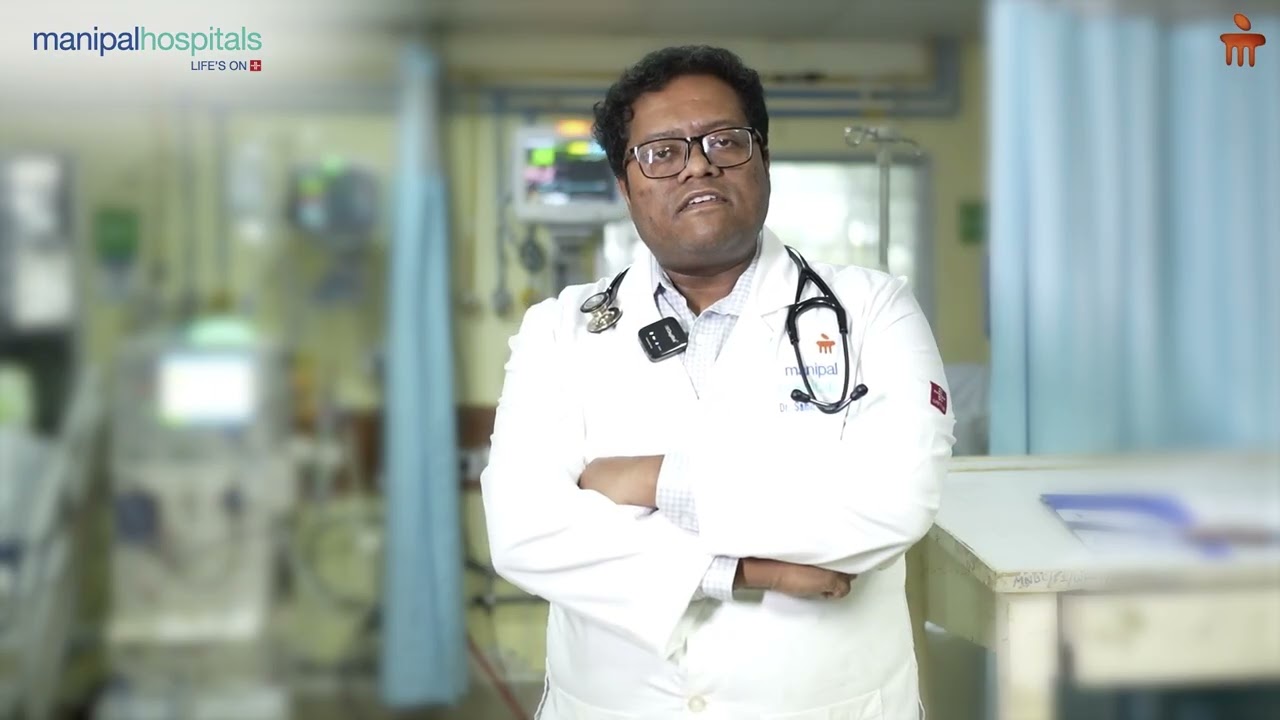
A Closer Look Inside the ICU | Dr. Samit Parua | Manipal Hospitals Siliguri
Watch on YouTubeVideo summary
The video introduces Dr. Samit Parua from Manipal Hospital Siliguri, who aims to demystify the Intensive Care Unit (ICU) for those who often feel fear upon hearing its name. He explains that the ICU is specifically designed to receive the most critical patients in the hospital, including individuals suffering from severe organ failures such as heart, liver, kidney, or brain diseases. These patients are admitted because they require immediate, life-saving interventions to stabilize their condition and prevent further deterioration of their health.
A typical day in the ICU begins with a comprehensive morning evaluation where the medical team assesses whether each patient's organ systems are improving or worsening. This rigorous daily process involves determining specific medication and antibiotic requirements while ordering essential life-saving tests. Crucially, the team also prioritizes nutritional assessment, recognizing that proper nutrition is a vital component of recovery. Depending on the patient's ability to eat, they receive either oral food or are fed through a small tube inserted into the nose to ensure they get the necessary nutrients for healing.
The ICU operates as a highly coordinated multidisciplinary environment where critical care experts work in close collaboration with consultants from various other departments. This teamwork allows them to formulate the best possible treatment plans tailored to each patient's complex needs, ensuring that no aspect of their care is overlooked. By combining specialized knowledge with compassionate dedication, the team manages the most severe cases to help patients overcome life-threatening illnesses and multi-organ failure.
Ultimately, Dr. Parua concludes that the ICU should not be viewed as a place of fear but rather as a sanctuary of care and compassion. Through dedicated teamwork and advanced medical support, the unit successfully rescues patients from critical conditions and guides them toward a new life. The video emphasizes that despite the gravity of the situations handled there, the environment is defined by hope and professional commitment to saving lives.
Read the full video transcript
[music]
>> Good afternoon. ICU is always a matter
of fear for everyone who hears this
name. I'm Dr. Somit, consultant critical
care, Manipal Hospital Siliguri, and
today
I'll brief you
regarding that how a day in ICU
typically progresses and
>> [music]
>> how we manage patients in our ICU on a
day-to-day basis. So, ICU is the area of
the hospital which actually receives the
most critical patients of the hospital,
and it is the area where the most sick
patients and the patients with the
maximum organ failure mean or by organ
failure we mean patients having heart
disease, liver disease, kidney disease,
brain problems, or any other multiple
organ-related problems get admitted
because they require life-saving
treatment. ICU
>> [music]
>> mainly works as a multidisciplinary team
where consultants from other department
work in coordination with our critical
care experts, and they form the best
possible treatment for the patient who
is in the ICU. It is no different in our
ICU. In a typical day in our ICU, it
begins with the morning care of the
patient where the patients are properly
evaluated. The patients are assessed
that yes, whether their organ systems
problem, they are improving, they are
deteriorating. What is their medicine
requirement? What is their antibiotic
requirement? What are the important
life-saving tests that we need to send
for them? And at the same time, not only
tests are required for the patient, but
we also need to see their nutritional
status. Their nutritional assessment is
very important because nutrition is a
very important part of patient
treatment. If we are able to feed them
orally, we give them food from mouth,
otherwise
via a small tube from the nose we
generally feed them. Therefore, in a
typical day in ICU, we manage [music]
the most critical type of patients so
that they get saved from their
life-threatening issues as well as from
their multi-organ failure. So, ICU is
not an area to fear, but it is a place
where care, compassion, [music]
and dedicated teamwork brings the most
critical patients out of their
life-threatening illnesses and brings
them to a new life.