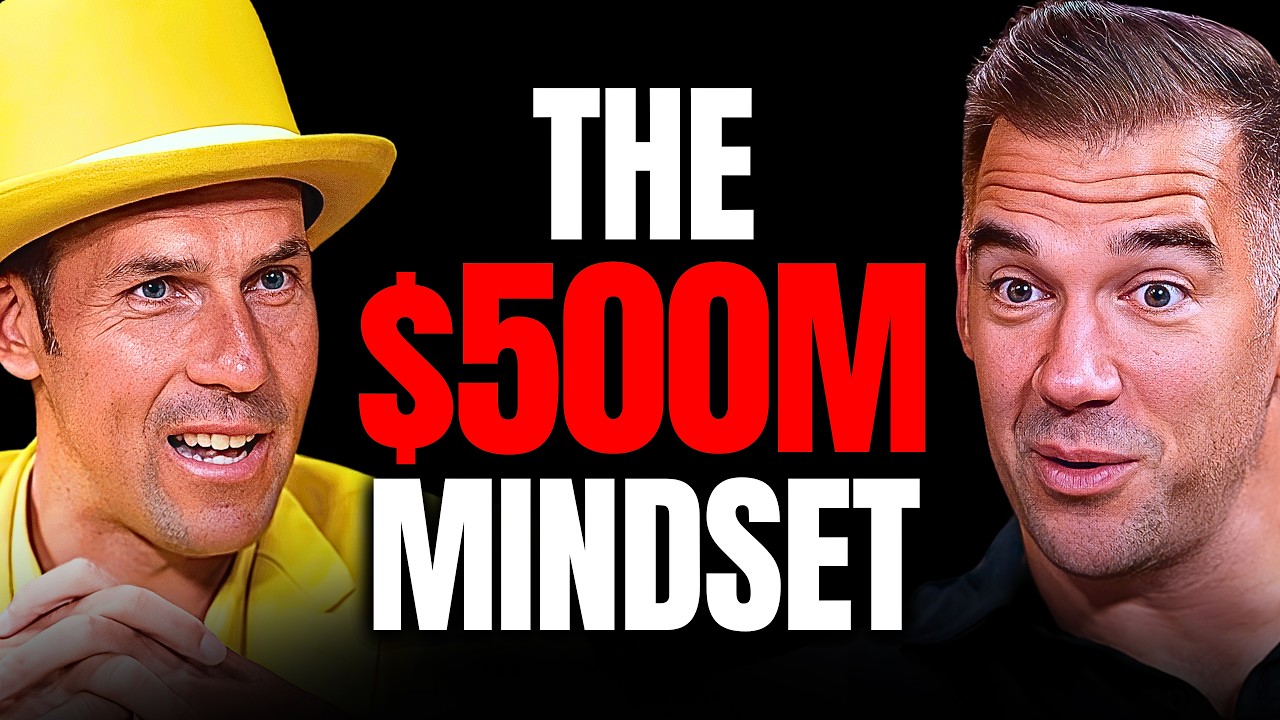
Video summary
The video explores how Jesse Kohl transformed the Savannah Bananas from a struggling college summer baseball team into a billion-dollar entertainment empire by prioritizing joy over tradition, even while facing significant personal hardships like living in poverty on an air mattress with minimal groceries. Inspired by Walt Disney's philosophy of constant improvement and figures like P.T. Barnum, Kohl realized that traditional wooden-bat baseball was too boring for modern audiences who left games early due to slow segments like mound visits or walks. Instead of chasing immediate profits or adhering to conventional rules, he developed "Banana Ball," a chaotic high-energy variant featuring trick plays such as sprinting on ball four, dancing players, and mascots that kept the action non-stop. This innovative approach was first tested during the 2020 pandemic when stadiums were limited, proving that focusing on creating unique experiences rather than just money could build unstoppable momentum even in skeptical environments.
Central to this success is a deep-seated belief that "the pre-show is the show," a concept Kohl adopted after realizing how crucial energy and tone are before an event begins, much like his transformative experience with Cirque du Soleil years prior. This philosophy stems from his own childhood loneliness and lack of connection, driving him to ensure every fan feels loved, heard, and valued through personal greetings, detailed communication about expectations, and memorable final impressions. Kohl extends this mission beyond the business into his family life; after selling their home in 2015 to pursue the vision from scratch, he embraced foster care during the pandemic, adopting two children while blending biological parenthood with fostering under the banner of "Bananas Foster." Despite missing games to be present for surprise visits and shared moments with his wife Emily and young daughters, he maintains that being fully available as a father is more important than professional presence, channeling his drive into making every interaction count rather than chasing status or wealth.
Kohl firmly refuses to sell the team or go public because doing so would inevitably shift the focus from fans first to profit maximization through fees and sponsorships, which he believes destroys purpose and morale. He contrasts this with other leagues that extract value by raising ticket costs when they hit capacity limits; instead, his organization focuses on strategic expansion into international markets and new venues while maintaining low base prices and offering premium VIP options only as requested. A critical lesson drawn from Walt Disney is the power of singular focus, warning against rushing growth or spreading energy too thin across many opportunities quickly, which would force a company to water down its experience. To maintain high standards as they scale, the team invests heavily in rehearsing every detail of their live shows with Broadway-level performers and original music, ensuring each game delivers an unforgettable emotional peak without diluting quality prematurely.
Ultimately, greatness is defined not by standing alone at the top but by discovering unique talents to pursue dreams while maximizing impact on people around you, avoiding selfish motivations that lead to failure. Kohl emphasizes that true success comes from obsessing over fans rather than transactional customers or products, creating shared moments where everyone feels alive together through creativity and dedication. He urges entrepreneurs to skip formal business structures like LLCs initially and instead start immediately by finding customers—even unpaid ones—to gain reviews and build momentum through direct action rather than planning alone. By staying focused on values such as joy, patience in personal goals paired with impatience in giving back, and consistently raising the bar, Kohl aims to build a movement centered on connection that can one day deliver an unforgettable global event like "The Banana Bowl," proving that obsession with doing what others won't do leads to endurance rather than just financial gain.
Read the full video transcript
We thought it was a very good decision
[music] for my wife and I to get married
and then go into over a million dollars
in debt. Sleeping on an airbed, only
selling two tickets down to our last
[music] dollar was brutal. We ran out of
money. Emily turned to me and said,
"Jess, we have to sell our house."
>> How did you continue to believe in
yourself when everyone said no?
>> It was chaos.
>> He is an entrepreneur, author, and the
creator of Banana Ball.
>> Transforming traditional baseball into a
class-based entertainment experience.
Please welcome Jesse Kohl's. [music]
>> Almost everyone said you're the craziest
person ever.
>> I still do. This is me and I'm not going
to hide away from this. Everyone [music]
said stay with that cuz that was the
safe bet. I was born. I was like why
isn't there non-stop action? Why isn't
there entertainment? Why aren't there
[music] things happening? How can you
bring entertainment to it? How we start
small dream big day. We're not going to
fail. We're going [music] to find a way
and we're going to do it the same way
we've done it from day one. Final
question, Jesse. What's your definition
of greatness? Such a tough question cuz
I'm [music] going to get criticism on
that one.
>> Welcome back everyone to the School of
Greatness. Very excited about our guest.
We have the inspiring Jesse Cole in the
house. My man, good to see you.
>> It's many years coming, man. I'm glad to
be with you.
>> We we met um eight years ago at a social
media blogging conference, I think it
was. And I remember vividly you coming
up in this outfit and saying hello to me
and you sent me the photo of us. Um
because we took a photo that day. So
there's a photo proof of this. You must
have thought this guy's a lunatic at
that point. You must who is
>> my original thought was this guy has a
lot of passion, a lot of excitement and
it reminded me not of me but it reminded
me the energy of like going for a dream
so big. You even told me right then like
I took over this like wooden bat league
this like semi-pro thing and I'm trying
to make it this new experience and I was
just like maybe we only had like two
minutes together so I really didn't get
the full context
>> but I remember thinking this is going to
be extremely challenging. I remember
thinking like this is going to be very
hard
>> to do what you were thinking about
doing. But at the same time, like if
you're willing to show up every single
day and believe in your dream and
believe in yourself even when everyone
says no to you, that is like the true
testament of someone who's able to do
something great. And I think and that's
the first thing I want to ask you about
because I know 100% that almost everyone
said you're the craziest person ever.
>> They still do. to take over to take over
essentially a wooden bat league that
makes no money.
>> Yeah.
>> And try to make it this brand that it is
today where you reinvent a game that has
been around for hundreds of years or
whatever that people have sta stayed
true to it in a certain way for so long
that nothing's really changed or evolved
and innovated in it. Yeah.
>> And you wanted to do something
completely different
>> and create an experience for people that
they've never had in their lives. And I
bet most people said like, "Don't do it.
It's too much work. You're crazy. You
can't do this. It's going to be too
hard." How did you How did you learn to
believe in a vision that you were had
never seen been done before in this
sport when everyone said no and also
you're you're living on an air mattress
with your wife.
>> You got no money. You sell everything to
like go after this and everyone's saying
you're crazy. just stick to like the
safe Yeah.
>> sales ticketing job in baseball.
>> Yeah.
>> How did you continue to believe in
yourself when everyone said no?
>> Well, I think if you go back and I think
a lot of the the greatest creators,
they're creating something that they
would love.
>> Uhhuh.
>> And so, you know, I I played baseball my
whole life just like you an athlete and
you know, there's a difference when
you're playing the game, you know, when
you're in the action, when you're in the
arena, you know, I was on the mound and
you could control the game and impact
the game and you know, every pitch
mattered. And then I tore my shoulder
when I was in college and that dream,
you know, and I was talking to
professional teams and I was I was like,
"It's going to happen." Like just
believe just like you you this is going
to happen. I'm going to have this dream
fulfilled. And then it was gone, right?
Like that. And I had no idea what I was
going to do. And you know, everyone said
I'd go into coaching and you know, I
tried coaching. But when I was coaching,
I realized something. You know, I'm
sitting in the dugout and you know, I
have an idea of what's going on in the
game. I know the players. I know a
little bit of strategy. I know what
we're trying to do. And I realized, wow,
I am bored out of my mind. Yeah.
>> And because you're not in the game,
>> not in the game. I'm not playing. And
I'm just sitting there and I'm like, and
I even know what's going to happen. I
know, all right, we're going to hit a
run here. All right, we're putting in
our closer in the eighth inning early.
We're going to do this. We're going to
move our outfielders. We I know what's
happening, but I'm still not in the
game. And even on board, and I'm
thinking, I remember looking around,
this was in the Cape Cod League and, you
know, one of the old historic college
summer baseball leagues, but one of the
best ones. And people are all sitting on
these, you know, wooden bleachers.
>> This this is not even semi-pro or is
this?
>> Well, it's the same what we ended up
going into, college summer baseball. Um,
but no one's getting paid or what?
>> No, you can't. It's it was back then.
NCA has changed a lot. But yeah, it was
just it was college players played
during the summer. And I'm just sitting
there and I'm like,
>> everyone's bored.
>> Everyone's bored. Well, you know,
baseball traditionalists, they're fine,
but I'm like, there's not a lot of
families. People are sitting. Kids are
trying to play catchup cuz they're
they're not watching the game. Kids are
running around trying to do things, and
the actual game isn't as exciting. Now,
baseball tradition, you're kidding me,
you know, and that's fine. But for me, I
was bored. And I was like, why isn't
there non-stop action? Why isn't there
entertainment? Why aren't there things
happening? Why isn't there music playing
non-stop? Why isn't all this? And you
know, maybe it's my crazy ADHD, you
know, mind, but I was like, I needed
more.
>> And so, I was very fortunate. You know,
I got an offered an opportunity to be a
GM at 23 years old. Um, and it was the
worst team in the entire country. It was
a team. You don't get offered that job
unless it was a team in North Carolina.
And basically, our the owner there,
which, you know, so fortunate he gave me
that opportunity. He said, "Jesse, you
know, we really have nothing to lose and
go do something." There was $268 in the
bank account my first day. The team was
losing, you know, hundred over $100,000
a year. 200 fans coming to the game. So,
I just I started learning everything.
Walt Disney, PT Barnum. I study studied
SER display, uh, WWE, SNL. I just looked
at all the entertainment. I was like,
how can you bring entertainment to it?
And then I just started trying things
and testing things and grandma beauty
pageantss and, you know, flatulence fun
nights and dancing players. And we
started testing things. But what I
realized is like it was fun. There was
an excitement because you were about to
try something out on the field. It might
work. It might not. But it was in the
spirit of fun and trying to get people
in the crowd to pay attention. And you
know when you say how did I believe in
it is because every day I spent 10 years
10 years in Gastonia, North Carolina
before Savannah even started going.
>> Wow. You're the real 10 years.
>> Yeah. GM. And then I became the managing
partner and then I bought the team and
you know I built up in there. Um but
like
>> we had one media story in 10 years. I
was, you know, we were outside a suburb
of Charlotte. Charlotte had all the
media. They had the professional teams.
We had this little tiny team. I had a
laboratory of 10 years of testing things
and trying to get fans to care about a
small college summer baseball team.
>> People don't People forget that story
>> and and things were failing every night,
but we were growing. People were saying,
"What are they going to do tonight? What
are they going to do tonight?" Really?
Oh, yeah. I mean, we started getting
2,000 fans a game.
>> Come on.
>> We were fourth in the country in
attendance.
>> Wow.
>> Out of college summer baseball. But
still, you know, team became profitable
and I was like, "This is fun." And then
that's when that led to the opportunity.
So, I had 10 years of going from nothing
to seeing a fan base built from just
experimentation and fun and letting the
players have fun and let them celebrate
and let them dance and let them get in
the crowd and deliver roses to little
girls and let them do things people
haven't seen before. Break down the
barriers between the fans and the
players. So, 10 years.
>> Curious, why didn't that take off into
something like it is today from that
team? Well, again, you think about uh
there was an already it was the Gastonia
Grizzlies.
>> Is it the league? Is that what
>> There's a few things. I mean, it was in
a regular college summer baseball league
and so we had to play traditional
baseball.
>> Yeah. You can't do all this.
>> You can't. We And that that was again
watching the fans over and over again
when they were leaving, when they were
getting up, when they weren't paying
attention, studying the fans to realize
we got to change the actual game. You
know what I realized? It's like a hot
dog stand. You know, we had unbelievable
condiments. you know, the mustard, the
relish, the ketchup, the sauerkraut,
whatever. That was all the promotions,
the entertainment, but the hot dog still
needed work.
>> And that was the game of baseball.
>> The main product,
>> the main product, the hot dog.
>> So, there's only so much you could do
around the product. We still had to play
within the rules. You had to win. You
had to try to win.
>> Yeah, it was. And we still try to win.
It's just based on entertainment first.
Interesting.
>> And so, so yeah, it was it was just a
regular traditional baseball. And so,
how did I get that belief? It was 10
years of building.
>> And when you go to away games, you can't
implement a lot of this stuff. I'm
assuming
>> that was the before. We started Banana
Ball. We started testing. We did a one
city world tour. The mindset, start
small, dream big. You know, I love that.
Just that's what how we do everything.
Start small, dream big. So, we called it
a one city world tour, which is
ridiculous. But we still call it a world
tour today.
>> So, it was an experiment, one game.
>> Yeah. But world tour because that's
where we're going. It'll be all over the
world. We believe it. No, no doubt about
it. So, we're we're setting that mindset
of where we're going, but we're starting
small. And we did a one city world tour,
but we also at that same point still had
the college summer baseball team. So, we
started creating all this attention.
People say, "What are they doing with
this game?" Banana ball fans catching
foul balls for outs. What is happening?
This game is crazy. And then we did
seven cities and we started playing
around the country and we started
getting a lot more national attention.
We had the first ESPN show, but we were
still playing traditional baseball.
>> This is Okay. So, this is when you took
over Savannah Bananas, right?
>> Yes. This is later with Savannah
Bananas. And so, good context. And so,
you were asking what happened.
>> So, you're still playing wooden bat.
Still playing wooden bat.
>> Normal baseball.
>> Yes. So,
>> but then you're like, "All right, let's
do this one night only."
>> Yeah. One night only. And do it and
>> and we'll do this this lab. this
experiment.
>> Wow.
>> We tested it all.
>> So that was when it first started. When
was that first night?
>> 2021. So yeah.
>> Really?
>> Yeah. Yeah. The first the first game of
actual banana ball was 2020 during COVID
in our in Savannah. We had the the
bananas play the bananas. We actually
had we actually had a split squad team
and we did it and fans had no idea what
was going on. It was absolute chaos
>> because it wasn't a normal baseball
game.
>> No, it was just we wanted to test this.
It was during co we can only have a
thousand fans in the stadium. Was like
might as well test it
>> really.
>> So we tested it then. to answer go back
to your full circle. So we were doing
both for years and so in 2022 we would
go to play in these other little towns
and they were expecting banana ball and
we were the way team we had to play
traditional baseball fan. These stadiums
were all selling out in Ashboro in
Forest City in Thomas.
>> They were upset they weren't the the
owners was the owners the teams were
pumped. The fans were like what I get in
I was like we got to we got to make the
clean break and we left and Lewis the
criticism we received you're leaving
traditional baseball. We had
consultants, high paid consultants
saying, "No matter what you do, you need
to keep playing traditional baseball."
Everyone said, "Stay with that." Because
that was the safe bet. We were selling
out every game playing traditional
baseball.
>> How much were you making for the
Savannah Banas in normal wooden bat
league?
>> Yeah. I mean, it was it was, you know,
>> was this wooden bat league?
>> Yeah, it was a little bad. You play 30
games during the summer. We were selling
out 4,000 seats.
>> How much can a team make? Like
>> 3 to 4 million.
>> 3 to four million.
>> Three to four million. It was very
profitable. It was a very healthy team.
Um but again it it's never been about
money for us. I was like we are bringing
this joy to only 100 thousand fans
>> for the whole season.
>> Yeah. For the whole season. There are
people around the country that we
believe in this. How do we go one city
at a time, one fan at a time? And so
that lab that was 10 years in Gastonia,
we turned that lab into Savannah after,
like you mentioned, sleeping on an
airbed, only selling two tickets um down
to our last dollar um grocery shop with
just $30 a week. I mean it was brutal.
We went through when we first came to
Savannah, everyone doubted us because
they're like, "Your college summer
baseball." We had minor league baseball
here. We had professional baseball. We
were
>> Savannah was minor league baseball.
>> Oh, for 90 years.
>> Oh. So, did it go down to Wood?
>> No, they left because uh they left and
the the
>> So, you took over. There was still an
arena there.
>> There was a stadium.
>> The team left and you're like, I'm going
to go start this Woody.
>> I love how you said arena, too. It goes
back to your background. I love that. Uh
yeah. I know it was a uh it was it was
an old stadium and um you know when we
got there
>> so you acquired the the
>> we we we thought it was a very good
decision for my wife and I to get
married and then go into over a million
dollars in debt. We thought that was a
very good decision. Um yeah
>> not on the wedding itself on a team the
wedding was the wedding was the wedding
but uh uh yeah no we had to we had
bought the team from the league. We had
to make payments over many years to buy
that. Then we had to put money in to
start up and all that. I mean, it was it
was a lot. And it was uh myself, my
wife, our 24-year-old team president, uh
Jared, who's still our president today
and leading us, and three 22 year olds
straight out of college. And um yeah, we
showed up, the phone lines were cut, the
internet lines were cut. The former team
took everything out of the stadium. Uh
there was nothing left.
>> What year was this?
>> This was in October of 2015 when we
came.
>> Wow. So really six years after that, you
you did the one night only.
>> Yeah. So, so 3 years later, I first
started writing down the ideas cuz we,
you know, we went from we sold two
tickets in our first few months. January
15th, 2016, we got the call. We ran out
of money and Emily turned to me and
said, "Jess, we have we have to sell our
house." So, we sold our house, MTR
savings account, put that money in, go
in more debt, and uh we had to get
people excited to coming to a college
summer baseball game.
>> Did you think about
this what you're doing now? Back then in
2015, were you like, "I'm going to do
this this Banana ball wasn't even a It
wasn't even a thought. What I thought
was, what if we could start from scratch
and create a whole entertainment product
that's not just the Gastonia Grizzlies
that we had seven years and all this
built-in thoughts. What if we could
build a new team, a new identity,
>> a new story, a new circus, a new show,
all of that,
>> but a new sport also?
>> No.
>> But within baseball.
>> Yes. You know, and that's why So
>> that's what you did for 5 years
essentially.
>> Oh yeah.
>> Wow.
>> Yeah. Because you you we did that and
then by watching our fans. So, you know,
we sold a couple tickets and then we
said, "All right, we got to get our fans
excited." So, we said, "We made every
ticket all-inclusive." So, we said, "You
come to Savannah, our games, all your
burgers, hot dogs, chicken sandwiches,
soda, water, popcorn, dessert,
everything. $15 total."
>> What?
>> No ticket fees, no convenient fees, no
service.
>> Got to start selling out.
>> Well, they got we we had to get them
into to experience it, but we didn't
know how to do it.
>> Yeah.
>> The first night we went through 10,000
pieces of meat in an hour.
>> Oh my god.
>> They just waited almost 3 hours. So, we
we made mistakes, but we just kept
going. And and so, you know, when they
they first came out, they were like,
"Wow, you know, we had a banana baby. We
put a baby in a banana costume and
lifted the baby up and saying, "Nah,
Sylvania, you know, [laughter] uh to
start the game, which makes no sense."
>> Sylvania.
>> Yeah. But we had the banana nanas, we
senior citizen dance team, you know, we
had the manas, a male cheerleading team.
We had a banana band. I I thought of,
you know, putting all these things into
a brand to make it non-stop
entertainment. But it was but it was
also you had limitations back then
because you could only do it in the
beginning of the game, the end of the
game in the arena stadium.
>> There you go.
>> Before the stad, you know, before the
game, we used to get fined. I mean, for
playing music during the games.
>> Wow. But you didn't care.
>> No, we just wrote bigger. We just wrote
more checks.
>> Wow.
>> I mean, it's it's
>> So, when did Savannah Bananas the the
the brand it is now? Like, when did you
realize I have to try this one night
inter scrimmage?
>> Yeah. with each other and see what we
can recreate because
>> you weren't even thinking about that
when you took over this team.
>> Yeah. Well, you're always thinking about
plusing, you know. I think I learned
from Walt Disney and he was obsessed. He
said, you know, Disneyland's a living,
breathing thing. It'll never be
complete. We will always plus the show.
He called it a show, you know,
performance. And, you know, Disney's the
kind of guy that, you know, literally
they were at capacity at Disneyland 3,
four years in. I mean, they were
dominating in uh and he wanted to put a
Christmas parade and he said, "It's
going to cost $350,000." And all the
accountants, everyone in his business
was like, "No, Walt, you can't do this.
We're already at capacity. Why would we
spend another $350,000? It makes no
sense." He goes, "No, we got to give him
a reason to want to come back." And that
obsession, he goes, "To continue to
invest, to continue to put things in."
He was always plusing the show. So,
yeah, we were selling out every single
game. You know, you went from sleeping
on an air bed and $30 a week grocery
shopping to having a very healthy
business. Um, successful, but
>> like you'd maxed out. You gotten to the
top of the league of what you can make.
Three to four million a year.
>> Yeah. Yeah.
>> Maybe you can make a little more every
year, but it's
>> kind of you then you got to take from
your fans and you got to you can't you
got it's it's incremental.
>> Uhhuh.
>> So then we as we were watching we kept
thinking how do we make it better for
fans? How do you plus the show? How do
you plus the show? So, I wasn't thinking
about how do we make this global or make
this, you know, all over the country. I
was thinking, how do we make it better?
And I just kept watching our fans
watching. And this is what Walt Disney
did better than anyone else. I mean, he
literally put an apartment above the
fire station at Disneyland just so we
could walk the park. And Walt said,
"Whenever I go on a ride, I'm always
asking what's wrong with this thing and
how it can be improved." And so, I was
like, "All right, how do we improve
this? How do we make it better? How do
we make it better for fans?" And I
realized that even with our big show,
players dancing, the celebrations, all
the promotions, fans were still leaving
games early. M. So we start taking
pictures and videotaping every 30
minutes. First 5:30 when they get in,
6:00, 6:30, 7:00, 7:30. And I realized
something. At 9:00, you have your first
influx of fans. No matter what, even if
we had a firework show or something at
the end of night, 9:00, 2 hours in, fans
would start leaving. Then 9:15, 9:30,
you'd have a lot more. By 10:00, you'd
have 50% of your crap no matter what.
That told me right there, there's a
fundamental problem with the game of
baseball.
>> It needs to be two hours. I always say
this before. It's like, you know, you go
to a movie and it's like how, you know,
you go, "Oh, the movie was great. Yeah,
I left in the middle."
>> No one leaves a great movie in the
middle, but baseball's Yeah. Hey, I had
a good time. Left in the sixth inning or
so, you know, got out early. You should
never create something where people want
to leave early. So, how do you create
something that's so good they want more?
And so, I said, "All right, let's look
at all the parts of a baseball game that
are too long, too slow, too boring." So,
I remember wrote down and um
>> that's most of the game. Yeah, most of
the game is too long, too slow, too
boring.
>> Other than, you know, if you ask
baseball traditional,
>> unless you're watching the playoffs or
something. Yeah,
>> 100%. And so I started writing down and
what I'm so blown away by right now. So
I I started an idea book in 2018 and I
realized if you want to have good ideas,
you got to come up with more ideas. Um I
mentioned you earlier about the great
podcast episode with uh Andy Grammar and
about how many songs he wrote. He was
just constantly writing songs and
performing them out in the streets over
and over and over again. Quantity leads
to quality. So I was like, I got to have
more ideas. So, I started writing down
all these ideas and in 2018, um, you
know, I was like, "All right, what are
all the boring parts of baseball?" Mound
visits, stepping out of the box, walks,
bunting's boring. I just all these
[laughter] things. I started just
writing all these down. And then one of
our big I premises of everything is
whatever's normal, do the exact
opposite.
>> No one gets excited about normal. When
we first started in Savannah, we were
doing normal social media, normal ads,
normal radio, normal all that. We're
getting terrible results. So I wrote
down all these ideas and um I said why
don't we just try them just see what
happens and so the first time we went to
a college we went to my old school Wford
College and uh the coach said yeah we'll
try this in practice no one's there
we'll try it
>> so we got rained out so the first ever
intentional banana ball game it got
rained out on as I learned in my wedding
they say the rain is good luck so I'll
take that as good luck so I went to my
old other former coach at Lander and uh
so we played with these guys I said guys
hey we're playing a crazy game Okay. The
goal is we just want you to have fun.
Have fun. Enjoy it. Let us know how it
is.
>> But this was not inner squad. This a
different team.
>> This is a different team. We're testing
it out at a college.
>> And they're thinking we're trying to
just play baseball.
>> What are we doing it? Yes.
>> We went to it played nine innings in 99
minutes. And the guys at the end said it
was the most fun they've ever had
playing. And there was actually a few
girlfriends that like came in and they
were like doing their homework as they
were practicing. And they put their
homework down. They were busy watching
cuz it was just boom. There were
walk-off hits. You know, you could walk
off every inning. There was outs. It was
pass. the pitchers were throwing every
six seconds. It was just exciting. I was
like, "We got something here." And so,
yeah, in 2020, in the middle of co,
>> this was like a scrimmage game.
>> It was a scrimmage. No one knew about
it.
>> Yeah. Yeah.
>> But, you know, we filmed it. We We were
We filmed it. We knew that
>> what 20
>> This is 2018.
>> Wow.
>> So, this is this was right after we met
and uh so then 2019, we just kept doing
our thing and finally was like 2020.
>> You kept rehearsing it or
>> Well, we just I kept iterating. So, it
was like talking about ideas. We were
still in a league. We you know, we're
set in a contract. We can't get out of
the league. all those things.
>> But you were trying to do a scrimmage
every now and then.
>> Yeah. And so so co happened and like you
know
>> and baseball shuts down.
>> Everything shuts down. And so we were
allowed to have a thousand fans but we
had to spread them all out and I was
like all right screw it. Let's try it.
>> And so we did it and it was chaos. I
mean the first one of the one of the
first hitters he walked ended up being a
home run because no one knew what to do
with the ball. So a ball for sprint is
you get ball four sprint the hitter
takes off full speed
>> and the the fielding team has to throw
the ball to every guy in the field
before it's live. That's cool.
>> But they didn't know what to do at that
point because it never happened. So
they're like throwing a little seal.
They're throwing a center field. The
guy's running around the bases like home
run and everyone's like, "What is
happening? It's just chaos."
>> Um, but we played and the guys had fun
and we realized a few things, a few
rules, iterations and like okay,
>> what if we go do this on the road one
time and then One City World War in
2021.
>> And then sound didn't go out. There were
so many issues. Fans were confused
again.
>> But they stayed till the end and I was
like, "All right, there's something
here. Let's do it further. Let's keep
going." Then 2022 we do seven cities and
then you keep iterating. 2023 we did 33
around the country. Then we added new
teams and 24 our first major league
stadium. 25 we started adding football
stadiums and we build a league and it's
just the constant iteration just like
Walt it's like plus and improve
constantly. And uh you know I want to be
the fastest learning organization.
>> This is crazy to me because essentially
in five years you went from a3 to4
million
wooden bat league to a billion dollar
brand. Now, do you think
>> that makes me uncomfortable when you say
that to I hear that? You saw how I look
away. I just I I don't I don't like
thinking. I That's not how I think.
>> Well, you could say, "Okay, three to
four million to a billion dollar brand
that impacts, you know, however many
people."
>> Yeah. I I I'm proud we play in front of
3.4 million fans this year and uh you
know, we're impacting so many more
online and social, millions of people
and billions. I I love that. I want to
bring joy to billions of people. That
fires me. That's that's the difference.
Do you think Walt Disney was intimidated
by the numbers?
>> Well, Walt Walt hated talking about
money. He hated it. He was Roy, you
handle all the money. I mean, he he
didn't want to He said, "Money doesn't
excite me. My ideas excite me." He was
fascinated. And like he was terrible
with money. He was like, "Ah, this this
movie uh Snow White, this will cost a
couple hundred thousand. It's cost
millions." Or or uh you know,
Disneyland, it's going to be a couple
million. It's 17 million. Like he was
because he he told it he told his team,
he's like, you know, hey, I'll let you
know when I'm done. Like I'll let you
know when I'm done how much it's going
to cost. We're innovating here. We're
innovating. You know, the multiplane
camera which was never invented and and
sound and the first, you know, animated
with color, the full full length
animated in Snow White in Disneyland. I
mean, he was constantly doing things
that never happened before. The
animatronics. Are you kidding me? He was
so far ahead of his time. How can you
put a price tag on something that's
never been done before? And luckily,
Roy, which deserves so much more credit
than he than he he got, you know, he
said, "Okay, we're going to keep going.
We're going to keep going." and he found
a way to keep the business stable enough
when they were ups and downs. I mean,
they were almost out of business
numerous times. I mean, there were
strikes, there was it was But Walt said,
"We're going to keep going because it's
best. It's best he believed in it." So,
when you ask me, "How do I believe in it
when I'm sleeping on an airbed?" You
know, I saw something. If we bring joy,
we bring fun and we can see we create
something that people have never seen
before, never experienced before. Every
single night, it'll work.
>> And I just Walt has built in me this
trait. It's in my DNA. I will never
doubt anything. It doesn't mean we don't
fail. We fail every step of the way, but
we're gonna keep getting up and go to
the next step.
>> Wow. So, if CO doesn't happen, where
would you be? Do you think you would
eventually done this?
>> Oh, yeah. Because in 2018, we we tested
it before. Oh, I was I was ready. It was
how do we get out of the league? How do
we, you know, our people in Savannah at
first, you know, they were they hated
our name. They hated who we were. They
hated what we were about until we
actually delivered and we brought joy.
They didn't want this.
As Steve Jobs says, no one knows what
they want until you show it to them.
>> We hadn't shown them anything when our
first That's what no reason why we sold
two tickets. We're talking about there's
going to be dancing players and there's
going to be entertainment and banana
nanas. They hadn't seen it. They had
every right not to believe in it. And so
when I'm talking about this new game
where fans are catching foul balls
sprouts and, you know, there's non-stop
celebrating and non-stop entertainment
and there's trick plays and guys
catching back flips, they're like, "I
don't get it. What are you talking
about?" As as Bezos said, Jeff, you need
you need to be willing to be
misunderstood. Anybody that innovated or
truly invented something that's ever
been done before, they are misunderstood
in the beginning. They are always
misunderstood.
>> What's the thing you misunderstand about
yourself still?
>> It's a good question.
Misunderstand about myself. I know. I I
want to cut that back at you. like what
what are something you think that
>> say that you're you're so
passionate about the brand, the mission,
fans first,
not caring about the money, you know,
and the experience of bringing joy to
millions of people around the world.
>> Yeah.
And you've been going non-stop for
what it seems like five, six years since
you did the first show, the first kind
of live show.
>> And it is only obviously you've had lots
of mistakes and challenges you've had to
face.
>> But you have been non-stop like a
machine of innovating. It's got to be
better. It's got to be bigger. It's got
to be more fans. More better for the
fans. It's got it's been non-stop for
five, six years for you
>> for 20 years. Almost 20 years.
>> 20 years. But since you launched this
new version been non-stop
>> and it has grown from an uncomfortable 3
million to a billion dollar valuation
>> and you're getting offers left and right
from every TV network deal players want
to play and you know everyone now
everyone understands it.
>> Not everyone understand
>> not everyone but the fans understand it
now.
>> The fans who have been there. Yes.
>> Is there anything you misunderstand
about yourself or you don't understand
about yourself at where you currently
are from where you were five years ago?
>> Yeah. It it it it's tough. I think, you
know, I'd have to go back. I think, you
know, when you first start and, you
know, you're trying to think about
growing yourself and and growing your
own, you know, you want to get, you
think about everyone, they want to have
a bigger promotion, bigger title, they
want to be all this. And, you know,
people that see me in a yellow tuxedo,
you know, oh, he's just, you know, maybe
he's about himself. He's got an ego.
And, you know what I've realized with
this and inspired from PT Barnum back in
the day, it was like this actually is
the I believe this the best version of
myself. energy, fun, give permission to
have people to have fun. You know how
many owners are they're dressed in their
suits and they're up in the sweet like I
want to be out with the fans having fun
that says you can dress up, you can be a
little silly, you can be goofy, you can
let loose. You don't need to take
yourself too seriously.
>> I think you know um you know I think
there's always a little bit of an
imposttor syndrome. You know, I'll tell
you when I came up to you in 2018, I was
a little nervous. I was you were
dominating. I mean you were showing up
every week in a huge audience and making
an impact and I was like he's probably
looking at this guy like he's crazy. But
I was like, "This is me and I'm not
gonna hide away from this." And it was
there were a lot of awkward
uncomfortable moments when you go into a
different room in a bigger room with
people that are accomplished. You know,
I know there's the perception, who does
this guy think he is? And so I think
there's always a uh, you know,
misunderstanding or, you know, people
that look at me and, you know, can't
always just talk about the fancy. He has
to be about money. I mean, yeah, I want
to make sure we have a healthy business
because I want to take care of our
people.
>> Yeah. But when I was sitting on the air
bed, it was like, yeah, we got to get
out of this. But like I learned in my
wife how to be okay with not having a
lot.
>> And so, you know, I think the people
that get to the point where they have so
much. You were asking me before, what
are you going to fly private? I'm like,
I don't know. I have my 2018 Honda
Accord. I drive it. I'm fine with it.
Like, it is what it is.
>> Um, so it's tough for me to ask that
question because I guess I not um I
heard someone say on a podcast recently,
they're like some of the greatest
entrepreneurs, they aren't
introspective.
>> And which was really interesting to me.
>> I saw that, too.
>> Yeah. And I I I don't remember the whole
thesis behind
>> introspection is more of like a modern
day thing.
>> Yes. Back in the day, you talk about
Henry Ford back in the day and
Rockefeller. It's not like Walt Disney
was thinking of I wonder how I'm being
right now. He was just trying to create.
>> Yeah.
>> Something that he loved and that gave
him energy. I think everyone should just
chase things that give him energy. What
fires you up every day.
>> And yeah, I think it's important to know
who you are and what you stand for. But
if you focus so much focus internally
and not actually just as focused on
actually doing things and doing things
that fire you up,
>> you might get stuck holding yourself
back. Mhm.
>> And I don't ever want to hold myself
back.
>> So, you were 15 years then working in
teams, smaller teams until this kind of
took off, right? Maybe maybe you're
playing in front of 3 4,000 people back.
>> Yeah. 4,000. A great night. It was a
great night back in the day.
>> So, what is it like going from 4,000 to
100,000 within a couple of years?
>> Yeah. And what shifted within you
energetically to be able to take on that
energy
>> of 4,000 being like this is our biggest
night of the year.
>> Yeah.
>> To a 100,000 every week.
>> How do you energetically hold that space
>> and not feel like an impostor?
>> Yeah. Oh, it's hard. And we, you know,
the first major league stadium, I'll
never forget it. So, that was a big jump
for us. So, we did a minor league
stadium 15,000 which was big. But then
we went our first major league stadium.
We went to Houston,
>> the big boys, big boy arenas.
>> And it was in 2024. and I remember it
vividly and I took our whole team and
our staff up to the upper deck.
>> That's two years ago. That's not that
long ago.
>> Yeah. 2020, right? Feels like decades
ago.
>> I know what happened. U so we took
everyone to the upper deck, the furthest
seat away. And now what people don't
realize is is we travel with 200 plus
people.
>> Wow.
>> You know, we get k of the globe charters
and again I have respect for them, but
we are completely different in the sense
we're in a league. Every game counts.
We're doing 10 to 15 things every night.
The Globe Tros travel with 20 to 30. We
travel with 200. Now we have three tours
going on six teams, 150 to 200 plus
people. So, we had 200 people at that
first major league stadium and everyone
is, you know, big high looking around
like, "What are we doing? Do we belong
here? Like, what are we doing?" And I
said, "Guys,
we're up in the upper deck." I said,
"Everyone's expecting us to fail. We are
too big for our britches. Everyone says,
you know, you can do the small stadiums,
but this is too big." And I go, I go,
"We're not going to fail." I go, "We're
going to find a way, and we're going to
do it the same way we've done it from
day one, and it's one fan at a time." I
go, we're right here in the upper deck.
How are we going to make sure these
people that are the furthest away are
going to have the best experience?
What's it just between the people behind
home plate and the people up here? What
are we going to do differently? Remember
our head coach, Tyler Gillum, who's been
with us since 2018. He's amazing,
amazing individual. And he uh started
writing thank you letters and signing
them and putting them in different seats
all throughout the upper deck. Then our
players started doing it, too. It's
like, what can we do? Can we put a a
card up here or put something up here?
How can we make sure we get up here in
the middle of the the middle of the
game? And I said, I'm going to be up
here. I'm going to spend two innings in
the upper deck every single game. I do
it now. We put on a great show.
Ironically, we did fail. Our ticket
system shut down. Completely went out.
Chaos ensued. And so, we put on a show.
We delivered the show, but it's just
chaos. And uh but we got through it. We
got through it. We got to the next major
league stadium. But, um yeah, I I think
I knew I tried to put myself in those
people's shoes all the way up there. And
so we go to 40,000 now to 100,000 seat
stadiums, which when you walk into
100,000 seat stadium, you know, I just I
can't believe that us, this little small
college summer team got to perform
there. But I also know no one obsesses
like we do about every single seat
around that stadium. And so, you know,
now if you come to one of our shows, you
know, most people say you're going to a
sporting event, 7:00 game. What time you
come to the game? 6:30. You know, maybe
I got to get there early. There's some
major league teams, 50% of their fans
come after first pitch.
>> Wow.
So I said, "All right, well, we got to
deliver a lot more. We got to plus the
experience." So one step at a time, we
started doing a bigger pre-show and then
we started adding a little bit to it. So
now at a football stadium, 100,000, our
show starts at 2:00. We do a rope drop.
The first thing you see when you come
in, rope drops, we have all our
characters cast. We do a big opening
number.
>> Really?
>> You come in, the first thing you see is
our players. Our players greet you for
the first hour. They sign autographs
>> before the game.
>> Before the game from 2 to 3:00. Then
from 3:00 to 4:30, we do a huge stage
show.
>> 2 to 3. The game is at 7:00.
>> Yeah. Players are signing.
>> So players are signing. People are there
at 2 o'clock.
>> Thousands.
>> Wow.
>> So like at Texas&M 100,000, there were
45,000 people there three hours before
the show.
>> Wow.
>> So we do a whole performance show. Then
we have a march and our players go
through the crowd and we high-five every
single fan. So we know who we play for.
People have come from all over the
country. You know, as an athlete, often
you're in your own world, how I going to
win this game. But when you realize that
all those people all around that came
five hours before the game, seven hours
before the game, that stay an hour and a
half after the game, that flew in from
all over the country for that and you
either get to high five, you get to see
them, you have a different sense of
purpose playing
>> 100%. And so we know that. And so when I
talk about winning the upper deck, we
put ourselves in their shoes. We said,
"We're going to get up here." And so we
actually have activation stations.
People realize we have all of our
players, we have activation stations
throughout 100,000 seat stadium where
our cast and our players, this is your
zone. This is where you're throwing
beads. This is where you're throwing
t-shirts. This is where you're getting
up and doing selfies. This is where
we're doing a sing off. And so it
I knew it was going to be hard. And we
still, you know, some people we probably
don't get to touch as much as we'd like
to, but I knew if we just had to focus
on it, like put ourselves in their shoes
and do it and give them so much more
than they expected, we'll continue to
find a way.
>> Wow. It's interesting because when I got
into kind of online business I guess 16
years ago 17 18 years ago I guess um I
went through my first cirus show not to
compare you guys with that.
>> No I have a lot of respect for them
admiration. What year was this? [snorts]
>> Probably 20
>> okay
>> 20 uh 2009 probably
>> in Vegas or
>> Vegas? Yeah.
>> I can't remember which one I saw but I
saw I saw a bunch of them.
>> Oh yeah. But I remember getting there, I
don't know, 30, 60 minutes early or
something and the cast being out in the
lobby and even out of the tickets area
too. And I was like,
>> and it made me apply what I learned from
Search into webinars, into online
marketing, into live events
>> where I was like, oh, and into the
podcast as well where I was like, oh,
it's not about the show. The pre-show is
the show. The pre, you know, it's just
like the pre-show is the show. like our
conversation out there for 30 whatever
minutes
>> that is the show in my mind
>> and it's not obviously you got to make a
great show too but
>> the show can be a thousand times better
based on what happens before the show
>> 100% tone it's intentional
>> you set the tone
>> and so I was like oh how do you create
that experience that vibe that energy
that joy
>> before people enter your arena whatever
that arena is for you
>> and um it seems like you guys are just
Well, we lost that.
>> We've learned and you just again you put
yourself in the shoes. I I just
>> I'm in a world where I want to be
entertained all the time. I want I don't
want to be bored. Like I am so scared of
boredom. I don't know what it is in my
mind. I have this fear of boredom, the
fear of settling, a fear of irrelevance
that I want to have something going on.
And so again, I don't to go back to Walt
Disney, but he's like, "We're going to
create a burm around Disneyland, but
when you first come in, you're going to
see the train. You're going to see the
fly the landscaping. Then you're going
to go through this little tunnel and
you're going to start to smell. Then
you're going to start hearing sounds and
it's going to open up to mainstream. Say
Main Street. Then you're going to have
the castle there and it's just
everything was intentional
>> and this is that that's in many ways the
pre-show.
>> It is no one has gone on a ride yet. No
one has experience.
>> Pre-show is the show.
>> That's exactly exactly. So we think
about that same you know we you know you
got to do the unscalable do the scalable
too.
>> Yeah.
>> People don't realize our first seven
years we called every single fan that
bought a ticket and thank them.
>> Hundreds of thousands of fans. That's
cool.
>> Now during Christmas time we'll get our
players. We'll we'll do surprises and do
now we serve millions. It's kind of hard
to do that, but but your pre-show, we
send an email, what to expect, when
expecting, you know, we set the tone
there and then when they show up, you
know, we're ready to go at 2:00 and then
it's and then your last impression
leaves a lasting impression. Every
night, every show I'm at, I will say,
>> so again, you're you're what?
>> Your last impression leaves a lasting
impression. And so like every night, no
matter where I'm at, I will sign to the
last fan leaves and it is a full day.
start and you're at midnight maybe it's
like
>> every some Yeah. If we're at 100,000
seat stand it'll be two three hours
after the game and and we you know we
start rehearsals 7 8 in the morning
we're going through all our programming
our tech and it's it's a
>> this is why you're going to need a
private jet in the future because at
midnight you're going to want to jump to
the next city. [laughter]
>> But if you want to be successful you got
to do what others won't do.
>> Of course. Yes.
>> And and to me I'm so grateful. I I
remember you know that kid who dreamed
playing at Fenway Park and getting an
opportunity. I remember the kid just
hoped to meet a player. I remember
>> catch a foul ball or something.
>> Foul ball. I remember sleeping on the
air bed and having nothing.
>> And I think a lot of people, you know,
business that becomes successful if you
haven't gone from starting from nothing
>> and to get to that level. It's hard.
It's very easy to take it for granted
and just say, you know what, I don't
need to do this anymore. I've made it
>> and I don't want that to ever happen. I
want when I'm 70, 80 years old to still
be at the end of the night. I want to be
up at the upper deck with the fans
singing with them, you know. And I think
if myself, my wife, and our team sets
that tone, all of us will continue to do
that. And so when people say we're a fad
and you look at the graveyard of all the
leagues that have failed over the years,
there's hundreds. They start up, they
fail, you know, I think a lot of people
would put us that we're destined to fail
because we're just this, you know, new
kind of fad that's, you know, this
quirky little thing. But they don't know
our passion. They don't know our
purpose. They don't know how we put
ourselves in the fan shoes every single
day. And so and our how our obsession is
so much different than trying to make
money or trying to drive revenue. And so
um I want to have this conversation in
50 60 years when people say banana ball
is just this fat. It's whatever. They
said that back in the day because I
think our obsession is going to continue
to grow in our ability to plus the show
and plus the experience. That's what
fires me up.
>> Where does the fear of irrelevance come
from?
>> Hes you want to get Now we're going to
go deep. This is right up your alley.
Uh,
>> why do you why do you have a fear of
being
>> irrelevant or being being bored or
sitting?
>> Yeah. I mean, yeah. Well, the bored is
just I just enjoy feeling alive. I love
feeling alive, but but the uh, you know,
the relevance I was an only child when I
grew up and um, you know,
I didn't have a lot of friends when I
was really young and I remember I mean
you know my dad would come home from
work and we'd play and stuff and play
baseball but you know I'd say Jesse you
know during the summer what did you do
today? And it's like, you know, I rode
my bike to Alex's and then I went to
Bobby's and I didn't I didn't do that
>> really.
>> Yeah. It was I I didn't have a lot of I
I you know, again, I was, you know,
there's I'm not going to make excuses. I
just didn't have a lot of friends.
>> You just kind of like a quirky kid or
you just I think I was. And so what I
learned was uh when I had opportunities
around people to try to make the most of
them. And so when I was around my my
teammates, I would try to try to get
like, "Hey, let's have fun. Let's do
this." And I started So I started
building friends. But like when I was
young, I was just I just wasn't around a
lot of people. I was in a neighborhood
there were no kids in it and I just I
didn't I don't know I wasn't great at it
but I learned cuz I was I didn't want to
feel like I didn't matter you know like
I was just so I started really working
hard to create attention to get
excitement I mean I think I got 26
detentions in seventh grade you know I
did I did I did anything to try to
>> Were you like the joker kid then?
>> Yeah I joked I was trying to have fun. I
was just always trying to have fun. And
so I I think
>> what I realized is I felt alive when I
felt seen, heard, and that I mattered.
And so what the opposite of that is
feeling irrelevant.
>> And so when I think about uh now what we
create, I want every single fan,
everyone to feel loved, to feel seen, to
feel heard. Um you know, my dad, who I
have the closest relationship in the
world with, and um you know, he didn't
use the word love when I was a kid, so I
never really received that. He didn't
say I love you.
>> He didn't say I love you. And now we say
it every day. Uh we have a different
really but I didn't get that. And so and
you know my birth mother wasn't in the
picture as well. So I just didn't I
didn't didn't have that. And so I think
I've always searched for feeling that
love. And so at the end of the night
being around fans, being around our
team, coming back in and having our fans
first talk with all of our closest
people, I feel alive then because I feel
a lot of love. I feel a lot of love of
what we just did and how we did it
together. And so that feeling of
irrelevance or feeling like you didn't
do anything that matters. Yeah. Uh
that's that's going to be uh something
that drives me. And I think I've
channeled it to be a very positive uh
positive motivation.
>> Your uh your mom wasn't around.
>> Uh you know, my birth my birthother.
I've had an amazing stepmother who's
been tremendous in in my life. But my
you know, my birth mother, he had some
challenges and and and she my parents
got the divorce when I was 8 years old.
And so my dad, you know,
>> was she around before then? Before you
were eight. Yeah.
>> Yeah.
>> Sporadically or just emotionally not
available.
>> I don't want it too I mean again I I
don't want to go too much but yeah I I
think you know
>> she did her best and and you know my dad
helped raise me. We had the bond of
baseball and then amazingly my
stepmother came in and we you know we we
built from there but yeah it was my dad
was going to the park and playing every
day and so that was it. It was playing
ball me and him. Wow. And so when I got
to take him, you know, to Fenway, our
first game at Fenway and I took him out
on the field and we got to play catch at
Fenway. You know, that's those are some
moments that
>> Field of Dreams right there.
>> Well, I grew up wanting to play for the
Red Sox. That was my dream. And so to be
able to now because of what we built
with Banana Ball to now sell our family
park and be able to take my dad and take
my son out there and play catch, you
know, it's a it's a it's a full circle.
>> You have a video of that playing catch.
>> You better believe I
It was crazy. They were there were fans
on tours and they were coming to our
games and they were up around and they
they were taking videos and they saw,
you know, me playing catch and light.
>> Wow. It's pretty special.
>> That's cool, man.
>> Yeah. Yeah.
>> Biological mom stole the picture. He's
talked to her.
>> She's Yeah.
>> You talk to her every now and then or
here and there. Yes.
>> Here and there. You're closer with your
stepmom.
>> Oh, she's she's been tremendously
supportive. She was the first one
literally videotaping, you know, when I
was pitching when I was 10 and 11 years
old. She was filming all my games. Yeah.
Yeah. Yeah. So, that was special.
>> Wow. Do you feel like any of that
relationship is also what drives you to
want to be relevant or or create a a
deeper love or deeper
>> Yeah, I think I think we all want to
feel loved. We all want to feel loved to
an extent and I think that was it. I I
didn't understand love too much when I
was cuz it just wasn't, you know, my my
my birth mother, she said it to me, but
I didn't understand that as much. My dad
didn't. So, I just didn't understand it.
It just wasn't part and now, you know, I
literally say it to my kids every day,
numerous times a day. I just I'm
probably giving them what I always
wanted.
>> Yeah.
>> You know, if you look deep into it. And
so, uh, yeah, I think it's I think what
we've built and how I built this whole
world, it's all built on spreading love
and spreading joy. And so,
>> what's your relationship like with your
wife? Because I know she's obviously
>> owner with you. She's been, you know, on
the air mattresses with you going for
this crazy dream. Baseball wasn't her
first love. I'm assuming it wasn't like
I want to go start a baseball team when
I'm an adult. you know, she's really
kind of supported you on this journey.
>> Yeah. Well, well, and yeah, she's
supported everyone. She's the heart of
our organization for in many ways. Um,
>> but what what is your and I know she
does a lot of you guys have foster kids.
I know every game she's a big part of
>> giving back in a big way. Um,
how have you fallen in love with her
more since you guys have been on this
journey from taking over in 2015 to
>> taking over and recreating and
reinventing in 2020 to where it is now?
How has your relationship with love or
your wife evolved over the years with
all the different levels and layers from
adoption to having your own kid to
>> giving back to the charities that you
guys support? We'll go back to uh you
know 2015 when we took over this team.
We got married and we're taking over a
brand new team. That's a huge venture, a
scary venture. And when we got the phone
call, we're out of money. The first
thing she said, "We need to sell our
house." So we were living in Charlotte.
Her whole family had moved down. So she
grew up in New York. Her whole family,
her three brothers, who she's extremely
close with, her mother and dad all live
in Charlotte. And she's like, "We got to
sell our house there and we got to go in
to Savannah and be there full-time." So
immediately she says, "I'm here for like
we're married. I'm going to do this.
leave, you know, the family because we
got to take on this.
>> You had a house in Charlotte.
>> Yeah, cuz we still had a team in Gaston,
North Carolina. Yeah, [clears throat] we
were still going.
>> You were kind of going back and forth
back and forth, but we need to get down
there.
>> You need to be all in.
>> I had to be all in cuz we had nothing
left.
>> And so we sold the house.
>> Sold the house. Found an absolute It was
an old uh garage that was turned into a
studio.
>> Uhhuh.
>> We We put an air bed there and it was so
gross. Like it was the floor was so
nasty. Like we slept in our socks. Like
you should never sleep in your socks.
Only lunatics sleep in their socks. Like
I I would have probably upset some but
you got to be crazy to sleep in your
socks.
>> And so we're sleeping in our socks
because so we don't know where we're
going to step on. You couldn't ever
clean the floor cuz an old garage.
>> It was brutal.
>> And so we went through that and she was
she was there and then during co we're
down there and again not around family
just trying to figure out how to get out
of our business live entertainment
business just shut down all this just
there. And it was amazing at that point
she started learning about foster care
and just studying like
>> 2020
>> 2020 in the middle of co she read the
book everything is figure outable.
>> Wow.
>> Yeah. She said uh Jesse there's 400,000
kids in the US that don't have a
permanent home. We got to do something.
>> And she's like will you you know join me
in this in my mind are you kidding me?
You've supported me like crazy to come
down here with nothing. I go I'm all in.
She's like will become foster parents.
>> I go in the middle of co I go, "All
right, let's do her launch."
>> Well, like again, we just started this
big vision. We all like, "Yeah, yeah,
>> let's do it." And so we started, we got
our first call.
>> Why does she want to foster?
>> Because again, there's 400,000 kids in
the US that don't have a permanent home.
We got to do something.
>> But where did that where did that spark
this
>> her family
>> kids that don't have water, kids that
don't have education? Why foster kids?
>> Her family. So she her family was one of
the close-knit families. Her three
brothers, they were just always
together. You know, they went through
challenges and everything, but they were
always together. and she just realized
the power of family. She's always been
family, family, family. And then when
she started learning about this, she's
like, "No one's talking about it.
>> It's one of these things that's out
there and just there's kids and like she
heard stories, she started listening to
every podcast." She went deep like like
how I go and Walt, she was learning
everything about it. And so I went to we
went to like an online class. I was
like, "We got to do it." And so uh yeah,
so we said yes and we got the first call
and a two and a half year old girl
joined us and gashes and cuts on her all
over and she was nonverbal and it was
>> really two and a half.
>> Two and a half. And you guys had a son
already?
>> We had a biological son who was a little
four months older, three months older.
>> So 3 years old roughly almost.
>> Yeah. Yeah. And so she joined us and
immediately we learned started learning
what foster care is like. You know, the
challenge with DSS, they're
understaffed, you know, being able to
have visits every week and then
sometimes the parents don't show up, the
kids are devast.
And so we went through it and then about
a year later, we got another call. We're
going out on date night and we got a
call from uh uh there's a six-day old
who's in the NICU who's battling every
drug imag
battling every drug imaginable in her
system.
>> You did not bring her in.
>> So, we took her in
>> and she joined us and uh and you know,
we didn't know what was going to happen
with her. You know, the goal in foster
care is always reunification. You want
to get the kids back to their family.
That's the best thing. And that was the
goal. Six weeks a year. We always
thought that's what hey, we're just
going to be it and we're going to be
foster parents again. Just help help
these kids in their journey when they
need it the most. But um yeah, on
Mother's Day uh that year of our baby
that or the old six day old who had us
um we're traveling. This is act of 2022.
>> And so it's our final stop of our banana
ball tour. Seven cities is all we did.
And we're in Kansas City. It was
unbelievable. We played another
professional team. We beat them. It was
covered on ESPN. It was unbelievable.
And we're in and we're traveling and
it's, you know, me and the we got seats.
It's Emily up there with Maverick, our
son, and me and with Kenna and Addie.
And uh Emily turns to me in her phone
and she turns around and she was balling
her eyes out. It's Mother's Day. And she
shows me the text and it was from the
birth mother of the baby. And it said, I
you know, if think a lot of this on
Mother's Day today, I couldn't imagine
um a better gift than for you to be the
mother. Wow.
>> My daughter.
>> And
>> she just had this kid 6 days prior.
>> She had No, this is a full year later.
Okay.
>> So, it's a full year later. So, it's a
full year later. and she realized the
maturity of that birth mother.
>> And so at that point, we realized that
now was the goal to, you know, help.
>> She said, "I want you to be the mom.
>> I want you I want you to be able to take
care of the maturity of that." And so
then Addie, you know, we went on a path
towards uh towards adoption. And then
the same thing with Kenna, we went on a
path towards adoption. So we adopted
them on the same day in January of 2024.
So they joined our life and, you know,
we still continued foster care, but uh
you know, doing respit fostering from
now on from time to time, like for
weekends when families need it. But we
still realized there's more to do. And
so Emily, uh, we started talking, we got
to do something more. And so that's when
I realized, well, what if we honor
families every single night, we're
playing all over the country. We honor a
family that's, you know, had 60 kids in
their home or helped adopted three or
helped 20 go back to reunification,
whatever is, make them the heroes,
celebrate them. And so we said, we might
as well call call it Bananas Foster. And
so we came up with the name and we
started doing it. And so now, yeah, it's
been, don't answer this long about
question. It's like I think we just have
so much purpose when we're doing
something that you know really matters
and I will always support her in this in
the family and she will always support
me with the business and now we've
brought those two together and so now
with our family literally those two
worlds are together with everything we
do have two that came out of foster care
and a biological we have the world we
have bananas foster we have banana ball
our worlds work together in doing
something that gives us a lot of purpose
and fulfillment and so for me and Emily
it's just it's a support system and it's
very hard right now with three kids
under 8 years old it's extreme-
extremely hard. But
>> does she travel to all the events?
>> She goes to a lot of them. But this
year, she's like, "You know what? The
kids right now, this season, they need
me." And so, she stepped off a little
bit, which was really hard for her. And
again, I had to support her in that. And
she came to me like a couple months, she
was like, "We got to we got to get these
kids to experience new things." And so,
she came up with world schooling. And
so, literally, we we took the kids to
Greece to experience that. So, Full
Circle is and and I flew there and then
I fly back to a game and I'll fly there.
And it's just it's all part of, you
know, uh we're figuring this out. But
when you have clarity on what matters,
Emily right now is I'm going to make
sure this family as strong as we can.
I'm going to make sure I can do
everything I can to keep the family and
the business as strong as we can. And we
just try to to figure it out. Man, it's
hard.
>> Well, how is your relationship as a
married couple evolved over the last 5
years with again, you've taken on so
much more. She's taken on so much more.
>> You're you're you're pulled in a lot of
direction. It's all exciting, but it's
also a lot of time and energy. How has
your definition of love evolved?
>> 100%. And and there could be there can
be resentment in different ways. Like
I'm like, you know,
>> she's having fun.
>> Well, she's right now with the kids in
Greece experiences and I was there for
the first week, but I had to fly back
for the SPS and do all these things and
it's like and and then she seen me, you
know, play and do all these things. And
so there can be that. But but what
happens is um when you it's how you view
things is how you do things. I believe
that more than anything. And so every
night uh we send our roses and our and
our buds. So the roses is something
great that happened during the day and a
bud is something that uh you're looking
forward to. And so normally we'll
FaceTime or call but if we're in
completely different time which we are
now 10 hours different um you know we'll
text it to each other and we're
constantly sharing the good in the day.
We're constantly sharing what we're
looking forward to and I believe that so
much. So many people talk about all the
negative things and you see it all over
social media. Emily M's like I love
social media cuz all she gets is
positive. That's what we look for. It's
what you seek out. I love it. I'm not
getting negative politics. I'm getting
positive stuff. And so, how do we keep
the connection? You know, we really
focus on the good. We talk about the
joy. We don't hide away from things that
are hard. We talk about it. But then
when we get together, we really lean in.
You know, when I went was Greece of the
kids, I literally shut down work for a
little bit. I was like, I'm going to be
here. I'm going to be fully present. Um,
>> did you have to miss a game or did you
miss a game?
>> I I miss games. We have six teams
playing, Lewis. I miss games.
>> Who's running the production to make
sure that your vision is being executed
at the highest level without you there?
>> We have hundreds. I mean, so, so like we
have show callers for every team. We
have lead vice marketing. We have video.
We have creative. We've we've had a team
that we've been working together like a
core team for
>> six, seven, eight years. And so, yeah,
it might not be 100% at the level that I
would see it, but if you get it 90%,
you got to keep learning and growing.
So, yeah. So, I miss a lot of games. I
miss, you know, more than sometimes I'd
like, but if you're if you're with your
family and you're growing that together,
I don't want my kids to This is where it
get can get emotional, get tough for me.
the kids to feel like, you know, daddy's
just at another game.
>> And, you know, I remember when you're
outside of Greece and, you know,
Maverick goes, "Daddy, when are you
coming back?"
>> Because, you know, I planned I was going
and right when they came back, I was
meet them. So,
>> but they don't know this right now, but
I plan to plan a surprise trip.
>> Yeah. do that. And so, uh, so they'll
surprise trip and I'm not telling them
I'll turn my location services off for
12 hours and and show up and because
those those are the moments that really
matter. And so I will miss more games to
go be there for them and so my kids can
know that
>> they do matter most.
>> Wow, man.
>> Because you're probably away from them a
lot right now, right? Especially in the
growth phase. But do you get to bring
them with you also?
>> Yeah. So they they like all the last few
years they travel like crazy. But when
they travel with us, man, it's we we get
one hotel room. We're all in a hotel
room. We've got a you know Addie's four
now but she's wild.
>> Yeah.
>> And Kenna and Maverick and so yeah it's
tough and then you know in the morning
we start we start rehearsals at 7 8 9 in
the morning. We have our promo meetings,
rehearsals, our tech director meetings,
our I mean every show is a brand new
show. We're not this isn't you know I
have so much respect for Broadway. So
much respect for what they do. But they
are executing the same show eight times
a week
>> in the same location. in the same
location. We're going to a brand new
facility, brand new stadium, brand new
video boards, brand new plaza set, a
brand new everything with a brand new
show and with huge performances we've
never done every single night.
>> It is extremely hard. And so the time
that we have to put in every week, like
on Tuesdays today, like we spend all day
creative.
>> I spent three hours before this a part
of all of our OTT meetings talking with
the clowns on what they're going to do,
talking with the bananas and the party
animals. We had a host meeting talking
about all our new promos. all of this
because this is brand new for this
weekend coming up. I love it, but it's a
lot. So, when the family travels, you
know, they get some of their dad, but
probably not as much as they should and
that hurts me.
>> I still love it. The kids, Emily, this
is how great Emily is. Just we'll get
naps at the end of the night when I'm
done signing.
>> The best feeling in the world at
midnight, 11:00, I come back, we're all
having dinner,
>> and you know, Kennle will put on my
yellow jacket, she'll put on my hat,
she'll come over and give me a big hug.
>> It's those feelings that the kids get to
be hard for that. So, we're trying our
best, but it is hard,
>> man. Yeah. My twins are nine months now.
>> Yeah.
>> And I'm starting to see, you know,
they're not talking yet. They're just
they're just starting to crawl. They're
they're saying some papa mama kind of.
>> But every time I come back, whether from
the office or on a trip and they see me,
they just light up. Oh, yeah. It's got
to be crazy when they start talking.
>> Oh, yeah.
>> It's got to be the craziest thing when
they can start interacting with you in a
different way.
>> It's a different level of love. And you
know what my biggest fear is? What? The
day I come home and they don't run out.
>> Oh no.
>> The day I come home
>> and they're just still playing and it's
not their dad's home. And so to make
sure that doesn't happen, I have to make
sure I'm there for them and I'm their
best friend when I'm there.
>> Yeah.
>> And I'm their best friend. So their best
friend is coming home.
>> Wow. Because right now when I see them,
they will sprint up and hug me and they
won't let go. And I'll hold I'll hold on
until they let go.
>> You're like Disney.
>> There you go.
>> You're like Disney character, man.
Disney character until they let go.
>> Wow.
>> And so I'm still fortunate, you know,
8-year-old, seven-year-old, and a
four-year-old. I still have that.
>> Wow.
>> I don't want to lose that.
>> Gosh, man. That would suck. That would
really be scary. I think
>> it's kind of like the beginning. It's
like the beginning of the end. It's like
you're always trying to get back to that
feeling. And maybe when they're 20,
they're not going to do that.
>> I mean, it's evolving, but you don't
want them to have lose the spark in
their eye when they see
>> when they're excited. And it's because,
and the key for that is when you are
there, are you there? Are you there with
them? You know, I try whenever I'm with
them, if they ask me something, I say
yes. If I'm exhausted and they want to
play a game, which is not the most fun
game, I try to say yes. And uh you know,
a lot of times when we come home, we
have a pool in the backyard and you
know, I'll I'll just jump in my full
clothes. Like I'll have pants on, I'll
have a shirt on. I'll just jump on
because like they're in the pool or
we're getting like I'm going, let's go.
They come out, run, dad, we're going
swimming, let's go. And you just those
are the moments. And I think about the
moments like everything I do, everything
we do is all about moments. Creating
moments that feel alive,
>> you know? I think now more than ever AI
technology you you think about this
connectivity that's happening in the
world and everyone's you know connected
in their own world but it's the shared
moments the shared experiences it's the
humanto human connection I am betting
all in on that and so we got to be able
to do it the best with our family and
make sure that we provide those and so
I'm going to do everything I can to make
sure that in 1015 years they remember
the time that dad's jumping in the pool
with them and they're creating these
moments and you know dad's danc dancing
in the middle of the night in places
they never imagined like with them.
That's what I think they're going to
remember
>> because when I was a kid, I remember the
moments playing catch with my dad. I
remember the moments playing until, you
know, literally it was almost dark and
you couldn't see, but we were still out
there hitting. It's those moments and
uh, you know, going to the Disney trip
and just feeling things with it.
>> It's that's what I'm that's what I'm
working on.
>> Do you feel like you're a different
person
in the yellow suit versus outside of the
yellow suit? like do you put on a
identity almost?
>> It's a good question. Yeah, it's kind of
the alter ego uh mindset. Uh yeah, I
mean uh I'm a dad, you know. I'm a dad
when I'm when I'm off like this is
usually when I'm working. So when I'm in
this and I'm going I'm with you. I'm at
stadiums. I'm in this. Um
>> when you're doing business meetings,
you're in this too.
>> Oh yeah. I'm
>> pretty much every day you're in this.
>> Every day that I'm working. Weekends
when I'm with the kid or from Greece,
I'm like no on a damn
>> unless you're at a game though on a
weekend. But yeah.
>> Yes. Weekends if there's not a game in
the fall and the winter. Yes. Yes. Yeah.
I mean, you know, this is me and and
again, after a game when I'm coming from
signing and the kids are there, I I can
go into dad mode as well. But no, I
mean, this is me, man. I I just like I
like bringing energy. I like having fun.
I like bringing joy. And
>> do you feel like you have more
confidence when you're in this outfit
than when you're in normal clothes?
>> That's a good question. People would say
like, yeah, you would say, "No, I
sometimes I could actually less because
if I get into a room that's a little
different and like, you know, I don't
really think about that, but it's not Is
there anything that switches on though?
Like when you button up jacket, hat
>> on a show night, you better believe it
on a show night. So like I'll be in if
if I'm like, "All right, it's time to
meet the fans. Let's do this." And so
like there's a Oh, when we do our march,
you know, at 4:15
>> and we know there's 30, 40, 50,000
people outside the hours,
>> we got our band playing, band's playing
the music, everyone's hyped up, we're
jumping around. I mean, we played it
playing, we're bouncing indie tri, we're
doing like it's crazy. Like people see
it in videos like what? Like that gets
me fired up because then when you're
blowing through the crowd and that we do
a march that goes all the way around the
stage, there's just fans lined and
you're feeling this. I'm like, are you
kidding me? I can't imagine, you know,
how the Beatles felt back in the day or
Michael Jackson. But I'll tell you, I
feeling 20, 30, 40,000 going through and
every time you get close to they're
yelling and screaming and yelling your
names and myself and our players, man,
how how could you give purpose? Like,
let's go. We're going to put on a show
and we owe it to them. They're sitting
out here in the sun for three hours. We
got to give them something that's
unbelievable. That fires me up. And
that's why even when I'm tired at the
end of the night, even after a tough
show where we make mistakes, things
don't go our way, I will go out there
and I'll sign for them because they
showed up for us. We need to show up for
them. And that's what fires me up. And
that that starts at the top. You know,
once companies get bought by
shareholders and, you know, they get
investors, private equity, that all
changes. How do we make more money from
the top? You're not thinking about how
do you care about that one fan, that
single mom that showed up with their kid
that been waiting for four years on the
lottery list, the wait list to get
tickets and they show up that one night
they flew from all over to get there.
They deserve something special.
>> They earn the best of you.
>> I know you've been asked this a lot
about would you ever sell or something
like that. What would it take for you?
Would there ever be a world where you'd
sell, go public, or take a minority sale
like let someone buy a piece of it?
>> Never. Never. What would it what would
have to happen there? There's nothing.
There's nothing. And again, like I I
know that's crazy and and people will
say that's BS because well, they're
they're playing on a different system.
They're playing a different game.
>> They're playing for money.
>> They're playing for money. You know,
we're fortunate. We built our business
to be healthy. We're healthy. We're able
to take care of our people at a level
that I never even imagined.
But like, I love this so much. There's a
different purpose. There's a joy. We
show up every day. I get to do what I
love. and so does hundreds of people.
When you see the joy of our staff, you
watch some of our our sideline staff,
they're dancing throughout the game.
They're having fun. Are you able you get
to dance on your job and just have fun
and be with people that appreciate you.
>> And so we sell it. What happens? All
that changes.
>> Their goals change. They want to make
money. They will take away all the
things that really matter to our team,
matter to our fans. Try to make a little
bit more money.
>> You'll start adding sponsorships
everywhere, doing TV rights. Hey Jesse,
there's no reason you're doing you're
paying everyone's taxes. Everyone
charges taxes. Just just do that. No.
No. You just charge shipping, Jesse.
Everyone charges shipping. Just do it.
No.
>> Ticket fees, convenient fees. Just do
it. Hey, doesn't matter. People, the
fans are used to it. Just do it. They
keep saying that over and over again
because it's hundreds of millions of
dollars, but it's not. It's what best
for fans.
>> You want your people to be fired up
every day for who they work for and what
they stand for. And our business is fans
first entertainment. That's who we are.
>> We live by that decision. As soon as you
start making decisions that aren't for
your fans,
>> you lose all that. You lose the people
that help build this from nothing, from
selling two tickets. And so the
>> you lose the mission. You lose
>> the mission, the purpose, the drive,
everything. And it happens. Look at the
amount of companies that have gone
private equity and they change.
>> An unbelievable book, Incorruptible by
Eric Ree. He shared it. He shared all
these companies. You can just look at
it. They were this company and then they
sold and this is what happened. There's
very few. There's very few out there.
And so I just there's not one model in
my world. I hope that I can have this
till the day I die. I hope our family I
hope the people that understand what
matters most. I want to put some kind of
structure that no matter what you do,
you have to do it for the fans. I want
to figure out that. I'll probably try to
lock it up in a crazy way to keep
control. So someone whoever does try to
say, you know, well, just hey, there's
$100 million here. I don't care.
>> Mhm.
>> Keep us healthy. But if you run a
business for the right reasons and do
the right thing right things, your fans
will repay you. And our fans have taken
care of us more than you imagined.
>> The merchandise, the tickets, we have a
weight list that's now approaching 5
million.
>> Wow.
>> Where can you have that in the world?
>> Let's go. That's amazing.
>> And so like that's that's what fires me
up. I know it's like crazy. You sound
like I know people say that's you're not
real. Like it's not real. And I'm like I
was sleeping on air bed with nothing. I
could I were good.
>> It's so interesting because I I lived in
a two-bedroom apartment. Yeah. until
three years ago, you know, and until I
hit 40, I was
>> I mean, I was in a studio and a
one-bedroom apartment and a two-bedroom
apartment for like, I don't know, 12 or
13 years. And I was happy. I didn't need
more than a two-bedroom apartment.
>> Yeah%.
>> I was pretty pretty happy. Like, I
didn't need more space. And this
>> You're sometimes happier with less. Our
place that we have right now, it's a
little one apartment. The more you The
more you own, the more it owns you.
>> And so, I love like just like, "Hey,
this is what we have."
>> Yeah. And again, like as I mentioned
before, like look at the graveyard of
fast past leagues that have failed. The
ABA, you know, they had Dr. J, they had
the three-point line, they had
everything. The World Hockey
Association, they had Brett Hall, Wayne
Gretzky, you look at the XFL, the USFL,
you know, they had they had uh, you
know, Steve Young and Jim Kelly, World
Team Tennis, Billy G. They had all these
all these competitor leagues, but they
were playing the same game. They were
competing on the same thing and they
were chasing sponsors, TV rights. They
weren't obsessed about creating fans and
creating something brand new and special
>> and you know I I think about that you
know and one you could just keep going
all the leagues over the last 30 40 50
years.
>> Isn't live going out of business now
too? I mean I mean
>> yes arena football and they got more
recent like all these like live and all
these they put all the resources into it
>> but they're doing it for different
reasons.
>> Mhm. When you obsess over the right
reasons and do it for the fans and build
something truly special, you can be
unstoppable
>> and you can be an enduring company. And
so that's why when people say you want
to sell out or you want to do this, like
just study history. Yeah.
>> Study history. Look at everyone else and
what they've done.
>> With everything you studied around Walt
Disney,
what do you think Walt would think about
where his vision is at today? They've
had some obviously some amazing CEOs
that we know. Yeah. Yeah.
>> Uh but also they've gone through some
phases where they probably made a lot of
mistakes.
>> Yeah.
>> What do you think he do you think he
would be proud of what Disney has become
>> or what do you think if Walt was around
today
>> that he would be saying that's a loaded
question
>> guys? We're missing this. We we've got
to hear more of this. Like what do you
think that his original vision that he
would be more obsessed about than
anything today that would take Disney to
a whole new level?
>> Yeah. Well again you got to look at the
history of Disney. So obviously they had
20 or 30 extremely challenging years
after Walt went down there. Everyone
said what would Walt do and they weren't
actually just doing things and they were
just kind of working on their past and
Walt always said you can't top pigs with
pigs cuz they you know did the first
three little pigs and they tried another
one and he was always against sequels
which is ironic cuz now now Disney's
doing tons of sequels but they were
successful so crusher
>> things change.
>> Um and then then Mike Eisner came in and
Mike boy when he started he went at it.
He was so innovative. He started
building new parks. He started you know
focusing on animation. and he started
focused on creating and he did some
things that didn't work but he was
innovating and trying things and
experimenting I mean he was made to say
he was the next w and boy he did it for
a while and then there was challenge
there was some turmoil stagnant and then
I came in and I said you know what we're
missing animation what's our last it's
been years since we have it and he's
like all right we got to find it Pixar
Marvel starts bringing it in then starts
creating new and completely revitalized
Disney animation and Frozen and
everything they did comes to a different
level Disney has amazing years then they
had a couple challenging years during co
and Alison and um and now they're back
on creative. You know, Josh Dear I think
is a tremendous lead for them because he
is going to be obsessed on creative.
That's where he comes from. And so when
you look at Walt
>> bag
>> and he cares about the fans.
>> Well, he would walk the parks every day,
Josh. Yeah.
>> And shake people's hand and be like,
"What is it that we're missing? How do
we make it better for you?"
>> He's obsessing about that constantly.
So, if you look at uh you know, look his
his first shareholder call for instance,
he he used the word fans like over 10
times.
>> Wow. And I told him this. I said, I
said, Josh, I go, that's how you're
going to be different than anyone else
because everyone's also talking about
their clients, their customers, their
product, you're talking about your fans,
you know, no matter what happens with
AI, no matter what happens with all the
things, you know, and everyone's chasing
customers, customers are transactional.
>> They come and go, but fans never leave.
>> There's something different about fans,
especially Disney fans. But like I have
fans that get tattoos of every one of
our teams. And one guy came, he's like,
"Jesse, you got to stop adding teams." I
go, I go, "That's a you problem."
But uh you know again there's a lot of
fans. So to answer your question I I
think I think Walt if you look back what
what did Walt want to do? He wanted to
keep creating. He wanted to innovate. He
wanted to keep moving forward opening
new doors. He would say if you look at
what Disney has done, the amount of new
theme parks, the amount of new
animation, the amount of new movies
overall in a scheme of things, how could
Walt not be not be proud of it? Now I
think when you look at some of the
challenges that they have um you know
pricing you know I mean Walt is quite it
is and but you know again
>> there's demand there's demand
>> demand Eisner increased price and their
their attendance was going up. I mean
there was when they started doing they
were realizing and and the value they
put so much into it you can't just
charge nothing. So there
>> they also have to make money because
they they're a public company their
shareholders now. So they're different
model have to
>> they have to respond every quarter
>> to people. This is one of the reasons
why you go back to me why I will never
sell and I'll never be public. Mhm. I
work for the fans. And so what Josh and
the team and all the CEOs have that
challenge is every 3 months gosh they
got a report to the shareholders. How
are they growing revenue? So not how are
they growing fans? That's not the
question.
>> How can they do both? How can they
>> they do like so like I mean they're
they're investing what 60 billion on uh
new enhancements uh and parks, adding
new cruise ships. They're adding all
these new experiences and you know
>> how can anyone not even Disney but how
can any business owner entrepreneur CEO
think yeah I need to think about revenue
because
>> you need to yeah we we
>> they're not a full owner like you
they've got other people that are
invested
>> and they got to make a return.
>> Yeah.
>> How can they think about financial
growth but also fan growth?
>> Well, it goes hand in hand. You know,
the the thing is like every day we're
constantly trying to think how can we
provide something that's unforgettable
for fans and then how can we continue to
pro new products, new services, new
experiences. So yes, we're playing one
game, but you know, we obsess over our
merchandise, which we all all in-house.
We obsess over our team, Jared and Cory
and the team. I mean, they are obsessed
and we are coming up with new things and
we do it all in house. We're building
our own everything. And so like that's
exciting for us. Um, when we think
about, you know, we're playing at
football stadiums, we we're selling out
cruise ships, which makes no sense. Um,
but again, constraints foster
creativity. We had to learn five days on
how can we entertain for five straight
days about playing an animal. Great
constraint for us. And so, we added that
to pans and our fans loved it. And that
was a whole another level. Like, you
can't sell a cruise ship here. Yet, we
did like eat all the fees. We we made it
so it's very minimal profit, but like
that was a new service. So, what are
these new services that we can build the
banana ball universe?
you know, where could we could we play
at beaches, aircraft carriers, could we
do new innovative games at football
stadiums people never seen before, new,
you know, all these ideas that we think
about constantly, which is a whole new
thing that can, if you do it well, it'll
drive fans. It'll also drive revenue.
Every day, we're looking at how can we
serve more fans. A few years ago, we
sold only 100,000 tickets. Then we went
to 500,000
>> the whole year.
>> The whole year. Then we went to 500,000
in 2023. Then a million in 2024. Then
2.2 million in 2025. Now 3.4 4 million
in 2026
>> already in the first half or the whole
year but it's all the whole season sold
out so yeah
>> 3.4 million
>> 3.4 for it, but in next year we'll go to
four, but it's going to be hard. So,
what are we going to have to do? The
biggest challenge because you have so
many teams, they're maxing out their
games. They're saying selling off
football stadiums. We're selling that
everywhere we go. So, it's going to be
hard. Our team knows this. So, where do
we have to look? Do you look
international? Do you look at new
opportunities? Do you look at different
seasons to play? You have to look at all
these other things on when you can
provide something for fans that fans
want. That's a great challenge. It's
very hard. You know, WWE, they maxed out
at 2.5 million fans one year. That was
it.
>> Tickets sold.
>> Tickets sold. So, what do they have to
do? They got to start doing more TV
rights, sell more sponsorship. That's
the only way they can really grow their
business because they maxed out on how
many fans they can. MLB did 80 million
fans 15 years ago. They're around 70 72
now. They maxed out. So, what do you got
to do? Higher, higher sponsorship, all
that.
>> More expensive merch.
>> We got to find out how to serve more
fans.
>> That's a hard proposition because every
single league maxes out
>> and your ticket prices are like very
minimal.
>> 40, 50, and $60 with no ticket fees, no
convenience.
>> That's it. 16 bucks is the most you can
>> Yeah. Yeah. Yeah. That's I mean we have
a a VIP behike package that's more and
we're gonna and to answer your question
we're going to offer more of those
because fans want those
>> the VIP.
>> Oh yeah. But we're still going to keep
that low low price but we're going to
offer more of those because fans are
craving for those those first tickets we
sell are the $125 tickets. The backstage
tickets they go faster than anything
else because people want that. So we
have to offer more of that.
>> So you offer more or do you increase the
price?
>> And when do you increase the price?
>> That's the biggest challenge. We try to
go many we perennial we're going about
three plus years without raising prices
which I'm proud of and then we do a very
small and I always fight back with our
team I was like how do we not and you
know that's that's that's a constant
challenge
>> but then you have a million people on a
wait list still
>> 5 million
>> or 5 million that can't go to a game
>> correct so so what so what so what back
in the day Eisner would say well just
charge more and I think that that makes
supply and demand supply and demand do
that but like I don't feel good about
that I'm that fan that single mom that
family that's been waiting forever like
I just because you're successful now you
got to charge more. We try to picture a
fan with us. Would a fan want that? Now
we have to at some point. You know, we
might have to do a little bit here and
there. We've done it throughout five 10
bucks here. Those
>> Yeah, you have to at some point just
because of of as much as we fight back,
you know, costs continue to grow and we
want to make sure we take care of our
players and take care
>> and your expenses are going to grow. And
so yeah,
>> my point is every other league what they
have to do is they got to find revenue
on how to extract value from the fans.
They got to extract ads, sponsors, TV
rights. They got they got extract. What
we got to figure out is how to serve
more fans and how to do it in the way.
So what the challenge is Yeah. So you
got to look at all other top
opportunities throughout a year or
international or at different venues to
serve more fans and that's a hard hard
challenge and I love it. It fires me up
because it's very very difficult. But
when our whole team's in on it, we're
going to find a way. And so we'll go to
4 million, maybe we go to 5 million,
maybe we'll start doing international.
>> Let me ask you this question. In two
years, if you had to sell 10 million
tickets
>> Yeah.
>> by 2028.
>> Yeah.
>> In one year.
>> Yeah.
>> Without raising the price.
>> Yeah.
>> How would you do it?
>> I wouldn't do it. And here's why.
Because you would you would uh dilute
your product. You'd water down. So what
what happens is so we have six teams now
>> and I'm proud of these shows. They've
sold out everywhere, but they're not at
the level that the bananas we built at
that for 11 years. And so you know
they're getting Yeah. But but like the
party animals, they're selling out major
league stadiums without the bananas.
They have more followers.
>> Who do they play against then?
>> Well, we've got the firefighters, the
tailgator, the coconuts, and the clowns.
We got six teams in a league.
>> They play those the
>> They play teams.
>> They play you guys who?
>> Yeah, it's elite. They play a 60 game
schedule. So the question would be, if
you try to go to 10 million in two
years, what you would have to do is you
would have to dilute and you take away
your focus and you would water down.
You'd have to add some more teams. You'd
have to play at bigger venues.
>> The product would be
>> it would not do that. You know, you look
at Costco, you look at Chick-fil-A, you
look at some of these companies that
have grown, you know, they're very
strategic. They make sure when they go,
they're going to do it the best possible
for their customers.
>> So, you're not trying to get to that
many.
>> No. Well, we'll eventually I I believe
we're going to create a billion fans,
>> but I'm not saying we're going to do in
two, three, four, five years. I want to
try to do in 100 years. That excites me.
I like doing it. Yeah. Yes. To go from
100,000 to 3 million in 5 years is
crazy. All right. It's crazy. But we're
not going to try to go jump to 10
million. we'll probably do four and then
maybe we'll find a way to get five and
then we'll start over here this country
and we'll do this over here and like
that that fires me up because it's it's
it's really hard and it's a way to build
something that you can make sure the
fans get a great show and a great
experience and if you go too fast most
companies Boston market quiz knows I
could keep going there's a huge list of
all the companies like we got something
good let's go
>> and then go have and then their quality
goes down they try to do too much Boston
market try to serve all these other
things they just wanted the chicken you
stayed Boston chicken you probably would
have been more successful Do one thing,
do it better than it.
>> Sweet potato in Boston.
>> Sweet potato. Yeah, you had a side.
>> Pretty good.
>> But but but but you know what I'm
saying? Like I I think that's the
mindset. So So I think the question is
continue growing fans every year without
taking away from the fan experience.
>> Wow. So you're not trying to grow as
fast as you can.
>> No, I just want I want to I want to
continue to create fans and make sure we
grow and stay healthy. I want to make
sure I take care of I want our players
to continue to pay more. Our staff to
paid more. Like the average bonus for
our our front office staff is like $30
to $40,000. Like that's just everybody.
Like that's from when you start like
that's our average bonus or something
like that makes me happy. I want to we
have to continue to do that. So we have
to continue to serve more fans.
>> Wow. What's your biggest internal
challenge with all the success you've
had?
>> Uh the this the standard of the uh the
standard of the show and the experience.
So I think that's the biggest that the
biggest challenge
>> because when it's smaller and
>> I'm everywhere. We're everywhere.
>> You can do it all. You can be there at
each game but now it's so many moving
parts.
>> So look about so go back to Walt. You
know, he spent three years on Snow
White.
>> Three years obsessing one project and
they had so much excite. Then they went
to they went to Pinocchio, they went to
Fantasia,
>> they had uh they had three movies going
on at once and all those, you know,
well, now they've, you know, critically
acclaimed, but they all did not succeed.
They actually lost money. They were
fail. He could have put his whole focus
in it. And then when Walt solely focused
on Disneyland every single day, he was
walking it. He was setting up. He was
visioning it.
Focus is everything. And so when people
say, "Why don't you grow?" So it's like,
"We've learned this. Going from one team
to six teams is hard."
>> Yeah.
>> And so I think that's the one thing that
internally I just try to How do we make
sure the show and the experience at the
highest level? And we're going to have
to be very strategic.
>> How you going to keep your focus when
you're only going to expand though? You
have so many cool projects happening and
so many ideas and you're creative and
you're writing down a hundred ideas.
>> Sound like my wife right now. By the
way, she asked this question. She sow
how you going to do it. You got cruise
ship here and you got 30 games over here
and you got these teams and this and
project ah Disney and it's like you have
so many cool I'm on the SPS now I'm
doing this thing I'm doing this project
this
>> you got how many people on your team
right now
>> we [snorts] got 10 full time but we got
about 30 you build your team you just
started who tell me your first podcast
what was it
>> me and Robert Green yeah
>> it's two yeah and you just started just
it
>> it was just it and so
>> the iPhone and now you built your team
and they've been I mean just my time
here it's it's a different level so like
I have to spend as much time as I can
with the core people that can have the
most impact on each show and I have to
do that and we have to obsess. I have to
not be afraid to coach when it's hard.
>> Hey, like
>> you know we are the speeds and there
were certain things that were missed
like there were like it was missed and
like our team deliver. I was so proud
but there were cameras.
>> You guys miss it but not everyone else
missed it.
>> Well no. Yeah. Was that like camera
shots and details and things not even
out of our control. So this is one of
the reasons why Lewis is like I think
you've learned this here. You control
everything.
>> Yeah.
>> People like oh you're a control freak.
It's not a bad thing when you can
control everything. We control our
tickets, our merchandise, our show, our
experience, deal points because we care
at a different level and we obsess over
it. And so that's where I got to make
sure when we go to other places, we
can't lose control. If we lose control,
we're in trouble.
>> So you got me going today, man.
[laughter]
>> What do you think will be your biggest
downfall if you do what? Or if you don't
if you don't do what? Yeah, it' be it'd
be the it would be taking an opportunity
for the wrong reasons. So again,
>> going against your values.
>> Going against your values, you know, as
like I said, what Roy said when when
>> what if it's such a big opportunity?
What if it's like, man, this is a big
number. This is something I never
thought I could imagine.
>> Yeah. Well, Steve Jobs with Johnny IV,
you know, is his creative director and
he said, you know, focus is when you
wake up and you you so badly want to do
something and you're willing to say no.
Gosh, that's that's that's crazy. is
like there were so many things that
Apple had the opportunity to do but if
you look at what they did they would
they're hey for two years I'm going to
focus on you know the the iPod for two
years now I'm going to focus on the
iPhone three years alone like they would
spend just constant you know they
innovated more than us but they spent
obsessive focus for years on one main
product they had their other ones going
but their a team their best of their
best was only focusing on one thing and
so yes we could get the biggest
opportunity we have we've got some crazy
opportunities I could run and say yes to
it and then what happens to the rest of
And so, you know, where your focus goes,
what does Tony Robin say? Where your
energy goes, your focus goes, something
like that. And so,
>> yeah, where your where attention goes,
your energy goes or something like
something like that. It makes sense in
my head, but [laughter]
>> but yeah, that's that. So, the downfall
would be we take something like, you
know, we have some movies coming up, we
have some ideas, we have some things
that we're working on and um some shows
and um I have to remember that, hey,
keep the main thing the main thing. And
I believe we can be the best in the
world creating the greatest show and
greatest live experience in any other
sport. And so I gota remember to keep
that the main thing. That's what drives
us all of us. Everything we do.
>> What's your three favorite baseball
movies?
>> Oh,
that's good. Um,
that's such a tough question because I'm
going to get criticism on that one. Uh,
>> just what comes to your mind?
>> Yeah, what comes to mind? I mean, you go
you go back to uh the Sandlot was
obviously Samot just and again I've been
able to connect with those guys and
we've had Patrick Rener with us, the
great Hambino. He's amazing. Oh man. Um,
and so yeah, that was such a great
movie. Um, you know what one that I
watched like religiously? Uh, which no
one will ever pick as one of their
greatest baseball was for love of the
game with Kevin Cosner. I was just
obsessed with that one, uh, cuz I was a
pitcher, but I mean, yeah. I mean, Field
of the Dreams, The Moment with the Dad
is special. Bull Durham was so funny.
There were moments. I mean, Major
League. Jeez, I'm I'm listing literally
all the baseball movies.
>> Top three. What am I missing?
>> What's your What's a movie that inspires
you the most with the vision that you
have? What's a movie that you watch
whether it be now or when you were a kid
that you're like this this feels like
me? What I'm going after?
>> Inspires me the most.
>> The Greatest Showman or just
>> Yeah. I mean, I love The Greatest
Showman because what they're doing, but
I don't know if it's the most inspiring
movie.
>> Um, Rocky, I don't know. What's your I
mean, again, I it's so crazy Louis and I
mean this I am so focused on what we're
doing and even my family in the business
that like I my mind doesn't even go to
movies. Like I the real recent one I saw
was Michael and Michael Jackson. What do
you think of that?
>> Um,
it was there was a lot more to be told.
>> Yeah, of course.
>> A lot more to be told. As someone I
studied Michael, I was obsessed with
Michael as a kid. One of the greatest
performers of
>> Did you perform Michael Jackson a lot?
But you have like all these videos of
you dancing.
>> That's bad that you know that, but yes,
I've done those videos. Um, I was
obsessed with Michael. Grace performer.
I mean, I think, you know, there was
moments in there. He goes, he goes, you
know, if if you see Haley's comment
every year, it won't matter anymore.
>> It's not special, right?
>> Not special. And so, I think about that
often. I think about a lot of those
things. And he goes, I want to be the
best. I want to sell this. I want to,
you know, I remember seeing a a
documentary about Chris Martin and Cold
Boy when he was a kid. He was young.
He's like, we're going to sell at the
biggest stadiums in the world. He was
like just his band just started. I love
people that go out and say what they're
going to do and they dream big and they
go out and do it. And so like yeah, you
know, Michael and some of those
documentaries. I just I love that.
>> What was it about Michael Jack?
Obviously, he's got a you know,
interesting past too, but what was it
about him as a performer that inspired
you so much to be obsessed about him as
a performer?
>> Well, watch this. is it or watch uh MJ
the musical uh on Broadway which is
great is talking about his tour. Um it
was such an obsession over every moment,
every beat, everything that comes in,
every sound effect, every everything.
And even right before he died, he was
challenged with a lot of medical issues.
You see that tour? He's like, "No, we
got to hit it here. No, right here. We
have to hit here." It was every moment.
And I watched that. You know, I've been
fortunate to work with Pacik and Paul,
the writers of The Greatest Showman, and
I've been able to sit in the room with
them, and the obsession over every
syllable, every piece. I mean, we've
been we've been writing together. We're
writing songs really
>> unbelievable. And we just released our
first song, Show Starts Now, and it's
that's cool.
>> Um, but when you're in rooms with people
like like Michael Pac and Paul, Mandy
Moore, a choreographer, who did the
Taylor Swift tour and did La La Land and
dance, it's every single detail matters.
the greatest performers, the greatest
achievers ever, they have that same
thing in common. And so I think Michael
was probably the best at it. And so when
you watch a tour, there was a reason why
people were fainting like my it was just
everything was perfection. How he'd come
up on the toaster lift, how he would
stand there for two minutes like he did
during the Super Bowl. Two minutes.
Yeah.
>> Just the glass and he's waiting cuz he
understands he's building the
>> I love that video of the producer behind
the scenes.
>> Fascinating.
>> Who's like, "Come on, Michael. Come on,
Michael. Let's do it." And he's and he
knows it. He's sizzling and because
because he's feeling the moment and I
tell our people all the time, it's you
build the moment, you build the moment,
you build the moment. It's that
obsession to detail. So like Michael or
any of the greatest performers, they all
have that in common. Taylor Swift,
another one. You watch her, you're like,
it's every moment her and Mandy, that's
why they work so well together. I just
that's what excites me because when you
nail it, which doesn't happen often,
there's no other you feel you do come
alive. Like our first football stadium
at Clemson, we had a halftime show in
the middle of the game.
>> We had singers up in the top decks. We
had the whole Clemson band come
together. We had both teams into a full
performance. This is happening in the
middle of the game with the clock still
running and they're all dancing and I
wish there was a clip somewhere. I'm
jumping on the side up and down because
I'm feeling it. I'm literally jumping up
and down and I'm going nuts cuz I'm
watching the vision of like we're
hitting that upper deck. We're hitting
that upper deck. We're hitting here. Now
the whole the band comes and 200 people
now 60 performers and you nail it. You
nail
>> those moments. I feel alive
>> for something like that. How how much do
you rehearse that big half?
>> An outrageous amount. So you're
rehearsing it where at the stage.
>> So So every show starts it's exactly
like Saturday Night Live. And I've taken
so much inspiration from
>> all week you're rehearsing.
>> You start you b you start on Tuesday.
>> Tuesday ideas.
>> Well the ideas you start then you have
your table read some set things that
you're going to do. You're like all
right we have no it's all new.
>> Oh yeah. So you have so
>> you have like guys walkoff songs, right?
You have different
>> Yeah. You have your regular hits like we
we do Hey, it's a banana land. We do
that every game. So you have some
romance but all of the
>> 50% is standard.
>> Yeah. But Tuesday is all brand new.
Yeah. Yeah.
>> And so for instance, we have six shows.
>> And so we're
>> every weekend
>> uh season.
>> Yeah. So if you have if you have two
games a weekend, you have six shows. If
we have three games a week, you have
nine shows. And you're doing 10 to 15
brand new every night. So we're doing
100 brand new things. So Tuesday, all
the idea sessions all day. Then we start
writing the scripts, the blocking, the
choreography. Start doing rehearsal in
Savannah for that Wednesday. Then we
fly. Everyone's in Savannah.
>> Oh, all six teams are in Savannah.
>> Really?
>> Yeah. We had to figure that one out,
too. That was hard. So, they're all
rehearsing and practicing during
>> Oh, yeah. On one field. We had to figure
that one out. Yeah.
>> Do they have different times?
>> Oh, yeah. It's It's crazy. Our day is
like literally from like 9:00 a.m.
they're going and then we have a little
side field and we built a like
>> Wow.
>> We figure it out. Uh because now we're
all there and we understand what's cool
that you're all there though.
>> 100%. You understand what it's all
about. So, we know the heart of who we
are and what we stand for. You don't
separate it.
>> So, yeah. Then we travel and then saw
that at Clemson uh the day before we
start a little bit of the rehearsals,
the blocking.
>> That's the Vanna though, right?
>> Well, we start Yeah. Start. But then you
go and then you got to bring the the
Clemson van. Then you got to bring the
performers in. Then you do it in the
morning. Then you do it during the day.
You do it three, four, five times. And
then you just hope with 81,000 fans
there. And in the middle of the game,
you hope.
>> The last That's when it all comes
together.
>> You hope that it hits. And most times
for me, it's hard because I know I see
all the things that don't hit.
>> Oh, yeah. Of 100%. You're always going
to see things that don't hit.
>> So like, well, whenever I go on a ride,
I'm always asking what's fun with
things, how it's improved. So funny
because I was at a [laughter]
>> you know we do a we do a big event every
year called the Soman of greatness and
and we do some smaller kind of
mastermind events or whatever but
>> we're not an event company but we like
to put on a show when we do it. We want
to go big. We've never made any money
because we overspend on production and
experience and music
>> dance and art. We make it an artistic
expression of life.
>> And when you spend money on art you
don't make money unless it's like a
long-term investment. So
>> and we don't sell anything at our
events.
>> Yeah. There's no upsell. There's no
nothing. It's all fans. It's
>> the worst business model.
>> Yeah. But you're creating a community.
There's a purpose for you're creating.
Yeah. 100% 100%.
>> And um it's so funny because you know uh
so I relate to this because we're
rehearsing for two days before, but
we're really rehearsing all year round
and then we only have like two days on
location while you're building the set
and the production and there's tons of
moving parts to try to get the essence
of the feeling you want to create.
>> Yes. And you hope that when it starts at
9:00 a.m. like the music cues hit, the
the performance like everything works
with all those rehearsals. So, I
understand that feeling. And I was in
Australia last week at a little speaking
tour.
>> Yeah.
>> And I wasn't putting on the event, but
the the guy who was putting on the
event.
>> It's just so funny cuz I notice when
something's not working also from behind
the scenes.
>> Yeah. And we were doing like this little
kind of VIP meet and greet Q&A at the
end and
I could see because at one point we were
given the mics to like do Q&A.
>> Yeah. Yeah.
>> And the mic wasn't on and I could just
see him scratching the mic like without
anyone noticing. I could just I looked
over I see him scratching it and just
kind of
tapping and then looking over and I go I
just laugh and I look at him go I go
you're obsessive like me to the littlest
details. the mic is not turned on like
right when you need it to be turned on
>> and I could just see it and we just kind
of had this laughing moment of like the
production mind you know
>> you always see it but I think what you
said what you said earlier was really
brilliant you said uh you know you have
this feeling that you want I think mo
most people like they're like I want to
build this I want to create this I want
to do this but it's it's it's working
backwards from that feeling like what's
that feeling that you like if you work
backwards I I I had when I was
struggling I was uh you know starting in
Gastonia and it was just me it was like
a few of like we were just I was burnt
out almost every night
>> really.
>> Oh man, I was just I was doing
everything. I was doing sales. I was
doing sponsorship. I was doing finance.
I was burnt out. And finally, I was I
was like, "All right, what days are the
days that I feel good and I looked at my
schedule and it was days I was coming up
with ideas or I was out sharing what
we're doing, talking to people or I was
promoting, I was doing all that or I was
learning, I was doing that." And so I
created, you know, uh my energy list and
it's all things that are creating or
sharing and growing. And what I realized
what you just said there, it's like work
backwards from that and work backwards
from the feeling that you want to have.
And like I can I vividly can remember
that feeling at Clemson jumping up and
down. I feel I can feel it right now
because it everything came together.
It's like okay why how do you work
backwards from that? What are you trying
to create? I was like what I felt was
everyone together was doing something
together. We were building something
together. It wasn't just one person
doing this, one person doing this. It
was hundreds of people on the field,
people up in the stands, everyone in
this moment together. And it's like,
okay, I always want to create those
shared emotional powerful moments where
you feel alive. And so that's what I
work backwards from. Because if I can
have one of those a day, one of those a
week, it's a great week. It's a great
day.
>> Wow. So, everyone there's what, hundreds
of players now. And
>> 160 players, 150 cast members.
>> How does this work then? Do you pay
their rent or they they have to move?
They have to move there and then they
find an apartment, they find a house,
and they just they live their life.
They're getting a salary, right? So,
you're not paying for
>> Yeah, I mean, we we pay them we pay them
year round, which mostly don't. We pay
them year round. They have full health
insurance. They have all the you know,
the benefits, all that stuff. Yeah,
we're uh
>> yeah, we're really proud of where it's
come because, you know, you look at
where baseball leagues and minor leagues
and everything else. I mean, it's just
at such a low level and we're continuing
to grow at a higher level than we ever
imagined and um very grateful for that.
>> Now, I'm I'm interest I'm curious about
this cuz most people think of it as
obviously they're coming to watch
baseball, but you look at it more as
entertainment, I'm assuming. Yeah. Yes.
Baseball's the game we're playing, I
guess.
>> Well, banana ball. We don't use the term
baseball. This is not baseball yet.
>> Okay. It's banan ball.
But are you trying to get your guys to
be better at dancing and entertaining
and performing or trying to have them
better at banana ball with playing
baseball within your level of banana
ball?
>> D. All of the above really. So like yes.
I mean
>> right now I'm assuming they're better
baseball players within banana ball
rather than
>> they all start as baseball players. Yes.
>> They become banana ball players and what
we hope is they all obsess over putting
on the greatest performance, the
greatest show and creating fans. And so
we're very intentional. I mean, we in
our spring training, we spend days going
through who we are, what we stand for,
what great banana ball is. In the middle
of the season, I meet with them, I talk,
we literally have everything timed, how
the long the games are, how many trick
plays we're doing, all of this. I mean,
it's a constant metric of how do we make
the game better. I mean, we're having
we're having games over 30 trick plays.
>> That's back flip catches behind. We have
first baseman catching the ball behind
on on a ball thrown like this. We've had
double plays where a guy catches a bare
hand at first base on a 90 mile. I It's
crazy. Wow. Bare hand back flip catches.
They're doing things every night I've
never seen before on a baseball field. I
love that cuz that's how you we can't
get bored. You know, going back to the
feeling of boredom. If if we've seen it
all,
>> we're going to You want to watch and see
what's happening.
>> Oh, yeah. 100%. I don't want to miss
something.
>> What's going to happen if me and our
team who's been We don't want to miss
anything. Good luck for the fans their
first time coming. What do you think
will happen when all of your players
>> get better at dancing and performing and
the entertainment side
>> just as good as they are at the baseball
side?
>> Well, well, you plus so uh
>> or better.
>> Yeah. So, so here's a here's a thing
that I learned and um bring on we talk a
lot about raising the bar and we talk
about who's going to be the bar raisers
and so like for instance we had um Ziggy
Alex Ziggler and so he was the bat
trickster. I found it. He was on
internet doing bat trickling. That's
cool. Yeah. And he bounced and he can do
all these things and so he's a bad
trickster.
>> But he hit the ball.
>> Yeah, he he played baseball so he could
Yeah, he could Yeah, he he had a home
run at Clemson, I think, last year,
which is awesome. So, uh we won't say
how short the fence was because it was a
football save, but he hit a home run.
So, my my point was uh he I watched I
said, "Guys, just continue to try things
and show things." Again, going to Steve
Jos. People don't know what they want
until you show it to them. So, he was in
the offseason and he was just catching
balls like this and catching balls like
this.
>> So, I said, "Ziggy, what is that?" He
goes, "I just been working on it." So I
call our coach. I go, "Let's put Ziggy
at first." Goes, "Ziggy first." And I
go, "Yeah,
>> let's catch him behind the back.
>> Let's catch him behind the back." So he
goes over there and he's just practicing
over and over and over again. And the
first time a guy throws a ball over and
he immediately turns and catches it like
that against we were all like, "What?"
And then the next day he catches ball
like this. He's now a regular first
baseman.
>> Wow. That's cool.
>> But professionally, he's doing it. He
raised the bar
>> and now everyone else needs to learn how
to do that at first.
>> Dr. Meadows, our center fielder. First
he's like, I can do a back flip. I'm
gonna try to catch a ball doing a back
flip. Start doing it. Then he's like,
I'm gonna try without a glove. Did a
bear hat. Then he's like, I saw the
Saquon Barkley where a guy jumped over
backwards. I'm going to jump backwards
and catch the ball between my legs.
>> He did the Saquon Barkley. He raises the
bar in the outfield.
>> Rack raises the bar. He's trying to do
aerial catches and all these other
things. So, for instance, everyone you
look at at raising the bar. Derek
Clenna, I don't know if you know the
name, but Dererick Clenna was a Broadway
A-lister is a Broadway A-lister and
passing and Paul, we were writing and
coming up with ideas. He goes, "Have you
heard of Derrick Clint?" I go, "No." He
starts showing me. I'm like, he was on
Wicked literally in Mulan Rouge. I'm
like, "Allister?"
>> But he played baseball at uh UCLA.
>> Wow.
>> 13 years ago. And I was like, "Derek and
we we play next." I go, "You crazy idea?
Why don't you come down to a try out?"
>> He comes down to a try out.
>> Shut up. And he takes a mic out, sings,
and it's the best I've ever heard
singing on a field because it's Broadway
full. Unbelievable. And then he pitches.
I was like, "The arm works." Now he's
not throwing 90 mph, but the arm works.
>> Yeah. Yeah.
>> So we talked and we said, "Want to give
it a shot?"
>> Is he playing now?
>> He's a full-time player with the big
>> Come on.
>> And so when
>> he was on Broadway, now he's with you
guys.
>> He left Broadway and now he's a pull.
>> He's a pitcher.
>> Oh yeah.
>> Does he say like in the middle of
something? There
Derek has generated
hundreds of millions of views. He has
gone from thousands of followers to
hundreds of thousands of followers. He
we wrote our song show starts now. He
sang clad the SBS live.
>> That's incredible.
>> And it's wow.
>> He raised the bar. So now that we have a
singer player, what's next?
>> You mean a dancer player?
>> Well, yeah. We have great dancing
coaches. We have other things. We have
we have cast that's unbelievable that
are doing things that, you know, I've
never seen before. And we've got two uh
Broadway type guys that are hosts for
the Indianapolis Clowns. We've got the
number one juggler in the world,
Spencer, who's with us juggling for the
Indianapolis Clowns, which was the
former Negro League team that was all
about entertainment. We've got an
acrobat who was from Circus. We've got
one of the best contortionists in the
world that's with us that
>> we're going to give him his first at bat
this week. So, he's got to come up to
bat and I hopefully he'll be like enter
>> hoping he'll be completely flat on the
ground with no strike. So, we'll see
what happens. And so, you keep pushing
the envelope and raising the bar and
that's so who's going to raise the bar
in your position? who's gonna raise the
bar here. And that's that's what excites
me.
>> This is cool, man.
>> You gotta see, man. I gotta bring out a
show out. Yeah, I gotta come out. Um,
>> this has been powerful. Jesse, I've got
a couple final questions for you.
>> Um, this one's called the three truths.
Imagine it's your last day on earth many
years away.
>> Yeah.
>> And you get to create and manifest
everything you want in this life from
personal to to banana ball to
everything. it comes true beyond your
wildest dreams. Imagine six years ago
>> when you did your first game to where it
is now, how much it's grown. And imagine
50 years from now where it could be.
>> Yeah.
>> But on your last day, you have to take
all of your information with you. This
conversation, your books, anything you
ever say, videos gone,
>> but you get to leave behind three
lessons to the world.
>> Oh jeez. Yeah. Yeah. you've asked for. I
hope
>> you only get to leave behind three
lessons that we would get to remember
>> of your content. What would those three
truths be for you?
>> U yeah. I mean I I go back to you know
the first thing we ever put on our fans
first playbook I wrote be patient in
what you want for yourself but be
impatient and how much you give to
others. And so I think that's something
that I've really learned that has uh
been powerful for us. Um,
again, this isn't uh so eloquent, but do
what gives you energy.
>> You know, I think that's just something
that I've um
and you know, again, there's lots of all
these sayings that I I think our staff
could all say on my sayings, but you
know, I don't want to use those. I just
like to keep things simple and and
spread joy. Just spread joy, man. And
it's it's you know, it's how you show
up. How you do anything is how you do
everything. And if you spread joy, you
bring energy, and you give to others, I
think anything is possible.
>> Good things happen. Good things happen.
>> You've got um Banana Bowl, I believe. Is
it on ESPN in October? Do we know where
it's at?
>> Disney. The Banana Bowl. Yes.
>> What is this Banana Bowl?
>> It's the biggest event in Banana Bowl
history.
>> It's our Wrestlemania. No.
>> So, what is it going to be? What can
people expect when they watch it? What
can
>> So, we're going to do We're bringing all
six teams, all of our cast. There'll be
hundreds of people. It's going to be the
biggest performance of our lives. We're
gonna we're gonna picture a Super Bowl
halftime show, but we're going to do the
final inning show with all original
music and it is going to be over the top
and it's going to be larger than life
and uh it is the scariest thing I've
ever done. Um because it's the biggest
stakes and if you go back to first
Wrestlemania, the first Super Bowl, all
those moments, this is it for us. And to
show that it's so much more than just
one team, so much more than just one
person. It's uh it's a movement and the
Banana Ball universe is is here to stay.
That's our first night we're going to go
out and prove.
>> Wow. Where's it going to be? [laughter]
>> Do we know yet? Do we
>> uh we we we we we can't share. U It is
something that has changed. Uh
>> it's not public yet though.
>> It's not public and it's changed a lot
over time because
>> you don't know where.
>> Well, there's a lot of things that have
changed. Um and there's an
intentionality on where where it's going
to be and we're pretty close to be able
to announce that.
>> Wow, that's cool.
>> Yeah.
>> But it'll be televised or it'll be
>> Oh, it'll be all over Disney. It'll be
all global. It'll be Disney and there'll
be uh there'll be things that we've
never done before, bigger than we've
ever done them before. And I'm hoping
for that feeling that I had at Clemson
that I'm jumping up and down. But uh
it's going to be extremely hard. Uh and
if we deliver, it'll be something people
will never forget.
>> Wow. It' be cool if it was at Disney,
huh?
>> Uh yeah. Well, we we play games in the
wide world of sports, but yeah, you
can't you can't have it at uh uh I don't
think Magic Kingdom. We could fit we
could fit the fields and all that stuff
there. Maybe one day. What um by the end
of Banana Bowl, what is the the feeling
you want to have after you after it's
midnight, all the fans leave
>> and you've accomplished your first ever
Banana Bowl? What do you want to feel?
>> And
yeah, what do you want to feel? I'm
going to hug my dad.
I'm going to hug Emily. Hug the kids.
I've had these feelings before. So when
you do something that's really hard and
you work really hard for it and you get
to feel it and you get to feel how far
you've come and
>> you know we've come from nothing. We've
come from a wild journey, a lot of
criticism every step of the way. People
told us that we couldn't do it and when
you do something that is um beyond
anything you ever imagined and you the
key is to not you know be at the top of
that mountain and be by yourself and to
be with my dad, my family and then all
the people that have worked so hard in
this. As much as it's going to be
amazing seeing the thousands of fans at
the end of the night, it's going to be
coming back to have our final fans first
chat, cheersing everyone, being around
everyone, saying, "Look at what we just
need."
>> Wow.
>> That's going to be And the song that we
wrote was, "Look what we made. Dream it
up. It could look something like this.
Long ago, we said we'd make it someday.
Hey, hey, look what we made."
>> Wow.
>> And that's the song we're going to
perform, the final song.
>> That is cool.
>> Yeah. It's going to be pretty special.
>> Wow, man. This is amazing. Yeah,
>> I want to acknowledge you, Jesse, for
the journey you've been on, man. It's
been crazy, you know, since well, I met
you in 2018 for a few minutes. We we've
been connected over the years uh on
social media and text and things like
that, just seeing what you've been up
to. But it's uh
>> it's inspiring to see you've stuck to
your values and you've just gone for it.
>> Thank you.
>> You've gone for it and you've been
riding the wave and you haven't allowed
outside forces to get you off path. And
I think a lot of people get caught up in
shiny objects for the wrong reasons.
You've been, you know, caught up in your
own shiny object for the right reasons
and stuck true to yourself.
>> So I want to acknowledge you for staying
true to yourself, for not doing it for
the money, but doing it for people
>> and bringing as much joy to as many
people as possible. And I cannot wait to
to get to a game one day. So
>> we're going to have some fun. You You
better be ready. You're going to We're
going to get you going.
>> I'm in, man. Put me in. Put me in.
>> Singing going forward. Let's go. You
know, I'm I'm in for this. We're going
to have some fun.
>> Um, for people that haven't seen uh
Banana Ball yet, how can they follow the
journey, get on a wait list, social
media, where should they go to
experience what you're talking about if
they've never seen it? And then how can
they come to a game or be a part of the
universe?
>> Good. I appreciate using the banana ball
universe. Yeah. Yeah. I mean, we're
we're easy to find. You search banana
ball, search bananas, and you know, even
I think my phone number, my email is
still out there everywhere. It's it's
crazy. But uh yeah, I mean, we post
every day. You know, one of the things I
I believe is you learn by doing. And so,
when we first started social media, we
didn't know what we're doing. We said,
"We're going to post every day, try to
spread joy, try to make baseball fun and
show what we're doing." And now, you
know, fortunately, over 40 million
followers that have been following us on
this journey. And so, uh, yeah, we are
very visible. We're very out there. I
think that's one of the biggest things
that is our differentiator. You know,
when many people put barriers between
people, we try to, you know, break down
those barriers and allow our fans to be
around us and interact. And we love it.
It gives us joy and purpose. So um very
accessible uh probably too much to an
extent but uh I love it and the joy I
feel when fans come up to me and you
know think about this how many people in
their life
>> someone you get to feel it I know
because of what you do but how many
people come up just say thank you you
know just to come up I wish everyone in
the world could get thanked every day
for what they do and we get to feel that
so I'm very grateful
>> man it's a it's a blessing anytime I I
don't really leave much um like I you
know I work out at home my trainer comes
to me I come to the office I go home
with kids. Yes.
>> I don't go out as much any but anytime I
travel or I go out and someone comes up
to me and tells me how the show has
impact impact their life. Yeah.
>> There's no better feeling to meet
someone that you've made a difference in
their life. There's no better feeling.
And so if you get to do this every week
and high-five thousands of people
>> who are having the best time ever.
>> There's nothing else you'd rather do.
>> Oh, 100%. It's it's it's fuel.
>> If someone gave you a billion dollars
right now to sell it,
>> you'd be like, I don't know what else I
would do. I would go redo this whole
thing again.
>> 100%. Because it's not about the money,
it's about the impact.
>> And that's what helps me when there's
constant criticism because we still get
criticism. You know, every day we get
criticism because, you know, the only
people that get criticized are the
people that actually do something.
>> Yeah.
>> And so, we're going to keep doing I'm
going to have that fuel from those
people. And, you know, that's that
drives us. If you don't want to, you
know, I just I so believe in just
showing up constantly with people that
believe in what you believe in. And I
realize that we're going to continue to
get criticized. The bigger the stage,
the bigger the criticism. But the people
that believe in you and you feel that
every day that come and thank you,
that's who we work for. That's who it
is.
>> Yeah. How I'm just curious. How many
followers does all of MLB or MLB teams
have combined? Do you know?
>> It's not a
>> I'm just curious.
>> No, I don't know. I I honestly like I
think a lot of people they spend a lot
of time focusing on their competitors,
you know. I'm just obsessed over our
fans or what we say our customers, but
like Yeah. I don't I mean, they it's
they probably they probably have a lot,
but I know we I know our party animals
have I was told more than every Major
League Baseball team on TikTok, and
they're our second team.
>> So, like it shows you we've been able to
grow by giving something that fans, you
know, want.
>> Wow.
>> That's amazing, man.
>> Um, well, they can follow you. Yellow
tucks Jesse all over social media. You
got a lot of great content. And the
thing I love about your content, you
tell a lot of great stories. Thank you.
You're in the the stadiums, you're on
location sharing stories, which I think
is just
>> think about this. Who's who's look back,
who's the biggest inspiration for you
like in your like maybe not personal,
but maybe even someone big like like for
me it's Walt Disney like
>> Yeah.
>> is there anybody that like that's not I
mean like you know LeBron James I liked
as an athlete.
>> Anyone from way back? Anyone like anyone
that
>> Michael Jordan was like you know when I
was growing up he was he was the guy
>> and you got to see it a little bit with
the last dance but think about this.
>> Yeah, the last dance was good. Think
about
>> we didn't tell many stories though
during growing up. Yes, that's what I'm
saying.
>> Just on play.
>> If Walt Disney and his journey of
building Snow White Disneyland was
sharing the ups and the downs and when
they mess up.
>> Incredible.
>> That's what So I I realized like
>> I I had such a great gift to be able to
read a lot. But why on this journey like
it's hard we're going through it. I just
love I I think it's something I love
sharing it because I know other people
are going through some things.
>> Yeah, man.
>> And so that's that gives me that
inspires me. I'm like I think back man
if Walt share everything back.
>> Incredible. Yeah, you're a great
storyteller. That's awesome.
>> Thank you. Um, find your yellowtux.com.
You can learn more about you and what
you're building as well, but uh, yellow
jesse on socials. Uh, final question,
Jesse. What's your definition of
greatness?
>> You know, it's funny. I I think about
I've watched so many of your shows and I
probably some I know some people
probably prepare on these like I was
just like I'm going to be here with you.
I the way I greatness is
someone being the best version
themselves and truly being able to give
and go all out and just really
I I think about what we do and I think
about I've been surrounded by a lot of
greatness and they are they've been in
tune with everything that lights them up
that makes them feel alive and they give
everything they got at the best version
of themselves and I think That's
something that um you know you could
look at greatness as you know success,
fulfillment, joy and I think all that
comes to but someone that's truly great
is able to put in tune everything that
they have, everything that they can give
to the world and they give their best. I
think that's what that's what greatness
can be. So I probably should have
thought of that more in detail. Um it's
funny. No, it's so funny like I know you
asked those questions but I was like I'm
just going to be present with you and
I'm not going to like think about stuff
but u man. Well, what do you what do you
define greatness as
>> my current definition?
>> Does it change?
>> It probably has about
>> That's where I figure where you are in
your world.
>> Yeah. Yeah. Yeah. It is. And for me,
it's discovering your unique talents and
gifts.
>> Yeah. Yeah. Yeah.
>> Uh to pursue your dreams and in that
pursuit making the maximum impact on the
people around you.
>> For me, that's what it is. Cuz I feel
like you were born to discover what our
gifts are.
>> Yeah.
>> And I feel like it's a waste if we don't
pursue those gifts. But I think it's a
similarity of what we because I said to
you the best version of yourself, you
have to have your unique gifts.
>> Yes.
>> And I think it's a waste if you just do
it for selfish reasons for you to like
look good rather than impact help people
around you.
>> Yeah. Yeah.
>> So that's the current but who knows
maybe in 30 years I'll be like
>> well it's interesting. Well I wrote my
in my first book I wrote my um obituary
>> and I was 30 years old or whatever I
was. That's completely different because
you know at a 30 year different mindset
is you grow and you evolve and I was
like how do you how will you be
remembered? And so like greatest like
right now I'm just talking with you. I'm
like, "All right, what's the best
version of yourself?" But like, you
know, if you think about it in 5 years,
I be like, "Ooh, this is greatness."
>> Of course.
>> But again, you when I surround myself
with greatness, I see it unbelievable
obsession, an obsession with how to make
something truly special and different
and unique. It's an obsession. And I
don't I don't find anybody that's truly
great that is not obsessed. And people
look at obsession as a bad thing. I
think it's a beautiful thing. I think if
you can find something that you're truly
obsessed with, boy, what a gift. Yes.
Not many people have that. And so
that's, you know, it's I think that's a
really good point. I think in 5 10 years
it'll be how you evolve and how you
define things.
>> Jess man, we jam, man. Appreciate you,
brother. Appreciate you, man.
>> People are [music] masters at playing
business and not doing business. They go
get an LLC. They make a business plan,
>> a logo. They start talking to their
[music] friends about I'm making moves.
You don't do any of that. Go find a
customer. I don't care if it's your mom,
your best friend. I don't care. [music]
You got to start somewhere. I don't care
if it's an unpaying customer and you do
it for free just to get a five star
review.