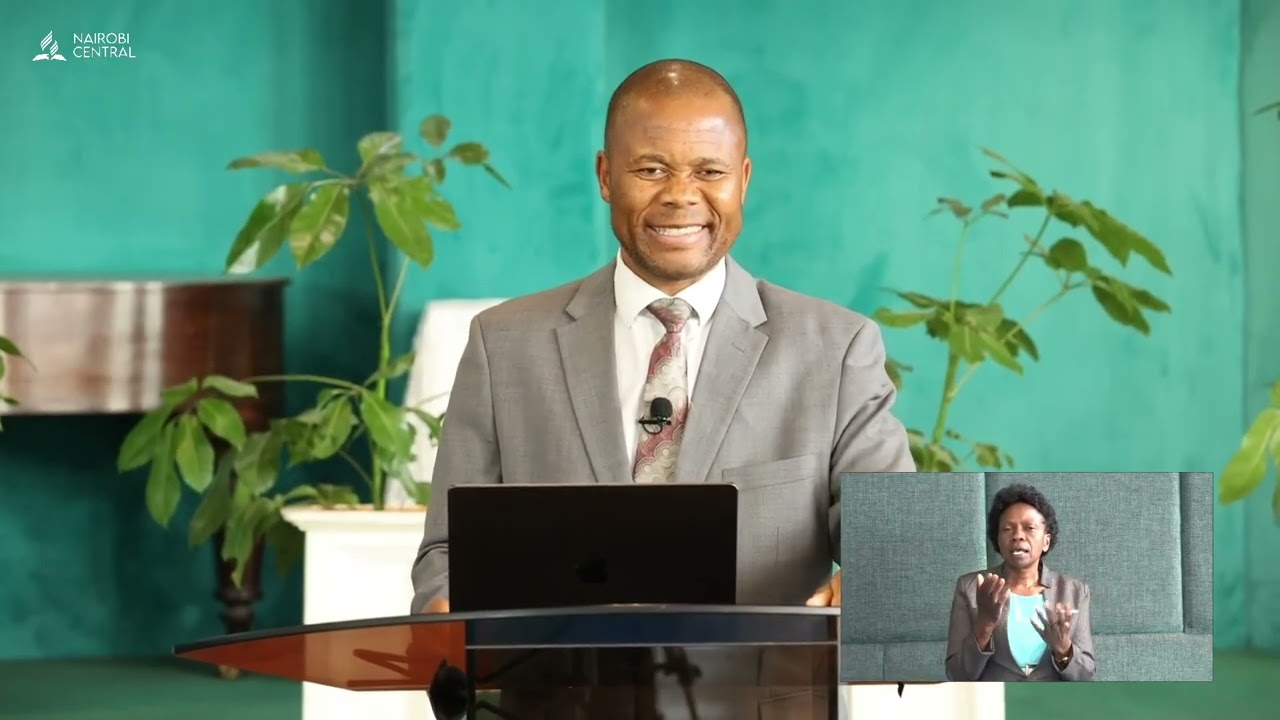
Video summary
The central theme of this Bible study is "Obey and Live," which frames true worship not merely as a suggestion but as a fundamental call to acknowledge God as our Creator, Owner, and Provider. The speaker emphasizes that the abundance of life, longevity, and prosperity are natural results of genuine worship rather than the primary motivation for it. To honor the Lord with all one's possessions is to recognize His sovereignty over every aspect of creation, including wealth, animals, and resources. This acknowledgment is demonstrated practically through faithfulness in returning tithes and offerings, which serves as an act of declaring God's lordship rather than a simple financial transaction. When believers separate their worship from their wealth, they inadvertently serve mammon—wealth itself—which acts as a master that dictates human behavior and often leads to spiritual restlessness and poverty.
The message draws heavily on the agro-economic context of ancient Near Eastern culture, where wealth was defined by agricultural produce and livestock, yet the principle remains universally applicable across all generations and cultures. The speaker explains that withholding what belongs to God is akin to treason, inviting divine curses upon one's life, whereas faithfulness in giving opens the "windows of heaven" for blessings that cannot be contained. This dynamic creates a paradox where those who scatter their resources generously become increasingly rich, while those who hoard and withhold inevitably grow poorer. The text cites Proverbs and Leviticus to show that God is consistent in His nature; He promises to rebuke the devourer and protect the fruit of the ground for those who remain faithful, ensuring that no one lacks anything when they prioritize worship over self-interest.
Ultimately, the study concludes with a heartfelt appeal for repentance and a renewed commitment to faithful stewardship. The speaker acknowledges that many may have been tempted by mammon or failed in their duty to return tithes, urging listeners to choose God over wealth and to restore their relationship with Him through prayer and action. This call to worship extends beyond the act of giving money; it involves reflecting God's merciful and truthful character in daily interactions, trusting Him without seeking personal gain, and fearing Him out of reverence rather than a desire for health or safety. The session ends with a collective prayer asking God to transform these lessons into practical experiences for all who listen, ensuring that the Holy Spirit applies the truth of "Obey and Live" to honor His name and bring about spiritual transformation in the lives of believers everywhere.
Read the full video transcript
May I request you to pause for a moment
of prayer.
Our kind and loving father in heaven,
we are thankful this morning for the
privilege of prayer that you have given
us.
And we thank you for the peaceful night
that we have had.
We thank you for another day, another
chance
that you have given us to learn from
your word.
May you prepare our hearts
to accept
and to understand
your word as you desire us to.
Our desire is to see you when you come
to take us home. Our desire is to be
transformed into your likeness. And
therefore, Lord, we commit ourselves
before you.
For a season of learning experience,
this is our prayer in Jesus' name, our
Lord. Amen.
The theme, obey and live,
is a call to worship.
It is a call to worship God.
It is not a suggestion of worship, but
it is a call to worship. It is an appeal
to worship God as he is our creator. And
therefore, as we are pursuing this
theme,
whatever we are sharing has to do or
answers the question of worship. How do
we worship God? We obey him.
Okay?
First day, we had to unpack this theme
by way of uh appealing for obedience
that we may have more life. The issue or
the reason is not about life, it's about
worshiping God.
And the abundance of life or prolonged
lifespan or lengthy life experience
or longevity
is just but a natural
a natural result of true worship.
So, it is in the interest and in the
spirit of worship
that we are unpacking these lessons one
after another.
And it is our interest and it was our
joy
to walk through the passage of wisdom
literature
in the book of Proverbs chapter 3. We
were just anchoring our messages from
Proverbs chapter 3.
Of course, there's a lot to be learned
from the entirety of scripture.
But this time it was our joy just to
approach the theme of obey and live in
the interest of wisdom literature. And
such is still our task this morning.
Today we are looking at
Proverbs chapter 3 verse 7 and 8, which
says,
"Honor the Lord with your possessions,
and with the first fruit of all your
increase.
Outcome:
So, your barns will be filled with
plenty,
and your vats will overflow with new
wine."
This appeal or this promise
or this invitation to honor the Lord
with all your possessions
and all your festive fruit
is rooted or it was transmitted in the
context of
agro-economy.
Agro-economy.
People of the ancient Near Eastern
culture,
they subsisted on agribusiness.
Their life
was more understood and their wealth was
defined in terms of
agricultural produce.
Or in the likes of
crops which they harvest
or in the likes of animals which they
have because they were cattle herders.
So, it is in the interest or in the
understanding or in the spirit of that
agro culture or agro economy
that God is appealing to them to say,
you worship God
with your possessions.
With your wealth you must worship your
God.
Honor God it means worship God
with your substance.
With your wealth
you cannot afford to separate your
worship or yourself
from your wealth in the matters of
worship.
In the matters of worship your wealth
and yourself and all your substance,
just as with all your family, with all
your relatives, with everything, God
expects you to worship him like that.
So, a condition is set. What is the
condition? You honor God.
What is honoring God? Worshiping him.
Acknowledging him as the creator.
What is the outcome?
And then
your vats or your barns or wherever your
treasure your treasures
where you keep your your wealth will
continue to be replenished over and over
again.
In other words, you will not lack
anything.
You will not lack anything.
He who is faithful in the matters of
worship through his possession or her
wealth or whatever the one has in terms
of resources,
that person will never lack anything.
This is what God is promising.
Now,
the whole text and the whole passage and
the whole week we've been looking at
this subject matter,
which involves around worshipping God.
We looked at
chapter 3 verse 1 and 2,
which appealed to us to say obey the
Lord. That was the submission and
appeal.
The result of obeying God we we learned
and we saw that it is a prolonged
lifespan.
Then number two,
we challenge each other
to reflect the character of God by being
merciful and truthful.
God wants to see his image, his original
image, that he entrusted in us at
creation.
How? By being merciful. If we are
merciful and truthful, we are reflecting
the character of God, because God is
merciful. God is long-suffering. God is
loving. God is kind. God is truth.
So, he desires us to reflect his
character
in the how we relate with each other as
human beings, in how we relate with him,
how we relate with our spouses, how we
relate with ourselves, and how we relate
with everything that is surrounding us.
He desires us to be faithful,
to be merciful,
to be loving kind,
and also to care and to be truthful in
how we relate and how we transact
business in our day-to-day living.
Simple.
The third day, we looked at this idea of
trusting the Lord.
That was verse five and verse six. Trust
the Lord.
At the heart
of worship, if you are a true worshiper
of God, you must trust trust God. You
can't
worship God without trusting trusting
him. And you cannot trust God if you
don't worship if you are not a true
worshiper of God. And then the fourth
day, we challenged challenged each other
to fear the Lord. And the center of all
these things is God. God. God. Or the
Lord. The Lord. The Lord.
Fear the Lord.
And then the issue of benefits just
comes as a natural experience. Natural
outcome.
We are not moved by the outcome in order
for us to to undertake and to align our
lives with these conditions, but we are
more interested in worshipping God.
Everything else follow follows
naturally.
If you are moved or motivated by the
benefits,
your sense of worship is is a lot to be
desired and is much questionable.
And today, we are looking at this
subject matter,
honor the Lord with all your substance,
with all your possessions.
In the matters of wealth,
honor the Lord your God.
And then,
as a natural benefit, you will not lack
anything. Let's get into the
nitty-gritties and into the names and
capitalities of our message this
morning.
This text is presenting a universal and
a timeless principle of success.
In the matters of business, many people
have been to
so many business forums, business
schools of business
where they learn business principles for
them to succeed in life.
The Bible presents a simple principle of
business
that is timeless, that is universal.
In other words, it appeals to all people
of all time, people of all ages. It cuts
across generations.
According to Solomon, the wisest man
ever lived here on earth and the most
richest person ever lived here on earth,
this is his business principle which he
is subscribing and also
prescribing for us who are growing in
our time.
In the matters of wealth and business
and in the matters of wisdom, Solomon
was a man of his own class.
And this is
his prescription for us.
Honor the Lord with all your substance
and you will never let anything.
Such is the counsel of the wisest man
ever lived here on earth.
What does it mean to honor God with our
possessions and with all our substance?
What does it mean? Number one,
it means to acknowledge him as our
creator.
God is the creator of gold and silver.
God
is the creator of all animal wealth that
we may claim.
God the creator of the universe in its
entirety.
And if we acknowledge that he is the uh
he's the creator of all these things, we
need to prove
how we relate with him
in the view of our wealth. How do we
relate with the God in the view of our
wealth?
Do we put God first
before we look at the before we look at
the wealth or we put the wealth first in
order for us to see God?
God desires
us to put the God the first in order to
look at
wealth.
Point number two, what does it mean to
honor God with our possessions?
It means to acknowledge him as our
as the owner of everything that we may
gain in this world. He is the owner.
According to Psalm chapter 24 verse 1,
God declares ownership of everything
that exists in this world including us.
He claims ownership.
Psalm 24
verse 1 and then Psalm 50 verse 9 to 15.
God claims ownership.
What does he say?
In in Psalm
24
verse 1,
this is what God says.
The earth is the Lord's
and all its fullness,
the world and the those who dwell
therein.
In other words, God is claiming
ownership of both
wealth and the wealth owners on earth.
The wealth and
its fullness belongs to God.
What God is claiming
15
to 15
>> God is the owner.
It is in that understanding or in the
sense of ownership that we should
acknowledge that God, since he is the
owner, we need to worship him
by our substance and by our possessions
and by our wealth. We cannot separate
ourselves, our wealth from us and from
our sense of duty as far as worshipping
God is concerned.
We acknowledge that God is the owner. We
need to do so and prove by bringing our
wealth to him.
Not that we are bringing our wealth to
him and our possession to him for him to
exist because God is a self-existent.
He does not need our contribution for
him to be God because he is God without
me, without you, without your
contribution, without my contribution,
God remains God.
What does it mean to honor God with our
possession? It means to acknowledge his
lordship.
He is the lord of the universe. He is
our God. He is our lord.
We need to acknowledge his lordship.
To deny him of his this this uh
lordship, it
it means you claim it to say, "I'm now
the lord of myself."
You acknowledge that God is the lord of
your life, is the lord in your life, is
the lord of your wealth in in your
wealth.
You do so by
uh
doing what it's
what is supposed to be done. That is
acknowledging him.
To say he is the lord and you return to
him
faithfully what belongs to God.
What does it mean to honor God with our
substance? It means to acknowledge his
providence.
It is not so much in our wisdom that we
gain wealth.
But it is so much about God and what he
is able to do in our lives that we gain
wealth.
In Deuteronomy,
counsel is given to say, "You remember,
Israel, that it is God who teaches you
to gain wealth or to make money."
Unless God helps you or guides you or
enables you, no one is capable to gain
any substance in the midst of wealth.
So, in this or in all this
acknowledgement, what is our duty and
what is our responsibility? In other
words, how do we acknowledge that God is
our creator, he is our he is our
sustainer, he is the provider, he is the
Lord, he is the one who owns us all
these things? How do we do so?
We declare non-ownership of what you
get.
How do you declare non-ownership of what
you get? You become faithful in
returning tithe.
You become faithful in returning
offerings.
You leave no space
to rob God of what it is
or what belongs to him.
You leave no space or no room
in your transactions.
No space
robbing God.
Leviticus chapter 27 verse 30. Someone
may be asking, "How can you talk of
tithe? What is tithe?"
Leviticus chapter 27 verse 30.
And all the tithe, this is God speaking,
and all the tithe
of the land,
whether of the seed of the land or of
the fruit of the tree, it is the Lord's.
It is a holy to the Lord.
Not a holy to the pastor. Not a holy to
the church.
Not a holy to the stewardship director,
but it is a holy to the Lord.
What does this mean? It implies
by returning 10% of what you get
in terms of gain, and 10% reflects that
returning it, you are acknowledging
God's lordship
of his creation and what he has done in
this world. And what he has done in your
life. You acknowledge that that God is
the Lord.
By returning 10% of your gains to him.
In other words, if you withhold that
10%, you are declaring that I'm also the
Lord of
my life. I'm also the Lord of this
world.
Such is a serious matter or it's a
treasonous treason
against God.
And that you will never remain silent.
You will not. Because it's treasonous.
Any treasonous behavior
must be followed by justice. And if
justice needs to be done, it will never
leave you the same.
Leviticus chapter 27 verse 32 also says,
"And concerning the tithe of the herd or
animals or the flock
of whatever passes under the rod, the
10th the 10th one shall be holy to the
Lord.
To those of you
or to those of us who are cattle
headers,
the 10th
out of every 10 animals that you have
in your flock, the 10th one belongs to
God or 10% of your animals belongs to
God.
Whether of your chickens
or goats or sheep or
cattle or whatever, it belongs to God.
This is what God is claiming.
What does it imply? It implies you are
declaring declaring or acknowledging
God's creatorship, God's ownership,
God's prov- uh providence, God's
authority.
You worship God in the matters of your
possessions by declaring that I am not
the owner, I am not the creator, I am
not the one who provides for myself, I
am not the one who make things happen in
my life, but it is only God. So, being
faithful in the matters of tithe and
offerings is an act of worship.
Verse 33, Leviticus 27, it says, "He
shall not inquire whether it is good or
a bad, nor shall he exchange it. And if
he exchange it at all, then both it
and the one exchanged for it shall be
holy. It shall not be redeemed."
The 10th one.
So, how do you administer this? You call
the pastor.
He is the one who is responsible
in the process of counting
and identifying the 10th one.
It's not you
who count it by yourself and identify
the 10th one by yourself and then you
bring what you think. Uh-uh.
The man of God is
set apart for that special sacred duty.
In this case, in the experience
of God's children in the context of
Leviticus 27, the Levites or the priests
had the that obligation
of identifying or counting in order to
identify the 10th one and it
dedicated
to the worship of God.
To honor God, to honor the Lord with
your possessions means to glorify God
with your wealth.
To be a faithful steward or manager of
God's creation.
The greatest temptation that the people
have is when they get money or wealth
to separate themselves from it.
That is a serious temptation that
humanity has. And God is only saying
that you just have to acknowledge that
you are not the owner of that wealth by
the
separating or dedicating the 10%
of what you get back to God as a way of
acknowledging God's creatorship,
God's lordship,
God's ownership.
He is the owner. He is the He is the
creator.
He is He is the provider. He is the one
in charge. To acknowledge that he he is
the one in charge.
You do so by returning a faithful tithe
to him.
Being faithful in treasure management
means
that you do not compete with the God.
Here is a caution that is given by Jesus
Christ himself.
Mat- According to Matthew chapter 6
verse 24,
Jesus gave gave a question
in how we relate with the wealth, how we
relate with the money, how we relate
with the possessions.
This is his question.
No one can serve two masters at a time.
For either he will hate the one and love
the other.
Or else he will be loyal
to the one and despise the other.
You cannot serve God and mammon.
This is a question that Jesus gave.
What does this question mean?
It's impossible.
It's impossible
to be loyal to two masters. In this
case,
there are two masters that compete with
each other.
God and the mammon.
The question is, who is mammon? God, we
know him.
But who is this mammon
that may that is that may claim
the role of a master in our life
besides God?
The term mammon is an Aramaic word which
means wealth or which can be translated
wealth.
Wealth by its nature or by its tendency
has a mastery role or effect, not
and never
does it take a servant role.
In our lives as human beings,
how we relate with the wealth,
at the any given point, wealth is not
prepared to assume the role of a servant
in your life.
But in fact, it actually demands or
expects
its role to be of that a master.
That of a master.
Which means or which implies you and me
in many cases we become servants
or slaves
to mammon or to wealth. In other words,
it it dictates the pace of how you move
or how you relate with it. It wants to
dictate the pace.
This is why you see when someone has
some money in his pocket or a pocket or
a purse, that person
when you know that you your account at
the bank is effect, you become restless.
You become restless.
It becomes very difficult to contain
you.
Sometimes people can even tell that
something is happening. Something is not
in order here.
Why? Because you are restless. Mammon is
telling you how to behave. And mammon
wants you to wants to be wants you to be
known that you you are his servant.
Or it's servant. So, you behave in a
certain way
that even those around you you wanted
them to come and to worship what you
have in your pocket.
So, Christ cautions, be careful of
mammon.
Don't worship wealth. Just worship the
God and the God alone. Just that. It's
enough.
Malachi chapter 3 verse 8, another
caution is given.
Another caution is given.
Will a man rob God?
Yet, you have robbed me. This is God
speaking. But, you say, "In what way
have we robbed you?" In tithes and
offerings.
If you withhold tithes
and withhold offerings, you are robbing
God.
And that is treasonous.
For that reason, God will not remain
silent.
How does he respond when you become
treasonous or when you rob him of what
that which belongs to him? When you rob
him of his lordship, when you rob him of
his creatorship, when you rob him of his
ownership, FAILURE TO DECLARE that the
God is the owner, God is the creator,
God is the Lord. If you fail to declare
that, that's treasonous. How did the God
How does God respond? This is how he
responds. He will curse you.
You will be cursed.
You will curse me.
And when you are cursed, no one has
power to redeem that curse
or to redeem you from that
that curse that is
executed by God himself because God is
the supreme supreme power. He's
omnipotent.
So, you are cursed with a curse. For you
have robbed me, even this whole nation.
He's talking to the nation of Israel.
They were cursed. Why? Because they
robbed the God. Why? Because they were
treasonous.
How? Because they they claimed God's
creatorship, God's ownership, God's
lordship.
Chapter 3 verse 10. Here is a condition
and an outcome that can only redeem you
from such a predicament of divine
curses.
Bring all tithes into the storehouse
that there may be food in my house.
And then try me in this, says the Lord
of hosts, if I will not open for you the
windows of heaven and pour out for you
such blessing that there will not be
room enough to receive it.
This is
the condition and also the outcome.
If you bring tithes and offerings,
naturally the outcome is God will open
the windows of heaven
and I would pour his blessings upon you
that there will be room no room enough
to contain his blessings in your life.
This is the appeal
with the condition and in outcome. And
the outcome comes automatically or
naturally as a result of your
faithfulness.
This condition outcome kind of a thing
attendance
is consistent
from the Pentateuch or from the first
five books of the Bible, which are the
Torah,
and to to the end of the Bible. God is
consistent. Doesn't change.
The condition is met,
the outcome comes as a natural result of
what has happened, naturally.
Sometimes we mistaken these things by
way of being so much obsessed and
interested in the outcome
without regarding the condition and
therefore because we are interested in
the outcome and therefore we seek to
bribe God by way of trying to become
trying trying to be faithful because we
want to bribe God.
No, you don't need to bribe God.
Faithfulness
is an act of worshipping and you must be
consistent and be faithful.
Throughout the whole week, Pastor Victor
has been laboring every afternoon to try
by all means to unpack this issue of
worshipping God. We need to worship the
God by being faithful
in returning tithes and offerings.
Throughout the week, Pastor Victor has
been laboring and he doing he did
everything and he was trying to come
from all different corners and angles to
present this message to us. I'm simply
trying to summarize what he has been
presenting to us throughout the week.
Thank you so much Pastor Victor for the
great work that you did. Uh may God
bless you.
In the same spirit and in the same sense
of condition and outcome.
Malachi chapter 3 verse 11 says, "And I
will rebuke the devourer." This is what
the God will do if you are faithful in
bringing tithes and offerings. This is
what God will do in your life by way of
removing curses.
He will rebuke the devourer for your
sakes.
So that he will not destroy the fruit of
your ground, nor shall the
shall divine fail to bear fruit for you
in the field, says the Lord.
All your potential threats that is
threatening
the integrity of your wealth,
God will remove them. He will remove all
the obstacles that prohibit or that
prevent you from becoming prosperous or
wealthier than you have been all this
time.
Sometimes you wonder and you question,
but how come it appears other people are
becoming more and more becoming more
pronounced in their life in the matters
of wealth, but it I'm remaining poor and
becoming poorer and poorer each now and
again. May you reflect and revise how
you relate with with the God in the
matters of wealth management.
Condition and outcome. Proverbs chapter
11 verse 24. Here is what God says or
what the wisdom teacher says.
There is one person who scatters all the
time, yet increases more and more.
I'm trying to amplify and to unpack and
to paraphrase this thought we understand
better.
And there is someone who withholds
more than is right.
But it always leads to poverty. The more
you try to withhold that which belongs
to God, you become poorer and poorer.
The more you scatter and release that
which belongs to God, you become richer
and richer and richer.
What a paradox of life. What a paradox
in the journey of faith.
Those that are faithful to retain, that
release, that have no problem to let go
that which belongs to God, they become
richer and richer and richer. Those that
withhold and withhold and withhold, they
become poorer and poorer and poorer, yet
they are withholding. What a paradox.
This is heaven's doings, not human
doings. Verse 25.
The generous soul will be made rich.
And he who waters will also be watered
himself. It's a principle of life.
A principle of business. It's a prin- It
is a natural principle of life.
Timeless, universal.
It does not apply to a particular group
of people and doesn't apply elsewhere.
Uh-uh. It applies It cuts across
generations, races, tribes, color, age
groups.
Honoring the Lord
means
worshiping God
and this worshiping God through
returning tithe.
It goes beyond a transaction. It's not a
just a transaction. Of okay,
out of the money that I have, okay,
which one? The 10th one? The 10% is this
one? Okay, I have retained. That's a
transaction. It goes far beyond that
transaction. Actually, it has nothing to
do that with that transaction. That
transaction is a result of true worship.
God desires us to be faithful.
In Mark chapter 14 verse 3 to 9, there
is a story of a woman
who came
and poured the expensive oil
on the feet of Jesus. And someone was
affected and disturbed and offended by
it.
That transaction did not augur well with
Peter.
Or with the Judas, as it were.
He saw a transaction. And for this
woman, this was worship, an act of
worshipping God.
She did not count the cost because Jesus
is far above everything that can be
transacted as far as life here on earth
is concerned. So, faithfulness is trust
in action.
It is a
an issue of worship.
Faithfulness.
It is a result of trust in God.
Faithfulness
is a result or it is an expression of
true worship of God. It is an
acknowledgement that God is the creator.
Faithfulness is an acknowledgement that
God is the owner of wealth.
Faithfulness is an acknowledgement
that God is the provider. It is an an
acknowledgement that God is the
sustainer of my life and the universe at
large.
It's possible that to some extent
someone was not a faithful in returning
what belongs to God.
Yes, it's possible.
To our online
uh congregants who are
following and who are worshipping with
us in this service.
And to those who are physically present
here, it's possible that among all of us
some may were not faithful and are not
faithful in returning tithes and
offerings to God.
The text
today in the Bible has taught us that we
are robbing God.
And that is treasonous before God. It
will not just go and be noticed and
unattended to because it is treasonous,
God has the prerogative to kiss.
Not because he's cruel
but because he wants you to come back to
your senses
and worship God faithfully as he is the
creator, the owner
and the provider and the lord of the
universe. Everything that we have and
that we get as far as our effort of
getting wealth is concerned
comes from God and belongs to God. How
do we acknowledge that? By returning 10%
of our gains to him because he's the
owner.
I want to give you a chance
to repent
and to ask for forgiveness from God.
That the lord
will
reverse
the kiss that he may have pronounced on
your efforts.
You know yourself.
I know myself.
You are saying this morning, "Lord, help
me. I want to be faithful to honor you
in sub in all my substance by returning
a faithful tithe to you and offering.
Lord, may you help me." Because humanly
speaking, according to the nature of the
controversy between us and the enemy,
between the God and the enemy, Satan
doesn't want you to be faithful to God
because he wants you to worship him. So,
that's why he gives you the temptation
of mammon.
There are two powers that are contending
for allegiance from you.
God on one side and the mammon on the
other side.
What is your take this morning? It's a a
question of choice.
I appeal to you that you choose to
worship your God of faith, to worship
him faithfully. If that is your desire
that you are declaring and you are
interested to worship your God
faithfully in returning a faithful tithe
to him.
From this point onwards,
I request that you rise on your feet
wherever you are. We need to have a time
of prayer.
Pastor Opanda, may I request you to come
up front. Men of God, throughout the
week we have been dealing with the
issues and the questions of true worship
here.
On the second day,
we talked about
worshipping God by being
obedient to his commandments.
By being obedient to his commandments
and to his laws.
Naturally, if that is done, God will
grant us a prolonged life.
Second day, we spoke about
reflecting the character of God. True
worshipping of God means and implies
reflecting the character of God. God
wants to see his character in us as it
were on the day he created us in in in
the first place.
We were created in the image of God.
In his likeness.
HE'S MERCIFUL. HE'S LOVING. HE'S KIND.
HE'S LONG-SUFFERING.
He stands for the truth and the truth
alone. He wants to see his image in us.
That is true worshipping.
HE WANTS US TO TRUST HIM. The third day
we talked about it, trusting the Lord
as an act of worship.
We must trust God.
Not out of impulse of gains, favor from
God and the favor FROM MEN. UH-UH. BUT
BECAUSE THIS IS OUR solitary duty to
trust God.
We spoke about the fear OF GOD.
NOT BECAUSE WE need good health. UH-UH.
BUT BECAUSE THIS IS OUR DUTY TO FEAR
GOD.
Healthy and whatever, those are just
benefits that comes naturally.
In the spirit and in the sense of true
worship.
Here are God's children who are
declaring interest to say, "No.
Yes, we've been messing up. Well, this
time we want to trust God again, to fear
God again, AND TO HONOR HIM,
TO WORSHIP HIM EVEN IN our substances
and in our wealth,
having faith equal to retain
that which belongs to God.
That is our desire.
This such is
my appeal.
And as you pray for the saints here
present and those worshipping God
online,
wherever they are,
if I appeal to you, there are people
who are
also standing with me and with us to SAY
FROM THIS POINT ONWARD, we want to be
faithful
in returning that which belongs TO GOD
AND SUPPORTING GOD'S WORK.
SUCH IS MY PRAYER, TOO. As you pray for
the saints, may you also remember to
pray for me.
>> Amen.
Let us pray. Father in heaven,
the whole of this week your man servant
has been
belaboring
the matter of obey and leave.
We have listened to him. He has given a
lot of illustrations.
We thank you for this ministry
and pray, oh God, that you bless him
abundantly and use him mightily as we
have as you have used him here.
And may all those who have listened, oh
God,
not go away empty-handed,
but that your Holy Spirit will translate
all these lessons of obey and live into
our practical experience
to the honor and glory of your name.
We pray in Jesus' name. Amen.
>> Thank you. May God bless us.