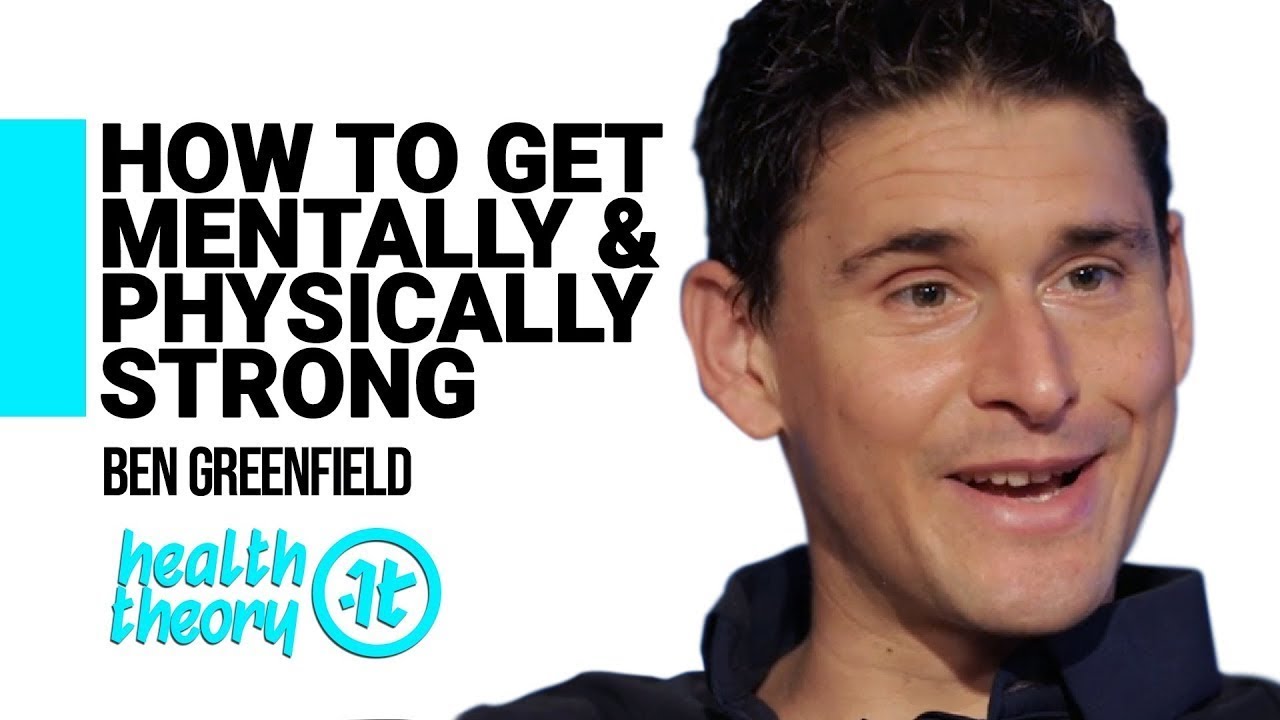
5 Best Biohacks for Living Better & Longer | Ben Greenfield on Health Theory
Watch on YouTubeVideo summary
Ben Greenfield, a New York Times best-selling author and founder of Kion, argues on Health Theory that while modern society is obsessed with anti-aging technology and expensive supplements, true longevity lies in low-hanging fruit found within "blue zones." He emphasizes the concept of hormesis, where small doses of stressors like cold exposure, heat from saunas, or intense exercise trigger beneficial adaptive responses. For instance, brief cold showers boost nitric oxide production and vagus nerve tone without causing harm, whereas prolonged immersion would be detrimental; similarly, moderate sauna use correlates with significant reductions in Alzheimer's risk among Finnish men when combined with social de-stressing rather than isolation. Greenfield warns against over-exercising beyond 60 minutes of intense effort or 90 minutes of aerobic activity, noting that exceeding these limits leads to diminishing returns and increased mortality risks due to factors like cardiomegaly and arterial stiffness. To optimize mitochondrial health without relying on fringe injections, Greenfield advocates for a holistic approach involving grounding (earthing), mineral-rich water intake—specifically recommending Celtic sea salt over iron-heavy options like Himalayan salt—and photobiomodulation via sunlight or red light therapy. He strongly advises against high-dose antioxidant supplements taken immediately after exercise, explaining that free radicals act as essential signaling molecules for mitochondrial repair and adaptation; quelling this natural response with excessive antioxidants blunts the body's ability to create new mitochondria. Instead of relying on synthetic aids, he suggests fasting post-workout to stimulate endogenous antioxidant production and growth hormone release, allowing the body to engage in its necessary cellular cleanup processes naturally. Greenfield also addresses the modern lack of "rites of passage" for men, contrasting it with clear biological markers like menstruation or circumcision that historically defined coming-of-age moments. He describes his own journey from physical challenges like Ironman triathlons and Navy SEAL training to a more internalized purpose: finishing a five-part fiction series by age 50 and producing an album. For his sons, he plans to implement wilderness survival skills and plant medicine experiences at age thirteen as their rite of passage, aiming to dissolve the ego rather than prove physical dominance. This philosophy extends to parenting; Greenfield employs "Love and Logic" principles where children are educated on consequences—such as alcohol's effect on the liver or Wi-Fi radiation risks—and allowed autonomy in decision-making, provided they have a healthy relationship with those choices modeled by their parents. Ultimately, Greenfield posits that biohacking should serve a higher purpose defined by "ikigai," the Japanese concept of one's reason for living. His specific mission is to empower people to live adventurous, joyful, and fulfilling lives until well past 100 years old so they can continue contributing meaningfully rather than merely surviving in retirement. He shares his most extreme experiment involving a full-body stem cell injection protocol derived from his own fat and bone marrow, which he claims reduced his biological age by 17 years based on telomere measurements and significantly improved recovery times. However, he concludes that even advanced technologies like this should be framed within the context of community connection, family dinners, gratitude practices, and a clear sense of purpose, asserting that living longer is valuable only if it allows one to leave the world better than they found it.
Read the full video transcript
Everybody, welcome to Health Theory.
Today's guest is Ben Greenfield. He's a
New York Times best-selling author and
legendary biohacker who was named
America's top personal trainer in 2008
and one of the world's top 100 most
influential people in fitness in 2013
and 2014. He's also the founder and CEO
of Kion, a former bodybuilder and an
endurance athlete who in a single year
completed the nine hardest Spartan
races. To top it all off, he lives
almost completely off the grid in
Spokane, Washington, and he writes one
of the most incredible blogs around on
health, fitness, and nutrition.
Now, Ben, whenever I have somebody on
the show that knows a lot about health
and nutrition, I always want to talk
about how can we at least make a real
attempt at living forever? Forever?
Forever. It's interesting, right?
Because we live in in a modern era in
which people seem to be pretty
infatuated with anti-aging technology or
or supplements or, you know, medications
that you know, that that have lines, you
know, say they promise to extend life at
a at a nickel a pop. But, what's
interesting is that
people do not seem to be living much
longer yet despite these efforts. It
looks like on paper that we are, but
what's primarily measured with life
expectancy is how long you're going to
live from the time that that you're born
until the time that you die. And once
you once you strip out the variables
that we have managed to get a pretty
good handle on
in our modern health era, like like
reducing the amount of infant deaths and
early deaths and
you know, worldwide epidemics, you know,
and and measles, mumps, polio, just just
all these things, you know, the bubonic
plague, everything that would that would
have wiped out children and babies, and
then you begin to look at the amount of
time that we're living after, say,
social security age or retirement, you
know, kind of like that 65 to 67-ish
age, we're not living that much longer.
We really aren't. I mean, the the the
past couple centuries have not produced
a significant increase in lifespan once
you once you reduce or or you eliminate
that that children baby death component.
So,
I think that if you look at a lot of
these cultures
where we find a high portion of
centenarians, people who are living a
disproportionately long period of time,
these so-called blue zones,
Right. that
the the lowest hanging fruit must start
there. Right? We know that there are
certain characteristics that when you
look at like a Venn diagram of of
Okinawa and Loma Linda and Icaria and
Sardinia and and
you know, all these different there's
there's a multitude of blue zones now.
We see things that that overlap over and
over again. No smoking, wild plant
intake, legume intake, which throws a
lot of Westerners for a loop because we
hear, you know, plants are bad and
there's a whole paleo movement you don't
eat beans and and you avoid a lot of
these these plants' natural built-in
defense mechanisms, but uh we we know
that legumes and and wild plants in
general induce a a xeno hormetic effect
that causes the body to bounce back even
stronger.
you think then So, hormesis I've heard
you talk about it and um certainly
something that's been on my radar for a
while, but just for the people that are
listening, so hormesis being the
something bad for you in small amounts
gives a positive effect even though in
the things, yes. That that could that
could kill you. Exercise will kill you
if you do too much of it or at least
you'll get overtraining syndrome and you
know, you you can you can generate some
adrenal issues and and some hypothalamic
issues and and you you can do a number
on yourself with over exercise as as
many people who have dug themselves into
that hole know. It's it's horrible. The
same thing with cold and cold
thermogenesis, right? Uh
a small cold shower every day is
fantastic for your nitric oxide and your
fat burning capacity and the the
conversion of adipose tissue into
metabolically active tissue and your
your vagus nerve tone. But, if you were
to do and and this this is how they
stress out rodents in laboratory models
of stress. If you were to to plunge
yourself in the cold water for an hour a
day, you would you would die a a
horrible early death or just feel feel
really miserable. Uh the same thing
could be said for heat, right? We know
that from these Finnish studies that
that saunas induce longevity, you know,
four to five saunas for 20 to 30 minutes
a week and we see a four to five-year
lifespan increase in Finnish men and uh
I forget the percentage, but it's
staggering. It's like a 40 to 60%
decrease in in Alzheimer's and dementia.
Just from the sauna?
Just from the sauna. Now, there are
confounding variables, right? Like I've
I've saunad at the Finnish Men's Sauna
Society and and been in many of these
European countries in the sauna. You are
I mean, all sorts of things, right?
You're you're not drinking a lot of
alcohol, you're not sitting in front of
the TV, you're in a social situation,
you're de-stressing. There there's a lot
of confounding variables that go above
and beyond the heat. But, it seems
pretty apparent that small amounts of
heat are good for you and and large
amounts, of course, you could sit in the
sauna for two hours a day and wind up
mineral depleted and dehydrated. And
again, yeah,
so so so that's the idea of hormesis,
that things that that are bad for you in
very large doses are good for you in
small doses with uh probably calorie
restriction and fasting being one of the
most powerful and profound examples of
that. If you don't eat, you'll
eventually die or again, just just have
a a miserable existence and be
libideless and cold and hungry. But, if
you engage in certain periods of caloric
restriction or any type of modified
fasts as a frequent part of your life,
you you actually induce that hormetic
effect of fasting.
So,
we look at these blue zones and
and they're doing things like no
smoking, wild plant intake, legume
intake, a lot of these hormesis things,
right? The you know, in Iceland, they
they have their babies sleep outside in
the cold and you know, folks are you
know, in Switzerland, and you can you
can look at these Swiss school children
going outside in the cold weather in
their underwear as a way to fight
against the flu. Uh and then of course
we see, you know, moderate amounts of of
alcohol intake. We see
uh lots of time in social settings with
friends and emphasis on love, life,
family, relationships. I'm a bigger fan
of before you go after the I want to
live forever and have my head
cryogenically frozen and buy all the
expensive injections and supplements and
creams and lotions and you know, do my
my photobiomodulation and my cryotherapy
chambers to instead go after this
low-hanging fruit. You can get outside
barefoot or climb trees or climb rocks
or you know, go out and do a a Spartan
race and roll around in the ground, but
that's that's that's known as grounding
and earthing. And of course there are
modern corollaries to that. There are
modern biohacks that allow you to
concentrate that. There are grounding
and earthing pads. I I sleep on a mat
all night that produces what is called a
pulsed electromagnetic field, a PEMF
mat. And this this simulates exactly
what I get if I were to go outside and
ground or earth and it's useful if I've
been traveling and I I need to kind of
I don't I've heard about grounding, but
It matters because the earth emits a
natural magnetic field that is actually
very therapeutic to the human body. But
most of us aren't camping outdoors or
sleeping outdoors and and in a modern
post-industrial era walking outside
barefoot. So we can charge our bodies
and enhance the health of our
mitochondria by using the natural
electrical frequencies that the earth
produces or that we can produce through
modern technologies. So So there are
ways around this.
Uh how else can you charge the body? Uh
good water and mineral intake, right? We
know that each of the cells is is in
basically like an aqueous solution that
needs minerals and needs water. You can
put Celtic sea salt in water. There are
companies
between a good
sea salt and Celtic sea salt or Celtic
salt?
Based on on the spectral analysis that
have been done by a variety of companies
on salts, at the top of the totem pole
from the data that I've seen is the
Celtic salt. You know, it's kind of like
a grayish salt. You can find it at most
grocery stores. That's about the best
when it comes to salt. Himalayan tends
to be higher in iron and other metals.
Uh for men especially who are concerned
about, you know, men men tend to be at a
higher risk for what's called
hemochromatosis or iron overload. I used
to tell people, you know, kind of like
kind of like I used to use the the term
fruits and vegetables as as one single
word and then you realize, well, fruit I
mean apples and pears are actually a
very good way to spike your blood sugar
for a long period of time. Uh I don't
want to vilify fructose because I think,
you know, fruit is nature's dessert.
It's fine in small amounts and I I love,
you know, small dark rich berries that
have a low glycemic index, but I don't
lump fruits and vegetables into the same
category like I used to. I no longer do
I tell people, "Oh, have a good salt
like a Himalayan salt or a Celtic salt."
No, actually I kind of think of those
differently now based on on the effect
the different salts have on the body.
But, the big picture is that I don't
think enough people, based on soil
depletion, based on on water being
stripped of minerals, if you're you
know, if you're paying attention to your
health and filtering your water and
using reverse osmosis or something like
that, you're not getting a lot of
minerals. So, there are there are places
you can purchase trace liquid minerals.
You can buy Celtic salt. You can buy
a very they they taste like sea water,
these solutions called hypertonic
solutions. But, you want to stay very
adequately hydrated and have a lot of
minerals and get outside and charge the
body with the earth. And finally, you
want to charge the body with the other
way that we can actually uh we we can
actually affect our electrochemical
balance and that's near and far infrared
light, which you can get from sunlight.
Or if you're if you're into whole, you
know, the whole modern biohacking and
technology movement, there are there are
now
it's almost like like a an infatuation
with this thing called
photobiomodulation. You go to these
anti-aging clinics and they have these
red light tables that you lay on and you
can buy them for your home, but you
you're you know there are infrared
saunas, right? But it's far infrared,
near infrared, and red light. And when
you combine grounding or earthing or the
use of of PEMF if you want a more
advanced tactic, water, good clean pure
water, high amount of minerals, and a
lot of sun or again if you're going to
biohack it, some type of
photobiomodulation panel or bed or
sauna, you're well on your way to
optimizing mitochondrial health without
a lot of these fringe injections and
tactics. And I would say that that's
closer to kind of simulating what the
blue zones might do versus taking a deep
dive into some of the some of the more
modern technologies and supplements
before you've taken care of just the the
basics. That's really interesting. And
something I'm going to play this back
cuz so much of that I think is is
getting into mitochondrial health and
really thinking about that is something
that I want to be obsessive about just
from a an energy perspective having the
energy to do the things that I want to
do.
Yeah, absolutely. And I'll tell you one
other very interesting thing that I
think confuses a lot of people when it
comes to the mitochondria. And that's
this idea of of antioxidants. And the
And these are actually marketed and sold
in a lot of supplements including a lot
of of you know so-called anti-aging or
longevity supplements, right? But the
idea with antioxidants is that I think a
lot of people take too many of them.
Not only has research shown that high
doses of vitamin C and vitamin E
actually blunt the mitochondrial
response to exercise.
When you exercise, you produce new
satellite cells and you get an increase
in the production of mitochondria,
mitochondrial density. As soon as you
dump a bunch of antioxidants into your
body, you're quelling the body's natural
hormetic response to exercise. You're
actually shutting down hormesis, which
is exactly what you were going after by
exercising in the first place. So, by
going out after an exercise session and
taking a bunch of antioxidants or or
even taking a you know, doing doing a
cold soak or a cold bath, you're
quelling the body's natural inflammatory
response that you actually want to
occur.
Now, when it comes to the mitochondria,
the same thing can be said. The
mitochondria produce free radicals. Free
radicals are are bad, right?
Well, that's what we're led to believe.
They're not. Free radicals are signaling
molecules. Free radicals are what are
released by your mitochondria to let all
the other mitochondria in that cell or
in that area of tissue know how much
energy to produce or not to produce. You
need a certain amount of free radicals
to actually signal your body to know,
"Hey, I I I need to shuttle more
electrons through the electron transport
chain to produce more ATP or I don't."
And when you completely quell that free
radical response, you get decreased
mitochondrial activity, decreased
cell-to-cell signaling, and you lose a
lot of that hormetic response that
you're going after. So, the trick is to
find the sweet spot with antioxidants,
preferably to get a lot of your
antioxidants from wild plant intake and
whole food intake so that, similar to
the blue zones, you're also getting that
hormetic effect of the wild plants. And
then finally, to be careful pairing your
antioxidant intake too close to an
exercise session. So, I'm I'm a huge fan
of fasting after exercise. Not only do
you get a a growth hormone response and
a testosterone response that's greater
than if you finish your exercise session
with the suck down, you know, your your
fructose, your maltodextrin, your
creatine, you know, whatever else is in
your shake. Uh you instead fast for a
couple hours after exercise. That also
allows the body to have to fight its own
battle, right? It's It's got to create a
lot of its own endogenous antioxidants.
it has to engage in that free radical
cell-to-cell signaling, has to create
new mitochondria or increase the health
of the current mitochondria, has to has
to repair and recover. And as soon as
you try to do everything you can, you
know, all the biohacks and supplements
you can so that you recover as fast as
possible, you actually quell a lot of
that response. So, it's it's very
interesting how there's there's kind of
like a sweet spot with a lot of these
things, especially when you when you
combine hormesis and mitochondria and
exercise and and wanting to live a long
time. So, speaking of exercise, what is
the um
the sweet spot, I guess, for if if
you're trying for longevity, a healthy
lifespan, um I'm guessing it isn't the
ultra-endurance races. Um
what does it look like?
um you human beings are wired in a
certain sense to go out and slay
dragons, to climb our own personal Mount
Everest, to to get out and and and just
to move, right? Living in a modern,
post-industrial, largely sedentary era,
we no longer are scratching that itch
with our jobs. Unless you're lucky
enough to be a construction worker
or a painter or, you know, like my wife
out there, you know, bringing alfalfa to
the goats in the wheelbarrow and taking
care of the chickens and pulling weeds
out in the garden and just being out in
the sunshine and lifting heavy rocks
every once in a while uh or maybe, you
know, you're you're a you're a
hunter-gatherer.
If you don't fall into any of those
categories,
you get to the end of the work day or or
start the beginning of the work day and
you do have this ancestral itch to move.
And hence, we now live in an era of
CrossFit boxes and pop-up gyms and quick
done-for-you 45-minute super brutal
exercise sessions to replace what would
have normally just been our day-to-day
job 100 years ago. And, you know,
uh up until very recently, gyms and
exercise and beating up and buffeting
the body. That was the realm of athletes
and gymnasts and and warriors and
knights and gladiators and it wasn't
something the average person really even
felt the pressure to do. You know, you
want to survive, you want to get through
the day, you
you want to move and this idea of of
intentionally starving yourself or
fasting and also intentionally beating
up the body with exercise like this is a
relatively new phenomenon you know, in
an era where we're we're sitting all day
and surrounded by food. You know, we had
to figure out a way to to kind of kind
of fight that battle, right? So we fast
and we exercise. But uh the idea with
exercise is of course we don't see to
and return and kick this horse to death.
Not many of the blue zones or longevity
hotspots engaging in formal exercise
sessions, right? They are moving,
lifting heavy things every once in a
while, you know, occasionally sprinting
or playing game of soccer or tennis or
you know, if you look at it in in terms
of like an ancestral context, maybe
running from a lion. But you know, we're
doing a lot of those things now and so
we need to to go to the gym. Now what
research has shown is that you know, to
respond more directly to your question
about how much
more than 60 minutes of intense
exercise, let's you know, let's say like
a CrossFit intensity. Once you exceed
about 60 minutes of that, which sounds
ridiculous, but I know a lot of people
who are who are literally pushing
themselves with two a days or or
exercising hard more than 60 minutes a
day, you see a law of diminishing
returns and an increased risk of
mortality. And in the same way with
aerobic exercise, let's say moderate
aerobic exercise, right? Where you're
pretty aware that you're exercising.
It's not like you're out picking weeds
in your garden. Once you exceed about 90
minutes of that, you also see an
increased risk of mortality, a decreased
rate of return on your exercise and we
see things like a cardiomegaly, like an
enlarged left ventricle of the heart. We
see the risk for arterial stiffness. So
it appears to be about 60 minutes of
intense exercise and 90 minutes of
aerobic exercise where you definitely
see a law of diminishing returns.
And so,
what I recommend that people do
is a,
you hack your environment so that you
are somehow trying to simulate
that
all day long low-level physical activity
type of scenario. You get a standing
workstation. You get a treadmill
workstation. You litter your office or
your cubicle with things that allow you
to do short movement spurts throughout
the day, such as a kettlebell to stop
and do some kettlebell swings,
or jumping jacks, or you know, I even
have a hex bar in my office with some
plates on it where I can lift heavy
things every once in a while when I take
a break. So, I work hard for 25 minutes,
take 5 minutes, move, change positions,
walk, swing kettlebell, do a few
pull-ups, lift the hex bar a few time,
keep going.
You know, I I wait to take all my phone
calls until the afternoon when I can go
outside in the sunshine and walk and
take my phone calls. So, you figure out
a way to get your body to be to to
engage in low-level physical activity
during the entire day. The way I like to
think of it is that exercise should be
an option when you finish your day, not
a necessity. Then when you do exercise,
exercise with the minimum effective dose
of exercise. Walking is one of my
favorite modes of exercise period cuz I
can I can talk on the phone while I'm
doing it. I can be in the sunshine, very
low barrier to entry. I can do it when
I'm sleep deprived. I can go see a city
when I'm in a city. You I can it can be
functional if I'm commuting.
But, walking speed, particularly walking
at a slightly faster rate than what is
comfortable for you, slightly faster
than your stroll rate, and being kind of
cognizant of your walking speed as
you're walking, like pushing yourself to
walk just a little bit faster than you
want to walk. Walking speed is
correlated with longevity as well.
Uh and I'll I'll throw one other at you.
Uh this particular mode of exercise
involves cold exposure. It involves
hypoxia. It involves some amount of
sensory deprivation. You know, swimming.
Just swimming.
Interesting that you call that sensory
deprivation. Oh, if you've uh
you know, this is one of the favorite
things I like to do in the mornings when
I travel is I'll get into a pool at the
hotel and I go under the water. I hold
my breath. I go under the water back and
forth. And when I need to come up for a
breath, I come up for a breath. And I
train myself how to control the heart
rate. And it's even better if the pool's
a little bit cold, right? So, you're
getting some of your cold therapy. And
then as soon as I've recovered my
breath, I go back under and it's
peaceful and you can't hear much other
than the little swish of your hands or
the swish of your feet. Your heart
rate's up. You're training your breath.
You're a little bit cold and you're
sensory deprived. So, you almost get a
very kind of meditative feeling from it.
So, swimming.
Swimming would be the one. That's a very
good one. Um
earlier you were you mentioned a couple
times like everybody has their own
personal Mount Everest. What is yours?
Given the crazy [ __ ] that you do. Like
what is your personal Mount Everest?
Well,
if for me it's no longer physical.
That's interesting. Uh
because
I've been there and done that. You know,
and and you know, I've done the the you
know, all the Spartan races and I've
done 13 Ironman triathlons and the Navy
SEAL training down in Encinitas and the
the the Death Race up in Vermont and you
know, you get to a certain point where
you know, where that combination of
physical activity and kind of the mind
[ __ ] aspect that they throw in as
well where a lot of these events they
don't tell you what's coming next and
they want to beat you down and spit you
out. You come out the other end a a
stronger person
and it's made me incredibly resilient in
life. Not many things feel hard to me
anymore. I've I've learned how to
develop my purpose and my why, you know,
very efficiently, which is what gets you
through a lot of these events.
But I think that one of the main reasons
that I personally sought out and did so
many of those things is not only for the
reasons that I that I already
elucidated, which is that modern
post-industrial itch that we have to
just get out and move and come back with
a battle scar and get down in the mud
and you know, be outside and and even
compete against others in the in the
so-called field of battle. Uh but it's
also because we really don't see
uh
rites of passage or coming-of-age
ceremony or a vision quest or anything
like that implemented with our youth
these days. So for me, growing up as as
a young man and never having that time
when I officially became a man, I think
that a big part of my drive was actually
wanting to to prove that I'd become a
man. My my twin boys, River and Taran,
when they're 13, they will go through a
rite of passage. You know, they're
they're 10 right now. So so they do a
lot of wilderness survival and you know,
I'm training them to bow hunt and and
start fires and plant forage and and do
everything that would take to survive on
one's own in the wilderness. Then when
they're 13, they'll spend a week out in
the wilderness
by themselves.
Together? No, not together.
Okay. On their own. When they finish,
we'll have a you know, like a a cutting
of the cord type of ceremony. They will
most likely have their first plant
medicine experience where they're where
I'll I'll expose them in a very healthy
way to to psilocybin or to marijuana.
And I doubt that my kids are going to
come out of that experience and feel
like they need to go do an Ironman to
you know, to prove they're a man or
something like that. So kind of a long
answer. I didn't even answer your
question yet about what my own personal
Mount Everest is now.
But for me, I I would say
it's the first time I've been asked that
question.
And that there there are things that I
really enjoyed to do when I was a little
boy
that I don't feel I fully utilized in my
adult life. Things that you know, skills
that I know I was born with. I think
everyone is born with a unique skill
set. One of the best ways to to know
what your purpose is, what your passion
is, is to think about what you enjoyed
to do when you were young.
I loved to to read and to write. I like
to collect and disseminate information
and to teach, right? I do that now with
my podcast and my books and my blogs.
But I also absolutely loved music and I
loved fantasy fiction when I was a kid.
Music and I played the violin and I
loved to dance and sing and you know,
all of my family members have been in
bands. But for me, it's finishing my
first five-part fiction series by the
time I'm 50 years old and also producing
my first album.
Uh particularly in in the the country
folk realm. I didn't see that answer
coming.
Um
I want to go back to this vision quest
that you're doing with your kids. I
think that is extraordinary. Have you
read Joseph Campbell?
Uh
I I I'm very aware of the hero's
journey. I haven't read his book. When I
read Joseph Campbell, probably in my
early 20s and he was talking he was
lamenting that there were no rites of
passage that he was saying that
basically one of the reasons that he
thinks the divorce rate is as high as it
is is when you go through even a wedding
ceremony is when really stripped of any
sort of real ritualistic power.
Mm.
And after reading that I was like, "Oh
my god." Like it really hit me hard. And
so I said, "Right, when I get married,
I'm going to be ritualistically scarred
and my ceremony cuz my wife is Greek, it
was this Greek Orthodox thing and it was
like all in a language that I didn't
understand and it was very formal and
there was waving of smoke and chanting
and all this stuff and I thought,
"Whoa." Like it was so intriguing. It
just really had my attention. So you
couple that with then the being going
through a very painful experience that
that left a permanent mark on my body
and I was like, I'm a different person
the day after I got married than I was
the day before I got married. But, it's
really intriguing to me that you said
that even like the triathlons and stuff,
if they could just ritualize it. Right.
So,
something something stark and profound
and memorable like that
could almost be kind of kind of gimmicky
or or cheesy to try to approximate, you
know, with like a triathlon or Spartan
or something in those along those lines.
But, yeah, I absolutely agree. We're
missing that. It's very interesting that
you bring that up with marriage. I
hadn't heard it framed in that context
before, but you're right. If if if
marriage were more liturgical or
ritualistic, we'd probably see lower
divorce rates. And and if if
particularly and this might sound
stereotypical or sexist to say, but
particularly if a if a man's coming of
age remark by something hard because
when you think about it, a woman when
when she has her first period, she kind
of does have that identifiable moment
when she has become a woman, right? That
that identifiable coming of age. I don't
know that men go through something
similar in terms of an actual
identifiable right of passage, you know,
if we were circumcised in this day and
age, many cases it was when we were a
very small child or baby. We don't
remember it at all. So, you can't really
depend upon that as being a mark and
right of passage.
But, the the other thing that I think
about
is
is the fact that it could be okay and
this is just a thought experiment to
have multiple rights of passage as you
age to to to occasionally and I I love
this idea. It's really the only way I
stay fit is I always have something on
the calendar that scares me, you know,
from a from a fitness or from a physical
standpoint. Like right now, I'm supposed
to go up for a for a two-week hunt for
grizzly and doll sheep and caribou in
the Arctic Circle and I plan on taking
no food with me. That will be a bow
hunt. I will rely upon fish and plant
foraging to get through that and that's
not until August of 2020. Like it's
going to be a while before I go out and
do that, but that means that during this
upcoming year 2019, I'll need to work on
my Arctic survival skills. I'll need to
work on my fire making skills. I'll need
to work on on my on my hunting, on my
fishing, on my plant forage
identification for that region of the
world. Like there's a lot that goes into
preparing for something like that.
clear. You're going to bow hunt a
grizzly bear? Yes. Yes. I am not opposed
to people going out and occasionally
doing hard things like that. I just
think we need to strike a balance, you
know, I you know, like you know, people
feel like they got to go out and do it,
you know, an Ironman triathlon every
month or something like that. I you
know, I I think that that's that's um
this little excessive. So.
Um ultimately though,
uh yeah, I mean I I think that that a
right of passage is something that it's
never too late to identify and go
through and that uh it's it's something
that a lot more a lot more people should
tap into. Mhm. Dude, I want to talk more
about your kids. The way that you raise
your kids is really fascinating to me.
So,
um you were talking about how you really
don't have rules at home
and that you were like, "If my kids want
to try a bit of scotch, they can try
scotch. I educate them about what it's
doing to their liver."
That I'll be on That sounds crazy.
Yeah. Why isn't that crazy?
Well, it's it's there's actually there's
a book and and a series of learnings on
this called Love and Logic. That's the
style of parenting that this is and I'm
no expert on on that book or that
curriculum per se, but the general idea
is that rather than
than barking orders at your children or
your babies or telling them them no,
don't do that, taking things away from
them, having a host of forbidden fruit
from pornography to alcohol to drugs to
the freaking hot stove that they're not
supposed to touch. You instead
teach them the potential consequences of
any decision that they might make in
life
and then allow them to make that
decision with very few exceptions to
that rule. If if your child is about to
step out in front of a train, I mean,
for God's sake, tell tell them no, shout
at them, grab them and then pull them
back, you know, don't don't let them
die. But at the same time, there are
certain decisions that I think a child
should be far more equipped to make
young in life so that as they get older,
they're able to responsibly handle those
decisions. My first experience with
alcohol was when my my father's friend
bought him a really nice bottle of
scotch and in our house, the children
did not drink alcohol. Uh alcohol was
forbidden. If the adults did have wine
or beer or anything like that, which was
seldom, you know, the youth were not
allowed to to go near it and touch it.
So, my first experience with alcohol was
stealing that bottle of scotch from my
father's desk and taking it back to my
room and getting drunk. So,
I think a far better approach is, you
know, at our house, if we have some new
fancy bottle of wine that someone sent,
I'll open it up and say, "Oh, smell
this, boys. This wine is fantastic." And
pour a little bit in a shot glass and
smell it and you see how that tastes in
your mouth and and you know, they they
can spit it out. They can smell it. And
my children hate the taste of wine and
beer and alcohol, but they have a very
healthy relationship with it. Uh the
same could be said for
uh for smartphones, right? There is no
There's no smartphone rule in our house.
There's no you can't be on the phone for
X period of time or here here's your
minute allotment to be on the phone. No,
my kids can take the phone or their own
They have an eye touch, not a phone.
They can be on that as much as they
want, but they've been well educated
about the effect of Wi-Fi and Bluetooth
on on the increasing uh cell you know,
neuronal division in their brain and the
effect that that can have on the sperm
cells if they, like so many children and
adults do, sit there with their phone in
in their lap, you know, they know I'm
I'm very very straightforward. My
children tell them, "Well, you might you
might actually mess up your sperm and
the children that you have later in life
might be sick if you're holding your
cell phone with Wi-Fi on down by your
tiny growing gonads, right?" And so, I'm
very straightforward with them about
that and then they can go use the phone
whenever they want and they do go and
use the phone, but when they use the
phone,
they put it in airplane mode. They don't
spend a lot of time on it cuz it's not
like this forbidden thing that they you
know, they
"I got dad's phone and it's time to use
it as much as I can until he rips out of
my hand."
Um if it's night, they they go up to the
room and they get their little blue
light blocking glasses and they have
these little like anti-radiation pads on
their laptop and anti-radiation cases
and they always like pull those out and
have those in their laps or use those
and you know, they know about blue light
and their sleep and I don't tell them go
put your blue light blockers on, but I
make an example and I put them on myself
and I tell them why I'm wearing those at
night when I'm looking at screens.
Uh and you know, the same could be said
for gluten, right? It's not like, "Oh,
don't eat the cupcakes. Don't eat the
bread. When you go to the birthday
party, you have to skip the cake." I
tell them, "Well, gluten will affect
your brain. It can affect your
performance in school the next day. It
can do some harm to your gut and you
know, and and I I buy them these gluten
digesting enzymes that they can take as
a supplement and then I just let them go
out and make the decision. A lot of
times they'll go to the birthday party
and they'll come back and say, 'Dad,
those cupcakes looked really good. I
didn't want to have too much gluten, so
I had about half of the cupcake and it
was really good.'" Or we'll go to the
the restaurant with the wonderful
popovers that they love to eat with the
lavender butter and they'll they'll get
their popover and they'll make their
popover and then they'll they'll pull
out their gluten guardian or their
enzyme capsules, you know, their
dipeptidyl peptidase. That's the name of
the chemical that'll actually digest
gluten and so they'll they'll take their
gluten enzymes and do that, but there's
no rule they could eat all the bread on
the table and they know that, but it's a
combination of of educating the children
about the consequences of the decisions
that they're going to make and then
letting them make the decisions and
pairing that with you being a very good
example. If I'm not wearing blue light
blocking glasses when I'm on screens at
night and if I'm just basically hovering
bread at the at the restaurant and and
I'm you know, I'm not exercising and and
then telling them, "Hey boys, you got to
go learn to do the kettlebells." If they
don't see me in the garage doing Turkish
get-ups with the kettlebell the day
after I taught them how to do it and
told them it'd be really good for them,
it really doesn't mean you know, kids
can see right through that. So, so it's
it's two things. It's the consequences
and then it's also being a good example.
Yeah, so listeners of my podcast know
that I am I'm intrigued by
microdosing, but I've never done it. But
I've recently come into possession of
some psilocybin
that I'm
really interested in trying and you said
that at 13 that maybe the time that your
kids first have a plant medicine. I
think those are the words you used. Um a
a responsible
a responsible plant medicine experience
overseen in the proper set and setting.
Yes.
Right. And what do you hope that they'll
take away from that? What can I expect
to take away from that?
Well, microdosing is different than than
dosing dosing with plant medicine. You
know, what the merging of the left and
right brain hemispheres, your ability to
set aside pre-existing values and
beliefs and notions and make yourself
open and embracing of new ideas, new
thought patterns which allows you to
make business breakthroughs and personal
breakthroughs and leave emotional
baggage behind and develop better, more
meaningful relationships with those
around you. These are all things that
you would get from from dosing with
these things in more of what might be
considered a trip scenario. And then
there's also the addiction component.
People who are who are addicted to other
drugs such as you know, whatever
alcohol, heroin, cocaine, you name it.
The use of psilocybin uh or ibogaine is
another very common one has been
successfully used to treat many of these
addictions. But we're talking about
overseen trip doses where you're you're
you're not useful in in any sense.
You're usually, you know, flat out on
your back for hours and you know, it's a
very different experience to something
like a microdose. But in the case of
a right of passage, the reason to do
something like that would indeed be
after after a young man, for example,
has gone through something like that for
them to be able to dissolve the ego.
You go I mean, the best way I can
describe it when you use a medicine in
that way in a higher dose is that you go
completely blank slate and and you just
find yourself on your back open to
anything that the world has to say to
you at that moment. I am a Christian and
I believe that that God actually created
a lot of these plants to allow him to be
able to speak to us in very deep and
meaningful way when the time comes.
Problem is they're used very
hedonistically like a lot of people are
on their 38th ayahuasca trip and
before we talk about microdosing, I
should name
that I am definitely a fan of a stoic
versus a hedonistic approach. I think
anyone before they go out and do plant
medicine should go and and be in the
wilderness or go camping for for two
days or three days or five days and do
do a water fast out in the wilderness
without your cell phone and maybe a
journal and some kind of a spiritual
book and it's just you and nature. I
feel a lot of people would would quote
find themselves or get what they're
looking for as far as ego disillusion
and a deep spiritual experience if they
were to go that route stoically before
they head off to Burning Man with their
friends to do DMT or ayahuasca. I I
think that in many cases it's overdone.
With the proper set and setting
done done in the right scenario with the
right intention,
I think it can be very powerful again
for let's say in the case of a young man
dissolving the ego and allowing them to
venture forth into the next chapter of
their life as a new person having almost
kind of kind of pushed the reboot button
so to speak and started the next chapter
of life in a very profound and
meaningful way.
Now microdosing,
we're talking about far less,
but it's still a perceptible
difference that you experience in your
cognition and your relationships and
even things like sensory perception in
the case of something like psilocybin.
Microdosing with psilocybin,
what you get is not only that merging of
the left and right hemispheres of the
brain, but a little bit of that ego
dissolving effect and a little bit of a
a sensory enhancement effect. The veins
on leaves begin to stick out just a
little bit better. Flowers become
brighter. You go outside and you feel
the sunshine on your skin a little bit
more and plants are brighter. A lot of
people like to do things like use a
microdose of psilocybin and then before
the day of work begins, go for a walk
outside in the sunshine to just kind of
integrate everything that you're feeling
and then you get back in and you just
charge into a day of work. Your
relationships feel better. Your
interpersonal communication improves.
I find that you become more empathetic
to others' feelings. I use it for
hunting because you actually do get you
know it's I
it almost has like this turn you into
the ultimate predator type of effect
where you can smell better, you can see
farther, you can see tracks better, you
can you can see trees and plants and
leaves better. So it's useful in that
type of scenario as well. And yeah, it's
it's very very pleasant experience when
you use these type of things in the
right format and responsibly.
Yeah, that's
I I I haven't done it historically
because I'm a wuss. I want to be very
clear about why I haven't done it. Not
like I would have some fear of not being
in control. I have a real like pervasive
fear in my life of brain damage. And so,
if things that mess with the brain
really just freak me out. But, I've
heard so many people talk about, I mean,
like you just did, that there's a
potential really amazing impact of it.
What is the craziest thing that you've
tried?
There There's a There's a lot of crazy
stuff, but I guess the one I've I've
probably caught the most flak for was um
last year Men's Health magazine had me
do like a 3-month immersive journalism
story on everything a fella could do to
enhance his sexual performance and
testosterone. So, they had me doing uh
gas station dick pills, which
essentially turned out to be like a
blend of sildenafil and ephedra, not any
of the ancient rare Chinese herbs that
they say are in them. Uh
reduced ejaculation frequency where you
you have sex, but you do like what's
called a power draw, or you you put your
fingers down by your perineum. Uh or or
kind of kind of do like a Kegel squeeze
down there. Power draw would be very
similar to what's taught in the book The
The Multi-Orgasmic Man, where you
breathe energy from your from your
crotch, your lower dantian, up your
spine, up to your head. So, you're
drawing the energy just as you're about
to come back up into your body. Like,
for real, how do you And then do that.
As you're learning how to do that,
you're literally just breathing and
imagining the flow of energy coming up
the back of your spine, over the top of
your head, and back down. And And it And
it sounds strange, but you you can try
this. I mean, if you want to just try it
on your own, you can you know, you can
you can masturbate, and as you're
getting close, you start to breathe and
draw it back up. And you can also take
two fingers and put them on on your
perineum, which is kind of the soft area
between your your [ __ ] and your
balls, and you just kind of put pressure
there, and that can kind of keep you
from ejaculating. And then you you can
practice that and do it during sex. It's
called reverse ejaculation. It allows
you to orgasm without ejaculating. Uh
but that that was one thing that they
wanted me to experiment with to to see
what happened with testosterone. All
that had you know is as a married man
who who finds it difficult enough to
step away and and make the time for sex
and you'll find alone time with my wife
as it is.
Being able to have sex and then not
ejaculating mostly just leaves you kind
of irritable and full of energy and
laying awake in bed at night wanting to
go bench press or hit the gym but but
you can't. So I didn't I didn't like
that too much. But it it was
interesting. There there was a
platelet-rich plasma injections where
they draw plasma from your body and they
concentrate the growth factors and then
re-inject them into your genitals. They
had me do acoustic sound wave therapy.
They had me do this therapy that they
use in in men with erectile dysfunction
where they literally take the equivalent
of like a like a jackhammer wand and
they wave it around your genitals and it
makes this ba ba ba ba ba ba like a
shaking sound like you're having your
dick sandwiched in between two giant
speakers and supposedly breaks open old
blood blood vessels and and builds new
blood vessels and and I had to put
numbing cream on for that one too of
course. And uh and and that protocol
also seemed to work as did the
platelet-rich plasma uh as did despite
the sweaty palms and and no sleep the
gas station dick pills. Like like it all
seemed to work to a certain extent. Uh
but the stem cells to answer your
question about one of one of kind of
like the the craziest things I've done.
I had the fat extracted from my back via
what is essentially a liposuction
procedure which is a very common way to
harvest fat for stem cells and had it
grown using an enzymatic process to
isolate what are called the MSCs the the
mesenchymal stem cells.
Uh a lot of people will do that and then
have those available as a systemic
injection for anti-aging. Literally
injecting the young you into the old you
which I did and I was able to subtract
17 years off my biological age based on
telomere measurements by doing just that
alone. That's something you do like once
every 5 years or so. Woah.
So, bank it as early as you can, I'm
guessing. No. You actually That's That
is a myth. That if you're 70 years old
and you can't bank your stem cells,
you're screwed. Yeah. Now, the stem cell
theory of aging is based on the fact
that you tend to lose your endogenous
availability of stem cells as you age,
but that doesn't seem to accelerate
aging. And it appears that when you
inject stem cells, what's happening is
the stem cells are calling on your own
stem cells, your own growth factors,
your own signaling molecules, and
upregulating your body's own built-in
ability to be able to repair itself.
Which means that it doesn't matter how
old the stem cells are that you inject
because your body isn't using the stem
cells that you are injecting to do the
repair as much as it's using those to
amp up the communication availability of
the rest of the body. So, if you're 70
years old and you harvested your stem
cells and you had those injected, you'd
still see a pretty good effect. Still
see a a good effect measured in the
length of telomeres. Right. The Well,
the length of telomeres or or joint
health or anything like that. So, That's
really
Yeah, that In in the case of like a like
a like a genital injection, uh same
thing that they're they're acting to
call in the body's own growth factors to
that area to to bring new
vascularization, new capillary delivery.
And so, as as part of that protocol,
what I did was I underwent full body
sedation. I had the bone marrow
extracted from my hips along with my own
fat stem cells, along with things called
exosomes, along with this platelet-rich
plasma derived from my own blood, and I
had my toes, ankles, knees, hips, penis
three times, all up the spine, face,
hair, everything done with stem cells at
a clinic in in Salt Lake City, Utah. So,
it was it was called a full body stem
cell makeover.
And
and and of all the things I did for that
Men's Health article in terms of sexual
enhancement, the one that I noticed the
most as far as you know, just making me
feel like a 16-year-old boy. You wake up
every morning with morning wood and your
libido is high. Uh and just everything
works, you know, perfectly was that stem
cell protocol. But that was also the one
that I I caught the most flak for in
terms of you know, the article and some
follow-up stories that have you know,
some some French magazine pulled the
story and and their their headline was
man with small dick attempts to make
dick larger. And then I turned into a
couple US websites picked that up. And
so all of a sudden you know, man
attempts to make dick bigger with stem
cells. And then one of the photos on on
one of the websites was me in my kitchen
holding a needle, which was not stem
cells. It was like a peptide injection
or something like that. but they found
the photos. So now it looks like I'm
injecting my own dick with stem cells.
And I'm just a complete cowboy. Uh
so anyways though, it was in a medical
setting. I found it profoundly helpful.
Uh my wife was so impressed with things
like uh the length of my orgasms
improving, um firmness, hardness,
everything. She went She She did her her
uh her clitoris and vagina with stem
cells. So she did the same protocol,
banked her stem cells so she could do as
I'm doing and and do repeat injections
like every 5 years for the anti-aging
effect. Uh but ultimately that to answer
your question that that was probably one
of the crazier things I did was the stem
cells into the dick. That is amazing.
What other effects did you notice if
any? Recovery huge.
Significantly increased recovery post
workout. Meaning you know, I have
friends who use testosterone who say
it's almost it's it's weird like you got
to be careful not to get injured because
you just get out of bed the next day and
you're just ready for the next workout.
I noticed very similar effects with stem
cells to where your body just repairs
itself far more quickly after the
workout. So that was one big one.
Um my face. A lot of people said that
after the after the microneedling
procedure they thought my face looked
younger, like less less wrinkles. Um
you know, so so there's appears to be a
pretty good effect on collagen or skin
or wrinkles.
Um the big one though was just repair
and recovery. You know, I've done a lot
of [ __ ] and just just melting away a lot
of the aches and pains and joints. That
was That was what I appreciated a a lot.
Um you know, I still get injured knock
on wood, but it's uh
it just it subsides a lot faster, you
know. Yeah, I I I clear things up from
an inflammatory standpoint a lot faster.
Well, dude, doing all that
experimentation uh from the rest of us,
thank you. It is I'm never going to be
the first one to inject my penis.
as a vessel for science for the good of
men everywhere.
I don't I don't plan on doing that much
more. I I think
uh
yeah, I I did I don't want to be like
the like the dick guy. I especially
don't I don't want to be the small dick
guy, but I I don't want to I don't want
to be known for for crazy biohacks crazy
sexual biohacks. I mean, honestly uh
going forward in life, I think that
there are things that bring you a lot
more meaning and happiness than than
necessarily trying to uh trying to grasp
at and even even life and health at all
costs, right? And again, coming full
circle to some of these blue zones,
they're incredibly happy because they
have their ikigai, the reason for
getting out of bed in the morning. It's
the Japanese term. It's the the reason
for living, the purpose. They have a
purpose. I think everyone should be able
to very clearly and succinctly name
their purpose in life.
What's yours?
Just in a single sentence. When you're
under stress, when you know, when the
bullets are flying at you, you need to
be able to say, you know, what my
purpose in life is to empower people to
live a more adventurous, joyful, and
fulfilling life. That's really your I
Ben Greenfield live to empower people to
live a more adventurous, joyful, and
fulfilling life. And that gets me out of
bed in the morning.
Surrounding yourself with with positive
relationships. We prioritize family
dinner every night. We gather around, we
share our gratitude journals, and we
play table topics, and we laugh, and we
go upstairs, and I play the boys, you
know,
songs on the on the guitar, and and we
we sing, and and we and we read, and we
say a prayer, and we go to bed, and and
we're we're all together as a family.
Knowing your neighbor's name and being
able to to be there for your neighbor in
the people in your local community.
There are all these things that
when we tend to myopically focus on
ourselves and stem cell injections and
peptides and SARMs and mitochondria and
all these things, they're good. And I I
think it's good. Like you Like the
reason that you want to live longer or
even live forever
is not so you can be the person who who
has the most car and makes the most
money and [ __ ] the most and has the
most amazing adventurous life, right?
The reason that I think you should be
trying to live a long time and feel
really good doing it is so that you are
as equipped as you possibly can be to
best fulfill your purpose in life. To
best be able to take the unique skill
sets that you were born with, and if I
can if I can help people to go on
adventures and and have happiness and
feel fulfilled until I'm 150 instead of
until I'm 70, and if especially after
I'm 70, I'm not relegated to a
wheelchair, but I'm doing this and I'm
up on stages when I'm 120
giving my talks and inspiring people,
that's the reason that you want to live
a long time. It's not just so you can so
you can, you know, sit at home watching
Netflix and counting your gold bars,
right? So
So, I think that all this stuff needs to
be framed in that mindset, and if that's
the reason that you're going out and
doing all this fringe [ __ ] and
biohacking and spending all the money
and reading all the books, as long as
you have that in the back of your mind
that ultimately it's all so that you can
make this world a better place and leave
this world a better place. And there's
going to be it's it sounds it sounds
like a horribly pessimistic way to view
things, but
you want as many people crying at your
funeral as possible, right? And if
there's a lot of people crying at your
funeral, then then you've probably done
a a pretty good job with that long life
that you've strived for and and
hopefully been given.
That's a damn good answer, man.
Before I ask my last question, tell
these guys where they can find you
online. I have a blog.
I have a podcast where you can find all
my books and everything. That's at
bengreenfieldfitness.com.
Uh and then I have a company called Kion
where uh it's it's my my playground to
develop supplements and you know, I
wrote a gratitude journal that I have
there and all my my books are over there
and anytime I discover a cool new
molecule or herb or something I want to
create a supplement formulation over
over there, I do it. I've got coffee and
and uh all sorts of stuff. So, I would
say my company Kion or or my website at
bengreenfieldfitness.com or or two good
places. Love that. Yeah. All right. My
last question, what's one change that
people can make that would have the
biggest impact on their health? Uh
okay, so we said we said going outside
barefoot and
uh we we said sunshine and water and
minerals. I take a cold shower at the
beginning of the day and at the end of
the day. The beginning of the day gets
the nitric oxide going. About 2 minutes,
yeah. Yeah, I get bored once I go past 2
minutes, but I kind of turn around, I
get the the underarms where your vagus
nerve travels and the the throat and the
back of the neck and the face. It's very
important to get that wet. So, I do kind
of a full body little cold shower at the
beginning of the day, which gives you
nitric oxide and increases the tone of
your vagus nerve, uh increases cellular
resilience, it deactivates the
sympathetic nervous system once you're
able to breathe your way through that
stress and kind of suppress the
mammalian dive reflex, right? That sharp
intake of breath when you get in the
cold. You want to train yourself to just
be like a monk. You get in there. And
man, when you pair that with a grounding
and earthing, sunlight, water, and
minerals, I mean, you just do those five
things and I I bet if we did that that
we would reduce the whatever that it is
that the 900 plus
billion-dollar pharmaceutical industry,
we'd at least make a dent in that if
everybody started doing just those few
things.
Love that. Awesome. Ben, thank you so
much for being on the show, man. Thanks,
Tom.
It's really fantastic. Thanks. All
right, guys. This is somebody who I
think um is at the absolute cutting edge
of all health, fitness, all of it, and
is able to make it accessible to people.
And like he was talking about there at
the end with really finding your purpose
and connecting to why you're doing all
this stuff, I think it's really
interesting. And the fact that he writes
fantasy fiction gives you an into the
humanity that's behind everything that
he does, which is why I find him so
interesting. Um there are few people
that really make me interested in the
juxtaposition of the science of all this
with the spirituality of it.
One thing that we didn't talk about,
which would be actually really
fascinating, and I think you can feel
sort of undergirding his work is that he
obviously being um religious, which I am
not, but seeing people who are deeply
religious and that they have that
connection, um it it adds a a layer to
their work, which I find really, really
interesting. And you'll see it across
everything that he does. I think that
he's really sincere about understanding
um human biomechanics. So, even looking
at some of the things that he's doing
from what he's putting out from
nutrition and supplement perspective, I
think it's really interesting, and I
highly encourage you guys to look at
that. And I think the way there at the
end that he really broke down the five
simple things that you could be doing
that would have a massive impact on your
health, um I think that your lives would
be revolutionized by making those
changes. They're certainly things that
he said that I'm going to implement into
my daily life. Um so, I encourage you
guys not just to look into what he's
doing, but to really experiment and see
if it works for yourself. Um I think
that you'll see some pretty
extraordinary changes. And just dive in
his world. It is so much bigger than
what we touched on today. The number of
topics that he can go into um just even
like the wild plants, which is um a
whole massive topic unto itself. Uh he's
written pretty profoundly about, so
check all of that stuff out. All right,
if you haven't already, be sure to
subscribe. Until next time, my friends,
be legendary. Take care.
Sweet, my man. Thank you so much. Thank
you guys so much for watching and being
a part of this community. If you haven't
already, be sure to subscribe. You're
going to get weekly videos on building a
growth mindset, cultivating grit, and
unlocking your full potential.