YouTube Transcript Downloader and AI Video Summaries
Paste a YouTube video URL to extract its English transcript, download the subtitles as text, or create a concise AI summary.
1. Paste link
Enter a YouTube video URL.
2. Find subtitles
Automatic English subtitles are detected.
3. Download
Save clean subtitles as a TXT file.
Recent summaries
3402 videos · Page 91 of 114
C Programming Language | Brian Kernighan and Lex Fridman
Lex Fridman
In this discussion, Brian Kernighan reflects on the enduring legacy of C and his co-authored book, *The C Programming Language*, which he considers one of the most impactful works in programming history. He attributes the language's longevity to its unique combination of expressiveness and efficiency, allowing developers to write naturally while maintaining high performance even with the limited computational power available fifty years ago.…
EN
Jul 30

Neural networks learning spirals
Lex Fridman
The video utilizes TensorFlow Playground to demonstrate how neural networks learn to partition space for binary classification problems, distinguishing between blue and orange dots in a two-dimensional plane. The input consists of point positions while the output determines whether a dot is classified as orange or blue.…
EN
Jul 30

Will Javascript Take Over the World? | Brian Kernighan and Lex Fridman
Lex Fridman
In this discussion, Brian Kernighan and Lex Fridman explore the evolution of JavaScript from its early reputation as an irregular and aesthetically displeasing language to a dominant force in modern computing. Initially dismissed by academic circles where working with such code was met with ridicule due to perceived ugliness, JavaScript has undergone significant transformation through improved compilation technologies and backend adoption platforms like Node.js.…
EN
Jul 30

Jitendra Malik: Computer Vision | Lex Fridman Podcast #110
Lex Fridman
In this episode of the Lex Fridman Podcast, Professor Jitendra Malik from UC Berkeley reflects on his career and the fundamental challenges within computer vision, arguing that the field is often underestimated because human visual processing occurs subconsciously. Malik explains that while early AI researchers failed to grasp the complexity of vision due to its unconscious nature in humans, neuroscience reveals that a vast portion of the cerebral cortex is dedicated to it.…
EN
Jul 30

Richard Karp: Algorithms and Computational Complexity | Lex Fridman Podcast #111
Lex Fridman
Richard Karp, a distinguished professor at Berkeley and a pivotal figure in theoretical computer science, reflects on his journey from being mesmerized by Euclidean geometry proofs to developing foundational algorithms like the ADM algorithm for maximum flow problems. His 1978 paper demonstrating that 21 combinatorial problems were NP-complete served as a major catalyst for understanding computational complexity.…
EN
Jul 30

The most controversial Python feature | Walrus operator
Lex Fridman
The Walrus operator, formally known as the assignment expression or `:=`, was introduced to Python 3.8 following a contentious period involving significant drama and toxicity within the community. This feature enabled developers to combine an assignment operation with its return value into a single statement, diverging from traditional notation where the equals sign denotes equality rather than assignment—a convention largely attributed to Fortran's influence on early programming languages.…
EN
Jul 30

Ian Hutchinson: Nuclear Fusion, Plasma Physics, and Religion | Lex Fridman Podcast #112
Lex Fridman
Ian Hutchinson, a nuclear engineer and plasma physicist at MIT, joins Lex Fridman to discuss his work on magnetic confinement fusion, aiming to replicate the energy-producing reactions of stars for practical human use. He distinguishes between fission, which breaks heavy elements like uranium into lighter ones, and fusion, which combines light isotopes such as deuterium and tritium to form helium, releasing approximately a million times more energy per unit mass than chemical reactions.…
EN
Jul 30
Manolis Kellis: Human Genome and Evolutionary Dynamics | Lex Fridman Podcast #113
Lex Fridman
In this episode of the Lex Fridman Podcast, MIT Professor Manolis Kellis explores the profound beauty and complexity of genomes through a computational evolutionary lens. He argues that life is fundamentally digital rather than analog; unlike protein concentrations which degrade over time, genetic information remains intact across generations because it consists of discrete units.…
EN
Jul 30

Best feature of Python | List Comprehensions
Lex Fridman
The core argument presented in this discussion centers on list comprehensions being, without a doubt, the best feature of Python. The speaker defines what makes a programming language's feature truly exceptional as something that fosters long-term enjoyment and love for coding rather than just utility. List comprehensions achieve this by allowing developers to define one list directly based on another using syntax reminiscent of mathematical set notation.…
EN
Jul 30

Russ Tedrake: Underactuated Robotics, Control, Dynamics and Touch | Lex Fridman Podcast #114
Lex Fridman
Russ Tedrake, a roboticist and professor at MIT who also serves as vice president of robotics research at Toyota Research Institute (TRI), explores the elegance of underactuated systems where robots rely on physics rather than complex control to achieve motion. A prime example he cites is the passive dynamic walker developed by Steve Collins and Andy Rowena at Cornell, which walks down a ramp powered solely by gravity without batteries or controllers.…
EN
Jul 30

2+2=5 in Java
Lex Fridman
The video explores a technical demonstration of hacking Java using its own reflection capabilities to alter fundamental arithmetic operations, specifically making the statement 2+2 equal five. Drawing an analogy to George Orwell's dystopian novel *1984*, where propaganda machines sublate truth, the speaker suggests that if our reality is indeed a simulation written in Java, this technique could theoretically manipulate that simulation into something more oppressive.…
EN
Jul 30

Dileep George: Brain-Inspired AI | Lex Fridman Podcast #115
Lex Fridman
Dileep George, co-founder of Vicarious and former collaborator with Jeff Hawkins at Numenta, argues that building artificial intelligence requires a deep understanding of brain function rather than merely simulating its biological components without theory. He critiques projects like the Blue Brain initiative for attempting to simulate neurons using detailed biophysical models—such as Hodgkin-Huxley equations—at a functional level where no overarching computational framework exists.…
EN
Jul 30

Sara Seager: Search for Planets and Life Outside Our Solar System | Lex Fridman Podcast #116
Lex Fridman
In this episode of Lex Fridman Podcast #116, planetary scientist Sara Seager shares her journey from childhood curiosity about the moon and stars to becoming a leading researcher in exoplanet astronomy. Her new memoir, *The Smallest Lights in the Universe*, weaves together personal tragedies, including the death of her husband Mike, with her scientific quest to find life beyond our solar system.…
EN
Jul 30

Lex Fridman Podcast | Now in ASCII + Name Change
Lex Fridman
In this announcement regarding version 2.0 of his long-running show, Lex Fridman reveals two significant updates to the podcast: a rebranding and a new visual format for video content. He explains that he has decided to rename the program from "Artificial Intelligence" to simply the "Lex Fridman Podcast," acknowledging that this is already how most listeners refer to it in conversation.…
EN
Jul 30

Sheldon Solomon: Death and Meaning | Lex Fridman Podcast #117
Lex Fridman
In this episode of *The Lex Fridman Podcast*, social psychologist and philosopher Sheldon Solomon, co-developer of Terror Management Theory (TMT), explores how the human awareness of mortality serves as a primary motivational force behind civilization's creations.…
EN
Jul 30

Best hidden feature of Python | Chaining comparison operators
Lex Fridman
The video highlights a powerful yet often overlooked feature in Python known as comparison operator chaining, which allows multiple comparisons to be evaluated within a single statement without using logical operators like `and` or `or`. For instance, assigning values of 2 and 3 to variables x and y respectively enables the expression "1 < x < y < 4" to evaluate directly.…
EN
Jul 30

Grant Sanderson: Math, Manim, Neural Networks & Teaching with 3Blue1Brown | Lex Fridman Podcast #118
Lex Fridman
In this episode of Lex Fridman Podcast #118, Grant Sanderson returns to discuss his work with 3Blue1Brown and the philosophy behind teaching mathematics through visualization. The conversation begins by examining Richard Feynman as a role model; while often perceived merely as an icon or a "shuck" character who simplified complex topics, Sanderson argues that Feynman was deeply mathematical and possessed a unique ability to reinvent problems for himself rather than just consuming existing proofs.…
EN
Jul 30
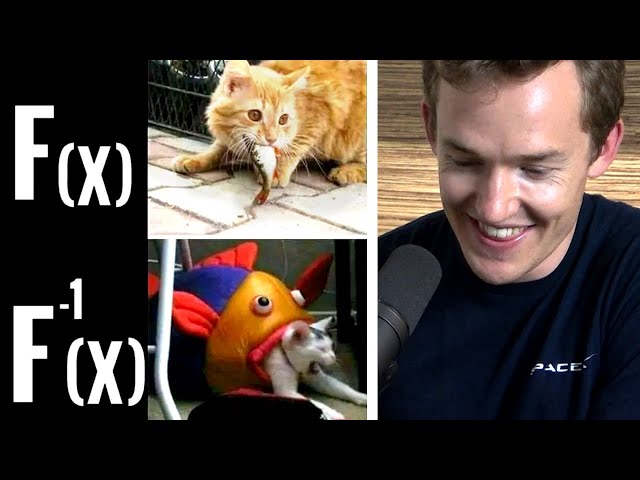
Math Meme Review with Grant Sanderson (3Blue1Brown)
Lex Fridman
In this lighthearted segment titled Math Meme Review, Grant Sanderson of 3Blue1Brown joins a host to critique and analyze popular mathematics memes following their recent podcast conversation. The duo begins by addressing specific internet jokes with humorous yet insightful commentary on the underlying mathematical concepts they represent.…
EN
Jul 30

David Eagleman: Neuroplasticity and the Livewired Brain | Lex Fridman Podcast #119
Lex Fridman
In his new book *Livewired*, neuroscientist David Eagleman challenges the traditional hardware-software metaphor used to describe the brain, proposing instead that it is a system of constant physical reconfiguration he terms "liveware." Unlike engineered devices where circuitry remains static while software updates occur, the human brain physically changes its structure—rewiring synapses and altering cellular properties—as it learns.…
EN
Jul 30

A day in my life | Lex Fridman
Lex Fridman
Lex Fridman presents his daily routine designed to maximize productivity through strict time management, sleep optimization, and disciplined habits. He emphasizes that while he occasionally pulls all-nighters for sprints, his regular schedule relies on six to eight hours of sleep plus a thirty-minute power nap. His core philosophy revolves around controlling addictions like social media, which he limits to checking only once or twice daily for ten minutes each time specifically when posting content.…
EN
Jul 30
François Chollet: Measures of Intelligence | Lex Fridman Podcast #120
Lex Fridman
In this episode of Lex Fridman Podcast #120, François Chollet explores his paper on measuring intelligence in artificial systems and reflects on the philosophical underpinnings of cognition. Drawing from early influences like Jean Piaget's developmental psychology and Jeff Hawkins' theories on hierarchical prediction, Chollet defines intelligence not merely as data processing but as the efficiency with which an agent adapts to novel situations using minimal prior knowledge or training data.…
EN
Jul 30

Eugenia Kuyda: Friendship with an AI Companion | Lex Fridman Podcast #121
Lex Fridman
Eugenia Kuyda, co-founder of Replica, founded her company following a personal tragedy in late 2015 when she lost her close friend and mentor, Roman Mazurenki, to a hit-and-run accident at age 34.…
EN
Jul 30

In Memory of My Grandmother
Lex Fridman
In this poignant tribute, the narrator reflects on the life and enduring legacy of his grandmother, Anne, who passed away at 91 in Moscow after a remarkable existence defined by immense resilience. Born near Kharkiv, Ukraine, she survived two of history's darkest periods: the Holodomor famine between 1932 and 1933 under Stalin, which claimed millions of lives including those who refused to eat their children, and World War II in a fascist-occupied city as a young teenager.…
EN
Jul 30

David Fravor: UFOs, Aliens, Fighter Jets, and Aerospace Engineering | Lex Fridman Podcast #122
Lex Fridman
Commander David Fravor, a former Navy fighter pilot and instructor from Top Gun who served for 18 years leading Strike Fighter Squadron 41 (VFA-41), recounts his historic encounter with an unidentified aerial phenomenon in 2004. During this incident aboard the USS Nimitz, Fravor chased what he describes as a "Tic Tac" object—a smooth, white, metallic craft approximately thirty feet long that exhibited no visible propulsion systems, windows, or appendages.…
EN
Jul 30

Manolis Kellis: Origin of Life, Humans, Ideas, Suffering, and Happiness | Lex Fridman Podcast #123
Lex Fridman
In this episode of the Lex Fridman Podcast, MIT Professor Manolis Kellis explores the profound structural and functional complexity of the human epigenome, describing it as an engineering marvel that compacts two meters of DNA into a microscopic nucleus while simultaneously regulating gene activity. He uses a musical analogy to explain how different cell types act like instruments in an orchestra, reading specific "chapters" from the same genetic score based on chemical modifications known as methylation.…
EN
Jul 30

Thoughts on Joe Rogan's New Texas Studio | Lex Fridman
Lex Fridman
Lex Fridman shares his recent experience hosting *The Joe Rogan Experience* for a fifth time, marking the first occasion he has utilized the newly renovated studio in Austin, Texas. Following an interview with Rogan on his own podcast where they discussed philosophical and romanticized topics, Fridman addresses viewer inquiries regarding the new space by offering a comprehensive review from both guest and technical perspectives.…
EN
Jul 30

Stephen Wolfram: Fundamental Theory of Physics, Life, and the Universe | Lex Fridman Podcast #124
Lex Fridman
In this extensive discussion, Stephen Wolfram explores his ongoing project to derive a fundamental theory of physics based on simple rules operating within hypergraphs rather than traditional mathematical equations. He contrasts historical breakthroughs in science, such as the rapid development following the invention of quantum mechanics in the 1920s or the recent surge in machine learning since 2011, with his own realization that complex phenomena can emerge from very simple computational programs.…
EN
Jul 30

Ryan Hall: Martial Arts and the Philosophy of Violence, Power, and Grace | Lex Fridman Podcast #125
Lex Fridman
In this episode of *Lex Fridman Podcast*, Lex welcomes Ryan Hall, a black belt in jiu-jitsu and undefeated UFC fighter who approaches combat sports through the lens of philosophy and systems thinking. The conversation begins by defining what constitutes a "warrior," with both speakers agreeing that true warriors possess skin in the game; they have lost battles or faced real consequences, distinguishing them from video game characters where failure has no physical cost.…
EN
Jul 30

Jiu Jitsu Meme Review with Ryan Hall
Lex Fridman
In this Jiu-Jitsu Meme Review, Ryan Hall and his guest explore the unique intersection of humor and martial arts culture through a series of Reddit memes ranging from deeply philosophical to absurdly accurate observations about training life. The review begins with an analysis of various images, including one depicting sobbing after adult class, which is identified as a reference to Tobias in *Arrested Development*.…
EN
Jul 30

James Gosling: Java, JVM, Emacs, and the Early Days of Computing | Lex Fridman Podcast #126
Lex Fridman
James Gosling, the founder of Java and a pioneer in object-oriented programming, reflects on his early fascination with mathematics and concurrent computing before he embraced neural networks. He recalls how studying parallelism as an undergraduate changed his view of computers from single-tasking machines to systems capable of guaranteed stability while performing many tasks simultaneously.…
EN
Jul 30